
Seido Gyuto Chef Knife Guide 2026: Collections Compared
A seido gyuto is designed as a versatile, multi-purpose Japanese chef knife capable of slicing, dicing, and mincing through meats, fish, and vegetables with agility. Seido Knives provides several versions of this core kitchen workhorse across distinct collections such as Awabi, Executive, and Master Series, combining high-carbon stainless steel blades with ergonomic handles. When you shop through our referral link, you get 15% off your order at checkout.
Affiliate disclosure: This article may contain affiliate links. If you buy through them, we may earn a commission at no extra cost to you. Details were checked on November 20, 2026 and can change.
To take advantage of our reader discount, you get 15% off your order when you shop through our link.
Gift 15% off with your referral link
Quick Answer: What Is a Seido Gyuto and How Do the Options Differ?
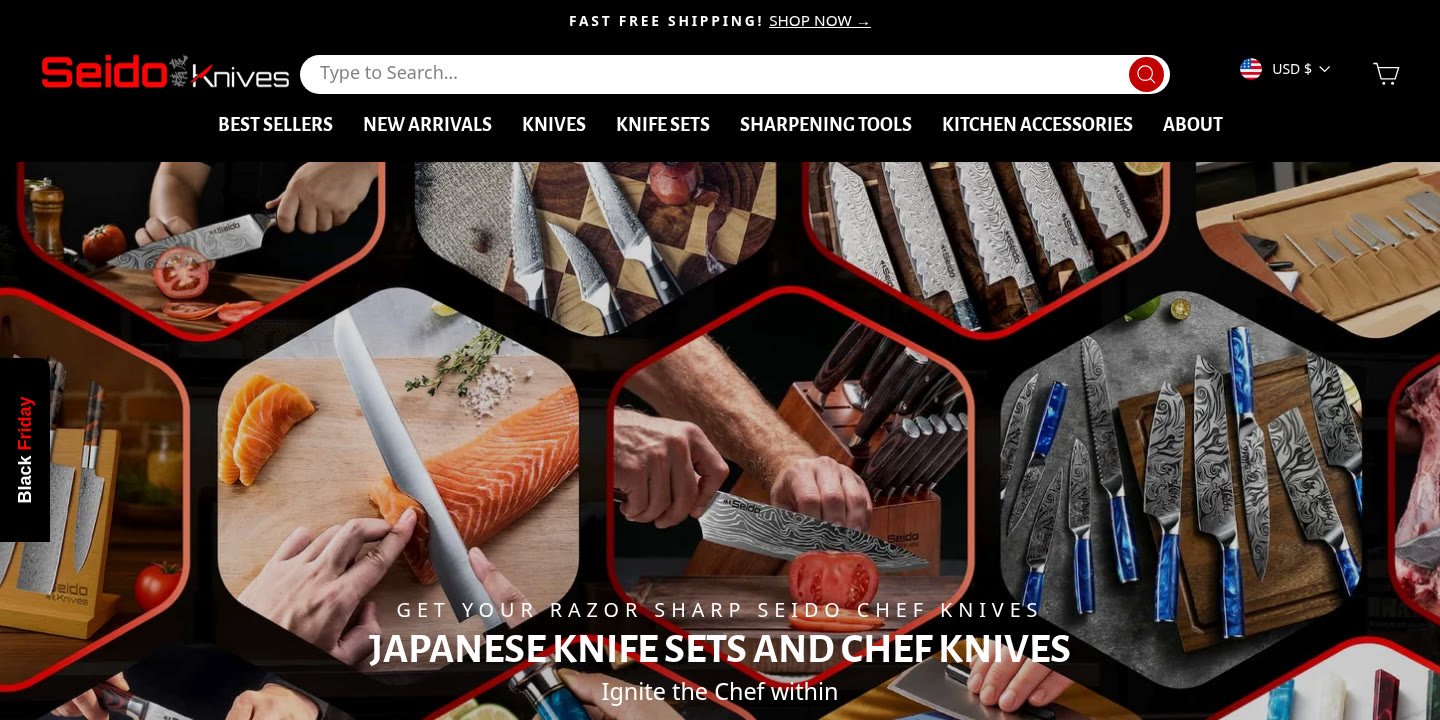
In Japanese culinary traditions, the gyuto serves as the primary chef knife—the functional equivalent to the Western culinary workhorse, but generally shaped with a leaner profile and sharper edge geometry. Seido Knives markets its gyuto knives as artisan blades forged from high-carbon stainless steel, designed to merge German durability with Japanese precision handling. Across their catalog, you will find gyuto blades sold as standalone pieces or integrated into larger culinary blocks and sets.
- Core Role: Built for daily precision kitchen work including push-cutting, mincing herbs, carving cooked proteins, and dicing root vegetables.
- Key Standalone Models: Official pricing includes the Awabi Gyuto Chef Knife (regularly $199.00, listed on sale at $129.00) and the Japanese Gyuto Executive Chef Knife (regularly $199.00, listed on sale at $119.00).
- Knife Block Integrations: Featured within larger collections like the Japanese Master Chef Knife Set (from $169.00) and the 16-Piece Executive Knife Block Set ($899.00).
- Steel Profiles: The brand highlights high-carbon stainless steel, Damascus steel, VG-10 steel, and AUS-10 steel constructions across its various product lines.
- Verified Promotion: You get 15% off your order when you shop through our link (discount confirms at checkout).
What Is a Gyuto Chef Knife in Japanese Cutlery?
To evaluate whether a seido gyuto suits your kitchen workflow, it helps to understand what the word “gyuto” signifies. Translating historically to “beef sword,” the gyuto was originally developed in Japan during the late 19th century to prepare Western-style beef and meat cuts. Over decades of refinement, Japanese blacksmiths modified the profile into a comprehensive chef knife capable of handling almost every cutting board preparation.
Unlike a traditional German or French chef knife—which frequently features a thick, heavy spine and an exaggerated belly curve built for heavy rocking motions—a Japanese gyuto typically emphasizes a flatter heel, an agile midsection, and a pointed, delicate tip. This profile favors multiple cutting styles:
- Push-Cutting: Moving forward and down in one clean, decisive stroke without crushing delicate vegetable cells.
- Draw-Cutting and Slicing: Pulling the blade smoothly through proteins like steak, poultry, or fish to avoid tearing flesh.
- Precision Tip Work: Utilizing the pointed tip for shallow scoring, mincing garlic cloves, or trimming fat caps.
- Gentle Rock-Chopping: While flatter than Western blades, many modern hybrid gyutos retain sufficient belly curve for light rocking over herbs.
Seido Knives states that its brand name reflects the Japanese concept of “accuracy, precision, and lucidity.” By adopting the gyuto design, the brand offers home cooks an everyday knife aimed at precision meal preparation without the extreme bulk of traditional European cutlery.
Comparing Seido Gyuto Models: Awabi vs. Executive Series
Seido Knives does not limit its gyuto pattern to a single aesthetic or construction. The brand categorizes its knives into specific collections, each bearing distinct handle designs, steel specifications, and visual styling. For readers comparing individual blades on the official storefront, two primary gyuto options stand out with published pricing.
| Model / Line | Regular Price | Sale Price | Key Design Focus | Available Sets |
|---|---|---|---|---|
| Awabi Gyuto Chef Knife | $199.00 | $129.00 | Awabi Collection styling; dedicated standalone gyuto blade | Awabi Series catalog |
| Japanese Gyuto Executive Chef Knife | $199.00 | $119.00 | Executive Series styling; streamlined balance | Executive Series & 16-Piece Block Set |
| Japanese Master Chef Knife Set | $429.00 | From $169.00 | Multi-knife bundle including primary chef blades | 8-piece bundle / 17-piece block configurations |
Awabi Gyuto Chef Knife
The Awabi Gyuto Chef Knife is listed on the official Seido Knives store with a regular price of $199.00 and a sale price of $129.00 (representing a $70.00 discount). The Awabi collection is distinguished by specialized handle materials and distinct blade finishes. With 61 customer reviews documented on its catalog listing, it is oriented toward cooks looking for a visually striking centerpiece knife that delivers functional high-carbon performance for general meal preparation.
Japanese Gyuto Executive Chef Knife
The Japanese Gyuto Executive Chef Knife carries a regular catalog price of $199.00, marked down on sale to $119.00 (saving $80.00). Documenting 97 customer reviews on the official site, this blade belongs to the brand’s Executive Series. The Executive line represents Seido’s premium tier, designed for high visual elegance and refined balance. For cooks planning an entire workstation upgrade, the Executive Gyuto forms the focal point of the larger 16-Piece Executive Knife Block Set (regularly $1,999.00, sale price $899.00).
Master Series Chef Knives
In addition to standalone specialty lines, Seido features its Master Series, which houses bundles such as the Japanese Master Chef Knife Set (regularly $429.00, sale price from $169.00 with 849 customer reviews) and the 17-Piece Master Chef Knife Block Set (regularly $799.00, sale price $349.00). If you are weighing whether to purchase a single gyuto or invest in a coordinated set, reviewing our comprehensive Seido Knife Set Guide helps break down the exact contents of these bundles.
Materials and Blade Construction: High-Carbon, Damascus, and Specialty Steels
When selecting a seido gyuto, understanding the blade steel is vital to knowing how it will behave on your cutting board. Seido Knives states on its website that its knives are hand forged and made from high-carbon stainless steel, designed to offer “the best of both German and Japanese craftsmanship.”
On the official navigation menu, Seido categorizes its blades into several steel designations:
- High-Carbon Stainless Steel: Combines carbon for edge retention and sharpness with chromium for corrosion resistance. This hybrid philosophy attempts to reduce the extreme rusting risks of traditional Japanese raw carbon steel while retaining a keener edge than soft European kitchen steel.
- Damascus Steel Knives: Showcases decorative folding patterns along the blade face, offering visual texture while protecting a harder internal cutting core.
- VG-10 Steel Knives: A recognized Japanese stainless cutlery steel known for high wear resistance, high hardness, and long edge retention.
- AUS-10 Steel Knives: Another premium Japanese stainless formulation offering toughness, keen sharpenability, and reliable corrosion resistance.
Because Seido features diverse product lines—ranging from the Caveman, Kanpeki, and Inferuno collections to Epokishi, Shujin, Takoizu, Kurogane, Shinko, and Titan Series—individual steel compositions, exact Rockwell hardness ratings, and edge bevel angles can vary per collection. If you need specific metallurgical data for a particular gyuto model before purchasing, check the individual product specification tab on the official Seido Knives storefront.
How a Seido Gyuto Compares to Santoku and Kiritsuke Alternatives
Shoppers exploring the Seido catalog often encounter other Japanese knife profiles alongside the classic gyuto. Understanding the functional differences prevents ordering the wrong blade geometry for your cooking habits.
Gyuto vs. Santoku
The Santoku (“three virtues”) is generally shorter, typically measuring between 5.5 and 7 inches, with a flatter edge profile and a rounded, downward-curving “sheepsfoot” tip. While a Santoku excels at compact vertical push-cutting on small cutting boards, a seido gyuto provides a longer blade length, a tapered pointed tip, and a subtle belly curve. The gyuto is superior when slicing larger cuts of meat, carving roasts, or processing bulky vegetables like cabbage and squash.
Gyuto vs. Kiritsuke
Seido Knives prominently showcases the Kiritsuke, including its Kiritsuke Damascus Japanese Chef Knife (regularly $199.00, on sale from $119.00). The Kiritsuke features an aggressive, angled “reverse tanto” or clip-point tip and an even flatter cutting edge. In Japanese culinary tradition, the Kiritsuke is an expert’s knife requiring precise technique to prevent board chipping. The Seido gyuto, by contrast, is much more forgiving for everyday home cooks, providing a smooth transition between slicing, rocking, and push-cutting.
Gyuto vs. Sujihiki and Nakiri
The Seido catalog also includes specialized tools such as the Sujihiki (a long, narrow slicing knife intended specifically for carving boneless proteins) and the Nakiri (a rectangular, double-beveled vegetable cleaver). While these tools excel at their singular tasks, a gyuto can handle both slicing tasks and vegetable preparation respectably, making it the preferred single-knife investment for minimalists.
Pricing, Available Sets, and Verified Savings
Pricing on the official Seido Knives platform reflects frequent promotional sales across both single knives and bundled block packages. Based on live catalog data, here is what prospective buyers can expect regarding investment levels:
- Individual Chef / Gyuto Knives: Standalone models like the Japanese Gyuto Executive Chef Knife sell for $119.00 (regularly $199.00), while the Awabi Gyuto Chef Knife sells for $129.00 (regularly $199.00). Other specialized chef blades, like the Hakai Chef Cleaver Knife, retail around $99.00 (regularly $179.00).
- Core Knife Bundles: The Japanese Master Chef Knife Set starts at $169.00 (regularly $429.00, saving $260.00), bundling multiple blades together for home kitchens needing an immediate cutlery overhaul.
- Comprehensive Block Sets: The 17-Piece Master Chef Knife Block Set is listed at $349.00 (regularly $799.00), and the 16-Piece Executive Knife Block Set is listed at $899.00 (regularly $1,999.00).
- Payment Flexibility: Seido Knives provides interest-free installment payment options across major sets and individual knives, visible directly in the site’s checkout module.
- Official Store Perks: The site advertises early sale events, fast free shipping promotions, and a dedicated Knife Set Builder for custom combinations.
To ensure you do not overpay, you get 15% off your order when you shop through our referral link. You do not need to hunt down an elusive coupon code—the discount is linked directly, though you should verify that the deduction appears in your final checkout total. For deeper verification on company policies and brand credibility, read our detailed guide on Are Seido Knives Good?.
Step-by-Step: How to Select and Order the Right Seido Gyuto
If you have decided that a Japanese gyuto matches your culinary habits, follow these steps to select the appropriate model from Seido Knives:
- Assess Your Cutting Surface and Kitchen Space: Gyuto knives require adequate clearance. Ensure you have an appropriate cutting board—such as end-grain or edge-grain wood—and sufficient counter space to maneuver an 8-inch class blade comfortably.
- Decide Between Standalone or Set Configurations: Determine whether you simply need to replace an aging primary chef knife or if you need supporting cutlery like paring knives, utility knives (such as the Kyodai Japanese Utility Knife, on sale for $69.00), or kitchen shears.
- Choose Your Aesthetic Collection: Browse Seido’s collections. If you prefer high-contrast patterns and unique handle materials, explore the Awabi Gyuto. If you prefer classic executive balance, examine the Executive Gyuto. For broader variety, review collections like Master, Kanpeki, Inferuno, or Epokishi.
- Check Steel Preferences: Determine whether you want standard high-carbon stainless steel, layered Damascus steel, or specific Japanese steels like VG-10 or AUS-10 by checking the product specifications on each listing.
- Review Maintenance Accessories: Sharp Japanese-style cutlery requires proper upkeep. Seido sells dedicated whetstones, sharpening and honing rods, and pull-through sharpeners. Consider pairing your blade with proper sharpening tools at checkout.
- Apply Your Reader Discount: Navigate to the storefront using our link so that the 15% referral discount applies to your cart, and confirm the total before submitting payment.
Pros and Cons of a Seido Gyuto Chef Knife
Before purchasing any kitchen cutlery, weighing operational advantages against realistic limitations ensures you make an informed decision based on your cooking style.
Pros
- Versatile All-Rounder: The gyuto profile excels at push-cutting, rocking, dicing, and protein slicing, making it the most practical single knife in any kitchen.
- Lighter and More Agile: Offers a thinner blade geometry and lighter balance compared to traditional heavy-bolstered European chef knives.
- High-Carbon Stainless Steel Construction: Blends keen edge sharpness with stainless corrosion resistance, reducing the high-maintenance rust risks of raw carbon blades.
- Distinctive Visual Design: Models across the Awabi, Executive, and Damascus series feature eye-catching handle scales and decorative blade finishes.
- Accessible Price Points: Frequent sales place individual gyutos between $119.00 and $129.00, significantly lower than boutique artisan Japanese knives that often exceed $300.00.
- Reader Discount: You get 15% off your order when you shop through our link.
Cons
- Thinner Edge Demands Care: High-carbon Japanese-style blades are not meant for chopping through frozen food, animal bones, or hard shells, which can chip the cutting edge.
- Not Dishwasher Safe: Like all fine cutlery, hand washing and immediate towel drying are mandatory to protect the handle materials and cutting edge.
- Varying Specs Across Series: Because Seido features over a dozen collections, specific blade weights, balance points, and spine thicknesses differ, requiring careful reading of individual product pages.
- Sharpening Learning Curve: Maintaining the acute edge bevel requires periodic honing or whetstone sharpening rather than neglect.
Who Is a Seido Gyuto Best For (and Who Should Look Elsewhere)?
Understanding the intended audience for a seido gyuto helps prevent mismatched expectations between the knife and the user’s kitchen habits.
Recommended For:
- Home Cooks Upgrading from Dull Box Sets: Cooks transitioning from standard big-box store cutlery will immediately appreciate the lighter weight and sharper cutting feel of a gyuto.
- Enthusiasts Who Value Japanese Geometry: Those who prefer delicate push-cuts, precise julienne slicing, and clean protein portions over brute-force chopping.
- Aesthetic-Focused Kitchens: Home chefs who want striking visual presentation on magnetic knife strips or display blocks without spending hundreds on custom bespoke blades.
- Gift Buyers: The premium packaging and distinct styling of lines like the Executive or Awabi series make them popular choices for culinary gifts.
Not Recommended For:
- Heavy-Handed Cleaver Users: If your cooking style involves hacking through chicken bones, split squash, or frozen meats, a heavy cleaver or German butcher knife is required.
- Dishwasher-Reliant Households: Anyone unwilling to hand-wash and towel-dry their knives immediately after use should avoid high-carbon cutlery.
- Traditional Carbon Steel Purists: Culinary traditionalists seeking non-stainless, unclad Shirogami (white paper) or Aogami (blue paper) steels that develop deep natural patinas should explore specialized artisan Japanese blacksmith shops.
Care, Sharpening, and Maintenance for Japanese-Style Blades
To preserve the edge retention and appearance of your gyuto, adhering to basic cutlery hygiene is essential. Seido Knives highlights proper sharpening tools on its storefront, including whetstones, honing rods, pull-through sharpeners, and knife roll bags.
Follow these essential maintenance guidelines:
- Hand Wash Only: Never place your gyuto inside an automatic dishwasher. The high heat, harsh abrasive detergents, and violent water spray will loosen handle pins, degrade resin or wood scales, and dull the cutting edge. Clean with warm water, mild dish soap, and a soft sponge.
- Dry Thoroughly: Wipe the knife completely dry with a clean towel immediately after rinsing. Even high-carbon stainless steels can suffer water spotting or micro-corrosion if left wet in a drying rack.
- Use Knife-Friendly Cutting Boards: Cut exclusively on wooden cutting boards (such as end-grain walnut, maple, or larch) or soft food-grade rubber boards. Avoid cutting on glass, ceramic plates, marble countertops, or granite, which will instantly roll or chip a fine edge.
- Regular Honing: Use a ceramic or diamond honing rod between prep sessions to realign microscopic edge teeth without removing substantial steel.
- Whetstone Sharpening: When the blade eventually loses its slicing keenness, sharpen it on a dual-grit water whetstone (such as 1000/6000 grit) to restore the factory bevel. For more background on brand quality, see our comprehensive Seido Knives Review.
How to Research User Feedback and Avoid Common Buying Pitfalls
When shopping for direct-to-consumer kitchen cutlery online, it is important to evaluate customer sentiment methodically rather than relying solely on marketing claims. While Seido Knives displays customer reviews across its storefront—such as 849 reviews on its Master Chef Knife Set and 180 reviews on its Kiritsuke blade—potential buyers should know how to read reviews objectively.
When browsing feedback on culinary forums, social platforms, or review hubs, look for specific, repeatable observations:
- Balance and Handle Ergonomics: Look for comments detailing how comfortable the handle feels during extended chopping sessions, especially for cooks with smaller or larger hands.
- Out-of-the-Box Sharpness: Check whether buyers report clean, razor-sharp factory edges capable of effortlessly slicing paper or ripe tomatoes without tearing.
- Fit and Finish: Note feedback regarding the transition between the handle scales, bolsters, and tang to ensure there are no sharp, uncomfortable ridges.
- Shipping Times and Packaging: Pay attention to delivery experiences and whether items arrive safely cushioned in protective sheaths or presentation boxes.
- Discount Code Confusion: Be wary of third-party coupon aggregate sites claiming expired 50% or 70% voucher codes. To ensure verified savings, you get 15% off your order when you shop through our referral link, with the discount reflected directly at checkout without entering questionable codes. For a step-by-step breakdown of how the promotion functions, refer to our Seido Knives Discount Code Guide.
Remember that you get 15% off your order when you shop through our link.
Gift 15% off with your referral link
FAQ
What is the difference between a Western chef knife and a Seido gyuto?
A Western chef knife typically features a thicker spine, a prominent finger bolster, a heavier overall weight, and a deep belly curve designed primarily for rocking cuts. A Seido gyuto features Japanese-inspired geometry: a thinner blade profile, a lighter agile balance, and a flatter heel that excels at precision push-cutting, fine dicing, and slicing proteins cleanly.
Can I put my Seido gyuto in the dishwasher?
No. Placing any high-carbon chef knife into a dishwasher exposes the blade to harsh caustic detergents, extreme heat cycles, and mechanical jostling against other utensils. This can dull the sharpened edge, induce surface spotting, and ruin handle materials. Always wash by hand with mild soap, rinse, and dry immediately with a clean towel.
Which Seido gyuto knife models are available individually?
The Seido Knives catalog lists standalone gyuto models including the Japanese Gyuto Executive Chef Knife ($119.00 on sale, regularly $199.00) and the Awabi Gyuto Chef Knife ($129.00 on sale, regularly $199.00). In addition, chef blades are central to the Master Series bundles and executive block sets.
What steels are used in Seido gyuto knives?
Seido Knives states that its blades are crafted from high-carbon stainless steel. Depending on the specific collection, the official store also organizes knives into Damascus steel, VG-10 steel, and AUS-10 steel categories. Check the exact product page specifications for the model you choose.
Does Seido Knives offer free shipping?
The official Seido Knives website features a “Fast free Shipping!” promotional banner across its storefront. Shipping terms, eligible regions, and delivery timelines should be confirmed in your shopping cart during checkout.
How do I claim the 15% discount on my Seido gyuto purchase?
You get 15% off your order when you shop through our referral link. There is no manual coupon code required; the promotional pricing applies automatically when you visit the store via our link. Always check your cart summary before submitting payment to ensure the discount is reflected.
Related Reading
- Seido Knife Set Guide 2026: Which Chef Knife Set to Choose
- Are Seido Knives Good? What to Know Before Buying (2026)
- Seido Knives Discount Code Guide: How to Get 15% Off in 2026
- Seido Knives Review 2026: Japanese Kitchen Knives Explained