OKX Wallet Explained: Web3 Wallet vs Exchange Account (2026)
Exclusive reader offer
The okx wallet is a non-custodial Web3 portal that gives users full ownership over their on-chain private keys, distinguishing it fundamentally from an OKX centralized exchange account where the platform manages asset custody. While an exchange account enables fiat deposits, centralized order-book trading, and custodial portfolio management, the Web3 wallet connects directly to decentralized applications and independent blockchains without requiring custodial intervention. When opening an account on the exchange side, you can use our referral code BAAZ3JPA to automatically join the platform’s New User Bonus Program, which requires completing advanced identity verification and specific tasks that may vary by region.
Affiliate disclosure: This article may contain affiliate links. If you buy through them, we may earn a commission at no extra cost to you. Details were checked on November 23, 2026 and can change.
Risk Warning: Digital asset prices are highly volatile, and trading cryptocurrencies—especially using margin, futures, or leverage—involves substantial risk of financial loss. You should never trade or invest money that you cannot afford to lose. This guide is published strictly for educational and informational purposes and does not constitute financial, investment, or legal advice.
To access the centralized exchange and qualify for eligible new-account programs, register with referral code BAAZ3JPA, complete advanced verification, and review the regional terms on the official site.
Official website · Latest pricing & offers
Quick Answer: OKX Wallet vs Centralized Exchange Account
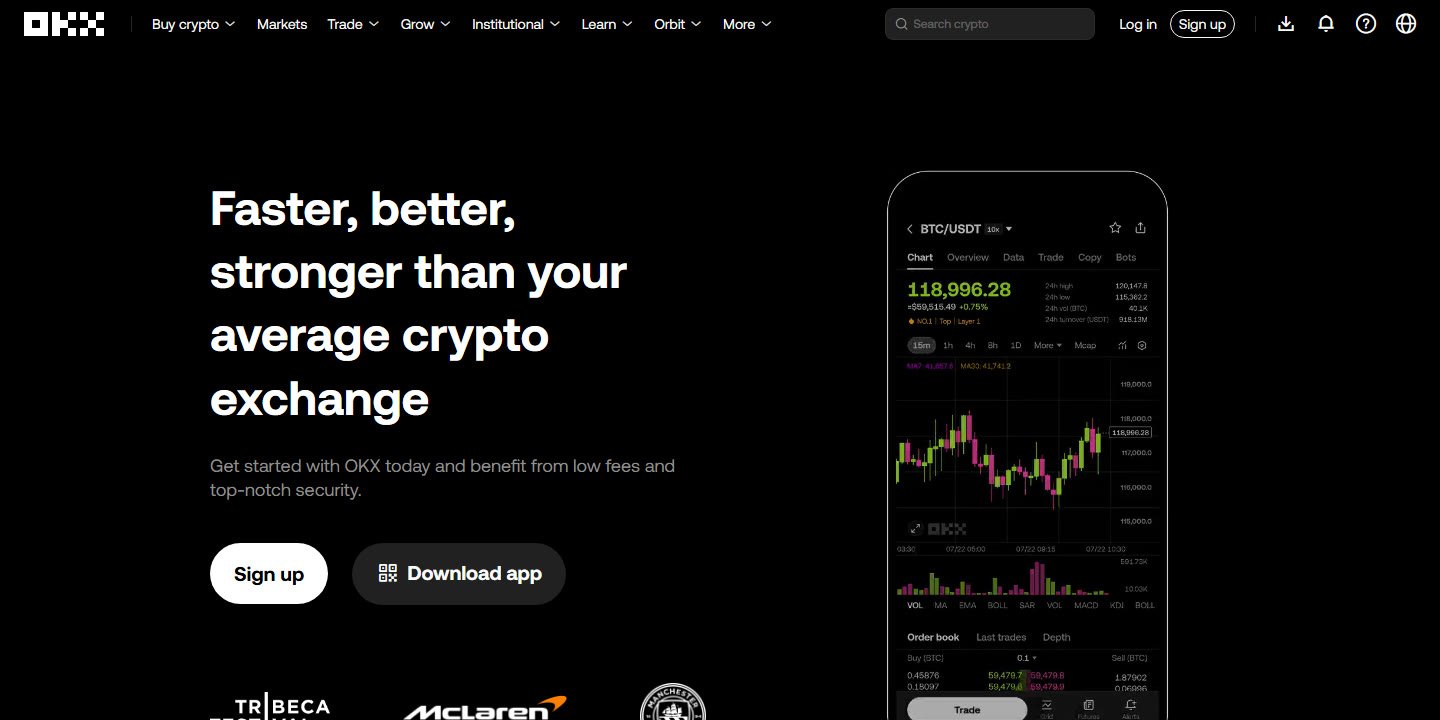
The primary distinction between the two services lies in asset custody and network execution. When you use the okx wallet, you create or import a self-hosted cryptographic wallet where only you hold the seed phrase or private keys. The exchange does not possess your funds, cannot reverse transactions, and does not demand identity documentation simply to create on-chain addresses. Conversely, an OKX exchange account is a custodial service governed by centralized servers, regulated entities (such as OKX Europe Limited, licensed by the Malta Financial Services Authority under the European Union’s MiCA framework), and compliance procedures requiring Know Your Customer (KYC) identity verification.
New traders registering for the centralized platform through our link or using referral code BAAZ3JPA automatically join the platform’s New User Bonus Program, with eligible accounts potentially receiving a trading fee Rebate Card under the New User Full Rebate Program (terms, task requirements, and lock-in windows vary by region). The key differences can be summarized as follows:
- Asset Custody: The Web3 wallet is strictly self-custodial (your keys, your crypto). The exchange account is custodial, meaning OKX secures the underlying blockchain addresses on your behalf.
- Regulatory & Identity Requirements: The Web3 wallet operates permissionlessly across open blockchains with zero KYC. The centralized exchange requires advanced identity verification to trade, deposit, or withdraw.
- Transaction Execution: Web3 wallet actions interact directly with smart contracts and decentralized protocols, paying variable network gas fees. Exchange trades settle off-chain on internal order books or through tools like OKX Convert without on-chain gas costs.
- Recovery Options: Losing your Web3 wallet seed phrase or private key means permanent loss of assets with no customer support recovery possible. Exchange accounts allow automated password, email, and two-factor resets via customer support.
What Is the OKX Wallet and How Does Web3 Integration Work?
The OKX Web3 wallet is engineered as an open, decentralized gateway allowing users to interact directly with multiple public blockchain networks from a single unified interface. Unlike traditional centralized accounts that maintain a proprietary ledger, this self-custody software functions as a bridge between your local device and the distributed ledgers of Bitcoin, Ethereum, Solana, and other Layer-1 and Layer-2 protocols. Because the software interacts directly with decentralized protocols, it features an on-chain decentralized exchange (DEX) aggregator, marketplace tools for digital collectibles, and access to decentralized finance (DeFi) earning protocols.
When you launch the Web3 interface through the OKX mobile app or browser extension, the application generates cryptographic key pairs locally on your hardware. These keys are never transmitted to OKX servers, meaning the exchange does not maintain a database of your private credentials. As a result, the wallet grants users unmediated access to decentralized applications (dApps). Whether you are executing a token swap on an automated market maker, staking assets through on-chain liquid staking contracts, or minting digital tokens, every action is signed cryptographically by your private key and broadcast directly to peer-to-peer validators.
Furthermore, OKX has integrated native cross-chain capabilities within the Web3 dashboard. Users can explore protocol yields under the Onchain Earn suite, monitor decentralized asset valuations, and inspect transaction histories across independent networks. Because the software is non-custodial, you can also import external recovery phrases created in other decentralized applications, or export your OKX-generated keys into any compatible hardware or software wallet at any time.
What Is an OKX Exchange Account?
An OKX exchange account represents a centralized, custodial trading environment. In this ecosystem, OKX acts as the financial intermediary, matching buyers and sellers through deep liquidity pools, proprietary order matching engines, and specialized execution tools. When you deposit assets into your exchange account, those tokens are transferred into segregated institutional storage facilities managed by OKX. According to official disclosures, OKX maintains reserves backed 1:1, verified monthly through publicly accessible Proof of Reserves mechanisms.
Operating inside a centralized exchange environment grants users access to an extensive suite of financial instruments and infrastructure that cannot run natively on a standard decentralized blockchain. These custodial tools include:
- Fiat Payment Gateways: Support for cash deposits via SEPA bank transfers, Visa, Mastercard, and an integrated peer-to-peer (P2P) trading marketplace offering over 100 payment methods.
- Diverse Trading Instruments: Access to spot trading, margin trading, futures contracts with leverage, TradFi access (trading stocks, ETFs, and commodities using crypto balances), options, and event markets.
- Zero-Slippage Conversions: The OKX Convert tool, which enables instant asset swaps with zero trading fees and no price slippage.
- Automated Trading Infrastructure: Pre-built algorithmic solutions including trading bots, copy trading systems, Nitro Spreads, Request for Quote (RFQ) block trades, and the Agent Trade Kit for automating strategies with AI tools.
- Custodial Growth Products: Centralized yield structures under the Grow suite, such as Flash Earn, Margin Rewards, Dual Investment, BTC Yield+, and collateralized crypto lending services.
Centralized exchange activity takes place off-chain on OKX’s high-speed matching engine rather than directly on public blockchains. This means that executing an order on the BTC/USDT spot market does not trigger a public Bitcoin or Ethereum network transaction. Instead, the internal database reallocates balances between users instantly and without on-chain gas costs, charging standard trading fees according to the platform’s published schedules.
OKX Wallet vs Exchange Account: Key Architectural Differences
Understanding the architectural divide between the okx wallet and a standard exchange account is critical for safeguarding capital and selecting the appropriate execution environment. While both tools can be accessed through the same overarching mobile and desktop applications, their underlying mechanics, technical risks, and operational capabilities are fundamentally separate.
| Feature / Attribute | OKX Web3 Wallet | OKX Centralized Exchange |
|---|---|---|
| Custodial Model | Non-custodial (self-custody). User controls private keys. | Custodial. OKX manages and safeguards private keys. |
| Identity Verification (KYC) | None required. Instant generation of public addresses. | Mandatory advanced identity verification for full access. |
| Transaction Settlement | On-chain across independent distributed ledgers. | Off-chain internal ledger matching engine. |
| Transaction Fees | Network gas fees paid to blockchain miners/validators. | Trading fee schedules; zero gas on internal book trades. |
| Account Recovery | Impossible without local seed phrase / private keys. | Supported via customer service, email, and 2FA resets. |
| Fiat Rails | Limited to third-party Web3 on-ramps. | Direct bank transfers (SEPA), cards, and P2P marketplace. |
| Trading Tools | DEX swaps, liquidity pools, dApp interactions. | Spot, margin, futures, options, copy trading, AI bots. |
As illustrated above, using the Web3 wallet means you assume sole liability for transaction execution. If you send tokens across an incompatible bridge or sign a malicious contract on an external dApp, no centralized authority can freeze the transaction or restore lost assets. By contrast, transactions on the centralized exchange occur within a monitored, regulated framework where technical safeguards and customer service teams can assist with common operational difficulties.
Custody, Private Keys, and Security Architecture
The philosophical and technical dividing line in cryptocurrency has always been self-sovereignty versus custodial convenience. The phrase “not your keys, not your coins” directly describes the operational reality of choosing between the Web3 wallet and the exchange.
How Key Management Works in the Web3 Wallet
When an okx wallet is generated, the underlying software derives a recovery phrase (mnemonic seed) using standard cryptographic algorithms. This seed phrase mathematically generates the master private key from which all public deposit addresses across various blockchains are created. The private key acts as the ultimate digital signature required to authorize any outward movement of funds.
Because these keys exist exclusively on your device (or in your encrypted local backups), OKX has no technical capability to view, reset, or restore them. If an unauthorized party gains access to your recovery phrase, they can clone your wallet on any device globally and transfer all balances immediately. Conversely, if you misplace your device and fail to keep a secure offline copy of your recovery words, your funds remain permanently locked on the blockchain, inaccessible even to OKX technical engineers.
How Custody Works in the Exchange Account
Within the exchange framework, OKX acts as the institutional custodian of all deposited capital. Individual user balances are tracked through internal accounting databases while the physical digital assets are stored in cold storage systems, multi-signature vaults, and operational hot wallets maintained by the exchange. In jurisdictions governed by robust legal oversight—such as the European Economic Area under OKX Europe Limited’s MFSA license—customer funds must be held in segregated accounts completely separated from operational company capital.
Security on the exchange account side focuses on account-level authentication rather than personal key management. Users protect their access through a combination of passwords, authenticator apps (TOTP), SMS codes, email verifications, and anti-phishing codes. To examine the exchange’s broader organizational safeguards, you can read our detailed guide on is OKX safe and legit, which outlines cold-storage mechanisms and compliance standards.
Account Management, KYC, and Regional Availability
The regulatory and geographic boundaries governing OKX apply almost entirely to its centralized exchange operations rather than the open-source nature of blockchain wallets.
KYC Requirements Compared
To use an OKX centralized exchange account, you must undergo comprehensive identity checks. Under global anti-money laundering (AML) and counter-terrorist financing (CTF) frameworks, OKX requires new users to complete advanced identity verification before accessing trading pairs, depositing fiat currency, or executing withdrawals. This process involves submitting government-issued identification, completing facial recognition screenings, and occasionally verifying proof of address.
In stark contrast, the Web3 wallet requires no personal disclosures. You do not provide an email address, phone number, physical address, or identity card to generate an on-chain address. Anyone with an internet connection can download the software, initialize a public address, and immediately receive tokens sent from external network participants.
Restricted Jurisdictions
Access to OKX centralized exchange services is strictly constrained by regional licensing agreements and international sanctions. Crucially, centralized exchange services (with the exception of OKX US, operated independently by OKX INC.) are not available to residents of the United States. In the US, OKX US provides limited spot trading and basic buy/sell/convert options, but does not provide the global derivatives, margin, or broader exchange products.
Canada also appears among restricted locations in OKX’s official U.S. Risk & Compliance Disclosures, while other platform terms restrict either Canada as a whole or specifically the provinces of Ontario and Quebec. Because international compliance mandates evolve constantly, users must consult official terms rather than assuming broad availability. Readers should examine our breakdown of OKX restricted countries and check the official restricted-locations list on OKX.com before attempting to open an account. Attempting to bypass these geographic filters violates platform policies and can result in account suspension.
Understanding Fees: Gas Fees vs Exchange Schedules
Financial costs diverge significantly depending on whether you are transacting through on-chain infrastructure or within the centralized order books. Many beginners confuse network gas fees with trading commissions, leading to unexpected expenses.
On-Chain Network Costs (Gas)
When executing transactions via the Web3 wallet—such as sending ETH, swapping a token through a decentralized exchange, or interacting with a smart contract—you do not pay transaction fees to OKX. Instead, you pay network “gas” fees directly to the miners, validators, or sequencers who maintain that specific blockchain network. Key aspects of network costs include:
- Native Token Requirement: Gas must always be paid in the native currency of the underlying blockchain (e.g., ETH on Ethereum, SOL on Solana, POL on Polygon). If you hold tokens on a network but have zero native currency for gas, your transaction cannot be processed.
- Network Congestion: Gas prices fluctuate constantly based on global transaction demand. During periods of heavy on-chain volume, smart contract executions on networks like Ethereum can become expensive.
- Zero Surcharge from OKX: The standard Web3 wallet interface broadcasts your transaction without adding hidden custodial markups to base network gas rates.
Centralized Exchange Fee Structure
Trading on the centralized exchange eliminates network gas costs for internal book trades, replacing them with a standardized trading fee schedule based on maker and taker tiers. When you execute trades on the spot or derivatives markets, fees are deducted directly from your allocated balance according to volume tiers and platform tiering rules. The platform also features OKX Convert, which allows direct asset swaps with zero trading fees and no slippage.
Deposit and withdrawal fees on the exchange behave differently. While crypto deposits into your custodial account are typically free of platform fees (aside from network transfer costs paid by the sender), crypto withdrawals from the exchange incur fixed or dynamic withdrawal fees designed to cover the blockchain gas cost incurred by OKX when broadcasting the transaction from its hot wallet to your personal address.
Step-by-Step Guide: Setting Up and Navigating Your OKX Wallet
Because the centralized exchange and the decentralized wallet exist within the same software ecosystem, transitioning between them is straightforward once you understand how each mode operates.
- Download and Installation: Install the official OKX application from verified app stores or add the official Web3 browser extension to your desktop browser. Always verify domain authenticity to prevent phishing attacks.
- Toggle to Web3 Wallet: At the top of the mobile or desktop interface, select the “Web3 Wallet” tab instead of the “Exchange” tab. This switches the application environment from custodial services to decentralized tooling.
- Create or Import a Wallet: Choose “Create Wallet” to generate a fresh cryptographic seed phrase, or select “I already have a wallet” to import an existing mnemonic phrase or private key from an external tool.
- Secure Your Recovery Phrase: Write down your seed phrase on physical paper and store it in a secure, offline location. Never store seed phrases in unencrypted cloud notes, digital screenshots, or messaging apps. Confirm the backup when prompted by the application.
- Funding Your Wallet: To begin transacting on-chain, you must deposit digital assets into your newly generated public addresses. You can copy your public address directly into an external withdrawal portal, or transfer assets directly from your OKX exchange balance using the unified transfer option. Ensure you send sufficient native network tokens (like ETH or SOL) to cover subsequent network gas fees.
- Interacting with dApps and Swaps: Navigate to the integrated DEX tab to execute peer-to-peer swaps across decentralized liquidity pools, or use the in-app Web3 browser to connect your wallet securely to external decentralized finance platforms.
For those who also wish to utilize custodial spot trading, fiat rails, or copy trading tools, reviewing our walkthrough on OKX account registration ensures you follow compliant setup steps from the start.
Pros and Cons of Both Solutions
Neither tool is universally superior; each solves distinct operational challenges. Evaluating their respective strengths and weaknesses helps clarify which environment fits your immediate objectives.
OKX Web3 Wallet: Pros and Cons
- Pro (Sovereign Ownership): You retain absolute control over your private keys, eliminating third-party counterparty risk or platform insolvency exposure.
- Pro (Privacy and Permissionless Access): No identity checks, registration forms, or regional jurisdictional gating are required to initiate an on-chain address.
- Pro (Decentralized Ecosystem Access): Direct, native interoperability with smart contracts, decentralized exchanges, lending pools, and cross-chain dApps.
- Con (Irreversible Operational Risk): User error—such as signing a compromised smart contract or losing a seed phrase—results in unrecoverable asset loss.
- Con (Variable Gas Overhead): On-chain network congestion can make executing micro-transactions economically inefficient on certain layer-1 networks.
OKX Centralized Exchange: Pros and Cons
- Pro (Comprehensive Trading Tools): Full access to leveraged futures, options, margin pairs, automated trading bots, copy trading, and zero-slippage Convert tools.
- Pro (Direct Fiat Rails): Frictionless cash deposits and withdrawals supported through SEPA transfers, credit cards, debit cards, and P2P networks.
- Pro (Account Recoverability): Standardized credentials allow automated password resets, 2FA recovery, and dedicated technical support intervention.
- Con (Custodial Counterparty Risk): Assets are managed by a centralized intermediary subject to platform terms, regulatory holds, and account-level compliance reviews.
- Con (Strict Geographic and Identity Restrictions): Full functionality requires advanced identity verification and is completely unavailable in prohibited jurisdictions like the United States.
Who Should Use Each Solution?
Aligning your trading style, technical literacy, and risk tolerance with the correct environment prevents frustrating account locks or accidental on-chain losses.
When to Choose the Web3 Wallet
The Web3 wallet is ideally suited for decentralized finance enthusiasts, crypto-native participants, and long-term asset holders prioritizing self-sovereignty. If you intend to provide liquidity directly into automated market makers, participate in decentralized governance, mint tokens, or hold assets without third-party exposure, the Web3 wallet is the correct tool. It is also the necessary choice for users living in jurisdictions where centralized exchange operations are legally unavailable, provided they understand how to manage seed phrases and on-chain gas costs independently.
When to Choose the Centralized Exchange Account
An exchange account is designed for active traders who demand high liquidity, rapid execution speeds, advanced order types, and derivatives instruments like futures and options. It is equally essential for anyone who needs to bridge traditional fiat currency (such as Euros via SEPA transfers or bank cards) into the digital economy. Furthermore, beginners who are uncomfortable with the technical complexities of managing cryptographic seed phrases often find the exchange’s password-recovery mechanisms and managed storage significantly safer than self-custody.
Common Problems and Troubleshooting
Both environments present distinct operational friction points. Recognizing these common stumbling blocks ensures smoother day-to-day operations.
Web3 Wallet Pitfalls
The most frequent problem encountered by Web3 wallet users is “stuck” or failed transactions caused by insufficient native gas tokens. If you hold USDT on the Arbitrum network but possess zero ETH on Arbitrum, the wallet cannot broadcast a transfer. Users must maintain a small operational balance of the network’s native base asset. Another major hazard involves approving malicious smart contract permissions on unvetted external websites. Users must periodically audit and revoke token allowances using security dashboard tools.
Exchange Account Issues
On the centralized side, delays in identity verification represent the most common onboarding friction point. Mismatched personal documentation or unreadable identity scans can stall advanced verification processing. Additionally, when transferring funds from the centralized exchange to an external personal wallet, users must ensure they select the identical destination network (e.g., verifying whether an address expects ERC-20, TRC-20, or native Layer-1 formatting) to prevent misrouted deposits.
When signing up for an exchange account, entering our referral code BAAZ3JPA automatically enrolls you in the New User Bonus Program, subject to completing advanced identity verification and applicable regional trading tasks.
Official website · Latest pricing & offers
Frequently Asked Questions About OKX Wallet
Is the OKX Web3 wallet safe to use?
The Web3 wallet is a non-custodial software tool that generates and stores private keys locally on your personal device. Because it operates through open-source cryptographic standards and peer-to-peer blockchain protocols, security depends almost entirely on how well you safeguard your recovery phrase. If you keep your recovery phrase offline and avoid signing transactions on untrusted websites, the wallet provides robust self-custodial security.
Do I need to complete KYC verification to use the OKX Web3 wallet?
No. The decentralized Web3 wallet does not require identity verification, personal documentation, or account registration. Anyone can download the app or extension and immediately generate independent on-chain addresses. Identity verification (KYC) is only mandatory if you use centralized exchange services such as fiat deposits, spot trading, or derivatives.
Can I transfer funds between my OKX wallet and exchange account?
Yes. The OKX mobile and web applications provide an integrated interface allowing you to transfer assets between your custodial exchange balances and your self-custodial Web3 wallet addresses. Remember that moving funds from the exchange to your Web3 wallet constitutes an on-chain blockchain withdrawal, meaning standard network withdrawal fees will apply.
What happens if I lose my OKX Web3 wallet recovery phrase?
If you lose your recovery phrase and lose access to the device where the wallet was installed, your assets cannot be recovered. Because the Web3 wallet is strictly non-custodial, OKX does not maintain a copy of your private keys and customer support cannot reset your credentials or unlock your funds.
Does the OKX centralized exchange operate in the United States?
Global centralized exchange services offered by OKX are not available to residents of the United States. US users can only access OKX US (operated by OKX INC.), which provides spot trading and basic buy/sell/convert tools, but excludes global derivatives, leverage, and margin products. Always verify localized access rules on the official OKX website.
Are trading fees the same on the OKX wallet and the exchange?
No. When executing trades through the centralized exchange order books, you pay tiered maker and taker commissions directly to OKX, or zero fees when using OKX Convert. In contrast, when swapping assets inside the Web3 wallet via decentralized exchange aggregators, you primarily pay on-chain network gas fees directly to blockchain validators, though specific third-party liquidity providers or routing contracts may include their own swap protocols.
Related Reading
- Is OKX Safe and Legit in 2026? An In-Depth Security Review
- OKX Sign Up Guide 2026: How to Create an Account Step by Step
- OKX Restricted Countries: Where OKX Isn’t Available (2026)
- How to Withdraw From OKX: 2026 Step-by-Step Guide
References
- OKX Official Homepage
- About OKX Crypto Exchange
- OKX US Risk and Compliance Disclosures
- OKX Referral Program Details