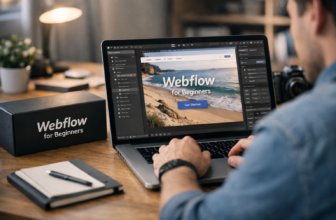
Webflow Review 2026: Honest Pros and Cons
Free cancellation on most bookings · No hidden fees
Webflow Review 2026: Quick Verdict
Bottom line in 60 seconds
This Webflow review comes down to a practical answer: Webflow is worth it if you care more about custom design control, CMS-driven pages, hosting, SEO structure, and professional publishing workflows than having the absolute easiest website builder.
It is not the simplest option for beginners, and it can become expensive as your site, team, or governance needs grow. But for designers, agencies, marketing teams, and businesses that want a polished custom website without managing a traditional developer-heavy stack, Webflow remains one of the strongest options in 2026.
This article contains an affiliate link to Webflow, but the recommendation is based on fit, features, and tradeoffs—not commission. If you already think Webflow matches your needs, you can review the current plans through Webflow here.
Who Webflow is best for
Webflow is best for people who want more control than a template-first builder usually provides. In my practical evaluation, it shines when the site needs a custom visual system, reusable page layouts, CMS collections, marketing pages, and content that non-developers can update.
This Webflow review is especially positive for agencies, freelancers, and marketing teams that build polished sites for brands. Webflow’s official platform areas—Build, Manage, Optimize, and Extend—map well to real business workflows: designing, publishing, improving, and connecting the site over time.
Who should look elsewhere
Webflow is not ideal if you want the fastest possible beginner setup with minimal learning. If you are looking for a basic personal page, a very simple drag-and-drop editor, or a highly specialized ecommerce backend, a simpler or more focused platform may be a better fit.
The main Webflow pros and cons are clear: you get flexibility and professional control, but you pay for it with a learning curve, pricing decisions, and some limits around native extensibility and complex selling workflows.
What Webflow Is and How It Works
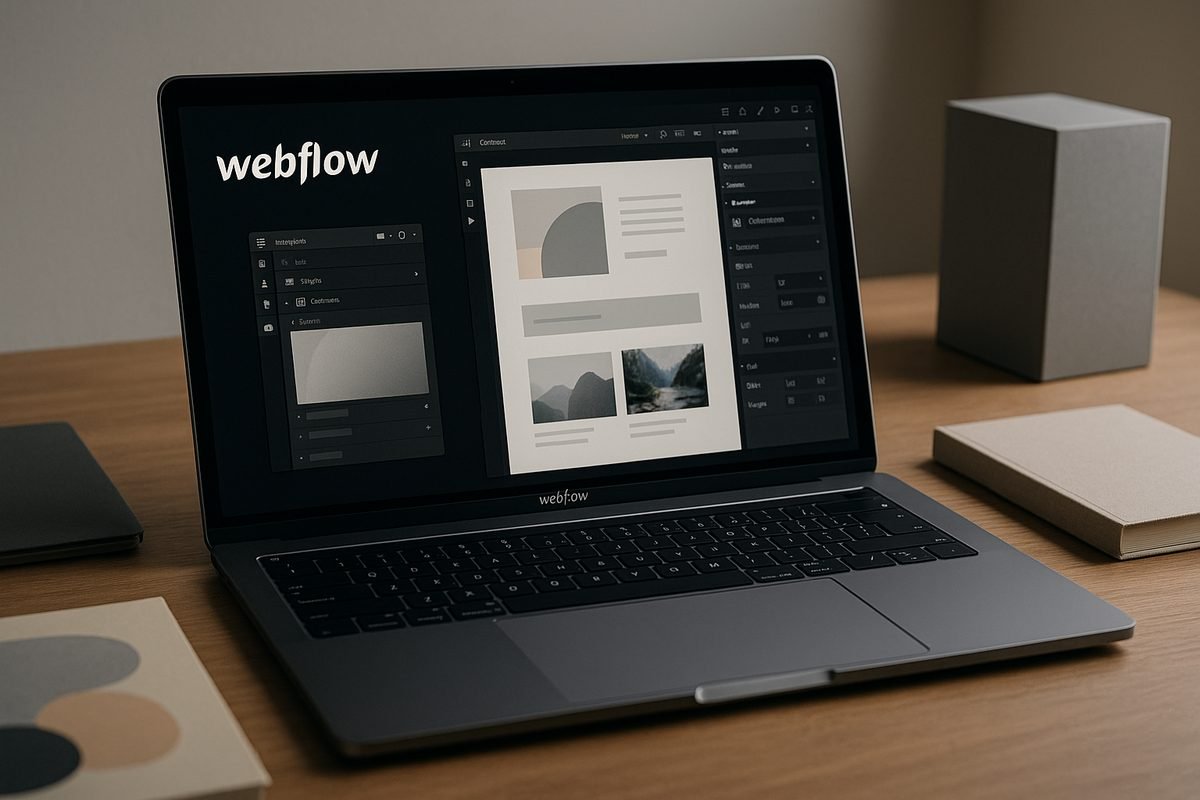
Visual development platform vs traditional website builder
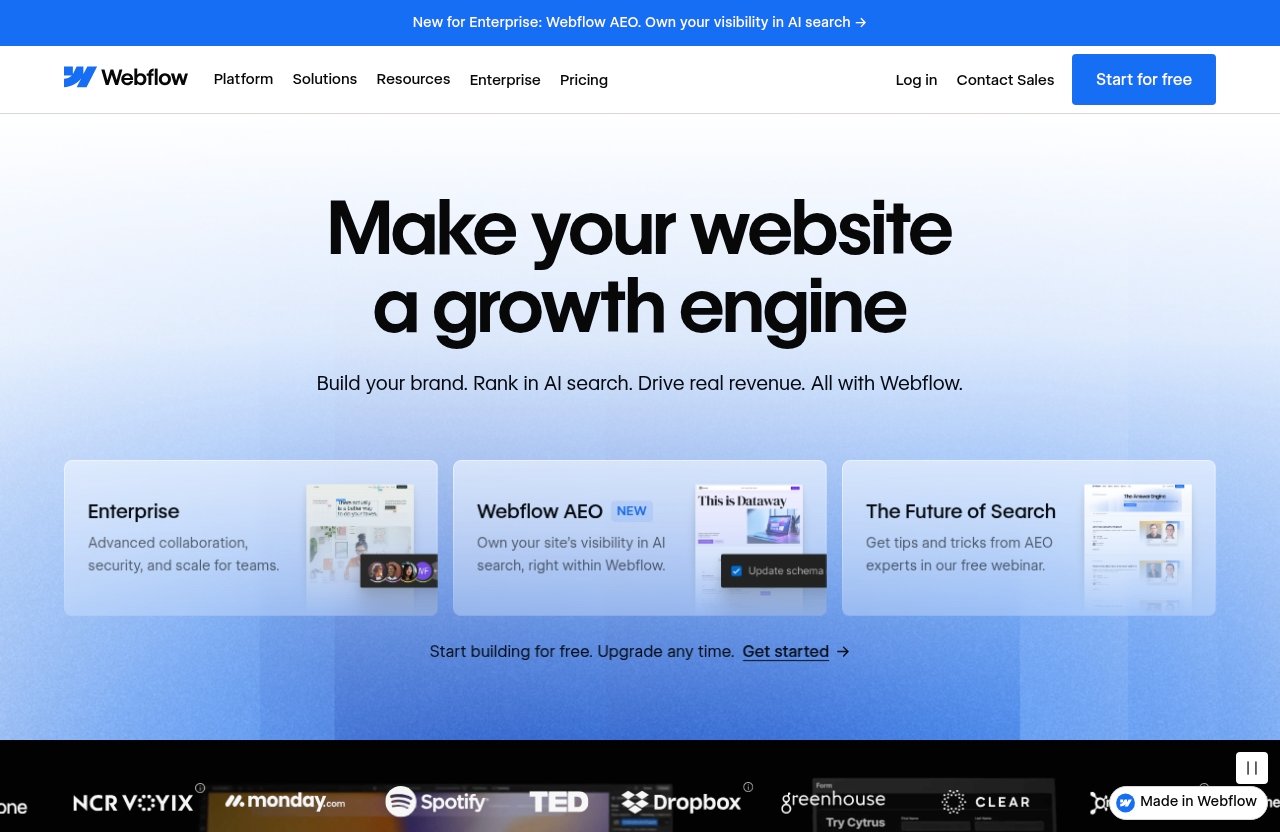
Webflow describes itself as “the agentic web platform for modern businesses.” In plain English, that means it is more than a basic website builder. It gives you a visual way to design and build websites while also supporting CMS content, hosting, optimization, apps, and more advanced team workflows.
A typical drag-and-drop builder starts with simplicity. Webflow starts closer to visual development. You work with layout, spacing, structure, interactions, and reusable design decisions in a way that feels more like building a real front-end system than filling in a template.
That is why this Webflow review treats it differently from beginner-first tools. Webflow can absolutely be used by non-developers, but it rewards users who are willing to learn how web layouts actually work.
Core platform areas: build, manage, optimize, extend
Webflow’s official platform is organized around four areas: Build, Manage, Optimize, and Extend. That structure is useful because it reflects how teams actually operate a website after launch.
The Build area includes Design, Edit content, Interactions, Collaboration, and Page building. These are the features people usually notice first because they shape the look and feel of the site.
Manage includes CMS, Hosting, Localize, Security, and Shared Libraries. Optimize includes Analyze, Optimize, SEO, and AEO. Extend includes Apps, Figma to Webflow, Webflow Cloud, and DevLink.
For this Webflow review 2026, that matters because Webflow is no longer just a design tool. It is positioned as a broader website platform for teams that want to create, manage, optimize, and extend digital experiences.
Why it attracts designers, marketers, and agencies
Designers like Webflow because it offers fine control over layout and visual presentation. Marketers like it because the Webflow CMS and publishing tools can support landing pages, resource hubs, and content-rich brand sites.
Agencies like it because they can build custom-looking websites without handing every small change to a developer. In client work, that can make maintenance easier, especially when the client needs to update content but not redesign the whole site.
This Webflow review is not saying Webflow replaces every developer or every CMS. It is saying Webflow gives design-led teams a serious middle ground between simple builders and fully custom development.
Webflow Pros: Where It Excels
Pixel-level design control
The biggest advantage in this Webflow review is design control. Webflow gives skilled users the ability to create custom layouts, detailed visual systems, and interaction patterns that feel much less boxed-in than many template-first builders.
For example, a portfolio site can have distinct project layouts, custom animations, and rich visual storytelling. A B2B marketing site can have unique hero sections, comparison pages, case studies, and conversion-focused landing pages without looking like every other template.
The tradeoff is that this control requires more thought. You need to understand layout, spacing, responsiveness, and content structure. But if your brand experience matters, that learning curve can be worthwhile.
Built-in CMS and content workflows
The Webflow CMS is one of the main reasons businesses choose the platform. It is useful for blogs, case studies, directories, resource libraries, team pages, landing page collections, and other repeatable content types.
Instead of manually duplicating static pages, you can structure content and publish dynamic layouts. In practice, that makes Webflow especially useful for content-rich sites where design consistency matters.
This Webflow review rates the CMS as a major strength for marketing sites and brand publishing. It is not necessarily the best fit for every complex content operation, but it is strong for teams that want CMS flexibility inside a visual design platform.
Clean code, performance, and SEO-friendly structure
Webflow includes SEO as part of its Optimize platform area, and that is important for businesses building long-term organic visibility. The platform also includes Analyze, Optimize, and AEO, which signals that Webflow is paying attention to how websites are discovered and improved in 2026.
From a practical standpoint, Webflow encourages a more structured build than many purely template-based tools. You still need to make good SEO decisions—clear headings, thoughtful content, internal links, metadata, and fast-loading assets—but the platform gives you a serious foundation.
I would not claim that Webflow SEO automatically beats another platform. Search performance depends heavily on strategy and execution. But this Webflow review finds that Webflow gives capable users enough control to build SEO-friendly pages without relying on a large plugin stack.
Hosting, security, and scaling advantages
Hosting and Security are official parts of Webflow’s Manage area. For many teams, that is a real advantage because they do not want to manage hosting environments, security configuration, or separate infrastructure decisions.
This is especially helpful for marketers and agencies. Instead of assembling hosting, CMS, design tools, and optimization tools from scratch, Webflow packages the core website experience into one platform.
That does not mean Webflow is always the cheapest path. It means the operational burden can be lower. In this Webflow review, that simplicity is one of the reasons Webflow works well for professional sites that need reliable day-to-day management.
Strong ecosystem for teams and agencies
Webflow’s ecosystem includes Apps, Figma to Webflow, Webflow Cloud, and DevLink under its Extend area. It also supports Collaboration, Shared Libraries, and more advanced team capabilities on higher-level plans.
For agencies, this can help connect design, build, and handoff workflows. For internal teams, it can support a more organized publishing process as multiple people contribute to a site.
The ecosystem is not the same as having an unlimited plugin marketplace. Still, this Webflow review sees the ecosystem as a strength for design-led teams that want a cohesive platform rather than a patchwork of separate tools.
Webflow Cons: The Real Friction Points
Steep learning curve for beginners
The most common complaint in almost any Webflow review is the learning curve. Webflow for beginners can be challenging because the platform exposes real web design concepts rather than hiding them completely.
If you do not understand boxes, containers, spacing, responsive behavior, and CMS structure, the editor can feel intimidating at first. It is powerful, but it is not always obvious.
The payoff is control. Once you understand the system, you can build more refined layouts. But if your priority is launching a basic site in an afternoon with almost no learning, Webflow may feel like too much tool.
Costs can rise as needs grow
Webflow offers a free Starter plan and paid plans for more advanced needs. That is helpful for testing, but serious sites usually need a paid plan once you want a custom domain, more pages, CMS capability, or team features.
Official Webflow pricing is in USD, per site, plus applicable taxes at checkout. Basic and Premium pricing is billed yearly, Team requires an annual contract, and Enterprise uses custom pricing.
This Webflow review does not frame the pricing as unfair. Instead, the issue is fit. If Webflow replaces several tools and supports a valuable website, it can make sense. If you only need a tiny low-maintenance site, the cost may feel harder to justify.
Limited native app-store style extensibility
Webflow has an Extend area that includes Apps, Figma to Webflow, Webflow Cloud, and DevLink. That gives users ways to expand workflows and connect Webflow with broader systems.
However, if you are coming from a platform mindset where you expect a huge plugin marketplace for every niche function, Webflow can feel more controlled. Some use cases may require third-party tools, custom work, or a different platform altogether.
This Webflow review sees that as both good and bad. A more controlled ecosystem can reduce clutter, but it can also limit users who want plug-and-play solutions for highly specific needs.
Ecommerce and advanced customization tradeoffs
Webflow ecommerce can be appealing for brands that care heavily about custom storefront design. If the visual experience is central to the brand, Webflow’s design strengths are attractive.
The caution is that ecommerce decisions should be made carefully. Stores often need specific checkout flows, inventory processes, fulfillment requirements, promotions, integrations, and scaling considerations.
Because the provided verified product facts do not list detailed ecommerce plan features or limits, this Webflow review will not overstate what Webflow ecommerce includes. The practical advice is simple: review your selling workflow closely before choosing Webflow for a serious store.
Team and enterprise complexity
Webflow can support growing teams, but larger organizations need to think carefully about governance, workflows, permissions, compliance, and support expectations. The Team and Enterprise plans are designed for more complex needs, but that also means more planning.
The Team plan includes capabilities like Site & Workspace, Webflow Localize, AEO agents, publishing workflows, single-page publishing, site activity log & API, foundational governance, enhanced security & compliance, and priority support.
Enterprise adds enterprise-ready scale, granular permissions, custom roles, advanced governance, secure integrations, a dedicated account manager, enhanced SLAs, and custom configurations. This Webflow review sees those as serious business features, but they are not casual add-ons for small projects.
Webflow Pricing Explained
Starter plan
The Starter site plan is free. It is intended for exploring and experimenting, which makes it the best place to begin if you are unsure whether the platform feels right.
The Webflow free plan includes a Webflow.io domain, limited Webflow CMS, 2 static pages, 1 GB bandwidth, 50 form submissions, Webflow AI, MCP server, Webflow Cloud app hosting, and a Free Starter Workspace.
In this Webflow review, the Starter plan is best viewed as a test drive. It is generous enough to learn the interface and try ideas, but it is not meant to be the final home for a serious business website.
Basic plan
The Basic site plan is $15/mo billed yearly. It is intended for simple sites that do not need a CMS.
It includes a custom domain, 300 static pages, 10 GB bandwidth, unlimited form submissions, password protection, Webflow AI, MCP server, Webflow Cloud app hosting, and a Free Starter Workspace.
For a simple brochure site, landing page site, or small business presence without dynamic content, Basic may be enough. In this Webflow review, Basic makes sense when design control matters but CMS content does not.
Premium plan
The Premium site plan is $25/mo billed yearly. It is intended for content-rich sites with robust CMS and traffic needs.
It includes everything in Basic plus Webflow CMS, bandwidth, code components, site search, form file upload, and well-known files.
For many serious users, Premium is where Webflow becomes more compelling. If your site needs a blog, case studies, resources, or repeatable CMS-driven pages, this plan aligns better with Webflow’s core strengths.
Team plan
The Team platform plan is $2,500/mo, with an annual contract required. It is intended for growing teams that need more control without complexity.
It includes everything in Premium plus Site & Workspace, Webflow Localize, AEO agents, publishing workflows, single-page publishing, site activity log & API, foundational governance, enhanced security & compliance, and priority support.
This is not a casual upgrade. In this Webflow review, Team is best suited for organizations where website operations involve multiple stakeholders, controlled publishing, localization, governance, and support requirements.
Enterprise plan
The Enterprise platform plan uses custom pricing. It is intended for organizations needing a flexible and fully customizable solution.
It includes everything in Team plus enterprise-ready scale, granular permissions, custom roles, advanced governance, secure integrations, a dedicated account manager, enhanced SLAs, and custom configurations.
Enterprise is for complex organizations, not typical small businesses. If governance, security, integrations, and organizational control are central buying criteria, Enterprise is the plan to evaluate directly with Webflow.
Which plan gives the best value
The best value depends on the type of site you are building. For experimentation, Starter is the obvious choice. For a simple non-CMS site, Basic is the practical entry point.
For content-driven marketing sites, Premium is likely the most relevant because it adds Webflow CMS and related capabilities. For larger teams, Team or Enterprise may be justified if governance, localization, workflows, compliance, and support reduce operational friction.
This Webflow review recommends starting with the least complex plan that matches your real requirements. Do not pay for enterprise-style capabilities unless your team will actually use them.
Webflow Features That Matter Most in 2026
Design and page building
Design and Page building are core Webflow Build features. For users, that means you can create custom pages and visual systems without relying entirely on rigid templates.
This matters in 2026 because many businesses compete on brand experience, not just information. A startup landing page, a consultant portfolio, and a SaaS marketing site all need to communicate trust quickly.
The design workflow is the reason many people search for a Webflow review in the first place. If you want a site that feels custom and polished, Webflow is built around that need.
CMS and publishing workflows
Webflow CMS is one of the platform’s most important practical features. It supports structured content, repeatable layouts, and easier publishing for content-rich sites.
Publishing workflows become more important as teams grow. The Team plan specifically includes publishing workflows and single-page publishing, which are useful for organizations that need more control over what goes live and when.
In this Webflow review, the CMS and workflow story is strongest for marketing teams, agencies, and businesses that publish regularly. It gives non-developers more control while still preserving a designed system.
SEO and AEO
Webflow’s Optimize area includes Analyze, Optimize, SEO, and AEO. SEO helps with traditional search visibility, while AEO reflects the growing need to structure content for answer-focused discovery.
This does not mean Webflow automatically ranks your site. Content quality, topical authority, technical setup, internal linking, and competition still matter.
But Webflow SEO tools and structure give teams a practical foundation. For a modern brand site, having optimization features inside the platform can reduce dependence on separate tools for basic website improvement work.
AI and app ecosystem
Webflow AI is included in the Starter, Basic, and Premium plan facts provided, along with MCP server and Webflow Cloud app hosting. The broader Extend area includes Apps, Figma to Webflow, Webflow Cloud, and DevLink.
For teams, these features point toward a more connected workflow between design, content, development, and platform extension. I would treat them as productivity enhancers rather than magic solutions.
This Webflow review is intentionally cautious here. AI and app ecosystems can save time, but the quality of your website still depends on strategy, content, design judgment, and implementation.
Localization, governance, and enterprise capabilities
Localization, governance, security, compliance, permissions, and support become much more important as organizations scale. Webflow Localize appears in the Team plan, while Enterprise adds granular permissions, custom roles, advanced governance, secure integrations, enhanced SLAs, and custom configurations.
For a small business, those features may be unnecessary. For a larger organization, they can be central to the buying decision.
This is where Webflow moves beyond “website builder” territory. In this Webflow review, the enterprise capabilities make sense for teams that need brand control, publishing control, and operational structure across a larger web presence.
Free cancellation on most bookings · No hidden fees
Webflow vs WordPress, Wix, and Shopify: How to Think About the Tradeoffs
Design freedom vs simplicity
Webflow vs Wix is often a question of control versus ease. Webflow gives more design precision, while simpler builders may feel faster for users who want fewer decisions.
Webflow vs WordPress is more nuanced. WordPress is known for flexibility and a large ecosystem, while Webflow focuses on visual design control, managed hosting, CMS, and an integrated platform experience.
This Webflow review does not claim one is universally better. The better choice depends on whether you value simplicity, plugin flexibility, custom design control, or operational convenience most.
CMS depth vs plugin ecosystems
Webflow CMS is strong for structured marketing content, blogs, case studies, directories, and reusable layouts. It works especially well when content and design need to stay tightly connected.
WordPress is often associated with a broader plugin ecosystem, which can be useful for niche features. The tradeoff is that plugin-heavy sites may require more maintenance and decision-making.
If you search “Webflow review reddit” or “Webflow review trustpilot,” you will see varied user opinions because people judge the platform against different expectations. A designer, blogger, developer, and store owner may all define “best CMS” differently.
Ecommerce considerations
Webflow vs Shopify is usually about brand design flexibility versus ecommerce specialization. Webflow can be attractive for visually custom storefronts, while Shopify is commonly considered when ecommerce operations are the center of the business.
Because this article is limited to verified Webflow product facts, I will not list unsupported ecommerce features or competitor specifications. The key point is to evaluate your store requirements before committing.
For Webflow ecommerce, ask about your checkout needs, product complexity, operational workflow, integrations, and future growth. If the store itself is the core business engine, test carefully before choosing.
Best use cases by platform
Webflow is strongest for custom marketing sites, content-rich brand sites, portfolios, agency-built websites, and teams that want visual control plus CMS workflows. It fits businesses where the website is both a brand asset and a publishing system.
A simpler builder may be better for users who want speed and ease above all else. A plugin-heavy CMS may suit users who need many niche extensions. A commerce-first platform may suit stores with deep selling requirements.
This Webflow review positions Webflow as the premium design-and-CMS middle ground. It is not the easiest path, but it can be the right path when presentation, structure, and control matter.
Who Should Use Webflow?
Freelancers and solo creators
Freelancers and solo creators should consider Webflow if their website is part of their professional credibility. Designers, consultants, photographers, writers, and creative specialists can benefit from a site that does not feel generic.
The Starter plan lets you experiment for free, while Basic or Premium may fit once the site becomes more serious. If you need CMS content, Premium is the more relevant option.
For this group, the main question in this Webflow review is time. If you are willing to learn the platform, Webflow can give you a more distinctive online presence.
Agencies and service providers
Webflow for agencies is one of the platform’s strongest use cases. Agencies can build custom client sites, create reusable systems, manage content structures, and deliver polished marketing experiences.
Collaboration, Shared Libraries, Figma to Webflow, Apps, and CMS capabilities all support agency workflows. Higher-level plans may also matter when clients need publishing governance, localization, or enhanced support.
This Webflow review sees agencies as a natural fit because they can absorb the learning curve and turn Webflow’s design control into client value.
Marketing teams
Marketing teams should look at Webflow if they need to launch and maintain campaign pages, content hubs, case studies, resource pages, and brand storytelling experiences.
The CMS, SEO, AEO, Analyze, Optimize, and publishing workflow capabilities are relevant here. Webflow can help marketing teams reduce reliance on developers for every content or layout update.
That said, internal ownership matters. A marketing team should have at least one person who understands Webflow well enough to maintain design consistency and avoid messy page builds.
Founders and small businesses
Founders and small businesses should consider Webflow when the website needs to look credible, support growth, and communicate a differentiated brand. A startup, consultant, agency, or local premium service business may get strong value from a polished Webflow site.
Basic can work for simple non-CMS websites. Premium makes more sense when content marketing, case studies, or resource pages matter.
This Webflow review would not recommend overbuying. Start with the site you actually need, not the site you imagine needing three years from now.
Enterprises and complex orgs
Enterprises and complex organizations should evaluate Webflow when governance, localization, permissions, security, compliance, workflows, support, and integration needs are part of the website decision.
The Team and Enterprise plans are built for more complex operational requirements. Enterprise adds custom roles, granular permissions, advanced governance, secure integrations, dedicated account management, enhanced SLAs, and custom configurations.
For large organizations, Webflow is less about “building a website quickly” and more about managing a web platform responsibly.
Who Should Avoid Webflow?
True beginners who want the simplest builder
If you want the easiest possible setup, Webflow may frustrate you. Webflow for beginners is doable, but it is not the lowest-effort path.
The editor expects you to make real design and structure decisions. That is great for control and less great for users who want everything decided for them.
This Webflow review recommends beginners try the free Starter plan before paying. If the interface feels overwhelming, a simpler tool may be the better choice.
Users needing a heavy plugin marketplace
If your website depends on many niche extensions, Webflow may not match your expectations. Webflow has Apps and broader Extend capabilities, but it is not best understood as a massive plugin marketplace.
Some teams prefer an integrated platform with fewer moving parts. Others need endless third-party feature options.
Neither approach is automatically better. The right choice depends on whether your site needs controlled design workflows or broad plug-and-play extensibility.
Teams with very limited budgets
Webflow can be affordable for the right use case, especially when it replaces separate tools or saves implementation time. But teams with very limited budgets should be cautious.
The free Starter plan is for exploring and experimenting. Serious business needs often push users toward paid plans, and larger team requirements can raise costs significantly.
In this Webflow review, budget-sensitive users should define must-have features before choosing. If you only need a tiny static presence, Webflow may be more platform than necessary.
Stores needing highly customized native ecommerce
Webflow ecommerce may work well for some visually driven stores, especially where custom storefront design is important. But stores with highly specific selling operations should evaluate carefully.
Checkout needs, integrations, product complexity, fulfillment workflows, and scaling requirements can make ecommerce platform choice more consequential than design preference alone.
If ecommerce is your primary business model, do not choose Webflow only because the site can look beautiful. Choose it only if the selling workflow also fits.
How I’d Judge Webflow for Your Use Case
Best for portfolio and marketing sites
For portfolios and marketing sites, Webflow is one of the easiest recommendations in this Webflow review. These sites benefit directly from custom design, polished interactions, strong visual hierarchy, and flexible page building.
A designer can showcase case studies with unique layouts. A consultant can build service pages that feel premium. A startup can create landing pages that do not look like generic templates.
If you need a custom-looking site and can handle the learning curve, Webflow is a strong fit.
Best for content-heavy brand sites
Content-heavy brand sites are another excellent use case. The Webflow CMS supports repeatable content models, which helps with blogs, resources, case studies, team profiles, and structured landing pages.
Premium is the plan that most clearly aligns with this need because it adds Webflow CMS and related capabilities. Teams that publish often should also think about workflow requirements.
This Webflow review sees content-rich marketing sites as one of the most balanced fits: enough complexity to justify Webflow, but not so much that the platform becomes strained.
Best for agencies building client sites
Agencies can get strong value from Webflow because they often need to deliver custom design without building every site from scratch in code. The platform supports design, CMS, collaboration, apps, and handoff-friendly workflows.
Webflow for agencies also works because agencies can develop internal systems, reusable patterns, and best practices. That reduces the learning curve over time.
For client projects, the key is scoping. Webflow is excellent for many marketing and brand sites, but agencies should confirm ecommerce, integration, governance, and content needs before committing.
Best for scaling organizations
Scaling organizations should judge Webflow by operational fit. The question is not just “Can it build the page?” but “Can it support the people, workflow, governance, localization, and security needs around the site?”
Team and Enterprise plans are where those requirements become more relevant. Features like publishing workflows, Webflow Localize, activity logs, API access, governance, enhanced security, granular permissions, custom roles, secure integrations, and dedicated support can matter.
This Webflow review recommends a deeper evaluation for scaling organizations. Webflow can be a serious platform choice, but it should be assessed with the same rigor as any important business system.
Final Verdict
Is Webflow worth it in 2026?
Yes, Webflow is worth it in 2026 for the right buyer. It is strongest for custom marketing sites, content-rich brand websites, portfolios, agencies, and teams that want design freedom with built-in CMS, hosting, SEO, AEO, and collaboration capabilities.
It is less ideal for true beginners, very tight budgets, users who want a huge plugin marketplace, or stores with complex native ecommerce requirements. The platform is powerful, but it asks more from the user than a simple drag-and-drop builder.
The final conclusion of this Webflow review is straightforward: choose Webflow if its design control and publishing workflow will create real value for your site.
Recommendation summary
Use Webflow if you want a polished, custom website and are willing to invest time into learning the platform. Start with the free Starter plan if you are unsure, consider Basic for simple non-CMS sites, and look at Premium for content-rich sites that need Webflow CMS.
For teams, Team and Enterprise should be evaluated based on governance, localization, support, compliance, permissions, and workflow needs. Do not buy advanced capabilities unless your organization will actually use them.
If Webflow sounds like the right fit, you can compare the current options directly through Webflow.
Affiliate disclosure note
This article includes an affiliate link to Webflow, which means Drive The Atlas may earn a commission if you choose to sign up through it. That does not change the recommendation.
The purpose of this Webflow review is to help you make a fit-based decision. If you need simplicity above all else, avoid Webflow. If you need professional design control, CMS-driven publishing, and an integrated platform, it deserves a serious look.
Free cancellation on most bookings · No hidden fees
FAQ
Is Webflow free?
Yes. Webflow offers a free Starter site plan intended for exploring and experimenting.
The Starter plan includes a Webflow.io domain, limited Webflow CMS, 2 static pages, 1 GB bandwidth, 50 form submissions, Webflow AI, MCP server, Webflow Cloud app hosting, and a Free Starter Workspace. For a serious business site, you will likely need a paid plan.
Is Webflow hard to use?
Yes, Webflow has a steeper learning curve than simple drag-and-drop website builders. It gives you more control, but that control comes with more design and layout decisions.
Beginners can learn it, especially by starting with the free Starter plan and tutorials. But if you want the simplest possible builder, Webflow may feel demanding.
What is Webflow best for?
Webflow is best for custom websites, content-rich sites, portfolios, marketing sites, agencies, and teams that want design freedom plus built-in CMS and publishing workflows.
It is especially useful when brand presentation matters and the site needs more flexibility than a basic template builder can provide.
Does Webflow have ecommerce features?
Webflow can be used for custom storefront design, and its visual design strengths may appeal to brands that care deeply about presentation.
However, ecommerce buyers should review fit carefully. Consider checkout needs, operational workflows, integrations, scaling tradeoffs, and any limitations before choosing Webflow ecommerce for a serious store.
Is Webflow worth the price?
Webflow is worth the price if you need its combination of design control, CMS, hosting, SEO, AEO, collaboration, and platform management features.
It may not be worth it if you only need a very simple website or have a tight budget. Costs can rise as your site, team, and requirements grow, so choose the plan that matches your real needs.
Related Reading
References
- Webflow homepage
- Webflow plans & pricing
- Marketer Milk – Webflow review
- eComm.design – Webflow review