
Top 10 Mutual Funds & ETFs Providers: The Ultimate 2025 Guide for Smart Investors


Choosing the right Mutual Funds & ETFs Providers is one of the most important decisions investors make when building long-term wealth. In 2026, the bar is even higher: investors expect transparent pricing, dependable performance, broad diversification, and easy access to global markets. The best providers combine low costs with strong research, intuitive platforms, and fund lineups that fit everything from retirement planning to tactical allocation.
This guide highlights the top 10 Mutual Funds & ETFs Providers shaping the market in 2026. From low-cost index fund pioneers to ETF innovators and active-management specialists, each provider brings a different edge. Some focus on passive investing and near-zero fees, while others lean on research-heavy strategies designed to outperform in changing markets. Use this updated review to compare the providers that best match your goals, risk tolerance, and preferred investing style.
One notable shift in the market is how much more integrated the experience has become. Providers are no longer competing on fund menus alone; they’re also competing on analytics, automation, retirement tools, and portfolio guidance. That makes the best platforms in 2026 the ones that help investors not just buy funds, but build better portfolios with less friction.
Quick Summary
Top 10 Mutual Funds & ETFs Providers in 2025

Vanguard – Best Overall Low-Cost Provider
Broad global index fund coverage
Investor-first ownership structure
Strong long-term performance stability

Fidelity – Best for Active + Passive Investing
Advanced research and analytics tools
Excellent active fund performance
Strong retirement planning ecosystem

BlackRock iShares – Best Global ETF Provider
Deep global market diversification
High liquidity and tight spreads
Strong ESG and thematic offerings

Charles Schwab – Best for Beginners
Extremely low-cost index funds
User-friendly tools for beginners
Trusted retirement portfolio builders

State Street Global Advisors – Best for Sector ETFs
Iconic SPY S&P 500 ETF
Strong institutional investor adoption
Robust market analytics platform
T. Rowe Price – Best Actively Managed Funds
High-performance target-date funds
Research-driven portfolio strategies
Reliable long-term fund returns

JPMorgan Asset Management – Best Institutional-Grade Strategies
SmartRetirement lifecycle fund series
Global macro research capabilities
Strong risk-managed investment models

Invesco – Best Smart Beta & Thematic ETFs
Popular QQQ Nasdaq exposure fund
Strong thematic innovation lineup
Quantitatively optimized fund strategies

Franklin Templeton – Best for Global & Emerging Markets
Global multi-asset diversification
Strong fixed-income fund lineup
On-the-ground international research
Dimensional Fund Advisors (DFA) – Best Evidence-Based Investing
Rules-driven systematic strategies
Low-turnover portfolio construction
Academic research-backed performance
Review for each item and
More details


Vanguard remains the benchmark for low-cost investing in 2026. Its investor-owned structure keeps expenses lean, and its lineup still covers the core building blocks most long-term portfolios need. For buy-and-hold investors, few providers combine scale, simplicity, and fee discipline as effectively.
Its appeal is not just about cheap funds. Vanguard’s broad ETF and mutual fund suite supports retirement savers, tax-aware investors, and anyone looking to automate a straightforward, diversified portfolio. If your priority is minimizing drag while staying diversified, Vanguard continues to set the standard.
Open an account today and take advantage of industry-leading expense ratios.

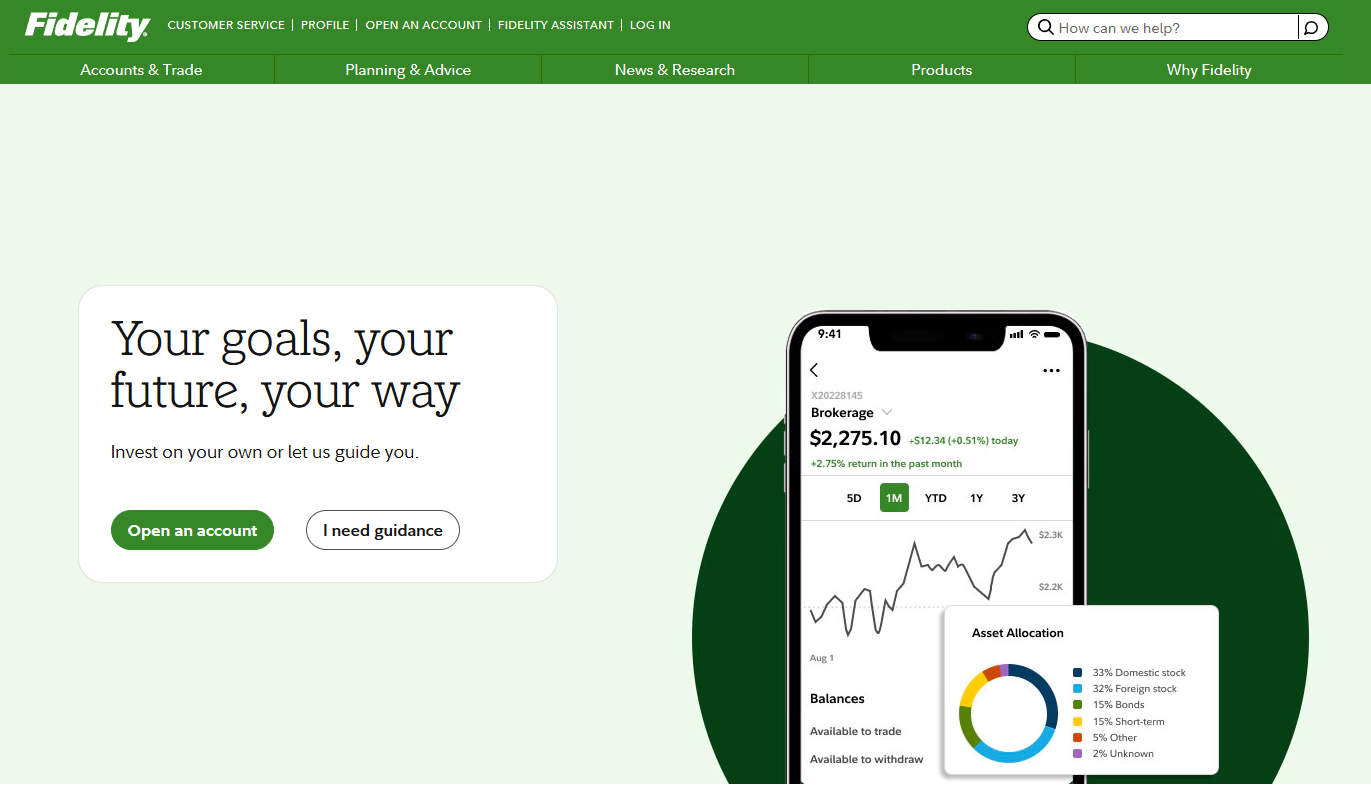
Fidelity continues to stand out in 2026 for investors who want both depth and flexibility. It pairs zero-expense-ratio index options with a powerful active-management platform, giving users a wide range of ways to build a portfolio. That balance makes it especially strong for investors who want to grow over time without outgrowing the platform.
The research tools remain a major advantage. Fidelity’s screeners, analytics, and retirement planning resources give investors more control than many competitors, while its app and desktop experience keep everyday portfolio management straightforward. For investors who value both customization and cost efficiency, Fidelity is one of the most complete choices on the market.
Powerful research tools, and a world-class investment platform designed for every level of investor.


BlackRock, through iShares, remains the world’s largest ETF provider in 2026. With hundreds of ETFs spanning nearly every sector, region, and strategy, it gives investors unmatched global exposure. iShares funds are a frequent choice for institutions and sophisticated retail investors because of their deep liquidity and tight spreads.
From ESG investing to factor-based smart beta strategies, iShares continues to lead in breadth and innovation. Its analytics and market tools help investors evaluate volatility, sector exposure, and portfolio risk with more precision than most peers.
Beginner-friendly tools, and one of the most trusted investment ecosystems in the U.S.

Charles Schwab remains one of the best entry points for new investors in 2026. Its mix of commission-free ETF trading, low-cost index funds, and clear navigation makes it easy to start investing without feeling overwhelmed. That simplicity is a big advantage for people who want a straightforward way to build a long-term portfolio.
Schwab also does a strong job supporting investors as they grow. Automated investing tools, retirement planning resources, and educational content make it easier to move from basic investing to a more intentional strategy. If you want a provider that is easy to understand but still capable of handling a full investing journey, Schwab fits well.
Dversify your portfolio with the world’s most liquid and institution-backed fund lineup.

State Street’s SPDR lineup remains a core option for ETF investors in 2026, especially those who value liquidity and focused exposure. The firm’s flagship SPY ETF still anchors many portfolios, and its sector-based products remain useful for tactical allocation and macro-driven strategies.
For investors who want exposure beyond broad-market funds, State Street offers highly specific ETFs that can be used to tilt a portfolio toward particular industries or themes. That makes it especially relevant for investors who want precision without giving up the scale of a major global provider.
Get started now and invest with one of the most established ETF providers worldwide.

T. Rowe Price is still a strong option in 2026 for investors who want disciplined active management. Its equity, bond, and multi-asset funds benefit from long-tenured managers and a research process built around consistent decision-making rather than market noise.
The firm’s target-date and retirement offerings remain especially relevant for long-horizon investors. While costs are typically higher than the cheapest ETF providers, many investors are willing to pay for the depth of the management process and the consistency of the portfolio approach.
Open an account today and invest with top-tier portfolio managers.

JPMorgan’s asset management division offers mutual funds and ETFs that blend institutional research with retail accessibility. Its SmartRetirement series, income-oriented funds, and multi-asset strategies remain well suited to investors who want a more guided approach.
In 2026, JPMorgan remains especially relevant for investors who want risk-aware growth with professional oversight. The firm’s market commentary, global research, and model-portfolio capabilities continue to make it a strong choice for more sophisticated portfolios.

Invesco stands out in 2026 for investors who want thematic exposure and smart-beta strategies. The flagship QQQ ETF continues to be one of the most popular ways to access Nasdaq growth, while the broader ETF lineup gives investors more ways to target specific market themes.
Its factor-based and innovation-focused products are useful for investors seeking growth with a more rules-driven framework. If you want to blend core exposure with targeted themes like AI or clean energy, Invesco remains a compelling provider to watch.
Open your Invesco account now and target high-growth opportunities.


Franklin Templeton continues to offer standout global and emerging-markets expertise in 2026. Its worldwide research footprint helps it evaluate opportunities beyond the U.S., especially in regions where local knowledge can matter as much as headline valuation metrics.
For investors looking to diversify internationally, Franklin Templeton remains a useful provider for global equity, fixed income, and multi-asset strategies. It is especially relevant for portfolios that want exposure to emerging-market growth alongside broader global diversification.
Start your journey toward disciplined, long-term portfolio growth.

DFA uses academic research to build portfolios based on factors like size, value, and profitability. Its strategies sit between passive and active investing, offering rules-based frameworks designed to capture long-term return patterns rather than chase short-term trends.
Traditionally available mainly through advisors, DFA has expanded access to more investors through ETFs and model-based strategies. The result is a lineup known for low turnover, consistency, and a process-driven approach that appeals to disciplined investors.
Open an account today and invest with fixed-income specialists.
What Are Mutual Funds & ETFs Providers?
Mutual funds and ETFs providers are financial institutions that create, manage, and distribute investment funds. These organizations design investment products that pool money from individuals and institutions, then allocate capital across a defined set of assets such as stocks, bonds, commodities, or sectors. Their responsibility includes portfolio construction, research, risk management, and overall fund performance.
While mutual funds are typically priced once per day and actively managed, ETFs trade on exchanges throughout the day and are often passive or index-based. Providers supply the underlying structure, strategy, and ongoing maintenance that make these investment products accessible to the public.
Why Choosing the Right Provider Matters
Your choice of provider influences fees, long-term returns, diversification quality, and portfolio stability. Different providers offer different specialties:
✅ Low-cost index investing
✅ Actively managed performance strategies
✅ Global market access
✅ Sector-specific or thematic funds
✅ Advanced analytics and research tools
Choosing wisely ensures you’re not overpaying for management, missing diversification opportunities, or investing in funds with inconsistent performance.
Additional Insights: Trends in Mutual Funds & ETFs for 2025
The investment landscape is still evolving in 2026 as providers refine their platforms, expand automation, and compete more aggressively on cost. Several trends are reshaping the role of Mutual Funds & ETFs Providers:
✅ 1. Ultra-Low Expense Ratios
Competition continues to push costs down across major asset classes, giving investors more room to keep returns.
✅ 2. Thematic Investing
Providers continue launching funds tied to disruptive technologies such as AI, robotics, green energy, and biotechnology.
✅ 3. Sustainable Investing (ESG)
Demand for ESG-focused funds remains strong as investors weigh environmental, governance, and social factors alongside returns.
✅ 4. Factor Strategies
Smart beta strategies still blend indexing with quantitative models designed to improve outcomes versus standard benchmarks.
✅ 5. Global Diversification
International and emerging-markets ETFs remain important as investors look beyond U.S. large-cap exposure for broader diversification.
Conclusion
In 2026, the best Mutual Funds & ETFs Providers are the ones that combine low costs, strong fund lineups, and tools that make investing easier to manage over time. Vanguard, Fidelity, and BlackRock iShares remain standout choices, but the right provider for you depends on whether you care most about fees, research, active management, global reach, or beginner-friendly guidance.
Use this expert review to narrow your options based on your goals and investing style. A well-chosen provider can reduce costs, improve diversification, and make it easier to stay disciplined through changing markets. That’s the real edge in building long-term wealth.
Frequently Asked Questions (FAQs)
1. Which Mutual Funds & ETFs Provider is the best overall?
Vanguard remains the best overall due to its low fees and broad market coverage.
2. Which provider has the best ETFs for global diversification?
BlackRock’s iShares offers the most extensive global ETF lineup.
3. What is the best provider for beginners?
Charles Schwab offers a simple platform, low-cost funds, and excellent educational tools.
4. Which provider specializes in actively managed funds?
T. Rowe Price is known for its research-driven active management approach.
5. Are ETFs better than mutual funds?
ETFs offer intraday liquidity and lower fees, while mutual funds offer structured professional management. The best choice depends on your investment strategy.