
Skool Affiliate Program Review 2026: Commission, Payouts, and Promotion Strategy

The skool affiliate program is built for marketers, creators, and community operators who want to recommend a community platform and earn recurring commission when referrals become paying customers. Its official offer is straightforward: refer people to Skool and earn 40% of their monthly recurring revenue for life.
In this independent Skool affiliate review, I’ll separate the verified program facts from practical affiliate-marketing commentary. The real question is not whether recurring commission sounds good in theory—it is whether you can introduce Skool to an audience that genuinely needs a home for paid communities, courses, and live calls.
Official website · Latest pricing & offers
What the Skool Affiliate Program Is
The skool affiliate program lets affiliates refer prospective Skool customers through their referral link. When a referred customer pays for Skool, the affiliate earns 40% of monthly recurring revenue for life, according to Skool’s official affiliate page.
That positioning makes it different from a one-time software referral arrangement. You are not simply promoting a digital product launch; you are introducing a recurring platform subscription to creators and business owners who may continue using it over time.
How the affiliate program works
At a basic level, you share your Skool affiliate link with an audience that could benefit from launching or operating a community. If referred users become paying customers, the program’s stated compensation model is a 40% recurring share of their monthly revenue for life.
Skool also states that if somebody creates a group from your group, it attributes that person to you automatically. That is a notable feature for community-led promotion because it recognizes how platform adoption can spread through group participation, not only through a standard direct link.
For readers who decide that the platform fits their business model, they can explore Skool through this Skool affiliate link. The recommendation should still depend on the audience’s needs, budget, and willingness to build an engaged community.
Who can benefit from promoting Skool
The strongest candidates for the skool affiliate program tend to already speak to people who sell knowledge, host communities, or want more ownership over their audience experience. This can include affiliate marketers, business educators, coaches, course creators, consultants, and newsletter operators.
A generic deal-sharing audience may be less responsive. Skool is easier to recommend when someone already has a specific problem: they are managing a fragmented course experience, need a central community destination, or want to bring members, content, and calls together.
In my experience with software affiliate content, relevance beats reach. A smaller tutorial audience searching for “how to launch a paid community” often has more commercial intent than a broad audience that only wants productivity tips.
Why it stands out in the creator economy
The Skool community platform is positioned around community participation and creator-led education. Its pricing plans include unlimited members, courses, videos, and live calls, which gives affiliates a clear platform story rather than a confusing menu of add-ons.
From an affiliate viewpoint, the skool affiliate program stands out because its core proposition is understandable: help a creator set up a community and content hub, then receive recurring compensation if the customer remains subscribed. That simplicity can make educational promotion easier.
The important caveat is that a simple offer does not eliminate the need for strong positioning. People do not sign up because an affiliate says “recurring commission”; they sign up because they see a credible way to solve a business or audience-building problem.
Skool Affiliate Program Commission Breakdown
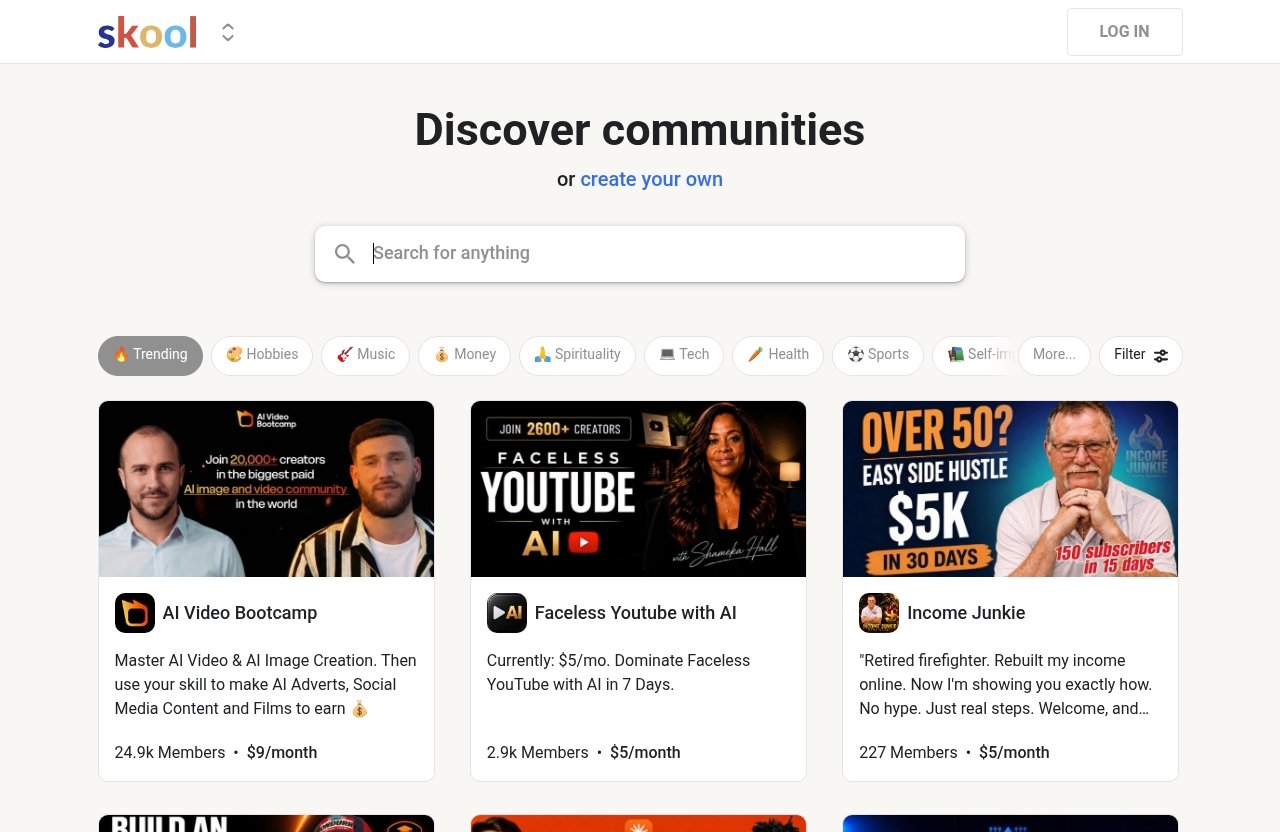
The official Skool affiliate page states that affiliates earn 40% of monthly recurring revenue for life. This is the central financial fact behind the skool affiliate program, and it is more meaningful than a generic promise of “high commissions.”
Because the payout is recurring, the long-term value of a referral depends on whether the customer stays active. That makes traffic quality, onboarding content, and audience fit more important than chasing a high volume of low-intent clicks.
40% recurring commission explained
The official Skool affiliate commission is 40% of monthly recurring revenue for life. In plain terms, if someone you refer becomes a paying Skool customer and continues their subscription, the stated commission continues monthly.
Using Skool’s published monthly prices as a simple illustration:
| Referred Plan | Published Monthly Price | 40% Illustrative Monthly Commission |
|---|---|---|
| Hobby | $9/month | $3.60/month |
| Pro | $99/month | $39.60/month |
These figures illustrate the stated Skool commission 40% structure using the listed plan prices. They are not income forecasts, and actual affiliate results depend on valid referrals, customer retention, and the program’s applicable terms.
A portfolio of customers can become more valuable over time, but affiliates should avoid presenting that as guaranteed passive income. A recurring model rewards customer longevity; it does not create it automatically.
Lifetime attribution and how it works
For the skool affiliate program, Skool officially says that if somebody creates a group from your group, it attributes that person to you automatically. This matters because community software can have a network effect: members may experience a group first and later decide to create their own.
That feature is separate from making assumptions about cookies or click-tracking windows. Skool’s official information provided here verifies automatic attribution in the “creates a group from your group” scenario, but it does not establish a general cookie duration, so responsible affiliates should not claim one.
The practical takeaway is simple: build a useful group experience if you operate a Skool community yourself. A well-run community can create product familiarity that a standalone promotional post may not match.
Why recurring payouts matter for affiliates
A recurring skool affiliate payout changes how you should evaluate content investment. A detailed SEO guide or YouTube walkthrough may take longer to produce than a social post, but it can attract high-intent visitors repeatedly if it answers a real platform-selection question.
Recurring commissions also encourage more responsible recommendations. If a customer leaves quickly because the platform was a poor fit, the economic upside disappears. The best incentive is to send people who understand what they are buying and are prepared to use it.
For that reason, I would treat the program as a relationship-based affiliate opportunity. Promote implementation, not just registration: explain how communities work, who should use them, and what a prospective owner needs to do after joining.
Skool Pricing and Product Facts You’re Promoting
Before promoting any software platform, an affiliate should know exactly what the buyer sees. The skool affiliate program is easier to promote ethically when your content accurately reflects the official plans, features, and transaction fees.
Skool’s official pricing page shows simple pricing, Monthly and Yearly toggles, and a “2 months free!” note. It does not make sense to invent annual plan totals where official pricing details have not been confirmed, so this review focuses on the published monthly prices.
Official Hobby plan features
Skool’s Hobby plan is listed at $9 per month. The plan includes unlimited members, unlimited courses, unlimited videos, unlimited live calls, a custom URL, and affiliates, with a 10% transaction fee.
For affiliates, Hobby creates a low-entry-price discussion point for people who want to test the platform. It may appeal to newer creators who need a community and content setup without beginning at the higher Pro price point.
However, be precise when discussing the affiliates feature. Skool’s help center says the member-referral Affiliates feature for communities is available only on the Pro plan, not the Hobby plan. In other words, do not imply that a Hobby community can set up that Pro-only member referral mechanism.
Official Pro plan features
The Pro plan is listed at $99 per month. It includes unlimited members, unlimited courses, unlimited videos, unlimited live calls, a custom URL, and affiliates, with a 2.9% transaction fee.
The Pro plan is likely the more relevant plan for established coaches, paid-community operators, and businesses that need the lower published transaction fee. It is also the verified plan for community owners who want to use Skool’s Affiliates feature to let members refer others.
When explaining Skool pricing 2026, avoid framing either plan as universally “better.” Hobby and Pro are different business decisions. The appropriate choice depends on a creator’s revenue model, community goals, and need for member referrals.
Why pricing matters for conversion
Pricing is central to the skool affiliate program because it affects both buyer objections and the potential recurring commission. The $9 Hobby plan may reduce the barrier for experimentation, while the $99 Pro plan provides a different value conversation for operators with more established monetization needs.
A useful content angle is to help readers identify which plan category fits their stage. Instead of declaring that everyone needs Pro, explain the verified difference in transaction fees and the Pro-only member referral feature.
Transparent pricing coverage also builds trust. Visitors are more likely to use your Skool affiliate link when they feel you have addressed the cost, not hidden it behind vague claims about growth or community success.
Is the Skool Affiliate Program Worth It in 2026?
Is the skool affiliate program worth it? For affiliates with an audience of creators, educators, coaches, and community builders, it can be a strong program because the offer aligns with a clear operational need and pays recurring commission.
For marketers without that audience or without a plan to create useful educational content, it may be less compelling. A 40% recurring structure is attractive, but it cannot compensate for poor audience-product fit.
Best-fit audiences
The ideal prospects are people actively considering how to host a community, organize courses, publish videos, run live calls, or monetize an audience. They may already be using disconnected tools and looking for a more centralized member experience.
This means the skool affiliate program is especially suitable for affiliates who publish content around creator tools, online coaching, digital education, paid memberships, or audience building. Their visitors already understand the problem, so the promotion can focus on solution fit.
You can also reach potential users through adjacent topics. Examples include launching a cohort, moving a community off social media, packaging expertise into a course, or selecting a platform for a paid mastermind.
Earning potential realities
The potential of the skool affiliate program comes from recurring monthly revenue, not from a promised one-time windfall. At the listed $9 Hobby price, 40% is a modest monthly amount per active referral; at the listed $99 Pro price, the same percentage produces a larger monthly amount.
Neither figure tells you what you will earn. Conversion rates, plan selection, retention, audience trust, content quality, and compliance with program terms all affect outcomes. Anyone promoting Skool responsibly should avoid screenshots or income claims that cannot be independently verified.
My practical view is that the model rewards patience. A useful review, comparison, or tutorial can keep generating relevant visits, while accumulated referrals can make the content more valuable than a short-lived promotional campaign.
Where the offer is strongest and weakest
The skool affiliate program is strongest when the audience has an existing need for a community platform. It is also strong when you can demonstrate the product in context, such as showing how a coach might organize a course, community discussions, and calls in one member destination.
It is weaker as a broad “make money online” promotion. Those audiences often attract curiosity clicks instead of people ready to operate a community, which can produce low-quality referrals and weaken your credibility.
The offer also relies on customer retention. If a referral does not launch, monetize, or maintain their community, they may not remain subscribed. That is why onboarding-oriented content is generally more sustainable than hype-heavy acquisition content.
Official website · Latest pricing & offers
Best Ways to Promote Skool Without Looking Spammy
The best skool affiliate program promotion does not begin with the commission. It begins with the prospect’s business problem and gives them enough information to decide whether Skool is relevant.
This approach is both better for readers and more durable for affiliates. Helpful content earns attention; repeated promotional links without context usually do not.
Educational content first
Create content that helps someone make a platform decision. A guide such as “How to choose a community platform for a paid coaching program” gives you room to discuss requirements, trade-offs, pricing, and implementation.
Then introduce Skool only where it fits the discussion. Explain its published ability to support unlimited members, courses, videos, and live calls, rather than claiming that it is the best solution for every creator.
Educational content can also answer high-intent questions: how to build a paid community, how to deliver a course with a member group, or how to prepare content before launch. These topics attract people with a reason to evaluate software.
Tutorials, comparisons, and case studies
Tutorials are one of the strongest Skool affiliate marketing formats because they reduce uncertainty. A beginner walkthrough can cover the decision process, group setup considerations, plan differences, and the practical work of inviting members.
Comparison posts can work well too, provided they are fair. Compare workflow categories—community, courses, videos, live calls, transaction fees, and referral capability—rather than inventing feature claims about competing platforms.
Generic hypothetical scenarios can make a review more useful without fabricating results. For example, explain how a coach with recurring members may assess the Pro plan’s 2.9% transaction fee and Pro-only member referral feature, while a newer creator may first consider Hobby’s $9 monthly price.
Email, YouTube, SEO, and social distribution
Email works best when it is tied to a useful lesson, such as a checklist for choosing a paid-community platform. A short email can introduce the issue, link to a full guide, and disclose that you may earn a commission if readers use your referral link.
YouTube is effective for search-driven walkthroughs and platform comparisons. Show the decision framework, narrate what features matter, and direct viewers to a supporting article that includes current verified details.
SEO content is often the most durable channel for a Skool affiliate review because it can reach readers already comparing options. Social distribution can extend that content, but avoid copying the same sales pitch into every post; share practical clips, checklists, and lessons that point back to the full resource.
Pros and Cons of the Skool Affiliate Opportunity
A balanced skool affiliate program review should make the advantages and limitations equally clear. The program has a compelling recurring structure, but it works best for marketers who can earn trust with a relevant audience.
Main advantages
The clearest advantage is the official 40% monthly recurring revenue for life structure. This aligns affiliate compensation with ongoing customer use rather than a single initial transaction.
Another strength is product clarity. Skool’s published plans communicate a straightforward platform purpose, and both listed plans include unlimited members, courses, videos, live calls, and a custom URL.
Finally, the automatic attribution statement for people who create a group from your group is potentially valuable for operators who build communities themselves. It gives community-led adoption a place in the affiliate model.
Potential drawbacks
Recurring commissions depend on retention, so affiliate revenue can change if referred customers stop paying. This is not unique to Skool, but it should shape your expectations.
The price difference between Hobby and Pro also means not every referral has the same commission value. Affiliates should not push a higher-priced plan when it does not fit the buyer’s current needs.
There is also a learning curve in quality promotion. A basic referral post may generate clicks, but stronger outcomes usually require tutorials, honest comparisons, and content that helps customers use the platform after joining.
Risk factors to consider
The biggest risk in the skool affiliate program is treating it as a shortcut instead of a relevant recommendation. Low-intent traffic can hurt conversion performance and reduce audience trust, especially if your messaging overstates earnings or platform suitability.
Do not claim unverified payout thresholds, cookie durations, annual prices, bonuses, or special terms. A trustworthy review should stay close to official information and clearly label personal opinion as opinion.
You should also disclose your affiliate relationship. A plain statement that you may earn a commission if someone signs up through your link is usually more credible than trying to hide the commercial relationship.
How to Maximize Conversions as a Skool Affiliate
To improve results with the skool affiliate program, match the content format to the visitor’s stage of awareness. Someone searching for pricing needs facts and plan context, while someone searching for “how to start a community” needs education before they are ready to choose a platform.
The goal is not to force a conversion. It is to make the next step logical for people who have already determined that Skool may fit their business.
Match the offer to the right intent
High-intent keywords include searches around Skool pricing, community platform reviews, course-community tools, and starting a paid membership. These searchers are closer to making a decision than people looking for generic affiliate opportunities.
Build individual pages for distinct questions. One page can focus on pricing, another on community-platform comparisons, and another on practical setup guidance. This helps the visitor land on information relevant to their exact concern.
A well-positioned skool affiliate link should appear after you have explained who the platform is for, what the official plans cost, and what the key limitations are. Context is more persuasive than aggressive placement.
Use proof and demos
Proof does not have to mean unverified revenue screenshots. Better proof includes a clear screen-based tutorial, a practical checklist, accurate plan tables, and a transparent explanation of how an affiliate relationship works.
If you use Skool personally, share only what you can substantiate from your own experience. Discuss navigation, content organization, or the setup process without turning normal observations into claims about universal results.
Demos are especially helpful because community software can feel abstract before someone sees the workflow. Focus on the buyer’s likely tasks: organizing content, inviting members, hosting live calls, and deciding whether the plan structure suits their model.
Build a content funnel
A simple content funnel for the skool affiliate program can start with broad educational content, move to comparison or implementation guides, and end with a current pricing-focused review. Each asset should answer a different question rather than repeating the same pitch.
For example, a YouTube video on launching a paid community can link to an article about platform selection. That article can then link to a Skool pricing guide and your referral destination for readers who want to evaluate the platform directly.
Use email to continue helping rather than repeatedly resending the same offer. A short sequence about community positioning, member onboarding, and content planning can naturally introduce Skool to subscribers who reach the software-selection stage.
Who Should Promote Skool vs. Skip It
The skool affiliate program is not equally suitable for every publisher. Affiliates should assess their audience, content capabilities, and comfort with promoting a recurring software subscription before adding it to their portfolio.
Ideal affiliate profiles
Skool is a sensible fit for creators who teach creators, marketers who cover online business tools, and consultants who help clients launch memberships, communities, or educational products. It can also suit operators with an existing audience interested in monetizing expertise.
The most effective affiliates are likely to have trust-based distribution: a useful blog, YouTube channel, email list, engaged social following, or their own community. These channels make it possible to explain the platform rather than merely drop a link.
If you already help people solve community-building problems, the skool affiliate program can be a natural extension of your existing content.
When another program may fit better
Consider another offer if your audience is primarily looking for low-cost consumer products, physical goods, or unrelated business services. Forcing community software into an irrelevant content niche is unlikely to help readers or create sustainable commissions.
You may also want a different program if you only want one-time payouts or do not plan to create educational content. Recurring software programs work best when you are willing to support the buyer journey with helpful resources.
Skool may not be the right recommendation for every creator either. A buyer’s workflow, pricing sensitivity, and desired community model should guide the decision.
Decision checklist
Use this checklist before promoting Skool:
| Question | Good Sign for Promotion |
|---|---|
| Does my audience include coaches, creators, or community builders? | Yes |
| Can I create tutorials, reviews, or comparison content? | Yes |
| Can I explain the published plan differences accurately? | Yes |
| Am I prepared to disclose affiliate relationships? | Yes |
| Would I recommend the platform without a commission? | Yes |
If most answers are no, the skool affiliate program may not be the best match. A narrower, more audience-specific affiliate offer could produce better outcomes and protect your editorial credibility.
Final Verdict on the Skool Affiliate Program
The skool affiliate program is a credible recurring affiliate opportunity for marketers who serve creators, coaches, course sellers, and community builders. Its official 40% monthly recurring revenue for life model is attractive, while the platform’s published plans give affiliates concrete features and pricing to discuss.
Short answer
Is Skool affiliate program worth it? Yes—when you have relevant, trust-driven traffic and a practical content strategy. It is less suitable for affiliates looking for instant results from generic promotional posts.
The strongest approach is to make the platform decision easier for prospective users. Explain what Skool offers, who each plan may suit, and why recurring community-platform economics depend on retention and genuine member value.
Recommendation by audience type
For creator-tool bloggers, YouTube educators, newsletter publishers, coaches, and community consultants, the skool affiliate program is worth testing through tutorials, comparison pages, and transparent reviews. The offer has a clear connection to their audience’s needs.
For broad discount sites, unrelated influencers, or marketers unwilling to produce helpful content, it is probably not the best first choice. The product requires more explanation than a simple impulse purchase.
Next step CTA
If Skool appears aligned with your audience and content strategy, review the official pricing and affiliate details before promoting it. Readers who want to explore the platform can use the referral link provided in this review, but should choose a plan based on their actual community and business needs.
Official website · Latest pricing & offers
FAQ
How much does the Skool affiliate program pay?
The official skool affiliate program pays 40% of monthly recurring revenue for life. Using Skool’s published monthly prices as an illustration, 40% of the $9 Hobby plan is $3.60 per month, while 40% of the $99 Pro plan is $39.60 per month.
These are simple commission illustrations, not guaranteed affiliate earnings. Your results depend on qualified referrals, valid tracking, customer plan choice, and how long referred customers remain subscribed.
Is the Skool affiliate program worth it?
The Skool affiliate program can be worth it for creators and marketers with an audience interested in communities, courses, coaching, or audience monetization. The recurring commission model is appealing, but results depend on audience fit, trust, content quality, and customer retention.
It is not a guaranteed-income opportunity. The best affiliates help potential customers make a well-informed platform decision instead of relying on hype.
How does attribution work in Skool’s affiliate program?
According to Skool’s official affiliate page, if somebody creates a group from your group, Skool attributes that person to you automatically. This is particularly relevant for community owners, because people who experience a group may later decide to create one themselves.
Do not assume additional attribution rules, cookie periods, or tracking terms unless they are confirmed in Skool’s official documentation.
What are the official Skool pricing plans?
Skool lists a Hobby plan at $9 per month and a Pro plan at $99 per month. Both published plans include unlimited members, unlimited courses, unlimited videos, unlimited live calls, a custom URL, and affiliates.
The Hobby plan has a 10% transaction fee, while the Pro plan has a 2.9% transaction fee. Skool’s pricing page also shows Monthly and Yearly toggles and a “2 months free!” note, but this review does not assign an unverified annual price.
Can members refer others in Skool communities?
Yes. Skool’s help center says members can refer others through the Affiliates feature. However, owners and admins cannot refer people to their own groups.
The same help-center guidance states that the Affiliates feature for community member referrals is available on the Pro plan, not the Hobby plan.
Related Reading
- Skool deals and pricing tips
- Systeme.io Affiliate Program Review 2026
- Taplio Personal Branding: A Complete Guide
References
- Affiliate program – Skool
- How to set up member affiliates for your community? – Skool Help Center
- How to refer other members to a community and earn affiliate commissions? – Skool Help Center
- Skool: Pricing