Genki Grips Review (2026): Switch Ergonomics & Features Explained
When deciding whether to modify your handheld console setup, genki grips represent an ergonomic accessory designed by Genki (Human Things Inc.) to improve handling, comfort, and grip stability during extended mobile play sessions on Nintendo Switch hardware. Handheld consoles feature flat, compact profiles that can lead to palm and finger fatigue over long sessions, making external grip attachments an essential consideration for mobile players.
Affiliate disclosure: This article may contain affiliate links. If you buy through them, we may earn a commission at no extra cost to you. Details were checked on November 19, 2026 and can change.
Official website · Latest pricing & offers
Quick Answer: Are Genki Grips Worth It for Nintendo Switch?
For players who spend significant time using their console in handheld mode, grip accessories often solve the common issue of hand cramping caused by flat Joy-Con contours. Genki is well regarded in the portable gaming hardware space for functional industrial design, and their grip offerings aim to bridge the gap between pocketable portability and traditional controller ergonomics.
- Primary Purpose: Enhanced palm support and contoured handling for handheld Switch gaming.
- Brand Heritage: Developed by Genki (Human Things Inc.), known for enthusiast hardware like the Covert Dock and ShadowCast.
- Compatibility Scope: Built around Nintendo Switch mobile form factors, complementing standalone Joy-Con handling.
- Purchase Source: Direct from the official Genki storefront with local fulfillment options in regions like the UK and EU.
What Are Genki Grips and How Do They Fit Into the Genki Lineup?
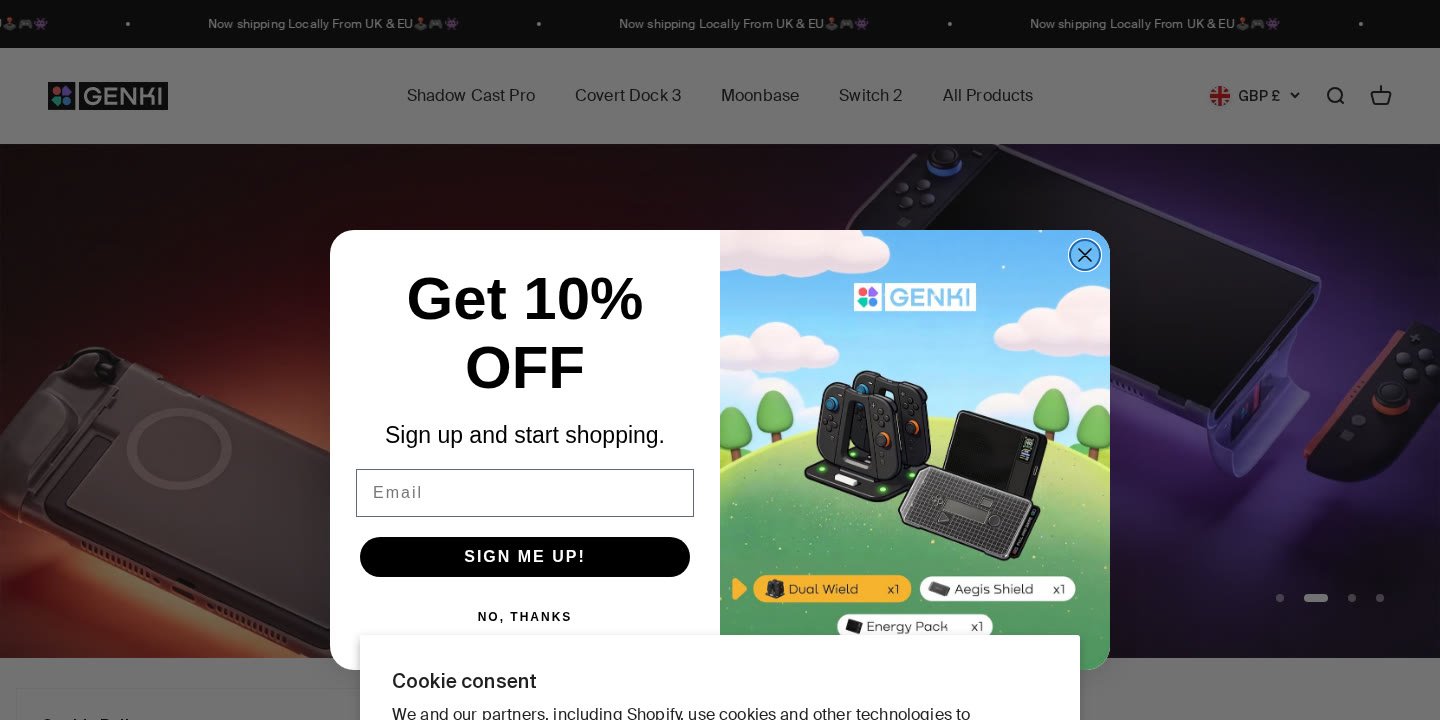
Genki, an accessory brand operated by Human Things Inc., has established a dedicated presence in the portable gaming ecosystem by addressing specific design limitations of hybrid consoles. The company first achieved widespread recognition through compact travel solutions and visual hardware, which we also examine in our comprehensive Genki review.
In the official catalog, products like the Genki Covert Dock and Genki ShadowCast are featured in the brand’s hardware lineup. In contrast, genki grips address physical human-machine interface comfort. The brand’s lineup also includes items such as the Sleeper Case, Saya Carry, Force Field, and Aegis Shield, placing Genki Grips firmly in the category of daily handheld interaction enhancements.
Rather than redesigning the core console, ergonomic grips typically attach to or encase the Joy-Con controllers, adding volume where the player’s palms naturally rest. Because Nintendo’s stock Joy-Con design prioritizes modularity and slim storage over deep ergonomic contours, players with medium to large hands often seek additional bulk to prevent fingers from curling tightly during fast-paced play.
Understanding the Ergonomics and Handheld Comfort of Genki Grips
Ergonomics in handheld gaming relies heavily on neutral wrist alignment and reduced pinch grip pressure. When playing without an ergonomic attachment, the user must pinch the flat surface of the console between the thumbs on the front controls and the fingers resting against the flat back panel. Over time, this pinch grip puts stress on the thenar muscles (the base of the thumb) and the tendons along the inner forearm.
By introducing rounded palm swells and sculpted finger rests, genki grips aim to shift the holding dynamic closer to a standard home console controller, such as the Nintendo Switch Pro Controller. This design approach yields several mechanical benefits:
- Distributed Surface Contact: Spreads the weight of the console across the entire palm rather than concentrating pressure on the fingertips.
- Relaxed Finger Angles: Keeps index and middle fingers in a natural arc over shoulder buttons (L/R and ZL/ZR), minimizing hyperextension.
- Thumb Positioning: Positions the thumbs at a more natural angle over the analog sticks and directional buttons, aiding precision during prolonged sessions.
- Reduced Drop Risk: Textured or contoured outer surfaces provide more mechanical traction during mobile play, such as on public transit or while reclined.
Official Compatibility: Nintendo Switch and Joy-Con Hardware Support
Hardware compatibility is the most critical technical consideration when choosing gaming grips. Because Nintendo has released multiple hardware revisions—including the original standard Nintendo Switch, the Nintendo Switch Lite, and the Nintendo Switch OLED model, as well as announcements surrounding next-generation hardware—grip dimensions must be verified prior to purchase.
The official Genki website includes disclaimers confirming that their products are designed independently and are not officially affiliated with, endorsed by, or sponsored by Nintendo. Genki explicitly notes trademarks for Nintendo Switch, Joy-Con 2, and Nintendo Switch 2 across their legal documentation and product pages. When shopping on the official store:
- Verify Console Model: Determine whether the grip is engineered specifically for standard Joy-Cons, the slightly wider Switch OLED console body, or the unibody Switch Lite.
- Detachable vs. Fixed: Check whether the grip design allows Joy-Cons to be removed without detaching the entire grip mechanism, or if the grip acts as a full-console cradle.
- Kickstand Access: Examine whether the back panel of the grip leaves the built-in console kickstand accessible for tabletop mode.
- Dock Clearance: Determine whether the console can slide directly into the standard Nintendo dock while the grips remain attached, or if they must be removed before docking.
Because product specifications and production runs evolve, readers should always inspect the exact product listing on the official Genki website to confirm dockability and chassis compatibility for their specific hardware model.
Checking Pricing, Stock Availability, and Regional Storefronts
Pricing for gaming gear can fluctuate based on production runs, regional duties, and localized shipping setups. Genki operates a global direct-to-consumer store with local shipping fulfillment from regional warehouses, including the United Kingdom and the European Union, which helps reduce delivery times and import fees for European customers.
Because Genki frequently updates inventory across its international store switchers—supporting currencies including USD, EUR, GBP, CAD, AUD, and dozens of other localized denominations—exact retail prices and bundle discounts should always be confirmed directly on the official Genki storefront.
| Store Feature | Official Genki Implementation | What Buyers Should Check |
|---|---|---|
| Regional Currency | Dynamic selector supporting 100+ global regions (USD, EUR, GBP, etc.) | Ensure your regional storefront matches your local delivery address. |
| Fulfillment Origin | Local shipping hubs in the UK and EU alongside global fulfillment | Review regional delivery estimates and domestic shipping thresholds. |
| Warranty & Returns | Dedicated official policy pages for refunds, exchanges, and warranty claims | Review the official return window before unboxing or modifying packaging. |
| Clearance / Shop All | Clearance and product category filters available in site navigation | Check whether specific grip colorways or bundles are on standard or final-sale terms. |
How to Choose, Setup, and Inspect Genki Grips Step-by-Step
Proper installation and regular inspection ensure that third-party grip accessories function properly without scratching console plastics or stressing the Joy-Con rail mechanisms. Follow this step-by-step procedure when outfitting your console:
Step 1: Check Model Specifications on the Official Product Page
Before ordering, visit the official Genki storefront and confirm the precise model compatibility listed in the specifications. Check whether the grip supports the original launch Switch, the OLED model, or individual Joy-Con controllers, and note whether replacement inserts or modular grip sizes are included.
Step 2: Clean Joy-Con Rails and Console Contact Points
Dust, grit, and pocket lint trapped between an external grip and the smooth matte plastic of the console can cause micro-scratches over time. Before installing any grip accessory, wipe down the Joy-Cons and back housing using a clean, dry microfiber cloth.
Step 3: Align and Secure Without Excessive Force
Whether the grip uses a snap-on shell mechanism, slide-in rails, or silicone tension sleeves, alignment should be straightforward. Align the grip with the contours of the controller, ensuring that cutouts for buttons, triggers, microphones, and cooling vents match up perfectly. Never force an attachment if you feel stiff mechanical resistance.
Step 4: Verify Full Access to Vents, Ports, and Controls
Once fitted, perform a complete diagnostic check of your hardware interfaces:
- USB-C Charging Port: Ensure standard charging cables seat firmly without hitting the grip frame.
- Intake and Exhaust Vents: Confirm that the top fan exhaust and lower air intake slots are completely unobstructed.
- Trigger Travel: Press L, ZL, R, and ZR to ensure full bottom-out depth without rubbing against the plastic casing.
- Cartridge and Audio Slots: Ensure the headphone jack and game card flap remain fully accessible.
Step 5: Perform an Ergonomic Test Session
Play an action-oriented game for 20 to 30 minutes. Pay attention to whether your hands naturally settle into a relaxed grip, whether the thumbsticks remain easy to rotate, and whether palm fatigue is reduced compared to using bare Joy-Cons.
Evaluating Potential Strengths and Limitations
Like any peripheral, adding grips to a portable system involves structural and functional trade-offs. Weighing these factors helps determine if the accessory matches your specific gaming routine.
Potential Strengths
- Enhanced Handheld Comfort: Deep palm swells decrease the strain required to support the console’s weight during long mobile sessions.
- More Secure Handling: Reduces accidental slippage during travel, commute play, or handheld gaming in bed.
- Seamless Ecosystem Aesthetic: Genki hardware is engineered with consistent, player-focused styling that complements their power and audio accessories.
- Controller-Like Experience: Emulates the familiar grip geometry of a standard console gamepad without requiring separate wireless controllers on the go.
Potential Limitations
- Increased System Bulk: Contoured grips add overall thickness, meaning the console may no longer fit into slim, minimalist travel cases.
- Dock Clearance Constraints: Depending on the grip design and the tight tolerances of the official Nintendo dock, the grip may require partial removal before docking.
- Weight Addition: Adding material to the console increases total carry weight, which may affect ultra-lightweight travel preferences.
Who Should Consider Genki Grips vs. Who Should Skip Them
Every gamer interacts with hybrid consoles differently. Review the profiles below to see if an ergonomic grip aligns with your habits:
Who Should Consider Genki Grips
- Dedicated Handheld Players: Gamers who spend 70% or more of their playtime in mobile or tabletop mode rather than on a television.
- Players Experiencing Hand Cramps: Anyone who feels tension, numbness, or palm aching after 30 to 45 minutes of using stock Joy-Cons.
- Fans of Action, Shooter, and Precision Games: Titles requiring intense analog stick control and rapid trigger actuation benefit significantly from stable palm leverage.
- Travelers and Commuters: Players who frequently game on trains, planes, or buses where dropping a flat console is a constant risk.
Who Should Skip Them
- Exclusively Docked Gamers: If your Switch rarely leaves its television dock, investing in a traditional Pro Controller is a more practical solution.
- Ultra-Minimalist Travelers: Those who rely on ultra-slim sleeves that only hold the bare console without millimeter allowances.
- Players with Very Small Hands: Gamers who find the stock Joy-Cons already comfortably fill their palms might find additional grip volume unwieldy.
What to Look for in Real User Reviews and Customer Feedback
When researching customer reviews and discussion threads on platforms like Reddit, gaming forums, or Trustpilot regarding gaming accessories, it is important to analyze feedback systematically. Because individual hand sizes and play habits vary widely, isolated praise or complaints rarely tell the entire story.
Here are the key factors to focus on when reviewing user discussions about grip hardware:
- Material Longevity: Look for reports on how the plastic, rubber, or textured surface holds up over six to twelve months of daily friction and sweat exposure. Note whether surfaces retain their matte finish or become glossy.
- Tolerance and Fit Precision: Check whether users report any wobbling, creaking, or loose tolerances around the Joy-Con rails, or conversely, if the fit is so tight that it requires excessive force to remove.
- Impact on Joy-Con Latches: Read community feedback regarding whether installing or removing the grip puts pressure on the plastic locking nubs of the Joy-Con rails.
- Docking Experience: Look for candid feedback from owners who use the exact same Switch chassis revision as you. Pay attention to whether the system docks smoothly or if it requires excessive downward force.
- Customer Service Experiences: Review how the manufacturer handles warranty requests, replacement parts, or shipping inquiries when an item arrives damaged.
Accessory Categories: Comparing Grips to Full Cases and Docks
Grips are part of a broader spectrum of console enhancements. Understanding how they compare to alternative accessory categories will help you allocate your budget effectively.
| Accessory Type | Primary Benefit | Key Limitation | Ideal Use Case |
|---|---|---|---|
| Dedicated Ergonomic Grips | Optimal palm contouring and reduced hand fatigue | Adds bulk; may require removal for slim cases or docking | Extended handheld mobile gaming sessions |
| Slim Protective Shells | Scratch defense and drop protection without significant volume | Minimal ergonomic improvement over flat stock controllers | Daily commuting with standard slim carrying sleeves |
| Integrated Battery Grips | Extends console battery runtime while improving grip shape | Significantly heavier than passive plastic or silicone grips | Long-haul flights or off-grid gaming without power outlets |
| All-in-One Travel Cases | Consolidates cables, chargers, and console for transit | Provides zero ergonomic improvement during active gameplay | Storage and transit organization between destinations |
If your primary frustration is physical hand cramping, protective shells and standard travel cases will not solve the underlying issue. In that scenario, dedicated ergonomic grips represent the most direct and effective hardware fix.
Common Setup and Maintenance Questions
To keep your grip hardware in peak condition and ensure long-term comfort, follow these straightforward care recommendations:
- Routine Cleaning: Clean the grips periodically using a slightly damp cloth with mild soapy water. Avoid harsh solvents, bleach, or isopropyl alcohol on rubberized or textured finishes, as chemical solvents can break down soft-touch coatings.
- Storage Practices: When not in use, avoid leaving the gripped console exposed to direct sunlight or inside a hot vehicle, as high heat can warp molded plastics and loosen structural tolerances.
- Cable Compatibility: If you use thick braided cables or right-angle adapters alongside third-party docks, ensure the adapter does not put upward torque on the grip cutout or the console’s internal USB port.
Official website · Latest pricing & offers
FAQ
What are Genki Grips designed for?
Genki Grips are handheld accessories created by Genki (Human Things Inc.) to add ergonomic palm support and physical contouring to flat Nintendo Switch Joy-Con controls, reducing hand strain during mobile play.
Do Genki Grips work with both the original Switch and Switch OLED?
Because the Switch OLED has slightly different outer dimensions compared to the standard model, you should check the official Genki product page for your specific hardware revision before purchasing.
Can I dock my Nintendo Switch while using ergonomic grips?
Dockability depends on the exact model design and the tolerances of your dock. While some slim grips allow docking, many contoured ergonomic designs require detaching the grip before sliding the console into the official dock. Check the official product page for dock-compatibility confirmations.
Where are Genki products shipped from?
According to the official Genki website, the company provides localized fulfillment from regional warehouses in the UK and EU, alongside global international shipping across numerous countries and currencies.
Are Genki accessories officially made by Nintendo?
No. Genki is an independent brand owned by Human Things Inc. Their product packaging and website explicitly state that their accessories are not affiliated with, endorsed by, or sponsored by Nintendo.
How do I clean and maintain my grips?
Wipe the surfaces with a soft, slightly damp microfiber cloth. Avoid using harsh chemical cleaners, alcohol rubs, or abrasive scrubbers, which can degrade soft-touch textures or matte surface coatings over time.
Related Reading
- Genki Review 2026: Switch and Gaming Gear Explained
- Genki Covert Dock Review: Features and Specs Guide (2026)
- Genki ShadowCast Explained: Play Your Console on a Laptop (2026)