
Cloudways Pricing Explained: Plans, Costs, and Value for Money

Cloudways pricing starts at a low entry point for managed cloud hosting, but the exact monthly cost depends on the cloud provider you choose and the server size you need. In simple terms, Cloudways is pay-as-you-go hosting, not fixed-price shared hosting, so a small blog can keep costs modest while a busy ecommerce store may pay much more for extra resources and performance.
That flexibility is the main reason Cloudways is popular. You are paying for managed hosting, cloud infrastructure, security, backups, support, and the convenience of not handling server administration yourself. If you want to compare current plan options directly, the official Cloudways pricing page is the best place to start, and Cloudways’ homepage also confirms the platform’s managed cloud focus.
Cloudways Pricing at a Glance

Cloudways does not use one flat price for everyone. Instead, the monthly bill changes based on the provider and the server configuration you select.
| What affects the price | Why it matters |
|---|---|
| Cloud provider | DigitalOcean, Vultr, Linode, AWS, and Google Cloud all have different base rates |
| Server size | More CPU, RAM, storage, and bandwidth increase the monthly cost |
| Hosting type | Flexible and Autonomous are priced and positioned differently |
| Add-ons | Some extras can increase the total bill |
What Cloudways starts at in 2026
Cloudways’ entry pricing generally starts around the smallest DigitalOcean plan, which is the most affordable route for many new users. Exact pricing can change, so I always recommend checking the live Cloudways pricing plans before you commit.
For commercial investigation purposes, the important takeaway is this: Cloudways cost per month is variable, not fixed. You should expect a low entry price for basic sites, but costs will rise as your traffic and resource needs increase.
How Cloudways pricing is structured
Cloudways sits between you and the underlying cloud provider. You are not buying a shared hosting package with a fixed server stack; you are renting cloud resources through Cloudways’ managed platform.
That means the bill usually reflects:
- Base infrastructure cost from the provider
- Cloudways management layer
- Any active add-ons or higher-resource servers
This model is why Cloudways pricing feels more transparent than many host bundles, but it also means there is no “one best plan” for everyone.
Which cloud providers affect the monthly cost
The provider you choose is a major pricing lever.
- DigitalOcean is usually the cheapest starting point
- Vultr is often competitive and can be appealing for performance-focused users
- Linode is similar to DigitalOcean in positioning
- AWS typically costs more, but offers enterprise-grade infrastructure
- Google Cloud is also premium-priced and best for teams that want that ecosystem
If you are comparing cloudways digitalocean pricing with cloudways aws pricing or cloudways google cloud pricing, the difference is not just cost. You are also trading off infrastructure level, scale potential, and complexity.
How Cloudways Pricing Works
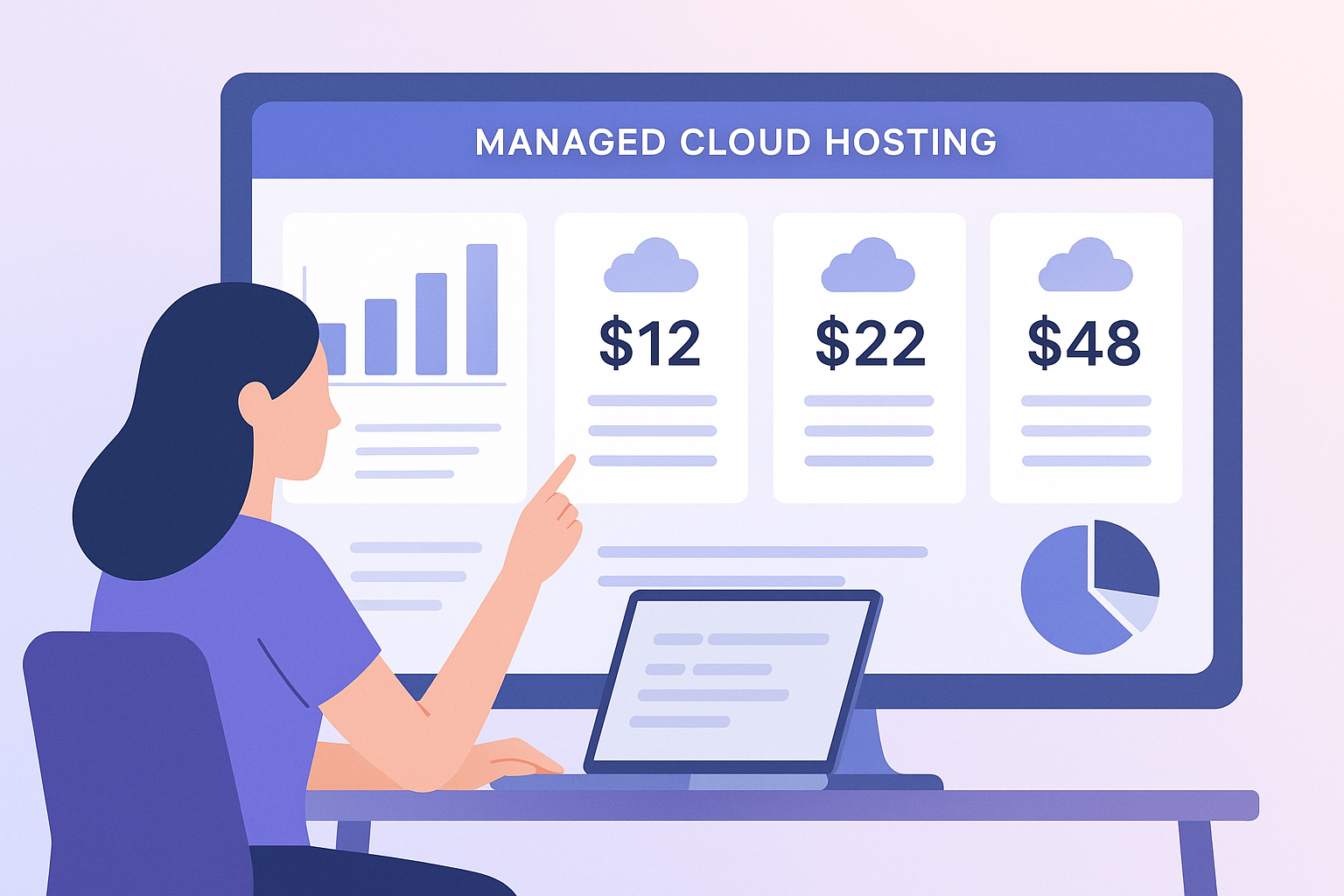
Cloudways pricing can feel confusing at first, but the billing logic is straightforward once you break it down.
Pay-as-you-go billing explained
Cloudways is a cloudways pay as you go platform, meaning you pay for the server you choose rather than a long-term shared hosting bundle. In most cases, that gives you more control over cost and less waste.
For practical buyers, this matters because:
- You are not paying for resources you do not need
- You can scale up when traffic grows
- Your monthly cost should reflect real usage more closely
That said, pay-as-you-go can also become more expensive if you overbuy resources or scale too early.
Server resources that change the price
The biggest price drivers are server specs.
- CPU affects how many tasks your site can process
- RAM helps with speed and concurrent visitors
- Storage matters for images, backups, and databases
- Bandwidth affects transfer volume and traffic handling
A small WordPress blog can often survive on a basic server, but a WooCommerce store or a high-traffic membership site may need significantly more room to breathe. That is where Cloudways wordpress pricing or Cloudways ecommerce pricing can rise quickly.
Add-ons and optional extras to watch
Cloudways can include strong core value, but buyers should still watch for extras that can change the bill.
Common cost factors include:
- Larger server sizes
- Additional team access or business features
- Backup or storage-related usage beyond your comfort zone
- Upgraded support or advanced services where applicable
I like Cloudways because the core pricing is clear, but it is still smart to read the checkout details carefully. Transparency helps, yet it does not remove the need to choose the right configuration.
Cloudways Pricing Plans by Cloud Provider
Below is a practical breakdown of the main Cloudways pricing plans by provider. Exact prices can change, so treat this as a guide and verify live rates on the official site.
| Provider | Entry position | Typical value profile | Best for |
|---|---|---|---|
| DigitalOcean | Lowest-cost option | Strong balance of cost and simplicity | Beginners, blogs, small businesses |
| Vultr | Low to mid-cost | Good performance and flexible sizing | Growing sites, performance-minded users |
| Linode | Low to mid-cost | Similar to DO with solid value | Agencies, developers, business sites |
| AWS | Higher-cost premium option | Enterprise infrastructure and scale | Large projects, demanding workloads |
| Google Cloud | Higher-cost premium option | Strong ecosystem and performance | Advanced users, larger teams |
DigitalOcean plans
DigitalOcean is usually the most budget-friendly Cloudways starting point. If you are comparing cloudways digitalocean pricing, this is often where the best value begins for small WordPress sites.
The appeal is simple: low entry cost, manageable resources, and enough performance for many new sites. I usually see this as the “safe starter” option for bloggers, small service businesses, and anyone who wants Cloudways without a big monthly commitment.
Vultr plans
Cloudways vultr pricing tends to attract users who want a little more performance flexibility without jumping to premium cloud pricing. It can be a strong middle ground for sites that are outgrowing bargain hosting.
Vultr is often a good fit for:
- Growing content sites
- Agency client sites
- Sites where speed matters but budget still matters too
Linode plans
Cloudways linode pricing is another value-oriented choice. In practice, it sits close to DigitalOcean in the minds of many buyers, with a slightly different performance and ecosystem feel.
I’d consider Linode when you want:
- Reliable managed cloud hosting
- Reasonable entry pricing
- A simple path from small to medium-scale hosting
AWS plans
Cloudways aws pricing is usually where pricing jumps noticeably. AWS is premium infrastructure, and that matters if your site has serious traffic, complexity, or reliability needs.
AWS can make sense for:
- Enterprise sites
- Larger ecommerce operations
- Applications that need advanced cloud tooling
But for a modest blog or local business website, AWS is often overkill from a cost perspective.
Google Cloud plans
Cloudways google cloud pricing also sits in the premium tier. Like AWS, it is better suited to teams that want stronger infrastructure and are comfortable paying more for it.
Google Cloud can be worthwhile for:
- Data-heavy projects
- Higher-scale business sites
- Teams that prioritize cloud ecosystem alignment
For most buyers, though, Google Cloud is not the best starting value if budget is a concern.
Cloudways Autonomous vs Flexible Hosting
This is one of the most overlooked parts of Cloudways pricing, and it matters a lot.
What Cloudways Flexible includes
Cloudways Flexible is the traditional managed cloud hosting model most people associate with Cloudways. You choose a cloud provider and a server size, then manage scaling as needed.
The pricing benefit is control. You can start lean and keep costs efficient if your usage is stable.
What Cloudways Autonomous is designed for
Cloudways Autonomous is built for a more automated, high-performance experience. It is designed to simplify scaling and handling demand spikes, which is useful if traffic is unpredictable.
In practical terms, Autonomous is more “hands-off,” but that convenience can come with a higher price than a small Flexible setup.
Which option is better for most buyers
For most readers, Flexible is the better value. It gives you the strongest combination of price control and hosting power.
Autonomous makes more sense if:
- You expect spikes in traffic
- You want less manual server management
- You are willing to pay for automation and scale convenience
For a first Cloudways server, I would usually start with Flexible unless there is a clear operational reason not to.
What You Actually Get for the Price
Cloudways is not cheap in the same way shared hosting is cheap. But you are not paying only for server space; you are paying for a managed layer that saves time and reduces technical burden.
Performance and uptime value
A key reason people choose Cloudways is performance. Managed cloud hosting usually delivers better consistency than budget shared hosting, especially under load.
What that means in practice:
- Faster page loads
- Better traffic handling
- Less site slowdown during busy periods
That matters for SEO, user experience, and revenue. If you run a business site, the extra monthly spend can be easier to justify when downtime or slow performance would cost you more.
Free migration and SSL
Cloudways includes practical value here. Free site migration can save time and reduce setup stress, especially for WordPress users moving from weaker hosting.
SSL is another must-have. Getting it included removes a small but important cost and setup step. If you have ever paid a developer to fix a migration or certificate issue, you know those “small” tasks add up quickly.
Support, security, and backup features
This is where Cloudways often earns its place in the market.
You are paying for:
- Managed support
- Security-focused platform features
- Backups and restore options
- Server monitoring and operational convenience
These services do not sound flashy, but they are part of the real value. For busy site owners, the time saved can be worth more than the raw server cost.
Cloudways Pricing Calculator and Real-World Cost Examples
The Cloudways pricing calculator concept is useful because it helps you think in terms of use case rather than just plan names.
Example cost for a small WordPress site
A small blog or personal site usually does not need a large server. A basic DigitalOcean or Linode setup is often enough to start.
A realistic approach:
- Start with the smallest practical server
- Track traffic and load
- Upgrade only when the site actually needs it
For a small blog, Cloudways can be a good middle ground between cheap shared hosting and expensive enterprise cloud.
Example cost for a growing business site
A local business site with lead forms, service pages, and moderate traffic usually benefits from a step up in resources.
A growing site may want:
- More RAM for smoother backend use
- A faster provider like Vultr or Linode
- Room to scale without migrating again
This is where cloudways pricing plans start to look attractive, because you can grow without rebuilding your hosting stack.
Example cost for an agency
Agencies often care about consistency, client management, and clean scaling. Cloudways can work well because it reduces server administration time while keeping each client site on a stronger infrastructure base.
For agencies, the value is not just the monthly bill. It is the operational savings from fewer hosting headaches, easier migrations, and less server maintenance.
Example cost for an ecommerce store
Ecommerce is where Cloudways pricing becomes more of a business decision than a hosting decision.
A WooCommerce store may need:
- Better CPU and RAM
- Stable uptime during promotions
- Faster checkout performance
- Reliable backups and support
That can make Cloudways worth it, but only if the store is earning enough to justify the higher monthly cost. If sales are still very low, a smaller plan may be the right place to start.
How to estimate annual spend
A simple way to estimate annual cost is:
- Choose the provider and server size
- Multiply the monthly cost by 12
- Add any expected scaling or extra services
This matters because Cloudways is easy to underestimate. A small monthly difference can become meaningful over a year, especially for agencies or portfolio owners managing several sites.
Is Cloudways Worth the Money?
For many users, yes — but not for everyone.
Best value for beginners
For beginners, Cloudways is worth it when they want better performance and support than shared hosting, without going fully into unmanaged cloud hosting.
Best beginner value usually comes from:
- DigitalOcean
- The smallest practical Flexible plan
- A simple WordPress or business site
Best value for agencies
For agencies, Cloudways often offers very good value because it reduces maintenance time. That alone can justify the cost if you are managing multiple sites.
Agencies tend to benefit most when they want:
- Faster deployment
- Less server admin work
- Room to scale client sites cleanly
Best value for ecommerce
For ecommerce, Cloudways can be worth the cost if speed and uptime matter to revenue. The hosting bill may be higher than shared hosting, but the upside is a more stable storefront.
I would especially consider it if your store has:
- Repeated traffic spikes
- Multiple plugins or integrations
- Revenue that depends on page speed
When Cloudways may be too expensive
Here is the honest tradeoff: Cloudways may be too expensive for a very small personal blog, hobby project, or low-traffic site that does not need managed cloud hosting.
If you are comparing Cloudways vs Hostinger or another basic shared host, Cloudways will usually cost more. That is not necessarily bad, but it is a reminder to buy for your real needs, not for theoretical scale.
Cloudways Pricing Pros and Cons
Where Cloudways is competitive
Cloudways is strong when you value:
- Managed cloud hosting
- Transparent server-based pricing
- Flexible scaling
- Good infrastructure choices
For many buyers, that is the sweet spot between cheap shared hosting and complicated self-managed cloud servers.
Where costs can rise quickly
The downside is that pricing can climb as you increase resources or move to premium providers.
Costs can rise because:
- Bigger servers are more expensive
- AWS and Google Cloud cost more than entry providers
- Growth is often a good thing, but it increases the bill
Who should avoid Cloudways
Cloudways may not be ideal for:
- Tiny hobby websites
- Users with extremely tight budgets
- People who only need the cheapest possible hosting
If your main goal is the lowest possible monthly payment, Cloudways will usually lose to budget shared hosting.
How to Save Money on Cloudways
Choosing the right provider
If price matters most, start with DigitalOcean. It is often the cheapest practical option and one of the strongest entries in cloudways digitalocean pricing.
If you need more power but still want value, compare Vultr and Linode before jumping to AWS or Google Cloud.
Starting small and scaling later
This is the simplest way to manage Cloudways server pricing.
- Start with the smallest server that can handle your current site
- Monitor resource usage
- Scale only when needed
Overbuying capacity is one of the easiest ways to waste money on cloud hosting.
Using promotions or affiliate offers responsibly
Cloudways may run promotions from time to time, but these can change and should never be assumed. If you are checking the platform through an affiliate review, use the official site and confirm the live terms before purchasing.
If you want to explore current options, you can check Cloudways here: Cloudways official site. I recommend doing that only after comparing your actual needs against the plan size.
Final Verdict: Which Cloudways Plan Offers the Best Value?
Best value for solo site owners
For solo users, the best value is usually the smallest DigitalOcean Flexible plan. It keeps costs lower while still giving you managed cloud hosting, SSL, backups, and support.
Best value for growing sites
For growing sites, Vultr or Linode often offer the best balance of price and performance. They are usually the most logical step up once a small starter server begins to feel tight.
Best value overall
The best value overall for most readers is Cloudways Flexible on DigitalOcean. It is the strongest mix of affordability, simplicity, and managed hosting value.
If I had to summarize the buying decision:
- Best for beginners: DigitalOcean Flexible
- Best for growing sites: Vultr or Linode Flexible
- Best for agencies: Linode or Vultr Flexible, depending on workload
- Best for ecommerce: A larger Flexible plan or Autonomous if traffic is spiky
Cloudways is not the cheapest host, and that is exactly why it can be worth it. You are paying for a better hosting experience, more control, and less maintenance. For the right site, that is a fair trade, and the official Cloudways pricing page is the best place to verify which plan gives you the most value today.
FAQ
How much does Cloudways cost per month?
Cloudways cost per month depends on the cloud provider and server size you choose. It starts at a lower entry tier and increases as you move to bigger servers or premium providers, because Cloudways uses pay-as-you-go billing rather than one flat fee.
Is Cloudways owned by DigitalOcean?
No. Cloudways is a separate managed cloud hosting platform that offers DigitalOcean as one of several infrastructure providers. It is not owned by DigitalOcean.
What are the cons of Cloudways?
The main cons are higher cost than basic shared hosting, the need to choose resources carefully, and the fact that scaling or add-ons can raise the bill. For very small sites, Cloudways may be more hosting than you actually need.
Is Cloudways a Pakistani company?
Cloudways is a global hosting platform, and it is best described that way rather than as a Pakistan-only company. If you are researching ownership or corporate background, check the company’s official website for the most current information.
References
- Cloudways Pricing & Plans: Simple Managed Cloud Hosting
- Cloudways: Managed Cloud Hosting Platform Simplified
- Cloudways Pricing 2026