
Manual Engagement vs Tweet Hunter: Which X Growth Approach Wins in 2026?

Choosing between manual engagement vs Tweet Hunter comes down to a practical tradeoff: manual work gives you more control, nuance, and personal credibility, while Tweet Hunter is designed to make content creation, scheduling, engagement workflows, and analysis more repeatable.
This page may include an affiliate link to Tweet Hunter. The recommendations here are based on verified product facts and workflow fit—not blanket claims that one approach works for everyone.
Short verdict: manual engagement is better for high-touch relationship building, sensitive conversations, and founder-led networking. Tweet Hunter is better for creators and teams that need a consistent content system, scheduling, analytics, and help with repetitive engagement tasks.
Official website · Latest pricing & offers
Manual Engagement vs Tweet Hunter in 2026: The Short Answer
What each approach is trying to do
The manual engagement vs Tweet Hunter decision is really a choice between time-intensive relationship work and a more systemized publishing workflow. Manual engagement means finding relevant conversations, writing original replies, posting natively, tracking people yourself, and following up when appropriate.
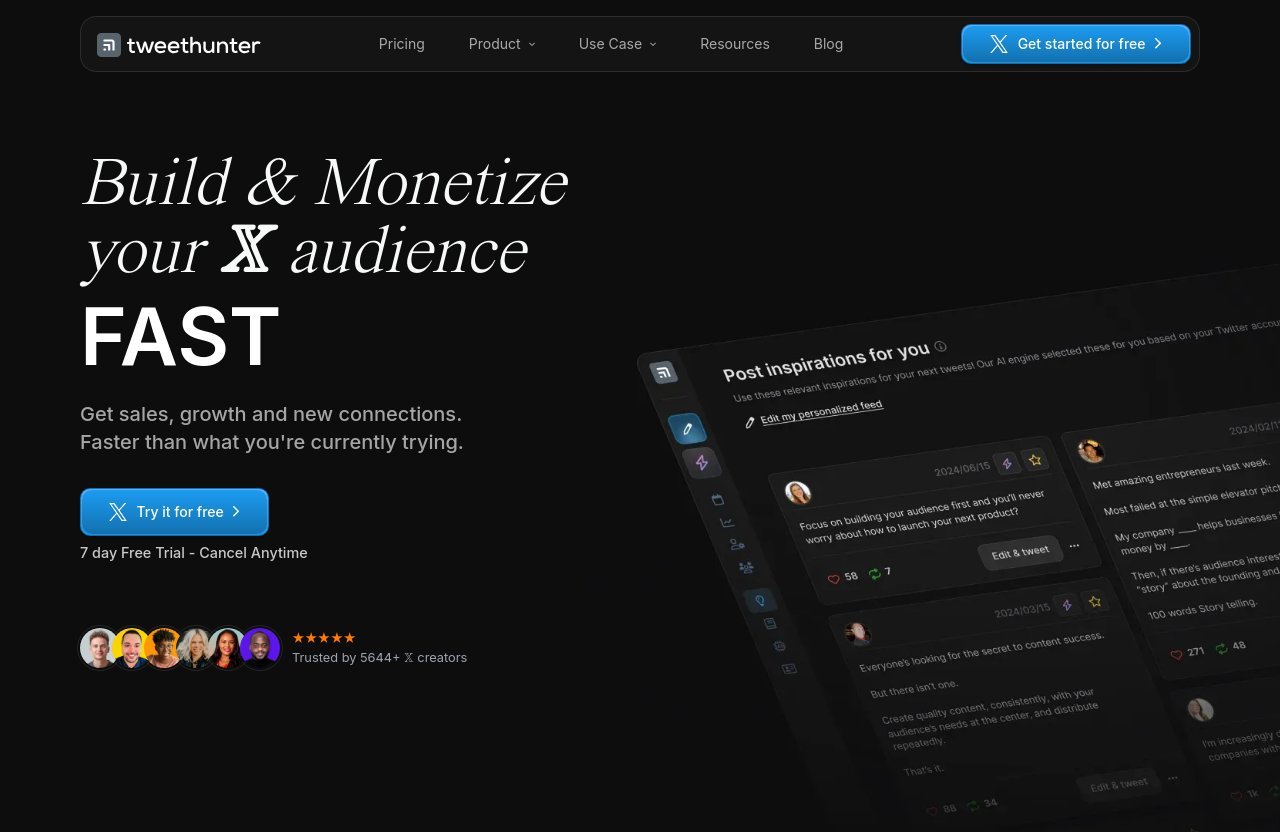
Tweet Hunter positions itself as an X growth tool built to help users build and monetize an audience faster. Its official workflow covers content ideas, faster writing, boosting and automation, engagement and selling, plus analysis and understanding performance.
The best answer is often not “manual or tool.” A strong Twitter engagement strategy can use a tool for organization and repeatable publishing while reserving human attention for the conversations that actually matter.
Who should care about this comparison
Creators, solopreneurs, consultants, small businesses, and agencies all face the same constraint: X rewards consistent, relevant participation, but few people can spend all day researching posts, drafting content, replying, and reviewing results.
If you are weighing manual engagement vs Tweet Hunter, focus on your bottleneck. If your issue is that every post sounds too generic, manual work may be the answer. If you have clear ideas but struggle to publish consistently or evaluate what is working, a structured platform may be the better fit.
What Manual Engagement Actually Looks Like Day to Day
Typical manual workflow on X
Manual Twitter engagement usually starts with a curated list of relevant accounts, topics, customers, peers, and industry conversations. You read posts, add thoughtful replies, save ideas, publish original posts, and revisit discussions when people respond.
A fully manual workflow can also include drafting threads in a document, keeping a spreadsheet of prospects or collaborators, and checking native post performance. Direct messages, follow-ups, and relationship tracking are handled personally rather than through an automated sequence.
For many people, manual engagement vs Tweet Hunter is not a feature debate. It is a question of whether they want to spend their available X time inside conversations or building the systems around those conversations.
Time cost, repetition, and bottlenecks
The main cost of manual work is context switching. You may have to research topics, find examples, write a post, remember when to publish, return for replies, and then manually assess the result.
That process creates useful market awareness, but repetition can become a drag. The same applies to routine tasks such as maintaining a posting cadence, resurfacing evergreen ideas, monitoring recurring account lists, and reviewing X analytics.
A manual-first approach can work well when your account is small or your relationship list is narrow. It becomes harder when your content calendar, audience, offers, or number of managed profiles expands.
Where manual engagement still wins
Manual engagement is strongest when the message needs judgment. A founder responding to a customer concern, an agency handling a client’s brand voice, or a consultant entering a high-value discussion should not treat the interaction as a volume task.
In the manual engagement vs Tweet Hunter comparison, human work wins on context, empathy, and originality. A thoughtful reply that shows you understand the specific post will usually do more for trust than a fast but generic response.
Manual work also has low tool dependency. You are not relying on a separate workflow to remember your voice, your priorities, or your standards.
What Tweet Hunter Is Built to Do
Core workflow: discover, write, schedule, engage, analyze
Tweet Hunter’s official positioning is centered on helping people build and monetize an X audience faster, with an emphasis on growth, sales, and new connections. The platform highlights content ideas, writing support, engagement, automation, selling workflows, and analysis.
For the manual engagement vs Tweet Hunter choice, its core advantage is consolidation. Verified features include access to a library of more than 12 million viral tweets, custom tweet inspirations, tweet and thread scheduling, evergreen tweets, auto-plug and auto-retweet functions, auto DMs, and complete X analytics.
Its higher-level verified features also include daily AI-written tweets, tweet rewriting, help finishing a tweet, thread ideas and hooks, account lists, importing previous tweet and DM interactions, and engaging with tweets from specific lists. The top-level offering adds ghostwriting mode, priority support, and custom trained AI.
The official site also states that users can write 100 high-quality tweets in less than one hour and use advanced AI for automated content generation. Treat that as the company’s workflow claim, not as a guaranteed result for every niche, voice, or campaign.
Why it matters in a 2026 growth stack
A modern X growth tool is most valuable when it reduces administrative friction without replacing strategic thinking. Tweet Hunter can centralize research, content development, scheduling, recurring posts, engagement organization, and reporting in one place.
That is useful for a creator who wants more time to refine ideas, or for an agency that needs a repeatable operating process. It may also appeal to users comparing Tweet Hunter alternatives because it combines several workflow categories rather than addressing just one task.
The key point in this Tweet Hunter review 2026 is simple: the product is not a substitute for knowing your audience. It is a system for making a good content and engagement process easier to sustain.
Head-to-Head Comparison: Manual Engagement vs Tweet Hunter
| Decision factor | Manual engagement | Tweet Hunter |
|---|---|---|
| Content research | Search, save examples, and track ideas manually | Viral tweet library and custom tweet inspirations |
| Writing workflow | Draft from scratch in native X or external documents | AI writing support, tweet rewriting, completions, thread ideas, and hooks on eligible plans |
| Publishing | Publish and revisit posts manually | Tweet and thread scheduling plus evergreen tweets |
| Engagement process | Personally identify and respond to conversations | Tools to engage faster, account lists, and list-based engagement features on eligible plans |
| Repeatable outreach | Personal DMs and follow-ups | Auto DMs with plan allowances |
| Performance review | Native review and manual record keeping | Complete X analytics |
| Account scale | More workload for each additional profile | Plans include one, five, or unlimited X accounts depending on level |
Speed and throughput
The biggest difference in manual engagement vs Tweet Hunter is the number of workflow steps you must do yourself. Manual publishing may be perfectly manageable for a few posts per week, but it becomes demanding when you need a reliable content pipeline.
Tweet Hunter is built to speed up idea generation, drafting, scheduling, and organized engagement. Its pricing page specifically describes the ability to engage with other people five times faster at the base feature level, although the real value will depend on your niche, message quality, and how carefully you use the workflow.
Consistency and posting cadence
Consistency is not the same as posting constantly. It means having a deliberate rhythm that your audience can recognize and that you can maintain without burning out.
With manual posting, missed days often happen because writing, formatting, and timing are all handled in the moment. Tweet Hunter’s thread scheduling and evergreen tweet features provide a more structured way to prepare content in advance.
For manual engagement vs Tweet Hunter, the tool-led option has the clearer advantage in operational consistency. The human-led option has the advantage when you need every post to react to live events or evolving customer feedback.
Personalization and authenticity
No Twitter automation tool can decide whether a reply is genuinely helpful, tactful, or appropriate to the conversation. That remains a human responsibility.
Manual engagement is naturally more personal because you read the full context before you respond. Tweet Hunter can support a faster workflow, but content and messages should still pass through your judgment—especially if your business depends on trust, expertise, or a distinct founder voice.
The practical answer is to automate preparation, not personality. Research, drafts, scheduling, and reporting are often suitable for systems; sensitive replies and key DMs deserve human attention.
Scaling from one account to multiple accounts
A one-person account can often stay manual for longer because the audience knows the individual behind it. Scaling becomes more difficult when you manage brands, clients, regions, offers, or multiple specialists.
The manual engagement vs Tweet Hunter gap widens here. The verified base plan includes one X account, higher-level plans include five X accounts, and the top plan includes unlimited X accounts. That structure is relevant to agencies and teams that need a shared workflow across profiles.
More accounts do not remove the need for brand guidelines. They increase the need for them. Every account should have clear topic boundaries, voice rules, response standards, and review ownership.
Analytics and feedback loops
Manual users can still learn from post results, but the information is often fragmented. It is easy to remember the posts that felt successful and overlook quieter posts that attracted the right audience or customer action.
Tweet Hunter includes complete X analytics, which can help create a more regular review routine. In a manual engagement vs Tweet Hunter workflow, analytics matter because they turn content decisions into a feedback loop rather than a sequence of guesses.
Use analytics to ask better questions: Which themes earn meaningful replies? Which hooks bring profile visits? Which posts attract potential customers rather than only broad reach? The tool can surface information, but you still interpret it.
Official website · Latest pricing & offers
Test-Style Verdict: Which Approach Wins for Different Goals?
Best for brand-building and trust
Winner: Manual engagement. For trust-led brand building, direct participation is difficult to replace. The most valuable replies often respond to a detail, challenge an assumption politely, or add expertise that only a real practitioner can provide.
In the manual engagement vs Tweet Hunter test, use manual work for priority accounts, customer questions, partner conversations, and industry discussions where your name is part of the product. You can still use Tweet Hunter to develop and schedule your original content around that high-touch activity.
Best for lead generation and monetization
Winner: Tweet Hunter, with human oversight. Tweet Hunter officially emphasizes sales, clients, subscribers, and new connections, and it includes engagement and outreach-oriented features such as auto DMs, account lists, and imported interaction history on eligible plans.
That does not mean every prospect should receive the same message. An effective Twitter engagement strategy uses automation to reduce repetitive setup, then applies a human review layer before important outreach and sales conversations.
For manual engagement vs Tweet Hunter, choose the tool-led route if lead generation suffers because you cannot consistently publish, identify relevant conversations, or follow a routine. Choose manual outreach when every deal is bespoke and relationship depth matters more than process volume.
Best for busy founders and solo creators
Winner: Tweet Hunter for most consistent publishers. Founders often have strong opinions and expertise but little time to turn them into a reliable X content system.
Tweet Hunter’s content ideas, viral tweet library, custom inspirations, AI assistance, scheduling, and evergreen content options are designed to reduce the blank-page problem. The result is not automatically better content, but it can give a busy operator more raw material and a clearer production process.
The best manual engagement vs Tweet Hunter setup for a solo creator is usually mixed: plan and schedule posts in batches, then spend a focused daily window replying personally to the few conversations that align with your business.
Best for teams managing multiple X accounts
Winner: Tweet Hunter. Manual coordination gets complicated quickly when multiple people draft posts, review performance, maintain account lists, or handle client approvals.
Tweet Hunter’s account allowances are especially relevant here: one account at the base level, five accounts at a higher level, and unlimited accounts at the top level. Its systems can create more consistency across a team, while complete X analytics gives everyone a common basis for review.
A team should not confuse access with governance. Establish who approves content, who handles replies, and which conversations require escalation before introducing any automated workflow.
The Real Tradeoff: Human Control vs Workflow Automation
Where automation can reduce friction
The strongest case for manual vs automation on X is not “automation does everything.” It is “automation removes avoidable repetition.” Content research, draft creation, post scheduling, evergreen reuse, account-list organization, and regular reporting are all tasks that can consume disproportionate time.
Tweet Hunter offers a system for these functions, including thread scheduling, content assistance, analytics, and selected automation features. Used carefully, this can free up time for strategic writing and real relationship management.
The value of manual engagement vs Tweet Hunter changes when the saved time is reinvested in better thinking rather than simply more output.
Where over-automation can backfire
Over-automation can make an account feel detached from its audience. Generic replies, poorly timed DMs, excessive promotion, or content that does not match the current conversation can weaken the credibility you are trying to build.
Auto DMs deserve particular caution. They may be useful for a clearly stated opt-in, a requested resource, or a simple follow-up process, but they should not replace a genuine sales conversation or customer support response.
Platform rules, audience expectations, and brand risks also change. Review current X policies and make sure any workflow you use aligns with them before activating automated features.
How to keep your account sounding human
Create a voice guide before you scale. Define the topics you cover, claims you will not make, phrases you avoid, how you handle disagreement, and when a team member must step in.
For manual engagement vs Tweet Hunter, use the platform to produce a first draft or queue a post, then edit for specifics: a real observation, a precise example, or a viewpoint that reflects your experience. Avoid publishing AI-assisted text unchanged simply because it is available.
A practical rule is to schedule content in advance but write important replies in the moment. That protects both consistency and relevance.
Pricing and Value: What Tweet Hunter Actually Costs
Monthly vs yearly billing
Tweet Hunter pricing is presented with Monthly and Yearly billing options. The official pricing page states that plans start from $49/mo and offers a free 7-day trial.
Pricing and included features can change, so verify the current details on the official site before purchasing. This is especially important if your decision depends on account limits, outreach allowances, or AI features.
Which plan matches which use case
The base plan includes one X account. Verified base-level features include the 12M+ viral tweets library, custom tweet inspirations, engaging with other people five times faster, tweet and thread scheduling, evergreen tweets, 3,000 auto DMs per month, auto-plug and auto-retweet, and complete X analytics.
Higher-level plans include five X accounts, everything in Discover, 7,500 auto DMs per month, paid partnership labels on posts, daily AI-written tweets, tweet rewriting, tweet completion, thread ideas and hooks, account lists, imported tweet and DM interactions, and engagement with tweets from specific lists.
The top-level plan includes unlimited X accounts, everything in Grow, 15,000 auto DMs per month, ghostwriting mode, priority support, and custom trained AI. In the manual engagement vs Tweet Hunter decision, the right level depends on whether you are managing one account, several accounts, or an agency-scale workflow.
When the tool pays for itself
A tool pays for itself only when it solves a real constraint. If you publish irregularly, spend too long searching for content angles, or need centralized X analytics, Tweet Hunter may have practical value.
If your X strategy is occasional, conversational, and highly bespoke, manual engagement may remain more economical. The right calculation is not just financial—it is whether the system saves time without lowering the quality of your public interactions.
How to Choose Between Manual Engagement and Tweet Hunter
Choose manual if…
Choose manual engagement if your success depends on nuanced conversations, limited but high-value relationships, or a deeply personal founder brand. It is also the better starting point when you are still learning what your audience cares about.
The manual engagement vs Tweet Hunter question should favor manual work when you do not yet have a repeatable content process. First learn your best topics, objections, and audience language; then decide which recurring tasks are worth systemizing.
Choose Tweet Hunter if…
Choose Tweet Hunter if you regularly publish on X and want a more reliable process for ideas, drafting, thread scheduling, evergreen content, engagement organization, and X analytics. It is particularly relevant for creators, busy operators, and teams that manage multiple accounts.
It may also be a sensible option if your current workflow consists of disconnected notes, inconsistent publishing, and forgotten follow-ups. The platform is designed to bring these actions into a more coherent workflow.
A hybrid workflow for 2026
For most serious users, the best answer is hybrid. Use Tweet Hunter for research, content inspiration, draft support, scheduling, evergreen posts, account organization, and analytics; use manual engagement for key replies, relationship building, sales conversations, and brand-sensitive decisions.
That hybrid model makes manual engagement vs Tweet Hunter less of an either-or decision. You keep the human judgment that earns trust while reducing the repetitive work that makes X audience growth difficult to sustain.
Official website · Latest pricing & offers
FAQ
Is Tweet Hunter worth it?
Tweet Hunter is worth considering if you post consistently on X, need a more organized content workflow, or manage more than one account. Its value depends on whether its content tools, scheduling, analytics, account management, and permitted automation features save enough time to improve your output.
For a creator who only posts occasionally or relies almost entirely on one-to-one conversations, manual work may be sufficient. In this manual engagement vs Tweet Hunter comparison, the tool is most compelling when consistency and repeatability are your biggest limitations.
What is the 4-1-1 rule on Twitter?
The 4-1-1 rule is a content-mix guideline: share four useful or relevant pieces of content, one curated or community-oriented post, and one promotional post. The purpose is to avoid making every post a pitch.
You can apply the framework manually or use scheduling to plan the mix in advance. The important part is maintaining useful, audience-focused content rather than following the ratio mechanically.
What is X's biggest competitor?
There is no single answer because the biggest competitor depends on what the user wants from X. Major social platforms compete for attention, creators, communities, short-form updates, professional discussion, and advertising budgets in different ways.
For a text-first creator, the closest alternative may differ from the platform that competes most directly for video, private communities, or professional networking. Evaluate where your actual audience participates rather than choosing based only on platform size.
How much money is 1 million impressions on Twitter?
One million impressions does not have a fixed monetary value. Impressions are attention, not automatic revenue, and outcomes depend on your niche, audience quality, offer, conversion rate, monetization model, and the actions people take after seeing a post.
A smaller number of impressions from ideal buyers can be more valuable than a large number from people with no reason to engage further. Measure leads, subscribers, sales conversations, and customer acquisition—not impressions alone.
The final decision is straightforward: choose manual engagement when relationships and nuance are the core asset; choose Tweet Hunter when a repeatable content and engagement system is the missing piece. If that workflow matches your needs, you can try Tweet Hunter through Top Trust Review’s affiliate link and verify the latest pricing and plan details before committing.
Related Reading
References
- Tweet Hunter official homepage
- Tweet Hunter pricing page
- Typefully vs TweetHunter: Why Typefully Is the Best Alternative
- Eden vs Tweet Hunter X growth