How to Use Remote Rocketship for Better Remote Job Search Results

Learning how to use Remote Rocketship effectively starts with treating it as a focused research tool, not a place to send dozens of identical applications. A remote-only job board can help you spend less time sorting through irrelevant office-based roles and more time evaluating positions that match your skills, location, and work preferences.
Affiliate disclosure: This article contains an affiliate link. If you decide Remote Rocketship fits your job-search needs, I may earn a commission at no extra cost to you. My goal is to give you a balanced, practical guide so you can decide whether the platform is useful for your situation.
Official website · Latest pricing & offers
What Remote Rocketship Is and Who It’s For
Remote Rocketship is positioned publicly as a remote job board for opportunities that may not appear on broader platforms. Its public-facing messaging highlights “Remote Jobs You Won't Find on LinkedIn,” while its sign-up page references discovering more than 100,000 remote jobs.
The central benefit is focus. Instead of starting with a general job site and repeatedly excluding office roles, a remote-focused platform can make your remote job search more efficient from the beginning.
What Makes It Different From General Job Boards
General job boards can contain a mixture of in-office, hybrid, temporary, and remote positions. That variety is useful, but it also creates noise—especially when a listing says “remote” but requires you to live near a specific office or travel regularly.
When you understand how to use Remote Rocketship, you can begin with listings intended for remote job seekers. That does not remove the need to check individual requirements, but it can reduce the time spent digging through poor-fit openings.
Who Should Use It: Entry-Level, Experienced Professionals, and Remote-First Job Seekers
Remote Rocketship may be useful for entry-level candidates who need to see how employers describe junior remote roles. It can also suit experienced professionals looking for specialized positions in areas such as marketing, sales, operations, customer support, design, development, or management.
The strongest fit is usually a person who specifically wants remote-first jobs and is willing to search strategically. If you are open to several job titles, contract formats, or time zones, you may find more relevant opportunities than someone searching for one highly specific role.
What Kind Of Results To Expect From A Remote-Only Search Tool
A remote job board can help you find relevant job leads faster. It cannot guarantee interviews, offers, salary levels, or a particular application outcome.
The best expectation is that Remote Rocketship can provide a more targeted starting point for your search. Your results will still depend on your experience, resume quality, timing, location eligibility, and how closely each application matches the employer’s needs.
How To Use Remote Rocketship: Quick Start Overview
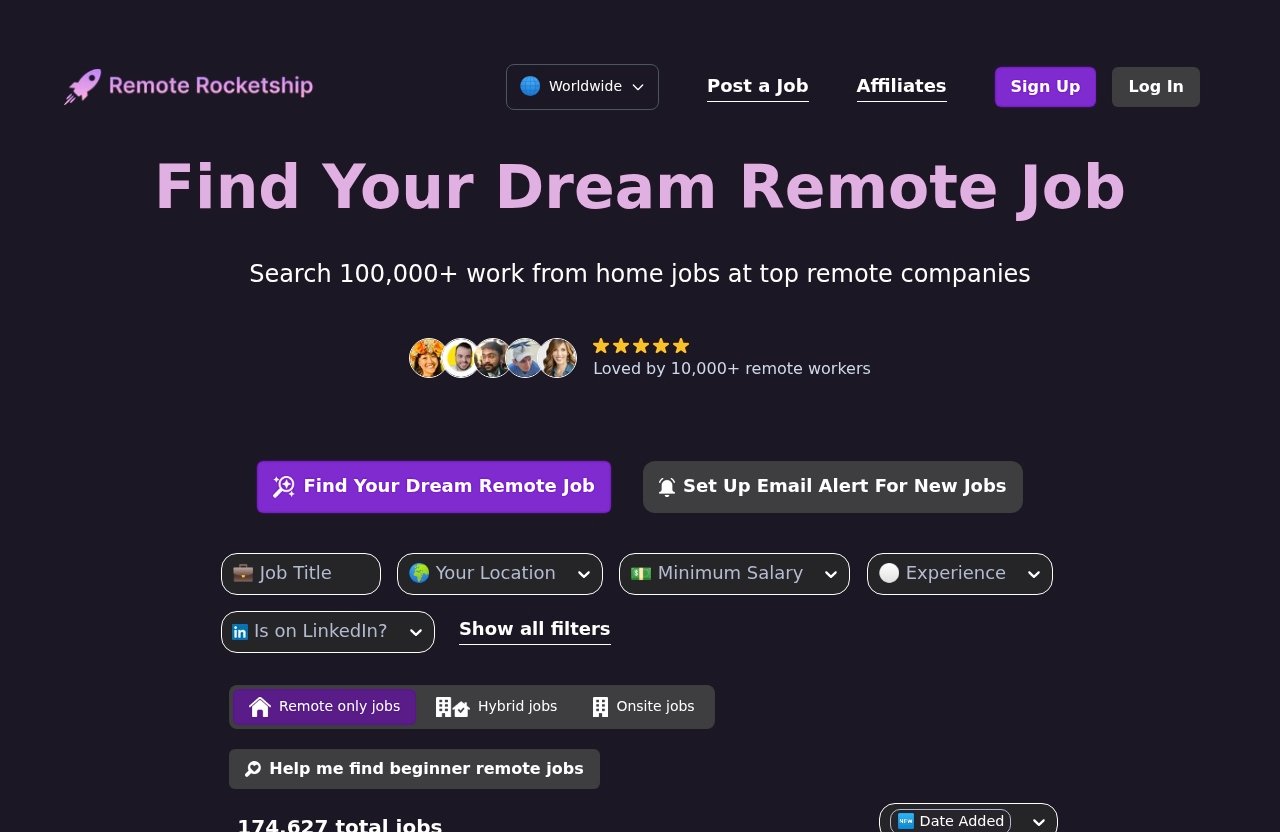
The simplest way to learn how to use Remote Rocketship is to create a clear search target before you browse. Know the role you want, the work arrangement you can accept, and the qualifications you can demonstrate confidently.
Start narrow, then expand only if your search produces too few suitable listings. This approach prevents the familiar problem of saving 50 jobs, applying to none, and feeling overwhelmed.
Create An Account Or Start Browsing
You may be able to browse available opportunities before completing the remote rocketship sign up process, depending on the current site flow. If the platform requests an account, use an email address you check regularly and keep your job-search details organized.
For readers who want to review the official offer and determine whether the service suits their search, the platform is available through this Remote Rocketship page. Check the terms, current access options, and any account requirements directly before proceeding.
Set Your Target Role, Location, And Seniority
Choose a primary role before you search. For example, “Customer Success Manager” is clearer than “customer service,” and “Content Marketing Manager” is more focused than “marketing.”
Also define your location eligibility. Some remote jobs are worldwide, while others are restricted by country, state, payroll region, legal entity, or time zone. Seniority matters as well: searching for manager-level roles when you have junior experience wastes time and can hurt your confidence.
Save Jobs And Return Daily
Save roles that appear promising but need a second look. Keep a simple shortlist with three labels:
| Label | Meaning | Action |
|---|---|---|
| Apply now | Strong fit and recently posted | Apply today |
| Review | Potential fit but needs research | Check company and requirements |
| Skip | Weak fit, unclear, or unsuitable | Move on without revisiting |
A reliable system for how to use Remote Rocketship is to revisit new listings daily rather than doing one long search each week. Newer roles generally attract fewer applicants than listings that have been circulating for days.
Apply Early When New Roles Are Posted
Early applications are not automatically better, but they often give you a better chance of being considered before a hiring team receives a large volume of submissions. If the role is a strong match, aim to apply while the posting is still fresh.
Do not rush so much that you submit an inaccurate resume or skip basic company research. A fast, tailored application is more useful than a rushed generic one.
Step 1: Set Up Your Search Strategy
Before opening listings, define what success looks like. A good remote search strategy gives you boundaries, reduces decision fatigue, and helps you recognize a strong opportunity quickly.
Define Your Target Job Titles
List two to five realistic job titles based on your experience. Include close variations because companies often name similar jobs differently.
For instance, a customer-support candidate might search for:
- Customer Support Specialist
- Customer Experience Associate
- Technical Support Representative
- Customer Success Associate
- Support Operations Coordinator
This is an important part of how to use Remote Rocketship because a single broad title can hide relevant roles under different naming conventions.
Choose Full-Time, Contract, Or Other Role Types
Decide whether you need full-time employment, part-time work, contract work, freelance projects, or a temporary role. There is no universally better option; the right choice depends on income needs, benefits, scheduling flexibility, and experience level.
A contract position may be a practical route into remote work, while a full-time role may offer more stability. Avoid applying to every format unless you are genuinely willing to accept it.
Decide On Salary Expectations And Timezone Preferences
Choose a realistic compensation range before you search, even when a listing does not publish pay. Think about the minimum amount you can accept and the range that reflects your skills.
Also identify your time zone boundaries. A role may be remote but require daily overlap with North American, European, or Asia-Pacific working hours. That distinction is essential if you want sustainable remote work rather than a schedule that causes burnout.
Build A Shortlist Of Must-Have Keywords And Deal-Breakers
Create two lists: keywords you want and conditions you will not accept. Your keyword list might include specific software, industry terms, languages, or responsibilities.
Common deal-breakers include unpaid trial work, mandatory local residency, rotating overnight shifts, unclear compensation, or frequent travel. Having these rules prepared makes how to use Remote Rocketship faster and more objective.
Step 2: Use Filters And Search Terms Effectively
Good search habits are less about finding every job and more about finding the right jobs. Use the visible search and filtering options thoughtfully, and do not assume a listing is suitable just because the title sounds familiar.
Search By Role Keywords Instead Of Broad Titles
Avoid searches that are too vague, such as “remote jobs” or “work from home.” Those phrases can produce a large, mixed set of results that takes too long to evaluate.
Instead, search for the role, function, or tool you actually use. A marketer could search “SEO,” “lifecycle marketing,” or “paid media.” An operations professional could try “project coordinator,” “business operations,” or “implementation.”
Combine Skills And Seniority Terms
Use skill and seniority terms to separate close matches from aspirational but unrealistic jobs. Examples include “junior data analyst,” “senior recruiter,” “B2B SaaS account executive,” or “technical writer API.”
The more specifically you search, the easier it becomes to understand how to use Remote Rocketship without getting buried in unrelated listings. Keep your searches readable, though; adding too many terms can exclude roles that would otherwise fit.
Filter By Job Type And Recency
Where available, prioritize filters for job type and posting recency. Looking at recent opportunities first helps you focus on roles that may still be actively reviewed.
Then review the employer’s requirements before applying. A recent post is not automatically a good opportunity if it requires credentials, industry experience, or location eligibility you do not have.
Refine Results By Remote Compatibility Signals
Read the wording around location carefully. Positive remote signals may include “remote-first,” “work from anywhere,” “distributed team,” or a clear list of eligible countries and time zones.
Be cautious with vague phrases like “remote available” or “flexible work arrangement.” These can still involve office attendance, regional restrictions, or hours that do not fit your schedule.
Step 3: Read Listings Like A Recruiter
A job title is only the headline. The real value comes from reading the description with enough care to determine whether you can solve the employer’s problem.
Spot Strong Remote-First Signals
Strong remote-first listings often explain how the team works across locations. They may mention asynchronous communication, collaboration tools, distributed teams, time-zone overlap, onboarding processes, or remote-specific expectations.
This does not mean every good listing will use those exact terms. Still, reading for practical details is a useful way to improve how to use Remote Rocketship and avoid roles that are remote in name only.
Check Responsibilities, Requirements, And Compensation Clues
Read the first responsibilities section before you focus on benefits or company language. Ask yourself whether you have performed similar work and can show proof through your resume, portfolio, outcomes, or examples.
Look for compensation information where it is provided, but do not make assumptions where it is absent. If a role has no salary details, assess the responsibilities, level, and company carefully before investing significant time.
Watch For Vague Or Overloaded Postings
A weak posting may ask one person to perform several unrelated full-time jobs. For example, a role described as customer support, sales, marketing, bookkeeping, and executive assistance all at once deserves extra scrutiny.
Vagueness is not always a scam signal, particularly at small companies. However, unclear duties, unrealistic demands, and poor communication are reasonable reasons to slow down and research further.
Identify Signs Of A Fast-Moving Role
A listing can indicate urgency through a specific start date, an active hiring process, or language suggesting the company is growing quickly. In those cases, submit a strong application promptly.
The lesson in how to use Remote Rocketship is not to chase urgency blindly. It is to recognize when a qualified, prepared applicant should avoid unnecessary delays.
Step 4: Apply Smarter, Not Just More
Application volume matters less than relevance. Ten thoughtful applications to roles you can genuinely perform are typically more productive than 50 generic submissions.
Tailor Your Resume To The Posting
Start with a master resume, then make small changes for each strong-fit role. Match your headline, summary, most relevant skills, and strongest achievements to the job description.
If the role emphasizes onboarding customers, do not lead with an unrelated accomplishment. Put the experience that best answers the employer’s immediate need near the top.
Match Keywords Without Stuffing
Use the employer’s language naturally when it accurately describes your experience. If the posting asks for project management, stakeholder communication, and reporting, include those terms only where you can support them.
A keyword-heavy resume that does not show real results can look generic. Strong applications combine relevant wording with evidence, such as metrics, projects, process improvements, or customer outcomes.
Write A Concise, Relevant Cover Note When Needed
A short cover note can help when the application gives you space to explain a career change, location fit, relevant portfolio, or direct interest in the company. Keep it to a few focused paragraphs.
Mention the role, one or two matching strengths, and a specific reason you can contribute. Do not rewrite your entire resume or use a long template that could fit any company.
Track Where And When You Applied
Use a spreadsheet, notes app, or job tracker with the company name, job title, posting date, application date, link, contact person, and status. This prevents duplicate applications and makes follow-up easier.
Tracking is a practical part of how to use Remote Rocketship because it turns browsing into a measurable process. After a few weeks, you can see which titles generate responses and where your approach needs adjustment.
Official website · Latest pricing & offers
Step 5: Build A Daily Remote Job Search Routine
Consistency is more valuable than occasional marathon search sessions. A repeatable daily routine keeps your search active without taking over your entire day.
Morning Scan For New Jobs
Spend 15 to 30 minutes checking newly posted roles. Start with your narrowest searches and look for positions that align with your must-have requirements.
This is often the most efficient time to apply because you are reviewing a manageable number of listings. Save anything worth researching later rather than opening dozens of tabs.
Save, Shortlist, And Apply In Batches
Separate searching from applying. First, save strong candidates. Next, research the companies. Finally, tailor and submit applications in a focused batch.
This workflow helps you maintain attention and reduces careless errors. It also makes how to use Remote Rocketship feel more manageable when you have limited time around your current job or personal commitments.
Review Saved Searches And Alerts
If remote job alerts or saved searches are available in your account, review the settings regularly. Your goals may change as you learn which roles produce better matches.
Update job-title variations, remove low-value terms, and add newly discovered skills. Search refinement is not a one-time setup task.
Follow Up And Track Outcomes
Follow up only when appropriate and when you have a legitimate contact route. Respect the employer’s stated process and avoid sending repeated messages.
Record interview invitations, rejections, and responses in your tracker. Patterns matter: if you receive no replies, review your targeting and resume; if you get interviews but no offers, focus on interview preparation.
How To Get Better Results Fast
Fast improvement comes from reducing wasted applications, not from blindly increasing volume. A few small adjustments can improve the quality of your remote job search within days.
Use Narrow Searches First, Then Expand
Begin with your best-fit title, top skills, preferred role type, and eligible location. If the results are too limited, expand one variable at a time.
For example, try a related title before opening up every location or seniority level. This keeps your search results relevant.
Test Multiple Job-Title Variations
Employers use inconsistent titles, particularly in startups and smaller companies. A “Customer Success Specialist” role may involve work similar to “Client Onboarding Specialist” or “Account Coordinator.”
Testing variations is one of the quickest ways to strengthen how to use Remote Rocketship. Keep a list of titles that repeatedly lead to credible, well-matched roles.
Prioritize Recently Posted Roles
Check the posting date and prioritize opportunities that are both recent and strongly aligned with your background. Apply promptly once you have completed basic verification.
Older roles can still be active, so do not dismiss them automatically. Just avoid spending all your time on listings that may already have a large applicant pool.
Keep A Simple Application Tracker
A useful tracker reveals whether your strategy is working. At minimum, record the number of applications, interviews, rejections, and pending roles.
You can then calculate which titles, industries, and resume versions lead to better outcomes. That feedback is far more valuable than guessing.
Common Mistakes To Avoid
Most remote job-search problems come from inconsistent targeting, rushed applications, or failure to verify the employer. Avoiding a few common mistakes can save significant time.
Using Only One Generic Search Term
Searching only “remote” or “work from home” produces too much noise. Use job-function terms, tools, industries, and seniority levels to get better results.
A targeted search is more likely to surface roles you can explain and support in an application.
Ignoring Remote-Specific Requirements
Remote does not always mean worldwide or fully flexible. Check location restrictions, required working hours, language needs, travel expectations, and equipment requirements.
This is especially important when learning how to use Remote Rocketship because remote compatibility is more than the word “remote” in a title.
Applying Without Tailoring Your Resume
A generic resume can make a qualified candidate look like a weak match. Take a few minutes to adjust your resume toward the responsibilities that matter most.
You do not need to redesign the document every time. Focus on the top third of the resume and the most relevant experience.
Waiting Too Long To Submit
Saving every role for later creates an application backlog. If a job is a strong fit and you have verified it, apply before the listing becomes stale.
Use a same-day rule for your highest-priority opportunities. For roles that need more research, set a specific review deadline.
Is Remote Rocketship Legit And Worth Using?
Questions such as “is remote rocketship legit” and “remote rocketship worth it” are reasonable, particularly when you are sharing personal information during a job search. The available public positioning indicates that it is a remote job board focused on remote opportunities and streamlined application flows.
That said, a job board’s existence does not guarantee that every individual listing is right for you. Evaluate the platform and every employer separately.
What Review Signals Suggest
When reviewing remote rocketship reviews, look beyond star ratings or a single positive or negative comment. Focus on repeated themes: listing relevance, application experience, customer support experiences, billing clarity where applicable, and whether users report finding useful opportunities.
Public review pages and independent discussion can offer context, but they should not replace your own due diligence. The question “how to use remote rocketship reddit” may come up in searches, but forum opinions are individual experiences—not proof of universal results.
How To Verify A Listing Before Applying
Confirm that the employer has a real website and that the job appears consistent with its business. If possible, compare the listing with the company’s careers page and check whether the recruiter uses a company email address.
Never pay upfront for a job, training, equipment, or background-check promise. Be careful with requests for sensitive personal information before a legitimate interview process, and verify that application links lead to the employer or a recognized hiring system.
When The Platform Is Especially Useful
Remote Rocketship may be most useful when you want a dedicated remote job board rather than a broad job site. It can fit candidates who are disciplined about using specific searches, checking new listings, and tailoring applications.
Pricing requires special care. The official homepage and pricing page were not accessible in the provided source snapshot because they displayed security verification pages. I could not confirm current plans, whether Remote Rocketship is free, trial details, or pricing levels, so verify the current terms directly on the official site before purchasing.
Final Verdict: Best Way To Use Remote Rocketship For Faster Remote Job Search Results
The best approach to how to use Remote Rocketship is to treat it as part of a deliberate daily system: search targeted terms, check fresh listings, verify employers, and submit tailored applications quickly. It is not a shortcut to a job offer, but it can help make a remote-focused search more organized.
Best Use Case
Remote Rocketship is best for people who want to focus on remote jobs that may be harder to find on broad, general-purpose job platforms. It is particularly useful when you have defined job titles, clear location boundaries, and a current resume ready to customize.
Who Benefits Most
The platform can benefit entry-level candidates willing to build a consistent routine, experienced professionals seeking remote-first roles, and career changers who can clearly connect transferable skills to a target position.
The candidates most likely to benefit are selective rather than reactive. They read listings carefully, prioritize fit, and track the outcomes of their applications.
Simple Next Steps
Choose three target job titles, build a short list of required skills, and set aside a daily window to review new opportunities. Then use what you learn from applications and interviews to refine your searches over time.
If the platform’s remote-first approach fits your needs, you can review the official offer through Remote Rocketship here. Before signing up or paying for anything, confirm current access terms and pricing directly through the official site.
Official website · Latest pricing & offers
FAQ
Is Remote Rocketship Legit For Work From Home?
Remote Rocketship is publicly positioned as a remote job board focused on remote opportunities. Still, verify every listing independently by checking the employer’s website, recruiter identity, job details, and application destination before sharing personal information.
Does Remote Rocketship Cost Money?
Current pricing could not be confirmed from the provided official-page snapshot because the pricing page displayed a security verification screen. Do not assume Remote Rocketship is free or paid; check the current pricing page and terms directly before purchasing.
How Do I Get The Best Results On Remote Rocketship?
Use specific job titles, combine role and skill keywords, prioritize recently posted listings, and filter by your preferred job type where possible. Save searches, apply quickly to strong matches, and track results so you can refine your approach.
How Should I Avoid Remote Job Scams When Using Job Boards?
Verify the employer’s website and contact details, compare the role with the company’s official careers page, and be cautious of vague descriptions. Never send upfront payments, share highly sensitive information too early, or continue with a recruiter who cannot verify their company identity.
Related Reading
- how to know if a remote job offer is legit
- how to use gohighlevel
- skool affiliate program review 2026
References
- Remote Jobs You Won't Find on LinkedIn
- Discover 100000+ Remote Jobs
- Remote Rocketship Reviews | Read Customer Service …
- Is Remote Rocketship Legit? A 2026 Review