Webflow Ecommerce Review 2026: Features, Pricing, Limitations, and Verdict
Official website · Latest pricing & offers
Webflow Ecommerce Review 2026: Quick Verdict
This webflow ecommerce review is for buyers who care as much about the storefront experience as the product catalog. Webflow is a compelling option for visually distinctive, content-led stores where design control, flexible page creation, and a polished brand presence matter more than following a conventional ecommerce template.
My practical take: Webflow is not the automatic choice for every merchant. It is strongest when a store is also a marketing site, editorial hub, portfolio, or launch platform. It becomes less attractive when ecommerce operations are highly complex and the team wants the most prescriptive, store-first workflow possible.
Who It Is Best For
Webflow Ecommerce is best suited to design-led brands, boutique product companies, agencies, and marketers who want to control how every landing page, category page, product page, cart touchpoint, and content section looks.
It is particularly appealing when a website needs to do more than sell products. If your store must blend product discovery with case studies, brand storytelling, campaign pages, lookbooks, or editorial content, the Webflow approach can feel more cohesive than bolting a shop onto a separate marketing site.
Who Should Avoid It
Merchants with large catalogs, complicated internal processes, or a strong preference for rigid, out-of-the-box commerce workflows should assess alternatives carefully. The same design flexibility that attracts creative teams can create more decisions, configuration work, and governance needs.
I would also be cautious if your team has no one comfortable managing a visual web-building environment. Webflow offers no-code control, but “no code” does not mean “no learning curve.”
Bottom-Line Recommendation
Webflow Ecommerce is worth serious consideration in 2026 if your commercial success depends on a differentiated digital brand experience. According to Webflow’s official help content, users can design stores, customize cart and checkout experiences, manage products and categories, and work through the Ecommerce panel and CMS.
If that combination matches your priorities, you can explore Webflow through this offer and assess the current setup options directly. For operationally dense ecommerce businesses, however, compare the workflow carefully before committing.
What Is Webflow Ecommerce?
How Webflow Positions Its Ecommerce Product
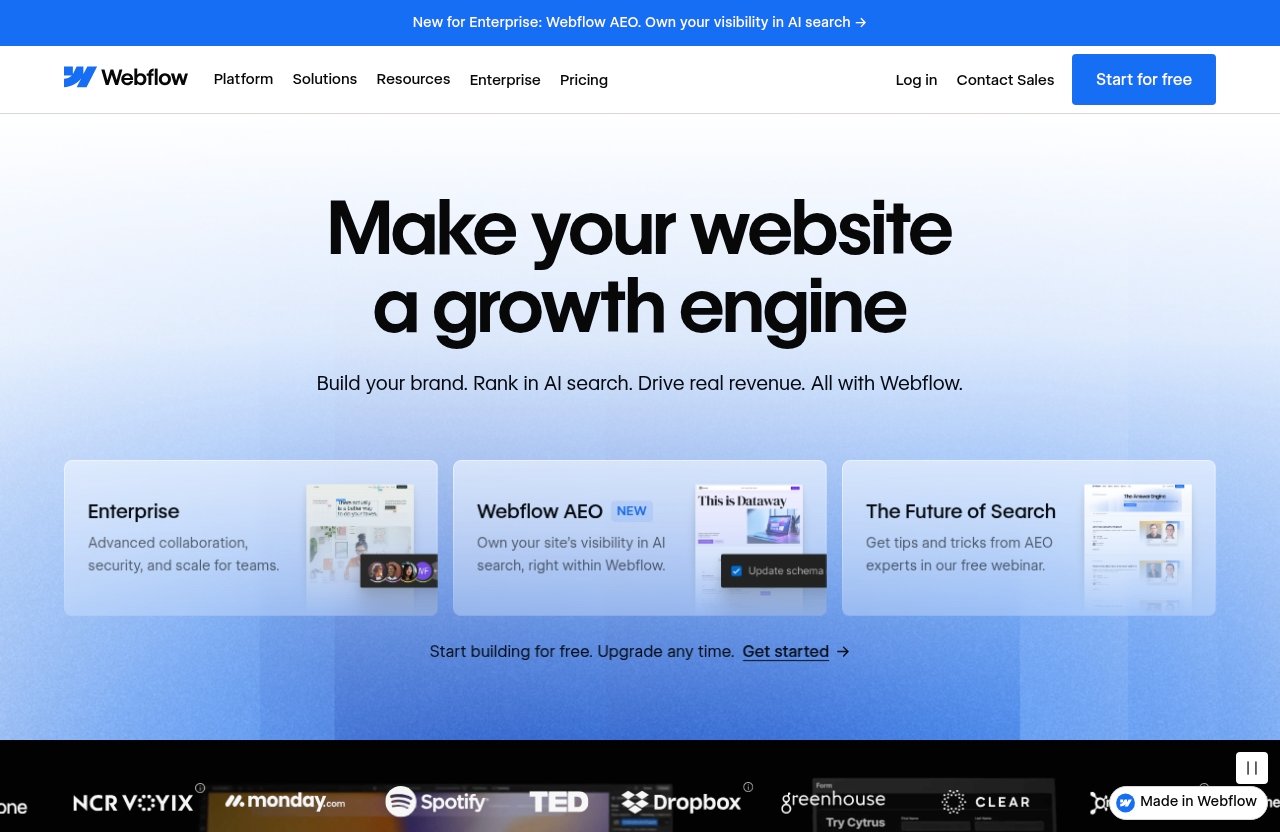
Webflow presents itself as an AI-native web platform for modern businesses. Within that broader environment, webflow ecommerce provides tools to build and design online stores while maintaining control over the wider website experience.
The important distinction is that this is not simply a checkout widget placed on a page. Webflow’s official ecommerce materials describe capabilities for creating stores, customizing cart and checkout experiences, and managing products and categories.
How It Fits Into The Broader Webflow Platform
A Webflow store sits within the same environment used to create pages and manage site content. In practice, this can make the platform attractive to teams that do not want their commerce pages to feel disconnected from their marketing pages.
The Webflow Ecommerce panel and CMS are central to that workflow. Rather than treating product information and site content as entirely separate projects, teams can build an integrated storefront around both.
This is a meaningful advantage for brands with frequent campaigns. A webflow ecommerce website builder approach lets a team think beyond the default product grid and create supporting pages that match the same visual system.
What Kinds Of Stores It Is Built For
Webflow is a natural fit for smaller, curated catalogs and stores where visual presentation influences conversion. Examples include apparel labels, design objects, beauty products, digital goods, lifestyle brands, artist merchandise, and limited product launches.
It can also serve companies where the store supports a broader brand mission. A consultancy selling resources, a creative studio selling products, or a publisher with a small shop may benefit from keeping content and commerce in one design environment.
Webflow Ecommerce Features That Matter Most
Design Freedom For Storefronts And Checkout
The central reason to consider webflow ecommerce is design freedom. Webflow officially confirms that users can build and design online stores and customize cart and checkout experiences, which matters to brands frustrated by generic storefront patterns.
In my evaluation, this is the platform’s clearest differentiator. It gives teams room to create a store that feels intentionally designed rather than assembled from a standard catalog layout.
That freedom has a tradeoff: more creative control means more responsibility for clarity. A visually ambitious store still needs intuitive navigation, readable product information, and an uncomplicated route to purchase.
CMS-Driven Product And Category Management
Webflow’s official ecommerce documentation confirms product and category management through the Ecommerce panel and CMS. For content-rich stores, that structure is useful because product discovery often depends on more than product names and prices.
A brand can approach its catalog as part of a broader content system. That can be valuable for curated collections, seasonal storytelling, buying guides, and category pages that need a stronger editorial feel.
These webflow ecommerce features are especially relevant when the site has a meaningful content layer. If every product needs a story, visual direction, or supporting educational material, the CMS-centered approach can be more valuable than a purely transactional setup.
Forms, File Upload, Search, And Code Components
According to Webflow’s official pricing page, the Premium plan includes Webflow CMS, bandwidth, code components, site search, form file upload, and well-known files, in addition to everything available in Basic.
Those tools are practical rather than flashy. Site search can improve discovery on content-heavy websites, while forms and file upload can support inquiries or workflows that sit alongside a store.
Code components are also worth noting for teams with technical resources. They may offer more room to extend the experience, but they do not eliminate the need for careful planning. A store should not rely on custom complexity unless the business benefit is clear.
Localization, Workflows, And Governance For Teams
For more advanced organizations, Webflow’s Team plan includes Webflow Localize/Localization, AEO agents, publishing workflows, single-page publishing, site activity log and API, foundational governance, enhanced security and compliance, and priority support, according to the official pricing page.
These are not features every merchant needs. But for a multi-person team, publishing workflows and governance can become important once many stakeholders contribute to the same site.
The practical lesson is simple: assess the operational requirements alongside the storefront design. A polished store is only one part of a sustainable web operation.
Webflow Ecommerce Pricing In 2026
Webflow pricing should always be checked on the official page before purchase because plans, eligibility, and included capabilities can change. The figures below were verified against Webflow’s official pricing page for 2026, and all prices are USD per site plus applicable taxes at checkout.
One important caution: the provided official pricing details describe the plans and their included website capabilities. Confirm the ecommerce configuration and any commerce-specific requirements directly with Webflow before assuming a particular webflow ecommerce plan meets your store’s needs.
Starter
Starter is free. It includes a Webflow.io domain, limited Webflow CMS, two static pages, 1 GB bandwidth, 50 form submissions, Webflow AI, MCP server, Webflow Cloud app hosting, and a Free Starter Workspace.
This is useful for evaluating the builder and starting a simple project. For a serious branded business site, the Webflow.io domain and two-page limit will likely be restrictive.
Basic
Basic costs $15 per month when billed yearly. It includes a custom domain, 300 static pages, 10 GB bandwidth, unlimited form submissions, password protection, Webflow AI, MCP server, Webflow Cloud app hosting, and a Free Starter Workspace.
The Basic plan is more practical for a conventional marketing site that needs a custom domain and a larger page count. However, Webflow’s pricing page does not list Webflow CMS as part of Basic.
Premium
Premium costs $25 per month when billed yearly. It includes everything in Basic, plus Webflow CMS, bandwidth, code components, site search, form file upload, and well-known files.
For many brands considering a content-rich storefront, this is the most relevant level to evaluate because CMS and search can matter significantly. Still, buyers should verify current ecommerce requirements rather than assuming Premium alone covers every commerce need.
Team
Team costs $2,500 per month and requires an annual contract. It includes everything in Premium, plus Site & Workspace, Webflow Localize/Localization, AEO agents, publishing workflows, single-page publishing, site activity log and API, foundational governance, enhanced security and compliance, and priority support.
This is clearly aimed at organizations with more advanced collaboration, governance, and support expectations. It is not a casual upgrade for a small shop; it represents a major commitment.
Enterprise
Enterprise has custom pricing. It includes everything in Team, alongside enterprise-ready scale, granular permissions, custom roles, advanced governance, secure integrations, a dedicated account manager, enhanced SLAs, and custom configurations.
For enterprise buyers, pricing should be only one part of the conversation. The more important question is whether Webflow’s governance model, integrations, and operating approach fit the organization’s architecture.
What The Pricing Structure Means For Store Owners
The published webflow ecommerce pricing picture shows a steep jump between the entry-level site plans and Team. Smaller businesses can evaluate lower-priced plans, while larger teams need to budget for more sophisticated publishing and governance needs.
Annual billing is another consideration. Basic and Premium are listed as billed yearly, while Team requires an annual contract. Before selecting a plan, map your content, commerce, collaboration, and compliance needs rather than choosing solely on the headline monthly number.
Webflow Ecommerce Limitations And Friction Points
When Webflow Is Less Efficient Than Dedicated Ecommerce Platforms
The key webflow ecommerce limitations are not necessarily failures of the platform; they are tradeoffs created by its design-led, flexible approach. Teams that primarily want a highly standardized store operation may find they spend more time shaping the experience than they would with a more prescriptive solution.
Webflow gives you choices. That is valuable for a distinctive brand, but it can be inefficient when the business needs simple, repeatable store management above all else.
Potential Scaling Concerns
Scaling is not only about traffic or page count. It also involves product management, internal approvals, multi-team publishing, localization needs, and the number of people touching the site.
Webflow’s Team and Enterprise offerings include advanced controls such as workflows, activity logs, permissions, and governance. That signals that sophisticated operations may require higher-tier plans and a more deliberate implementation process.
For a growing merchant, the honest question is not “Can I launch on Webflow?” It is “Will our future operating model remain comfortable in Webflow as catalog, team, and process complexity increase?”
Why Non-Designers May Feel The Learning Curve
Webflow’s visual control is powerful, but beginners may need time to understand layout structure, responsive design decisions, CMS organization, and publishing workflow. A webflow ecommerce template can provide a starting point, but it does not replace a plan for content architecture and store maintenance.
In my view, this is where some buyers make a poor decision. They choose Webflow for its beautiful examples but underestimate the ongoing skill required to maintain that quality after launch.
Official website · Latest pricing & offers
Who Webflow Ecommerce Is Best For
Design-Led Brands
Design-led businesses are the clearest match for webflow ecommerce. If the storefront is a major expression of the brand—not just a place to process transactions—Webflow’s ability to build custom experiences is highly valuable.
This includes brands that care about typography, motion, visual hierarchy, campaign-specific layouts, and nonstandard product storytelling. The platform gives them space to differentiate without forcing every page into a familiar store template.
Small Catalogs And Content-Rich Storefronts
A curated product range often benefits from more context around each item. Brands can use content, collections, category pages, and campaign pages to make product discovery feel more intentional.
This makes Webflow particularly relevant for stores that sell fewer products with stronger narratives. It is less about the raw number of items and more about whether the catalog can be presented effectively through a content-led browsing journey.
Agencies And Teams That Value Control
Agencies building sites for clients may appreciate being able to shape marketing and store experiences in one platform. Teams with a designer, marketer, or Webflow-capable creator can get more value from the available flexibility.
The platform is also sensible for teams that expect regular site updates. Campaign pages, product announcements, and editorial pieces can be designed as part of a cohesive web experience rather than treated as separate systems.
Who Should Avoid Webflow Ecommerce
Large Catalog Or High-Operational-Complexity Merchants
A merchant with a large, constantly changing catalog should examine its process in detail before choosing Webflow. This is not a claim that Webflow cannot support growth; it is a recommendation to avoid selecting a design-led platform without validating the day-to-day catalog workflow.
If several departments manage products, inventory-related information, merchandising, and regional content, test the exact process with your own team. A platform that looks ideal during design may be less efficient in routine operation.
Teams Needing Simpler Out-Of-The-Box Commerce Operations
Some companies want their ecommerce platform to make most structural decisions for them. They value predefined processes, straightforward administration, and a conventional store model over tailored experiences.
Those buyers may find Webflow’s flexibility unnecessary. If you do not intend to use custom design and content control, paying the learning cost may not be worthwhile.
Businesses Prioritizing Rigid Ecommerce Workflows Over Design Flexibility
Webflow is a weaker fit when design flexibility is low on the priority list. A business that wants to launch rapidly with minimal customization should choose based on operational simplicity, not on the quality of Webflow’s visual possibilities.
This is also a useful lens when reading a webflow ecommerce reddit discussion or any community commentary. Individual experiences are helpful context, but your own workflow, catalog, and team capabilities should determine the decision.
Webflow Ecommerce Vs Shopify: What Can Be Said Safely
Comparison On Verified Webflow Facts Only
A responsible webflow ecommerce vs shopify comparison should not pretend the platforms are identical. Based on verified Webflow information, Webflow lets users build and design stores, customize cart and checkout experiences, manage products and categories, and use the Ecommerce panel and CMS.
Webflow also offers a broader site-building environment, with plan-dependent features such as CMS, site search, code components, form file upload, localization, workflows, and governance. Those are real strengths for teams building a brand website alongside a store.
When To Choose Webflow Instead Of A Typical Dedicated Store Builder
Choose Webflow when your priority is to create a highly branded storefront and supporting website in one visual system. It is especially compelling when landing pages, editorial content, and product storytelling need the same level of attention as the store itself.
A typical dedicated store builder may be a more natural choice when store operations, standardized commerce workflows, and speed through convention matter more than design differentiation. That is a workflow preference, not a universal verdict.
Decision Framework Without Guessing Competitor Specs
Use this short framework instead of relying on blanket claims:
- Choose Webflow if brand design and content-led browsing are central to your sales strategy.
- Choose Webflow if your team has the skills and time to use its flexibility well.
- Compare other options if your store has complicated operations or a large, rapidly evolving catalog.
- Request demos or build a small test project before migrating a live business.
- Verify plan eligibility and current commerce requirements directly with each provider.
Real-World Use Cases And Examples
Portfolio-Style Boutique Stores
Boutique shops often need a store to feel like an extension of a creative portfolio. A carefully designed home page, product storytelling, visual campaigns, and a small curated catalog can work naturally in Webflow.
Among the most persuasive webflow ecommerce examples are not necessarily the biggest stores. They are the ones where product presentation, visual personality, and brand credibility work together.
Brand Stores With Editorial Content
A skincare label, apparel brand, publisher, or specialty maker may need guides, stories, interviews, or collection pages alongside products. Webflow’s CMS-based approach can make those supporting materials feel integrated rather than secondary.
This is where Webflow has a strong practical case. A reader can move from an educational article to a relevant category or product without leaving the brand’s visual universe.
Landing-Page-First Product Launches
Webflow is also well suited to product launches where the campaign page is the primary sales tool. A company can create a focused launch page, communicate the product value, and guide visitors toward purchase in a controlled sequence.
For limited releases and seasonal campaigns, the ability to design the sales narrative around the product can be more important than using a generic catalog experience.
Final Verdict: Is Webflow Ecommerce Worth It In 2026?
Recommendation By Business Type
Webflow ecommerce is worth it for brands that view their website as a strategic asset, not merely a transaction engine. It is strongest for design-led businesses, content-rich stores, boutique catalogs, agencies, and teams that want granular creative control over the web experience.
It is less compelling for merchants that need the simplest possible store administration, have highly complex operations, or do not have the internal capacity to manage a flexible site-building environment. The best decision is based on operating fit, not hype.
Short Buyer Checklist
Before choosing Webflow, ask:
- Does our storefront need a custom visual identity beyond a standard shop layout?
- Will content, campaigns, and product storytelling influence how customers buy?
- Do we have someone who can confidently manage Webflow after launch?
- Are our catalog and internal workflows manageable in a design-led environment?
- Have we confirmed the latest ecommerce requirements and plan details with Webflow?
Affiliate CTA Placement
For the right buyer, Webflow can offer a rare mix of store functionality and front-end creative freedom. If you have answered “yes” to most of the checklist, you can review Webflow’s current options here before making a final commitment.
Official website · Latest pricing & offers
FAQ
Is Webflow Still Relevant In 2026?
Yes. Webflow remains relevant in 2026 for businesses that want a modern, AI-native web platform with substantial control over site design, content management, and ecommerce experiences.
Its relevance is strongest for teams that need their marketing website and storefront to work together. Webflow’s official materials confirm store design, customizable cart and checkout experiences, product and category management, and CMS-related workflows.
Is Webflow E-Commerce Better Than Shopify?
It depends on the store. In the webflow ecommerce vs shopify decision, Webflow is often the more appealing direction for design-led, content-heavy brands that want a distinctive storefront and integrated website experience.
A dedicated commerce platform may be better for merchants who prioritize standard store operations and a more prescriptive ecommerce workflow. Neither is universally “better”; the right answer depends on design priorities, catalog complexity, and team capabilities.
How Much Does Webflow E-Commerce Cost?
According to Webflow’s official pricing page, Starter is free, Basic is $15 per month billed yearly, Premium is $25 per month billed yearly, Team is $2,500 per month with an annual contract, and Enterprise has custom pricing.
All listed prices are USD per site plus applicable taxes at checkout. Because ecommerce requirements may vary, verify the current plan configuration directly with Webflow before purchasing.
What Exactly Is Webflow?
Webflow is an AI-native web platform for modern businesses. It provides an environment for building and managing web experiences, including websites and online stores.
For ecommerce use cases, Webflow officially confirms tools for designing stores, customizing cart and checkout experiences, managing products and categories, and using the Ecommerce panel and CMS.
Related Reading
- Webflow for Agencies: Is It Worth It in 2026?
- Webflow for SaaS Landing Pages: 2026 Guide
- Cloudways WordPress Setup: A Performance-First Guide for 2026
References
- Webflow Ecommerce website builder
- Webflow Ecommerce overview
- Plans & pricing | Webflow
- Best Ecommerce Websites | Free Examples & Designs