Webflow Portfolio Website: Is It the Best Choice for Professionals?
Affiliate disclosure: TopTrustReview may earn a commission if you sign up through links in this article, at no extra cost to you. Our assessment remains editorially independent and based on practical portfolio-building needs.
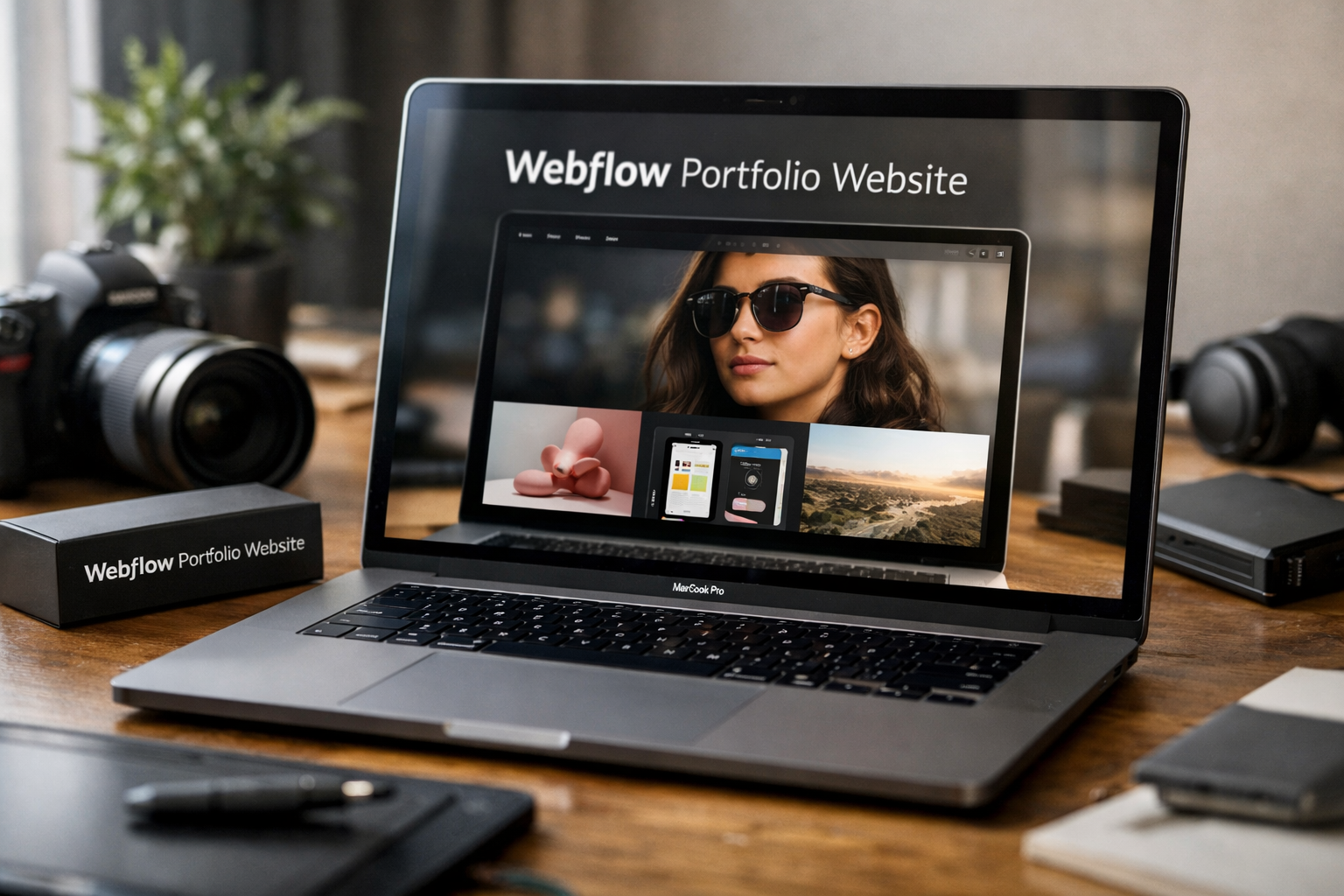
A webflow portfolio website can be an excellent choice for designers, creatives, freelancers, developers, and job seekers who need a polished online presence that does not look like a generic template. Webflow is particularly compelling when visual quality, detailed case studies, and brand differentiation matter as much as simply having a site online.
The trade-off is that Webflow requires more time to learn than the simplest site builders. It is not automatically the best option for every portfolio, especially if you only need a single page with a bio, three links, and a contact email. This guide helps you decide based on your portfolio goals, budget, content volume, and appetite for design control.
Official website · Latest pricing & offers
Webflow for Portfolio Websites: Is It the Right Choice?
Quick verdict for designers, creatives, and job seekers
Yes—Webflow is a strong portfolio website builder for people who want their work to feel considered, premium, and distinctly theirs. A webflow portfolio website is especially well suited to visual fields where presentation influences hiring decisions, client trust, or perceived rates.
In my experience reviewing portfolio websites, the difference between a basic online résumé and a compelling portfolio usually comes down to hierarchy, storytelling, and polish. Webflow gives ambitious users room to shape those details rather than settling for a fixed layout.
It is not a shortcut to great work, though. Strong copy, clear project outcomes, good images, and a sensible page structure still matter more than decorative effects. Webflow is best viewed as a flexible presentation tool for excellent work—not a replacement for it.
Who Webflow fits best
Webflow is a particularly good fit for:
- UX and UI designers presenting process-heavy case studies
- Brand designers, art directors, and illustrators who need visual freedom
- Freelancers who want to turn portfolio visitors into client inquiries
- Photographers, architects, and creative studios with image-led work
- Developers who want a custom-looking professional presence
- Job seekers building a personal brand beyond a conventional résumé
A multi-page portfolio with project pages, an about page, a service overview, and a contact path benefits most from the platform. It is also a sensible choice when you expect the site to evolve as your work and career develop.
Who may want a simpler alternative
A simpler website builder may be the better answer if speed matters more than customization. For example, someone applying to a few roles with a short deadline may only need a clean landing page, downloadable résumé, and contact details.
Likewise, if you do not want to spend time learning visual layout concepts, a more constrained builder can reduce decisions. A webflow portfolio website makes more sense when you actively value creative control and are willing to invest effort in the final presentation.
What Makes Webflow Strong for a Portfolio Website
Visual design control without coding
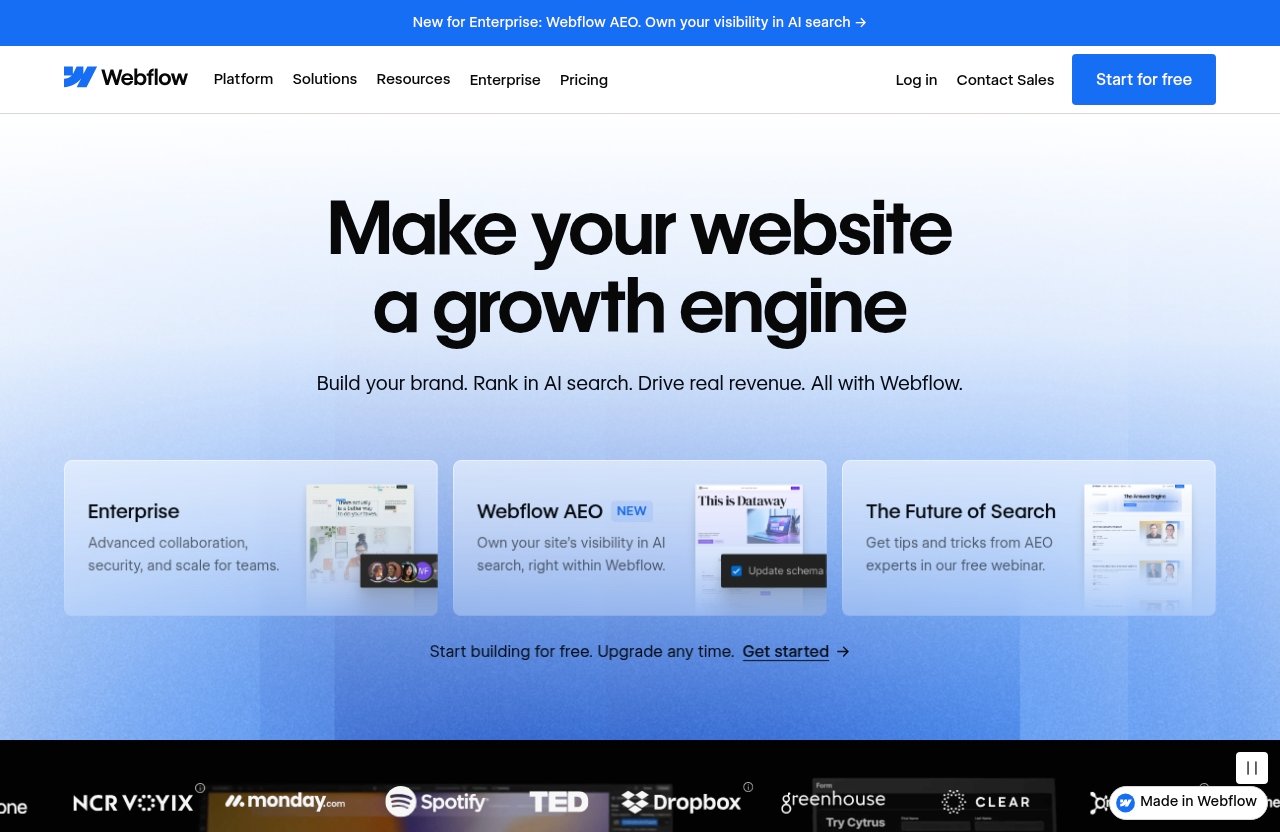
The central appeal of a webflow portfolio website is the ability to create a portfolio that reflects your own visual system. Rather than forcing every project into the same pre-set card style, you can develop layouts that suit the work: editorial grids for brand design, spacious image galleries for photography, or structured narratives for product design.
This matters because potential clients and employers often make an initial judgment quickly. A coherent type scale, intentional spacing, and focused page composition can signal professionalism before they read a word of your case study.
For beginners, it is worth learning the fundamentals before attempting an elaborate homepage. Our Webflow beginner guide and how to build a website with Webflow article can help you understand the building blocks and avoid common layout mistakes early.
CMS-driven case studies and project galleries
A content-rich webflow portfolio website benefits from a consistent system for projects. If you publish numerous case studies, project galleries, articles, or work updates, Webflow CMS can help you organize repeated content in a more structured way.
For portfolio use, that can mean maintaining a consistent project format while allowing every case study to have its own story. You might include the challenge, your role, process, visuals, deliverables, and measurable outcome without rebuilding the overall page framework each time.
The CMS is most valuable when your work list will grow. If you only have four permanent projects, manually designed static pages may be easier and entirely sufficient. See our Webflow CMS review for a more focused discussion of when a content-driven setup is worthwhile.
Professional animations and interactions
Subtle movement can make portfolio websites feel more intentional. Revealing project imagery as visitors scroll, refining hover states, or using restrained transitions can help visitors understand what is interactive and guide attention to your strongest work.
The important word is “subtle.” Excessive movement can make a webflow portfolio website harder to scan, distract from the work, and weaken accessibility. Use animation to support the story of a project, not to make a sparse portfolio appear more substantial.
For example, a product designer might use progressive image reveals to walk through a user journey. A creative director may use a refined gallery transition to support an art-led presentation. In both cases, content should remain understandable without relying on motion.
SEO and technical performance considerations
A portfolio should be discoverable, but it should first be useful to the people already evaluating you. Give each important project a distinct page title, a clear project name, useful image descriptions, and copy that explains the problem you solved.
Avoid turning every project page into a wall of large images with no context. Search engines, hiring managers, and prospective clients all benefit when a project includes concise, relevant written explanation.
Also keep media purposeful. Choose only the visuals that demonstrate your contribution, compress assets before uploading where appropriate, and test the complete experience on real mobile devices. A strong webflow portfolio website balances visual impact with clarity and easy navigation.
Best Use Cases for a Webflow Portfolio
Designer portfolios
Designers are among the clearest audience for Webflow. UX, product, brand, and visual designers often need more than a thumbnail grid—they need to show thinking, iterations, constraints, and results.
A designer’s homepage can introduce their specialty and feature three to five selected projects. Each case study can then explain the brief, role, approach, and evidence of impact. This format is more persuasive than displaying polished final screens without context.
For inspiration, the official Webflow design portfolio templates collection shows the range of structures available for design-led portfolios. Use inspiration as a starting point, but edit the architecture around your own work rather than copying someone else’s visual identity.
Creative portfolios
Photographers, illustrators, motion designers, architects, and artists often need the portfolio itself to communicate taste. A webflow portfolio website gives creative professionals room to build an image-first experience while retaining a clear route to an inquiry or commission.
The strongest creative portfolios edit aggressively. Showing 12 excellent images is usually more convincing than showing 60 inconsistent ones. Group work in a way that makes sense to buyers or employers, such as campaigns, disciplines, industries, or collections.
A creative portfolio can also benefit from an “available for” section that explains commissions, collaborations, services, or locations. This turns a gallery into a commercial asset rather than a passive archive.
Developer portfolios
A webflow developer portfolio can work well when the goal is to present technical work in an approachable, highly branded format. Developers can use it to frame live projects, describe product decisions, explain their role on a team, and direct visitors to relevant professional channels.
The best developer portfolios do not assume every visitor understands the stack. Lead with the problem and outcome first, then provide technical details for readers who want them. Describe what you built, why it mattered, and what constraints you handled.
If code demonstration is central to your job search, make it easy for reviewers to find your repositories or live project links. Keep the visual design restrained enough that the site itself does not overshadow the engineering work.
Job-seeker personal brands
For job seekers, a webflow portfolio website can be a meaningful advantage in competitive roles. It provides a dedicated place to make your positioning clear, show selected proof, and offer a contact route separate from a social profile or PDF résumé.
A simple personal-brand site may include a short headline, professional introduction, featured work, career highlights, résumé access, and a direct contact section. It does not need dozens of pages to be effective.
The goal is not to make every job application recipient explore a complex site. It is to give interested reviewers a professional destination where they can quickly understand what you do and why you are credible.
Webflow Portfolio Website Pricing: Official Plans and What They Include
Webflow’s official site plans are priced per site in USD, with applicable taxes added at checkout. The right option depends on whether your portfolio needs a custom domain, static pages, CMS-powered content, search, or other portfolio-specific requirements.
| Plan | Official Price | Relevant Portfolio Use |
|---|---|---|
| Starter | Free | Exploring and experimenting |
| Basic | $15/month billed yearly | Simple custom-domain portfolio without CMS |
| Premium | $25/month billed yearly | Content-rich portfolio with CMS needs |
| Team | $2500/month, annual contract required | Large-scale organizational requirements |
| Enterprise | Custom pricing | Enterprise-scale requirements |
Starter: free exploration and testing
The Starter plan is free and intended for exploring and experimenting with Webflow. It includes a Webflow.io domain, limited Webflow CMS, two static pages, 1 GB bandwidth, 50 form submissions, Webflow AI, MCP server, Webflow Cloud app hosting, and a Free Starter Workspace.
For someone researching a webflow portfolio website free option, Starter is useful for learning the platform, testing a layout, and building an initial concept. Its two static pages make it better for a very small test portfolio than a full multi-page professional site.
A Starter project can still be valuable as a design exercise. Build your homepage and one project case study, then decide whether the platform’s workflow suits you before committing to a paid site plan.
Basic: simple custom-domain portfolio
Basic costs $15 per month when billed yearly. It is intended for simple sites that do not need a CMS and includes a custom domain, 300 static pages, 10 GB bandwidth, unlimited form submissions, password protection, Webflow AI, MCP server, Webflow Cloud app hosting, and a Free Starter Workspace.
This is a practical option for a polished portfolio built from static pages. A freelancer could create a homepage, services page, selected project pages, about page, and contact page without requiring CMS functionality.
Password protection can also be relevant for client-facing work that cannot be publicly displayed. Before choosing Basic, consider whether you will regularly add projects in a format that would be easier to manage with a CMS.
Premium: content-rich portfolio with CMS
Premium costs $25 per month when billed yearly. It includes everything in Basic, plus Webflow CMS, bandwidth, code components, site search, form file upload, and well-known files.
This plan is the more natural match for a webflow portfolio website with a growing library of case studies, project categories, or content. Site search may be particularly useful when visitors need to browse a substantial body of work, while form file upload can matter for portfolios that accept briefs or supporting files from prospective clients.
Premium is not automatically necessary for every professional. Choose it when the CMS and additional included capabilities solve a real portfolio-management need rather than simply because it sounds more advanced.
How to choose the right plan for a portfolio
Use this simple decision framework:
| Portfolio Goal | Likely Starting Point |
|---|---|
| Learn Webflow or test a two-page concept | Starter |
| Launch a straightforward custom-domain portfolio without CMS | Basic |
| Manage many case studies or a growing content library | Premium |
| Meet large organization governance and collaboration needs | Team or Enterprise |
Team is listed at $2500 per month with an annual contract required, while Enterprise uses custom pricing. Both include broader capabilities beyond a typical individual portfolio, so most freelancers, creatives, and job seekers should focus on Starter, Basic, or Premium.
Pricing and features can change, so always review the official Webflow plan information before purchasing. For most people, the key decision is simple: choose Basic for static portfolio pages or Premium when CMS-driven project management and site search genuinely support your portfolio goals.
Official website · Latest pricing & offers
Webflow Portfolio Template and Inspiration Options
Portfolio templates for designers and creatives
Starting with portfolio website templates can speed up the launch process, particularly if you are more focused on presenting work than designing every page from a blank canvas. A well-chosen template gives you an initial page hierarchy, responsive structure, and visual rhythm to customize.
Searches for a webflow portfolio website template free or webflow portfolio templates free often reflect a sensible desire to reduce setup time. The important step is to review what you are getting: a template should support your content, not force your work into an unsuitable format.
For example, a UI designer needs room for narrative case studies, while a photographer may prioritize large galleries. Choose the starting structure based on what visitors need to understand about your work.
Browse Made in Webflow examples
The official Made in Webflow portfolio collection is useful for studying real presentation approaches. It can help you compare navigation patterns, project-card treatments, editorial layouts, and visual pacing across different disciplines.
Use these webflow portfolio website examples strategically. Note what makes a project easy to understand in the first few seconds, how the creator introduces themselves, and where the visitor is invited to get in touch.
The official design portfolio examples article is another helpful source of portfolio website examples. Do not copy individual layouts wholesale; identify the underlying principle, then apply it in a way that fits your own work and audience.
When to start from a template vs build from scratch
Start with a template when your priority is speed, you are new to Webflow, or you have a clear portfolio content plan but do not want to design a full system from zero. Templates are also helpful for testing whether a particular portfolio structure feels right before investing in extensive custom work.
Build from scratch when visual differentiation is a core part of your professional value. This is common for brand designers, art directors, and experienced digital designers whose own site is part of their proof of capability.
Either route can produce a credible webflow portfolio website. The deciding factor is whether a template gives you a useful foundation or creates more redesign work than a deliberate blank-page approach.
Pros and Cons of Using Webflow for a Portfolio Site
Main advantages
Webflow’s main advantage is its potential for visual distinction. It can help professionals create portfolio websites that feel deliberate rather than interchangeable, especially when typography, layout, image presentation, and interactive detail are important.
Other notable benefits include:
- Strong fit for premium, design-led presentation
- Flexibility for one-page sites or deeper case-study portfolios
- CMS availability through the Premium plan
- Custom domain availability on Basic and Premium
- Password protection included with Basic and Premium
- Site search included with Premium
- A large official ecosystem for templates and inspiration
For freelancers, these qualities can support a more convincing sales conversation. Our Webflow for freelancers article explores how a site can work as a business asset rather than merely an online gallery.
Main drawbacks
The learning curve is the most important limitation. Webflow rewards users who understand layout, responsive design, content hierarchy, and visual consistency, but that also means beginners may need more time before they feel confident.
Pricing also deserves honest consideration. A free Starter plan is available for exploration, but a custom domain is included with Basic, which costs $15 per month billed yearly. Content-heavy portfolios requiring Webflow CMS and site search may point toward Premium at $25 per month billed yearly.
Finally, creative freedom can lead to over-design. A webflow portfolio website should not become a collection of visual experiments that hides the actual work. Clear messaging and fast comprehension remain more valuable than complexity.
Best alternatives if your needs are minimal
If you only need a basic digital business card, a simple résumé page, or a short list of work samples, a simpler builder may be more efficient. Choose that route when you value the fastest possible setup and do not need extensive layout refinement.
You may also prefer a simpler option if your portfolio will remain permanently small and you do not enjoy website design. The best tool is the one you will maintain well and use to present your work confidently.
Webflow is most compelling when “good enough” is not the goal. If the website itself should reinforce your design judgment or professional positioning, its additional depth is easier to justify.
How to Build a High-Converting Portfolio in Webflow
Homepage structure that showcases your value
Your homepage should answer three questions quickly: who are you, what do you do, and why should someone explore your work? Start with a concise positioning statement rather than an abstract slogan.
A practical homepage structure is:
- A clear headline describing your specialty
- A short credibility statement or selected client context
- Three to five featured projects
- A brief services or expertise section
- An about preview with a human photo or personal detail
- A clear contact invitation
This structure works because it gives busy visitors an immediate reason to continue. The homepage does not need to tell your entire career story; its job is to direct readers toward your strongest proof.
Case study layout that wins clients or interviews
The best case studies explain decisions, not just outcomes. A visually attractive final deliverable is useful, but it becomes more persuasive when readers understand the problem you were solving and your contribution.
For each project, include:
- A concise project summary
- Your role and scope
- The challenge or opportunity
- Key decisions and process highlights
- Selected visuals with useful captions
- The outcome, lessons, or available evidence of impact
Be specific about team context. If you worked with other designers, developers, strategists, or clients, explain what you personally owned. This level of transparency builds trust with experienced hiring managers and buyers.
Navigation and contact CTA best practices
Keep the navigation short. Most portfolio websites only need clear routes to Work, About, Services or Résumé, and Contact. If visitors cannot tell where to find your best projects, adding more menu items will not solve the problem.
Your contact route should be visible without being aggressive. Include a relevant invitation such as “Discuss a project,” “View my résumé,” or “Get in touch about freelance work,” then make it easy to follow through.
Use the same core contact outcome across the site, but tailor the wording to the page. A case study can invite a reader to discuss similar work, while an about page can invite a recruiter or collaborator to connect.
Mobile-first and accessibility considerations
Review every important portfolio page on a mobile device. Hiring managers and potential clients may first open your site from a phone, so project thumbnails, headings, and contact paths need to remain easy to use on smaller screens.
Accessibility also improves usability for everyone. Use readable contrast, meaningful headings, descriptive labels, and image descriptions that communicate the important content of an image. Avoid using color, motion, or hover effects as the only way to communicate key information.
A webflow portfolio website should feel impressive without demanding extra effort from visitors. If a user can scan your work, understand your role, and contact you easily, the portfolio is doing its job.
Should You Use Webflow for Your Portfolio? Final Recommendation
Best for professionals who want premium design control
Choose Webflow if your portfolio is part of your professional proof. Designers, creative freelancers, visual specialists, and developers can benefit from a more tailored presentation that communicates care and capability before a visitor reaches the contact page.
It is particularly worthwhile when standard portfolio website templates feel too generic for the quality of your work. The platform gives you the freedom to create a stronger visual system and more memorable case-study experience.
Best for users who need CMS and scalability
A webflow portfolio website is also a strong choice for people with a growing body of work. If you regularly publish projects, case studies, or updates, the Premium plan’s Webflow CMS can be relevant to keeping that content organized.
Start with your actual content plan. A small portfolio may work well with Starter for experimentation or Basic for a simple custom-domain site, while a substantial and evolving project library may justify Premium.
If your portfolio also includes regular articles, compare the approach with our Webflow for blog sites guide. A portfolio and blog can work well together when both reinforce your expertise, rather than competing for attention.
Not ideal if you want the fastest no-learning-curve setup
Webflow is not the ideal choice if you want a website online immediately with minimal learning and little interest in customizing the result. A simpler builder can be the more rational option for a short-term, low-complexity portfolio.
However, for professionals who want a polished, distinctive site and are prepared to spend time on the details, Webflow is one of the strongest choices. If that sounds like your goal, you can explore Webflow through our affiliate link and begin by testing your portfolio structure before selecting a plan.
Official website · Latest pricing & offers
FAQ: Webflow for Portfolio Websites
Is Webflow good for a portfolio website?
Yes. Webflow is especially good for designers, creatives, freelancers, developers, and job seekers who want a highly polished, custom-looking portfolio with strong visual control. It is most valuable when presentation quality and detailed project storytelling matter.
Can I build a Webflow portfolio website for free?
You can start a webflow portfolio website free with the Starter plan. It is free for exploring and experimenting and includes a Webflow.io domain, limited Webflow CMS, two static pages, 1 GB bandwidth, and 50 form submissions. A custom domain requires a paid plan.
Do I need a CMS for a portfolio website?
Not always. A CMS is useful when you publish many case studies, projects, or ongoing updates and want a more structured way to manage them. A simple portfolio with a limited number of static project pages can work without it.
Is Webflow better than simpler website builders for portfolios?
It depends on your priorities. Webflow is better for design flexibility, visual differentiation, and premium presentation, while simpler website builders may be easier for beginners who want the fastest setup. Choose Webflow when the portfolio itself needs to demonstrate a higher level of creative and professional polish.
Related Reading
- Webflow for Beginners: Complete 2026 Guide
- How to Build a Website with Webflow in 2026
- Webflow CMS Review: Is It Good for Blogs?
References
- Best Portfolio Websites | Free Examples & Designs
- Design Portfolio Website Templates & Page Designs
- 23 portfolio website examples, plus best practices to attract …