Youlearn Alternatives 2026: 7 AI Study Tools Compared for Smarter Learning
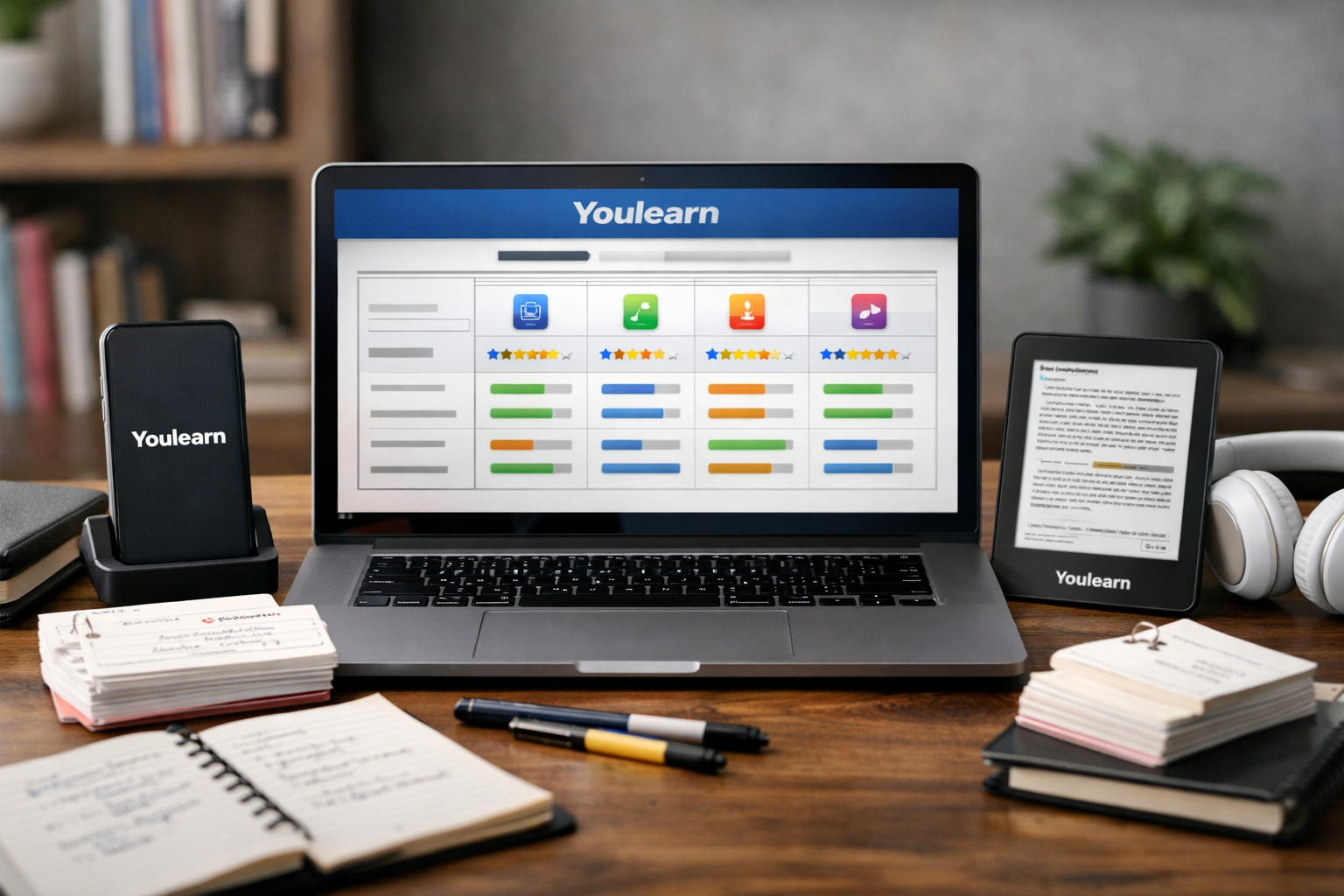
Students searching for youlearn alternatives 2026 usually want one of two things: a lower-cost way to study with AI or a more structured system for retaining what they learn. Uploading a source and getting an explanation can be useful, but exam preparation often requires more—such as flashcards, repeated review, source-based answers, and clearer study organization.
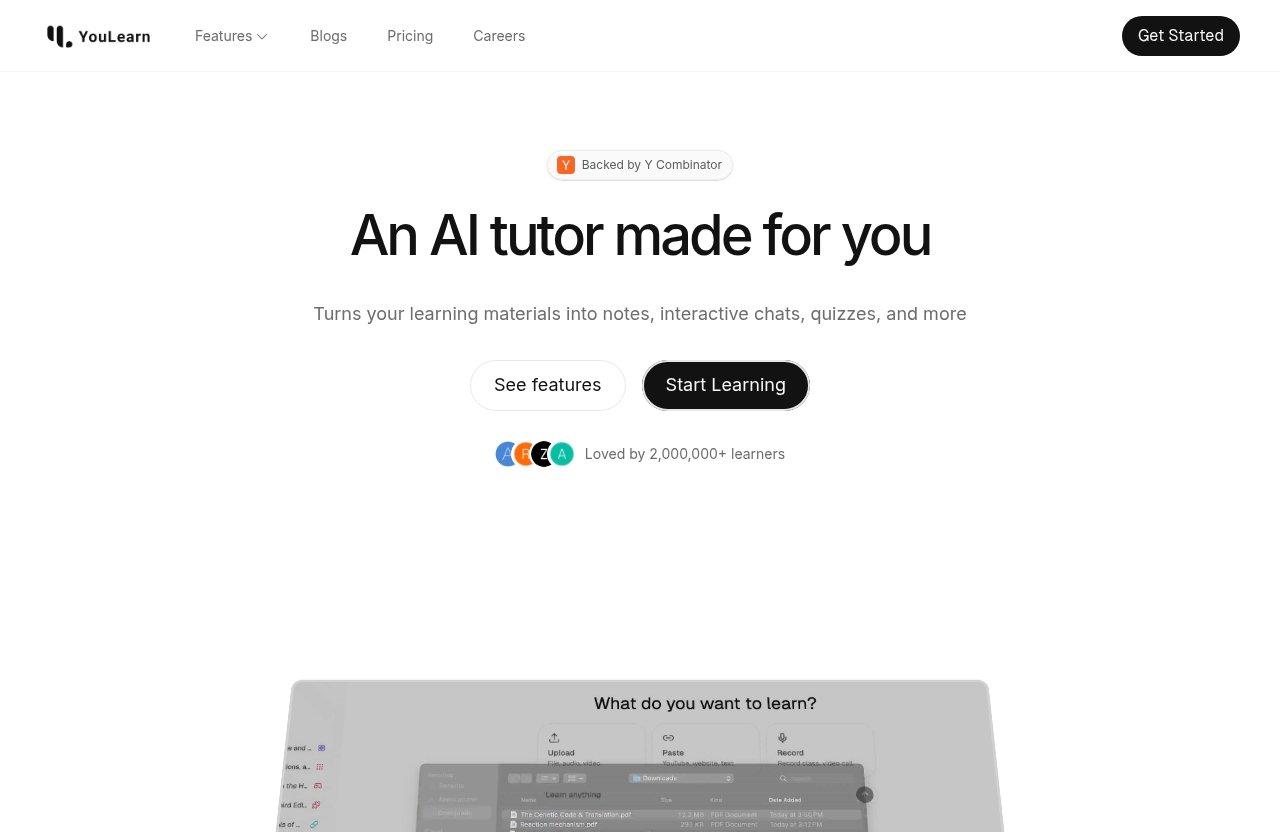
YouLearn positions itself as “An AI tutor made for you” that lets users chat with YouTube videos, PDFs, slides, websites, files, and lectures. That broad source support is appealing, yet it is not the only approach to AI-assisted learning. This guide compares seven practical options: NotebookLM, Quizlet, Mindgrasp, Otio, Brainscape, Scholarcy, and ChatPDF.
This article may contain affiliate links. If you purchase through one, TopTrustReview may earn a commission at no additional cost to you. That does not change how the tools are assessed; the goal is to help you choose a workflow that matches how you actually study.
Official website · Latest pricing & offers
Why Students Look for YouLearn Alternatives in 2026
Quick Summary of YouLearn’s Core Use Case
At its core, YouLearn is designed for learners who want to ask questions about their own materials. Its official description includes YouTube videos, PDFs, slides, websites, files, and lectures, making it relevant for students who work across more than one source format.
For many learners, that source-to-chat workflow is a convenient starting point. Still, people comparing youlearn alternatives 2026 are often deciding whether they need a better recall system, a research notebook, a dedicated flashcard app, or a simpler PDF assistant.
Common Reasons Users Switch: Pricing, Workflow, Retention, and Exam Prep
The biggest reason to compare study tools is that summarization is not the same as learning. A good summary may help you understand a topic once, but it does not automatically create the repeated retrieval practice needed before a cumulative exam.
Students also have different inputs. One person may need to review lecture slides and recordings, while another is buried in journal articles or textbook chapters. The best youlearn alternatives 2026 are therefore not necessarily direct clones; they may solve a different, more specific study problem.
Common switching triggers include:
- Wanting flashcards or a stronger memorization routine
- Needing answers that stay closely grounded in uploaded sources
- Working mainly with PDFs rather than mixed media
- Looking for simpler note digestion and article summaries
- Comparing free access before committing to another subscription
- Needing a workflow that feels less like chat and more like a study plan
Who This Guide Is For
This comparison is for high school students, college students, exam candidates, researchers, and knowledge workers who learn from long-form content. It is especially relevant if you use videos, PDFs, lecture notes, websites, or slides and want AI to reduce the setup time.
If you simply need a conversational way to work through mixed materials, YouLearn’s study workflow may still be worth evaluating. But if your main goal is retention, research synthesis, or rapid PDF review, the youlearn alternatives 2026 below may provide a closer fit.
How We Chose the Top 7 Alternatives
Evaluation Criteria: Source Support, Study Depth, Quizzes, Flashcards, and UX
I reviewed these youlearn alternatives 2026 through the lens of a real student workflow: collect material, understand it, test yourself, and return to difficult concepts later. A tool can be impressive in one stage and weak in another, so a broad feature list alone is not enough.
The comparison emphasizes:
| Criterion | Why It Matters |
|---|---|
| Source support | Your tool should work with the materials you already receive from class or work. |
| Study depth | Helpful tools go beyond short summaries and support follow-up questions or structured review. |
| Quizzes and flashcards | Active recall is often more useful for exams than rereading. |
| Source grounding | Learners should be able to check where an answer came from when accuracy matters. |
| Ease of use | A complicated tool can create more study friction than it removes. |
| Cost flexibility | Free access matters, but so do the limits that may affect a serious study routine. |
What Counts as a Good Alternative for Students
A good alternative does not have to cover every input type. For example, ChatPDF can make sense for a learner focused almost entirely on documents, even though it is narrower than a multi-source tool. Likewise, Brainscape may suit a student who already has notes but needs a disciplined memory practice system.
The best youlearn alternatives 2026 are the ones that match the bottleneck in your process. If you cannot understand readings, prioritize explanation and source-grounded chat. If you understand material but forget it, choose flashcards and spaced review instead.
How to Interpret Free vs Paid Options
Searches for youlearn alternatives 2026 free often assume that free means fully usable forever. In practice, free access can be a good way to test interface fit, but may have limits around uploads, advanced study generation, storage, or usage volume.
Before upgrading, test a tool with one actual unit from your course. Upload a representative reading or use a typical set of notes, then ask whether the result saves time without making you trust it blindly. The best AI for studying free is usually the one that supports your current workload—not the one with the longest feature list.
Top 7 YouLearn Alternatives in 2026
1. NotebookLM
Best for: Source-grounded research, reading-heavy classes, and studying from a defined collection of materials.
NotebookLM is one of the strongest youlearn alternatives 2026 for students who want to build a study workspace around selected sources. Its general positioning centers on working with your documents and asking questions in the context of those materials, which is useful when you need to trace an explanation back to a reading.
Standout use case: A history, law, social science, or graduate student collecting lecture notes, articles, and course readings around a single topic.
Limitations: It is better viewed as a research and source-synthesis workspace than a dedicated memorization system. If your exam success depends on daily flashcard repetition, you may still want a separate recall tool.
Who should choose it: Pick NotebookLM if your biggest problem is managing and interrogating a pile of sources. Among notebooklm alternatives, it is a practical choice when citation awareness and research organization matter more than gamified study.
2. Quizlet
Best for: Flashcards, term-heavy subjects, and familiar active-recall routines.
Quizlet is a well-known name among AI study tools for students because it centers on flashcard-based learning. It is often a natural choice for vocabulary, definitions, formulas, anatomy terms, and other content that improves through repeated recall.
Standout use case: A student preparing for a language test, biology midterm, or introductory course with a large volume of key concepts.
Limitations: Flashcards can oversimplify material that requires argument, context, or multi-step reasoning. You will need to make sure cards test understanding rather than only recognition.
Who should choose it: Choose Quizlet when memorization is your priority. For students comparing quizlet alternatives, the key question is whether you want a large flashcard-oriented ecosystem or a more source-centered AI workspace.
3. Mindgrasp
Best for: Turning course content into concise study aids and working through lecture-oriented material.
Mindgrasp is commonly positioned as an AI learning assistant for converting learning materials into more digestible outputs. It belongs on a list of youlearn alternatives 2026 for learners who want help moving from dense class content toward summaries, notes, and review-ready material.
Standout use case: A college student who receives lectures, readings, and recorded course materials and wants a faster first pass before creating personal notes.
Limitations: Any AI-generated study output needs verification against the original source, especially in technical, scientific, or assessment-sensitive subjects. It should support your review process, not replace careful reading.
Who should choose it: Consider Mindgrasp if you value study-content conversion and fast orientation. It can be a reasonable fit for students researching mindgrasp alternatives but still wanting an all-in-one learning-focused interface.
4. Otio
Best for: Research synthesis, web-based reading, and organizing information before writing or studying.
Otio is more research-workflow oriented than a traditional flashcard platform. It can appeal to students who gather material from articles, websites, documents, and online research before they begin outlining an essay, revising for a seminar, or preparing a presentation.
Standout use case: A learner preparing a research paper who needs to bring scattered sources into a clearer reading and writing process.
Limitations: It may be more than a student needs for a straightforward vocabulary test or a short worksheet. Learners looking mainly for drill-based recall may prefer Quizlet or Brainscape.
Who should choose it: Otio makes sense for research-heavy learners who want to consolidate sources, not just produce isolated summaries. It is one of the more relevant otio alternatives comparisons for people whose studying overlaps with writing and project work.
5. Brainscape
Best for: Long-term memorization and structured flashcard review.
Brainscape is a flashcard-focused option that deserves consideration when retention is the central concern. Unlike tools built around chatting with sources, it is aimed more directly at the practice stage of learning: seeing a prompt, recalling an answer, and revisiting it over time.
Standout use case: A medical, nursing, certification, or language learner who has a large body of facts to retain over several weeks or months.
Limitations: It is not a replacement for a source-analysis tool. You may need to create or refine cards from your notes, readings, or another AI tool’s summaries.
Who should choose it: Choose Brainscape if you already understand your course materials but keep forgetting them. It is one of the best youlearn alternatives 2026 when the problem is memory rather than content access.
6. Scholarcy
Best for: Academic papers, textbook chapters, and dense reading triage.
Scholarcy is associated with making long academic content easier to scan and review. That positioning can help students who face an overwhelming reading list and need to identify key arguments, concepts, and sections before deeper study.
Standout use case: A postgraduate student reviewing several journal articles for a literature review, seminar discussion, or research methods class.
Limitations: A condensed overview should not be treated as a substitute for reading a primary source closely. Important caveats, methodology details, and author qualifications can be lost when material is shortened.
Who should choose it: Pick Scholarcy if your first challenge is getting through academic documents efficiently. It is less suited to learners who want video-based tutoring or a full flashcard-centered revision plan.
7. ChatPDF
Best for: Simple PDF question-and-answer workflows.
ChatPDF has a focused premise: interact with a PDF rather than manually searching through every page. That makes it a useful comparison point for students who primarily receive textbook excerpts, handouts, readings, or exported lecture slides as PDFs.
Standout use case: A student who needs to locate explanations, definitions, or passages inside a single course document without building a broader study workspace.
Limitations: Its PDF-first workflow can feel restrictive if your materials are mostly videos, websites, recordings, or mixed-source research folders. It is also not inherently a complete memorization system.
Who should choose it: ChatPDF is a sensible option for a narrow document workflow. Among youlearn alternatives 2026, it is best for learners who value speed and simplicity over an all-in-one study environment.
Best Alternative by Student Goal
Best for Source-Grounded Research
NotebookLM is the clearest fit for source-grounded research. When your work depends on comparing assigned readings, checking claims, and keeping answers tied to a selected source collection, its research-notebook style is more suitable than a flashcard-first tool.
For the best youlearn alternatives 2026 in research-led subjects, prioritize traceability over novelty. A polished explanation is less valuable if you cannot easily verify it against the original material.
Best for Flashcards and Memorization
Quizlet is a practical choice for broadly accessible flashcard study, while Brainscape is worth considering for learners who want a more dedicated recall routine. The better choice depends on which interface and review method you will use consistently.
For fact-heavy coursework, these tools may be more effective than a source-chat product. They address the “I forget everything after I read it” problem directly.
Best for Lecture Notes and Summaries
Mindgrasp is a reasonable candidate for students who want to turn lectures and class materials into manageable study aids. Scholarcy can be a stronger fit when the “lecture notes” are really scholarly articles or textbook chapters.
The right tool depends on source type. This is why broad searches for youlearn alternatives 2026 should begin with your actual materials, not a generic feature comparison.
Best for PDF-Only Workflows
ChatPDF is the most straightforward pick for a PDF-only workflow. If nearly every resource in your course is a PDF, a specialized tool can be less distracting and faster to learn than a broad platform.
For academic PDF triage, Scholarcy is also worth considering. ChatPDF fits targeted questions; Scholarcy may better suit a reading queue that needs condensing first.
Best Budget-Friendly Pick
For budget-conscious learners, NotebookLM is often a sensible first tool to evaluate for source-based study. The right “free” choice changes with availability, limits, and the type of source you need to use, so check current product terms before committing your study system to one platform.
The best budget pick among youlearn alternatives 2026 free is the one that handles your highest-value task without forcing an early upgrade. Test it with one lecture or reading before moving an entire semester’s work.
Best for AI Tutoring or Explanation
For conversational explanations across multiple kinds of learning material, YouLearn may be relevant because its official description includes chatting with videos, PDFs, slides, websites, files, and lectures. If you want to evaluate that mixed-source approach before switching, you can review YouLearn here.
Among alternatives, NotebookLM is often the better fit when answers need to stay closely connected to a defined source set. Mindgrasp may appeal more when your workflow begins with converting course content into study-friendly outputs.
Official website · Latest pricing & offers
YouLearn vs Alternatives: What Changes in Real Studying
Content Conversion vs Active Recall
The major difference between YouLearn-style tools and flashcard platforms is where they sit in the learning cycle. Source-chat and content-conversion tools can help with comprehension, while flashcards force you to retrieve information without seeing the answer.
This distinction matters in youlearn alternatives 2026 comparisons. If you have not understood the lecture, use an explanation-focused tool first. If you understand it but cannot recall it during an exam, transition that knowledge into questions, cards, or practice problems.
One-Off Summaries vs Spaced Repetition
A one-off summary is useful for orientation, especially with a long chapter. But rereading summaries can create a false sense of familiarity because recognizing information feels easier than retrieving it.
Spaced repetition tools such as Brainscape and flashcard workflows such as Quizlet are designed around reviewing information repeatedly. For cumulative courses, that routine may be more valuable than generating another summary each week.
Generic Q&A vs Adaptive Learning Workflows
Generic Q&A is flexible: you ask what you need at the moment. The downside is that the learner must decide what to ask, what to revisit, and whether the answer is complete.
A structured learning workflow gives more support for repetition and organization. When evaluating youlearn alternatives 2026, decide whether you need a helpful conversation partner or a system that pushes you to practice consistently.
What to Look for Before You Switch
Supported File and Media Types
Start with your source reality. If your professor shares lecture recordings, slides, web links, and PDFs, choose a tool that fits mixed media. If you only work with assigned PDFs, a specialized option may be enough.
Do not pay for broad source support you will not use. Conversely, do not choose a PDF-only tool if video lectures are your main learning material.
Quiz Generation and Flashcards
Ask whether a tool helps you move from passive input to active recall. Even if it can create questions or cards, inspect them before studying; weak prompts often test trivia instead of core understanding.
For exam prep, prioritize clear questions, answer accuracy, and a review habit you can maintain. These are more important than an impressive-looking generated summary.
Source Citations and Trustworthiness
When studying from research, clinical content, law, or any high-stakes topic, source grounding matters. AI can misunderstand a table, miss qualifications, or state a confident but incomplete interpretation.
Use AI to navigate and explain materials, then verify important claims in the original PDF, lecture, or source. This is one of the most important decision criteria across study ai tools 2026.
Collaboration and Device Support
Consider where and how you study. Group projects may benefit from shared materials, while commuters may care more about smooth mobile access and quick review sessions between classes.
Your tool should fit your existing behavior. A perfect desktop workspace is not useful if all your revision happens on a phone the night before class.
Free Plan Limitations and Upgrade Triggers
Before upgrading, identify the exact friction you are paying to remove. It could be upload capacity, access to a specific workflow, or the need to manage more than one course at a time.
Avoid upgrading because a tool seems generally useful. Upgrade only when it saves enough time or improves consistency in a measurable way for your own workload.
Recommended Use Cases for Different Learners
High School and College Exam Prep
For broad exam preparation, pair an understanding tool with a recall tool. NotebookLM or Mindgrasp may help organize dense material, while Quizlet or Brainscape can handle definitions, formulas, and repeat review.
Students comparing youlearn alternatives 2026 for general coursework should avoid relying on summaries alone. Use AI to create a first draft of your study materials, then test yourself without looking at them.
Med School and Dense Lecture Review
Medical and health-related learners often face lecture-heavy, terminology-rich courses. A tool for digesting materials can help at the beginning, but a structured flashcard system is usually more aligned with long-term recall demands.
Brainscape and Quizlet are logical categories to evaluate for memory practice. Always validate generated content against authoritative course resources, especially for clinical or scientific information.
Research-Heavy Reading
For research papers, dissertation reading, and seminar preparation, NotebookLM and Otio are strong workflow categories to explore. They are more relevant when the task involves comparing sources, identifying themes, and preparing to write or discuss an argument.
Scholarcy can also be helpful for initial reading triage. Use it to prioritize where to spend close-reading time, not to skip the original papers entirely.
Language Learning and Memorization
Language learners often benefit most from frequent, small retrieval sessions. Quizlet and Brainscape are better-aligned with vocabulary, phrase recall, and repeated review than a tool focused mainly on document chat.
For grammar or listening comprehension, AI explanations can still help. Just make sure the workflow includes producing the language, not merely reading explanations about it.
Students on a Tight Budget
Students seeking the best ai for studying free should start narrow. Pick the task that costs you the most time—such as reading long PDFs, organizing research, or memorizing terminology—and test one free-access option against it.
Do not build your workflow around tools you cannot sustain. Among youlearn alternatives 2026, a focused free tool plus a simple personal note system can be more practical than juggling several limited platforms.
Final Verdict: Which YouLearn Alternative Is Best in 2026?
Overall Best Pick
NotebookLM is the overall best choice for learners whose studying depends on reading, research, and asking questions grounded in a set of materials. It is especially compelling when your course involves several documents rather than a single flashcard deck.
Best Free Pick
For a budget-sensitive source-based workflow, NotebookLM is a strong option to explore first, subject to its current access terms and limitations. Students should still check that it accepts the source types they use most often.
Best for Memorization
Quizlet and Brainscape are better choices when retention is the real issue. Quizlet suits learners who want a familiar flashcard environment, while Brainscape fits those seeking a more focused repeated-review routine.
Best for Research-Heavy Studying
NotebookLM and Otio stand out for research-oriented workflows, while Scholarcy can help make a heavy reading list less intimidating. The best youlearn alternatives 2026 are not one-size-fits-all: choose NotebookLM for source-grounded exploration, Quizlet or Brainscape for recall, Mindgrasp for digesting study content, Scholarcy for academic reading triage, and ChatPDF for simple document questions.
Official website · Latest pricing & offers
FAQ
Who are YouLearn's main competitors?
YouLearn’s main competitors depend on the study workflow you need. Common options include NotebookLM, Quizlet, Mindgrasp, Otio, Brainscape, Scholarcy, and ChatPDF.
Some are closer to research assistants, while others are flashcard or PDF-focused tools. When comparing youlearn ai competitors, first decide whether you need source analysis, summaries, flashcards, or structured memorization.
What is the best AI tool for students in 2026?
There is no universal best tool because students have different source types and learning gaps. NotebookLM is a strong category fit for source-grounded research, Quizlet and Brainscape suit memorization, Mindgrasp can suit study-content conversion, and ChatPDF works well for focused PDF Q&A.
The best choice is the one that supports your next study action. If you need to understand a source, choose an explanation-oriented tool; if you need to remember it for an exam, choose an active-recall workflow.
What are the most popular AI tools in 2026?
Student-focused AI tools commonly discussed in 2026 include NotebookLM, Quizlet, Mindgrasp, Otio, Brainscape, Scholarcy, and ChatPDF. They are used for different tasks, including note review, document questions, summaries, research synthesis, quizzes, and flashcards.
Popularity is less important than fit. The most useful ai study tools for students are the ones that work with your materials and encourage reliable study habits rather than passive scrolling.
Is YouLearn AI good?
YouLearn can be useful for learners who want to chat with study sources such as YouTube videos, PDFs, slides, websites, files, and lectures. That mixed-source approach can be convenient for understanding unfamiliar course material.
However, some students may outgrow it if they need stronger memorization workflows, spaced review, deeper research organization, or a more specialized PDF tool. Comparing youlearn alternatives 2026 is worthwhile when your study challenge is retention or research structure rather than source access alone.
Related Reading
- YouLearn vs Quizlet: Which Study Tool Is Better in 2026?
- YouLearn vs ChatGPT for Studying: Which AI Tool Is Better in 2026?
- How to Use Gohighlevel in 7 Easy Steps
References
- Top 10 YouLearn AI Alternatives for AI-Powered Study in 2026
- Top 10 YouLearn Alternatives & Competitors in 2026
- 11 Best YouLearn AI Alternatives Worth Trying in 2026
- 10+ Best YouLearn AI Alternatives for AI Tutoring