Webflow for Blog Sites: Pros and Cons
Official website · Latest pricing & offers
Webflow for Blog Sites: Quick Verdict
Webflow for blog sites is good for creators who want a distinctive, highly branded publication and are willing to invest more time in setup than they would with a traditional blogging platform. It is not the simplest route to publishing your first article, but it can be a strong long-term choice when design, content structure, and site presentation matter as much as writing.
In this Webflow for blog review, my practical view is simple: Webflow works best when your blog is part of a broader business, portfolio, editorial brand, or content marketing site. It is less compelling when your only goal is to publish straightforward posts quickly with minimal technical decisions.
Who Webflow Is Best For
Webflow for blog projects suits design-conscious solo creators, marketers, freelancers, and small editorial teams. It is particularly useful when the blog needs to feel integrated with service pages, case studies, landing pages, and a polished brand identity.
If you are building a client-facing presence, see our related guide to [Webflow for Freelancers](/webflow-for-freelancers/). The platform makes the most sense when the site itself is part of your professional positioning.
Who Should Probably Choose Something Simpler
A simple personal journal, hobby blog, or early-stage writing project may not need Webflow for blog publishing. Easier publishing tools typically let you choose a theme, start a post, and focus on writing with fewer design and structure decisions.
If you do not care much about custom layouts, structured content collections, or a highly tailored visual identity, a simpler platform may give you a better publishing-to-effort ratio.
Bottom-Line Recommendation
The Webflow blogging pros and cons come down to control versus convenience. You gain visual flexibility, a structured CMS approach, and more ownership over the presentation of your content, but you give up some of the immediate familiarity of a classic publishing-first tool.
Try Webflow if you value design control and want your blog to support a broader brand. Choose a simpler alternative if publishing speed and low-maintenance writing are your top priorities.
What Webflow Is and Why Bloggers Consider It
Webflow as a Visual Web Platform
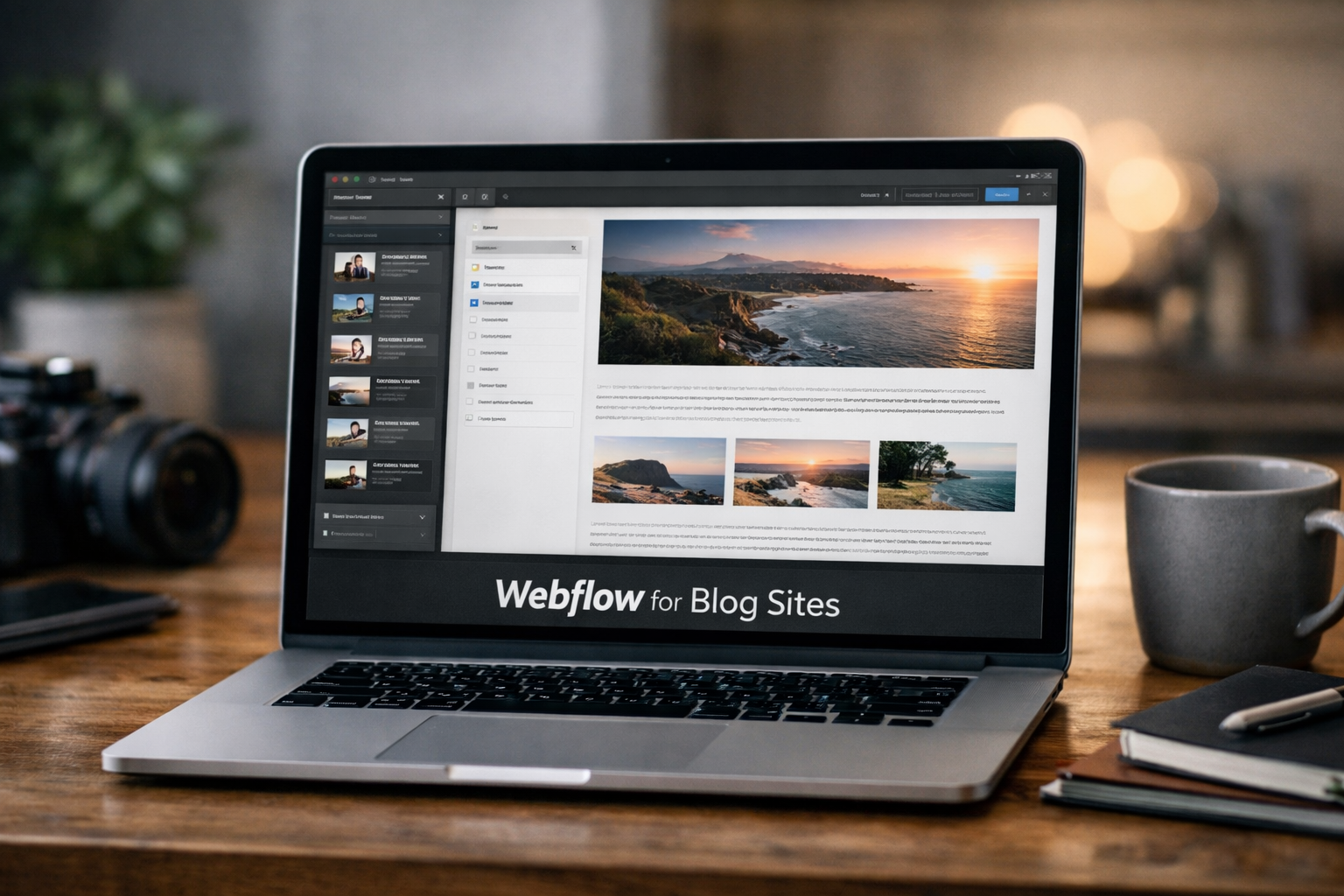
Webflow for blog use is different from using a traditional blogging tool. It is a visual web platform with CMS capabilities, meaning you build and manage a complete website visually rather than simply operating within a pre-set blog theme.
That distinction matters. With Webflow, your articles can sit inside a custom-designed site experience instead of feeling like a separate, templated publishing section. For creators who care about every part of the reader journey, that is a meaningful advantage.
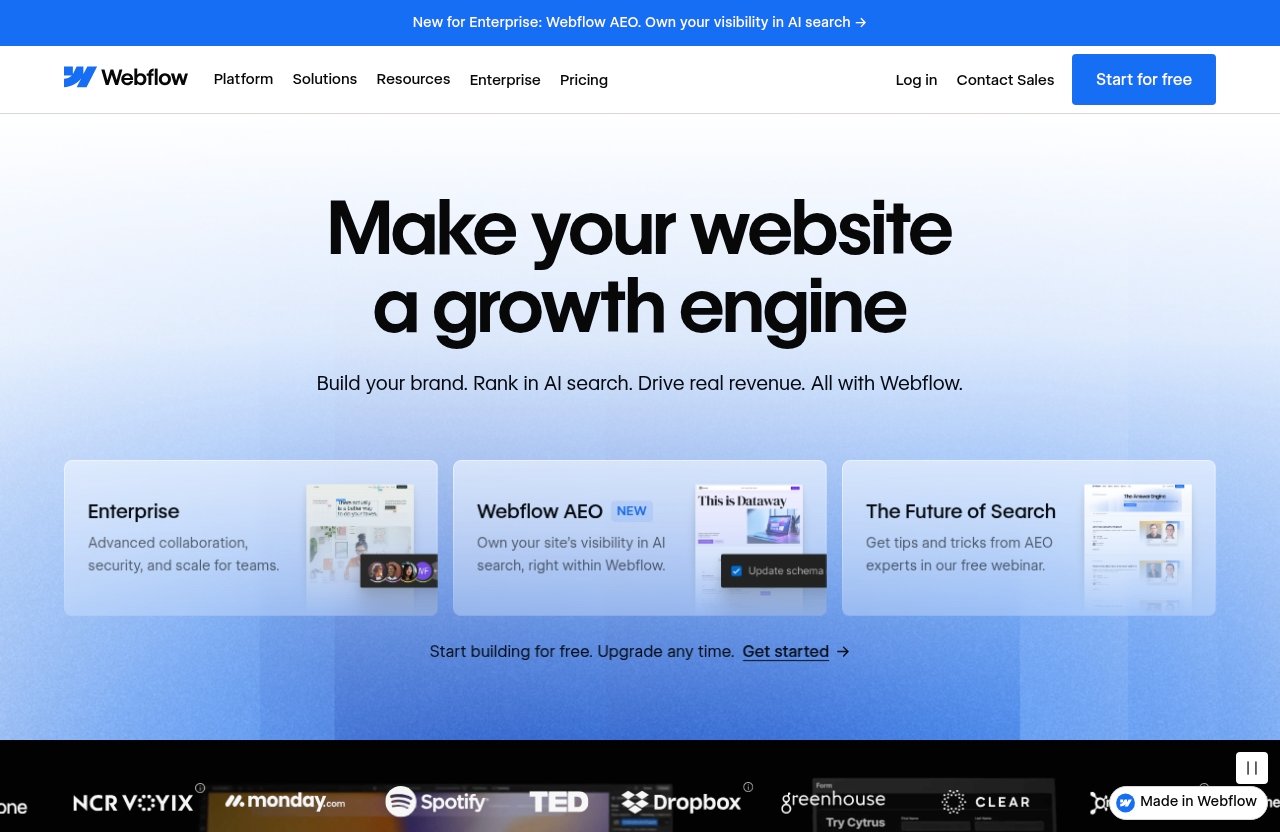
The official Webflow homepage positions the product as a website experience platform, which is the right way to view it. Blogging is one important use case, but it is not the platform’s only purpose.
How the CMS Supports Blog Content
The webflow CMS for blogging approach is based on structured content. Rather than treating every post as an isolated page, you can organize articles around fields and reusable content types such as authors, categories, featured images, summaries, and related resources.
For a growing blog, that structure can make the site feel more consistent. It also encourages you to think about content operations before publishing dozens of articles, which is useful for content marketers but can feel like extra work for a beginner.
Our [Webflow CMS Review](/webflow-cms-review/) explores that content-management side in more detail. For many site owners, the CMS is the main reason Webflow for blog publishing becomes attractive after the initial learning period.
Why It Appeals to Design-First Creators
A standard webflow blog template can provide a starting point, but the main appeal is the ability to tailor the final result. You can shape article pages, category views, author sections, calls to action, and supporting pages to suit your own visual system.
This is why many webflow blog examples look more like digital magazines, brand publications, or premium portfolio sites than conventional blogs. The platform is appealing when your design needs go beyond changing colors and fonts.
Pros of Using Webflow for a Blog
Flexible Design and Custom Layouts
The clearest benefit of Webflow for blog owners is creative control. You can make your article pages feel like a deliberate part of your brand rather than an off-the-shelf content feed.
This matters for consultants, agencies, creators, and niche publishers whose website needs to build trust before a reader ever reaches a contact form. A well-designed reading experience can reinforce expertise and make even evergreen articles feel current.
A flexible layout also lets you present content differently depending on intent. A tutorial, case study, opinion piece, resource library, and newsletter archive do not all need to look identical.
Strong CMS Structure for Content Teams
Webflow for blog sites can be especially useful when several people contribute to content. A structured CMS creates consistency around how posts are prepared and displayed, even if writers, editors, and designers have different responsibilities.
The key practical advantage is repeatability. Once the blog structure is designed well, the team can work from a clearer content model instead of rethinking every article page from scratch.
This is one reason the platform often fits a small marketing site better than a casual personal publication. You spend more effort on the system upfront, but that system can support a more organized editorial operation later.
SEO and Technical Control
Is Webflow good for blogging from an SEO perspective? It can be, particularly for site owners who want control over how their pages are organized, designed, and maintained.
The important point is that Webflow does not replace a content strategy. Search performance still depends on useful topics, strong writing, internal linking, topical relevance, and regular content maintenance. A beautifully designed blog with weak articles will not become competitive simply because it uses a more flexible platform.
From a reviewer’s perspective, the benefit is control rather than a shortcut. You can build a cleaner, more intentional content experience, but you still need an SEO process behind it.
Fast, Polished Publishing Experiences
Once the structure is in place, Webflow for blog publishing can produce a polished workflow for repeatable article formats. The visual consistency of cards, headings, author areas, and related-post sections can make a content hub look more credible.
That said, the polished result depends on thoughtful setup. Webflow rewards planning and design discipline more than it rewards rushing to publish.
For a business blog, that trade-off can be worthwhile. For a writer who wants to publish daily with no interest in site design, it may be unnecessary friction.
Cons of Using Webflow for a Blog
Steeper Learning Curve Than Beginner Tools
The biggest downside of Webflow for blog beginners is the learning curve. A traditional blogging platform usually assumes that you want to write first and customize later; Webflow asks you to think more deeply about pages, layouts, content structure, and visual behavior.
That learning investment is not automatically bad. It is valuable if you want a more custom website, but it can delay publishing for someone who mainly needs a clean place to write.
This is also a recurring theme in webflow for blog Reddit discussions: people often admire the design potential while acknowledging that it takes time to become comfortable with the platform. Treat informal community feedback as perspective, not as a substitute for testing the product yourself.
CMS Setup Can Feel Technical
Webflow for blog management becomes easier after your structure is defined, but defining that structure can feel technical at first. You need to decide how article information should be organized before you can benefit from a reusable system.
For example, content fields, categories, authors, and visual templates require decisions that simpler tools may hide from you. That can be a strength for an established content operation and a burden for a one-person blog that publishes occasional updates.
The practical lesson is to avoid overbuilding. Start with the content structure you truly need, not every possible field you might use someday.
May Be Overkill for Simple Personal Blogs
A basic personal blog often does not need Webflow for blog content. If your plan is to publish short essays, occasional updates, or a modest archive of writing, a simpler tool can keep you focused on the work that matters: creating useful posts.
Webflow becomes more justifiable when the blog has a commercial role. If it supports lead generation, a portfolio, a product, a newsletter, or a carefully developed personal brand, the platform’s design flexibility has a clearer return.
Before deciding, read [Is Webflow Free?](/is-webflow-free/) to understand the free Starter option and where a paid plan may become relevant.
Potential Cost and Workflow Trade-Offs
The webflow blogging pros and cons are not limited to the subscription price. Time is also a cost. You may spend more effort planning layouts, learning the editor, and maintaining a refined design system than you would on an easier tool.
Webflow for blog sites is therefore best evaluated as a business decision, not just a software decision. Ask whether the additional control will improve your brand, conversion path, or team workflow enough to justify the added involvement.
If the honest answer is no, choose the simpler path. There is no prize for using a more capable platform than your site requires.
Official website · Latest pricing & offers
Webflow Pricing for Blog Sites
Webflow for blog pricing should be assessed using the official plan details, not assumptions about what a creator “should” need. All prices below are in USD per site, with applicable taxes added at checkout.
Starter Plan
The Starter plan is free. It includes a Webflow.io domain, limited Webflow CMS, 2 static pages, 1 GB bandwidth, 50 form submissions, Webflow AI, MCP server, Webflow Cloud app hosting, and a Free Starter Workspace.
For Webflow for blog testing, this is the sensible place to explore the platform’s interface and determine whether its visual workflow suits you. The limited CMS and two static pages mean it is best treated as an evaluation option rather than a full commercial blog setup.
Basic Plan
The Basic plan costs $15 per month billed yearly. It includes a custom domain, 300 static pages, 10 GB bandwidth, unlimited form submissions, password protection, Webflow AI, MCP server, Webflow Cloud app hosting, and a Free Starter Workspace.
For a site without CMS-driven blog requirements, Basic may be relevant. However, the official plan details list Webflow CMS under Premium, so bloggers who specifically want a CMS-based publishing workflow should consider that distinction carefully.
Premium Plan
The Premium plan costs $25 per month billed yearly. It includes everything in Basic, plus Webflow CMS, code components, site search, form file upload, and well-known files.
For most serious Webflow for blog projects, Premium is the plan to examine first because it explicitly includes Webflow CMS. It is the clearest fit for a content-led site that needs CMS-based article management alongside a custom domain and broader website functionality.
Which Plan Makes Sense for Bloggers
| Blogging situation | Plan to consider | Why |
|---|---|---|
| Learning the platform or testing a concept | Starter | Free access with a Webflow.io domain and limited CMS |
| Building a mostly static branded site | Basic | Custom domain and up to 300 static pages |
| Operating a CMS-based content site | Premium | Includes Webflow CMS and site search |
| Managing more formal team publishing operations | Team | Includes publishing workflows and governance-related features |
| Large organization with advanced requirements | Enterprise | Includes enterprise-ready scale and custom configurations |
The right Webflow for blog plan depends on your workflow, design needs, and content volume. Avoid choosing based solely on the lowest price; choose based on whether the plan includes the publishing model your site actually needs.
PRODUCT FACTS: Verified Webflow Plans and Features
The following details are based on the official Webflow pricing page. Prices are USD per site, plus applicable taxes added at checkout.
Starter
Starter: Free. Includes Webflow.io domain, limited Webflow CMS, 2 static pages, 1 GB bandwidth, 50 form submissions, Webflow AI, MCP server, Webflow Cloud app hosting, and Free Starter Workspace.
Basic
Basic: $15/mo billed yearly. Includes custom domain, 300 static pages, 10 GB bandwidth, unlimited form submissions, password protection, Webflow AI, MCP server, Webflow Cloud app hosting, and Free Starter Workspace.
Premium
Premium: $25/mo billed yearly. Includes everything in Basic, plus Webflow CMS, code components, site search, form file upload, and well-known files.
Team
Team: $2,500/mo annual contract required. Includes everything in Premium, plus Site & Workspace, Webflow Localize, AEO agents, publishing workflows, single-page publishing, site activity log & API, foundational governance, enhanced security & compliance, and priority support.
Enterprise
Enterprise: Custom pricing. Includes everything in Team, plus enterprise-ready scale, granular permissions, custom roles, advanced governance, secure integrations, dedicated account manager, enhanced SLAs, and custom configurations.
How Webflow Compares With Easier Publishing Tools
What Bloggers Give Up for Simplicity
Easier publishing tools usually reduce the number of choices you make. They are often more immediately comfortable for writers because they prioritize getting a post live over designing a fully custom site.
When choosing Webflow for blog content, you are accepting more setup in exchange for more control. That is not a universal upgrade; it is a different operating model.
A simple platform is often better if you want to publish quickly, use familiar blog conventions, and avoid spending time on visual systems. For many individual writers, that is exactly the right choice.
What They Gain With Webflow
With Webflow for blog projects, you gain the ability to shape the broader website around your content. Your articles can connect more naturally with custom service pages, conversion paths, portfolios, resource pages, and a differentiated visual identity.
The experience is less “select a theme and start writing” and more “build a publication that reflects the business behind it.” That is why Webflow often appeals to brand-led creators and marketing teams.
Best-Fit Scenarios
Choose an easier tool when content production is the entire project. Choose Webflow when the blog is one part of a larger website experience and that experience directly affects credibility, leads, or sales.
The platform is also a better fit when you are happy to learn its workflow or have design support available. If neither is true, an easier publishing tool will likely feel more productive.
Best Use Cases for Bloggers on Webflow
Personal Brand Blogs
Webflow for blog sites works well for consultants, coaches, speakers, and independent professionals. Their articles can sit beside offers, testimonials, services, and personal positioning without looking disconnected from the rest of the site.
The real value is cohesion. A visitor who finds one article through search can move naturally into the broader brand experience.
Portfolio-Plus-Blog Sites
Designers, developers, writers, photographers, and other creative professionals often need both portfolio pages and educational content. Webflow can bring those two content types together in one visually consistent environment.
In this scenario, a webflow blog template may provide a useful foundation, but the ability to customize the final presentation is the bigger advantage.
Agency or Niche Editorial Sites
For agencies and focused publishers, Webflow for blog content can support a more editorial presentation. It makes sense when the site needs clear categories, recurring post structures, featured content areas, and polished conversion paths.
The platform is most persuasive here when the team has a defined content process. Without a process, even a well-designed CMS can become more complicated than necessary.
Content Marketing Sites
A content marketing site benefits when articles are tied closely to product pages, service pages, lead magnets, and case studies. Webflow for blog use can be a strategic choice when the site is designed around both organic visibility and conversion.
However, content quality remains the priority. Do not choose a platform first and attempt to invent a content strategy afterward.
How to Decide if Webflow Is Right for Your Blog
Questions to Ask Before Choosing
Before committing to Webflow for blog publishing, ask what role your content plays in the business. Is the blog mainly a writing archive, a lead-generation channel, a trust-building asset, or a central part of an editorial brand?
Also consider who will publish and maintain the site. A creator who enjoys design and structure will have a very different experience from a writer who wants a frictionless editor.
Decision Checklist
Use this checklist before making your decision:
- Do you need a highly customized design rather than a standard blog appearance?
- Will your blog support services, products, a portfolio, or lead generation?
- Do you want structured content beyond simple post pages?
- Are you willing to spend time learning a visual web platform?
- Does your content volume justify building a reusable CMS workflow?
- Will multiple contributors benefit from a more defined publishing process?
- Are your SEO goals supported by a clear content strategy, not just a platform choice?
If you answer “yes” to most of these questions, Webflow for blog sites is likely worth serious consideration.
When to Upgrade From a Simpler Platform
Upgrade when your current platform is limiting your ability to present content and brand together. Common signals include needing more tailored article layouts, wanting a more cohesive portfolio-plus-blog site, or finding that your content marketing pages feel disconnected.
Do not upgrade merely because Webflow looks more advanced. Move when the additional design and CMS control solves a real workflow or business problem.
My practical recommendation is to evaluate workflow, design needs, and content volume before deciding. Webflow for blog projects is a strong option for ambitious, design-forward content sites, while a simpler platform remains the better choice for uncomplicated publishing goals.
Official website · Latest pricing & offers
FAQ
Is Webflow Still Relevant in 2026?
Yes. Webflow remains relevant in 2026, especially for design-focused websites and teams that want more control over layout, CMS structure, and publishing workflows. It is most relevant when a blog is part of a broader branded website rather than a standalone writing archive.
What Is the 80/20 Rule for Blogging?
The 80/20 rule for blogging means focusing most of your effort on the smaller group of posts, topics, updates, and optimizations that generate the majority of your traffic and conversions. In practice, identify your highest-value content, improve it regularly, and build related articles around proven themes.
What Are the Downsides of Using Webflow?
The main downsides are the learning curve, the more technical feel of CMS setup, and the risk that it is more platform than a simple blogger needs. Webflow can be excellent for custom, brand-led sites, but it is not always the fastest or easiest way to start publishing.
Is Webflow Better Than WordPress?
It depends on your priorities. Webflow is often a better fit for people who value visual control and a streamlined design workflow, while WordPress may suit users who want a more classic publishing-first stack. The best choice is the one that matches your design needs, publishing habits, technical comfort, and long-term content goals.
Related Reading
- Webflow for Freelancers: How to Package Higher-Ticket Client Builds
- Webflow CMS Review: Is It Good for Blogs?
- Is Webflow Free? 2026 Plan Breakdown
References
- Webflow Blog | Web Design, Development, Web Strategies
- Blog & Editorial Website Templates & Page Designs
- Should I blog with webflow?
- Webflow Blog Setup in 2026: CMS Native vs …