
Skool vs Teachable: Which Platform Is Better for Courses and Communities in 2026?
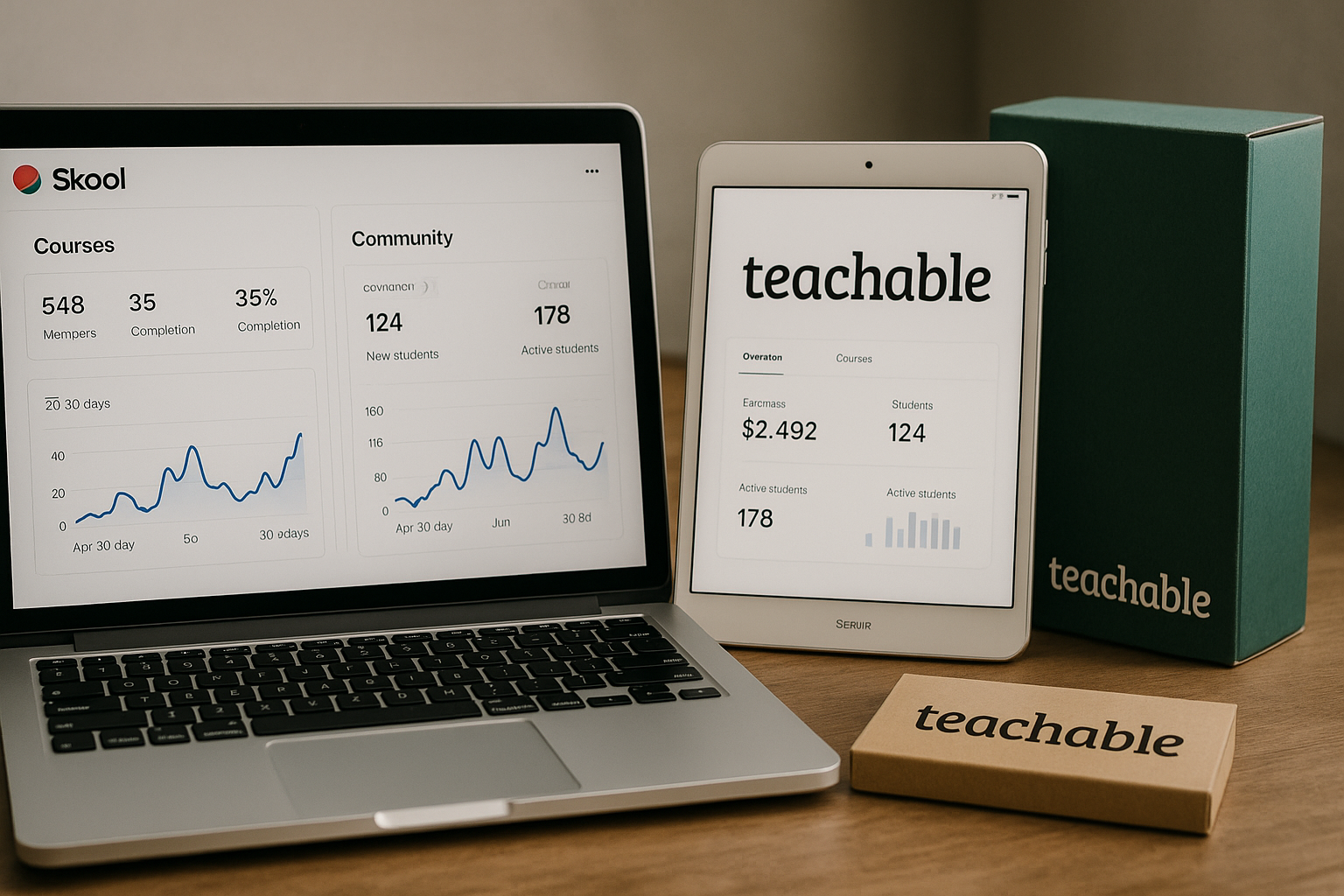
If you are comparing skool vs teachable in 2026, the fastest way to decide is this: Skool is strongest when community, engagement, memberships, and recurring interaction are central to your offer. Teachable is usually the better fit when your main product is a traditional online course with structured lessons.
I’ve reviewed this comparison from a buyer’s perspective: what creators actually need to launch, sell, and keep students engaged. This article is not about declaring one platform universally better. It is about helping coaches, course creators, community builders, and online educators choose the right tool for their business model.
Affiliate disclosure: TopTrustReview may earn a commission if you buy through our Skool link. This does not affect our recommendations, and the comparison below is based on practical fit, verified pricing facts, and platform positioning.
Official website · Latest pricing & offers
Skool vs Teachable: quick verdict for 2026
The skool vs teachable decision comes down to what you are really selling. Are you selling access to a community, coaching environment, mastermind, or membership experience? Or are you selling a course library where the lessons are the main product?
Skool leans toward the first model. Teachable leans toward the second.
Who should choose Skool
Choose Skool if your business depends on people interacting with you and each other. It is a better fit for creators who want a community-first platform with course hosting built in, rather than a course platform with community added around it.
Skool makes the most sense for:
| Best Fit For Skool | Why It Fits |
|---|---|
| Paid communities | The community is the core product |
| Coaching groups | Members need ongoing interaction |
| Masterminds | Engagement and accountability matter |
| Memberships | Recurring value is easier to communicate |
| Cohort-style offers | Live calls and discussion can support learning |
Based on the verified Skool pricing page, both Skool plans include unlimited members, unlimited courses, unlimited videos, unlimited live calls, custom URL, and affiliates. That makes Skool appealing if you want one simple place to host content and interaction.
Who should choose Teachable
Choose Teachable if your business is mainly about delivering a structured online course. If students are buying lessons, modules, and a more traditional course experience, Teachable is the safer course-first option.
This is where the skool community vs teachable course platform distinction matters. Skool is better when the community experience drives retention. Teachable is better when the course itself is the main value.
Teachable may also suit creators who are comparing traditional course platforms, such as in a teachable vs thinkific evaluation. In that case, the question is less about community and more about which course-first platform best fits your delivery style.
The one-sentence takeaway
For skool vs teachable, choose Skool if you are building a community-led membership, and choose Teachable if you are building a traditional course-led education business.
What Skool is built for vs what Teachable is built for
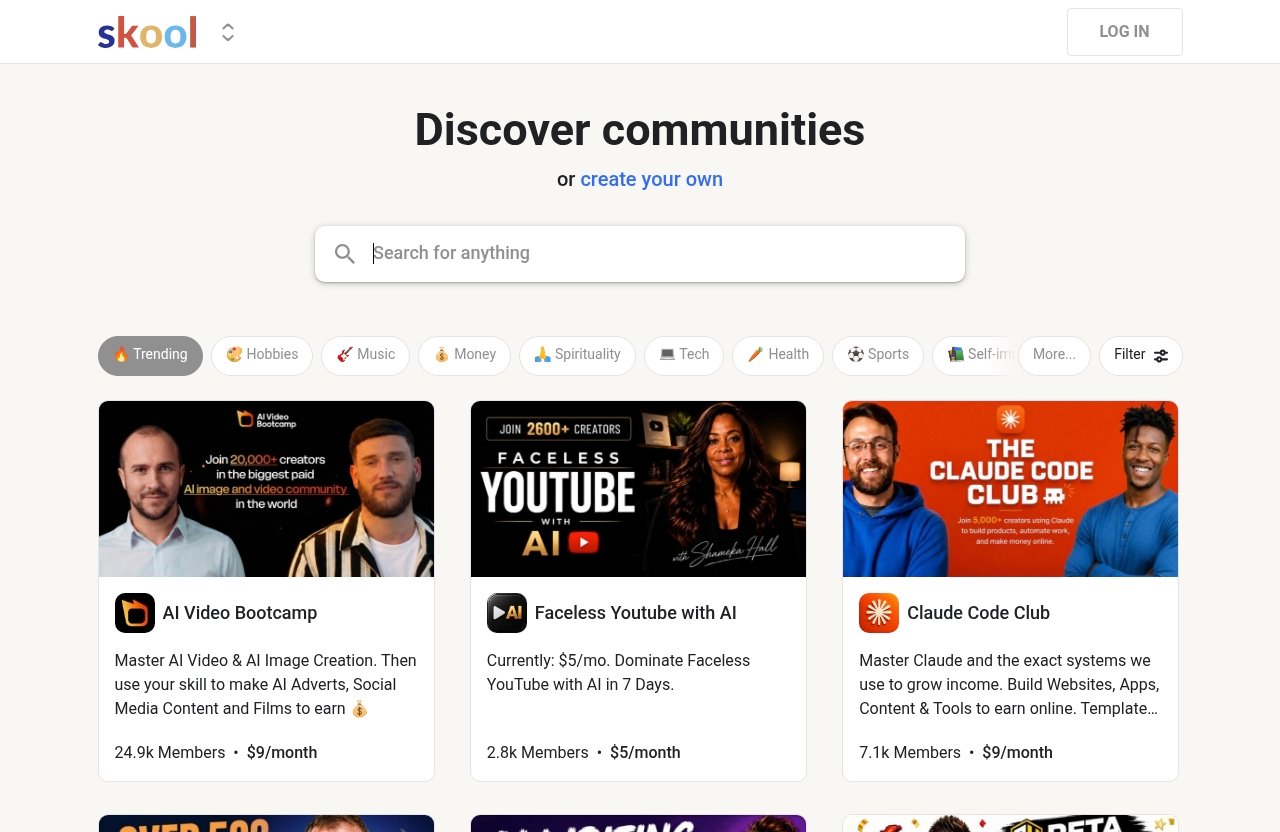
The most important difference in skool vs teachable is not a single feature. It is the platform philosophy.
Skool is built around community, engagement, member interaction, and recurring participation. Teachable is positioned more like a traditional online course platform where structured content delivery is the center of the experience.
Skool’s community-first model
Skool is primarily a community platform with course hosting. That means it is designed for creators who want students or members to come back regularly, ask questions, participate, attend live calls, and feel part of a group.
In a practical skool review, the biggest advantage is simplicity. You do not need to think of the course and the community as separate experiences. The offer can be “join the group, access the training, attend the calls, and participate.”
That is powerful for coaches, consultants, and creators selling transformation rather than just information. When your members need accountability, feedback, and peer interaction, Skool’s community-first model is easier to understand.
Teachable’s course-first model
Teachable is primarily known as a course hosting platform. Its strength is the traditional course model: creators organize educational content, package it, and sell access to students.
For a buyer reading a teachable review, the key question is whether the platform supports the learning experience they want. Teachable is generally a better fit when the course is meant to stand on its own and the community is secondary or unnecessary.
Because no verified Teachable pricing or detailed plan information was provided for this article, creators should check Teachable’s official site before making a final purchase decision. That is especially important if you are comparing teachable pricing with Skool’s verified pricing.
Why platform philosophy matters
The skool vs teachable choice affects how your offer feels to buyers. A course-first platform tells customers, “You are buying lessons.” A community-first platform tells customers, “You are joining an environment.”
That difference changes your sales page, pricing strategy, onboarding, retention, and day-to-day workload. If you want people to log in weekly, ask questions, and join calls, Skool’s structure better matches that behavior.
If you want students to purchase a finished course, move through lessons, and complete the material independently, Teachable may feel more natural. Neither approach is wrong; they simply support different business models.
Pricing and value: what you actually pay
Pricing is one of the most searched parts of skool vs teachable, but it can also be misleading. A lower monthly price does not automatically mean better value, especially if transaction fees, engagement, retention, and conversion all affect your revenue.
For Skool, we can use verified pricing details from the official pricing page. For Teachable, this prompt does not provide verified pricing, so any serious buyer should check Teachable’s official site directly before publishing or purchasing.
Skool pricing plans
The official Skool pricing page uses the phrase “Simple pricing” and shows a “2 months free!” note with monthly and yearly toggles. Based on the verified pricing facts provided, Skool has two visible plans:
| Skool Plan | Monthly Price | Members | Courses | Videos | Live Calls | Transaction Fee | Custom URL | Affiliates |
|---|---|---|---|---|---|---|---|---|
| Hobby | $9/month | Unlimited | Unlimited | Unlimited | Unlimited | 10% | Included | Included |
| Pro | $99/month | Unlimited | Unlimited | Unlimited | Unlimited | 2.9% | Included | Included |
This makes skool pricing unusually easy to understand from the provided facts. The main tradeoff is the monthly fee versus transaction fee.
If you are early and validating an offer, the Hobby plan’s lower monthly cost may be attractive. If you are processing more sales, the Pro plan’s lower transaction fee may become more important.
How to think about transaction fees
When comparing skool vs teachable cost, do not only look at the subscription fee. Transaction fees can become a major part of your total cost as your revenue grows.
For Skool, the verified transaction fees are 10% on Hobby and 2.9% on Pro. That means your best option depends on how much you sell and whether you prefer a lower monthly commitment or a lower per-sale fee.
For Teachable, no verified transaction fees or plan names were provided here. If you are building a final spreadsheet, check official teachable pricing directly and compare the real total cost against Skool’s verified numbers.
Why Skool vs Teachable pricing alone should not decide
The skool vs teachable pricing comparison matters, but value matters more. A platform that supports your business model can be worth more than a platform that looks cheaper on paper.
For example, if community engagement increases retention in your membership, Skool may produce better business value even if the monthly plan is not the only cost. If your buyers simply want a well-organized course, Teachable may be the more suitable investment.
Also consider your time. If one platform is easier for you to explain, launch, and operate, that simplicity has financial value too.
Feature comparison that matters for buyers
A useful skool vs teachable comparison should avoid long feature lists and focus on what affects buying decisions. Most creators do not need every feature. They need the right structure for their offer.
The three areas that matter most are course hosting, community engagement, and member experience.
Course hosting and structure
Skool’s verified pricing facts state that both plans include unlimited courses and unlimited videos. That is important for creators who want to host training content inside a broader community.
However, Skool should not be viewed as a traditional LMS-first platform. Its advantage is that courses can support a community-led offer, not necessarily replace every advanced course delivery workflow a creator might want.
Teachable is generally positioned as a course-first platform. If your main goal is to build a traditional online school, organize lessons, and sell courses as standalone products, Teachable may align better with that expectation.
Community and engagement
This is where the skool community vs teachable course platform comparison becomes clearest. Skool is built around community participation, recurring engagement, and the feeling of belonging to a group.
That matters because many modern creators are not just selling information. They are selling access, accountability, coaching, feedback, and peer support.
Teachable can still be relevant for creators who have a course-first model, but Skool is the more natural choice when engagement is the product. If your members need to interact consistently, Skool’s philosophy is better aligned.
Affiliates, live calls, and member experience
Based on verified Skool pricing facts, both Hobby and Pro include unlimited live calls and affiliates. Both also include unlimited members, unlimited courses, unlimited videos, and a custom URL.
For creators selling memberships, masterminds, or group coaching, those details matter. Live calls can support accountability, while affiliates can support partner-led growth.
For Teachable, this article does not make exact claims about equivalent features because verified plan details were not provided. If those features are essential to your purchase decision, check Teachable’s official site before choosing.
Official website · Latest pricing & offers
Best use cases: when Skool wins
Skool wins the skool vs teachable comparison when the creator is building a business around interaction rather than passive content consumption. It is especially compelling when the customer promise involves community, support, accountability, or ongoing access.
If that describes your offer, Skool may be one of the more relevant skool alternatives to traditional course platforms, even though it is not trying to be exactly the same kind of tool.
Coaches and creators building a paid community
For coaches, creators, consultants, and niche experts, a paid community can be more valuable than a static course. Members are not just paying for lessons; they are paying for proximity, direction, and shared momentum.
In that context, Skool’s community-first model makes practical sense. You can host courses, videos, live calls, and member discussion in one environment based on the verified features listed above.
If that model fits your business, you can review Skool through our affiliate link here: visit Skool. We may earn a commission, but the recommendation is only for creators who genuinely want a community-led platform.
Memberships, masterminds, and cohort-style offers
Memberships and masterminds depend on recurring value. If members stop participating, they are more likely to cancel.
That is why skool vs teachable is such an important decision for recurring offers. Skool’s model encourages creators to think beyond content libraries and toward active participation.
For cohort-style programs, the same logic applies. If students move through an experience together, live calls and community discussion can be part of the core product rather than an afterthought.
Creators who want simplicity
Many creators do not want a complicated tech stack. They want a place to put content, host members, run calls, and sell access without constantly stitching tools together.
Based on the verified Skool pricing facts, the inclusion of unlimited members, courses, videos, live calls, custom URL, and affiliates on both plans supports that simplicity angle. The difference between Hobby and Pro is mostly about monthly price and transaction fee.
That does not mean Skool is perfect for every creator. It means Skool is easier to justify when your offer is simple to explain: join the community, access the training, attend the calls, and participate.
Best use cases: when Teachable wins
Teachable wins the skool vs teachable comparison when the course itself is the main product. If your buyer expects a traditional learning experience, Teachable may be the more natural choice.
This is not a weakness. It is a different positioning.
Traditional online course businesses
If you are selling a self-paced course, a course bundle, or an online school experience, Teachable’s course-first positioning is likely to feel familiar. Students come for the curriculum and progress through educational content.
That makes Teachable a strong candidate for creators searching for the best online course platform 2026 and prioritizing structured course delivery over community energy.
If you do not plan to run an active community, Skool’s biggest advantage may matter less. In that case, Teachable deserves serious consideration.
Structured learning and student progression
Some students want a clear path: start here, watch this, complete that, move to the next section. For those buyers, a traditional course-first setup can reduce confusion.
This is where a teachable review often focuses on course experience rather than community dynamics. The platform is commonly evaluated as a place to package and deliver educational content.
If your success metric is course completion rather than member participation, Teachable may better match your operating style. The more your business resembles an online classroom, the stronger Teachable’s case becomes.
Creators who need a course-first classroom feel
Some creators simply do not want the responsibility of running a community. Moderation, engagement, live calls, and member conversations require time.
In the skool vs teachable debate, that matters. Skool can be a better fit for engagement, but engagement also means you need to show up.
If you want a more traditional classroom feel where the content carries most of the value, Teachable may be the cleaner choice. Just verify current Teachable plan details and pricing before committing.
Key differences to evaluate before you buy
Before choosing in the skool vs teachable comparison, evaluate the business implications rather than only the feature lists. The right platform should support how you sell, deliver, and retain customers.
Use the following criteria before you buy.
Monetization model
Ask yourself how you plan to make money.
| Question | Skool-Leaning Answer | Teachable-Leaning Answer |
|---|---|---|
| What are people buying? | Community, access, coaching, interaction | Course content and structured education |
| Is retention important? | Yes, recurring membership value matters | Maybe, but course purchase may be standalone |
| Will live interaction help sales? | Yes, calls and discussion are part of the offer | Not necessarily |
| Is the course the main asset? | It supports the community | It is the primary product |
If your revenue depends on recurring members, Skool has the stronger strategic fit. If your revenue depends on selling courses as products, Teachable may be more appropriate.
Student experience
Students behave differently depending on the platform experience. In a community-first environment, they expect conversation, support, updates, and interaction.
In a course-first environment, they expect organized content and a clear learning path. That is why skool vs teachable is not just a creator decision; it is also a customer experience decision.
If your buyers would feel shortchanged without a community, Skool is the better fit. If they would feel distracted by community features and only want the lessons, Teachable may be better.
Branding and flexibility
Skool’s verified pricing facts include a custom URL on both Hobby and Pro. That helps creators present a more branded destination for their community or membership.
For Teachable, do not assume specific branding options without checking the official site. Plan-level features can change, and this article does not have verified Teachable plan specs.
The practical question is not “which platform has more customization?” The better question is “how much customization does your business actually need to sell confidently?”
Ease of setup
If you want to start quickly with a community-led offer, Skool’s simple pricing and bundled community/course approach may reduce decision fatigue. That is one reason many creators discuss skool vs teachable reddit threads when trying to understand real-world usability.
However, Reddit opinions should be treated as anecdotal. They can reveal patterns, but they are not a substitute for checking official pricing and testing the platform fit yourself.
If your setup requires a traditional course structure, Teachable may feel more familiar. If your setup is a paid group with training and calls, Skool may feel more direct.
Real-world decision framework
The easiest way to choose skool vs teachable is to map the platform to your offer, not your wish list. Many creators overbuy features they do not need and underinvest in the experience their customers actually value.
Use this section as a practical decision tree.
Choose Skool if you want…
Choose Skool if you want:
- A community-first business model
- Paid memberships or recurring access
- Group coaching, masterminds, or cohort-style programs
- Courses that support a community experience
- Unlimited members, courses, videos, and live calls based on verified Skool pricing facts
- Affiliates included on the verified Skool plans
- A simpler structure for combining content and engagement
Skool is especially strong when members need a reason to return. If people are paying for access to you, the group, and ongoing momentum, Skool is likely the better choice.
This is where my affiliate-tilted recommendation is clearest: if you are intentionally building a community-led business, Skool is worth reviewing before you commit to a traditional course platform.
Choose Teachable if you want…
Choose Teachable if you want:
- A traditional course-first platform
- A more classroom-style learning experience
- Standalone course sales
- Structured educational content as the main value
- A platform commonly compared with other course tools
- Less emphasis on community management
In the skool vs teachable comparison, Teachable is not the weaker option. It is simply the better fit for a different type of business.
If your offer is “buy this course and learn the material,” Teachable may align better. If your offer is “join this community and grow with support,” Skool is probably closer to your needs.
A simple final checklist for Skool vs Teachable
Use this final checklist before buying:
| If This Is True… | Choose |
|---|---|
| Community is the main product | Skool |
| The course is the main product | Teachable |
| You want memberships or masterminds | Skool |
| You want a traditional course business | Teachable |
| You need ongoing live interaction | Skool |
| You want students focused mostly on lessons | Teachable |
| You care about verified simple Skool pricing | Skool |
| You need exact Teachable pricing details | Check Teachable officially |
The goal is not to find the most popular platform. The goal is to choose the platform that makes your offer easier to sell, deliver, and retain.
Final verdict: Skool vs Teachable in 2026
The final skool vs teachable verdict for 2026 is straightforward: Skool is usually better for community-led offers, while Teachable is usually better for course-led education businesses.
That is the cleanest way to avoid overthinking the decision.
Bottom line for creators
If you are a coach, consultant, educator, or creator building around community, live interaction, accountability, and recurring memberships, Skool is the stronger fit. Its verified pricing facts support that use case with unlimited members, courses, videos, live calls, custom URL, and affiliates on both listed plans.
If you are building a traditional course business where the curriculum is the product, Teachable remains a sensible option. Just make sure you verify current teachable pricing and plan details directly before buying.
For most community-first creators, Skool is the platform I would review first. For most course-first educators, Teachable deserves a closer look.
Bottom line for buyers
Buyers do not care which platform is trendier. They care whether the experience helps them get the result they paid for.
If they need support, accountability, peer energy, and ongoing access, Skool creates a better-aligned environment. If they need a structured course and independent learning path, Teachable may be the better match.
So the best answer to skool vs teachable is this: choose Skool when community is the value, and choose Teachable when the course is the value.
Official website · Latest pricing & offers
FAQ
Is Skool better than Teachable?
Skool is better than Teachable if your offer is built around community, engagement, memberships, coaching, or recurring interaction. It is the stronger fit when members need to participate and return regularly.
Teachable is usually better if the course itself is the main product. If your buyers mainly want structured lessons and a traditional course experience, Teachable may be the more suitable choice.
What is the main difference between Skool and Teachable?
The main difference is that Skool is community-first, while Teachable is course-first. Skool is designed around member interaction, engagement, and community-led learning.
Teachable is generally positioned around structured online course delivery. The right choice depends on whether engagement or course structure matters more to your business.
How much does Skool cost in 2026?
Based on the verified official Skool pricing facts provided, Skool has a Hobby plan at $9/month and a Pro plan at $99/month. The pricing page also shows monthly and yearly toggles and notes “2 months free!” as a pricing-page promotion.
The Hobby plan includes unlimited members, unlimited courses, unlimited videos, unlimited live calls, a custom URL, affiliates, and a 10% transaction fee. The Pro plan includes the same listed features with a 2.9% transaction fee.
Is Skool good for selling online courses?
Yes, Skool can be good for selling online courses, especially when courses are bundled with community, live calls, and member interaction. It is best for creators who want training content to support a broader membership or coaching environment.
If you want a traditional course-first setup where the course is the standalone product, Teachable may be a better fit.
Which platform is better for membership communities?
Skool is the stronger fit for membership communities, paid groups, masterminds, and recurring community-led offers. Its positioning is better aligned with ongoing engagement and member participation.
Teachable may still work well for course-first businesses, but for membership communities, Skool is usually the clearer choice.
Related Reading
References
- Skool Vs. Teachable: Which Is Better for Online Courses? – Matt Giaro
- Skool Vs Teachable: The Truth In 2026
- Skool vs Teachable – Learniverse