Taplio Use Cases: Best Workflows for LinkedIn Growth in 2026
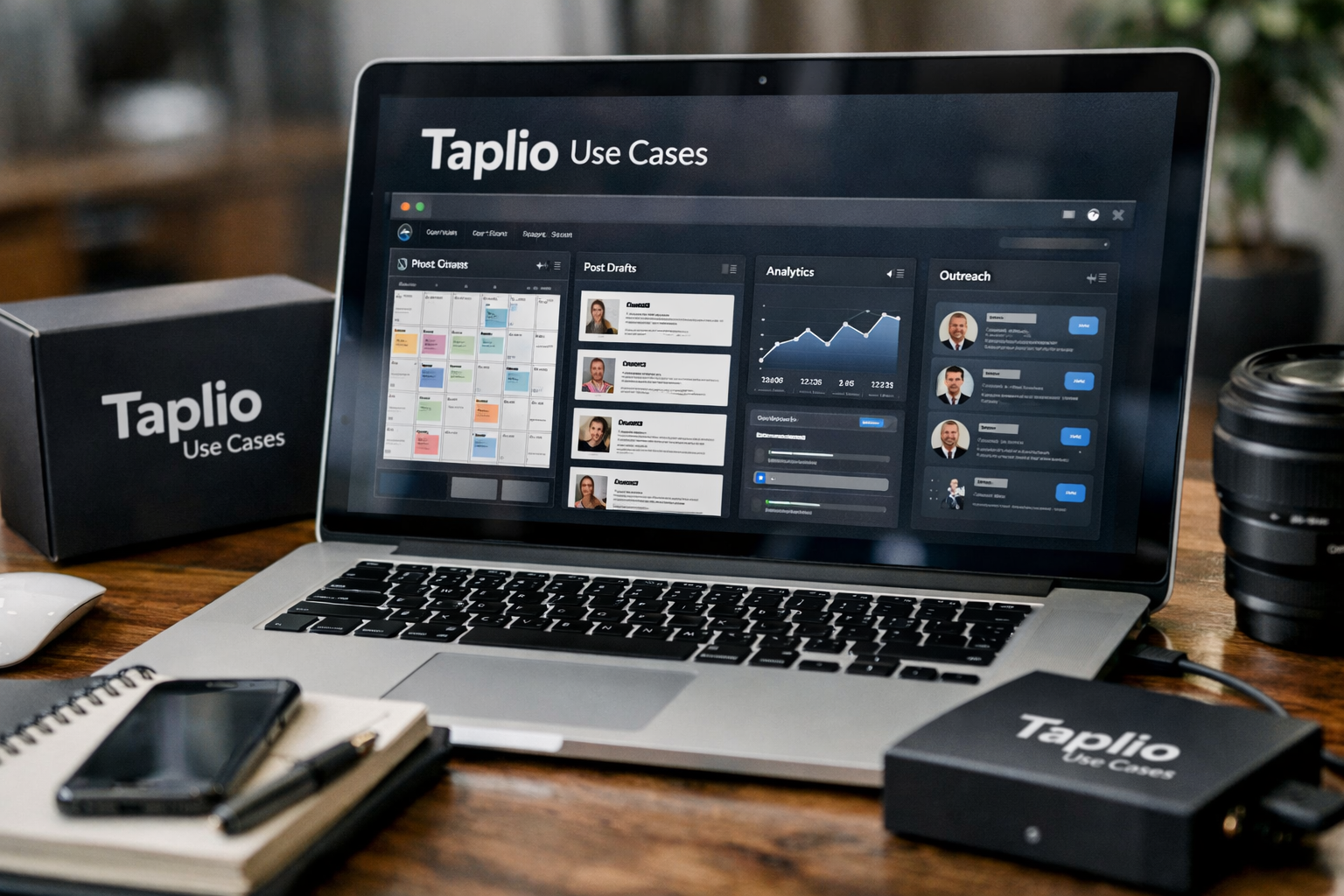
For buyers evaluating LinkedIn tools, the most useful question is not “What features does it have?” but “Which taplio use cases will save me time and improve my results?” Taplio is built around the practical work of growing a LinkedIn presence: finding ideas, creating posts, scheduling them, reviewing performance, engaging with the right audience, and turning warm interest into conversations.
This guide is based on Taplio’s official product pages and current SERP context. It is a buyer-focused breakdown of the workflows that can justify a subscription—not a generic feature list.
Official website · Latest pricing & offers
What Taplio Is and Why Use Cases Matter
One-line definition of Taplio
Taplio is a LinkedIn growth platform that helps users find content ideas, write and schedule posts, create carousels, analyze content performance, engage with relevant people, and automate selected outreach tasks.
Why buyers search for use cases instead of features
A feature only matters when it fits into a repeatable workflow. For example, AI-assisted writing is useful if it helps you turn scattered ideas into a credible weekly publishing schedule. Analytics matter when they change what you post next week, rather than becoming another dashboard you rarely open.
The strongest taplio use cases connect multiple steps: idea generation, drafting, scheduling, publishing, analysis, engagement, and follow-up. That is where a platform can reduce the friction that often stops people from publishing consistently.
For commercial buyers, the question is whether Taplio can replace a patchwork of notes, AI prompts, spreadsheets, scheduling tools, and manual LinkedIn routines. It will not replace strategic thinking or authentic relationship building, but it can make those efforts easier to execute at scale.
Who this guide is for: creators, founders, SDRs, agencies, and personal brands
This guide is designed for early-stage creators, solo founders, consultants, SDRs, agencies, and personal brands that want a more structured LinkedIn operating system.
If your LinkedIn activity currently depends on inspiration, spare time, and memory, Taplio for LinkedIn growth may be worth considering. It is especially relevant when you already know your audience but struggle to turn that knowledge into regular content, engagement, and warm conversations.
Taplio Best Use Cases for LinkedIn Growth
Use case 1: weekly content ideation and drafting
The problem: Most professionals do not lack expertise; they lack a reliable process for turning expertise into post ideas. They may have useful client lessons, sales objections, product observations, or industry opinions, but those ideas stay buried in notes or conversations.
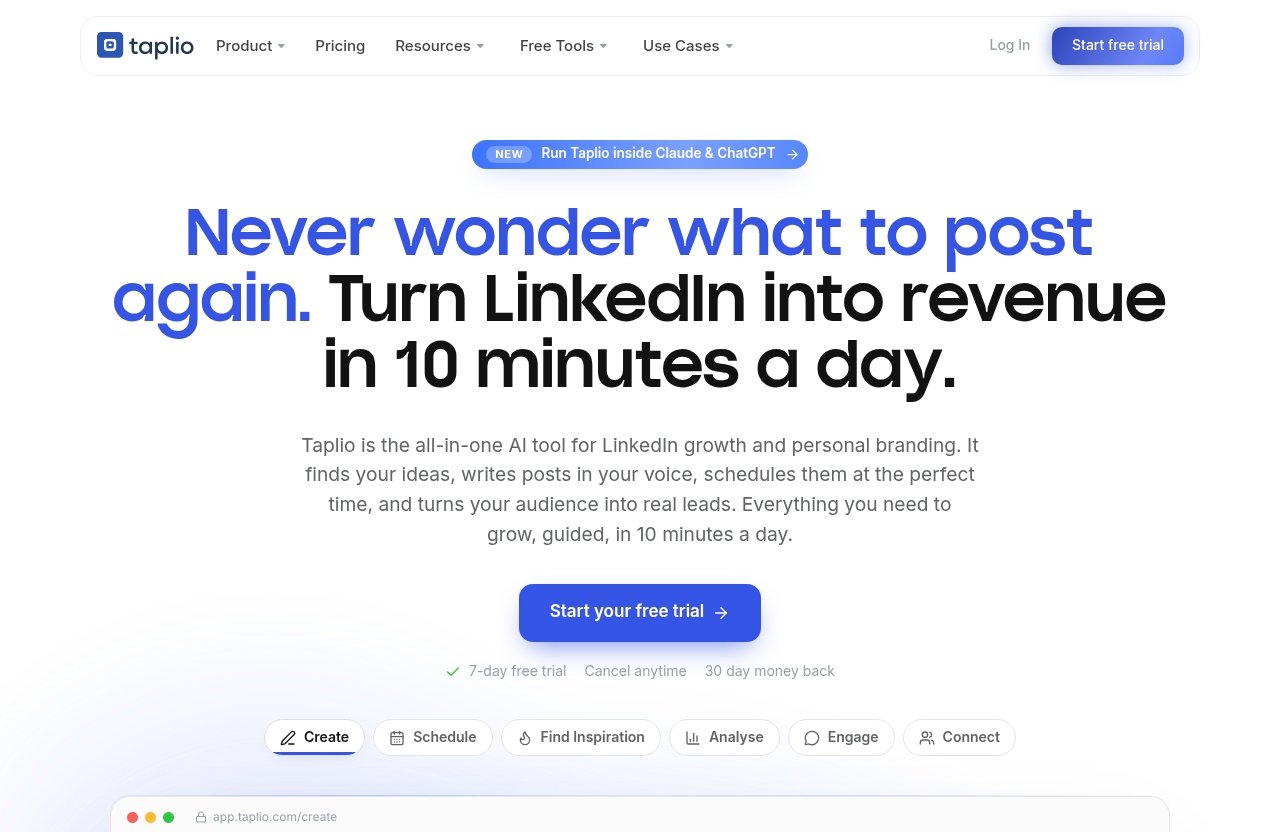
The Taplio feature involved: Taplio helps users find ideas and write posts that grow. Its content-creation capabilities are designed to move from a rough topic toward a publishable LinkedIn draft.
Who benefits most: Consultants, founders, creators, and subject-matter experts who need to publish without spending hours staring at a blank page.
Simple workflow:
- Write down five recurring questions from prospects, clients, or peers.
- Turn each question into a clear point of view or practical lesson.
- Use Taplio to develop draft angles and post structures.
- Edit the strongest drafts with your examples, language, and opinion.
- Add the finalized posts to your publishing queue.
This is one of the most valuable taplio use cases because it creates a content pipeline. A subscription makes sense when the platform helps you publish more consistently without making your content sound generic. The key is to treat generated drafts as starting material, not finished thought leadership.
Use case 2: scheduling a consistent posting cadence
The problem: Inconsistent publishing is one of the most common reasons LinkedIn growth stalls. Many users write several posts in one productive burst, then fail to publish for two or three weeks because client work, meetings, or sales activity takes over.
The Taplio feature involved: Taplio can schedule posts automatically at your best times.
Who benefits most: Busy founders, consultants, sales professionals, and creators who can batch content but cannot reliably log in at the right moment each day.
Simple workflow:
- Decide on a realistic cadence, such as several posts per week.
- Prepare a mix of educational, opinion-led, story-driven, and proof-based posts.
- Place the posts in Taplio’s schedule.
- Use the platform’s timing assistance instead of manually guessing when to publish.
- Reserve time after publishing to respond to relevant comments.
Taplio scheduling is valuable because it protects consistency. Scheduling should not mean disappearing from LinkedIn entirely; timely replies and human engagement still matter. Instead, it ensures your publishing rhythm survives busy weeks.
Use case 3: finding viral posts to remix
The problem: Content research can become a time sink. You may know that certain themes perform well in your market, yet spend too long scrolling, saving posts, and trying to identify patterns worth adapting.
The Taplio feature involved: Taplio can help users find viral posts worth remixing.
Who benefits most: Creators and marketers who need fresh angles, plus founders who want to understand which formats and hooks attract attention in their category.
Simple workflow:
- Search for relevant high-performing posts around your niche.
- Look for repeatable patterns: hooks, post structures, contrarian opinions, frameworks, or story formats.
- Identify the underlying idea rather than copying the wording.
- Rebuild the concept using your own evidence, perspective, and audience problem.
- Publish, then compare its performance with your existing formats.
A useful Taplio use cases list should always include remixing because it shortens research time while keeping your content connected to proven audience interests. The important distinction is between ethical inspiration and imitation. A strong remix adds a new perspective, practical example, or original conclusion.
Use case 4: turning long-form ideas into LinkedIn carousels
The problem: Some ideas are too complex for a short text post. A framework, process, case-study lesson, checklist, or sales playbook may be clearer when readers can move through it visually.
The Taplio feature involved: Taplio can turn content into swipeable carousels.
Who benefits most: Consultants, educators, agencies, and B2B founders with processes or expertise that benefit from visual explanation.
Simple workflow:
- Start with a topic that has clear steps or a logical sequence.
- Write a short outline: problem, insight, framework, examples, and conclusion.
- Convert the structure into a carousel concept in Taplio.
- Review every slide for clarity, readability, and brand voice.
- Publish the carousel and track whether it drives saves, comments, profile visits, or conversations.
Taplio carousels can justify a subscription when you repeatedly repurpose long-form thinking into LinkedIn-native assets. A webinar outline, customer FAQ, newsletter section, or internal framework can become a more accessible visual post without rebuilding the concept from scratch.
Use case 5: analytics-led optimization
The problem: Publishing without review leads to guesswork. You may assume an entertaining post worked because it received comments, while a practical post that generated profile visits or qualified discussions may have been more valuable commercially.
The Taplio feature involved: Taplio analyzes what is working so users can double down on effective content.
Who benefits most: Anyone publishing consistently enough to see patterns, particularly creators, founders, consultants, and agency strategists.
Simple workflow:
- Publish several posts across different themes and formats.
- Review what topics, hooks, and structures perform best.
- Note the business relevance of reactions and comments, not only raw engagement.
- Create follow-up posts around the strongest themes.
- Stop spending time on recurring formats that do not serve your goal.
Among the most practical taplio use cases, analytics-led planning is where casual posting becomes a real system. The goal is not to chase every metric. It is to identify the content that attracts the right audience and gives you a reason to continue the conversation.
Use case 6: engagement and warm outreach
The problem: Great content can underperform if nobody in the right network sees it. Meanwhile, cold outreach often feels disconnected when the prospect has no awareness of your point of view or expertise.
The Taplio feature involved: Taplio supports showing up on the right people’s posts and can auto-connect and send DMs to warm leads.
Who benefits most: SDRs, consultants, founders, recruiters, and personal brands with a defined ideal audience.
Simple workflow:
- Define the people you want to reach by role, industry, and problem.
- Engage thoughtfully with their posts and adjacent industry conversations.
- Publish useful content that reinforces your expertise.
- Identify people who have shown warmer signals of relevance or interest.
- Use a short, contextual message that starts a conversation rather than forcing a pitch.
Taplio lead generation works best when content and outreach support each other. Automation can reduce repetitive work, but it cannot replace good judgment. The most effective messages reference a relevant topic, show a genuine reason for reaching out, and make a low-pressure next step easy.
Use case 7: automating repeatable growth tasks
The problem: LinkedIn growth has many small but necessary tasks: maintaining a queue, researching ideas, tracking results, engaging with relevant people, and following up on warm opportunities. Doing every step manually can become unsustainable.
The Taplio feature involved: Taplio positions its platform around putting LinkedIn growth on autopilot. It can also be run from Claude, ChatGPT, or another MCP-enabled LLM.
Who benefits most: Users with established messaging and recurring processes, including creators, sales teams, agencies, and founder-led brands.
Simple workflow:
- Document your audience, content pillars, and acceptable outreach tone.
- Automate only repetitive actions with clear guardrails.
- Keep strategic writing, relationship management, and sensitive messages human-led.
- Review outputs regularly for relevance and accuracy.
- Adjust the workflow when results or audience feedback change.
Taplio automation is most valuable when it supports a well-defined process. If your positioning is unclear, automating activity simply creates more unclear activity. Build the strategy first, then use the tool to make repeatable execution easier.
Taplio Use Cases by Persona
For early-stage creators
Early-stage creators should use Taplio content creation tools to build consistency before chasing advanced growth tactics. Start with a small number of repeatable pillars, such as lessons learned, industry observations, practical how-tos, and personal stories.
The expected outcome is a sustainable content habit and clearer insight into what your audience responds to. For this audience, the best taplio use cases are idea development, drafting, scheduling, viral-post research, and weekly analytics review.
For solo founders and consultants
Founders and consultants need LinkedIn to establish trust while protecting limited time. Taplio can help turn customer questions, sales-call insights, and delivery experience into posts that demonstrate expertise before a prospect books a conversation.
Use scheduling to batch content around client work, then use analytics to identify which points of view create the strongest response. The expected outcome is a more visible personal brand and a warmer starting point for inbound or relationship-led outreach.
For SDRs and sales teams
SDRs should not treat Taplio as a shortcut for mass outreach. Its best role is supporting a social-selling workflow: publish relevant insight, engage with target-account conversations, and follow up with people who are warmer than a fully cold list.
The expected outcome is greater message relevance and more context for opening conversations. Taplio for LinkedIn growth is particularly useful when the sales team has clear personas, compliant messaging, and human review of outreach activity.
For agencies managing multiple LinkedIn accounts
Agencies can use Taplio workflows to create structure across client accounts: content research, draft development, scheduling, carousel production, and reporting reviews. A clear process also helps an agency separate strategy work from repetitive production tasks.
The expected outcome is more consistent delivery and easier content planning. Agencies should still maintain account-specific voices, approval processes, and content guardrails; a single generic AI style is not a client strategy.
For corporate influencers and employee advocacy
Corporate influencers and employee-advocacy participants can use Taplio to turn internal expertise into useful public content. The best source material may include customer insights, market observations, product lessons, leadership viewpoints, and hiring knowledge.
The expected outcome is stronger individual visibility that supports company credibility. Teams should establish brand, legal, and confidentiality rules before publishing, particularly when employees discuss customers, financial performance, or product roadmaps.
The Taplio Workflow That Makes Subscription Worth It
Idea capture to post draft
A productive Taplio routine begins with source material, not prompts. Capture questions from calls, objections from prospects, ideas from meetings, and recurring customer pain points. These are more useful than broad requests for “viral LinkedIn content.”
Turn each source into a draft with one message, one audience problem, and one practical takeaway. This makes your writing more specific and gives the platform better material to work with.
Draft to scheduled queue
Once you have drafts, edit them in batches. Check whether the hook matches the body, whether the claim is supportable, and whether your personal examples make the point more credible.
Then place finished posts into Taplio scheduling. A queue is valuable because it creates consistency without requiring you to write under pressure every morning.
Publish to analytics review
After publishing, do not judge every post immediately. Review performance on a regular schedule and look for trends across several posts. Consider which topics lead to meaningful discussion, relevant audience interaction, and repeatable content opportunities.
This is the point where taplio use cases become interconnected: content data should influence your next batch of ideas, rather than being treated as a separate reporting exercise.
Analytics to engagement and DMs
When a theme performs well, extend the conversation. Engage with people discussing the same problem, respond thoughtfully to comments, and identify warm opportunities for relevant follow-up.
A DM should be a continuation of context, not a sudden sales pitch. If the person has engaged with your post or shares a relevant challenge, a concise message can feel natural and useful.
Simple weekly operating system
A practical weekly routine could look like this:
| Activity | Suggested focus |
|---|---|
| Content research | Find relevant ideas and viral patterns worth adapting |
| Drafting | Create and edit several posts from real business insights |
| Scheduling | Fill a realistic queue at your best posting times |
| Engagement | Comment on relevant conversations and reply to responses |
| Analytics | Review winning topics, formats, and audience signals |
| Outreach | Follow up with genuinely warm, relevant contacts |
This workflow is why Taplio is more than an AI writing assistant for the right user. The platform becomes easier to justify when it supports the entire loop rather than one isolated task.
Official website · Latest pricing & offers
When Taplio Is a Good Fit vs. Not a Good Fit
Best fit signals
Taplio is a good fit if you want to publish regularly but struggle with ideation, execution, and follow-through. It is also a strong match if LinkedIn is part of your lead-generation, thought-leadership, recruiting, or authority-building strategy.
You will likely gain the most value if you already have useful expertise but need a system for turning it into visible, consistent content. The product’s combination of ideas, scheduling, analytics, carousels, engagement, and warm outreach is particularly relevant for this profile.
Signs you may outgrow it
Taplio may be less compelling if your core need is highly personalized ghostwriting with deep long-term memory of a complex brand voice. It may also be unnecessary if you publish rarely, have no audience or offer strategy, or prefer to manage every LinkedIn task manually.
A platform cannot solve weak positioning. If you cannot clearly explain who you help, what problem you solve, and what you want LinkedIn to achieve, establish those basics before investing heavily in tools.
What type of user gets the most ROI
The strongest buyer is someone who will use Taplio at least weekly across several connected activities. They create content, schedule it, learn from the results, engage with the right people, and use warmer conversations to support a business goal.
In that situation, the value comes from saved time, dependable execution, and fewer dropped tasks. That is a more realistic standard than expecting any tool to guarantee followers, leads, or revenue.
Pricing and Value Check Before You Buy
What the official pricing page says
The official Taplio pricing page states: “Taplio Pricing – Plans from $39/mo | Free Trial.” Based on the verified product information, Taplio plans start from $39 per month and a free trial is available.
Do not assume plan-specific features, limits, or terms beyond what Taplio currently presents on its official pricing page. Product packaging can change, so confirm the current offer before subscribing.
How to think about ROI from saved time and consistency
Taplio pricing is easier to assess through operational value than through promised ROI figures. Consider how much time you currently spend finding topics, drafting posts, scheduling, researching content patterns, reviewing performance, and managing warm LinkedIn follow-up.
If the platform helps you sustain a publishing and engagement system you would otherwise abandon, the subscription may be worthwhile. If you only plan to use it once a month for a generic post, the value proposition is weaker.
Free trial and money-back considerations
The free trial is the sensible way to test the workflow before making a long-term decision. Use that period to build a real content queue, schedule posts, create at least one carousel, review analytics, and test whether the interface improves your weekly routine.
For refund, billing, or money-back terms, rely on the current official terms and pricing information rather than assumptions. The trial should help you evaluate fit without needing to speculate about outcomes.
Step-by-Step Taplio Setup for a New User
Connect LinkedIn and define goals
Start by connecting your LinkedIn account and setting one primary goal. Examples include building creator visibility, creating consultant demand, supporting sales conversations, or strengthening founder-led marketing.
Avoid trying to optimize for everything at once. Your content, engagement, and outreach decisions become clearer when you know what a successful LinkedIn presence should support.
Build an idea bank and swipe file
Create an idea bank based on real inputs: customer questions, call notes, industry news, common mistakes, personal lessons, and product insights. Then use Taplio’s viral-post discovery capability to build a swipe file of formats and hooks that suit your niche.
Do not save posts simply because they are popular. Save them because their structure can teach you something about clarity, relevance, or reader attention.
Draft 10 posts and schedule a week
Draft a starter batch that includes different formats: a tactical post, an opinion, a story, a framework, a lesson from experience, and a carousel concept. Edit each one so it sounds like a person with a specific point of view.
Schedule only a cadence you can sustain. Taplio scheduling should reduce stress, not create a backlog of rushed or low-quality posts.
Set engagement targets
Define a manageable engagement routine. You might focus on responding to comments on your posts and contributing useful thoughts to conversations involving your ideal audience.
The goal is not to comment everywhere. It is to become recognizably useful in the conversations your potential customers, peers, or community members already care about.
Review analytics every week
Set a weekly review time and record what you learn. Which topics earned substantive comments? Which posts brought the right people to your profile? Which formats are worth repeating or improving?
This is how taplio use cases turn into an evidence-based system. Let results guide your next content batch instead of continually starting from zero.
Common Mistakes to Avoid with Taplio
Posting without a niche
Tools cannot compensate for a vague audience. If one post targets startup founders, the next targets recruiters, and the next targets ecommerce operators, readers will struggle to understand why they should follow you.
Choose a clear audience and several content pillars. You can expand later, but early consistency makes your expertise easier to recognize.
Relying on AI drafts without editing
AI can make drafting faster, but it should not remove your perspective. Unedited drafts often sound broad, overconfident, or interchangeable with content from other accounts.
Add real examples, honest trade-offs, specific opinions, and language you would actually use in a conversation. This is especially important for personal brands and high-trust B2B services.
Ignoring analytics
A scheduled queue is not a complete strategy. If you do not review Taplio analytics, you may keep repeating posts that attract attention but do not reach the audience you want.
Use performance data to refine your themes, hooks, and formats. Keep testing, but make each test intentional.
Using automation without human judgment
Automation should never become permission to send irrelevant messages or create low-quality engagement. Treat auto-connect and DM capabilities as workflow support, not an excuse to remove relevance and respect from communication.
Use human judgment for targeting, message quality, and timing. Relationship-based LinkedIn growth depends on trust, and trust is difficult to automate.
Final Verdict: Who Should Subscribe to Taplio
Best buyers
Taplio is best for creators, solo founders, consultants, SDRs, agencies, and employee advocates who need a more reliable LinkedIn system. It is particularly useful for people who already have expertise and a defined audience but need help converting that foundation into consistent content, better engagement, and warmer conversations.
The most compelling taplio use cases combine ideation, drafting, scheduling, viral-content research, carousel creation, analytics, and structured outreach. Used together, these workflows can reduce the operational burden of LinkedIn growth.
Cases where another workflow may be better
Consider another approach if you need a dedicated human ghostwriter, deeply customized editorial strategy, or an advanced content-memory system built around a large brand operation. You may also be better served by a simpler manual workflow if LinkedIn is not currently a meaningful channel for your goals.
Taplio works best when you are willing to contribute real insights and spend time engaging with people. It supports execution; it does not replace a clear message or genuine expertise.
Bottom-line recommendation
For professionals who want a practical operating system rather than another isolated AI tool, Taplio is worth evaluating. Its official capabilities cover the core activities behind a consistent LinkedIn presence, while the free trial offers a practical way to test whether the workflow fits your needs.
If you want to review the current offer and decide whether Taplio matches your LinkedIn strategy, you can learn more about Taplio through Top Trust Review.
Official website · Latest pricing & offers
FAQ
Who is Taplio best for?
Taplio is best for early-stage creators, solo founders, consultants, SDRs, sales teams, agencies, and personal brands that need more consistency with LinkedIn content, scheduling, analytics, engagement, and lightweight outreach.
What are the main Taplio use cases?
The main Taplio use cases include finding content ideas, drafting LinkedIn posts, scheduling content, finding viral posts to remix, creating carousels, reviewing analytics, engaging with relevant people, and supporting warm lead outreach.
Is Taplio worth it for LinkedIn growth?
Taplio can be worth it if you publish regularly and want a workflow that saves time while improving consistency and content output. It is less compelling if you need deeply personalized writing without contributing your own editing, expertise, and strategy.
Can Taplio help with lead generation?
Yes. Taplio’s official product information includes auto-connecting and sending DMs to warm leads. It is most effective when paired with consistent content, relevant engagement, and careful human judgment about whom to contact and what to say.
Does Taplio support carousels and automation?
Yes. Taplio’s official product pages list swipeable carousel creation and automation capabilities, including support for putting repeatable LinkedIn growth tasks on autopilot.
Related Reading
- Taplio Chrome Extension Review
- How to Use Gohighlevel in 7 Easy Steps
- Contentstudio vs Buffer for AI Repurposing: 2026 Comparison
References
- Taplio
- Taplio Pricing – Plans from $39/mo | Free Trial
- Taplio review: is this AI-powered LinkedIn tool worth it? – Salesdorado
- Taplio Review (2026): Honest Pros, Cons, Pricing, and When It's Worth It