Webflow CMS Review: Is It Good for Blogs?
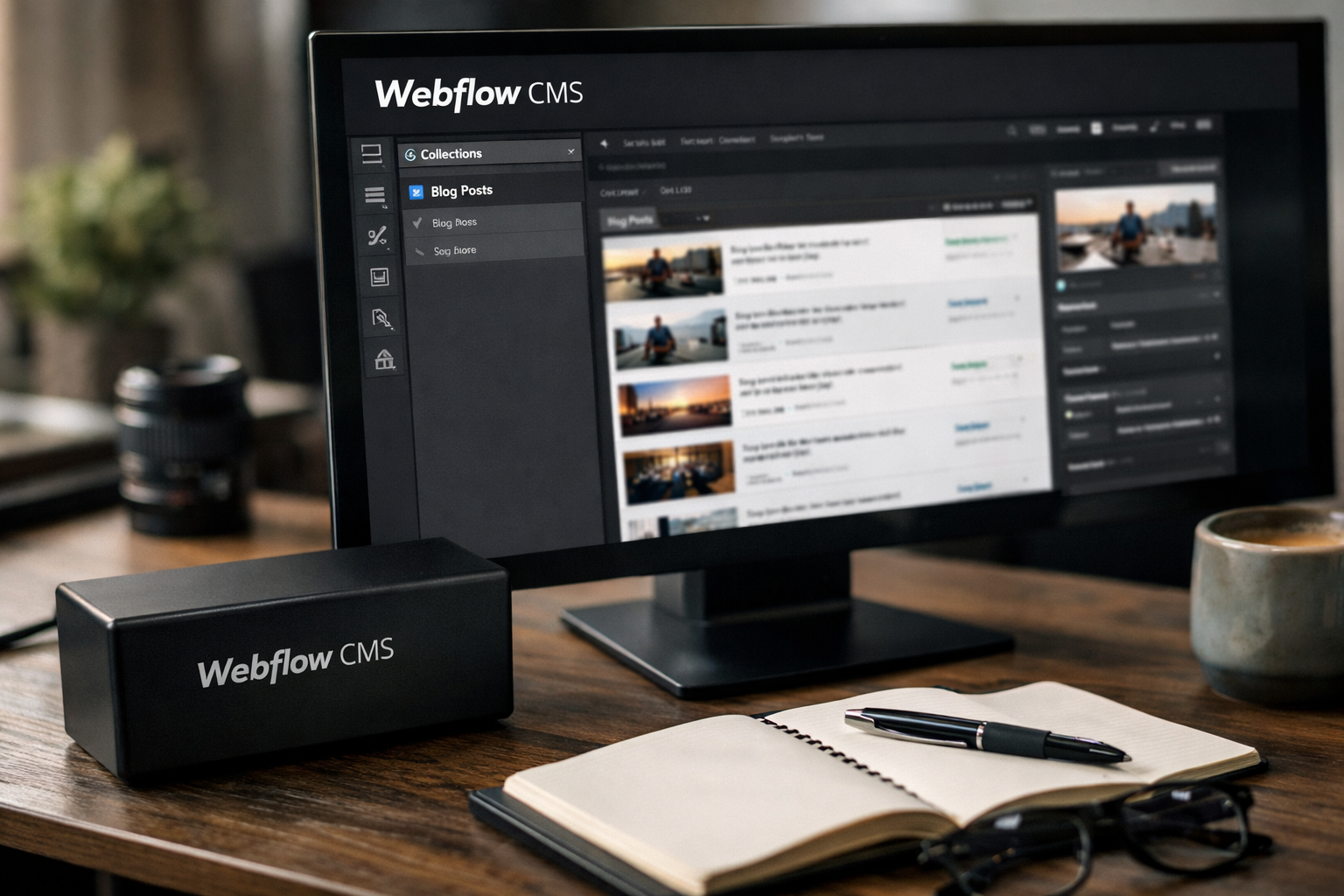
Webflow CMS is a strong choice for blogs, affiliate sites, and content hubs where polished design and a clear content structure matter as much as publishing. In this Webflow CMS review, I look at the real tradeoff: it is excellent for design-led, structured publishing, but it may feel less natural for ultra-high-volume editorial teams that prioritize publishing speed above all else.
If you need design control and structured publishing, Webflow can be a strong fit. The key is understanding whether your site is a curated content asset with repeatable templates or a fast-moving publication with many contributors and constantly changing workflows.
Official website · Latest pricing & offers
Webflow CMS Review: Quick Verdict for Bloggers and Affiliate Site Owners
My practical view is that Webflow CMS is good enough for serious blogs, especially when the site needs to look distinctive, load into a carefully designed editorial experience, and support repeatable content types. It works particularly well for affiliate blogs, niche sites, resource centers, agency blogs, and portfolio-led publishers.
The main limitation is workflow complexity. A simple blog-first platform may feel faster for writers who only want to draft, categorize, and publish articles without thinking much about page structure.
Is Webflow CMS Good for Blogs?
Yes, Webflow CMS is good for blogs when you want more than a standard article feed. It gives you a way to organize posts, authors, categories, reviews, resources, case studies, and other recurring content in a structured system.
For a smaller or mid-sized editorial project, this can create a much more premium experience than a generic blog layout. You can keep article templates consistent while giving each category, archive, and supporting section a deliberate visual identity.
However, the Webflow blog CMS approach is not necessarily the easiest option for a publication where many non-technical writers publish multiple posts every day. It rewards planning and content structure more than spontaneous publishing.
Who Should Use Webflow CMS
Webflow CMS is best for:
- Affiliate publishers building review sites, comparison pages, and content clusters
- Niche site owners who want a branded, high-quality editorial design
- Agencies and service businesses publishing educational content
- Designers who want direct control over the appearance of dynamic content
- Content marketers creating resource hubs, guides, case studies, and landing pages
- Portfolio sites that need a blog without compromising visual presentation
I would also recommend it to publishers who see their website as a long-term brand asset rather than merely a container for articles.
Who Should Skip It
Webflow CMS may not be the best fit if your main priority is maximum publishing volume with minimal setup. Teams that require highly flexible editorial workflows, frequent contributor management, or a broad range of ready-made extensions may prefer a more blog-first ecosystem.
It is also not ideal for site owners who do not want to learn how structured content, templates, and dynamic lists work. The learning curve is reasonable, but it is real.
What Webflow CMS Is and How It Works
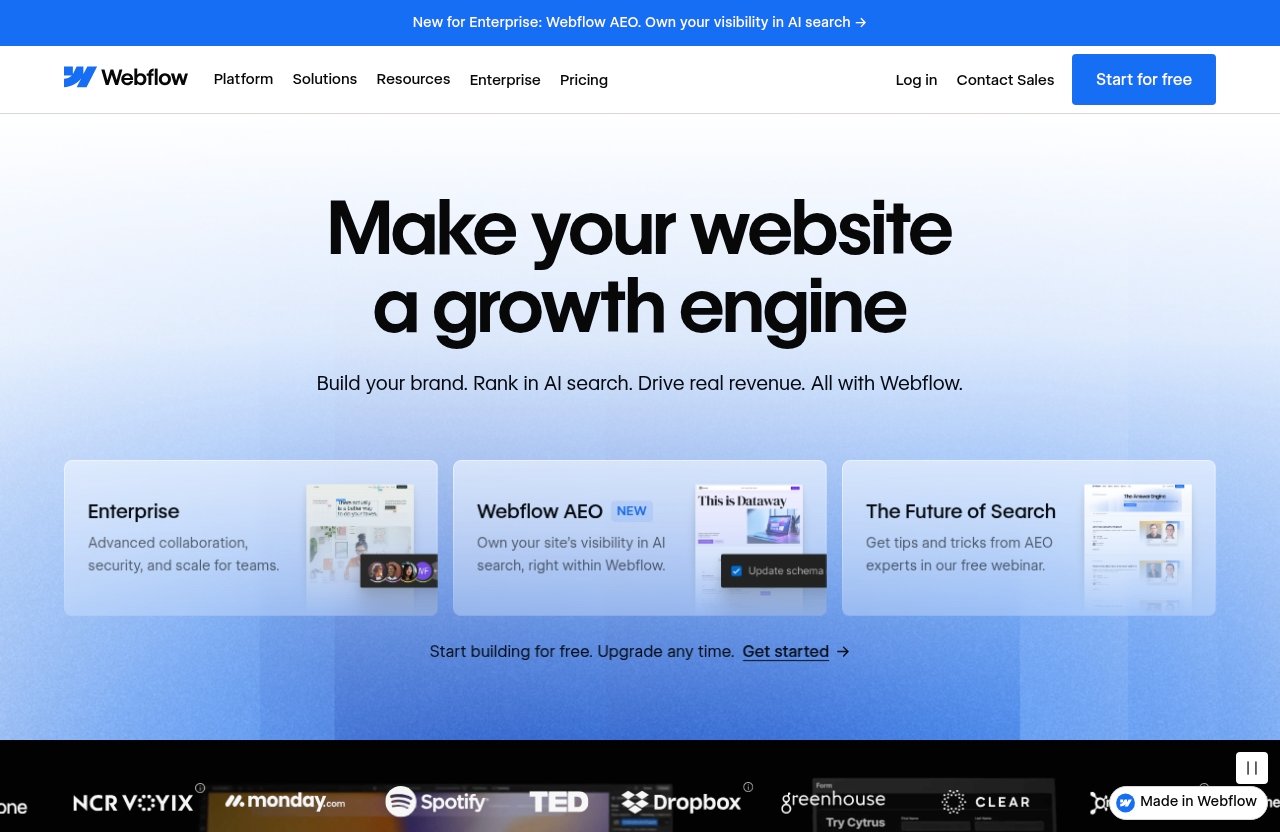
At its core, Webflow CMS is a structured content system. Instead of manually building every blog post page from scratch, you create a repeatable content model and use it to generate dynamic pages and repeated sections across your site.
For a blog, that means you can define the information each article should contain—such as title, author, featured image, summary, category, body copy, and publish date—then use those fields in a template.
Collections, Fields, and Items
Collections are like databases for a specific type of content. A blog may have a Posts collection, an Authors collection, a Categories collection, and perhaps a Reviews or Deals collection.
Fields are the information slots inside each collection. For example, a Post could include fields for the headline, slug, thumbnail, excerpt, article body, author reference, and category reference.
Items are individual entries inside a collection. Every article you publish is an item in your Posts collection. This structure is what allows Webflow CMS to keep recurring content organized and consistently displayed.
Collection Pages vs Collection Lists
Webflow Collection Pages are templates used to generate an individual dynamic page for each collection item. A single blog post template can therefore create a unique article page for every post you add.
Webflow Collection Lists display multiple items from a collection on a page. For example, you could use a Collection List to show recent articles on your homepage, related posts beneath an article, or category-specific content in an archive.
The difference is simple:
| Element | Main Purpose | Blog Example |
|---|---|---|
| Collection Page | Displays one dynamic item | A single blog post |
| Collection List | Displays repeated items | Latest posts or related articles |
| Collection | Stores structured content | Your full article database |
Why Structured Content Matters for Blogs
Structured content matters because it prevents a blog from becoming inconsistent as it grows. You can establish a repeatable article format, then reuse it across dozens or hundreds of pages without redesigning every post.
This is especially valuable for affiliate content. Product reviews, comparison articles, buying guides, and category pages often need consistent sections, visuals, calls to action, and internal links. Webflow CMS helps make that consistency easier to maintain.
Webflow CMS for Blogging: Core Strengths
The strongest argument for Webflow CMS is not that it makes blogging possible—many platforms do that. Its value is that it combines structured publishing with visual control, making it suitable for sites where the editorial experience itself supports trust and conversions.
Visual Design Control Without Coding
Webflow is attractive to publishers who care about how a blog feels, not just how it functions. You can design editorial layouts that align with your brand instead of accepting a conventional blog format.
In practical terms, this is useful for affiliate sites where product comparisons, review disclosures, tables, callout boxes, and visual content need to feel intentional. A well-designed article can improve readability and make a site look more credible to commercial-intent visitors.
Reusable Content Structure
Once the content model is set up, Webflow CMS templates can save substantial time. You design the article structure once, connect it to the right fields, and then publish new items using that foundation.
This approach works well for publishers with several recurring formats:
- Standard blog posts
- Software reviews
- Product roundups
- Tutorials
- Case studies
- Author pages
- Resource libraries
The more consistent your content types are, the more valuable the structured approach becomes.
SEO-Friendly Page Generation
A major benefit of dynamic content is that one template can generate many consistent pages. For a blog, that means your post pages, author pages, and category sections can follow a coherent structure rather than becoming a collection of unrelated layouts.
That said, Webflow CMS is not an SEO shortcut. Search visibility still depends on useful content, strong topical coverage, logical headings, internal linking, accurate titles, and a clean site architecture. The platform can support a solid structure, but it cannot replace editorial strategy.
Great for Content Hubs and Category Pages
Webflow CMS is particularly effective for content hubs. You can organize articles into categories, create visual landing pages around topics, and use Webflow Collection Lists to surface the right content in several places.
For example, an affiliate site about business software could create hubs for email marketing, ecommerce, website building, and online courses. Each hub can feature guides, reviews, comparisons, and beginner articles without requiring a separate manual layout for every new piece of content.
Where Webflow CMS Falls Short for Content-Heavy Sites
A fair Webflow CMS review needs to acknowledge that the platform is not automatically the best option for every content business. Its strengths in structured design can become friction when a team needs speed, flexibility, and many different publishing processes.
Editing Workflow Can Feel Less Flexible Than Blog-First Platforms
For a solo publisher with a defined article template, the workflow can be clean and efficient. But for writers accustomed to a simple text-first editor, content modeling and layout-aware publishing can feel more involved.
This does not make Webflow CMS difficult; it means the system expects more up-front planning. If your team frequently changes content formats, adds custom content blocks, or publishes with little design review, that planning can feel restrictive.
Scaling Editorial Operations
Large editorial operations often need clear roles, approvals, consistency checks, and publishing governance. Webflow’s Team plan includes publishing workflows, single-page publishing, a site activity log and API, foundational governance, enhanced security and compliance, and priority support.
Still, a content operation should test its real workflow before committing. The question is not whether the system can store many content entries; it is whether your writers, editors, designers, and developers can collaborate comfortably within the process.
Plugin/Ecosystem Limitations
A platform’s surrounding ecosystem affects how quickly you can solve unusual publishing problems. If your strategy depends on a long list of specialized add-ons, custom editorial tools, or highly specific integrations, you should validate those requirements early.
The Webflow CMS API may be relevant for organizations connecting structured content to external processes, but an API-based workflow should be planned carefully rather than treated as a plug-and-play replacement for every publishing need.
Potential Friction for Non-Technical Teams
Webflow is visual, but it is not entirely “set it and forget it.” Editors need to understand collections, fields, references, templates, and how their content appears in different parts of the site.
My recommendation is to document your publishing process. A short internal Webflow CMS tutorial covering post creation, image guidelines, category assignment, and quality checks can remove most day-to-day uncertainty.
Official website · Latest pricing & offers
Webflow CMS Pricing Explained
Webflow CMS pricing should be evaluated based on what your site needs to publish, not only the entry price. The important distinction is that the Basic plan is for simple sites that do not need a CMS, while Premium is positioned for content-rich sites with robust CMS and traffic needs.
Starter Plan
Starter is free. It includes a Webflow.io domain, Limited Webflow CMS, 2 static pages, 1 GB bandwidth, 50 form submissions, Webflow AI, MCP server, Webflow Cloud app hosting, and a Free Starter Workspace.
For anyone asking whether Webflow CMS free access exists, the answer is yes in a limited form through Starter. It is useful for testing the interface and understanding how collections work before you move to a paid publishing setup.
For more context, see our Is Webflow Free? 2026 Plan Breakdown.
Basic Plan
Basic costs $15 per month billed yearly. It includes a custom domain, 300 static pages, 10 GB bandwidth, unlimited form submissions, password protection, Webflow AI, MCP server, Webflow Cloud app hosting, and a Free Starter Workspace.
The important point for bloggers is that Basic is positioned for simple sites that do not need a CMS. If your website requires an ongoing blog with dynamic post management, this is not the plan to select solely because it costs less.
Premium Plan
Premium costs $25 per month billed yearly. It includes everything in Basic plus Webflow CMS, bandwidth, code components, site search, form file upload, and well-known files.
For most serious blogs, Premium is the relevant Webflow CMS pricing tier because it is positioned for content-rich sites with robust CMS and traffic needs. If your plan is to publish a blog, resource center, affiliate site, or growing content hub, this is the plan that aligns with that use case.
Team and Enterprise Plans
Team costs $2,500 per month and requires an annual contract. It includes everything in Premium plus Site & Workspace, Webflow Localize, AEO agents, publishing workflows, single-page publishing, a site activity log and API, foundational governance, enhanced security and compliance, and priority support.
Enterprise uses custom pricing. It includes everything in Team plus enterprise-ready scale, granular permissions, custom roles, advanced governance, secure integrations, a dedicated account manager, enhanced SLAs, and custom configurations.
Which Plan Is Needed for a Serious Blog
For a typical commercial blog, the practical answer is Premium because it includes Webflow CMS and is positioned for content-rich sites. Starter is useful for evaluation, while Basic is better suited to sites that do not need CMS functionality.
Team and Enterprise make more sense when publishing becomes an organizational process involving governance, workflows, security needs, and formal collaboration requirements.
Best Use Cases for Webflow CMS
The best use cases are those where content structure and presentation work together. Webflow CMS is less about publishing the highest possible number of articles and more about building a consistent, useful, visually credible destination.
Affiliate Blogs
Affiliate blogs are one of the strongest use cases. Reviews, alternatives, product comparisons, and buying guides all benefit from reusable structures and polished layouts.
For example, if you are evaluating platforms across your site, you can use consistent fields and templates for verdicts, pros and cons, pricing notes, images, and related content. That creates a better visitor experience and makes editorial maintenance easier.
If ecommerce is central to your strategy, our Webflow Ecommerce Review 2026: Features, Pricing, Limitations, and Verdict is worth reading alongside this review.
Niche Content Sites
A niche site with a focused topic can use Webflow CMS to create topic clusters, expert guides, glossary pages, author profiles, and category archives. This is ideal when your brand needs to look more established than a standard article directory.
The system is particularly useful when content follows repeatable patterns. A financial education site, a travel guide, or a software learning center can all benefit from a deliberately planned structure.
Service Business Blogs
Service businesses often do not need a huge publishing operation, but they do need content that reinforces expertise. Webflow CMS can support educational posts, case studies, service-area resources, team profiles, and lead-generation pages under one cohesive design system.
This is a strong option for agencies, consultants, and B2B companies that want the blog to feel like part of the sales experience rather than a separate section of the website.
Portfolio + Blog Hybrid Sites
Creative professionals frequently need both an attractive portfolio and an educational blog. Webflow CMS makes sense here because the blog can match the visual quality of the project pages.
A designer, photographer, studio, or product consultant can present work samples and publish insights without switching to an unrelated blogging theme.
Editorial Landing Pages and Resource Hubs
Resource hubs are where Webflow Collection Pages and collection lists become especially useful. You can build a central library, filter content conceptually through categories, and highlight key guides on different landing pages.
For creator-led education businesses, compare this approach with our Skool Tutorial: A Beginner’s Guide to Setting Up and Launching in 2026 and Systeme.io Features for Beginners.
Webflow CMS vs WordPress for Blogs
The Webflow CMS vs WordPress question is best answered through workflow, not blanket claims about which platform is “better.” Both can support blogs, but they appeal to different publishing styles and team needs.
Design Workflow
Webflow CMS is compelling when visual design is a priority. It gives site owners a structured way to connect dynamic content to carefully created layouts.
WordPress may appeal more to users who prefer a traditional blog-first publishing environment. Your choice should reflect whether your project starts with design and brand presentation or starts with rapid editorial output.
Content Scaling
For a curated site with repeatable formats, Webflow CMS can scale content cleanly. Collections, fields, templates, and reusable page structures make consistency easier as your archive grows.
For very high-volume publishing, assess the daily reality of your writers and editors. The best platform is the one that lets your team publish quality content without creating unnecessary training or approval bottlenecks.
Ease of Publishing
A writer-focused platform may feel more intuitive for teams that only need to create and edit articles. Webflow requires authors to understand the content model, particularly if they are managing references, images, categories, and dynamic outputs.
That extra structure can be a benefit for quality control. But it is not always the fastest route for a small team publishing simple posts.
Developer Dependence
Webflow can reduce dependence on code for many layout tasks, particularly when the site is planned well. However, a complex site still benefits from someone who understands the design system and can manage changes responsibly.
The same principle applies across platforms: the more custom the site becomes, the more important technical ownership becomes.
When WordPress May Still Win
WordPress may still be the better fit for teams that prioritize a familiar blogging workflow, want broad flexibility in how they extend their publishing process, or need to move quickly with many contributors.
If you remain on WordPress and performance is your main concern, see our guide on How to Speed Up WordPress with Cloudways.
SEO and AI Search Considerations
Webflow CMS supports the structural side of discoverability, but no CMS can substitute for genuinely useful content. Search performance comes from a combination of site architecture, page quality, technical consistency, and a clear answer to the reader’s query.
On-Page SEO Basics
For a blog, focus on unique titles, descriptive headings, concise introductions, useful internal links, and pages that meet search intent. A strong content model can help ensure essential article details are consistently included.
Do not rely on templates alone. Every article still needs a clear keyword focus, original value, and a reason for users to trust your recommendation.
Technical SEO Support
Webflow is built with SEO in mind, and its structured approach can help publishers keep recurring page types consistent. For example, category pages, author pages, and post templates can follow an intentional architecture rather than being assembled inconsistently over time.
The practical advantage is control. You can create a site structure that makes sense for users and gives each important content type a clear role.
AEO and Content Discoverability
AEO, or answer engine optimization, is increasingly relevant as people search through AI-powered interfaces. Webflow’s Team plan includes AEO agents, but the bigger strategic point is that answer-focused content still needs clarity and substance.
Use concise answers near the beginning of relevant articles, support claims with helpful details, and organize content so both people and systems can understand the relationship between topics.
Content Architecture for Topic Clusters
A good topic cluster starts with a major hub page and connects it to narrower supporting pages. For instance, a website-builder hub might link to individual reviews, pricing guides, migration articles, and design tutorials.
Webflow CMS is useful here because related content can be surfaced consistently through structured references and Webflow Collection Lists. Internal linking should be deliberate, not an afterthought.
How to Build a Blog in Webflow CMS
This simplified Webflow CMS tutorial is the process I would use before publishing the first article. Spending time on the content model at the start prevents avoidable redesign work later.
Plan Your Content Model First
List the content types you expect to publish. Most blogs need Posts, Categories, and Authors, while affiliate sites may also need Products, Brands, Deals, or Comparison Pages.
Then decide what every item needs. For a blog post, common fields may include title, summary, featured image, article body, author, category, and publish date.
Set Up Collections for Posts and Categories
Create a Posts collection first, then add supporting collections such as Categories and Authors. Connect them with reference fields when you want each post to display the right author profile or category information.
This stage is where Webflow CMS becomes most powerful. A thoughtful structure makes the rest of the site easier to build and update.
Create Templates for Posts and Archives
Build a Collection Page template for individual posts. Add the article title, image, author details, body content, and any reusable blocks that should appear on every article.
Next, create archive-style pages that use collection lists to display posts by topic or publication type. These Webflow CMS templates help create a consistent reader journey across the entire site.
Use Collection Lists for Related Content
Add related articles to the bottom of each post, recent content to the homepage, and category-specific content to relevant hub pages. Collection lists are a practical way to keep important pages fresh as you publish new material.
Make sure these sections are genuinely useful. Related links should support the reader’s next question, not simply fill space.
Optimize for Speed and Readability
Keep article templates readable. Use generous spacing, clear headings, easy-to-scan summaries, meaningful images, and straightforward navigation.
Before launch, test the blog on different screen sizes and ask someone unfamiliar with the site to find a category, open an article, and locate related content. A visually impressive design is only useful if it also makes reading easy.
Official website · Latest pricing & offers
FAQ
Is Webflow a CMS?
Yes. Webflow includes a CMS for managing structured, dynamic content. You can create collections, add fields to define content, enter individual items, and use Collection Pages and Collection Lists to display that content across your site.
What are the top 5 CMS platforms?
There is no universal top five because the best CMS depends on the project. A common shortlist may include Webflow, WordPress, Shopify, Drupal, and Contentful, but each serves different workflows, technical requirements, and business goals.
For design-led blogs and structured marketing sites, Webflow CMS is a strong candidate. For other use cases, the right choice may be different.
Is Webflow CMS worth it?
Webflow CMS is worth it for design-focused blogs, affiliate sites, niche publishers, and content hubs that benefit from strong visual control and structured content. Premium is the practical plan for content-rich sites because it includes the CMS.
It may be less worthwhile for publishers that need a very simple writer-first workflow or run an ultra-high-volume editorial operation with constantly changing processes.
How much does Webflow CMS cost?
Starter is free and includes Limited Webflow CMS. Basic costs $15 per month billed yearly but is positioned for simple sites that do not need a CMS.
Premium costs $25 per month billed yearly and includes Webflow CMS. Team costs $2,500 per month with an annual contract required, while Enterprise pricing is custom.
Final Verdict: Is Webflow CMS Worth It for Blogs?
Webflow CMS is good for blogs when your publishing strategy depends on quality design, repeatable content formats, and clear topic architecture. It is not merely a website builder with a blog attached; it is a structured system that can support serious editorial projects when set up thoughtfully.
Best for Design-Led Publishers
Design-led publishers will get the most value from Webflow CMS. The ability to create distinctive templates, dynamic pages, content hubs, and branded reading experiences makes it well suited to sites where presentation supports authority.
Best for Affiliate Sites With Strong Content Structure
Affiliate publishers should consider Webflow CMS when they plan to create organized review libraries, comparison content, buying guides, category hubs, and helpful internal links. It can make a commercial site feel more trustworthy and easier to navigate than a basic article archive.
If that matches your approach, exploring Webflow is a sensible next step. The best results will come from planning your collections before building your first template.
Not Best for Ultra-High-Volume Publishing Teams
Webflow CMS is less compelling for teams that need the loosest possible publishing workflow, many specialized extensions, or rapid daily output from a large group of contributors. Those organizations should test their exact editorial process before choosing a platform.
For most bloggers, affiliate site owners, agencies, and content-led brands, the conclusion is positive: Webflow CMS is worth considering if design control and structured publishing are central to your business.
Related Reading
- Is Webflow Free? 2026 Plan Breakdown
- Webflow Ecommerce Review 2026: Features, Pricing, Limitations, and Verdict
- How to Speed Up WordPress with Cloudways
References
- Build scalable websites visually with the Webflow CMS
- Intro to the Webflow CMS
- Plans & pricing | Webflow
- Intro to the Webflow CMS – Webflow University