Webflow vs Elementor: Best Design Option in 2026?
Official website · Latest pricing & offers
Webflow vs Elementor: Quick Verdict for Designers
The Webflow vs Elementor decision is not just about which visual editor looks nicer. It is really a choice between a hosted visual web platform and a WordPress page builder that lives inside a broader WordPress stack.
For design-led teams in 2026, I usually recommend Webflow when the priority is visual control, cleaner operational ownership, responsive design precision, and a more integrated build-manage-optimize workflow. Elementor can still make sense if you are already committed to WordPress and want to stay inside that ecosystem.
Who this comparison is for
This comparison is for freelance designers, small studios, agencies, marketing teams, and SMB founders deciding where to build their next serious website.
If you are comparing Webflow vs Elementor for designers, you are probably asking practical questions: Which one gives me more control? Which one is easier to maintain? Which one will scale better when the site grows? And which one creates fewer headaches after launch?
Those questions matter more than a feature checklist. A website builder can feel great during the first week and still become painful when content, stakeholders, SEO, governance, and client handoff enter the picture.
The short answer
Webflow is often the better design option if you want a hosted, all-in-one platform with strong visual control and fewer moving pieces to manage. It is built as a standalone web platform with design, CMS, hosting, collaboration, SEO, optimization, apps, and more under one roof.
Elementor is usually the better fit if you already use WordPress, like the WordPress plugin ecosystem, and want a visual builder layered on top of that environment. The tradeoff is that your final experience depends heavily on WordPress, your theme, hosting choices, and other plugins.
So the short answer in the Webflow vs Elementor debate is this: choose Webflow for a design-first hosted workflow; choose Elementor when WordPress continuity matters more than platform simplicity.
When Webflow is the better design option
Webflow is the stronger choice when you care deeply about layout precision, reusable design consistency, responsive control, and long-term maintainability without assembling a stack of separate tools.
It also fits teams that want content editing, CMS, hosting, SEO controls, Analyze, Optimize, Localize, Security, Shared Libraries, Apps, Figma to Webflow, DevLink, Webflow Cloud, MCP, and other platform capabilities in one connected environment.
That does not mean Webflow is perfect for everyone. But if your team thinks in systems, components, responsive behavior, and brand consistency, Webflow’s structure usually feels closer to a professional design workflow than a typical page-builder setup.
When Elementor may still make sense
Elementor may still make sense for existing WordPress users who do not want to migrate, retrain, or change their publishing habits. If your business already relies on WordPress content workflows, plugin integrations, or an existing WordPress developer, staying put can be the pragmatic choice.
This is especially true when the site is already working, the team is comfortable, and the redesign does not require a full rethink of design systems or technical ownership.
In other words, Webflow vs Elementor is not about declaring one platform universally superior. It is about matching the platform architecture to the way your team builds, maintains, and grows websites.
What Webflow and Elementor Actually Are
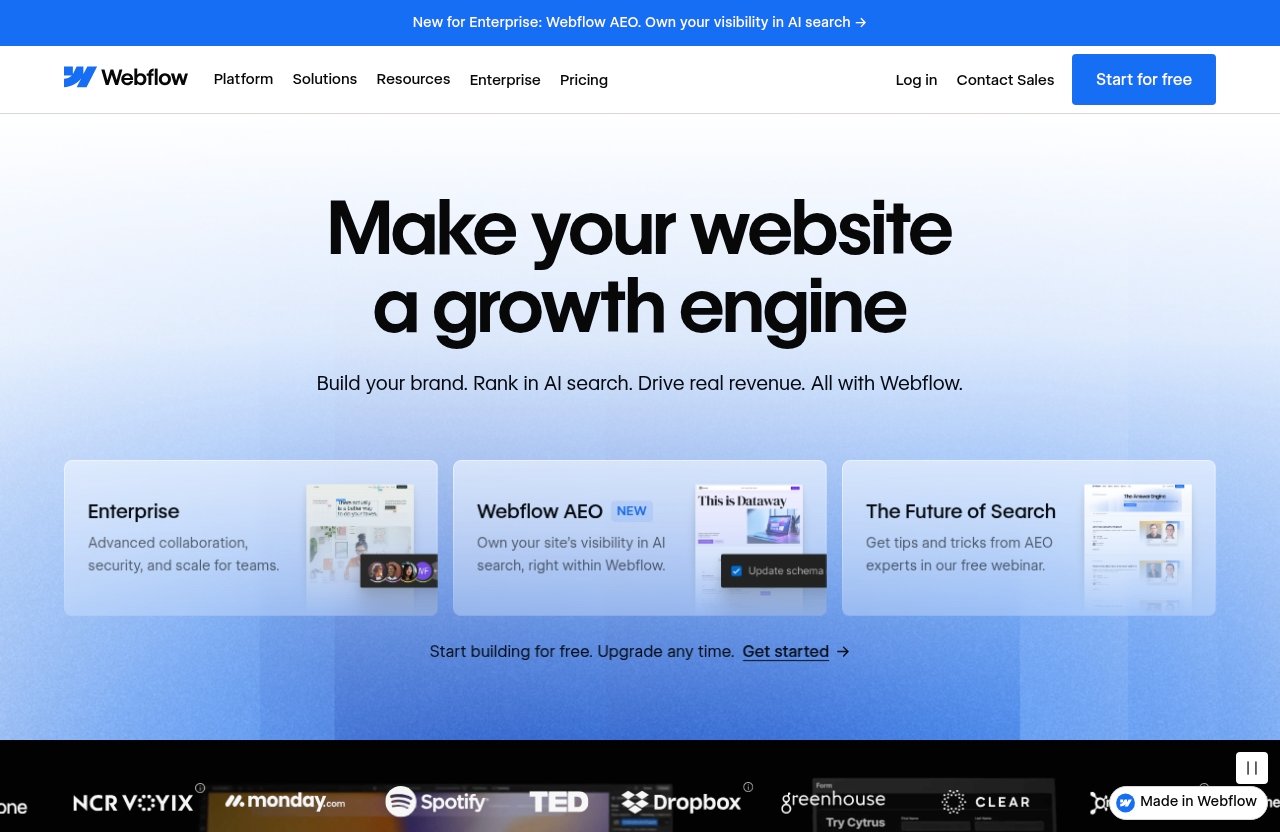
Before comparing design flexibility, SEO, performance, or pricing, it is important to define the tools properly. Many buyers treat Webflow and Elementor as if they are the same category. They are not.
Webflow as a hosted visual web platform
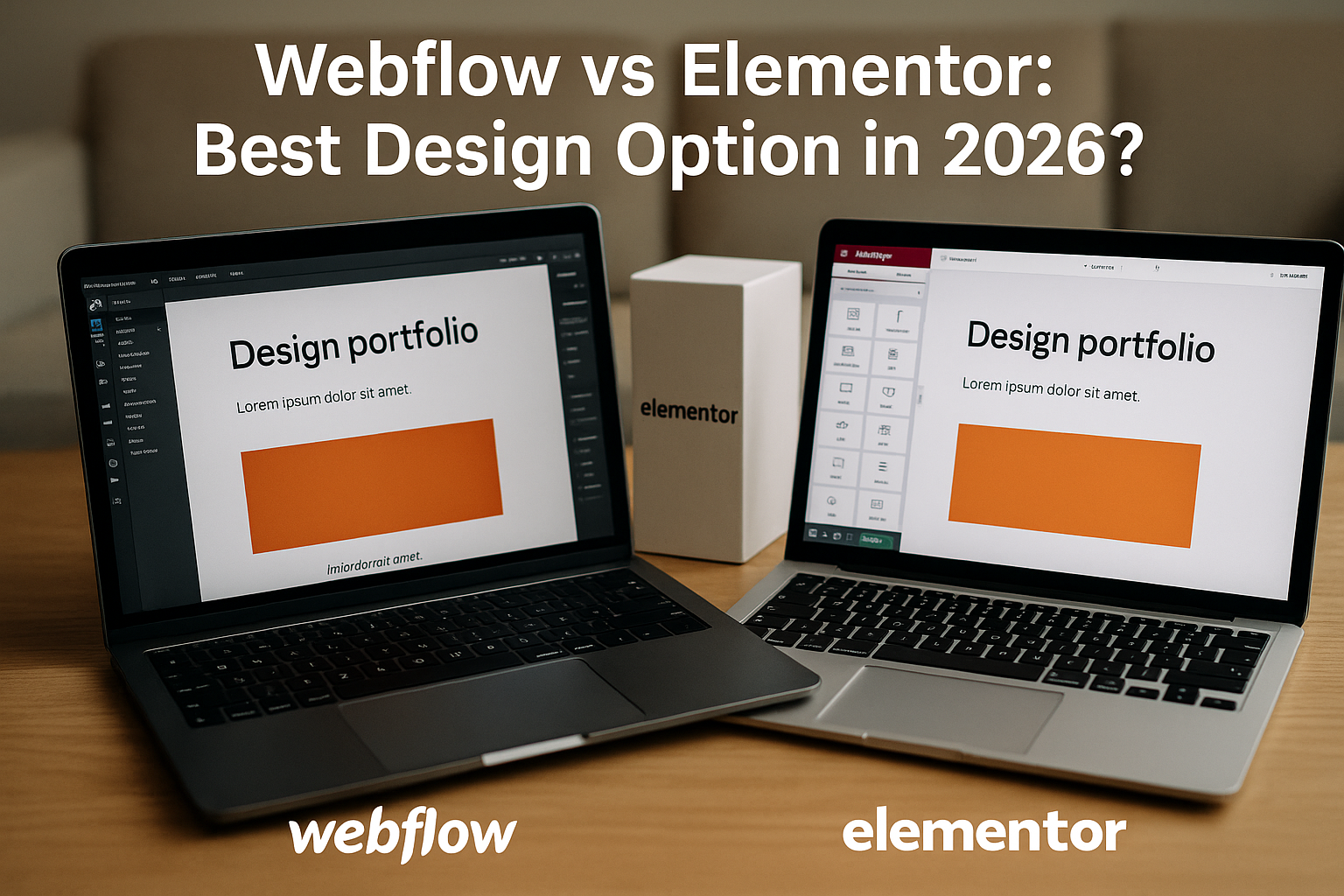
Webflow is a hosted visual web platform. It is positioned as an AI-native platform with capabilities to build, manage, optimize, and extend websites.
Official Webflow capabilities include Design, Edit content, Interactions, Collaboration, Page building, CMS, Hosting, Localize, Security, Shared Libraries, Analyze, Optimize, SEO, AEO, Apps, Figma to Webflow, Webflow Cloud, DevLink, and MCP.
That matters because Webflow is not just a canvas for arranging page sections. It is a platform where the design environment, CMS, hosting layer, optimization tools, and operational controls are designed to work together.
Elementor as a WordPress page builder
Elementor is a WordPress plugin/page builder. Structurally, that means it runs inside WordPress rather than replacing WordPress.
This gives Elementor an obvious advantage for teams already invested in WordPress. You can keep WordPress as the core CMS and use Elementor as the visual building layer.
The important caveat is that the final website experience depends on more than Elementor. It also depends on the WordPress setup, hosting provider, theme choices, plugins, update discipline, and any custom code or integrations involved.
Why that difference matters for design workflows
The platform difference affects the entire design process. In Webflow, designers typically work inside one connected system. In Elementor, designers work inside WordPress, where the builder is one part of a larger stack.
That distinction shapes everything from client handoff to QA. In a Webflow vs Elementor comparison, the question is not only “Which editor has more controls?” It is also “Which environment gives the team fewer ways to accidentally break the site?”
For design-led projects, fewer disconnected dependencies can be a real advantage. For WordPress-first teams, the broader ecosystem may be worth the added complexity.
Design Flexibility: Which Gives Creators More Control?
Design flexibility is where the Webflow vs Elementor conversation gets most interesting. Both tools are visual, but they are designed around different assumptions.
Webflow feels more like a visual development environment for designers who understand layout logic. Elementor feels more like a WordPress page-building interface designed to make editing accessible inside an existing CMS ecosystem.
Visual editing depth
Webflow gives designers a strong sense of direct control over structure, styling, layout behavior, and reusable patterns. In my experience reviewing design workflows, this is where Webflow tends to appeal to professionals who want to build custom-looking sites without constantly fighting templates.
The editor encourages you to think in terms of hierarchy, classes, spacing systems, components, and responsive behavior. That can feel more technical at first, but it also gives skilled designers more room to create polished, distinctive work.
Elementor can be efficient for assembling pages visually inside WordPress. For teams that want a familiar WordPress-based editing experience, that is valuable. But because it sits within WordPress, the final design workflow can be influenced by the theme, plugins, and site configuration.
Layout precision and responsive control
For Webflow vs Elementor design flexibility, responsive control is one of the biggest decision points. Designers often want more than “make it stack on mobile.” They want intentional behavior across breakpoints.
Webflow is strong for teams that care about precise layout systems and responsive refinement. You can approach the site with a design-system mindset, then adjust how layouts behave across screen sizes in a controlled way.
Elementor can also support visual layout work, but the level of predictability often depends on the broader WordPress environment. If the theme, plugins, or legacy site structure introduce constraints, designers may spend more time troubleshooting than designing.
Reusable design systems and consistency
A website usually starts simple. Then the team adds landing pages, campaign pages, content templates, new sections, localization needs, and multiple editors. That is when consistency becomes difficult.
Webflow’s platform includes Shared Libraries and Collaboration, which are especially relevant for teams trying to keep design systems consistent. For agencies and marketing departments, this can reduce the “every page looks slightly different” problem.
Elementor can be productive for individual pages, but WordPress environments can become inconsistent when multiple plugins, editors, templates, and historical decisions pile up. This is not an Elementor-only issue; it is a common operational reality of WordPress stacks.
Animation and interactions
Webflow includes Interactions, which is one of the reasons many designers consider it a premium visual design platform. Motion can be part of the design process rather than an afterthought.
The key is restraint. Animations should support usability, storytelling, and conversion—not just show off. Webflow gives capable designers more room to create refined interactive experiences, but the best results still require good judgment.
Elementor may be enough for teams that need straightforward page effects inside WordPress. But if the project depends on highly intentional interaction design, the Webflow vs Elementor comparison usually tilts toward Webflow.
Ease of Use and Learning Curve
Ease of use depends heavily on your starting point. A WordPress veteran and a product designer may have very different reactions to the same platform.
Beginner-friendly setup
Elementor can feel easier if you already understand WordPress. You are working inside a familiar dashboard, using a plugin/page builder model that many site owners already know.
Webflow can feel more structured at the beginning. It asks users to understand layout hierarchy, classes, CMS structure, and responsive design principles. For true beginners, that can create a steeper first impression.
However, beginner-friendly is not always the same as long-term efficient. In the Webflow vs Elementor decision, the better question is: which learning curve pays off for your type of work?
How each editor feels day to day
Day to day, Webflow feels more intentional. It rewards designers who think systematically and want control over how the site is built, managed, and optimized.
Elementor can feel faster for straightforward page edits, especially when a WordPress site is already configured. If the team’s goal is simply to update existing WordPress pages visually, it can be a practical choice.
But when projects become more design-specific, Webflow’s structure often becomes an advantage. Less time is spent navigating plugin conflicts or inherited WordPress decisions, and more time can go into the actual design system.
Team handoff and content editing
Handoff is where many website projects succeed or fail. A beautiful site is not useful if the client or marketing team is afraid to update it.
Webflow includes Edit content, CMS, Collaboration, and publishing-related capabilities across its platform. This can help separate content operations from core design decisions, which is valuable when non-designers need controlled editing access.
With Elementor, handoff depends on how the WordPress site is configured and how comfortable the team is inside WordPress. For some clients, that is perfect. For others, the dashboard, plugins, and builder layers can feel less tidy.
When the learning curve becomes a benefit
Webflow’s learning curve can become a competitive advantage for professionals. Once you understand the system, you can build more deliberately and create cleaner reusable patterns.
This is why many designers who initially compare Webflow vs Elementor end up preferring Webflow for client work where brand expression and custom layouts matter. The initial learning investment pays back through control and consistency.
Elementor’s lower switching friction is real, especially for WordPress users. But if you are choosing a platform for the next several years of design-led work, the higher ceiling matters.
Performance, Hosting, and Technical Ownership
Performance is not only a builder issue. It is a full-stack issue involving hosting, site structure, assets, scripts, third-party tools, CMS decisions, and maintenance habits.
That said, the architecture behind each option strongly affects who owns performance and operational risk.
Hosting model differences
Webflow includes Hosting as part of its platform capabilities. That creates a more unified operating model: design, CMS, hosting, security, optimization, and publishing live inside one ecosystem.
Elementor, as a WordPress page builder, depends on WordPress and your chosen hosting environment. That can be flexible, but it also means you or your team must make more technical decisions.
In a Webflow vs Elementor performance discussion, this hosting distinction is central. Webflow reduces the number of separate stack decisions. Elementor gives you more ecosystem flexibility, but also more responsibility.
Page speed and site performance expectations
No platform automatically guarantees a fast website. Poor design choices, oversized assets, excessive scripts, and careless tracking tags can slow down almost anything.
Webflow’s hosted model can make performance management more predictable because fewer core pieces are scattered across vendors. Its Optimize and Analyze capabilities are also relevant for teams that want to improve experiences after launch.
Elementor sites can perform well when the WordPress stack is carefully managed. But performance depends on hosting, themes, plugins, media optimization, and ongoing maintenance discipline.
Maintenance, updates, and plugin risk
This is one of the most practical Webflow vs Elementor pros and cons areas. Webflow reduces routine technical maintenance because you are not managing a typical WordPress plugin stack.
With Elementor, WordPress remains the foundation. That usually means paying attention to updates, plugin compatibility, theme behavior, backups, and hosting configuration.
For agencies with WordPress maintenance processes, this may be normal. For small teams without technical capacity, the operational burden can become distracting.
Security and operational overhead
Webflow includes Security as an official platform capability. For many SMBs and marketing teams, having security handled within a managed platform is a major reason to choose it.
WordPress can be secure, but the responsibility is more distributed. Hosting, plugins, themes, admin practices, and update habits all matter.
So the security side of Webflow vs Elementor is less about fear and more about ownership. Do you want a managed platform model, or are you comfortable managing a WordPress-based stack?
Official website · Latest pricing & offers
CMS, SEO, and Content Operations
A website platform is only as good as the team’s ability to publish, optimize, and maintain content without damaging the design.
This is where CMS structure, SEO controls, content workflows, and governance become more important than the visual editor alone.
Content management differences
Webflow includes CMS and Edit content capabilities. For design-led teams, this is useful because content models can be designed around the site’s visual and strategic needs.
The Webflow CMS works especially well when content types are structured intentionally. For example, a marketing team can think through collections, templates, and editorial patterns before publishing at scale.
Elementor relies on WordPress as the CMS. That can be a major advantage for teams already deeply familiar with WordPress content publishing. The tradeoff is that the design layer and content system are spread across the WordPress environment.
SEO controls and technical flexibility
Webflow includes SEO and AEO among its official platform capabilities. It also includes Analyze and Optimize, which are relevant for teams that want to improve content and performance over time.
That does not mean Webflow automatically ranks better. SEO results depend on content quality, technical execution, authority, site structure, internal linking, and search intent alignment.
For Webflow vs Elementor SEO, I would frame it this way: Webflow gives design-led teams a clean, integrated environment for SEO work; Elementor gives WordPress teams access to SEO workflows within the broader WordPress ecosystem.
Why content teams may prefer one platform over the other
Content teams may prefer Webflow when they want controlled editing, polished templates, and less exposure to technical site settings. This is common in brand, SaaS, agency, and B2B marketing environments.
Content teams may prefer Elementor when they already know WordPress and want to keep existing editorial habits. The less a team wants to change its publishing process, the more Elementor may appeal.
The right answer depends on whether the content operation is being redesigned along with the website. If yes, Webflow deserves serious consideration.
Scaling content without breaking design
As content scales, governance matters. More pages mean more chances for inconsistent spacing, off-brand sections, and broken layouts.
Webflow’s CMS, Shared Libraries, Collaboration, publishing workflows on higher plans, and related platform capabilities can help teams preserve consistency. This is one reason the Webflow vs Elementor choice often leans Webflow for brand-sensitive teams.
Elementor can work well when WordPress roles, templates, and editorial controls are managed carefully. But if many non-technical users are editing freely inside a complex WordPress site, consistency can become harder to enforce.
Pricing Breakdown: What You Actually Pay
Pricing is where buyers often oversimplify the decision. The visible subscription is only one part of the cost.
You also need to account for hosting, maintenance, implementation time, training, governance, redesign effort, and the cost of future changes.
Webflow site plans
All Webflow prices below are in USD, per site, plus applicable taxes at checkout.
| Webflow Plan | Price | Verified Included Details |
|---|---|---|
| Starter | Free | Webflow.io domain, limited Webflow CMS, 2 static pages, 1 GB bandwidth, 50 form submissions, Webflow AI, MCP server, Webflow Cloud app hosting, and Free Starter Workspace |
| Basic | $15/mo billed yearly | Custom domain, 300 static pages, 10 GB bandwidth, unlimited form submissions, password protection, Webflow AI, MCP server, Webflow Cloud app hosting, Free Starter Workspace |
| Premium | $25/mo billed yearly | Everything in Basic plus Webflow CMS, bandwidth, code components, site search, form file upload, and well-known files |
| Team | $2500/mo annual contract required | Everything in Premium plus Site & Workspace, Webflow Localize, AEO agents, publishing workflows, single-page publishing, site activity log & API, foundational governance, enhanced security & compliance, and priority support |
| Enterprise | Custom pricing | Everything in Team plus enterprise-ready scale, granular permissions, custom roles, advanced governance, secure integrations, dedicated account manager, enhanced SLAs, and custom configurations |
For Webflow vs Elementor pricing, Webflow is easier to evaluate because the hosted platform cost is more explicit. You can see what is included in the plan and compare it against your needs.
Webflow platform plans for teams
The Team and Enterprise levels are designed for organizations with more advanced operational needs. These are not usually the first stop for a solo freelancer building a small brochure site.
Team includes Site & Workspace, Webflow Localize, AEO agents, publishing workflows, single-page publishing, site activity log & API, foundational governance, enhanced security & compliance, and priority support.
Enterprise adds enterprise-ready scale, granular permissions, custom roles, advanced governance, secure integrations, a dedicated account manager, enhanced SLAs, and custom configurations. Those features matter when web operations become a governance function, not just a design task.
What to watch for in total cost
The true Webflow vs Elementor cost comparison should include labor. A platform that costs less monthly can cost more if it requires more maintenance, troubleshooting, plugin management, or developer intervention.
With Webflow, you are often paying for a more integrated hosted model. With Elementor, the total cost depends on the WordPress stack around it, including hosting and any tools or services your setup requires.
For buyers, the practical question is not “Which one is cheapest?” It is “Which one gives us the best outcome with the least avoidable operational friction?”
Why Elementor pricing is harder to compare cleanly
Official Elementor pricing and plan specifications were not provided for this review, so I will not invent numbers or make unsupported claims.
Structurally, Elementor pricing is harder to compare cleanly because Elementor is only one part of a WordPress website. Your total cost may involve hosting, WordPress maintenance, themes, plugins, backups, development support, and other operational choices.
That does not make Elementor bad value. It simply means the Webflow vs Elementor pricing comparison should be based on total ownership, not just the page builder line item.
Best Use Cases by Buyer Type
The best platform depends on who is buying, who is building, and who will maintain the site after launch.
Here is how I would think through the decision by buyer type.
Freelance designers and studios
Freelance designers who want to offer custom, polished, design-led websites will often prefer Webflow. It gives them more control over layout, responsive behavior, interactions, and design system consistency.
It can also create a cleaner client handoff when the site is structured properly. Clients can edit content without needing to understand every design decision.
Elementor may suit freelancers who specialize in WordPress and serve clients that already want WordPress. If your business model depends on WordPress maintenance and plugin-based flexibility, Elementor can fit that service offering.
Marketing teams
Marketing teams usually care about speed, brand consistency, SEO, landing pages, analytics, optimization, and controlled publishing.
Webflow’s Design, CMS, Collaboration, Page building, Hosting, Analyze, Optimize, SEO, AEO, and Shared Libraries make it compelling for teams that want fewer disconnected tools. For many marketing teams, this is where the Webflow vs Elementor comparison becomes more than a design question.
Elementor may work for marketing teams already embedded in WordPress. If the team knows WordPress well and has technical support, switching may not be necessary.
Startups and SMBs
Startups and SMBs often need a site that looks credible, loads reliably, and can be updated without constant developer involvement.
Webflow is a strong fit when the website is a key brand and conversion asset. It lets small teams operate with a more integrated platform instead of managing a patchwork WordPress stack.
Elementor may make sense when budget, existing WordPress familiarity, or plugin ecosystem needs outweigh the desire for a hosted design platform. The best choice depends on the team’s internal skills.
Agencies building client sites
Agencies should think carefully about their delivery model. Webflow can be excellent for agencies selling premium design, brand systems, landing pages, and marketing sites with strong visual standards.
It also helps when agencies want repeatable systems and less post-launch technical maintenance. That can improve margins if the agency’s process is built around Webflow from the start.
Elementor can be a good agency option for WordPress-centered clients. If clients demand WordPress or already have WordPress infrastructure, Elementor keeps the agency inside that ecosystem.
When to stay on WordPress
Stay on WordPress if your team already depends on WordPress workflows, has the right technical support, and benefits from the ecosystem breadth.
This is especially true if a migration would disrupt content operations without creating enough business value. The Webflow vs Elementor vs WordPress question is not always about moving away from WordPress; sometimes it is about improving what you already have.
But if you are starting fresh and the site is primarily design-led, Webflow deserves to be at the top of the shortlist.
Migration Considerations: Moving from Elementor to Webflow
Many buyers researching Webflow vs Elementor migration are not starting from zero. They already have a WordPress site built with Elementor and want to know whether switching is realistic.
It is realistic, but it should be treated as a redesign and rebuild project—not a one-click conversion.
What typically migrates well
Content usually migrates better than design. Text, images, metadata, URLs, and structured content can often be audited and moved with planning.
The site strategy can also migrate well. If you already know which pages convert, which blog posts attract traffic, and which layouts matter most, that knowledge should guide the Webflow rebuild.
What usually does not migrate perfectly is the visual construction. Elementor page layouts are part of a WordPress builder environment, while Webflow uses its own structure and design logic.
Content and SEO preservation
SEO preservation should be planned before the migration starts. Map URLs, audit metadata, review internal links, identify high-traffic pages, and decide which content should be consolidated or improved.
Webflow includes SEO capabilities, but the platform alone does not protect rankings. Migration mistakes can still hurt performance if redirects, content hierarchy, headings, canonical decisions, or indexing signals are handled poorly.
For a serious Webflow vs Elementor SEO migration, I would always run a pre-launch and post-launch QA checklist. Do not rely on visual review alone.
Design rebuild realities
A move from Elementor to Webflow usually requires rebuilding the design. That is not necessarily bad. In many cases, the rebuild is the reason to migrate.
The opportunity is to clean up inconsistent layouts, simplify content structures, improve responsive behavior, and create a more durable design system. The risk is underestimating how much QA is needed.
If the old WordPress site has many one-off pages, expect decisions. Not every legacy section deserves to be recreated exactly.
Common migration mistakes
The biggest mistake is treating migration as a copy-paste task. That leads to broken layouts, weak content structure, missed redirects, and messy design decisions.
Another common mistake is moving too much legacy content without auditing it. Migration is a good time to remove outdated pages, consolidate thin content, and improve conversion paths.
Finally, do not ignore stakeholder training. Even if Webflow is cleaner after launch, your team still needs to understand how content editing, CMS items, and publishing workflows should work.
Final Recommendation: Best Design Option in 2026
The best design option in 2026 depends on your platform priorities. But if I had to make a commercially practical recommendation, I would put Webflow ahead for most design-led marketing sites, agency builds, and brand-sensitive SMB projects.
Elementor remains useful for WordPress-centered teams, but Webflow is often the better fit when visual control, hosted infrastructure, CMS structure, and long-term maintainability matter most.
Choose Webflow if…
Choose Webflow if your team wants a hosted visual platform rather than a WordPress plugin stack. It is especially compelling if your priorities include custom design, responsive control, CMS structure, collaboration, hosting, SEO, optimization, and fewer operational dependencies.
Choose it if you want the website to feel like a managed design system, not a collection of pages held together by separate tools. That is where the Webflow vs Elementor comparison most clearly favors Webflow.
If you want the hosted option with stronger design control, explore Webflow here. It is not the right fit for every project, but when the fit is right, it can be a much cleaner platform choice.
Choose Elementor if…
Choose Elementor if you are committed to WordPress and want to keep using that ecosystem. It can be a sensible option when the site already exists, the team knows WordPress, and the cost or disruption of switching is not justified.
It may also be the better choice if your project depends heavily on WordPress-specific workflows or if your agency is built around WordPress service delivery.
In short, Elementor is not “worse” by default. It is just tied to a different operating model.
My recommendation for most design-led projects
For most design-led projects in 2026, I would choose Webflow. It gives designers a higher ceiling, gives teams a more integrated platform, and reduces the fragmentation that often comes with WordPress-based stacks.
The honest answer to Webflow vs Elementor is that both can work. But if you are building a modern marketing site, brand site, startup site, or agency client site where design quality and operational clarity matter, Webflow is often the stronger design option.
Elementor may still be the practical answer for existing WordPress users. But for teams choosing fresh, Webflow is the platform I would evaluate first.
Official website · Latest pricing & offers
FAQ
Is Webflow better than Elementor?
Webflow is usually better for advanced design control, hosted workflow, structured CMS use, and scaling a design-led site with fewer moving technical parts.
Elementor can be sufficient, and sometimes preferable, for WordPress users who want a familiar builder and lower switching friction. The right answer depends on whether you want a hosted platform or a WordPress-based setup.
What are the downsides of using Webflow?
The main downsides of Webflow are the learning curve, platform lock-in considerations, and the need to understand its structure to get the best results.
Some teams may also find pricing or collaboration needs less startup-friendly at higher tiers. Webflow is powerful, but it rewards teams that are willing to learn the system properly.
Is Webflow better than WordPress in 2026?
Webflow is often better for design-led teams that want a managed platform with visual control, hosting, CMS, SEO, optimization, and collaboration in one ecosystem.
WordPress still wins for ecosystem breadth and plugin flexibility. If your project depends heavily on WordPress-specific workflows, WordPress may remain the better choice.
Do professional web designers use Elementor?
Yes, many professional web designers use Elementor, especially when they work inside WordPress ecosystems or build for clients already committed to WordPress.
Professional designers also use Webflow when they want more control over custom layouts, responsive behavior, and hosted site operations. The tool choice often reflects the client’s platform needs as much as the designer’s preference.
Related Reading
- Is Webflow Safe? Security, Backups, and Account Protection Explained
- Webflow Reviews Trustpilot: Is It Reliable in 2026?
- Systeme.io vs HubSpot: Which Platform Is Better for Lean Small Businesses in 2026?
References
- Webflow homepage
- Webflow pricing
- Reddit: Just checked out WordPress Elementor…Woah. : r/webflow
- Flowout: Elementor vs Webflow: Full Comparison 2026