Top 7 Podcast Hosting Alternatives to Rss.com

Finding the right podcast host is less about picking the biggest brand and more about matching your workflow, budget, and growth plans. This guide compares seven podcast hosting alternatives to RSS.com for beginners, established creators, teams, monetization-focused publishers, and video podcasters.
This is a comparison guide, not an official ranking from the brands mentioned. Our editorial assessment is based on publicly available official product information, SERP research, and practical podcast publishing considerations as of 2026.
Official website · Latest pricing & offers
Quick Verdict: The 7 Best Podcast Hosting Alternatives to RSS.com
The best podcast hosting platforms vary by creator type. Some emphasize a simple publishing experience, while others are geared toward networks, WordPress users, or monetization experiments.
| Podcast Host | Best For | Practical Consideration |
|---|---|---|
| Podbean | All-in-one hosting and monetization | Useful for creators seeking a broad toolkit in one place |
| Buzzsprout | Beginners | Often a straightforward option for first-time publishers |
| Transistor | Teams and multiple shows | A strong fit when several people manage podcasts |
| Captivate | Growth-focused podcasters | Worth considering for creators prioritizing audience-building workflows |
| Blubrry | WordPress users | May suit publishers who prefer a traditional WordPress-centered stack |
| Libsyn | Long-running shows and publishers | A familiar option for established publishing operations |
| RedCircle | Free monetization experimentation | Relevant for creators exploring revenue options early |
| RSS.com | Free starts, scalable plans, video | A strong benchmark with unlimited episodes and downloads on every plan |
Who Each Alternative Is Best For
Podbean is a reasonable starting point for creators who want hosting and monetization considerations under one roof. Buzzsprout may appeal to people who value a simple setup process and uncomplicated publishing flow.
For multi-show operations, Transistor is one of the podcast hosting alternatives to investigate when collaboration matters. Captivate is more relevant for creators who think in terms of audience growth, while Blubrry may fit WordPress-centered publishing.
Libsyn can be worth evaluating for established publishers that prefer a familiar, traditional hosting approach. RedCircle may suit those testing monetization paths without immediately committing to a more complex business setup.
How To Choose In Under 60 Seconds
Start with your current bottleneck. If you are launching your first show, prioritize easy setup, reliable podcast distribution, and a free plan that does not force an early upgrade.
If your challenge is revenue, look at the available ad, subscription, donation, and listener-support options. If you manage multiple shows or contributors, review account permissions, analytics access, and how easily your team can work from the same dashboard.
For many new creators, RSS.com remains a practical reference point because its free plan includes unlimited episodes and downloads, distribution to major listening apps, a free podcast website, listener donations, and download tracking. You can learn more about RSS.com’s hosting options if that combination matches your launch requirements.
Where RSS.com Still Stands Out
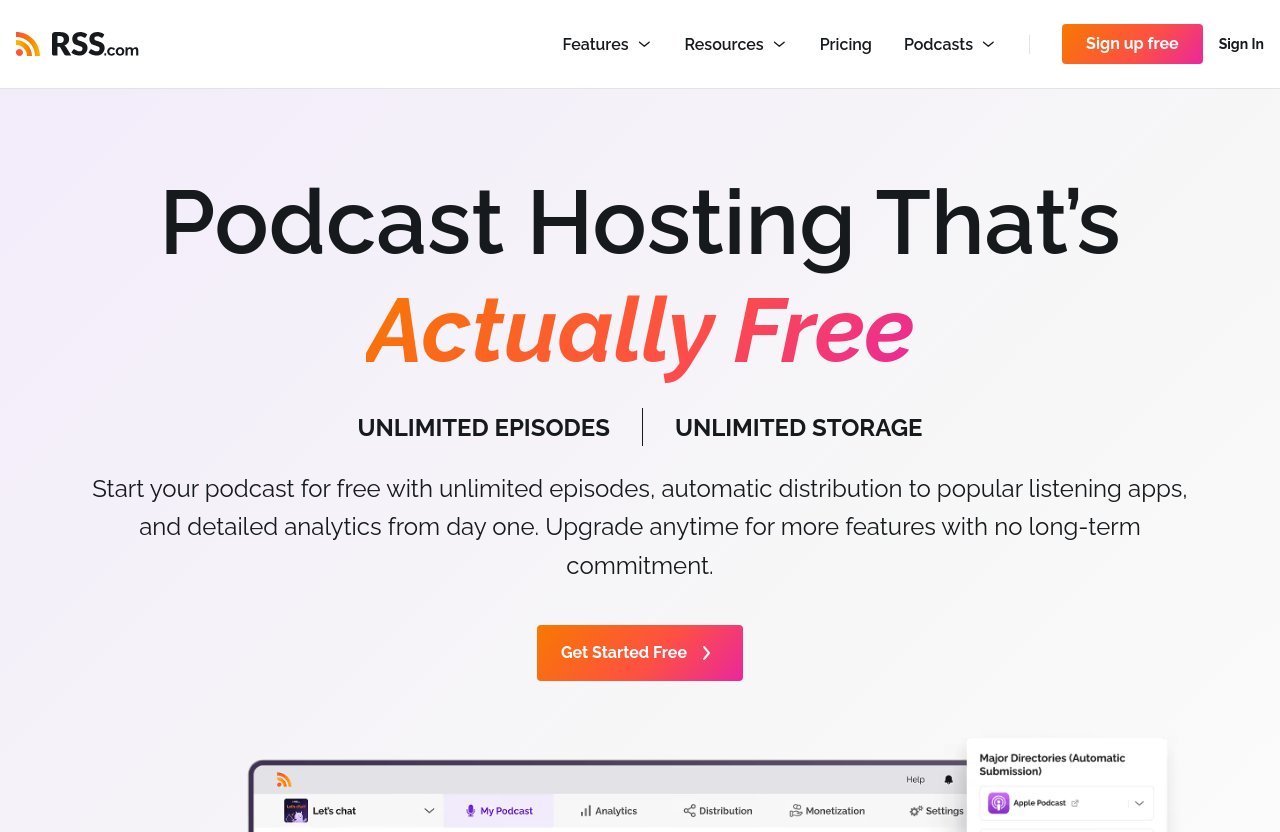
Among podcast hosting alternatives, RSS.com is notable for offering a free plan with no expiration and unlimited episodes and downloads. That can reduce pressure on beginners who want time to build a publishing habit before paying for advanced tools.
Its paid plans also add options such as ad monetization, Apple Podcasts subscriptions, AI-generated transcripts, advanced analytics, video publishing, team access, and API access at higher tiers. The right choice still depends on whether those features align with your actual workflow.
What To Look For In Podcast Hosting Alternatives
A useful podcast hosting comparison should go beyond price. Your host is where your audio files, RSS feed, publishing schedule, analytics, and often monetization tools come together.
Before switching or signing up, use this buyer’s checklist:
- Can you publish consistently within the plan’s limits?
- Is your show distributed to the directories your listeners use?
- Are analytics clear enough to guide content decisions?
- Does the host support your preferred revenue model?
- Can collaborators access the account safely?
- Is migration support clear if you outgrow the platform?
Free Plan Limits And Upgrade Path
Free podcast hosting can be valuable, but the details matter. Check whether a free tier has expiration dates, storage restrictions, episode limits, branded websites, or limits on analytics and distribution.
The upgrade path matters just as much. A host may be inexpensive at launch but become less attractive if important needs—such as video, team seats, or monetization—require multiple add-ons later.
RSS.com’s Free plan is $0 per month and does not expire. It includes unlimited episodes and downloads, which makes it relevant in a podcast hosting comparison for creators who do not want their publishing volume constrained from the outset.
Distribution To Apple Podcasts, Spotify, And YouTube
Podcast distribution determines where listeners can find you. At a minimum, examine the process for submitting and maintaining your show on Apple Podcasts and Spotify, then consider Amazon Music, YouTube, and other relevant apps.
Some hosts streamline directory submission, while others leave more manual work to the creator. Video publishing is especially worth checking because audio and video workflows can differ substantially between platforms.
RSS.com provides one-click distribution to Spotify, Apple Podcasts, YouTube, Amazon Music, and major listening apps. That may be useful for publishers who prefer a centralized distribution workflow.
Analytics, Monetization, And Support
A podcast hosting with analytics should help you understand downloads, episode performance, and audience trends without burying the useful information. Review whether analytics are available from day one and whether deeper reporting requires a higher plan.
Also consider your monetization path. A podcast monetization platform may focus on ads, listener donations, subscriptions, sponsorship tools, or a combination of these. No platform can guarantee income, so the more important question is whether its tools support the business model you want to test.
Support is equally practical. Look for clear documentation, responsive help channels, and a migration process that does not leave your feed or audience data in limbo.
Migration Tools And Ease Of Setup
Switching hosts should not mean starting your show over. A reliable migration process generally preserves your RSS feed, episode archive, artwork, descriptions, and subscriber connection through a properly configured redirect.
Before committing, ask how imports work, whether your current host supports a 301 redirect, and who is responsible for checking directories after the move. The strongest podcast hosting alternatives make these steps understandable even for non-technical creators.
1. Podbean
Podbean is often considered by creators looking for an all-in-one approach to hosting, publishing, and monetization. It can be a sensible option to compare if you want fewer separate tools in your podcast workflow.
Best For All-In-One Hosting And Monetization
Podbean may appeal to creators who want a mainstream platform that brings core hosting and monetization-oriented functionality into one environment. It is particularly relevant for hosts who prefer to manage publishing, distribution, and business features from a single dashboard.
Compared with more specialized podcast hosting alternatives, its appeal is breadth rather than a narrow team or WordPress-specific use case.
Pros And Trade-Offs
The potential advantage is convenience. A unified platform can reduce the number of services you need to learn when you are managing recording, publishing, promotion, and revenue experiments.
The trade-off is that an all-in-one system may include features you do not need yet. Review the plan details carefully to ensure the features you value are available at the level you choose.
Pricing Notes
Podbean offers different plan options, but prospective users should verify current prices, storage rules, monetization eligibility, and included features directly on its official site. Pricing structures can change, particularly where optional business tools are involved.
2. Buzzsprout
Buzzsprout is commonly associated with an approachable publishing experience. It is one of the podcast hosting alternatives many first-time podcasters consider when simplicity is their main requirement.
Best For Beginners Who Want Simplicity
For podcast hosting for beginners, Buzzsprout may be worth a close look if you want a platform that feels easy to navigate. A straightforward publishing workflow can help new hosts focus on episode quality and consistency rather than technical administration.
This can be especially helpful if you are producing a single show and do not need complex team management from day one.
Pros And Trade-Offs
A simple workflow may shorten the distance between exporting an episode and publishing it. For independent creators, that can make maintaining a schedule more realistic.
The trade-off is that beginner-friendly does not always mean best for every later-stage need. Compare the available analytics, monetization paths, media support, and upgrade options before treating simplicity as the only decision factor.
Pricing Notes
Check Buzzsprout’s official pricing page for current plan allowances and feature availability. When comparing it with RSS.com alternatives, focus on how each plan accommodates your expected publishing frequency and back catalog.
3. Transistor
Transistor is a relevant option for organizations managing multiple podcasts or involving several contributors in production. It may be more compelling for teams than for a solo creator with one occasional show.
Best For Teams And Multiple Shows
Podcast hosting for teams requires more than a place to upload audio. Teams often need organized show management, clear roles, and a system that can support contributors without sharing a single personal login.
Transistor may suit networks, agencies, businesses, and internal communications teams that see podcasting as a collaborative publishing operation.
Pros And Trade-Offs
The main potential benefit is fit. A platform designed around multiple shows or multiple stakeholders can make administration cleaner as your production workload grows.
The trade-off is that this approach may be more than a new solo podcaster needs. If your priority is simply launching a first audio series for free, compare the cost and complexity against simpler podcast hosting alternatives.
Pricing Notes
Review Transistor’s official plan details before deciding, particularly if you expect to add shows, collaborators, or larger production volumes. A team-oriented host should be evaluated on organizational fit, not just its entry price.
4. Captivate
Captivate is often considered by podcasters who think beyond basic publishing and want tools aligned with audience growth. It may fit creators who already have a content strategy and want hosting that can grow with it.
Best For Growth-Minded Podcasters
Growth-focused podcasters usually care about more than uploading episodes. They may be looking at discoverability, listener conversion, content repurposing, calls to action, and ways to understand what content attracts an audience.
Captivate is one of the podcast hosting alternatives to examine if you are building a long-term creator brand rather than treating your show as an occasional side project.
Pros And Trade-Offs
A growth-oriented platform can be useful when you have a clear audience and promotion plan. It may encourage you to think about episode packaging, publishing consistency, and performance measurement more deliberately.
The trade-off is that tools alone do not create listener growth. If your show is new, start with a sustainable production process before paying for features you may not use.
Pricing Notes
Confirm current Captivate pricing and plan inclusions directly with the provider. In particular, assess whether the available tier suits your publishing volume, show portfolio, and future audience-building needs.
Official website · Latest pricing & offers
5. Blubrry
Blubrry is a recognizable option for podcasters who prefer a more traditional publishing stack, particularly creators who already rely on WordPress. It can make sense for publishers who see their website as the center of their podcast presence.
Best For WordPress Users And Established Creators
If your podcast site already runs on WordPress, Blubrry may be a natural platform to investigate. Website-first publishers often want close alignment between their posts, episode pages, SEO work, and media hosting.
This may be more relevant for established creators than for someone who only needs a basic free podcast hosting setup.
Pros And Trade-Offs
The advantage is familiarity for WordPress users. Keeping your website and podcast publishing process closely connected can make content management feel more coherent.
The trade-off is that a more traditional stack may require more hands-on setup than some newer, streamlined services. Consider whether you value flexibility and site control enough to justify that learning curve.
Pricing Notes
Blubrry’s pricing and service options should be checked directly before purchase. Compare website integration, support expectations, and hosting capacity according to your specific publishing needs.
6. Libsyn
Libsyn remains a platform many established podcasters and publishers recognize. It may appeal to creators who value a familiar hosting and distribution workflow, especially for long-running shows.
Best For Long-Running Shows And Publishers
Libsyn can be worth considering if your podcast is already an ongoing publication with a substantial catalog and established release schedule. Publishers may prioritize operational consistency, feed continuity, and dependable distribution processes.
For this audience, switching platforms is not only a pricing decision; it is also a risk-management decision.
Pros And Trade-Offs
A more established hosting provider can feel reassuring for publishers that value continuity. This can matter when a show has years of episodes, sponsors, or multiple stakeholders depending on a stable release process.
The trade-off is that newer podcast hosting alternatives may feel more modern or purpose-built for certain creator workflows. Compare the dashboard experience and tools you will use weekly, not just the provider’s history.
Pricing Notes
Libsyn plan details should be verified on its official website. Long-running shows should also confirm migration support, episode archive handling, analytics availability, and monetization options before making a move.
7. RedCircle
RedCircle is often discussed by creators exploring monetization and audience growth early in their podcast journey. It may be especially relevant if you want to experiment before committing to a more involved business structure.
Best For Free Monetization Experimentation
RedCircle may fit creators who want to investigate revenue opportunities while keeping their hosting decisions flexible. It is useful to compare when your central question is how a host supports monetization experiments rather than simply where it stores audio files.
As with every podcast monetization platform, results depend on audience, niche, advertiser fit, listener trust, and consistent publishing—not just the software.
Pros And Trade-Offs
The potential benefit is a monetization-oriented starting point. That can be attractive if you already have a clear audience or intend to test different ways of supporting the show.
The trade-off is that monetization should not override basic hosting requirements. Check distribution, analytics, support, ownership of your feed, and migration options alongside revenue-related features.
Pricing Notes
Verify RedCircle’s current plans, eligibility criteria, and monetization terms directly before making a decision. Compare them with the total value of competing plans rather than assuming a free entry point will remain the best fit as your show grows.
RSS.com Vs. The Podcast Hosting Alternatives: Where It Wins And Where It Doesn’t
RSS.com is a strong benchmark in this category because it combines a free entry point with a clear path toward monetization, team management, and video publishing. Still, the best choice depends on which capabilities matter most to you today.
Best Free Start
RSS.com’s Free plan costs $0 per month, has no trial requirement, and does not expire. It includes unlimited episodes and downloads, publishing to Apple Podcasts, Spotify, and more, a free website for your podcast, listener donations, and download and growth tracking.
That makes it a compelling free podcast hosting option for creators who want room to publish without worrying about episode or download caps. It also offers detailed analytics from day one and automatic distribution to popular listening apps.
Monetization From Low Download Counts
On RSS.com Plus, creators can earn from ads through PAID with as few as 10 downloads. The Plus plan also supports paid subscriptions on Apple Podcasts, AI-generated transcripts, advanced analytics, unlimited voicemails, and YouTube videos created from audio episodes.
RSS.com Plus is listed at $19.99 monthly or $15 per month when billed annually, totaling $180 annually. This may suit creators who are moving beyond a hobby workflow and want a more structured monetization path.
Video Podcasting And Team Plans
RSS.com Pro supports up to 10 podcasts, unlimited team members, all-time analytics for every show, and automatic transcripts for every episode. It costs $34.99 monthly or $26 per month when billed annually, totaling $312 annually.
RSS.com Max adds unlimited audio and video podcasts, publishing to Apple Podcasts and YouTube from one upload, 70% of video ad revenue, and full API access. Max is $49.99 monthly or $37 per month when billed annually, totaling $444 annually.
When Another Host May Be A Better Fit
Other podcast hosting alternatives may be a better fit when your needs are highly specific. For example, a WordPress-first publisher may prefer Blubrry, while a team built around managing several shows may prioritize Transistor’s collaboration-oriented positioning.
RSS.com’s paid plans include a 30-day money-back guarantee, and users can cancel anytime. It also offers Podcasting 2.0 features, including interactive transcripts, clickable chapters, live episodes, Boostagrams, and direct listener funding, but not every creator will need these capabilities immediately.
Which Podcast Host Should You Choose?
The right host is the one that supports your next stage without making routine publishing harder. Avoid choosing based only on a headline price or a single feature.
Best For Beginners
Beginners should prioritize easy setup, dependable podcast distribution, and enough room to publish consistently. RSS.com is a practical option because its free plan includes unlimited episodes and downloads, major directory distribution, a free podcast website, donations, and growth tracking.
Buzzsprout may also appeal to creators who want a simple beginner-oriented workflow. Compare both platforms based on how comfortable you feel with their dashboard and plan structure.
Best For Monetization
Creators focused on revenue should compare the tools available for ads, listener support, subscriptions, and sponsorship workflows. RedCircle and Podbean are relevant options to review for monetization-oriented use cases.
RSS.com is also worth considering because Plus supports PAID ad monetization from as few as 10 downloads, Apple Podcasts subscriptions, and listener donations on the Free plan. There is no guaranteed earning level, so choose tools that fit your audience and revenue strategy.
Best For Video Podcasts
Video podcasters should make sure their host’s workflow genuinely supports their publishing destinations. RSS.com Max supports unlimited audio and video podcasts and can publish one upload to Apple Podcasts and YouTube.
If video is central to your strategy, assess file handling, publishing steps, analytics, and how easily each host fits into the rest of your production process.
Best For Teams
For collaborative shows, Transistor is worth examining due to its team and multi-show positioning. RSS.com Pro is also relevant because it supports up to 10 podcasts, unlimited team members, and all-time analytics for every show.
For many creators, RSS.com offers one of the more balanced paths from a free solo launch to paid monetization, team access, and video. If its feature set fits your plan, you can review RSS.com before choosing a host.
How To Migrate Your Podcast Without Losing Momentum
A host migration can be smooth when you treat it as a technical checklist rather than a rushed switch. Plan the move around your release schedule and do not cancel the old account until the new feed is confirmed everywhere.
Exporting Your Feed
Start by saving your existing RSS feed URL, episode files, artwork, titles, descriptions, and analytics records. Your new host may offer an import tool, but it is wise to maintain your own backup of core assets.
Before importing, check that episode dates, metadata, and explicit-content settings are correct. Small errors can become confusing once a feed is distributed across several directories.
301 Redirects And Episode Preservation
The key technical step is usually a 301 redirect from the old RSS feed to the new one. This tells podcast apps and directories that your show has moved while helping preserve existing subscriptions.
Follow your old host’s redirect instructions and keep the prior account active until the redirect is confirmed. Do not create an entirely separate feed if you want existing followers to continue receiving episodes automatically.
Updating Directories And Checking Analytics
After the move, check Apple Podcasts, Spotify, YouTube, Amazon Music, and any other directories where your show appears. Publish a test or regularly scheduled episode only after confirming that the new feed is updating correctly.
Monitor analytics closely for the first few weeks. A brief fluctuation may happen during a migration, but consistent checking helps you identify feed, directory, or tracking issues quickly.
Official website · Latest pricing & offers
FAQ
What Is The Best Platform To Host Podcasts?
The best platform depends on your goals, budget, technical comfort, and production setup. RSS.com is attractive for beginners because its free plan includes unlimited episodes, unlimited downloads, distribution to major listening apps, a podcast website, donations, and analytics.
Other hosts may be better suited to specific needs, such as team management, WordPress integration, growth-focused workflows, or monetization experimentation. Compare the tools you will use every week rather than looking for one universal winner.
Are Podcasts Declining In Popularity?
Podcasting remains a major and active media format, but broad trend claims do not tell you whether a platform is right for your show. A more useful question is whether your chosen host supports consistent publishing, effective distribution, and your preferred audience-growth strategy.
Focus on building a clear show concept, serving a defined listener need, and selecting podcast hosting alternatives that make it easier to publish reliably.
How Much Does A Podcast With 50,000 Listeners Make?
Podcast earnings vary widely. Revenue can depend on niche, listener geography, download patterns, ad rates, sponsorship arrangements, subscriptions, donations, and the strength of the relationship between host and audience.
There is no reliable fixed income figure for a show with 50,000 listeners. Instead, evaluate whether your hosting platform supports the monetization methods that make sense for your audience and publishing model.
Do I Need An LLC For My Podcast?
Many podcasters start without forming an LLC. Whether you need one depends on your country, business structure, revenue activities, contracts, liability considerations, and tax situation.
If your podcast becomes a meaningful business or you are signing sponsorship agreements, consult a qualified legal or tax professional in your jurisdiction. A hosting provider cannot determine the right legal structure for your specific situation.
Related Reading
- Best Airdna Alternatives in 2026
- Best Trustindex Alternatives in 2026: A Practical Buyer’s Guide
- Trackle vs Ovolane: Which Is Better?
References
- Podcast hosting providers
- Best Podcast Hosting Sites in 2026 (with 6 Free Options)
- Podbean: Free Podcast hosting and Monetizing Platform
- Best Free Podcast Hosting Platforms in 2026: 9 Options …