Webflow vs Shopify: Which Is Better for Stores in 2026?
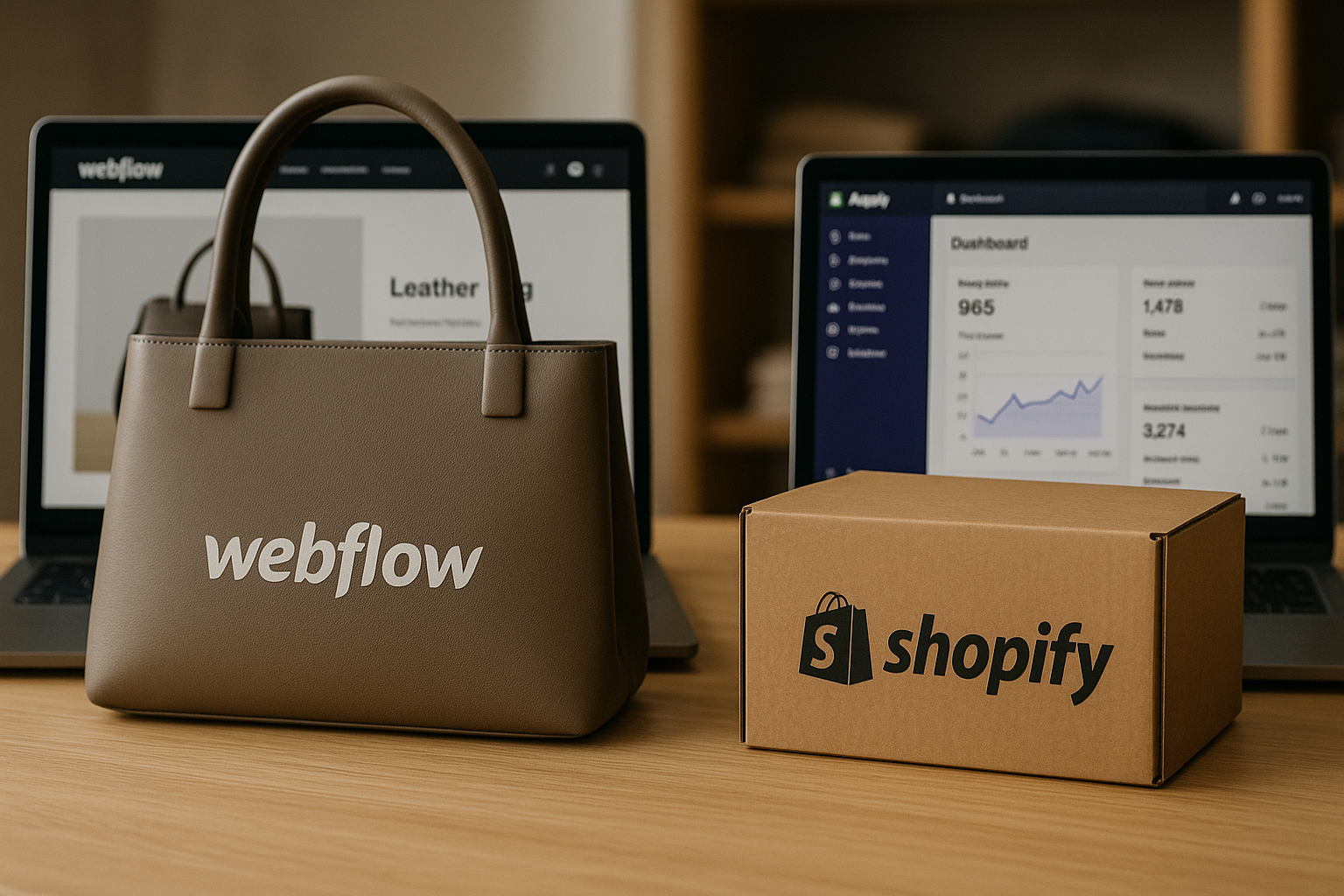
If you are comparing webflow vs shopify, the real question is not “which platform has more features?” It is “which platform fits the way your store needs to sell?”
After comparing both from a buyer’s perspective, I’d frame the decision this way: Webflow is strongest when brand experience, content, landing pages, and creative control drive conversion. Shopify is usually the safer fit when ecommerce operations, catalog handling, and retail workflows are the main priority.
How we evaluated: I looked at the decision through practical store needs—design control, merchandising, content workflows, SEO, team collaboration, operating complexity, and total cost—not just feature checklists.
Official website · Latest pricing & offers
Quick verdict: Webflow vs Shopify for stores
For most ecommerce buyers, webflow vs shopify comes down to visual freedom versus retail-specific tooling.
Webflow is the better fit when your store needs to feel custom, editorial, premium, or campaign-driven. Shopify is usually better when the store is primarily an ecommerce machine and the team wants commerce operations to be as straightforward as possible.
| Scenario | Better fit | Why |
|---|---|---|
| Premium DTC brand with strong storytelling | Webflow | More control over visual presentation, content structure, and brand-led pages |
| Inventory-heavy online store | Shopify | Generally better aligned with retail-first operations |
| Founder-led brand testing positioning and landing pages | Webflow | Faster creative iteration without forcing every page into a standard store template |
| Ecommerce team focused on operational scale | Shopify | Designed around selling and store management first |
| Brand wants Webflow design with Shopify commerce | Hybrid | Useful when you need polished front-end storytelling plus dedicated commerce workflows |
Who should choose Webflow
Choose Webflow if your store depends on presentation. That includes premium consumer brands, design-led products, content-rich businesses, agencies building branded storefronts, and founders who care deeply about how every page looks and converts.
In the webflow vs shopify debate, Webflow makes the most sense when the website is more than a product grid. If you need editorial landing pages, launch pages, lookbooks, buyer guides, educational content, and highly customized brand storytelling, Webflow gives you more room to shape the experience.
For readers evaluating Webflow seriously, you can review the platform through our partner link here: explore Webflow.
Who should choose Shopify
Choose Shopify if your biggest priority is getting a store live with ecommerce workflows at the center. Based on broad market consensus, Shopify is often favored by merchants who want a retail-focused platform for launching, managing, and growing an online store.
That does not mean Shopify is “better” for every brand. It means Shopify is usually the more natural fit when the operational side of ecommerce matters more than full creative control.
Who should consider a hybrid setup
A hybrid Webflow + Shopify setup can be smart when the brand experience and the commerce engine both matter. In that model, Webflow can support the marketing site, storytelling, content, and campaign pages, while Shopify can handle more commerce-focused operations where appropriate.
This is often the most nuanced answer to webflow vs shopify. You do not always need to choose one platform for every job.
Webflow vs Shopify at a glance
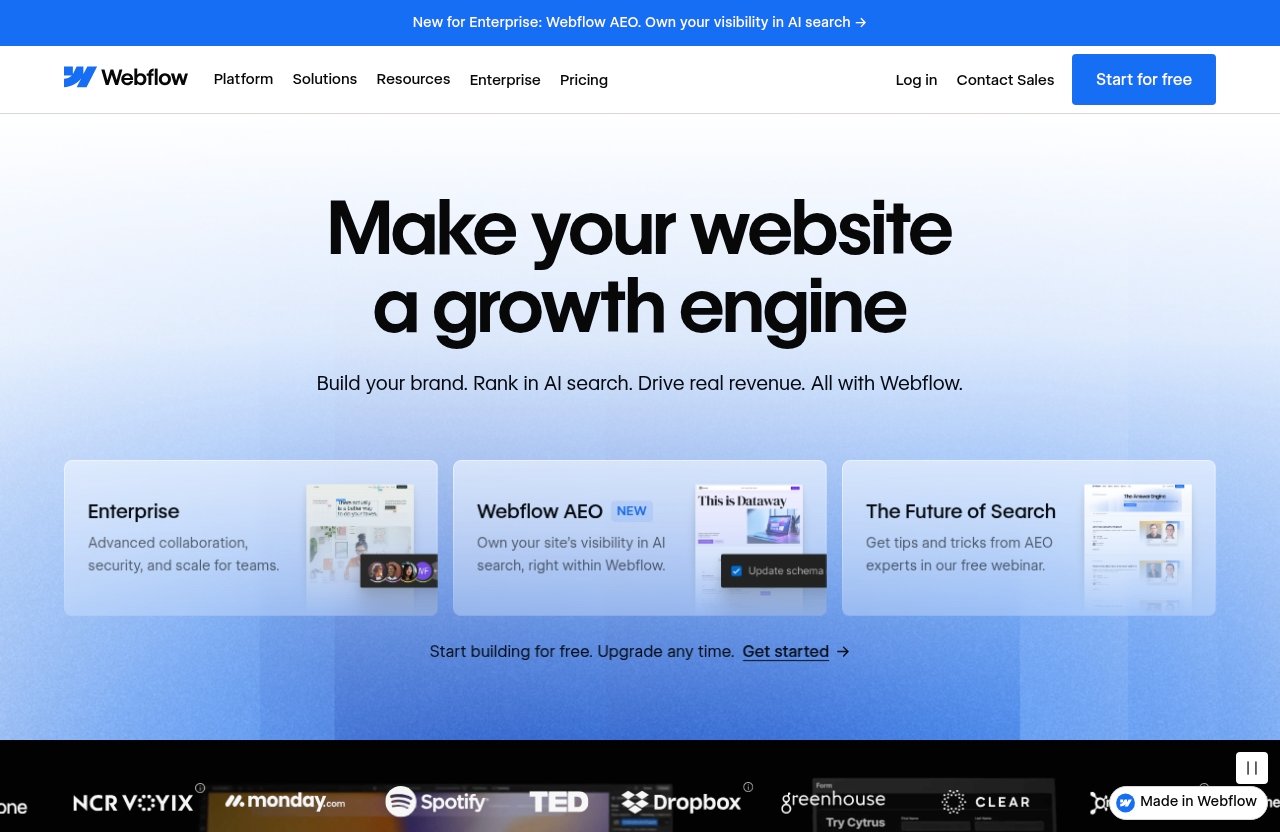
A practical webflow vs shopify comparison should start with business fit. Both can play a role in ecommerce, but they are built around different priorities.
Core difference in one sentence
Webflow is a visual design and content platform that can support ecommerce experiences, while Shopify is a retail-first ecommerce platform built primarily around selling products online.
That one sentence explains most of the tradeoff. Webflow gives you more creative control over the front-end experience. Shopify is usually more focused on the store management side.
Design freedom vs ecommerce operations
| Category | Webflow | Shopify |
|---|---|---|
| Primary strength | Visual design, CMS, brand storytelling | Ecommerce operations and store launch |
| Best for | Design-led, content-rich, premium branded stores | Retail-focused stores and product selling |
| Page control | Strong for custom layouts and campaign pages | Often more theme-driven |
| Content marketing | Strong fit for editorial and CMS-led workflows | Can support content, but commerce is the center |
| Operations | Best when commerce needs are simple or supported by integrations/hybrid setup | Usually stronger for ecommerce-first workflows |
| Team fit | Marketers, designers, brand teams, agencies | Merchants, ecommerce operators, retail teams |
Best fit by business type
For shopify vs webflow for small business, the answer depends on what the small business sells and how it sells.
A boutique brand with a small catalog and a strong visual identity may get more leverage from Webflow. A retailer with a growing catalog, frequent product updates, and day-to-day ecommerce complexity may prefer Shopify.
In other words, webflow vs shopify for ecommerce is less about which name is bigger and more about which workflow matches your store.
How Webflow is positioned for ecommerce and content-driven brands
Webflow is especially compelling for ecommerce-adjacent brands where the storefront is also a media property, brand hub, or conversion-focused marketing site.
This is where the webflow vs shopify decision becomes more strategic. If your product pages need context, education, editorial content, and distinctive visuals, Webflow can feel more aligned with how modern premium brands sell.
Visual design control
Webflow’s biggest advantage is visual control. It is built for teams that want to design custom web experiences without being boxed into generic layouts.
For ecommerce buyers, that matters because design is not decoration. It affects perceived quality, trust, product education, and conversion. A luxury skincare brand, a furniture company, or a design-forward software store may need more than a standard product page.
Webflow is a strong option when your homepage, collection pages, campaign pages, and product storytelling need to feel carefully art-directed.
CMS and content flexibility
Webflow’s CMS is available on the Premium plan and above, according to the official pricing information provided. That matters for stores that publish guides, collections, brand stories, landing pages, seasonal edits, or educational content.
For content-led commerce, webflow ecommerce is often less about running a massive catalog and more about building a persuasive buying journey. If customers need education before purchase, a flexible CMS can help your team create better pre-sale content.
This is also where Webflow can support hybrid business models: products, services, content, events, and lead generation can live together in one brand system.
SEO and AEO control
Webflow is also appealing to teams that care about organic discovery. The official Webflow pricing facts include Webflow AI across plans and AEO agents on the Team plan, along with publishing workflows and single-page publishing on Team.
For SEO and AEO work, page structure and publishing control matter. Stores competing in search often need buyer guides, comparison pages, category explainers, FAQs, and editorial content—not just product pages.
In a webflow vs shopify evaluation, this is a major reason content-first teams often lean Webflow.
When Shopify is usually the better fit
Shopify is usually the better fit when ecommerce operations are the main job. If you want the platform to be centered around selling products, managing a store, and supporting retail growth, Shopify is often the more obvious starting point.
This does not make Webflow weak. It simply means the center of gravity is different.
Fast launch and simpler operations
Shopify is commonly chosen by merchants who want to launch an online store quickly with ecommerce workflows already front and center. For many founders, that simplicity is valuable.
If you are not trying to create a highly custom brand experience, a more standardized ecommerce setup may be a benefit. It can reduce decision fatigue and help the team focus on products, pricing, and marketing.
In the webflow vs shopify choice, Shopify is often easier to justify when speed and operational clarity matter more than creative differentiation.
Inventory-heavy catalog management
For inventory-heavy stores, Shopify is usually a natural fit because it is widely understood as a retail-focused ecommerce platform. If your business has many SKUs, frequent product updates, and operational complexity, that orientation matters.
A design-first platform can still support ecommerce experiences, but a store with complex retail needs should be careful. The more the business depends on day-to-day commerce operations, the more important platform fit becomes.
Retail-focused growth
Shopify is generally associated with ecommerce growth, store management, and retail operations. For teams that think in terms of products, orders, inventory, promotions, and sales channels, that focus can be helpful.
For webflow ecommerce vs shopify, Shopify tends to look stronger when the store itself is the entire business engine. Webflow tends to shine when the brand experience surrounding the sale is just as important.
Pricing and total cost of ownership
Pricing is one of the most searched parts of webflow vs shopify cost, but sticker price alone rarely tells the full story.
For Webflow, we can use verified official pricing facts. For Shopify, because no official Shopify pricing page was provided for this review, I will not list specific Shopify plan names, fees, or transaction costs.
Webflow official pricing plans
All Webflow prices below are in USD, per site, with applicable taxes added at checkout.
| Webflow plan | Price | Officially listed inclusions |
|---|---|---|
| Starter | Free | Webflow.io domain, Limited Webflow CMS, 2 static pages, 1 GB bandwidth, 50 form submissions, Webflow AI, MCP server, Webflow Cloud app hosting, Free Starter Workspace |
| Basic | $15/mo billed yearly | Custom domain, 300 static pages, 10 GB bandwidth, unlimited form submissions, password protection, Webflow AI, MCP server, Webflow Cloud app hosting, Free Starter Workspace |
| Premium | $25/mo billed yearly | Everything in Basic plus Webflow CMS, bandwidth, code components, site search, form file upload, well-known files |
| Team | $2,500/mo annual contract required | Everything in Premium plus Site & Workspace, Webflow Localize, AEO agents, publishing workflows, single-page publishing, site activity log & API, foundational governance, enhanced security & compliance, priority support |
| Enterprise | Custom pricing | Everything in Team plus enterprise-ready scale, granular permissions, custom roles, advanced governance, secure integrations, dedicated account manager, enhanced SLAs, custom configurations |
When reviewing webflow pricing, the key is matching the plan to the site’s role. A simple brand site has different needs than a multilingual content operation with governance requirements.
What costs can grow with scale
The biggest cost drivers are not always the monthly platform fee. For ecommerce teams, costs can grow through:
- Design and development time
- Integrations and third-party tools
- Team collaboration needs
- Localization
- Governance and compliance requirements
- Content production
- Maintenance and iteration
- Commerce operations outside the website layer
This is why webflow vs shopify cost should be evaluated as total cost of ownership. A platform that saves design time may be cheaper for a brand team, while a platform that simplifies operations may be cheaper for an ecommerce team.
How to estimate total cost beyond the sticker price
Start by asking what your team does every week. Do you publish campaign pages? Update product content? Manage a large catalog? Test landing pages? Coordinate approvals? Localize pages?
If the team spends more time on storytelling, content, and brand presentation, Webflow may be more cost-effective because it gives marketers and designers more control. If the team spends more time on retail execution, Shopify may reduce operational friction.
That is the practical heart of webflow vs shopify pricing.
Design, branding, and creative control
This is the section where Webflow usually pulls ahead.
If your store’s brand feel is a competitive advantage, you should not treat design flexibility as a minor feature. For many premium brands, the website is the product’s first impression, sales pitch, education center, and trust layer.
Template limitations and differentiation
Many ecommerce platforms are theme-driven. That can be convenient, especially for fast launches, but it can also make stores feel similar unless you invest in customization.
Webflow is better suited to brands that want to escape that sameness. It gives design teams more freedom to create custom layouts, motion, page structures, and content experiences.
In a crowded market, differentiation matters. If your product is premium, design-led, or trust-sensitive, webflow vs shopify is not just a technical choice—it is a positioning choice.
Custom layouts and premium brand feel
A premium store often needs more than a grid of products. It may need founder stories, ingredient explainers, comparison modules, lookbooks, press sections, product education, interactive landing pages, and tailored category pages.
Webflow is strong for that kind of work because the site can be shaped around the buying journey. Instead of forcing every campaign into the same structure, teams can build pages that match the story.
This is especially valuable for:
- Beauty and wellness brands
- Furniture and home goods
- Fashion and accessories
- Premium food and beverage
- Consumer electronics
- Creator-led products
- B2B products with ecommerce-style buying paths
For these businesses, webflow ecommerce can support the front-end experience customers remember.
When design freedom matters most
Design freedom matters most when customers need to believe before they buy.
If your product requires education, emotional appeal, visual proof, or trust-building, Webflow’s creative control can help. A commodity store may not need that level of storytelling, but a premium brand often does.
This is why I often lean Webflow for founders and brand managers who say, “Our site needs to feel different.” In that specific webflow vs shopify scenario, creative control can directly support conversion.
Official website · Latest pricing & offers
Commerce functionality and day-to-day store operations
Now for the other side of the tradeoff: operations.
A beautiful store still needs to work. If your team spends most of its time managing products, stock, fulfillment, and commerce workflows, you need to be honest about what matters daily.
Catalog and merchandising workflows
For smaller catalogs, curated collections, limited drops, and content-led products, Webflow can be a strong fit. The site can focus on presentation and persuasion without needing to behave like a massive retail backend.
For larger or inventory-heavy catalogs, Shopify is usually the more natural choice. It is widely understood as ecommerce-first, and that matters when product operations are complex.
In webflow ecommerce vs shopify, Webflow is strongest when merchandising is part of a broader brand experience. Shopify is stronger when merchandising is mostly a store operations discipline.
Checkout and payments considerations
Checkout and payments are areas where you should verify the exact requirements before choosing either platform. Payment methods, tax handling, shipping workflows, compliance needs, and integrations can all affect the final decision.
Because this review is limited to verified Webflow facts and does not include official Shopify pricing or fee documentation, I recommend checking current official platform documentation before making a final commerce decision.
The practical takeaway: if checkout complexity is high, investigate carefully before committing to a design-first build.
Operational complexity and team workflow
Operational complexity should drive the decision. A small team with a premium product may value control over pages and messaging. A larger ecommerce team may value repeatable store operations more.
For webflow vs shopify for ecommerce, ask which team will use the platform most. If marketers, designers, and content editors are the primary users, Webflow is compelling. If ecommerce operators and retail managers are the primary users, Shopify may be the better fit.
SEO, content marketing, and publishing workflows
Search visibility is not just about technical settings. It is about how easily your team can create, structure, publish, and improve content.
This is a major reason Webflow often wins with content-driven brands.
Why content-first teams like Webflow
Content-first teams need flexibility. They may publish gift guides, comparison articles, buying guides, launch pages, seasonal campaigns, education hubs, and SEO landing pages.
Webflow’s CMS, available from the Premium plan according to the verified pricing facts, supports this kind of structured content work. Webflow AI is also included across the listed plans, and higher-tier plans include more advanced workflow and governance capabilities.
For webflow vs shopify, the SEO/content question is simple: does your store need to publish like a media brand? If yes, Webflow deserves a close look.
Publishing cadence and page control
Publishing cadence matters. A brand that launches campaigns weekly needs control over page layouts, copy, sections, and approvals.
The Webflow Team plan includes publishing workflows, single-page publishing, site activity log & API, foundational governance, and priority support. Those features are relevant for larger marketing teams where multiple people contribute to the site.
If content velocity is part of your growth strategy, Webflow can reduce reliance on rigid page structures.
AEO and AI search readiness
Search is changing, and many teams are now thinking beyond traditional SEO. Answer engine optimization, structured content, and high-quality informational pages are becoming more important.
The Webflow Team plan includes AEO agents, and Webflow AI is included across the listed plans. For content-rich ecommerce brands, those capabilities fit the direction of modern search behavior.
That does not automatically make Webflow the answer for every store. But in a webflow vs shopify comparison, it strengthens Webflow’s case for brands that rely on content discovery and education.
Scalability, governance, and team collaboration
Scalability is not only about traffic. It is also about people, process, permissions, publishing, support, and risk management.
A growing ecommerce brand eventually needs workflow clarity.
Small teams vs growing organizations
For a founder-led brand, simplicity matters. The team may need a site that can evolve quickly without waiting on developers for every landing page or content update.
For a larger organization, governance becomes more important. Teams need publishing controls, roles, permissions, localization, activity logs, and support.
In webflow vs shopify, small teams should think about speed of iteration. Larger teams should think about control and accountability.
Workflows, roles, and permissions
The Webflow Team plan includes Site & Workspace, Webflow Localize, AEO agents, publishing workflows, single-page publishing, site activity log & API, foundational governance, enhanced security and compliance, and priority support.
The Enterprise plan adds enterprise-ready scale, granular permissions, custom roles, advanced governance, secure integrations, a dedicated account manager, enhanced SLAs, and custom configurations.
These details matter for brand teams with multiple editors, designers, developers, marketers, and stakeholders. If your site is business-critical, governance is not optional.
When enterprise requirements matter
Enterprise requirements matter when the website becomes a shared asset across teams, regions, and campaigns. That is when permissions, compliance, localization, integrations, and support become buying criteria.
Shopify is often viewed as operationally scalable for ecommerce-first businesses. Webflow is compelling when enterprise teams need design control, content governance, and brand consistency across a sophisticated web presence.
The right webflow vs shopify answer depends on which kind of scale you mean.
Hybrid approach: Webflow + Shopify
A hybrid webflow shopify setup is worth considering when one platform does not fully solve the business problem.
This approach can let a brand use Webflow for high-impact design and content while using Shopify where commerce operations are the priority.
When to pair best-in-class design with commerce operations
A hybrid setup makes sense when the front-end experience needs to be highly custom but the commerce operation benefits from a retail-first system.
For example, a brand may want Webflow for its homepage, editorial content, product education, campaign pages, and SEO hubs. It may then use Shopify for store operations where that is the better operational fit.
This is often the most balanced answer to webflow vs shopify for mature brands.
Signs a hybrid stack is worth it
Consider hybrid if:
- Your brand team dislikes generic storefront design
- Your ecommerce team still needs retail-focused workflows
- Content and SEO are major acquisition channels
- You need polished landing pages for campaigns
- Your catalog or checkout requirements are more complex than your marketing site
- You have technical resources to manage integration complexity
Hybrid is not always necessary. But for brands that need both storytelling and operational depth, it can be a smart middle ground.
Risks and implementation complexity
The risk is complexity. Two systems can mean more integration work, more maintenance, more QA, and more ownership questions.
Before choosing hybrid, define which platform owns which part of the journey. Decide how products, content, analytics, checkout, and updates will work.
A hybrid webflow vs shopify decision should be intentional, not accidental.
Decision checklist: which platform should you pick?
Use this checklist to make the choice faster.
Choose Webflow if…
Choose Webflow if:
- Brand experience is a major conversion driver
- You need custom landing pages and storytelling
- Your catalog is curated rather than massive
- SEO content, guides, and editorial pages matter
- Designers and marketers need more control
- You want a premium, differentiated site feel
- You may build a hybrid Webflow + Shopify stack later
If that sounds like your store, Webflow is likely the best fit. You can review Webflow for your brand site here.
Choose Shopify if…
Choose Shopify if:
- Your store is primarily commerce-first
- You want retail workflows to be central
- You have a larger or more operationally complex catalog
- Speed to launch matters more than custom design
- Your team thinks mainly in products, orders, and store management
- You prefer a more standardized ecommerce platform approach
For many merchants, Shopify remains a strong ecommerce-first choice.
Choose hybrid if…
Choose hybrid if:
- You want Webflow-level creative control
- You also need commerce operations that are better handled elsewhere
- Your content and campaigns are too important to compromise
- You have the budget and technical support to manage integrations
- Your team can clearly define ownership between systems
Hybrid is best for brands that have outgrown a one-size-fits-all answer.
Official website · Latest pricing & offers
FAQ
Is Webflow better than Shopify?
It depends on the store. Webflow is often better for design-first, content-rich, premium brand experiences where creative control matters. Shopify is usually better for merchants who prioritize ecommerce operations, inventory workflows, and retail-focused scaling.
Who is Shopify's biggest competitor?
It depends on the use case. In many ecommerce comparisons, Webflow is considered a competitor for design-led stores, brand-heavy ecommerce sites, and hybrid setups. Other competitors may be more relevant for different types of merchants.
How much does Shopify take from a $20 sale?
This article avoids exact Shopify fee claims because no verified official Shopify pricing or payment documentation was provided for this review. Check Shopify’s official pricing and payment terms to calculate the exact cost for a $20 sale.
Is Shopify still worth it in 2026?
Yes, Shopify is still worth it in 2026 for many merchants, especially those focused on ecommerce operations, inventory, and scaling an online store. It remains a strong option for ecommerce-first businesses.
Bottom line
The best webflow vs shopify choice depends on what your store needs to do best.
Best for visual freedom
Webflow is the better choice when design freedom, storytelling, content marketing, and premium brand presentation are central to conversion. It is especially strong for content-rich stores, curated catalogs, and brands that need to stand out visually.
Best for retail operations
Shopify is usually the better choice when ecommerce operations are the main priority. If your team needs a retail-first platform and cares more about store management than custom page design, Shopify is often the more practical fit.
Best overall for your situation
Choose Webflow if your website is a brand experience that sells. Choose Shopify if your website is primarily a store that needs retail operations first. Choose hybrid if you need both.
For design-led, content-rich, premium branded stores, my recommendation in the webflow vs shopify decision is Webflow—especially when creative control is part of your competitive advantage.
Related Reading
- Is Webflow vs Framer the right choice for design-first sites?
- How to judge whether a subscription is worth it before you buy
- How we evaluate pricing, value, and hidden tradeoffs in tools
References
- Shopify vs Webflow: My Verdict for 2025 – Ecomm.Design
- When to Choose Webflow + Shopify Over Pure Shopify
- Webflow vs Shopify | Which Website Builder Wins in 2026?
- Webflow vs. Shopify