
Best Community Platform 2026: Skool or Kajabi?

If you are trying to choose the best community platform for a creator business, the short answer is this: choose Skool if you want a simple, community-first platform that helps you launch fast, manage members easily, and keep your setup streamlined. Consider Kajabi if you need a broader all-in-one business platform that goes beyond community management.
This comparison is based on verified Skool pricing facts, practical creator use cases, and a fair high-level view of Kajabi’s positioning. This page may contain affiliate links, and Top Trust Review may earn a commission at no extra cost to you if you buy through them.
Official website · Latest pricing & offers
Skool vs Kajabi: quick verdict for creators
Skool and Kajabi can both support online creators, but they are built for different priorities. The real question is not “Which platform has more?” It is “Which platform fits the way I want to run my community?”
For most community-first creators, Skool is the cleaner choice because it focuses on the essentials: members, courses, videos, live calls, affiliates, and a simple paid community experience.
Who Skool is best for
Skool is best for creators who want the best community platform without building a complicated tech stack.
It fits especially well if you are:
- Launching a paid community
- Selling courses with a community layer
- Running coaching groups or memberships
- Moving away from Facebook groups
- Starting lean and wanting fewer tools to manage
- Prioritizing speed, simplicity, and member engagement
The biggest reason to choose Skool is that it feels purpose-built for community-led businesses. You are not trying to force a broad marketing platform to behave like a community hub.
Who Kajabi is best for
Kajabi may be a better fit if your business needs more than a focused community tool. If your priority is a broader digital business setup with more marketing and site-building needs, Kajabi may make sense.
That does not automatically make it the best community platform for every creator. It means Kajabi can be a better match when community is only one part of a larger business system.
Bottom-line recommendation
Here is the practical verdict:
| Choose Skool if… | Choose Kajabi if… |
|---|---|
| Community is the center of your business | Community is one part of a broader setup |
| You want a fast, simple launch | You need a wider all-in-one platform |
| You want courses, videos, live calls, and members in one focused place | You want broader marketing and business tooling |
| You prefer simple daily management | You are comfortable with a more complex setup |
For creators who care most about community, speed, and low operational friction, Skool is my default recommendation for the best community platform.
What is the best community platform, and why this comparison matters
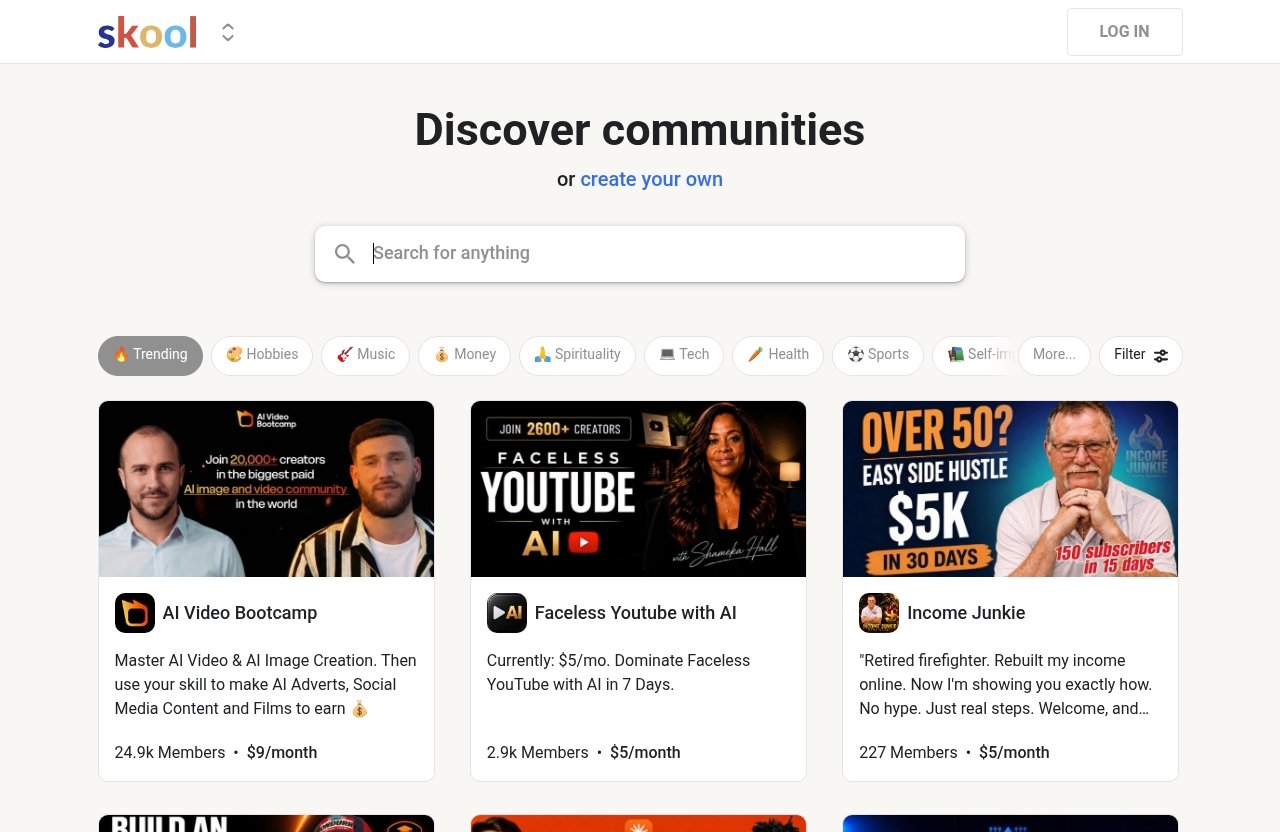
Choosing the best community platform is not just about features. It is about choosing the place where your members will actually show up, engage, learn, and stay.
A platform can look impressive on a comparison chart but still feel heavy in daily use. That matters because creator businesses often depend on consistency, not complexity.
What buyers usually mean by “best community platform”
When people search for the best community platform, they usually want answers to practical questions:
- Can I launch quickly?
- Will members understand how to use it?
- Can I sell access to my group?
- Can I organize courses or resources?
- Can I host calls or deliver ongoing value?
- Will it be easy to manage as I grow?
- How do fees affect my revenue?
In other words, buyers are not only comparing software. They are comparing business models.
Community-first vs all-in-one business platforms
A community-first platform is designed around member interaction. The main experience is the group itself: posts, discussions, learning, calls, accountability, and shared progress.
An all-in-one business platform usually covers a wider range of needs. That can include websites, digital products, marketing workflows, and other business infrastructure.
Neither approach is automatically better. But if your main goal is to build a paid group, coaching community, or course community, the best community platform for creators is often the one with the least friction.
Why creator-friendly UX matters
Creator-friendly UX is underrated. If a platform is hard to configure, you delay your launch. If it is hard to manage, you burn time every week.
Members feel this too. A clean online community platform can make participation easier because people know where to go, what to do, and how to find value.
That is why the Skool vs Kajabi decision matters. Skool is better aligned with creators who want a focused creator community platform, while Kajabi is better suited to users who want broader business infrastructure.
Skool overview: simple, creator-friendly community software
Skool’s core appeal is straightforward: it gives creators a focused place to build, monetize, and manage a community. For many buyers comparing the best community platform, that simplicity is the point.
Instead of starting with a large business suite, Skool starts with the community experience and wraps courses, videos, live calls, custom URL support, and affiliates around it.
Core use cases
Skool works well for:
- Paid communities
- Course communities
- Coaching groups
- Membership businesses
- Creator-led learning communities
- Small groups that need room to grow
- Communities replacing Facebook groups
It is especially useful when your offer combines education and interaction. For example, a course seller can deliver content while giving members a place to ask questions, share wins, and stay accountable.
Key platform strengths
Skool’s biggest strength is that it keeps the community business model simple.
Based on the official pricing facts provided, Skool’s Hobby plan includes unlimited members, unlimited courses, unlimited videos, unlimited live calls, a custom URL, and affiliates. The Pro plan includes the same unlimited members, courses, videos, and live calls, while lowering the transaction fee.
That combination makes Skool attractive as a paid community platform because creators do not have to separate community, content, and live delivery across several tools.
Where Skool can feel limited
Skool may feel limited if you want a more complex all-in-one business system. Some creators want advanced marketing workflows, extensive website control, or a broader funnel stack.
That does not make Skool weak. It simply means Skool is designed as a focused community platform for course creators, coaches, and membership owners rather than a full business operating system.
If your priority is simplicity, that focus is a benefit. If your priority is maximum business-system flexibility, Kajabi may be worth considering.
Kajabi overview: broader business platform with community capabilities
Kajabi is commonly positioned as a broader platform for digital businesses. It can be a reasonable option for creators who want more than a standalone community space.
In this community platform comparison, Kajabi’s advantage is breadth. Skool’s advantage is focus.
Core use cases
Kajabi may suit creators who want to manage a broader online business from one place. At a high level, that can include selling digital products, managing a web presence, and supporting customer journeys beyond the community itself.
For creators who think of community as one piece of a bigger business machine, Kajabi can be appealing.
Why some creators choose Kajabi
Some creators prefer having more business infrastructure under one roof. They may want their platform to support a wider strategy that includes marketing, product delivery, and brand presentation.
That broader approach can make sense for established businesses with clear systems and a need for more than an online community platform.
Potential tradeoffs for community builders
The tradeoff is complexity. A broader platform can require more setup decisions and more ongoing management.
If you mainly want to run a simple creator-led community, extra platform depth can become overhead. That is why Skool often feels like the best community platform for people who care more about launching and engaging members than building an elaborate backend.
Skool vs Kajabi: head-to-head comparison
The best way to compare Skool vs Kajabi is to look at the daily experience. What does it feel like to launch, manage, monetize, and grow?
For most community-first creators, the practical winner is the platform that removes friction.
Community experience and engagement
Skool is built around the community experience. That makes it a strong option for creators who want discussions, learning, member participation, and live interaction to feel central.
Kajabi communities can make sense when community supports a larger business setup. But if the group itself is the product, Skool’s focused design is usually easier to reason about.
This is why Skool is often the best community platform for creator-led memberships. It keeps the community front and center.
Courses and content delivery
Skool’s verified plan facts include unlimited courses, unlimited videos, and unlimited live calls on both Hobby and Pro. That matters because many creator communities are not just discussion spaces.
Members often expect training, replays, lessons, resources, and live sessions. Skool supports that model in a straightforward way.
Kajabi may be a better fit if your content business needs a broader all-in-one structure. But for a community platform for course creators, Skool covers the core needs without forcing a more complex setup.
Ease of setup and daily management
Skool’s main advantage is ease of use. It is a simpler tool for creators who want to get moving quickly.
A fast launch matters because many communities fail before they start. Creators spend too much time configuring tools, connecting systems, and polishing details instead of inviting members and delivering value.
If you want the best community platform for a lean launch, Skool is the stronger practical choice.
Monetization and pricing model
Skool’s pricing model is simple to understand from the verified facts:
| Skool plan | Monthly price | Included | Transaction fee |
|---|---|---|---|
| Hobby | $9/month | Unlimited members, unlimited courses, unlimited videos, unlimited live calls, custom URL, affiliates | 10% |
| Pro | $99/month | Unlimited members, unlimited courses, unlimited videos, unlimited live calls, custom URL, affiliates | 2.9% |
Skool’s official pricing page also says there are “2 months free!”
For Kajabi, this article will not list exact pricing or plan details because verified competitor pricing facts were not provided. The fairest comparison is qualitative: Kajabi may offer broader business tooling, while Skool offers a more focused community-first value proposition.
Branding, customization, and scalability
Skool includes a custom URL on both Hobby and Pro, according to the verified pricing facts. That gives creators a more branded destination than a generic social media group.
Kajabi may appeal to creators who want broader brand and business presentation options. However, broader customization can also mean more choices to configure.
For many creators, scalability is not about having the most settings. It is about having a platform that stays manageable as members, courses, videos, and calls increase. On that measure, Skool is a strong candidate for the best community platform.
Official website · Latest pricing & offers
Which platform is better for your use case?
The right answer depends on what you are building. A solo coach launching a small paid group has different needs than an established business running a larger digital product ecosystem.
Here is how I would think through the decision.
Best for solo creators
Skool is the better fit for most solo creators. It reduces the number of moving parts and lets you focus on the offer, the members, and the experience.
If you are running everything yourself, simplicity is not a luxury. It is a business advantage.
For solo operators, Skool is often the best community platform because it does not require a big technical setup to deliver a professional community experience.
Best for course sellers
Skool is a strong fit for course sellers who want content plus community. Since both plans include unlimited courses and unlimited videos, creators can structure learning material without treating community as an afterthought.
Kajabi may be a better fit when course selling is part of a wider business system. But if your course needs an engaged member space around it, Skool is more naturally community-first.
Best for paid communities
For paid communities, Skool is the clearer choice for many creators. It combines unlimited members, courses, videos, live calls, custom URL, and affiliates with a straightforward pricing structure.
The main decision is transaction fee tolerance. Hobby has a 10% transaction fee, while Pro lowers the transaction fee to 2.9%.
If your revenue grows, the lower Pro transaction fee may become more attractive.
Best for coaches and membership businesses
Coaches and membership owners often need a repeatable place to host discussions, deliver lessons, run live calls, and keep members accountable.
Skool fits that model well because it supports the core experience without pushing creators into a heavy platform buildout.
Kajabi may be better if the coaching or membership business depends on broader marketing infrastructure. But for a focused membership hub, Skool is usually the simpler creator community platform.
Best for users who want a fast launch
If launch speed is your top priority, choose Skool.
A fast launch does not mean a rushed business. It means you avoid unnecessary setup work and start learning from real members sooner.
For creators who want the best community platform to validate an offer, build momentum, and avoid tool fatigue, Skool is the more practical recommendation.
Pricing and value: what you actually get with Skool
Skool pricing is one of the easiest parts of this comparison because the verified plan facts are clear. The official pricing page says there are “2 months free!” and lists two paid options: Hobby and Pro.
You can review the current Skool offer through this Skool page before deciding which plan fits your revenue model.
Hobby plan breakdown
The Hobby plan is $9/month.
It includes:
- Unlimited members
- Unlimited courses
- Unlimited videos
- Unlimited live calls
- Custom URL
- Affiliates
- 10% transaction fee
This plan is especially interesting for new creators because the monthly cost is low. The tradeoff is the 10% transaction fee, which matters more as revenue grows.
Pro plan breakdown
The Pro plan is $99/month.
It includes:
- Unlimited members
- Unlimited courses
- Unlimited videos
- Unlimited live calls
- Custom URL
- Affiliates
- 2.9% transaction fee
The big difference is the lower transaction fee. If your paid community is generating consistent revenue, Pro may be more efficient.
How transaction fees affect your revenue
Transaction fees matter because they scale with sales. A lower monthly price can be attractive at the beginning, but a higher transaction fee takes a larger share as revenue grows.
That does not mean Hobby is bad. It means Hobby is likely best when you are starting, testing, or keeping monthly overhead low.
Pro becomes more appealing when transaction fee savings matter more than the monthly price difference.
Which plan to choose first
If you are launching your first paid community, Hobby is a practical starting point. It gives you unlimited members, courses, videos, and live calls at $9/month, with the tradeoff of a 10% transaction fee.
If you already have an audience, a proven offer, or meaningful paid community revenue, Pro is worth considering because the transaction fee drops to 2.9%.
For many creators, the smartest path is simple: start lean, validate demand, then upgrade when the math makes sense.
Pros and cons of Skool for community building
No platform is perfect. Skool’s strength is its focused design, but that same focus may not fit every creator business.
Here is the balanced view.
Pros
Skool’s biggest pros are:
- Simple community-first experience
- Fast setup for creators
- Unlimited members on both plans
- Unlimited courses on both plans
- Unlimited videos on both plans
- Unlimited live calls on both plans
- Custom URL included
- Affiliates included
- Clear plan structure
- Strong fit for paid communities and coaching groups
For creators comparing the best community platform, Skool stands out because it bundles the core pieces of a community business without making the platform feel overloaded.
Cons
Skool’s potential cons are:
- Hobby has a 10% transaction fee
- Pro costs more monthly than Hobby
- It may feel limited if you need a broader all-in-one business suite
- It may not be the right fit if advanced marketing infrastructure is your top priority
- It is more focused on community than complex business-system customization
These are not dealbreakers for the right user. They are simply tradeoffs to understand before choosing.
Best-fit creator profiles
Skool is best for creators who want to spend less time managing software and more time serving members.
The strongest fit includes:
- Coaches
- Course creators
- Membership owners
- Newsletter creators adding paid community
- Experts launching group programs
- Creators replacing Facebook groups
- Small teams that want a simple operating model
If your business is community-first, Skool is one of the most practical answers to the best community platform question.
When Kajabi may be the better choice
A fair comparison should be clear about when Kajabi may win. Skool is not the right choice for every creator.
Kajabi may be better if your main need is a broader digital business platform rather than a focused community tool.
If you need advanced marketing workflows
If your strategy depends heavily on advanced marketing workflows, Kajabi may be worth evaluating.
Some creators want their platform to support more than community engagement. They want a broader system for managing the customer journey.
In that case, Kajabi’s all-in-one positioning may be more aligned with your needs.
If your business extends beyond community
If your business includes multiple product lines, complex marketing campaigns, and a larger brand ecosystem, Kajabi may make more sense.
Skool is strongest when community, courses, videos, live calls, and member interaction are the center of the offer.
Kajabi may be better when the community is just one part of a wider business.
If you already rely on an all-in-one funnel stack
If you already operate around an all-in-one funnel stack, switching to a focused platform may not be necessary.
The question is whether your current setup helps or slows you down. If it already works and your community needs are secondary, Kajabi may remain a reasonable choice.
But if your members are the product experience, Skool is still easier to recommend as the best community platform for focused community building.
How to choose the right platform in 5 minutes
If you are still unsure, use this quick decision framework. It is designed to cut through feature comparisons and focus on business fit.
The goal is not to choose the platform with the longest feature list. It is to choose the one you will actually use well.
Define your primary goal
Ask yourself: what is the main thing I am selling?
If the answer is access to a group, coaching, learning community, or membership, Skool is likely the better fit.
If the answer is a broader digital business system where community is only one component, Kajabi may deserve a closer look.
Map must-have features
List only the features you truly need in the next 90 days.
For many creators, the must-haves are:
- Member access
- Community posts and interaction
- Courses
- Videos
- Live calls
- Paid access
- Simple admin
- Branded URL
- Affiliate support
Skool directly fits this practical checklist based on the verified plan facts.
Estimate monthly and transaction costs
Do not compare pricing only by monthly subscription cost. Consider transaction fees too.
With Skool, Hobby is $9/month with a 10% transaction fee. Pro is $99/month with a 2.9% transaction fee.
That makes your revenue model important. A new creator may value the low monthly cost of Hobby, while a growing creator may prefer Pro’s lower transaction fee.
Consider setup time
Setup time has a real cost. If a platform takes weeks to configure, that delays sales, feedback, and member results.
Creators often underestimate the value of a platform they can understand quickly.
If you want to launch fast, Skool is the more obvious choice in this Skool vs Kajabi comparison.
Choose the platform that matches your workflow
The best tool is the one that fits your natural workflow.
Choose Skool if you want to:
- Build around community
- Keep operations simple
- Launch quickly
- Deliver courses and calls in one focused place
- Avoid unnecessary platform complexity
Choose Kajabi if you want broader business infrastructure and are comfortable managing a more expansive system.
Official website · Latest pricing & offers
FAQ
What is replacing Facebook groups?
Many creators are moving from Facebook groups to dedicated community platforms. The reason is simple: creators want better organization, stronger branding, cleaner content delivery, and more direct monetization.
Skool is a strong modern alternative because it combines community, courses, videos, live calls, custom URL support, and affiliates in one focused place. For creators leaving social media groups, it can be a more intentional home for members.
What are the best online communities?
The best online communities depend on the goal. A customer support community, a paid coaching group, a course community, and a professional network all need different things.
For simple creator-led communities, Skool is one of the strongest options because it is designed around members, content, and engagement. If you want the best community platform for a focused creator business, it should be high on your shortlist.
What’s the best platform for small groups?
The best platform for small groups is usually the one with easy setup, low overhead, and room to grow.
For creators, Skool is a strong fit because both plans include unlimited members, unlimited courses, unlimited videos, and unlimited live calls. That gives small groups room to expand without immediately rebuilding the setup.
Is Skool better than Kajabi for communities?
Skool is usually better than Kajabi for creators who want a simple, community-first experience. It is easier to recommend when the main goal is launching and managing a paid community, course community, or coaching group.
Kajabi can be better if you need a broader digital business platform and community is only one part of your system.
Final recommendation: best community platform for creators who want simplicity
For community-first creators, Skool is my recommended best community platform because it is focused, practical, and easier to manage. It gives creators the core tools they need to launch and run a member-based offer without overcomplicating the process.
Kajabi still deserves consideration if you need a broader business platform. But if your priority is community engagement, course delivery, live calls, paid access, and a streamlined creator workflow, Skool is the safer default.
Why Skool is the safer default
Skool is the safer default because it matches how many modern creator businesses actually work. You build an audience, invite the right people into a community, deliver value through content and calls, and keep members engaged over time.
The platform’s verified plan facts support that model clearly: unlimited members, unlimited courses, unlimited videos, unlimited live calls, custom URL, and affiliates on both Hobby and Pro.
That is why Skool is such a strong choice for anyone comparing the best community platform in 2026.
Who should still consider Kajabi
You should still consider Kajabi if you want a broader all-in-one system and are willing to manage more complexity.
If your business depends heavily on a wider marketing and business stack, Kajabi may fit better. The key is being honest about whether you need that breadth or whether it will slow you down.
Next step
If your goal is to launch a focused community quickly, compare the current Skool plans and decide whether Hobby or Pro fits your revenue stage. You can review the offer here: Skool pricing and offer details.
For most creators who want simplicity, speed, and a community-first workflow, Skool is the better place to start.
Related Reading
References
- Circle Blog: 14 Best Community Platforms Compared (2026 Guide)
- Bettermode: The Best Community Platform for B2B SaaS in 2026
- Reddit: What community platform do you use (circle, mn, something else)?
- Reddit: What is the most suitable Community Platform fit for a Personal & Professional Development community?