
Skool vs Facebook Groups: Which Platform Is Better for Course Communities in 2026?
Disclosure: this comparison may include affiliate links. If you decide to explore Skool after reading, you can use our Skool affiliate link, which may support TopTrustReview at no extra cost to you.
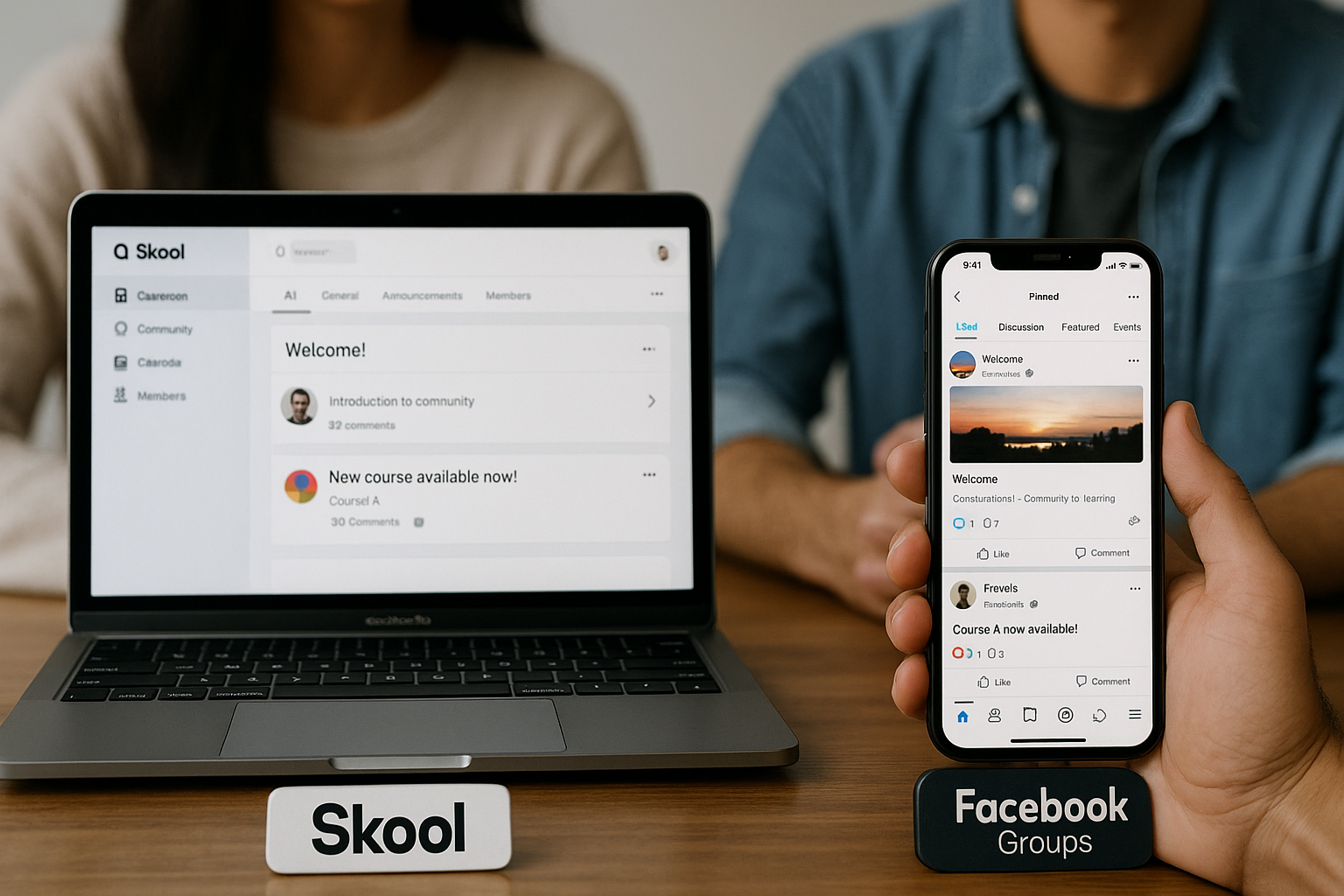
If you are comparing skool vs facebook groups, the real question is not just “Which platform has more users?” It is “Where will my members learn, engage, and pay with the least friction?” For course creators, coaches, and paid membership builders, Skool is usually the stronger choice when the community is tied to structured learning. Facebook Groups still make sense for free communities, early audience building, and low-friction social engagement.
Official website · Latest pricing & offers
Skool vs Facebook Groups: quick verdict for course creators
Who should choose Skool
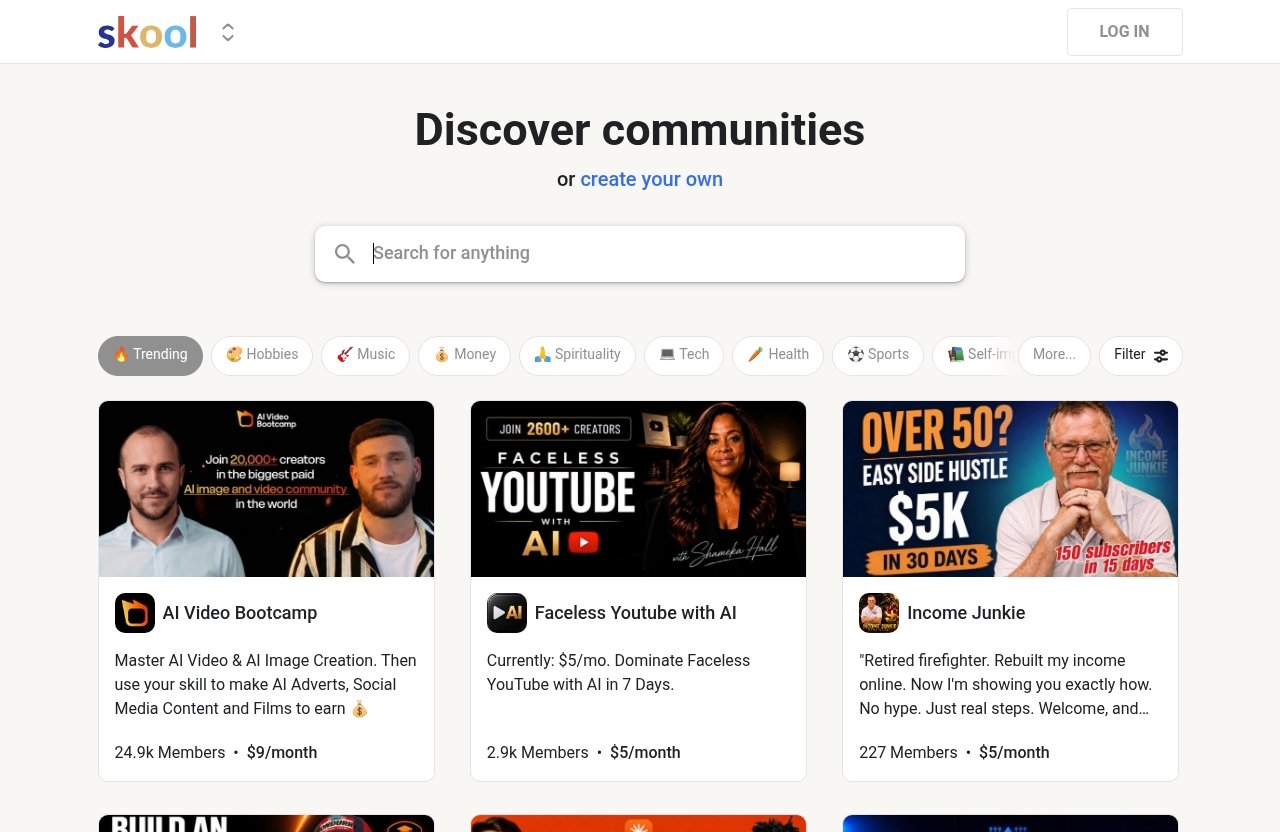
Choose Skool if your community is connected to courses, coaching, live calls, or a paid membership. The official Skool homepage presents it as a place to discover communities or create your own, and its pricing page confirms that both plans include unlimited members, unlimited courses, unlimited videos, unlimited live calls, a custom URL, and affiliates.
That matters because a paid learning community needs more than a discussion feed. It needs structure, a clear member journey, and a place where content does not get buried under unrelated social distractions.
In the skool vs facebook groups decision, Skool is better suited for creators who want a dedicated community and course environment rather than a social group attached to a broader platform.
Who should stay with Facebook Groups
Stay with Facebook Groups if your main goal is to build a free audience, warm up leads, or test community demand before paying for software. Facebook Groups are familiar to many users, easy to start, and can work well when your community is mostly conversation-based.
They are also useful if your audience already spends a lot of time on Facebook. For creators who rely on social reach and casual engagement, Facebook Groups can still be a practical starting point.
Bottom-line recommendation
For free networking and early-stage audience building, Facebook Groups are hard to beat. For paid courses, memberships, and communities where learning outcomes matter, Skool is the better long-term fit.
The bottom line on skool vs facebook groups is simple: use Facebook Groups when reach and familiarity matter most; use Skool when structure, monetization, and a cleaner member experience matter more.
What is Skool, and how does it work for courses?
Community + courses in one place
Skool is a creator community platform designed around communities and courses. Based on Skool’s official pricing page, its paid plans include unlimited courses, unlimited videos, unlimited live calls, and unlimited members.
That combination makes it different from a basic social group. Instead of relying only on posts and comments, creators can organize learning material alongside member discussions.
For course sellers, this is the central skool vs facebook groups difference. Facebook Groups can support discussion around a course, but Skool is built to keep the course and community closer together.
Why creators like the owned-platform feel
Skool is not “owned” in the same way as a self-hosted website, but it gives creators a more dedicated platform feel than a group inside a social network. Your members are there for the community, not to scroll a general social feed.
That matters for paid communities. When people pay for access, they usually expect a focused environment, clear navigation, and content that feels intentionally organized.
Many creators looking for a Facebook Groups alternative are not trying to abandon social media completely. They are trying to move the paid part of their business into a more controlled, learning-focused space.
How members experience the platform
From a member’s point of view, Skool is designed around joining a community, participating in discussions, accessing courses, and attending live calls. The experience feels closer to a paid community platform than a traditional social feed.
Facebook Groups, by contrast, feel familiar because they sit inside Facebook. That familiarity can help with onboarding, but it also means the group competes with notifications, friends, ads, and unrelated content.
In practical terms, the skool vs facebook groups choice often comes down to member focus. If your members need to complete lessons, follow a path, and stay engaged with a specific topic, a dedicated Skool community has a clear advantage.
What Facebook Groups does well for creators
Free to start
Facebook Groups are free to start, which is their biggest advantage for new creators. If you are validating an idea, building a free audience, or running a casual community, that zero-cost entry is attractive.
This is especially useful before you know whether your audience will engage. A free group can help you test messaging, collect questions, and learn what members actually want.
In the skool vs facebook groups comparison, Facebook wins on upfront cost. You do not need to justify a monthly platform fee before you have traction.
Built-in reach and familiar UX
Facebook’s biggest advantage is familiarity. Many people already have accounts, understand how groups work, and know how to comment, react, and receive notifications.
That reduces onboarding friction. For a free community, asking someone to join a Facebook Group can feel easier than asking them to create another account somewhere else.
Facebook Groups can also benefit from existing social behavior. Members may discover posts or updates as part of their normal Facebook usage, although creators should not assume every member will see every post.
Why some creators still use it
Some creators continue using Facebook Groups because they are simple, social, and good enough for lightweight engagement. If your group is mainly for announcements, peer conversation, or informal Q&A, Facebook can do the job.
It can also be useful as the “front porch” of your creator business. People join casually, get familiar with your ideas, and later move into a paid program elsewhere.
This is why the best answer to skool vs facebook groups is not always “replace Facebook immediately.” Sometimes the smarter move is to use Facebook for discovery and Skool for delivery.
Skool vs Facebook Groups feature-by-feature
Courses and content structure
For courses, Skool has the clearer fit. The official Skool pricing page confirms unlimited courses and unlimited videos on both the Hobby and Pro plans, which makes it directly relevant to course creators.
Facebook Groups can be used to discuss course topics, host announcements, and support students socially. But as a practical user experience, a group feed is not the same as a course-first environment.
Here is the key distinction:
| Category | Skool | Facebook Groups |
|---|---|---|
| Course delivery | Built around communities with courses included in Skool plans | Better for discussion around content |
| Content flow | More structured for learning communities | Feed-based and conversation-led |
| Best fit | Paid courses, memberships, coaching programs | Free groups, social engagement, audience warming |
If you sell structured learning, skool vs facebook groups is less about popularity and more about whether members can find and follow the material.
Payments and monetization
Skool’s official pricing page confirms that its plans include affiliates and transaction fees: 10% on Hobby and 2.9% on Pro. That makes monetization part of the platform’s stated pricing model.
For Facebook Groups, monetization is usually more indirect. Creators may use a group to build trust, promote offers, drive traffic to external checkout pages, or support customers who bought elsewhere.
You can make money with Facebook Groups, but the group itself is often not the complete paid learning environment. If your business depends on paid access, structured courses, and member retention, Skool is usually the more purpose-built option.
Member experience and engagement
Member experience is where the skool vs facebook groups decision becomes very practical. A Facebook Group feels easy because people already know it, but it is also surrounded by everything else happening on Facebook.
Skool feels more intentional. Members enter a community space where the topic, course material, and discussions are the main reason they are there.
That does not automatically guarantee better engagement. Community success still depends on your onboarding, prompts, live calls, content quality, and moderation. But a focused platform can remove some of the distractions that compete with learning.
Branding and ownership
Facebook Groups live inside Facebook’s environment. Your group name, cover image, rules, posts, and member conversations matter, but the broader experience still belongs to Facebook.
Skool offers a more branded community feel, including a custom URL according to its official pricing page. For creators building a paid membership, that can make the community feel more like a destination rather than a side room inside a social network.
This is why many creators searching for an owned community platform consider Skool. It gives the business a more dedicated home for the member experience, even though creators should still maintain their own email list and customer records wherever appropriate.
Organization and search
Organization is a common pain point in social groups. In a busy Facebook Group, valuable posts can get pushed down quickly, and new members may struggle to know where to begin.
Skool is more naturally aligned with organized learning because courses and community live together. That makes it easier to think in terms of modules, discussions, calls, and member progress.
If you have ever searched “skool vs facebook groups reddit,” you will often see creators debating this exact issue: Facebook can be active, but activity is not the same as organized learning. A course community needs both conversation and structure.
Mobile and notifications
Facebook has the advantage of being deeply familiar on mobile. Many users already have the app installed and are used to checking notifications throughout the day.
Skool also has a dedicated user experience, often discussed by creators as the Skool app experience, but the practical distinction is focus. Facebook notifications compete with personal updates, other groups, pages, messages, and general social browsing.
For paid communities, fewer distractions can be valuable. In the skool vs facebook groups comparison, Facebook may win on habit, while Skool may win on intentional attention.
Pricing reality: what Skool actually costs
Hobby plan
According to the official Skool pricing page, Skool has two plans. The Hobby plan costs $9/month.
It includes:
| Skool Hobby Plan | Verified Details |
|---|---|
| Monthly price | $9/month |
| Members | Unlimited members |
| Courses | Unlimited courses |
| Videos | Unlimited videos |
| Live calls | Unlimited live calls |
| Transaction fee | 10% |
| Custom URL | Included |
| Affiliates | Included |
The pricing page also shows “2 months free!” and a Monthly/Yearly toggle, but the supplied verified information does not include yearly dollar amounts, so this review does not estimate them.
Pro plan
The Skool Pro plan costs $99/month, according to the official Skool pricing page.
It includes:
| Skool Pro Plan | Verified Details |
|---|---|
| Monthly price | $99/month |
| Members | Unlimited members |
| Courses | Unlimited courses |
| Videos | Unlimited videos |
| Live calls | Unlimited live calls |
| Transaction fee | 2.9% |
| Custom URL | Included |
| Affiliates | Included |
For creators comparing skool vs facebook groups, the Pro plan is most relevant when transaction fees and paid community operations matter. The lower transaction fee may be important for creators selling memberships or courses through the platform.
Why pricing matters for course creators
Facebook Groups are free to start, so they are attractive when you are not yet earning from the community. But “free” is not the same as “best value” once your community becomes a product.
If members are paying for access, the platform should support the paid experience. Course structure, live calls, member organization, and a focused environment can be worth paying for when they support retention and satisfaction.
If you want to evaluate Skool directly, you can review it through our Skool affiliate link. The important thing is to compare the monthly cost and transaction fee against your actual community model, not against a vague idea of “more features.”
Official website · Latest pricing & offers
When Facebook Groups is the better choice
Free communities and audience warming
Facebook Groups are often better for free communities. If your goal is to build trust, share quick wins, and warm up an audience before making an offer, Facebook can be a practical place to start.
It works especially well when your content is conversational rather than course-based. Think daily prompts, informal discussions, market research, and community updates.
In the skool vs facebook groups debate, Facebook is strongest at the top of the funnel.
Low-friction community testing
If you are not sure whether your community idea will work, start simple. A Facebook Group lets you test the niche, observe engagement, and validate demand without paying for a platform.
This is useful for creators with a new audience or a new offer. You can learn which topics attract questions, what objections appear repeatedly, and whether members want deeper support.
Once the group starts showing signs of buying intent, you can decide whether to move the paid experience to Skool.
Creators who depend on social reach
Some creators depend heavily on Facebook’s social ecosystem. If your audience is already there and your content strategy is built around Facebook activity, keeping a group may make sense.
This is common for local communities, hobby groups, networking groups, and broad interest communities. The easier it is for people to join and casually participate, the more valuable Facebook can be.
For these creators, a Facebook group does not need to be replaced immediately. It can remain a discovery and engagement channel.
When Skool is the better choice
Selling courses or memberships
Skool is the better choice when your community is part of a paid course, membership, or coaching program. Its official pricing page confirms unlimited courses, videos, live calls, and members on both plans.
That gives creators room to build a more complete learning environment. Instead of sending members between a course platform, a group, and a call calendar, you can keep the experience more centralized.
For anyone choosing the best platform for online courses with community included, skool vs facebook groups usually points toward Skool.
Reducing distraction and spam
Facebook Groups can be busy, noisy, and difficult to keep focused, especially as they grow. Members may enter your group with good intentions and then get pulled into unrelated notifications.
Skool offers a more focused community environment. That can help creators reduce the feeling that their paid program is competing with the entire social internet.
Moderation still matters on any platform. But when the platform itself is designed around a specific community, it is easier to create a clean member experience.
Building an owned community asset
Creators increasingly want a community asset that feels separate from social media. A dedicated creator community platform can support clearer positioning, better member expectations, and a stronger sense of belonging.
Skool’s custom URL feature, confirmed on the official pricing page, supports that dedicated home feel. It helps your community look less like a generic social group and more like part of your business.
This is one reason creators researching a paid community platform often compare skool vs facebook groups before moving their best members into a dedicated space.
Improving course completion and engagement
Course completion is not only about hosting lessons. It is about making the next step obvious, keeping members connected, and reducing friction between learning and discussion.
Skool’s combination of community, courses, videos, and live calls can support that experience. Facebook Groups can support accountability conversations, but the learning path may be less obvious if everything sits inside a scrolling feed.
If your promise depends on members actually implementing what you teach, Skool is usually the better environment.
How to migrate from Facebook Groups to Skool without losing members
Audit your current group
Before moving, review what is working in your Facebook Group. Identify your most active members, best posts, recurring questions, popular topics, and any content that should become part of your Skool community.
Do not migrate clutter. Use the move as a chance to simplify your offer and improve the member journey.
A good audit makes the skool vs facebook groups transition feel intentional rather than reactive.
Announce the move clearly
Members need to know why you are moving. Avoid saying “Facebook is bad” or making the change sound like an inconvenience.
Instead, frame Skool as a better home for courses, live calls, organized resources, and focused discussion. Explain what members will gain and what they need to do next.
Keep the message short, specific, and repeated across multiple posts.
Keep both platforms temporarily
Do not shut down the Facebook Group overnight. Keep both platforms active for a temporary transition period so members have time to move.
Use the Facebook Group to remind members where the new content lives. Pin a transition post, answer questions, and direct important conversations into Skool.
This reduces confusion and protects engagement during the switch.
Incentivize the switch
Give members a clear reason to join Skool early. That could be access to organized course material, a live call, a welcome thread, or a new resource.
The incentive should be relevant, not gimmicky. The goal is to help members experience the new platform’s value quickly.
If your Skool community is paid, be especially clear about access, billing, and what happens to existing members.
Move course content first
Move your core course content before asking members to fully adopt the new space. People are more likely to switch when the new platform already contains what they need.
Start with your essential lessons, onboarding material, call schedule, and frequently asked questions. Then move secondary resources over time.
This approach makes the migration from Facebook feel like an upgrade rather than a disruption.
Best use cases by creator type
Course creators
Course creators are the strongest fit for Skool. If your business depends on lessons, videos, calls, and member discussion, Skool gives you a more purpose-built environment.
Facebook Groups can still help at the awareness stage. But for delivering a paid course experience, Skool is usually the better choice.
For course creators, the skool vs facebook groups decision is mostly about delivery quality.
Coaches and consultants
Coaches and consultants often need a place for clients to access resources, ask questions, and stay accountable between calls. Skool can work well when coaching includes repeatable curriculum or group support.
Facebook Groups can work for informal client communities, especially if the group is free or bonus-based. But if the community is part of a premium offer, Skool’s cleaner structure may feel more professional.
This is especially true when clients expect a dedicated learning space.
Membership communities
Membership builders should think carefully about retention. Members stay when they understand the value, know where to go, and feel connected to others.
A Skool community can support this with a more focused environment for content, discussions, and calls. Facebook Groups can support connection, but the experience may feel less controlled.
For paid membership communities, Skool is generally the stronger fit.
Creators with free lead magnets
If your community exists mainly to support a free lead magnet, Facebook Groups may be enough. The goal is usually relationship-building, not full course delivery.
You can use Facebook to answer questions, share wins, and invite members into a paid offer later. Then Skool can become the paid back-end community once people are ready for deeper support.
This hybrid approach often gives creators the best of both platforms.
Final recommendation: Skool or Facebook Groups?
Choose Skool if…
Choose Skool if you sell courses, run a paid membership, host live calls, or want a more focused community experience. The verified Skool pricing facts show that both plans include unlimited members, courses, videos, and live calls, which makes it highly relevant for course-based communities.
In the skool vs facebook groups comparison, Skool is the better choice when the community itself is part of the product.
Choose Facebook Groups if…
Choose Facebook Groups if your community is free, early-stage, or primarily used for audience warming. It is also a sensible choice if your members are already highly active on Facebook and you want the lowest possible onboarding friction.
Facebook Groups are not obsolete. They are just not always the best home for a paid learning community.
Hybrid strategy
The most practical strategy for many creators is hybrid: use Facebook Groups for free audience building and Skool for paid delivery.
That gives you social reach at the front end and a more focused, organized platform for customers. If your goal is to build a serious paid course community in 2026, the final skool vs facebook groups recommendation is clear: Facebook can help people discover you, but Skool is usually the better home for the paid member experience.
Official website · Latest pricing & offers
FAQ
What is replacing Facebook Groups?
Dedicated community platforms like Skool are becoming popular alternatives, especially for course creators and paid membership builders. They combine discussions, courses, live calls, and monetization-related features in one place.
Facebook Groups are not disappearing, but many creators are moving paid communities to more focused platforms.
What is Facebook's biggest competitor?
For broad social networking, Facebook competes with other major social platforms. In the course and creator-community context, platforms like Skool compete by offering a more dedicated home for communities, courses, and memberships.
So the answer depends on the use case: social networking is one category, while paid creator communities are another.
Can you make money with Facebook Groups?
Yes, creators can make money with Facebook Groups, usually indirectly. A free group can build trust, warm up leads, and send members to paid courses, coaching, or memberships.
For structured paid access, a dedicated platform like Skool is often easier to organize and present professionally.
Is Skool worth it for a free community?
Skool can be worth it for a free community if organization, course hosting, live calls, and a focused member experience matter more than zero cost. The Hobby plan is $9/month with a 10% transaction fee, while Pro is $99/month with a 2.9% transaction fee, based on the official Skool pricing page.
If your free community is casual and conversation-only, Facebook Groups may be enough. If it is a stepping stone into courses or memberships, Skool deserves serious consideration.
Related Reading
- Skool vs Discord comparison
- Systeme.io vs GetResponse comparison
- Gohighlevel for small business pricing guide
References
- Skool homepage
- Skool pricing
- Skool vs Facebook Groups: Honest Comparison for 2026
- The Community Platform That Might Replace Facebook Groups for Creators