Best Gohighlevel Templates for 2026

Choosing the right gohighlevel templates can shorten the path from idea to published campaign, especially when you need a funnel, website, form, or follow-up system live quickly. The best option is rarely the most elaborate design; it is the template that matches your offer, audience, and next conversion step.
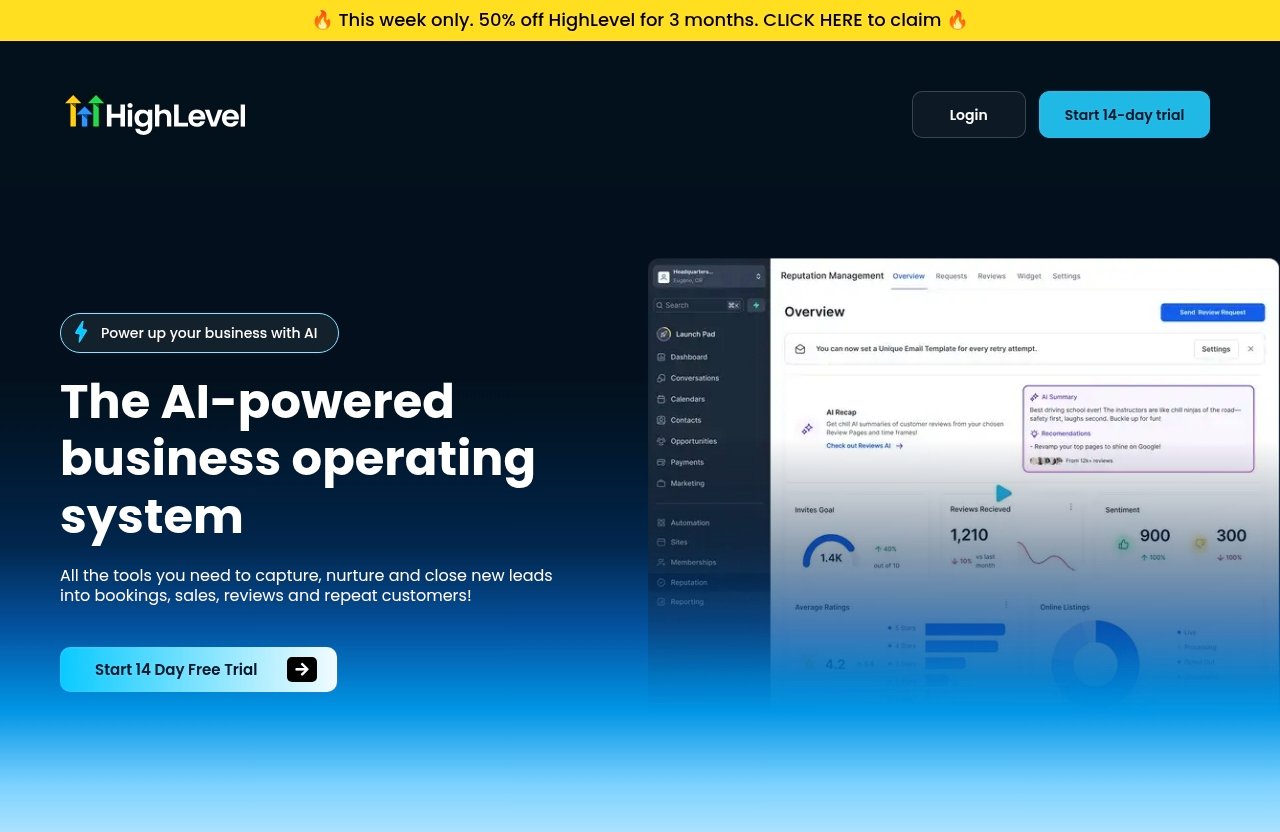
For agencies, coaches, local businesses, and course creators, HighLevel provides an AI-powered business operating system with tools for capturing, nurturing, and closing leads into bookings, sales, reviews, and repeat customers. This review focuses on practical template categories, where they fit, and what to check before you deploy them.
Official website · Latest pricing & offers
What Are GoHighLevel Templates and Why They Matter in 2026
Template library basics
GoHighLevel templates are reusable pre-built assets that provide a starting structure for common marketing and business tasks. Rather than building every page, email, form, or campaign from a blank screen, users can adapt an existing layout and replace the messaging, visual identity, and conversion elements.
The official gohighlevel template library includes professionally designed templates across websites, funnels, social media posts, email campaigns, documents and contracts, Ads Manager, forms, surveys, and more. Official support materials also describe the ability to search, discover, enable, disable, add custom templates, and customize selected assets.
This coverage matters because HighLevel’s product ecosystem extends beyond pages. Its official capabilities include CRM, Voice AI, Forms, Surveys & Quizzes, Websites, Funnels & Landing Pages, Webinar Funnels, Chat Widget / Conversation AI, Call Tracking, Inbound SMS & Social DMs, Social Planner, Missed Call Text-Back, AI Biz Card Scanner, QR Codes, Prospecting Tool, and Ad Manager.
Why templates speed up launches
The main advantage of gohighlevel templates is not that they eliminate strategic work. Instead, they eliminate repetitive production work: arranging page sections, creating basic form layouts, setting up email formatting, or recreating common campaign structures.
A useful template gives you a tested-looking framework for presenting an offer. You still need to clarify the audience, rewrite generic copy, add proof, connect the correct actions, and test the experience before traffic reaches it.
For example, a local contractor may start with a service landing page containing a headline, benefit list, reviews, service area, FAQ, and booking form. A coach might use a similar structure but exchange the service-area content for client outcomes, program details, and a call calendar.
Who benefits most: agencies, freelancers, and SMBs
Agencies benefit from gohighlevel templates because repeatable structures can support more consistent client delivery. A team can create a core system for lead capture, appointment confirmation, reminders, and post-call follow-up, then tailor the content to each client’s market.
Freelancers can use templates to reduce setup time without presenting every project as a one-size-fits-all build. This is especially helpful when offering packaged landing pages, simple websites, consultation funnels, or basic automation services.
Small and local businesses usually benefit most from straightforward assets with one clear purpose. A short lead-generation page, an appointment flow, and reliable follow-up are often more useful than a visually complex website with too many competing actions.
Best GoHighLevel Templates for 2026 by Use Case
The best gohighlevel templates are purpose-specific. Begin with the conversion event you want—lead, booked call, registration, purchase, or reactivation—then choose the template category that supports that event.
| Use case | Recommended template type | Primary conversion goal |
|---|---|---|
| Local lead generation | Lead magnet or service landing funnel | Form submission |
| Consultative sale | Appointment funnel templates | Calendar booking |
| Agency positioning | Agency website and case-study pages | Discovery call |
| Live training | Webinar or workshop funnel templates | Registration |
| Digital education | Course funnel templates | Enrollment or waitlist |
| Low-ticket offer | Free resource plus tripwire flow | First purchase |
| Lead nurture | Email and workflow templates | Reply, booking, or sale |
Best funnel templates for lead generation
Lead-generation gohighlevel funnel templates work best when the offer is easy to explain and the next step is simple. Common examples include a quote request, checklist download, consultation request, audit, coupon, or local-service estimate.
Choose a page with a strong headline area, a short benefit section, relevant proof, and a prominent form. For many offers, fewer fields reduce friction, but the right number depends on whether the business needs to qualify leads before contacting them.
Direct-response funnels should focus on one campaign and one audience. If a visitor arrives from an ad for roof repair, the page should lead with roof repair—not a general list of every construction service the company offers.
Best website templates for agencies and service businesses
The strongest gohighlevel website templates for agencies and service businesses tend to include a clear home page, service pages, trust-building sections, contact pathways, and a focused conversion action. An agency site may need a portfolio or case-study format, while a local business may need location details, reviews, and an appointment request.
Website templates are best for credibility, search visibility, and visitors who need more context before acting. Funnel pages are usually better when you are running a narrow campaign and want visitors to take a single, immediate action.
When reviewing go high level templates for a full website, look beyond the home page. Confirm that internal pages, navigation, mobile behavior, forms, and call-to-action placement can all be edited without forcing a major redesign.
Best workflow and automation templates for follow-up
A landing page without follow-up is often an incomplete lead system. Gohighlevel automation templates are useful for mapping what should happen after someone submits a form, books a call, fails to show up, replies to a message, or completes another important action.
A practical follow-up workflow may include an acknowledgment, internal notification, confirmation message, reminder sequence, and a task for manual outreach. The exact setup should reflect your consent practices, sales process, and the communication channels you actually monitor.
For appointment-driven businesses, connect the workflow to the booking action rather than treating it as a separate project. The template should support a consistent experience from lead capture through confirmation and follow-up.
Best webinar, course, and workshop templates
Webinar funnels, workshop funnel templates, and course funnel templates should make the event value clear before asking for registration. The landing page should answer what attendees will learn, who the session is for, when it takes place, and what happens after they register.
A webinar registration flow typically needs a registration page, confirmation page, reminder communications, and a post-event follow-up path. A workshop may benefit from a workbook download or an application-style form if places are limited.
Course launch pages need more depth when the purchase decision is higher consideration. Use sections for curriculum, outcomes, instructor credibility, format, objections, and frequently asked questions—but avoid adding content that does not help the buyer decide.
Best free resource and tripwire templates
Free-resource funnels work well when the offer solves a small, specific problem for an audience that may later need a larger service or product. Examples include an audit checklist, planning worksheet, local buyer guide, mini training, or industry-specific template.
A tripwire flow adds a low-cost introductory offer after the opt-in or on the confirmation step. This approach should be used thoughtfully: the paid offer must be genuinely relevant to the original free resource, not a distracting add-on.
Among gohighlevel templates, these flows are especially useful for building a segmented list. The resource topic can reveal what a lead wants, allowing subsequent messages to be more relevant than a generic newsletter sequence.
How to Choose the Right GoHighLevel Template
Match the template to the buyer journey
Start by identifying where the prospect is in the decision process. Cold visitors need quick context and a low-friction next step; warm prospects may need proof, comparison points, detailed FAQs, or a direct booking route.
The best gohighlevel templates reflect this reality. A cold-traffic lead magnet page should not look like an application page for a premium advisory program, and a returning prospect should not have to rediscover the basic offer.
Map the journey in one sentence before choosing a layout: “A local homeowner sees an ad, requests an estimate, receives confirmation, and books a visit.” That sentence exposes the pages, forms, and follow-up components you need.
Check mobile responsiveness and editing flexibility
Most prospects will evaluate your offer on a phone before they ever see it on a desktop. Review every template in mobile view and check headline length, form spacing, button visibility, image cropping, navigation, and section order.
Editing flexibility is equally important. A polished template is not a good fit if you cannot easily change the copy hierarchy, remove unused blocks, or add the proof your buyer needs.
Do not assume a template is ready just because the desktop preview looks polished. Use your own brand colors and assets carefully, but prioritize readable text, clear calls to action, and simple navigation over decoration.
Prioritize speed-to-launch versus customization
Some gohighlevel templates are ideal because they can be published after a light brand pass. Others are better for teams with the time and design skill to rework layouts, sections, and messaging in more depth.
A fast-launch choice is sensible for a time-bound workshop, a new service test, or an agency prototype. A more customized build is usually justified for a core brand website, a premium offer, or a campaign expected to receive sustained paid traffic.
Set a practical threshold: if altering the template changes its fundamental layout, look for a closer starting point. Templates should reduce work, not become a reason to rebuild everything from scratch.
Use templates that fit your offer type
Match the template to the action you are asking someone to take. A consultation offer needs an appointment flow, a downloadable guide needs an opt-in flow, and an e-commerce-style introductory product needs a clear offer and purchase path.
This is more important than choosing a design based on industry labels alone. A financial consultant and a business coach may both benefit from a call-booking funnel, even though their visual branding and proof requirements differ.
Before committing, list the offer, audience, traffic source, desired action, follow-up method, and success metric. That checklist makes it easier to select highlevel templates based on business needs rather than appearance alone.
Official HighLevel Template Library vs Third-Party Template Packs
What the official Template Library includes
The official Template Library is the most direct place to begin when you want assets that align with the HighLevel environment. Official support information identifies categories for Funnels and Websites, Social Planner, Email Builder, Documents and Contracts, Ads Manager, Form Template Library, and Survey Template Library.
It also notes that Reporting and Dashboard Template Library options are coming soon. For teams that need a coordinated set of assets, the official library’s broad category coverage is valuable because it supports more than page design alone.
When considering gohighlevel templates free of third-party charges, separate platform-provided library access from external marketplace purchases. HighLevel users can work with the official library, while external template packs may have their own pricing and licensing terms.
When a marketplace template pack is better
Third-party packs can be worth evaluating when you need a niche visual direction, industry-specific messaging structure, or a ready-made bundle for a particular campaign type. Providers such as GHLElite are examples of third-party sources that may be relevant to buyers researching specialized packs.
A marketplace pack may save time when its structure closely matches your offer. However, treat every external purchase as a product to evaluate, not as an automatic shortcut: review what is included, how it is imported, whether it can be customized, and what support or license terms apply.
Searches for a gohighlevel templates download often lead to external resources. Before importing anything, use a trusted source, understand what you are adding to your account, and avoid relying on generic copy without reviewing it for accuracy.
Pros and trade-offs of each approach
| Option | Best for | Key advantage | Main consideration |
|---|---|---|---|
| Official Template Library | Broad business needs and native workflows | Professional template categories inside HighLevel | May require more tailoring for niche offers |
| Third-party template pack | Specific industries or campaign styles | Potentially closer visual or structural fit | Review quality, terms, and implementation details |
| Custom internal template | Agencies with repeatable client offers | Strong control and consistency | Requires upfront creation and maintenance |
For most users, start with the official library, then consider external packs only when there is a clear gap. That approach reduces unnecessary purchases and helps you learn the platform’s own template workflow first.
Official website · Latest pricing & offers
Recommended Template Types for Specific Business Models
Local service businesses
Local businesses should generally prioritize simple gohighlevel templates built around calls, quote requests, directions, and bookings. Useful page elements include service areas, business hours, reviews, before-and-after examples where appropriate, FAQs, and a visible contact action.
Appointment funnel templates are especially relevant for salons, clinics, home services, fitness studios, and similar businesses. The key is to make the requested next step obvious, then connect confirmation and reminder follow-up so inquiries do not sit unattended.
Avoid broad corporate-style layouts when the customer simply wants to know whether you serve their area, solve their problem, and can respond promptly.
Coaches and consultants
Coaches and consultants often need templates that establish expertise without overwhelming visitors. A focused authority page, lead magnet page, workshop registration page, or discovery-call funnel can work well depending on the audience’s awareness level.
For a higher-ticket service, use a page that explains the problem, your approach, expected engagement format, evidence of credibility, and the call-booking process. If an application is necessary, make the reason clear so serious prospects understand why additional questions are being asked.
A workshop funnel can be a practical bridge between cold traffic and an advisory offer. It lets prospective clients experience your teaching before deciding whether to book a conversation.
Agencies and SaaS offers
Agencies often need a combination of agency website pages, lead-generation funnels, appointment flows, and onboarding communications. The most useful gohighlevel templates are those an agency can standardize internally while still adapting to each client’s brand and target market.
For an agency’s own marketing, use service pages that define the deliverable, ideal client, process, and next step. Case-study layouts can be helpful when you have substantiated examples to share, but avoid publishing vague outcome claims.
For SaaS-style offers, a direct-response page can focus on the problem, product workflow, key use cases, and demo or trial action. Keep the site flow distinct from a service-business funnel; software buyers often need more product context before converting.
Course creators and workshop sellers
Course creators need a launch sequence that reflects how prospects decide: free content or a lead magnet, event registration or sales-page visit, enrollment, and post-purchase onboarding. The right structure depends on whether you are selling a self-paced course, live cohort, workshop, or membership.
Course funnel templates should make the transformation and learning format easy to understand. Explain who the course suits, what participants receive, how lessons are delivered, and what level of effort is expected.
For workshop sellers, use registration pages with a concise agenda and a clear reminder path. If you offer a workbook or companion resource, ensure the delivery message and follow-up sequence are ready before promotion begins.
How to Install, Customize, and Publish a GoHighLevel Template
Importing into the Template Library
Start in the relevant HighLevel area—such as funnels, websites, email, forms, surveys, documents, social, or Ads Manager—and locate the available template options. Official support materials state that users can search, discover, enable, disable, add custom templates, and customize them.
The exact steps can differ by asset type, so confirm that the template is being added to the correct location before editing. Agencies should also use a consistent naming convention so reusable assets remain easy to find later.
If you use an outside pack, follow the provider’s current import instructions and review the result carefully. Do not assume imported gohighlevel templates automatically contain the correct brand assets, links, integrations, or legal language.
Editing copy, images, and sections
Replace placeholder text before changing design details. Begin with the headline, audience problem, offer explanation, proof, call to action, form labels, FAQs, and confirmation-page messaging.
Then update images, logos, colors, and fonts to reflect the business identity. Remove sections that do not serve the conversion goal; a shorter relevant page is often stronger than a long page filled with generic blocks.
Keep a copy document with approved claims, customer language, and offer details. This helps agencies and clients avoid introducing inaccurate statements while customizing a page under deadline pressure.
Connecting forms, calendars, and automations
A template becomes operational only when its actions are connected. Verify that each form routes leads correctly, calendar links open the intended booking option, and any workflow begins from the right trigger.
HighLevel’s product set includes Forms, Surveys & Quizzes, CRM, and inbound communication tools, which can support a connected lead process. Your configuration should be based on the business’s own process, including who receives notifications and how quickly inquiries are handled.
For a booking funnel, submit a test booking and confirm the confirmation experience, internal notification, reminder path, and any follow-up message. For opt-in pages, test delivery of the promised resource and check that it works on mobile.
Testing before launch
Before publishing, test on desktop and mobile as if you were a prospect. Check every button, link, form field, calendar action, confirmation page, email, and message trigger.
Use a simple launch checklist:
- Review copy for placeholders and unsupported claims.
- Submit each form with a test contact.
- Check calendar availability and confirmation details.
- Verify follow-up automation behavior.
- Test mobile layout, loading, and button visibility.
- Confirm tracking, consent language, and business contact details where applicable.
This final pass catches the common issue with go high level templates: a polished page that looks finished but has not been connected to the actual sales process.
Common Mistakes to Avoid When Using GoHighLevel Templates
Over-customizing too early
The temptation with gohighlevel templates is to change every detail before testing the offer. That can turn a fast-launch tool into a lengthy design project with no clear improvement in results.
First, make the page accurate, branded, functional, and audience-specific. After real visitors interact with it, use feedback and performance data to decide what deserves further refinement.
Choosing templates that do not match the offer
A template can be attractive and still be wrong for the job. A long-form coaching application page is not the best fit for a same-day plumbing estimate, and a minimal local-service quote form may not explain a complex course well enough.
Choose a structure based on the action, decision complexity, and traffic temperature. The goal is message-to-market fit, not visual novelty.
Ignoring mobile UX and load speed
Mobile usability is not optional. Large images, crowded sections, tiny text, broken spacing, and difficult forms can all create friction before someone ever sees the offer details.
Review your gohighlevel funnel templates on real mobile devices when possible. Keep the first screen focused, use readable type, and ensure the primary action can be reached without excessive scrolling.
Forgetting follow-up automation
A lead form alone is not a complete system. If no one receives an alert, no confirmation is sent, or no follow-up process exists, the business may lose qualified opportunities despite having a well-designed funnel.
Build the response path before buying traffic or announcing the campaign. Even a simple process—confirmation, internal notice, and prompt human follow-up—is more reliable than assuming leads will wait.
Final Verdict: Which GoHighLevel Templates Are Best for 2026?
Best overall choice
The best overall gohighlevel templates are the official Template Library assets that closely match your conversion goal and can be customized without extensive rebuilding. Its coverage across funnels, websites, email, social, forms, surveys, documents and contracts, and Ads Manager makes it a practical starting point for most businesses.
Begin with a template that supports one clear action, then connect the operational pieces around it. A good design is valuable, but a working lead path is more valuable.
Best for fast launches
For fast launches, choose a focused landing-page or appointment funnel template with minimal navigation, a clear offer, concise proof, and a connected form or calendar. This format suits local promotions, consultation offers, lead magnets, workshops, and simple campaign tests.
The best gohighlevel templates for speed are not necessarily the most feature-heavy. They are the ones that need the fewest structural changes before your team can confidently test the offer.
Best for agencies selling templates to clients
Agencies should build reusable systems around common client outcomes: lead capture, booked appointments, no-show reminders, review requests, service inquiries, and nurture communications. Standardized gohighlevel templates can support faster deployment while preserving room for client-specific messaging and branding.
If you want the platform that powers this template ecosystem, including its official library and broader marketing, CRM, and communication tools, you can try HighLevel through Top Trust Review’s affiliate link. HighLevel officially offers a 14 Day Free Trial Today; this is an affiliate link, meaning Top Trust Review may earn a commission if you choose to sign up, at no extra cost to you.
Official website · Latest pricing & offers
FAQ
What are GoHighLevel templates used for?
GoHighLevel templates are used to create reusable business and marketing assets faster. They can support funnels, websites, email campaigns, social posts, forms, surveys, documents, contracts, Ads Manager assets, and follow-up processes.
The most effective gohighlevel templates provide a starting structure, but they still need accurate messaging, connected actions, and testing before publication.
Does GoHighLevel have a template library?
Yes. The official Template Library includes professionally designed templates for Funnels and Websites, Social Planner, Email Builder, Documents and Contracts, Ads Manager, forms, and surveys.
Official support content also explains that users can search, discover, enable, disable, add custom templates, and customize available assets. Reporting and Dashboard Template Library options are identified as coming soon.
Are GoHighLevel templates free?
The official library is available for HighLevel users to work with inside the platform. However, third-party marketplace assets may be sold separately, so check the provider’s current price, licensing, support, and usage terms before purchasing.
When researching gohighlevel templates free options, confirm whether the asset is official, whether it is truly free, and whether it includes the pieces you need for a working campaign.
Which GoHighLevel templates are best for agencies?
For agencies, the most useful choices are agency website templates, lead-generation funnels, appointment funnels, client onboarding assets, and automation follow-up workflows. These categories align with the services many agencies deliver repeatedly across client accounts.
The strongest approach is usually to create a reusable core system, then customize the offer, branding, proof, and local details for each client.
How do I customize a GoHighLevel template?
Choose or import the asset in the appropriate HighLevel area, then update the text, images, brand elements, page sections, and calls to action. Next, connect forms, calendars, and relevant automations so the template functions as part of the business process.
Finally, test every link, form, booking action, confirmation message, and mobile layout before you publish.
Related Reading
- Gohighlevel Affiliate Program Review 2026
- Systeme.io Pros and Cons: Systeme.io Review 2026
- Webflow Features Review 2026: Best Features Explained
References
- How does the Template Library work? – HighLevel Support Portal
- Did You Know You Can Jumpstart Your Business Using Our Template Library? – GoHighLevel
- GHLElite – Gohighlevel Website & Funnel Templates
- Templates | HighLevel API – GoHighLevel Marketplace