
Best Cold Email Tools Like Smartlead in 2026

Finding the best cold email tools in 2026 is less about picking the platform with the longest feature list and more about matching software to your outreach model. A founder sending a few highly targeted campaigns needs something different from an agency managing several client inboxes or an SDR team operating outbound at scale.
In this comparison, Smartlead stands out for teams that prioritize sending scale, mailbox flexibility, and deliverability-focused infrastructure. However, the right cold email software may instead be Instantly, Lemlist, Woodpecker, Saleshandy, Reply.io, or Snov.io depending on whether you value multichannel outreach, prospecting, simplicity, or a broader sales outreach software stack.
Official website · Latest pricing & offers
Best Cold Email Tools in 2026: Quick Verdict
The best cold email tools help teams send relevant messages consistently without ignoring the operational realities behind inbox placement. That means evaluating mailbox management, warm-up, lead quality, campaign controls, and the workflow required to keep outreach sustainable.
Who This Roundup Is For
This guide is for B2B founders, lead-generation agencies, SDRs, recruiters, and sales teams comparing cold email outreach tools before committing to a platform. It is especially useful if you are deciding whether a high-volume platform such as Smartlead fits your process better than a multichannel or prospecting-led alternative.
The strongest choice depends on your actual bottleneck. If you struggle with inbox placement, prioritize deliverability and email warm-up. If you struggle to find prospects, look harder at data and prospecting workflows. If your team lives across email, LinkedIn, and calls, multichannel outreach may matter more than pure sending capacity.
Our Shortlist at a Glance
| Tool | Best Fit | Why Consider It | Potential Trade-Off |
|---|---|---|---|
| Smartlead | High-volume outbound teams | Mailbox flexibility, automated warm-up, sender rotation, verified lead incentive | Better suited to structured outbound than lightweight one-off campaigns |
| Instantly | Scale-focused email senders | Commonly considered by teams focused on high-volume email outreach | May not be the preferred fit for teams wanting a broader multichannel motion |
| Lemlist | Personalization and multichannel teams | Known for outreach workflows that extend beyond standard email sequences | Can feel more involved for email-only users |
| Woodpecker | Agencies and straightforward workflows | A practical option for teams that value a more focused cold email process | May not be ideal for buyers wanting an all-in-one sales stack |
| Saleshandy | Outreach teams wanting prospecting support | Appeals to buyers who want sending and prospecting in one workflow | Evaluate whether its data approach fits your target market |
| Reply.io | Broader sales engagement teams | Fits teams considering multichannel sales outreach software | Additional functionality can add workflow complexity |
| Snov.io | Prospecting-led teams | Often considered when lead discovery and outreach are closely connected | May be more than needed for teams with established lead sources |
Where Smartlead Fits in the Market
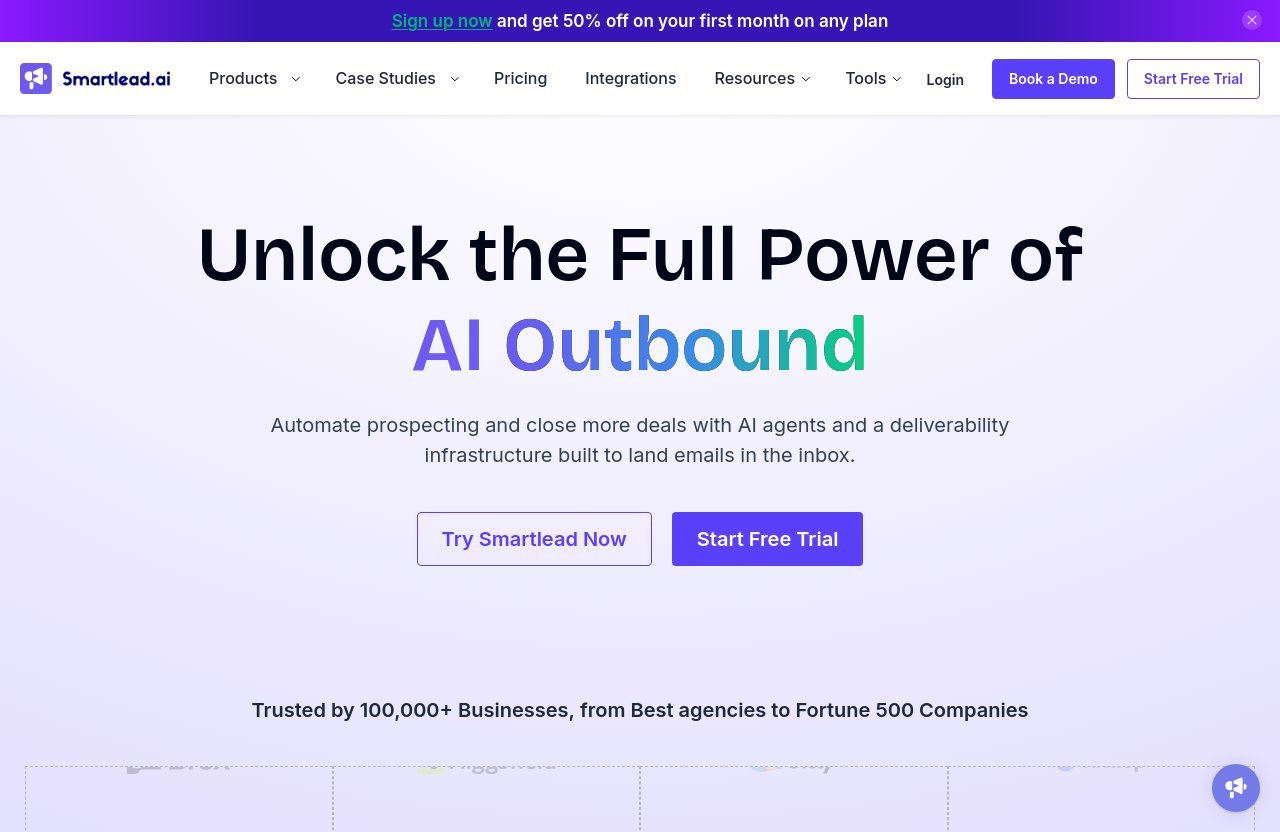
Among the best cold email tools, Smartlead is a strong contender for teams that need to organize a serious outbound motion around multiple mailboxes and sending volume. Its official positioning is clear: it is cold email software for sales teams running outbound at scale.
The platform highlights unlimited accounts and storage, including the ability to add unlimited mailboxes and store unlimited leads without storage fees. It also emphasizes that users pay only for what they send, which is a meaningful point for agencies and mature sales teams managing changing campaign volumes.
Smartlead is not automatically the best choice for every buyer. A small team that only needs a handful of campaigns may prefer a simpler interface, while teams that require native multichannel outreach may be better served by a broader sales engagement platform.
How We Evaluated the Best Cold Email Tools
The best cold email tools are not necessarily the ones with the loudest marketing. In real outbound environments, results depend on whether a platform supports disciplined campaign operations: relevant targeting, healthy sending infrastructure, readable reporting, and a workflow the team will actually use.
Rather than ranking products by hype, this review evaluates each option by the practical questions buyers should ask before moving data, domains, and campaigns into a new platform.
Deliverability and Inbox Placement
Deliverability is the baseline requirement for every cold email campaign. A compelling offer has no chance to convert if messages routinely land in spam or never reach the recipient’s primary inbox.
When reviewing a deliverability tool, look at how it approaches domain setup, email warm-up, sender rotation, list hygiene, and bounce prevention. No platform can guarantee placement, because recipient behavior, message relevance, domain history, and mailbox-provider filtering all matter. Still, strong infrastructure and responsible sending practices can reduce avoidable risk.
For many teams comparing the best cold email tools, this is the deciding category. If your previous campaigns have had poor reply rates despite solid targeting, inspect deliverability before rewriting every sequence.
Sending Scale and Mailbox Management
Volume is not just a bigger number on a plan page. Sustainable scale means being able to organize mailboxes, manage sending distribution, monitor campaign health, and avoid putting excessive pressure on a single sender identity.
High-volume senders should assess whether the software makes mailbox management manageable as their operation grows. Agencies should also consider whether separate accounts, client workflows, and lead storage will remain organized as they add campaigns.
The best cold email software for a solo consultant may be too limited for an agency. Conversely, an enterprise-oriented system may introduce unnecessary operational overhead for a small team that sends a modest number of targeted emails.
Automation, Personalization, and Sequencing
Email automation should reduce repetitive work without making outreach feel robotic. A good system helps users build sequences, maintain follow-up discipline, and tailor messages based on audience segments and campaign goals.
Personalization deserves careful attention. Adding a prospect’s first name is not enough; relevance comes from connecting a message to a company’s situation, role, market, or likely challenge. The best cold email tools make campaign operations easier, but they cannot replace thoughtful positioning.
Before buying, test how easily your team can create, review, and update messaging. If campaign changes are cumbersome, outdated copy can continue running long after your offer or target profile changes.
Lead Data, CRM Sync, and Reporting
A platform’s sending experience is only part of the equation. Buyers also need to understand where lead data comes from, how it is verified, how campaign results are reported, and whether useful activity reaches the CRM or reporting environment.
Teams with a reliable lead source may only need a focused cold email platform. Teams without one may prefer sales outreach software that combines prospecting, enrichment, and sequencing. Neither approach is inherently better; it depends on where your workflow currently breaks down.
For the best cold email tools, reports should help answer practical questions: Which audience is responding? Which message is creating qualified conversations? Which sending accounts need attention? Vanity metrics alone are not enough.
Ease of Setup and Team Workflow
The most capable platform is a poor investment if implementation stalls. In my experience reviewing outbound workflows, adoption issues often come from unclear ownership rather than missing features: nobody knows who approves copy, monitors mailboxes, handles replies, or updates lead lists.
Evaluate onboarding, account setup, permissions, campaign review processes, and support access. A beginner may value simplicity and guardrails, while an experienced growth team may accept a more advanced interface in exchange for operational control.
Smartlead Overview: What It Does Best
Smartlead’s core appeal is straightforward: it is designed for sales teams that run outbound at scale and want deliverability-oriented sending operations. When comparing best cold email tools, it is one of the clearer options for teams that need to manage many sender accounts without paying storage fees for growing lead databases.
The following points are based on Smartlead’s official homepage and pricing information, rather than assumptions about unlisted features.
Unlimited Mailboxes and Storage
Smartlead states that users can add unlimited mailboxes and store unlimited leads, accounts, and data without storage fees. For agencies and outbound teams, this can remove a common constraint as client work, campaigns, and list sizes increase.
The company’s messaging is that customers pay for what they send rather than for lead storage. That model may be particularly appealing if your team holds large prospect lists but activates them gradually through segmented campaigns.
This is one reason Smartlead regularly appears in conversations about the best cold email tools for operational scale. It addresses a practical concern that grows quickly when multiple campaigns and sending identities are involved.
Built-In Setup and Warm-Up
Smartlead says it handles DNS, warm-ups, and sender rotation automatically. Its warm-up approach uses an exclusive, private, reward-based, limited-access network designed to build sender reputation and support inbox placement.
The platform also describes human-like interactions within its warm-up engine, including simulated opens, reads, and replies. Its stated goal is to help establish domain credibility and reduce bounce rates before and during active outreach.
Email warm-up is useful infrastructure, not a substitute for responsible outbound. Even with automated setup, teams should use accurate data, reasonable sending behavior, relevant copy, and clear opt-out handling.
Sender Rotation and Deliverability Support
Sender rotation is an important operational concept for teams distributing campaigns across multiple mailboxes. Smartlead states that it manages sender rotation automatically, which can make large-scale campaign management less manual.
For buyers prioritizing a deliverability tool, the bigger question is how well the platform fits the full process: domains, mailboxes, copy, targeting, response handling, and ongoing monitoring. Smartlead’s published approach is clearly centered on this infrastructure layer.
If your team’s primary goal is outbound at scale, check Smartlead’s current platform details alongside a live demo or trial workflow. Confirm that its setup aligns with how your team segments leads and manages replies before migrating active campaigns.
Verified Lead Pipeline Growth
Smartlead also promotes a lead incentive tied to sending volume: every three emails sent earns one verified lead. According to the official description, each prospect is verified across three independent sources to help keep bounce rates low.
This is distinct from simply storing leads. It positions sending activity as a way to grow a verified prospect pipeline, which could be valuable for teams that need both campaign capacity and new contacts.
As with any lead source, review relevance before treating volume as quality. A verified email address can reduce data risk, but qualification still depends on whether the person matches your ideal customer profile and has a reason to care about your offer.
Official website · Latest pricing & offers
Top Alternatives to Smartlead for Cold Email Outreach
Smartlead alternatives are worth considering because cold outreach is not one uniform activity. Some teams need simple email sequencing, while others want prospecting, LinkedIn steps, calls, or broader revenue-engagement workflows.
Instantly for Scale-Focused Sending
Instantly is commonly evaluated by teams focused on email sending volume and outreach scale. It is a logical comparison for buyers whose priority is operating multiple outbound campaigns rather than building a complex multichannel sales process.
Its appeal is likely strongest for operators who want a scale-oriented cold email setup. The trade-off is that buyers should still confirm whether its workflow, mailbox organization, reporting, and support model match their own team structure.
If you are comparing Instantly with Smartlead, focus less on generic feature checklists and more on who will run the system daily. The best cold email tools are the ones your team can maintain consistently.
Lemlist for Multichannel Outreach
Lemlist is often considered by teams that want personalization and multichannel outreach rather than email-only sequences. It may suit sales teams looking to coordinate outreach across more than one buyer touchpoint.
That broader approach can be valuable when your prospects are difficult to reach through email alone. However, it also requires more process discipline: each channel should add useful context rather than create repetitive contact.
For buyers comparing cold email outreach tools, Lemlist is worth a closer look when your playbook requires coordinated outreach, not merely higher email volume.
Woodpecker for Straightforward Agency Workflows
Woodpecker is a sensible option for agencies and smaller sales teams seeking a focused, straightforward cold email workflow. It can appeal when the priority is getting campaigns launched and managed without adopting a sprawling all-in-one platform.
The advantage of a more focused system is often clarity. The potential limitation is that teams may need separate tools for prospecting, CRM work, or additional outreach channels as their process becomes more complex.
Woodpecker may be a better fit than some of the best cold email tools for a team that values simplicity over extensive operational scale.
Saleshandy for Teams Wanting Built-In Prospecting
Saleshandy is frequently considered by teams that want outreach plus prospecting support in the same environment. That can reduce the friction of moving between data sources and campaign tools.
For a new outbound team, an integrated prospecting path can be convenient. For established teams with carefully sourced lists, however, the key question is whether built-in data genuinely improves targeting or merely duplicates an existing workflow.
Review the data fit for your niche before deciding. Prospecting breadth does not automatically equal prospect quality.
Reply.io or Snov.io for All-in-One Outreach Stacks
Reply.io and Snov.io are both relevant options for teams evaluating broader outreach stacks. They are commonly associated with sales engagement and prospecting-oriented workflows, making them candidates for buyers who want more than email sending alone.
These platforms can make sense when multiple teams need shared processes around outreach, lead handling, and follow-up activity. The drawback is that broader stacks can require more onboarding, configuration, and internal ownership than dedicated cold email software.
If you need a unified workflow, these Smartlead alternatives deserve comparison. If deliverability-focused email operations are your core need, a dedicated platform may remain the more efficient choice.
Best Cold Email Tools by Use Case
The best cold email tools vary by use case because each team has a different constraint. Use this section as a practical shortcut rather than treating any single recommendation as universal.
Best for Deliverability
Smartlead is a strong choice for deliverability-conscious teams based on its published setup, warm-up, and sender-rotation approach. It says it handles DNS, warm-ups, and sender rotation automatically, while its private warm-up pool is engineered to build sender reputation and improve inbox placement.
This does not remove the need for good data and relevant messaging. But for teams that see deliverability as an operational priority rather than an afterthought, Smartlead’s stated infrastructure is compelling.
Best for Scaling to Large Volumes
Smartlead is also the clearest recommendation for teams focused on outbound at scale. Its official platform information highlights unlimited mailboxes and storage, alongside a pay-for-what-you-send model.
Instantly is another reasonable platform to evaluate for scale-oriented sending. The final choice should come down to your preferred campaign workflow, mailbox administration needs, and comfort with each platform’s operating model.
Best for Personalization
Lemlist is a strong candidate for teams that want personalization to be central to their sales outreach software process. It is particularly relevant when outreach requires more tailored, multi-touch engagement than standardized email sequences.
Regardless of tool choice, personalization should be meaningful. The strongest campaigns demonstrate a credible reason the message was sent to that recipient, rather than relying on superficial merge fields.
Best for Multichannel Outreach
For native multichannel outreach needs, consider Lemlist, Reply.io, or Snov.io. These platforms are more naturally aligned with teams that want outreach workflows extending beyond email.
Choose a multichannel system only if your team has the capacity to execute each channel well. Adding channels without improving relevance can create more noise, not more pipeline.
Best for Beginners and Small Teams
Woodpecker can be a sensible option for beginners, smaller teams, and agencies that want a straightforward campaign workflow. Saleshandy may also appeal to users who want prospecting and outreach closer together.
For small teams, the best cold email software is usually the one with the lowest operational burden. Start with clear targeting, a narrow offer, and a manageable campaign volume before investing in a more elaborate outbound machine.
Pricing and Value: What to Look for Before You Buy
Comparing the best cold email tools by monthly subscription alone can be misleading. The total cost of outbound includes mailboxes, domains, sending infrastructure, warm-up, data verification, list acquisition, staff time, copywriting, campaign management, and potentially CRM administration.
Mailbox and Sending Limits
Smartlead’s official pricing page lists the following core plans:
| Smartlead Plan | Sends per Month | Verified Prospect Emails per Month | Listed Price |
|---|---|---|---|
| Base | 6,000 | 2,000 | $59/month |
| Pro | 90,000 | 30,000 | $59/month |
| Smart | 150,000 | 50,000 | Free |
| Prime | 500,000 | 170,000 | Free |
Because pricing pages and package availability can change, verify current details before making a purchase decision. Smartlead’s published model also says users can add unlimited mailboxes and store unlimited leads without storage fees.
When comparing competitors, do not assume a lower entry price means lower total cost. Sending limits, mailbox limits, data allowances, and team requirements can change the economics quickly.
Warm-Up and Infrastructure Costs
Warm-up and infrastructure costs are easy to overlook when calculating ROI. If a platform requires separate tools or manual work for domains, warming, and managing sender accounts, the apparent subscription savings may disappear.
Smartlead states that DNS, warm-ups, and sender rotation are handled automatically. For a team with limited technical time, that may simplify the cost calculation. Still, ask every vendor what work remains on your side and what is included versus billed separately.
Lead Database and Enrichment Costs
Lead data is often the largest hidden variable in cold outreach budgets. You may pay for contact discovery, verification, enrichment, intent data, or regular list refreshes, depending on your approach.
Smartlead says every three emails sent earns one verified lead, with each prospect verified across three independent sources. Treat this as a potentially useful pipeline-growth feature, while continuing to assess fit and consent-related obligations for every audience.
For competing platforms, evaluate whether their prospecting capabilities help your particular market. A broad database may be less valuable than a smaller, accurate list in your ideal customer profile.
Support, Onboarding, and Management Options
Teams should consider the human cost of outbound. A self-serve platform is often economical when you have someone who can own messaging, deliverability monitoring, list segmentation, and reply management.
If that expertise is missing, onboarding and managed support may have more value than another advanced feature. Ask vendors about implementation guidance, response times, education resources, and the division of responsibilities between your team and theirs.
When a Managed Service Is Worth It
Smartlead’s SmartServices offering is positioned as a fully managed outbound service with a dedicated GTM team. The official description includes weekly lists from more than 12 databases, more than 10 live intent signals, competitor audience targeting, AI-personalized and A/B-tested copy, managed pre-warmed infrastructure, and live dashboard or CRM sync.
SmartServices has Growth and Scale plans. Both include every listed feature, with email volume as the stated difference: Growth includes 50,000 emails per month, while Scale includes 100,000 emails per month.
A managed service can be worthwhile when outbound is strategically important but your team lacks the time or specialist skills to run it internally. It is less compelling when you already have a capable outbound operator and primarily need software. If you see a 50% offer on the official site, review the promo banner and the checkout coupon field for the current terms; no specific code should be assumed.
Which Cold Email Tool Should You Choose?
The best cold email tools are the ones that align with your campaign maturity, channel strategy, and available internal resources. Do not choose based solely on a feature comparison; choose based on the work your team needs to accomplish every week.
Choose Smartlead if You Want Scale and Deliverability
Choose Smartlead if your main objective is managing structured outbound at scale with a deliverability-focused setup. Its official claims around unlimited mailboxes and storage, automated DNS and warm-up, sender rotation, and a private warm-up pool make it particularly relevant for agencies and sales teams running serious email volume.
It is also worth considering if verified-lead growth tied to sending activity fits your acquisition model. The platform’s value is strongest when you will actively use its operational capacity rather than only send a small number of occasional emails.
Choose an Alternative if You Need Native Multichannel or Prospecting
Choose Lemlist, Reply.io, or Snov.io if your sales process needs a deeper multichannel outreach workflow. These options are better aligned with teams that want email to be one part of a broader engagement sequence.
Choose Saleshandy if integrated prospecting is a central buying criterion. Choose Woodpecker if your priority is a more straightforward cold email process. Choose Instantly if your shortlist is centered on scale-focused sending and you want to compare operating workflows directly.
Best Choice by Team Size and Outbound Maturity
| Team Situation | Most Suitable Starting Point |
|---|---|
| Solo founder with focused prospect lists | Woodpecker or a simple outreach workflow |
| Small team needing prospecting and sending | Saleshandy or Snov.io evaluation |
| SDR team using several buyer channels | Lemlist, Reply.io, or Snov.io |
| Agency with multiple clients and mailboxes | Smartlead or Woodpecker, depending on scale |
| Mature outbound team sending at high volume | Smartlead and Instantly comparison |
| Team without in-house outbound expertise | Consider Smartlead SmartServices alongside self-serve options |
My practical recommendation is to start with your real constraint. If your team needs scalable sending operations and prioritizes inbox placement, Smartlead is among the best cold email tools to evaluate first. If your motion requires extensive multichannel engagement or built-in prospecting, compare the alternatives before committing.
Official website · Latest pricing & offers
FAQ
What Is the Best Cold Email Tool?
The best cold email tool depends on your priorities. Smartlead is a strong option for scale and deliverability-focused operations, while Lemlist, Reply.io, and Snov.io may fit multichannel teams. Woodpecker can suit simpler workflows, and Saleshandy may appeal to teams that want prospecting alongside outreach.
Is Cold Email Still Effective in 2026?
Yes, cold email can still be effective in 2026 when targeting is accurate, the message is relevant, and deliverability is managed carefully. Quality matters more than sheer volume: a well-researched list and a useful offer generally outperform generic campaigns sent to large, poorly matched audiences.
Is Cold Emailing Illegal?
Cold emailing is not automatically illegal, but rules vary by country, region, and recipient type. Follow applicable privacy, marketing, spam, and unsubscribe requirements in the places where you operate and where recipients are located. This is general information, not legal advice.
What Is the 60/40 Rule in Email?
The 60/40 rule is often discussed as an email deliverability or outreach heuristic, but it is not a universal law. Different teams use it to describe different ratios involving content, sending behavior, or audience composition. Focus on healthy sender practices, relevant messages, reliable data, and respectful follow-up rather than relying on any single ratio.
Related Reading
References
- We Tested 11 Best Cold Email Tools For 30 Days
- 10 Best Cold Email Software to Book More Meetings in 2026
- The 8 best cold email software options in 2026
- Best Cold Email Software in 2026: 6 Tools Compared