Bonfire Alternatives: 7 Fundraising Platforms Compared for 2026
Choosing among the best bonfire alternatives comes down to more than selling a T-shirt. Nonprofits, schools, clubs, and community groups need a platform that matches their campaign style, branding needs, volunteer capacity, and fulfillment expectations.
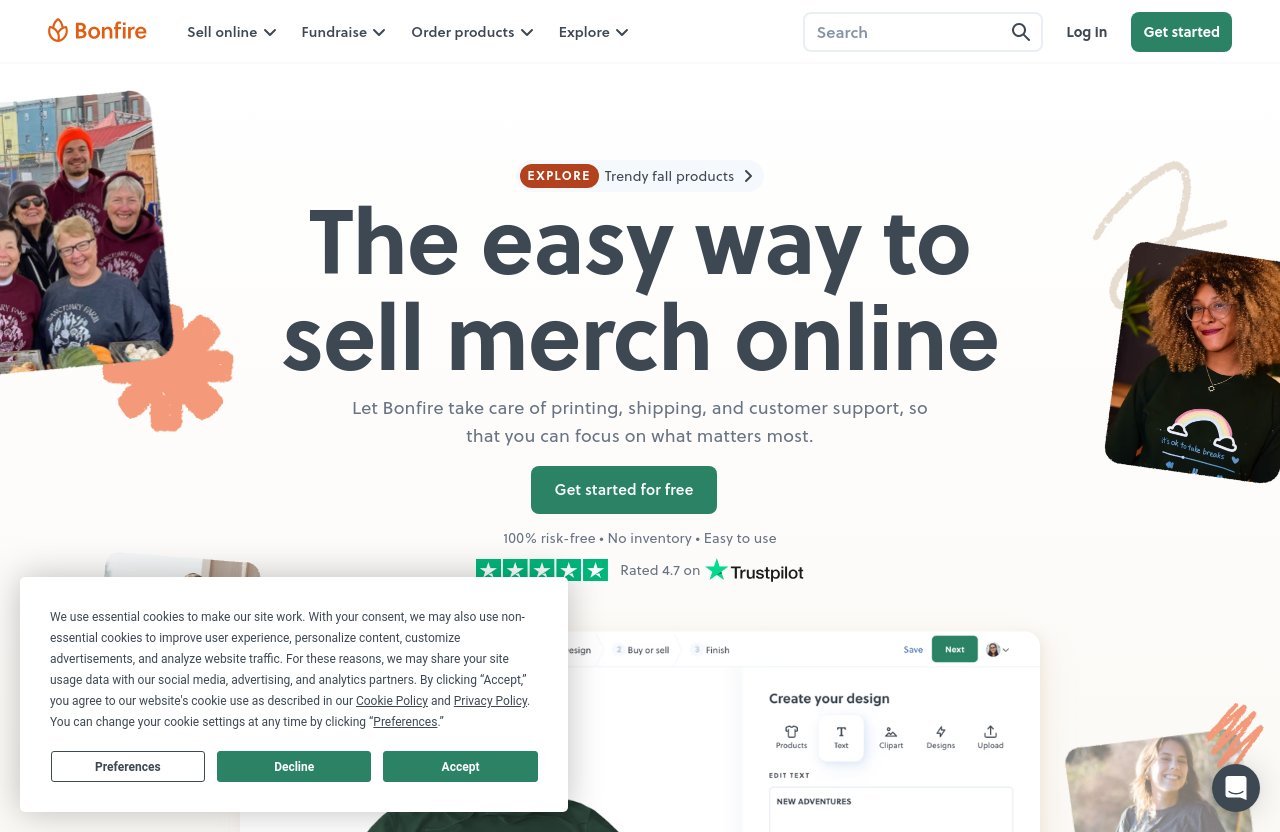
Bonfire is a useful benchmark because it positions itself as “the easy way to sell merch online,” with printing, shipping, and customer support handled for campaign organizers. Still, a merch fundraiser platform is not one-size-fits-all. Some teams need a more polished storefront, while others want marketplace reach, broader product selection, or direct control over their online shop.
Official website · Latest pricing & offers
What Bonfire Is Best For — and Where It Falls Short
Quick summary of Bonfire’s fundraising model
Bonfire is designed to help people sell merchandise online without managing physical inventory. According to the official Bonfire website, it handles printing, shipping, and customer support, allowing organizers to focus on their cause, audience, or campaign.
Its website highlights a risk-free, no-inventory approach and includes paths for personal fundraising, nonprofit fundraising, peer-to-peer fundraising, partial giving campaigns, and nonprofit stores. It also supports merchandise categories such as T-shirts, hoodies, tote bags, and other catalog items.
That makes Bonfire a sensible starting point for groups that want a straightforward print-on-demand fundraising workflow rather than a traditional e-commerce operation.
Who Bonfire fits best: nonprofits, schools, creators, community campaigns
Bonfire can fit well when a group wants to raise awareness and funds through wearable campaign merchandise. A local animal rescue, school booster club, sports team, church group, or neighborhood initiative can create a campaign without buying boxes of shirts upfront.
It is also relevant for creators building cause-based merchandise around an audience. Bonfire offers pathways for creators, YouTube merch, and branded store experiences through Bonfire Pro Beta.
For groups that value a guided campaign structure over extensive store customization, Bonfire may be easier to evaluate than a general e-commerce tool. Its homepage also displays a 4.7 Trustpilot rating, although prospective organizers should still review current customer feedback and policies before launching.
Common reasons people search for Bonfire alternatives
People researching bonfire alternatives usually are not rejecting merch fundraising itself. They are comparing different ways to sell products, run an online store, or support a cause.
Common reasons include:
- Wanting greater control over a branded merch store.
- Needing print-on-demand fulfillment that connects with an existing website.
- Looking for marketplace discovery instead of a campaign-specific storefront.
- Selling digital products alongside physical merchandise.
- Seeking a broader selection of customizable products.
- Buying printed items in bulk for an event, rather than running an ongoing online campaign.
- Looking for clearer pricing information before committing.
Bonfire’s official pricing page was not available in the source provided for this review, so its current pricing, fees, subscription options, and margins should be confirmed directly with Bonfire before a campaign goes live. That lack of visible pricing information may be one reason some buyers compare Bonfire competitors before choosing.
How We Chose the Best Bonfire Alternatives
Evaluation criteria: pricing, fundraiser tools, storefront control, fulfillment, support
This guide evaluates bonfire alternatives by use-case fit rather than unsupported feature claims or numerical rankings. Each platform serves a different operational model, so the “best” choice depends on how your fundraiser will actually run.
We considered five practical criteria:
| Evaluation Area | What to Assess Before Launching |
|---|---|
| Upfront cost and pricing clarity | Store fees, product costs, payout structure, and any campaign-related charges |
| Fundraiser suitability | Whether the workflow supports a clear cause, group goal, or community campaign |
| Storefront control | Your ability to present your name, message, product range, and visual identity |
| Fulfillment model | Whether products are made to order, shipped by a provider, or purchased in bulk |
| Support and administration | How easily volunteers or staff can manage orders, questions, and customer issues |
Where possible, readers should verify claims through each provider’s current official documentation, support pages, and terms. Platform policies, available products, and integrations can change.
Why nonprofit, school, and community use cases need different platforms
A nonprofit may need a polished donation-adjacent store that reinforces mission credibility. A school fundraiser may need a simple launch process that a parent volunteer can coordinate without learning complicated e-commerce tools.
Community organizers often have another priority: getting shirts, signs, or event items to people on a deadline. In that case, bulk printing or a production-oriented vendor may be more appropriate than a campaign-first tool.
The most useful bonfire alternatives for nonprofits are not always the same as the best choices for a student club or individual creator. Start with your operating model, then compare platforms.
How to read the comparison table
The table below is a directional shortlist, not a substitute for reviewing current policies. “Best for” reflects each company’s general market positioning and likely workflow fit, not a promise about costs, fundraising returns, or product availability.
A strong platform should fit your team’s capacity. If no one can maintain a complex store, the most customizable option may not be the best real-world choice.
Best Bonfire Alternatives for Fundraising at a Glance
Best overall
Fourthwall is the strongest overall choice for creators and organizations that want a more brand-led storefront experience. It is especially worth considering when merchandise is part of a longer-term audience or supporter strategy.
Best for schools
GotPrint is worth considering for schools, clubs, and event organizers with bulk-style printing needs. It may suit groups that want physical materials for a specific occasion rather than an open-ended online fundraiser.
Best for nonprofits
For many nonprofits, Bonfire remains a practical benchmark because of its dedicated fundraising paths. Among the alternatives, Fourthwall is a notable option for mission-led groups that prioritize brand presentation and a store they can build around over time.
Best for simple merch sales
Spring, formerly associated with Teespring, is a recognizable option for teams focused primarily on launching and promoting merchandise. It can make sense when the campaign is merch-first rather than donation-first.
Best for branded store control
Fourthwall is the leading option in this list for groups seeking a more deliberate branded store experience. Printful is also relevant when an organization already has a website and wants fulfillment to support that existing storefront.
| Platform | Best-Fit Use Case | Primary Consideration |
|---|---|---|
| Bonfire | Cause-led merch campaigns | Fundraising-focused starting point |
| Fourthwall | Branded creator or organization stores | Store identity and audience-building |
| Printful | Existing stores needing fulfillment | Requires an e-commerce plan |
| Sellfy | Small teams selling merch and digital goods | Better for direct selling than formal fundraising |
| Spring | Merch-focused campaigns | Evaluate brand and cause presentation |
| Redbubble | Artist-led designs and discovery | Less control over the fundraising message |
| Zazzle | Varied personalized products | Marketplace-style brand experience |
| GotPrint | Bulk event or school orders | More production-oriented than campaign-oriented |
1. Fourthwall
Why it stands out
Fourthwall is one of the most relevant bonfire alternatives for groups that want merchandise to feel like part of a complete brand experience. Its general positioning centers on helping creators and brands operate their own shops, making it more store-focused than a simple one-campaign fundraiser.
That distinction matters for nonprofits with recurring supporters, podcasts with mission-driven merchandise, and community groups that plan to keep selling after a single event. Rather than treating each shirt as a standalone campaign item, teams can think in terms of an ongoing supporter storefront.
Best fit for creators and branded merch fundraising
Fourthwall may be a strong fit for a nonprofit with a recognizable visual identity, a creator raising funds for a cause, or a school organization with an established audience. It is particularly relevant when you want the shop itself to reinforce trust, professionalism, and mission recognition.
For example, a regional rescue organization could use a branded store to organize seasonal collections, volunteer apparel, and supporter products in one place. That is a different model from launching one fundraising shirt at a time.
Pros and tradeoffs for nonprofits and schools
Potential advantages
- Better aligned with long-term branded merchandise strategy.
- Useful for organizations with an existing audience or content presence.
- May offer a more cohesive shopping experience than a campaign-only page.
Potential tradeoffs
- A branded store still requires promotion, product planning, and clear messaging.
- Small school groups may find a more direct campaign workflow easier to manage.
- Teams should verify current fees, fulfillment details, and available nonprofit-specific tools before relying on it for a fundraiser.
For an organization that wants store ownership and presentation to lead the decision, Fourthwall is one of the best Bonfire substitutes to research first.
2. Printful
Best for print-on-demand fulfillment
Printful is best understood as a print-on-demand fulfillment provider rather than a fundraising-native platform. It is useful for organizations that want merchandise produced and shipped without holding inventory but prefer to control the storefront elsewhere.
This makes Printful relevant to groups that already use an e-commerce website, have web support, or want their store to live alongside donation pages, event registrations, and educational resources.
When a nonprofit may prefer Printful
A nonprofit may choose Printful when its website is already central to supporter engagement. Keeping merchandise within the organization’s own web environment can create a more consistent donor journey and give the team greater control over content.
For example, a museum, advocacy organization, or university alumni group may prefer to integrate merchandise into a broader website rather than send supporters to a separate campaign page. This approach can be attractive, but it also creates more setup responsibility.
Limits compared with a fundraising-first platform
Printful does not appear to be positioned primarily as a dedicated fundraising platform. That means the organization may need to handle the campaign narrative, payment flow, marketing, and any fundraising calculations through its chosen store setup.
Among bonfire alternatives for fundraising, Printful is best for teams that value operational flexibility and have the capacity to build around a fulfillment provider. It may be less suitable for a volunteer-led campaign needing the simplest possible launch.
3. Sellfy
Best for simple digital-plus-merch selling
Sellfy is a reasonable option for small teams that want to sell merchandise alongside digital items. That can be useful for creators, school music groups, artists, or community organizations offering downloadable guides, recordings, artwork, or event materials in addition to apparel.
Its appeal is the possibility of keeping multiple product types under one selling workflow. For a group whose fundraiser includes both physical merchandise and digital content, that can reduce fragmentation.
Why small teams may like it
A small team usually benefits from fewer moving parts. If one person is responsible for storefront setup, social promotion, customer communication, and reporting, a straightforward selling environment may be more practical than a large custom commerce stack.
Sellfy may fit projects that are closer to direct sales than traditional charitable fundraising. A student filmmaker selling a digital project and related shirts, for instance, has different requirements from a registered nonprofit collecting mission support.
Potential drawbacks for charity campaigns
Before using Sellfy for a charitable campaign, check how clearly you can explain where proceeds go and what buyers should expect. Fundraising credibility depends heavily on transparent messaging, whether or not the platform has nonprofit-specific positioning.
These bonfire alternatives for schools can work best when the school is selling an identifiable product, such as club apparel or digital event content, rather than asking supporters to navigate a complex donation-plus-merch structure.
4. Teespring / Spring
Best for merch-first campaigns
Spring is a familiar name in creator merchandise and is often included in discussions of Bonfire competitors. It can appeal to groups that want to turn a design, slogan, mascot, or cause message into products for supporters.
The strongest use case is usually a merch-first campaign: people buy because they like the item and want to show affiliation, with fundraising or community support as part of the story.
Ease of launching a store
For a group with a clear design and active social following, a merch-oriented platform can reduce the barrier between idea and product launch. This is helpful for community campaigns that rely on Instagram, YouTube, TikTok, newsletters, or local social groups to spread the word.
However, easy setup does not replace campaign planning. A fundraiser still needs a clear beneficiary, an understandable purpose, realistic product choices, and consistent promotion.
Where it may be weaker for nonprofits
Spring may be less suitable when a nonprofit needs the fundraising process itself to be central to the supporter experience. Mission-first organizations often need pages that explain impact, establish accountability, and connect merchandise revenue to a specific initiative.
If your campaign is primarily “buy this shirt to support our cause,” compare Spring carefully with fundraising-focused options. If it is “shop our community merchandise,” Spring may be a more natural fit.
Official website · Latest pricing & offers
5. Redbubble
Best for creators with audience-driven sales
Redbubble is most relevant for artists and designers who want their work available through a marketplace-style environment. It can suit audience-driven sales where the design itself is the key attraction.
For an illustrator supporting a community cause through artwork, this model can be appealing. The creator can focus on design concepts while shoppers browse products featuring those designs.
Why it is less ideal for donation-led fundraising
Redbubble is generally less suited to a traditional fundraiser where every buyer needs to immediately understand the cause, funding purpose, and organizational identity. Marketplace shopping can put more emphasis on product discovery than on a campaign story.
That does not make it a poor option; it simply serves a different objective. It may work best when the fundraiser is secondary to the creative merchandise, not when fundraising transparency is the primary conversion driver.
Audience and brand control considerations
When comparing bonfire alternatives, consider how much control you need over the shopping environment. A marketplace can provide exposure, but it may not feel like a dedicated nonprofit or school storefront.
Organizations with strict brand guidelines, donor communication standards, or formal approval processes should consider whether a marketplace presentation fits their needs. Redbubble is usually a better match for individual artists than for institutional fundraising teams.
6. Zazzle
Best for wide product variety
Zazzle is widely associated with customizable and personalized products. That broad-product approach can be useful for groups looking beyond standard fundraiser shirts.
A school club may want invitations, mugs, stickers, banners, or event-related items alongside apparel. A community festival could also benefit from having several product formats that reflect its local identity.
Good use cases for schools and clubs
Zazzle can be worth exploring when variety matters more than having one focused apparel campaign. Parent-teacher groups, graduation committees, alumni clubs, and school activity organizations may find that a broader merchandise concept supports their event planning.
For example, a theater department could offer show-themed keepsakes, promotional materials, and apparel. That flexibility can be valuable when the fundraiser is tied to a specific celebration or production.
Tradeoffs for fundraising brand control
A wide marketplace catalog can make product selection easier, but it can also make the customer journey less focused. Too many options may dilute a simple campaign message such as “support the robotics team” or “help fund the band trip.”
For bonfire alternatives for schools, Zazzle is best viewed as a product-variety option. Groups should make sure their fundraiser page, social posts, and purchasing instructions still clearly explain the purpose behind the sale.
7. GotPrint
Best for bulk-style needs
GotPrint is a different type of alternative because it is more relevant to print production and bulk purchasing needs. It may suit groups that want printed materials or merchandise available for an event, fundraiser table, school function, or local distribution effort.
This model can be practical when organizers know approximately how many items they need and can manage distribution themselves. It is less centered on the hands-off, shipped-to-each-buyer print-on-demand model.
When schools and community groups might choose it
Schools, booster organizations, and community event planners often work with deadlines. If you need programs, flyers, signs, shirts, or promotional materials for a specific date, a production-focused provider may align better with the task.
The tradeoff is that the group may be responsible for forecasting demand, collecting orders, storing products, and delivering them. That is manageable for some teams but burdensome for others.
Considerations versus a campaign-first platform
A campaign-first platform reduces inventory pressure and can simplify individual fulfillment. A bulk-print approach can provide greater control over event logistics but shifts more work back to organizers.
This makes GotPrint a practical choice for operationally prepared groups, not necessarily for first-time online fundraisers. Before ordering, confirm production timelines, proofing procedures, shipping, and the exact product specifications needed for your event.
How to Choose the Right Bonfire Alternative
Choose by campaign type: nonprofit, school, community fundraiser
The right choice starts with the kind of campaign you are running:
| Campaign Type | Better Starting Point |
|---|---|
| Registered nonprofit with recurring supporters | Bonfire or Fourthwall |
| School club or booster fundraiser | Bonfire, Zazzle, or GotPrint |
| Creator-led cause campaign | Fourthwall, Spring, or Redbubble |
| Existing e-commerce site | Printful |
| Small project selling downloads and merchandise | Sellfy |
| Event with known quantities and deadlines | GotPrint |
This is not a rigid ranking. It is a way to narrow the field before spending time designing products and promoting a store.
Choose by priority: branding, simplicity, fulfillment, margin control
Use this quick decision path:
- Need a quick, cause-centered merch campaign? Start with Bonfire.
- Need a polished long-term branded merch store? Evaluate Fourthwall.
- Already operate a website and want fulfillment support? Investigate Printful.
- Need artwork-led marketplace exposure? Consider Redbubble.
- Need varied custom products for a club or event? Look at Zazzle.
- Need physical products in bulk for a date-specific event? Review GotPrint.
- Need to sell digital and physical products together? Explore Sellfy.
For campaign organizers who want to assess Bonfire directly, review its current offering through Bonfire’s official campaign platform before comparing practical details with the alternatives.
Red flags to avoid when comparing platforms
Avoid choosing solely because a platform appears easy to use. Easy setup is useful, but it does not answer important financial and operational questions.
Before launching, confirm:
- Who handles customer service, returns, and delivery issues?
- What does the buyer see about your organization and campaign purpose?
- How are proceeds calculated and reported?
- Can you export order information if needed?
- Is the product quality appropriate for your supporters?
- What happens if an event date changes or a design needs correction?
- Are nonprofit, tax, and disclosure obligations clear for your organization?
This checklist is particularly important when researching bonfire alternatives reddit discussions or other user-generated recommendations. Community feedback can reveal real experiences, but it may be outdated or reflect a very different campaign type.
Bonfire vs Alternatives: Which Platform Is Best for You?
If you want the easiest fundraising setup
Bonfire is a strong benchmark for groups that want merchandise fundraising without inventory management. Its official site specifically highlights fundraising paths and says it handles printing, shipping, and customer support.
For a first-time nonprofit organizer or school volunteer, that focused model may be easier than assembling a storefront, fulfillment partner, and campaign messaging separately. If your group wants a similar merchandise-first approach with stronger emphasis on store identity, Fourthwall is the clearest alternative to evaluate.
If you want a fully branded merch store
Fourthwall is the leading choice in this comparison for brand-led store building. It is best suited to teams that want supporters to experience a unified shop rather than a limited campaign page.
Printful can also support brand control when used with an organization’s existing website. However, that route typically requires more technical and administrative ownership than choosing a platform designed around an all-in-one merch experience.
If you need school-friendly or nonprofit-friendly workflows
Bonfire is likely the most direct fit when the fundraiser itself is the central goal. Zazzle may be useful for schools that need product variety, while GotPrint can suit event-based groups comfortable managing bulk orders.
The best bonfire alternatives for your organization should reduce workload, not create it. A parent-run school fundraiser may value simplicity more than advanced customization, while a staffed nonprofit may be able to benefit from a more configurable branded store.
Final Verdict
Best overall pick
Fourthwall is the best overall alternative for organizations and creators that want a durable branded merch store rather than a one-off fundraiser. Its general shop-building orientation makes it especially compelling for audience-based fundraising and ongoing supporter engagement.
Best value pick
The best value depends on your operational model, not just the visible product price. For a group that needs no-inventory merchandise fundraising with support handled externally, Bonfire remains a practical platform to assess first.
Because Bonfire’s provided official pricing page was unavailable, verify current costs, fees, and campaign economics directly before deciding. The same due diligence applies to every platform in this guide.
Best for branded fundraising stores
For a polished, long-term merchandise destination, Fourthwall is the strongest option among these bonfire alternatives. For a simple campaign built around fundraising merchandise, Bonfire’s nonprofit and fundraising pathways remain relevant and deserve comparison.
Ultimately, choose the platform that makes it easiest to tell your story, fulfill supporter expectations, and manage the work your team can realistically handle.
Official website · Latest pricing & offers
FAQ
What is the best Bonfire alternative for nonprofits?
Fourthwall is a strong Bonfire alternative for nonprofits that need a more branded, long-term merchandise presence. It is particularly suitable for organizations with an established audience and a desire to make merchandise part of a broader supporter strategy.
For a simple cause-led campaign, Bonfire itself may still be the more direct option because its official site explicitly includes nonprofit fundraising paths.
What is the best Bonfire alternative for schools?
For many schools, Bonfire is practical because it supports a no-inventory merchandise model and is easy to understand for volunteer organizers. Zazzle can be useful when a school needs more varied personalized products, while GotPrint may fit groups ordering materials for a defined event.
The best choice depends on whether the school wants online orders shipped individually or bulk products distributed by the school.
Are there free Bonfire alternatives for fundraising?
Some platforms may promote low-upfront-cost or no-inventory approaches, but “free” can be misleading. Product costs, store plans, payment processing, fulfillment charges, marketplace structures, and fundraising proceeds can all affect the result.
Always verify current fees, margins, payout terms, and shipping costs before launching. Do not assume that no upfront inventory means there are no costs.
Which Bonfire alternative is best for a branded merch store?
Fourthwall is the best option in this list for groups prioritizing a polished branded merch store. Printful is also worth considering if you already have an established website and want a fulfillment provider to support your existing store.
Choose based on whether you want an integrated merch destination or more control through your own e-commerce setup.
Is Bonfire good for fundraising?
Yes, Bonfire can be good for merch-based fundraising, especially for groups that want to avoid inventory and outsource printing, shipping, and customer support. Its official website specifically presents fundraising, nonprofit fundraising, peer-to-peer fundraising, and nonprofit store pathways.
However, some groups may prefer other Bonfire competitors if they need deeper storefront control, broader product variety, marketplace discovery, digital-product selling, or bulk-print logistics.
Related Reading
- Best Airdna Alternatives in 2026
- Best Trustindex Alternatives in 2026: A Practical Buyer’s Guide
- Autods vs DSers: Which Is Better?
References
- Top 10 Bonfire Alternative Platforms to Explore
- Try These Cozy Campfire Alternatives for Fun Without the Fire
- Campfire Alternatives During a Fire Ban
- Best Alternatives to Bonfire for Fundraiser Shirts in 2026