
Foreplay Creative Research: A Practical Review for Paid Social Teams
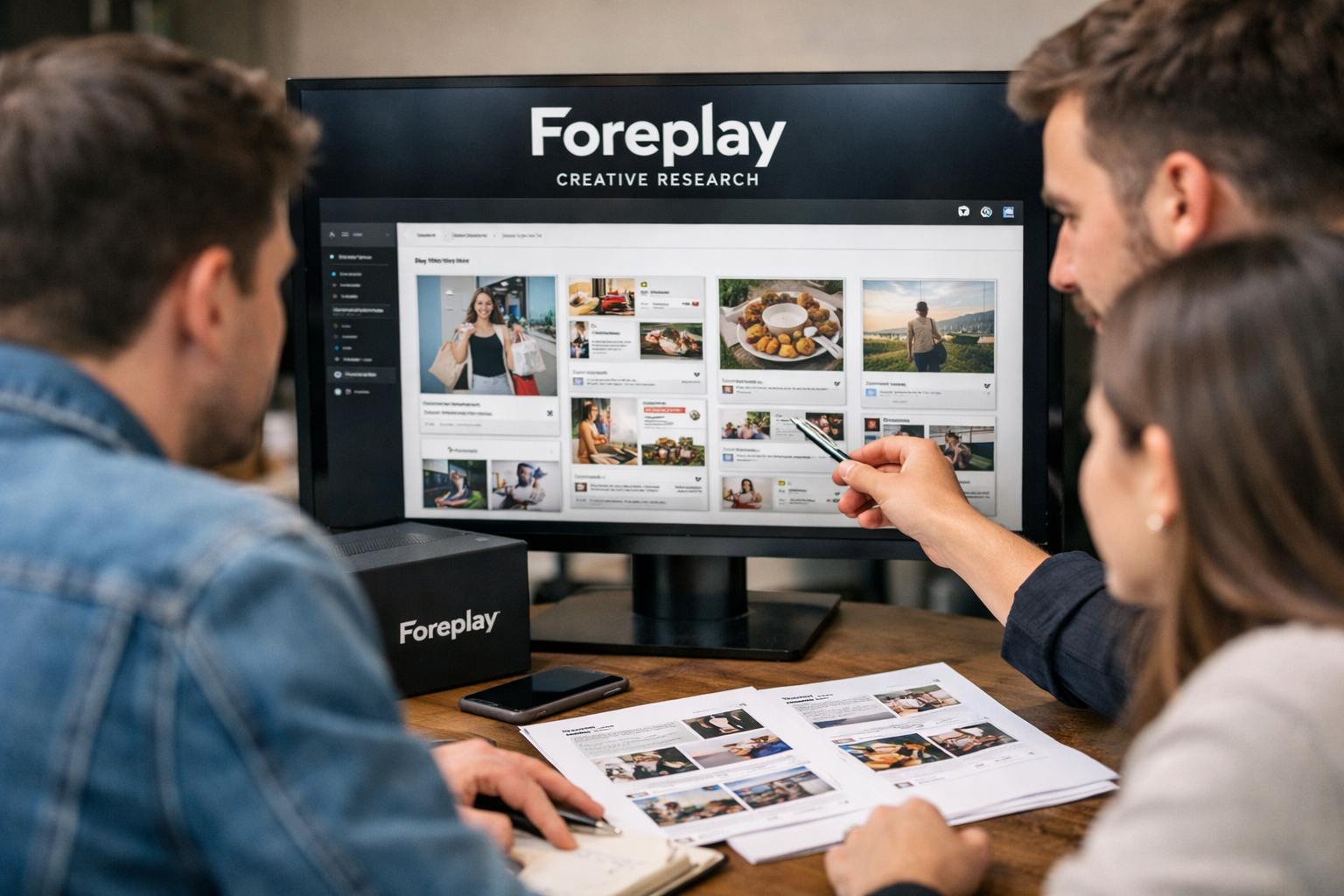
Foreplay creative research is built for the part of paid social work that happens before a designer opens a file or a media buyer launches a campaign: finding useful ad examples, spotting repeatable patterns, organizing references, and turning ideas into clear creative direction.
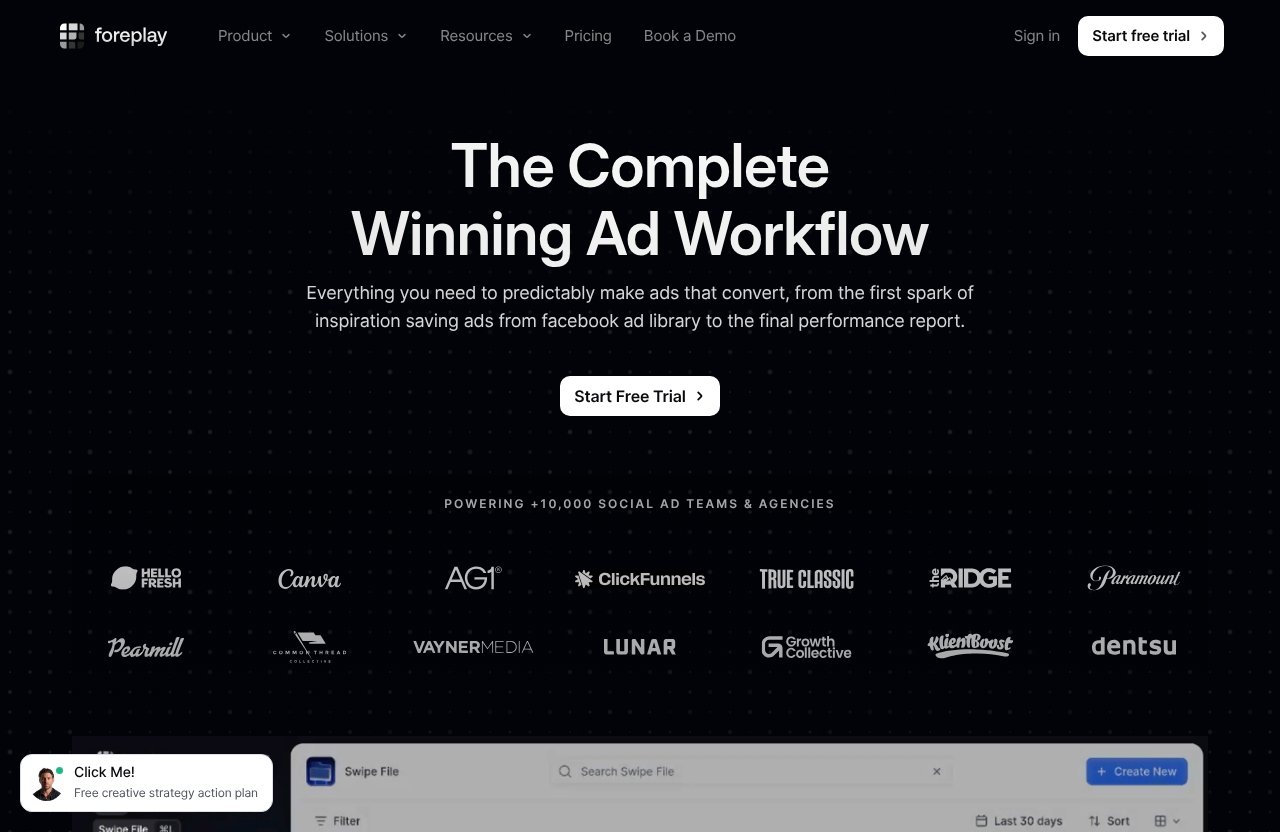
In this Foreplay review, I’m looking at the workflow marketers actually buy the platform for. Foreplay positions itself as “the complete winning ad workflow,” covering the path from saving ads from Facebook Ad Library through to the final performance report. The value is not that it replaces a media buying platform; it is that it gives creative and performance teams a more organized way to research, communicate, and act on ad inspiration.
Affiliate disclosure: This page contains an affiliate link to Foreplay. If you choose to purchase through it, toptrustreview.com may earn a commission at no additional cost to you.
Official website · Latest pricing & offers
What Foreplay Is and Where It Fits in the Creative Workflow
Quick definition of Foreplay
Foreplay is an ad inspiration hub and creative workflow platform for marketers who need to save, discover, organize, and discuss paid social creative. Its official product areas include Swipe File, Discovery, Spyder, Lens, Briefs, a Chrome Extension, MCP, Mobile App, and API.
At its core, foreplay creative research gives teams a central place to collect market examples instead of losing useful ads across browser tabs, screenshots, messaging threads, and isolated spreadsheets. That matters most when multiple people need to agree on what to make next.
Why creative research tools matter before ad production
Most weak creative processes do not fail because a team lacks ideas. They fail because the research is scattered, observations are vague, and the brief reaches the designer without enough context about the audience, offer, angle, hook, or visual format.
A good creative research workflow creates a bridge between market observation and production. Rather than saying, “Competitors are doing more UGC-style ads,” a strategist can show examples, identify patterns, explain the opportunity, and give the production team a usable direction.
Foreplay creative research is especially helpful when the team produces a high volume of creative or manages several brands. The more campaigns, clients, products, and stakeholders involved, the more expensive disorganized research becomes.
How Foreplay differs from post-launch analytics tools
Foreplay should not be evaluated as a replacement for your ad account reporting, attribution setup, or media-buying platform. Those systems answer questions such as what spent, what converted, and where results changed after launch.
Foreplay creative research sits earlier in the process and alongside production. It helps teams decide what concepts deserve testing, how to document market patterns, and how to communicate creative opportunities before ads go live.
The practical distinction is simple: post-launch analytics tells you what happened in your account, while an ad swipe file tool helps your team build a stronger hypothesis about what to test next. Mature teams need both, but they solve different problems.
Best Use Cases for Foreplay Creative Research
Building swipe files from ad libraries
The first and most obvious use case is building a structured swipe file from ad libraries. Without a system, marketers typically take screenshots, paste links into a spreadsheet, or send ads to themselves in Slack. That may work for occasional inspiration, but it falls apart when the team needs to retrieve an example weeks later.
Foreplay creative research provides a more deliberate home for examples found during routine browsing and research. Instead of saving an ad simply because it “looks good,” I recommend recording why it is useful: the hook, product demonstration, offer construction, landing-page message match, creator format, visual device, or objection it addresses.
The output should not be a giant archive of random ads. It should be a searchable collection of references that can support specific campaigns, products, audiences, and funnel stages.
For example, an e-commerce team preparing a seasonal offer could save examples into separate groups for urgency hooks, bundles, gifting angles, product demos, customer proof, and creator-led ads. When the creative sprint starts, the team already has an evidence-backed source pack rather than beginning from zero.
Reverse-engineering competitor ads and creative patterns
Competitor ad research is most valuable when it focuses on patterns, not one-off imitation. A single ad can be misleading; an advertiser may be testing an idea that is not working, or running creative for a very different audience and business model.
A better approach is to observe recurring themes across a category. Look for repeated angles, visual structures, offer types, social-proof methods, problem statements, and video openings. The goal is to understand what the market is actively trying to communicate, then find the gap your brand can own.
Foreplay creative research supports this type of disciplined review by giving marketers a place to collect and revisit examples over time. Spyder and Lens are listed among Foreplay’s official product areas, making the platform relevant to teams that want their creative research process connected to ongoing brand and market observation.
The outcome is a clearer creative strategy. Instead of telling a client, “Everyone is using founder videos,” you can make a more useful recommendation: “The category repeatedly leads with founder authority, but few brands explain the product mechanism clearly. We should test founder-led education paired with a short product demonstration.”
Turning inspiration into briefs for designers and editors
Saved ads only create value when they influence what gets made. This is where many teams lose momentum: a media buyer collects strong examples, but the creative team receives a loose message saying, “Make something like this.”
That is not a brief. A practical brief should identify the desired audience response, the core angle, the message hierarchy, the proof required, references, production notes, and the test variable. It should also make clear what the team is borrowing conceptually versus what needs to remain unique to the brand.
Foreplay creative research is useful here because Briefs is one of its official product areas. The buyer value is the ability to move from saved inspiration to a documented creative request in the same broader workflow, rather than forcing teams to reconstruct the research in a separate document.
A strong output might be: “Create three 20–30 second creator-led videos for cold traffic. Open with the customer frustration in the first two seconds, demonstrate the product by second eight, include one proof point, and test three different hooks. Use these saved examples only as pacing and structure references.” That is much more actionable than a folder of links.
Collaborating across media buying, creative, and client teams
Paid social creative often gets slowed down by handoffs. Media buyers see patterns in the market, strategists interpret them, designers need clear direction, and clients may want visibility before approving a concept. When research lives in personal bookmarks, each handoff creates friction.
Foreplay creative research helps establish a shared reference point for those conversations. The important benefit is not merely that everyone can see ads; it is that the team can discuss a common set of examples rather than relying on memory or subjective descriptions.
For an agency, this can improve the client approval process. A strategist can frame a recommendation around category evidence: which formats are appearing, which customer objections competitors address, and what creative territory may be worth testing for the client’s offer.
For in-house teams, the same process reduces the “that’s not what I meant” problem. Creative teams receive references with context, while performance marketers can explain the audience and testing logic behind the request.
Presenting winning ads and opportunities to stakeholders
Stakeholders rarely need another wall of screenshots. They need a concise point of view: what is happening in the market, what it means for the business, and what the team recommends doing next.
This is a valuable Foreplay use case for agency owners, growth leads, and senior marketers. A curated set of examples can become the basis for a creative review, client meeting, campaign kickoff, or quarterly opportunity presentation.
Foreplay creative research is not a guarantee that copied patterns will perform. It does, however, make it easier to show the reasoning behind a proposed test. That is especially useful when you need approval for a new format, more creator content, a new offer angle, or a larger production sprint.
The best stakeholder output is usually short: three market patterns, three supporting examples, three testable recommendations, and a clear owner for each next action. Research earns confidence when it leads to a concrete decision.
Who Gets the Most Value from Foreplay
Agencies managing multiple clients
Agencies are among the clearest buyers for foreplay creative research because they manage repeated research and briefing cycles across several accounts. An agency team can quickly lose track of which references were collected for which client, vertical, product line, or campaign objective.
The strongest Foreplay agency use case is centralizing the evidence behind recommendations. It helps account strategists, media buyers, and creative leads work from the same pool of references while making client-facing creative conversations more concrete.
E-commerce and retail teams
E-commerce and retail brands usually benefit when they need a steady flow of fresh ads across products, promotions, seasonal pushes, and customer segments. Their creative challenge is not just producing attractive ads; it is continuously finding new ways to frame the product, offer, use case, and proof.
Foreplay creative research is a good fit when the team has enough creative velocity to justify a repeatable research habit. It is particularly useful for teams that frequently build campaigns around launches, bundles, sale periods, gifting, product education, or creator-style demonstrations.
B2B and SaaS marketers
B2B and SaaS teams should evaluate Foreplay differently from direct-response product brands. Their research often centers on problem awareness, pain points, product explanation, credibility, customer stories, and category education rather than discount-led offers.
A SaaS marketer can use a creative briefing tool to turn competitor observations into testable messaging directions. For example, if competitors lead with broad productivity claims, the team may test a more specific workflow problem, role-based pain point, or product proof sequence.
Freelancers and creators
Freelancers and creators get the most value when they serve multiple clients or need a professional system for collecting references. A well-organized swipe file makes creative recommendations more defensible and helps reduce research time at the start of each new brief.
For a solo operator, foreplay creative research is worth prioritizing if research is a paid part of the service. If you only need occasional inspiration for a single small project, the workflow may be more than you need.
Creative strategists and performance marketers
Creative strategists and performance marketers are often the internal champions for Foreplay because they sit between market signals and production. They need to explain what should be tested, why it is relevant, and what the creative team needs to make.
Foreplay for marketers is most compelling when a team wants tighter links between ad research, creative strategy, and briefing. It gives the strategist a way to move beyond opinions and provide references that support a specific testing hypothesis.
Foreplay Features That Support Creative Research
Swipe File
Swipe File is the foundation of the Foreplay creative research workflow. It is the product area most directly connected to collecting and organizing ad inspiration for later review and reuse in planning.
The key buying question is whether your team currently has a usable system for saving examples with context. If the answer is “browser bookmarks, screenshots, and chat messages,” a centralized swipe file can create immediate operational value.
Discovery
Discovery is an official Foreplay product area that fits the research phase of creative development. It is relevant for teams that need a dependable way to find new ad references and expand beyond the same familiar competitors.
In practice, discovery should be treated as a starting point, not the final strategy. The best teams filter what they find through their own audience, brand position, offer, and production capabilities.
Spyder
Spyder is included among Foreplay’s official product areas and is available in both listed pricing plans, with plan-specific details on the pricing page. It belongs in the evaluation for marketers who want their creative research to include ongoing brand and competitor observation.
Use it as part of a recurring competitor ad research habit, not as an excuse to copy ads. The objective is to monitor shifts in creative themes and identify patterns worth discussing internally.
Briefs
Briefs connects research to production. This is important because a growing swipe file is only useful if it helps designers, editors, creators, and clients understand what to build next.
For teams with a messy briefing process, this may be one of the strongest reasons to consider Foreplay. The platform’s official workflow positioning is meaningful here: inspiration, research, and creative direction are closer together instead of living in disconnected tools.
Lens
Lens is another official product area and is listed in Foreplay pricing. It is available on Basic, while Workflow includes Lens for one brand with unlimited ad spend according to the official pricing page.
Before choosing a plan specifically for Lens, review the current official product and pricing pages for the latest detail. The practical evaluation remains straightforward: determine whether this product area supports the number of brands and the research workflow your team manages.
Chrome Extension and other extensions
The Chrome Extension supports Foreplay’s role in saving ads from Facebook Ad Library as part of the wider creative workflow. For researchers, the value of an extension is reducing the friction between seeing an interesting ad and capturing it for the right project.
Foreplay also lists MCP, a Mobile App, and API among its product areas. Teams with technical or cross-device workflow needs should confirm their intended use directly with the official product documentation, especially before building processes around API access.
Official website · Latest pricing & offers
Foreplay Pricing and Which Plan Fits Which Team
Basic plan
Foreplay Basic costs $59 per month and includes one user. Additional users cost $20 each. The plan includes Swipe File, Discovery, Briefs, Spyder, Lens, API Access with 10,000 credits, and MCP.
Basic includes a 7-day free trial with no credit card required. This is the logical starting point for freelancers, solo strategists, or small teams that want to validate whether foreplay creative research improves their actual briefing and planning habits.
Workflow plan
Foreplay Workflow costs $175 per month and includes up to five users. Additional users cost $20 each. It includes Swipe File, Discovery, Briefs, Spyder for 15 brands, and Lens for one brand with unlimited ad spend.
Workflow also has a 7-day free trial with no credit card required. It is better suited to agency pods, in-house growth teams, or multi-person creative operations where shared research and collaboration are part of the weekly rhythm.
| Plan | Monthly Price | Included Users | Notable Officially Listed Inclusions | Best Fit |
|---|---|---|---|---|
| Basic | $59/month | 1 | Swipe File, Discovery, Briefs, Spyder, Lens, API Access (10,000 credits), MCP | Solo users and small teams |
| Workflow | $175/month | Up to 5 | Swipe File, Discovery, Briefs, Spyder (15 Brands), Lens (1 Brand, Unlimited Ad Spend) | Collaborative teams and agencies |
Annual billing is also available. Foreplay states that annual billing saves 15% and includes Unlimited Spyder.
How to decide between Basic and Workflow
Choose Basic if one person owns most of the research, curation, and briefing work. It is also a sensible test plan for a small business that wants to prove adoption before involving a larger team.
Choose Workflow when research needs to be shared across several people and the team is managing a more active creative production process. The price difference makes more sense when it replaces repeated manual handoffs, scattered client references, and duplicated competitor research.
The free trial is the right way to judge Foreplay pricing. During those seven days, do not just browse ads; complete one real workflow from research to brief and ask whether the final output is clearer than your current process.
Foreplay vs Common Alternatives in the Buying Journey
Foreplay vs basic ad library browsing
Basic ad library browsing is useful and free, but it is usually a discovery activity rather than a complete system. It can help you find examples, yet it does not inherently create a shared, organized research process for a team.
Foreplay creative research is the better fit when you need to save examples consistently, group them for projects, and use them in discussions or briefs. If you only inspect a few competitors once per quarter, basic browsing may be enough.
Foreplay vs ad-spy-only tools
Ad-spy-only tools are typically evaluated for the narrow task of finding ads and observing a market. Foreplay’s official positioning is broader: it is designed around a complete winning ad workflow, from saving ads through to final performance reporting.
That makes Foreplay a stronger consideration for teams that need an ad research tool and a production-facing organization system. If discovery is your only requirement, evaluate whether you truly need the rest of the workflow.
Foreplay vs creative analytics tools
Creative analytics tools are generally used after launch to evaluate how creative performs in your own advertising environment. They are important for deciding what to scale, pause, refresh, or retest.
Foreplay creative research addresses the upstream work of finding concepts and communicating direction. In a mature paid social operation, the two categories can complement each other: one helps form the testing pipeline, and the other helps assess launched creative.
How to Use Foreplay for Better Creative Output
A sample weekly research workflow
A sustainable creative research workflow should be routine rather than reactive. I recommend assigning one or two short research blocks each week, with the strategist or media buyer responsible for curating only the most relevant examples.
Start by reviewing direct competitors, adjacent categories, and brands with similar customer motivations. Save examples that reveal a distinct hook, proof format, offer structure, creator approach, or visual pattern—not every ad that looks polished.
Next, group the strongest references around a live business question. That question might be: “How can we communicate product quality without relying on a discount?” or “What hooks could make this problem feel more urgent for cold audiences?”
Foreplay creative research becomes useful when each saved item is attached to an insight. The goal is not to collect more ads; it is to make the next creative decision faster and better informed.
How to turn saved ads into a creative brief
Choose three to five references that support one clear creative angle. Too many examples create confusion and encourage designers to combine unrelated ideas into a vague concept.
Then write the brief around the test, not the reference. Define the target audience, the customer problem, the promised outcome, the core proof, the hook options, required assets, and the format being tested.
Use references to clarify execution. For instance, note that one ad is useful for its fast product demo, another for the structure of its testimonial, and a third for the way it introduces an objection. This preserves originality while giving the production team useful direction.
How teams should review and iterate
Review new creative with both research and results in mind. Before launch, ask whether the concept matches the intended angle and whether the first seconds communicate a clear reason to keep watching.
After launch, use your own reporting systems to assess performance. Then bring learnings back into the creative research workflow: update the brief, identify what message or format was validated, and collect new references that help refine the next iteration.
This loop is where Foreplay creative strategy can become operationally valuable. Research informs production, launched creative produces learning, and learning improves the next round of research instead of disappearing in a meeting recap.
Is Foreplay Worth It for Creative Research?
When it is a strong fit
Foreplay is a strong fit for teams that repeatedly research ads, build creative briefs, collaborate across roles, or present market opportunities to clients and stakeholders. It is particularly relevant for agencies, e-commerce brands with regular creative production, and growth teams where paid social requires a consistent testing pipeline.
The real value of foreplay creative research is operational clarity. It helps teams preserve useful examples, connect them to strategy, and turn observations into production-ready requests without relying on fragmented manual systems.
When it may be overkill
Foreplay may be overkill for a marketer who only needs occasional inspiration and has no recurring creative production process. It may also be unnecessary if one person can comfortably manage a small number of references in an existing system and does not need collaborative review or briefs.
Do not buy it because you expect a tool to identify guaranteed winning ads. No research platform can replace audience knowledge, offer quality, testing discipline, and post-launch measurement.
Final buying recommendation
My recommendation is to consider Foreplay if your current research process creates delays between “we found a useful ad” and “the creative team has a clear brief.” That is the workflow gap it is designed to address.
Use the 7-day no-card trial to test foreplay creative research on a real campaign, not a hypothetical one. You can review Foreplay’s current plans and start the trial if the platform fits the way your team saves references, researches competitors, and briefs creative work.
Official website · Latest pricing & offers
FAQ
What does the Foreplay app do?
Foreplay is a creative inspiration hub for brands, agencies, freelancers, and performance teams. Its official product areas include tools for saving and discovering ads, organizing creative references, creating briefs, and supporting an end-to-end ad workflow.
In practical terms, foreplay creative research helps teams move from ad inspiration to a documented creative direction. It is designed to support research, collaboration, and briefing rather than replace ad platforms or post-launch reporting tools.
Is the Foreplay ad worth it?
Foreplay is worth it when your team spends meaningful time researching ads, organizing inspiration, briefing creators, or coordinating between media buying and creative functions. Its value comes from reducing research friction and making creative direction easier to communicate.
It is less compelling for someone who only browses ads occasionally and does not need a shared creative research workflow. The free trial is the best way to test whether it changes your team’s day-to-day process enough to justify the cost.
How to find winning ads?
Start with ad libraries and competitor observation, but do not assume every visible ad is a winner. Look for patterns that repeat across brands: recurring hooks, offers, formats, objections, demonstrations, and proof mechanisms.
Then save the most relevant examples, categorize them by the problem they solve, and revisit them during planning. Ads that have remained active over time can be useful signals to investigate, but the goal is to form testing hypotheses for your own audience—not to duplicate someone else’s creative.
Related Reading
- Is Foreplay Worth It for Agencies in 2026? A Practical Buying Guide
- Contentstudio Social Media Automation Review 2026: Is It Worth It for Solo Marketers and Small Teams?
- Taplio for Agencies Review 2026: Is It Worth Paying For?
References
- Foreplay
- Foreplay.co | Pricing
- Are MotionApp or Foreplay any good? : r/FacebookAds
- Foreplay.co: Is It the Best Ad Swipe Tool in 2025? – Bestever