Ad Library Chrome Extension 2026: Best Use, Foreplay Comparison, and Workflow Guide
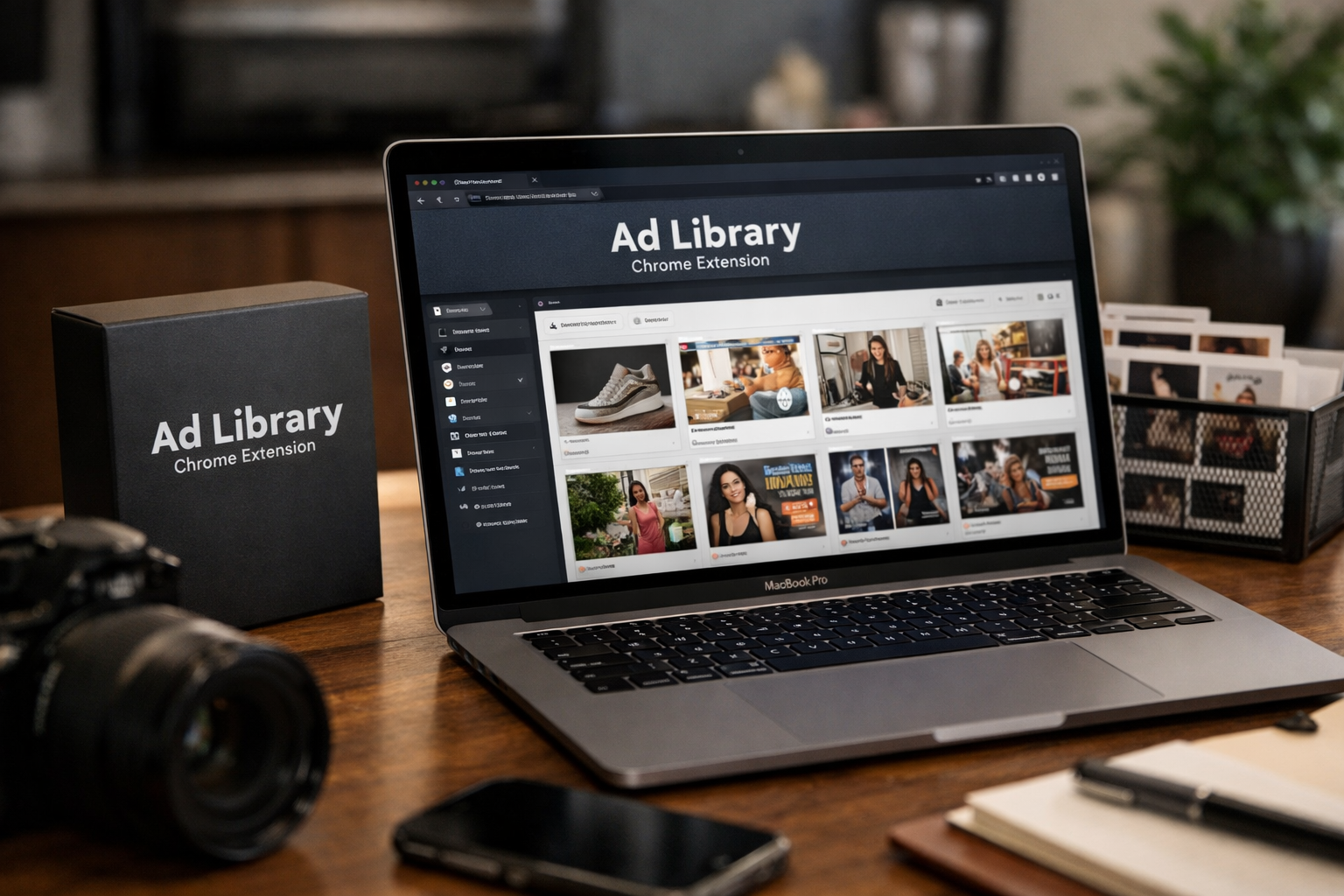
An ad library chrome extension is a browser-based tool that helps marketers capture, inspect, and sometimes download ad creative while researching campaigns online. In 2026, these lightweight tools are especially useful when you are moving quickly through the official Facebook Ad Library, competitor landing pages, or creative research sessions and want to retain useful examples without a manual spreadsheet workflow.
The important question is not whether an extension is useful—it usually is. The question is whether an ad library chrome extension provides enough structure for your actual workload, or whether you need a broader platform such as Foreplay to organize research, collaborate on creative direction, and turn saved ads into campaign decisions.
For solo browsing and fast inspiration capture, an extension can be enough. For agencies, media buyers, and creative teams managing recurring campaigns, it is often only the first layer of the workflow.
Official website · Latest pricing & offers
What an Ad Library Chrome Extension Is in 2026
An ad library chrome extension is designed to make ad research faster from inside the browser. Depending on the tool, it may let you save ad references, collect creative assets, record source links, or download available media for later review.
The category includes tools positioned as an ad library downloader extension, a Facebook ad library extension, or an ad library video downloader. Their precise capabilities differ, so it is important to check each provider’s current documentation and respect the terms of the platforms you research.
How these extensions typically work
Most extensions add a browser control or capture action while you are viewing ads in an ad library or browsing a brand’s public presence. Instead of copying a URL, taking screenshots, and pasting notes into a document, you can save a reference during the research moment.
A typical ad library chrome extension workflow looks like this:
- Open a public ad database, such as the official Facebook Ad Library.
- Search a brand, product category, offer type, or competitor.
- Review active creative and identify promising hooks, formats, or visual patterns.
- Save the useful ad, source URL, or creative reference.
- Sort the strongest examples later.
This approach reduces friction. When I review creative at speed, the biggest loss is rarely finding an ad—it is failing to retain the context that made the ad interesting in the first place.
Who uses them most
A lightweight ad library chrome extension tends to appeal to solo marketers, freelancers, junior media buyers, and creators building an initial inspiration collection. It can also be useful for experienced strategists who want a quick capture layer before moving selected research into a more structured system.
These tools are particularly practical for people who spend most of their research time in Chrome and do not need every ad example to become a team asset. Someone preparing a quick client pitch or researching one product category may value speed over extensive workflow controls.
What problems they solve faster than manual ad-library browsing
Manual research creates small but cumulative tasks: copying links, labeling screenshots, downloading video assets, and remembering why a particular angle stood out. An ad library chrome extension can streamline those actions so researchers stay focused on creative patterns rather than administration.
Common use cases include:
| Research task | Extension advantage | Manual alternative |
|---|---|---|
| Save a competitor ad | Quick capture in the browser | Copy link into a spreadsheet |
| Collect visual references | Save or download available creative | Screenshots and file folders |
| Track recurring hooks | Add a brief note while browsing | Recreate context later |
| Build inspiration folders | Keep a lightweight collection | Multiple browser bookmarks |
That convenience does not automatically make an extension a full ad library tool. It is best viewed as a fast collector, not necessarily the system that helps a team evaluate, share, brief, and act on what it collects.
Ad Library Chrome Extension vs Foreplay: The Real Difference
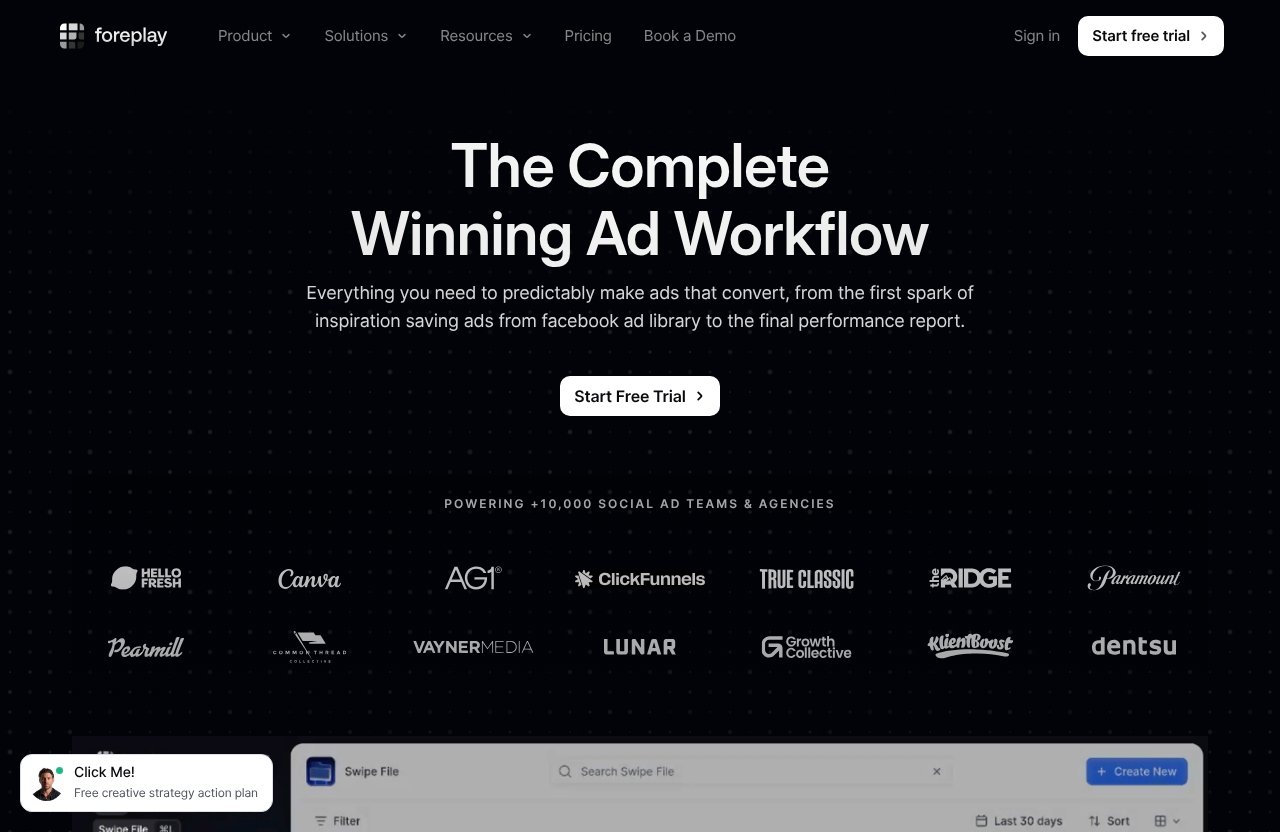
The core difference between an ad library chrome extension and Foreplay is workflow scope. An extension is usually centered on fast capture. Foreplay is positioned by its official site as “The Complete Winning Ad Workflow,” covering the journey from the first spark of inspiration to the final performance report.
That distinction matters once saved ads become inputs for real campaign planning rather than a personal collection of examples.
Single-purpose saver vs end-to-end workflow
A browser extension is often a point solution. It may help you save ads from ad library searches, retain a link, or perform an ad library chrome extension download for creative you want to study. That is valuable when the goal is simply to preserve a reference.
Foreplay’s official product areas include Swipe File, Discovery, Spyder, Lens, Briefs, Chrome Extension, MCP, Mobile App, and API. In practical terms, its positioning is broader: research and saving are connected to organization, competitor work, creative planning, and workflow operations.
An extension answers, “How do I capture this ad now?” A more complete platform helps answer, “What does this pattern mean, who needs to review it, and how should it influence the next brief?”
Research speed vs team collaboration
For raw browsing speed, a simple extension can feel hard to beat. You are already in the browser, and the capture action is close to the ad itself. This is why a meta ad library chrome extension can be a sensible choice for quick research sprints.
However, speed at the capture stage is only one part of creative operations. Teams also need a shared place to compare concepts, communicate context, identify repeated market patterns, and turn findings into assigned work. A saved ad with no notes, owner, or next step quickly becomes another forgotten file.
Foreplay is usually the stronger fit when creative research needs to move between strategists, designers, copywriters, media buyers, and clients. The platform’s named workflow areas—including Swipe File and Briefs—are more aligned with that handoff than a standalone saver.
When an extension is enough and when Foreplay is better
Choose an ad library chrome extension when you have a narrow need: capture ads quickly, keep a few examples, and conduct lightweight competitor research. It is especially suitable when one person owns the entire process from research through execution.
Foreplay becomes more compelling when your saved ads must support ongoing campaign work. If you need more than simple saving, Foreplay is the better fit, particularly when research needs to become organized inspiration, competitor monitoring, briefs, and team-ready creative direction.
Best Use Cases for an Ad Library Chrome Extension
A well-chosen ad library chrome extension is not trying to replace an entire creative intelligence stack. Its best use is reducing friction in the first few minutes of research, when you need to capture an idea before moving on.
Saving ads on the fly
The clearest use case is immediate capture. You are reviewing several advertisers, see an unusual product demonstration or a strong opening hook, and want to preserve it without breaking concentration.
An ad library downloader extension can be helpful when the available tool supports saving media references or files in a way that fits your workflow. But the value is not merely downloading. The useful part is connecting the asset to the brand, platform, offer, and reason you saved it.
If you only need a small personal folder, an ad library chrome extension free option may be worth evaluating. Before depending on any free tool, test whether it captures the details you actually revisit later—not just the creative itself.
Capturing inspiration from Meta Ad Library
The official Facebook Ad Library is a common starting point for researching active advertising. A Facebook ad library extension can make it easier to retain examples found during those searches, especially when you are comparing different ad formats or studying how brands frame similar products.
Use a ad library chrome extension as a note-taking companion during this process. Save examples for their hooks, angles, visual structure, audience clues, offer framing, and landing-page alignment—not simply because the design looks polished.
For example, a skincare marketer might save three ads with entirely different visual styles but the same “before-and-after proof” structure. The shared creative principle is usually more useful than the individual images.
Quick competitor reconnaissance for solo marketers
Solo marketers often need a fast answer to a focused question: What offer is a competitor emphasizing? Are they relying on founder-led videos, product demonstrations, testimonials, or static promotions? What creative themes appear repeatedly?
An ad library chrome extension supports this kind of reconnaissance without requiring a complex onboarding process. You can collect a short set of examples, review them, and develop a working hypothesis for your own campaign.
This is also where terms such as ad library spy or ad library cloud often appear in tool searches. Treat those labels carefully. The practical goal should be transparent research from publicly accessible sources and thoughtful analysis, rather than assuming any tool offers complete visibility into a competitor’s results or strategy.
Where Chrome Extensions Usually Fall Short
Browser extensions solve a specific convenience problem, but they can create a fragmented workflow when the volume of saved ads grows. The limitations are not necessarily flaws; they are a sign that quick capture and ongoing creative management are different jobs.
Limited organization and sharing
A personal collection can become messy quickly. If your saved ads live in browser folders, local downloads, bookmarks, or scattered documents, it becomes harder to find the right reference when a new campaign brief arrives.
An ad library chrome extension may provide basic folders or labels, but teams generally need more intentional organization. They need a consistent naming approach, searchable context, shared access, and a way to distinguish “interesting” from “ready to influence a campaign.”
This gap becomes visible during client reviews. Showing a folder of ads is not the same as presenting a curated creative direction with a clear rationale.
Weak analytics and reporting
Saved creative is not automatically performance insight. A browser extension may help you observe creative patterns, but it does not inherently provide structured analysis or final performance reporting.
That distinction is important for media buyers. Research can inspire hypotheses, but campaign decisions should still rely on your own validated account data, testing process, and reporting. An ad library chrome extension is useful for finding ideas; it should not be treated as proof that an observed ad format will perform for a different brand.
For teams that need a workflow connecting inspiration to campaign analysis, a broader platform is more appropriate.
Dependency on platform changes and browser compatibility
Extensions depend on browser behavior, permissions, and the page structures of the platforms they interact with. When Chrome, an ad platform, or a website changes, an extension may need updates to continue working as expected.
This is one reason searches such as “ad library chrome extension not working” are common across the category. Before committing a critical research process to any extension, test it on your usual pages and maintain a fallback method for saving source links and notes.
A reliable workflow should not depend entirely on one browser add-on. Keep essential research organized in a system your team can access beyond an individual browser profile.
Official website · Latest pricing & offers
Why Foreplay Is More Than an Ad Library Extension
Foreplay is not simply another ad library chrome extension. Based on its official positioning, it is built as a complete winning ad workflow that supports users from early inspiration through final performance reporting.
Its listed solutions include E-Commerce & Retail, Agencies, Mobile Apps & Gaming, B2B & SaaS, Info, Education & Community, and Freelancers & Creators. That breadth reflects a platform intended for recurring creative work across different business models.
Swipe File for saving and sharing creative inspiration
Swipe File is one of Foreplay’s official product areas. This is the key distinction for marketers whose collections need to become useful, searchable creative resources rather than a temporary browser archive.
In real-world team workflows, the best swipe files preserve context. A useful reference should tell colleagues what to notice: the hook, the format, the objection being handled, the offer, or the visual mechanism. That makes it easier to turn inspiration into an informed conversation.
Discovery with over 100M ads
Foreplay officially lists Discovery as a product area. It is designed as part of the company’s broader ad research workflow, alongside saving and organization.
When comparing an ad library chrome extension with Foreplay, the practical benefit of an integrated discovery area is continuity. You can research within the same overall system that supports your saved inspiration and later creative work, rather than repeatedly moving between disconnected tools.
Spyder for tracking and analyzing competitor advertising 24/7
Spyder is another official Foreplay product area, and the pricing page includes defined Spyder access within its plans. It is relevant for advertisers who need an ongoing competitor-research process rather than one-off browsing sessions.
This is a meaningful step beyond an ad library downloader. Downloading a creative tells you what you saw today. Ongoing tracking and analysis are more useful when you want to observe changing offers, creative themes, and competitive activity over time.
Briefs and Lens for turning inspiration into action
Foreplay officially includes Briefs and Lens among its product areas. These features matter because the real value of research is not the number of ads saved—it is whether the research helps a team make better creative decisions.
A strong process moves from examples to insights, then from insights to a usable brief. Foreplay’s product lineup is therefore better suited to teams that want their ad research to connect with planning and analysis instead of remaining an inspiration-only activity.
Which Tool Should You Choose for Your Workflow?
The right choice depends on what happens after you save an ad. Be honest about your current workflow, team size, campaign volume, and how often research needs to be shared.
Choose an extension if you only need quick saving
Choose an ad library chrome extension if you are primarily a solo operator who needs a lightweight way to capture ads during occasional research. It is a practical choice for quick inspiration boards, a short competitor audit, or a one-person content and ad planning process.
An extension is also sensible if you are testing whether structured ad research is valuable for your business. Start with the simplest process that you will consistently use.
Choose Foreplay if you manage campaigns or clients
Foreplay is a better choice when saved creative needs to support recurring campaign decisions. This applies to people managing multiple clients, multiple product lines, or a regular creative testing calendar.
Agencies and in-house teams benefit when research is not trapped in one person’s browser. Foreplay’s official workflow areas—including Swipe File, Discovery, Spyder, Briefs, and Lens—make more sense for research that needs to be organized, analyzed, and turned into team action.
Best option for agencies, in-house teams, and freelancers
Agencies are likely to value a central system because they work across brands and need a repeatable way to present creative research. In-house teams may need the same structure to keep brand, performance, and creative stakeholders aligned.
Freelancers and creators sit in the middle. A freelancer working with one client may be fine with an ad library chrome extension, while a freelancer managing several brands will often benefit from Foreplay’s broader workflow coverage. The deciding factor is not job title—it is whether creative research has become an operational process.
How to Use an Ad Library Chrome Extension and Foreplay Together
You do not always need to choose one approach exclusively. The most practical model for many advertisers is using an ad library chrome extension for rapid capture and Foreplay as the system where the strongest research becomes organized creative intelligence.
This approach keeps browser convenience without making the browser your long-term database.
Capture quickly in the browser
During an active research session, use your preferred extension or capture method to retain promising examples immediately. Save source links, note the brand and platform, and record one sentence explaining why the creative was worth saving.
This is where a meta ad library chrome extension or ad library video downloader may be useful, provided it works reliably with your research process. Focus on speed at this stage; do not try to fully analyze every ad while browsing.
Move the best ads into organized swipe files
After the session, review your captures and keep only the examples that support a clear creative learning. Move the strongest references into a structured Swipe File workflow, where they can be grouped around concepts such as UGC hooks, product demos, price objections, testimonials, or seasonal offers.
This review step prevents collection overload. It also separates momentary visual interest from examples that can genuinely inform creative direction.
Use Foreplay for research, analysis, and creative briefs
Once the best references are organized, use Foreplay’s broader product areas—such as Discovery, Spyder, Briefs, and Lens—as part of the strategic workflow. The goal is to connect research to the next campaign decision, not simply collect more assets.
Foreplay officially lists a Chrome Extension as part of its product areas, so it can fit naturally into browser-first research. The key advantage is having a workflow that extends beyond capture into organization and creative operations.
Pricing and Value: What Foreplay Offers
Foreplay’s official pricing page provides two named monthly plans, both with a 7-day free trial and no credit card required. It also states that monthly and annual billing options are available, with annual billing offering 15% savings plus Unlimited Spyder.
Basic plan
The Basic plan costs $59 per month and includes 1 user, with additional users at $20 per user. Its listed features are Swipe File, Discovery, Briefs, Spyder, Lens, API Access with 10,000 credits, and MCP.
For an individual marketer who has outgrown a basic ad library chrome extension, this plan is easier to evaluate as a workflow investment. The question is whether the time saved in research, organization, and briefing is worth more than maintaining disconnected folders and manual processes.
Workflow plan
The Workflow plan costs $175 per month and includes up to 5 users, with additional users at $20 per user. It includes Swipe File, Discovery, Briefs, Spyder for 15 Brands, and Lens for 1 Brand with Unlimited Ad Spend.
This plan is more relevant for teams that need shared creative research and a repeatable operating process. Before choosing it, confirm that the listed brand and user allowances match how your company or client roster actually works.
How to evaluate ROI for teams
Do not evaluate Foreplay solely against the price of an ad library chrome extension free tool. Compare it against the time spent finding old references, duplicating research, explaining creative context in meetings, and manually turning observations into briefs.
For teams, the value is usually in fewer workflow gaps. If the platform helps research move cleanly from discovery to shared inspiration to an actionable brief, it can be more useful than several low-cost tools that do not connect.
Verdict: Best Ad Library Chrome Extension Use in 2026
The best use of an ad library chrome extension in 2026 is fast, low-friction capture. It is ideal for saving promising ads, gathering inspiration during a browsing session, downloading available references when appropriate, and conducting lightweight competitor reconnaissance.
Best for quick saving and light research
A standalone extension is the right choice for a solo marketer, beginner advertiser, or occasional researcher who mainly needs to preserve examples from the official Facebook Ad Library or other public sources. Keep expectations realistic: it is a capture tool, not a complete strategy system.
Best for scalable creative ops
Foreplay is the stronger option when ad research must be organized, shared, tracked, and converted into creative decisions. Its official product areas—Swipe File, Discovery, Spyder, Briefs, and Lens—are better aligned with the work of active campaign teams.
Best overall choice for teams that need a full ad workflow
For agencies, in-house marketers, multi-client freelancers, and creative strategists, Foreplay is generally the better long-term choice. Use an ad library chrome extension when you need fast browser capture, but choose Foreplay when you need the saved ads to become a reliable part of your wider creative workflow.
Official website · Latest pricing & offers
FAQ
What is the best use for an Ad Library Chrome extension in 2026?
The best use is fast saving, lightweight downloading where supported, and inspiration capture directly in the browser. An ad library chrome extension is especially helpful when you are reviewing public ads and want to retain examples without interrupting your research flow.
Is an Ad Library Chrome extension better than Foreplay?
It can be better for a single, lightweight task: quick saving. Foreplay is better suited to marketers who need a broader workflow involving research, organization, competitor tracking, creative briefs, and analysis.
Can I use Foreplay with a Chrome extension?
Yes. Foreplay officially lists a Chrome Extension among its product areas, and a browser capture workflow can complement Foreplay’s broader organization and research capabilities. Treat browser capture as the front end and Foreplay as the system for making the best findings usable.
Who should use Foreplay instead of a basic ad library extension?
Agencies, in-house teams, freelancers handling multiple brands, media buyers, and creative strategists should consider Foreplay when saved ads need to be shared and used in repeatable campaign workflows. It is also relevant for businesses in Foreplay’s listed solution areas, including e-commerce, mobile apps, B2B and SaaS, education, and creators.
Does Foreplay help with ad research beyond saving ads?
Yes. Foreplay officially includes Discovery, Spyder, Briefs, and Lens alongside Swipe File. Those product areas position it as a broader ad workflow platform, helping users move beyond saving references toward research, competitor analysis, and actionable creative planning.
Related Reading
- Foreplay Marketing 2026: How It Works
- Foreplay Analytics: An Honest 2026 Review for Creative Teams
- Foreplay Co Chrome Extension: A Practical Review for Marketers in 2026
References
- Ad Library – Facebook
- Ad Library – Ad Finder & Adspy Tool – Chrome Web Store
- AdsLibrary: Save Ads from Ad Library, TikTok, YouTube & IG
- Ad Library Cloud – Chrome Web Store