
NCLEX Bootcamp vs UWorld 2026: Which NCLEX Prep Is Better?
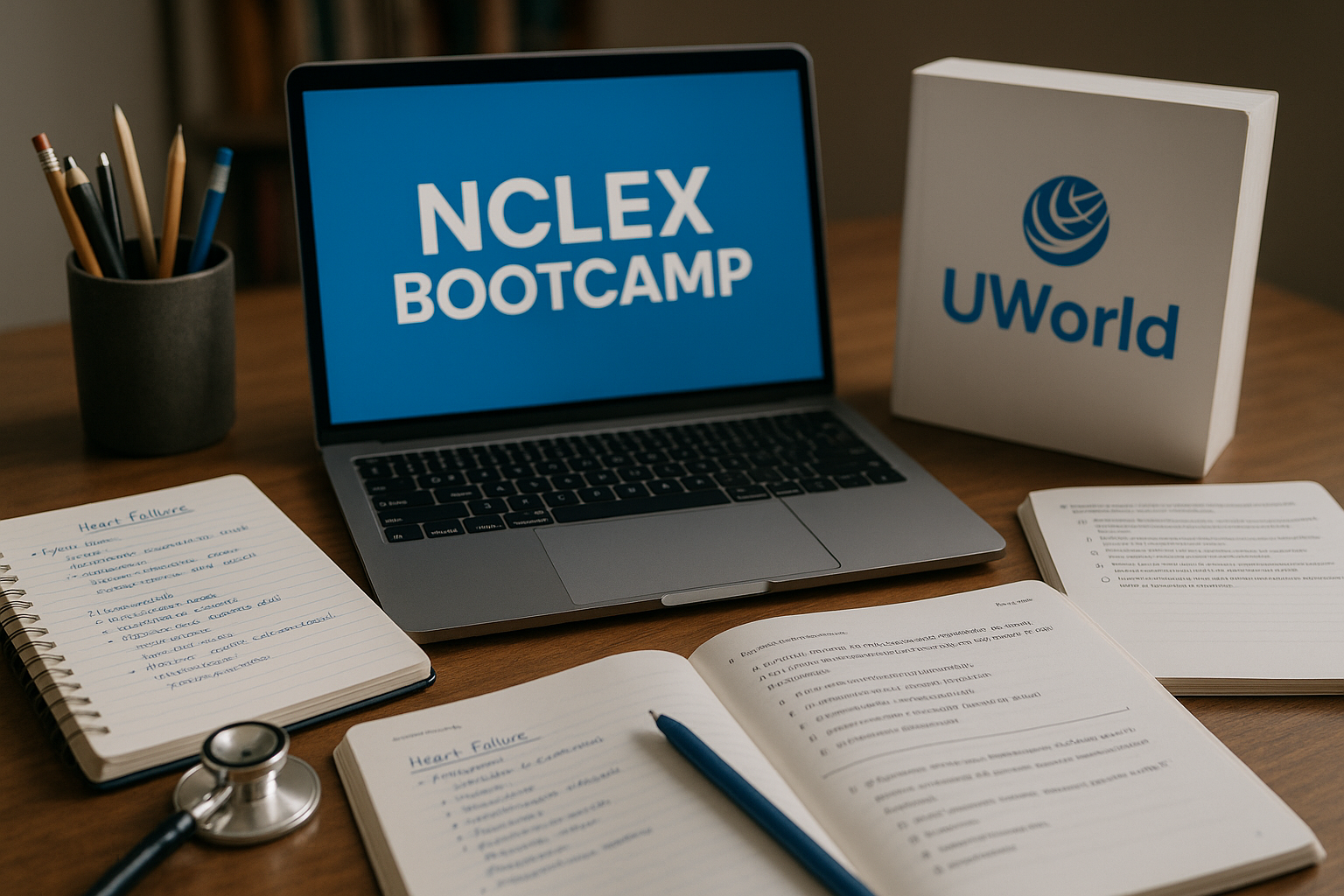
When deciding between nclex bootcamp vs uworld, nursing students must determine which study environment best develops clinical judgment, reinforces difficult pharmacology and physiology concepts, and aligns with their study timeline. Both platforms represent modern, high-yield approaches to licensing prep, yet they emphasize different facets of test readiness and daily workflow. Rather than guessing which resource fits your needs based on unsubstantiated online buzz, this guide outlines the verified platform structures, decision criteria, and study methodologies you need to make an informed choice.
Affiliate disclosure: This article may contain affiliate links. If you buy through them, we may earn a commission at no extra cost to you. Details were checked on November 25, 2026 and can change.
Official website · Latest pricing & offers
Quick Answer: Choosing Between NCLEX Bootcamp vs UWorld
For most nursing graduates preparing for the Next Generation NCLEX (NGN), the choice between these two platforms hinges on learning style, structural preference, and budget transparency:
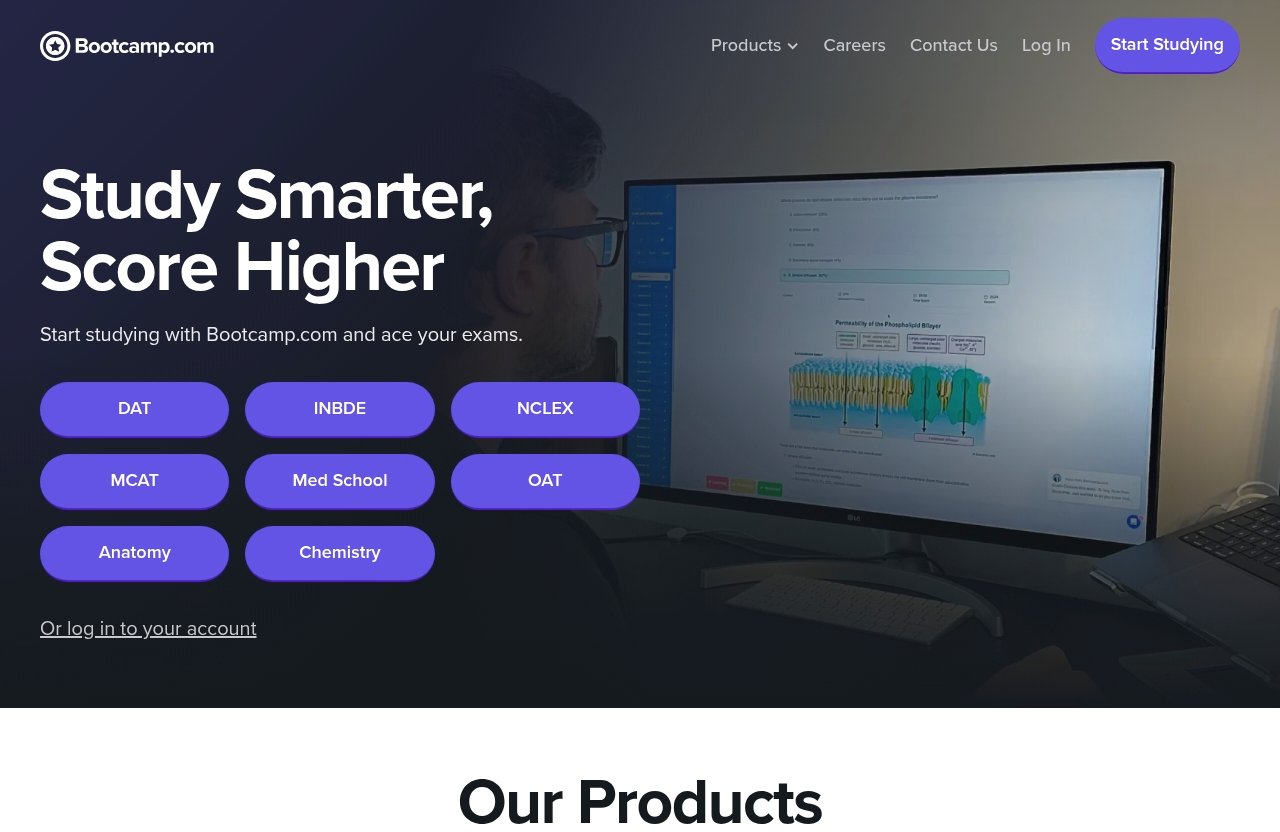
- Bootcamp: Tailored for students seeking an intuitive, guided review experience built around targeted practice and structured pacing. With its overarching principle to “Study Smarter, Score Higher,” Bootcamp highlights focused modules and provides options to start studying for free across select categories on its site.
- UWorld: Long regarded across health sciences test prep for its challenging standalone item banks and dense, textbook-style rationales. It suits candidates who want an established question bank and prefer self-directed, rigorous question drilling.
- Key Takeaway: Before committing, test the platform interfaces directly. Bootcamp allows users to create accounts and start studying with free introductory material, while UWorld requires verifying current tier packages directly on its portal.
NCLEX Bootcamp vs UWorld: Core Differences and Platform Overview
Evaluating an NCLEX preparation tool involves looking at how the software presents material, challenges clinical prioritization, and explains patient outcomes. The nclex bootcamp vs uworld decision often reflects two distinct philosophies of test prep architecture.
What Bootcamp Offers for Nursing Candidates
Bootcamp operates across several rigorous professional tracks, including Dentistry (DAT, INBDE, DLOSCE), Medicine (MCAT, Med School), Optometry (OAT), and Natural Sciences (Anatomy, Chemistry), alongside its dedicated Nursing division: NCLEX Bootcamp. Its core brand ethos, “Study Smarter, Score Higher,” emphasizes streamlined learning over brute-force memorization.
The platform is designed to break down intimidating board concepts into digestible practice blocks. Rather than presenting endless walls of uncontextualized text, Bootcamp focuses on step-by-step clinical workflows that mirror actual board standards. Students seeking a clear daily plan often reference an NCLEX Bootcamp study plan to organize their preparation systematically across calendar weeks.
Understanding UWorld’s Established Role
UWorld has built a widespread reputation across health professions by offering extensive question banks featuring thorough rationales. Nursing students often consider UWorld because it has been a fixture of board discussions for years. Its interface generally mirrors standard computerized testing layouts, training candidates to navigate split-screen case records, lab sheets, and patient charts under timed exam conditions.
However, an established brand name is not a universal guarantee that a platform aligns with your individual cognitive approach. Some students find dense rationale banks overwhelming when trying to pinpoint high-yield testable rules, making it critical to evaluate both formats objectively.
Evaluating Question Formats and Next Generation NCLEX (NGN) Preparation
The modern NCLEX requires candidates to demonstrate clinical judgment rather than simple knowledge recall. It is not enough to identify signs and symptoms; students must prioritize evolving patient needs across complex clinical shifts. When reviewing nclex bootcamp vs uworld, how each platform structures its NGN case studies is paramount.
Clinical Judgment Measurement Model and Case Studies
The National Council of State Boards of Nursing (NCSBN) evaluates test takers against the Clinical Judgment Measurement Model (NCJMM). This model tests six cognitive operations:
- Recognizing Cues: Identifying relevant subjective and objective patient findings from history, vitals, and physical assessments.
- Analyzing Cues: Interpreting what those findings mean in the context of the patient’s underlying pathology.
- Prioritizing Hypotheses: Ranking potential nursing diagnoses or emergency concerns based on urgency and stability.
- Generating Solutions: Formulating an evidence-based plan of care and identifying anticipated prescriptions.
- Taking Action: Executing nursing interventions while recognizing contraindications and safety hazards.
- Evaluating Outcomes: Re-assessing the client following interventions to detect signs of clinical improvement or deterioration.
A dependable prep resource must feature unfolding case studies that test all six layers across consecutive screens. While comparing resources, examine whether an NGN case study trains you to sift through nursing progress notes and provider orders, or merely asks isolated multiple-choice questions dressed up in clinical phrasing.
Standalone Questions vs Unfolding Scenarios
Beyond six-question unfolding scenarios, the NCLEX integrates standalone clinical judgment items, such as bow-tie questions and trend items. Bow-tie questions require candidates to identify two actions to take, one central condition, and two parameters to monitor simultaneously. When assessing if Bootcamp is good for NCLEX, candidates should explore whether the available item types accurately replicate these multifaceted item layouts.
Rationale Depth and Answer Explanation Quality
Answering thousands of practice questions without thorough review produces little clinical growth. A question bank is only as effective as its explanation methodology. The debate between platforms frequently centers on how rationales are constructed and digested.
Why Explanations Matter More Than Question Counts
Many candidates fall into the trap of believing that completing 3,000 questions guarantees passing. In practice, completing 1,000 questions with comprehensive rationale analysis usually yields superior diagnostic retention. A superior rationale should clearly state:
- The underlying physiological reason why the correct answer addresses the patient’s critical risk.
- The exact clinical rationale for why each incorrect distractor is either unsafe, ineffective, or secondary in priority.
- The overarching “test-taking rule” or clinical principle that can be applied to completely unrelated scenarios on test day.
Visuals, Diagrams, and Learning Flow
Text-heavy rationales can lead to mental fatigue during long study sessions. Effective modern resources integrate visual diagrams, algorithm flowcharts, and comparison tables directly into answer reviews. For instance, in complex categories like pediatric developmental milestones or critical care hemodynamics, visual summaries dramatically accelerate conceptual retention. When reviewing either platform, take note of whether explanations feel didactic and practical or dense and academic.
Pricing, Free Access, and Value Verification
Cost transparency is essential for nursing students balancing academic fees and licensing expenses. When analyzing the cost profile of prep platforms, candidates must rely on verified information directly from official channels.
| Platform Factor | Bootcamp Details | UWorld Details |
|---|---|---|
| Official Focus | “Study Smarter, Score Higher” across pre-health & nursing boards | Established specialized exam preparation qbanks |
| Free Starting Option | Offers “Start Studying for Free” links on official site | Verify availability of trial modules on official site |
| Public Pricing Page Status | Check bootcamp.com (official /pricing path returned 404) | Check uworld.com for current plan tiers and terms |
| Support Contact | team@bootcamp.com | Official portal support channels |
Bootcamp Pricing Status and Free Options
It is important to note that the official pricing page at bootcamp.com/pricing returned a 404 page when verified. Therefore, specific fixed dollar amounts, monthly tiers, and duration packages cannot be stated here as verified constants. Prospective students should check bootcamp.com directly or reach out to their support team at team@bootcamp.com to verify active membership packages.
Crucially, Bootcamp maintains “Start Studying” and “Start Studying for Free” links on its home page, allowing students to access preview materials and evaluate the learning interface before committing financial resources.
How to Check UWorld Pricing and Terms
Because UWorld updates its package structures, assessment combinations, and subscription lengths periodically, students should verify their current offerings directly through UWorld’s official portal. Common factors to verify include:
- Whether self-assessment exams with readiness predictors are included or sold as add-ons.
- The duration of the active question bank (e.g., 30 days, 60 days, 90 days, or longer).
- Whether single-use question resets are permitted within the chosen subscription tier.
How to Structure Your NCLEX Prep Step-by-Step
Regardless of whether you choose Bootcamp or an established competitor, adopting an organized methodology is essential for clinical readiness. Candidates can consult an operational guide such as how to use NCLEX Bootcamp to maximize daily retention.
Phase 1: Baseline Assessment and Weak-Area Identification
Begin your prep by taking a structured diagnostic block covering major client needs categories: Safe and Effective Care Environment, Health Promotion and Maintenance, Psychosocial Integrity, and Physiological Integrity. Document your baseline percentage and review every question to categorize your errors into:
- Knowledge Deficits: Inability to recall medication mechanisms, therapeutic levels, or disease pathophysiology.
- Prioritization Flaws: Difficulty distinguishing between an urgent physiological risk and a chronic, expected finding.
- Misreading Item Prompts: Overlooking critical qualifying terms like “requires immediate follow-up” or “contraindicated.”
Phase 2: Targeted Content Remediation and System Blocks
Avoid taking purely random question blocks during the initial weeks of study. Instead, group your practice by body system or clinical category (e.g., Cardiac, Endocrine, Pharmacology, Management of Care). Dedicate study sessions to working through a block of 20 to 40 questions, followed immediately by detailed rationale documentation. Create brief clinical flashcards or a remediation notebook capturing only the core rule tested in each missed question.
Phase 3: Mixed Timed Simulation and Endurance Building
The NCLEX is an adaptive, variable-length examination. Candidates must build the psychological and cognitive stamina required to answer up to 150 complex items without mental fatigue. In the final two to three weeks of preparation:
- Transition exclusively to mixed-subject, timed practice blocks.
- Simulate actual testing conditions by testing in a quiet environment without notes, smartphones, or snacks.
- Incorporate dedicated case studies to sharpen rapid chart navigation and cue clustering skills.
Pros and Cons: Evaluating Each Prep Philosophy
Examining the practical strengths and trade-offs of each platform helps clarify which tool aligns with your study habits and testing timeline.
Bootcamp Considerations
Strengths:
- Clear emphasis on modern study workflows and actionable clinical takeaways, aligning with the “Study Smarter, Score Higher” ethos.
- Free access options available on the official platform, enabling candidates to evaluate question styles before purchasing.
- A growing suite of professional health test prep resources spanning dental, medical, and nursing fields.
Considerations:
- Official pricing details are not listed on a public standalone pricing URL and must be confirmed directly through account sign-up.
- As a specialized nursing prep offering, candidates should review available question categories to ensure complete alignment with their specific curriculum needs.
UWorld Considerations
Strengths:
- Longstanding presence in health sciences exam preparation with extensive student brand awareness.
- Exhaustive explanations that function almost like modular textbook excerpts for complex pathology review.
- Realistic interface that acclimates students to standard computerized testing screens.
Considerations:
- Extensive, text-heavy explanations can contribute to cognitive fatigue for learners who benefit from concise, high-yield takeaways.
- Tiered pricing structures and self-assessment add-ons require careful review to ensure value matches your budget.
Who Should Choose Bootcamp vs Who Should Choose UWorld
Selecting the right platform is not about finding a universally “perfect” tool; it is about choosing the resource that fits your individual workflow, test anxiety level, and study style.
When Bootcamp Fits Your Strategy
Bootcamp is particularly well-suited for candidates who:
- Feel overwhelmed by sprawling, encyclopedic rationales and prefer a structured, guided pathway to test readiness.
- Want to test-drive practice questions and system workflows without upfront financial commitments via free study options.
- Value clean visual formatting, structured schedules, and clear prioritization rules that translate directly to clinical scenarios.
When UWorld Fits Your Strategy
UWorld may represent a better fit for candidates who:
- Prefer deep-dive theoretical explanations that comprehensively unpack every aspect of physiology and disease management.
- Seek an established testing environment with widespread recognition among peer study groups.
- Thrive in self-directed study schedules where they independently manage and execute vast question sets without supplementary guidance.
Alternatives and Complementary NCLEX Resources
Many candidates supplement their primary question bank with targeted category tools to reinforce specific exam sections:
- Official NCSBN Materials: The governing body that creates the NCLEX provides official test plans and sample NGN question frameworks. Reviewing these outlines ensures you understand how items are scored and categorized.
- Pharmacology Review Guides: For test takers who struggle with drug classifications, adverse effects, and safe dose administration, dedicated pharmacology review sheets or audio resources provide critical reinforcement.
- Clinical Judgment Frameworks: Independent case studies and free clinical judgment outlines help candidates practice cue extraction outside of standardized software interfaces.
Official website · Latest pricing & offers
FAQ
Can I try Bootcamp before committing to a paid subscription?
Yes. Bootcamp features “Start Studying” and “Start Studying for Free” entry points on its official homepage, allowing students to explore course materials and get familiar with the platform interface prior to purchasing.
Where can I find verified pricing for Bootcamp?
The dedicated URL at bootcamp.com/pricing returned an official 404 page. To view current pricing and active subscription tiers, visit the main site at bootcamp.com, log in or create an account, or contact their support team at team@bootcamp.com.
How does the NGN format impact which platform I should pick?
The Next Generation NCLEX emphasizes clinical judgment through unfolding case studies, trend items, and bow-tie questions. When comparing platforms, select the resource whose case studies best train you to evaluate evolving patient records, prioritize care hypotheses, and recognize critical clinical cues.
Is a higher question count always better for NCLEX prep?
No. While having sufficient question variety is helpful, deep retention depends on how thoroughly you analyze rationales. Reviewing 1,000 to 1,500 questions with comprehensive rationale analysis often produces higher pass readiness than quickly skimming through thousands of questions without remediation.
How long should I study for the NCLEX?
Most nursing graduates prepare over a period of 4 to 8 weeks, dedicating between 2 and 4 hours daily to focused question blocks, content remediation, and rationale review. Setting a consistent schedule and completing regular practice assessments helps prevent burnout and builds testing stamina.
Related Reading
- How to Use NCLEX Bootcamp in 2026: A Beginner-Friendly Study Workflow
- NCLEX Bootcamp Study Plan: A Realistic 4-Week Schedule for 2026
- Is Bootcamp Good for NCLEX? Honest Student Review 2026