
Youlearn for Exam Prep: Best Use Cases
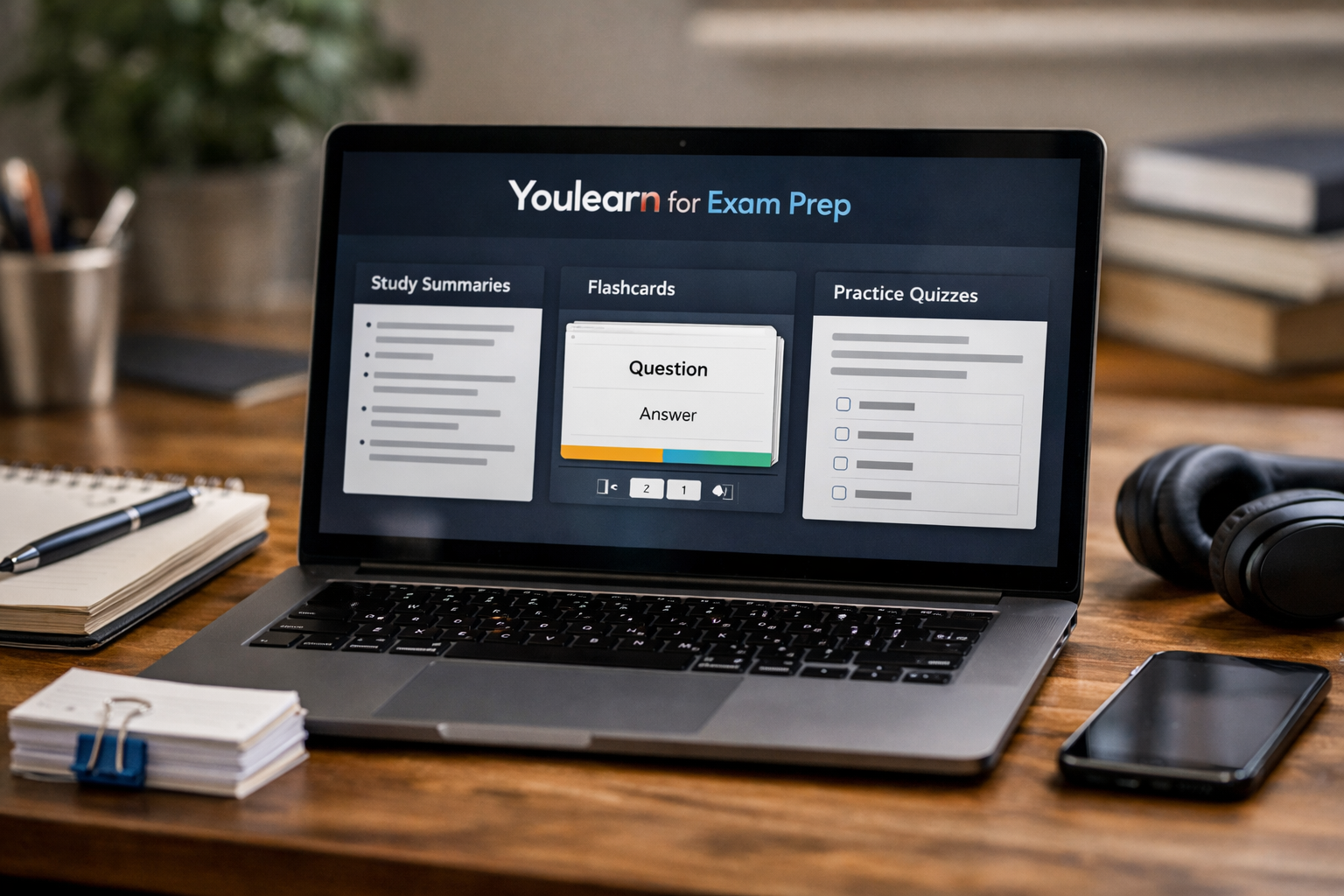
Preparing for a quiz, midterm, final, or certification exam usually means sorting through a crowded mix of slides, PDFs, lecture recordings, handwritten notes, and textbook chapters. YouLearn for exam prep is designed to make that material easier to review by turning it into summaries, flashcards, quizzes, practice tests, and tutor-style explanations.
This review focuses on practical study workflows rather than generic AI writing. For students who already have course materials but need a clearer revision system, YouLearn can help convert passive reading into more active practice. It is not a substitute for attending class, checking course requirements, or doing assigned problems, but it may reduce the time spent organizing materials before studying.
Official website · Latest pricing & offers
What YouLearn Is and Why It Fits Exam Prep
Quick Definition of YouLearn for Students
YouLearn is an AI study tutor built for students. It can understand PDFs, YouTube videos, recorded lectures, lecture slides, websites, files, photos, text, and recordings, then turn those sources into study resources.
For YouLearn for exam prep, the central advantage is that the tool works from the materials a student provides. Instead of asking a broad AI tool to explain an entire subject from scratch, you can upload the lecture deck your instructor used, the assigned reading, or your own notes and build revision materials around those sources.
The platform can create notes, summaries, flashcards, quizzes, podcasts, transcripts, step-by-step explanations, and personalized exams. It also includes AI tutor chat grounded in the materials you upload, which can be useful when a concept in your class notes still feels unclear.
Why Exam Prep Needs More Than Simple Note-Taking
Taking notes is important, but notes alone do not always show whether you can recall information under test conditions. Many students reread highlighted pages repeatedly, only to discover during an exam that they recognize the topic without being able to explain or apply it.
A stronger revision workflow includes several stages: condensing the material, identifying key ideas, testing recall, reviewing errors, and revisiting weak topics. YouLearn for exam prep supports that process by helping turn information-heavy source material into questions and review assets.
For example, a biology student may have four weeks of lecture slides and several PDF readings before a midterm. Instead of manually extracting every definition and process, the student could create a combined study set, review a summary, then use quizzes and flashcards to identify topics that need more time.
Which Students Benefit Most
Students with a large volume of digital course content are likely to see the clearest practical fit. This includes high school students working from classroom slides, college students managing recorded lectures and research-heavy readings, and adult learners preparing for certification-style assessments.
An AI study tool is especially useful when your issue is not a lack of materials, but a lack of structure. If you have files scattered across a learning portal, cloud folder, notebook, and video playlist, YouLearn for exam prep can provide a more consolidated way to review them.
It may be less necessary for students who only need to memorize a short list of terms or who already have a highly organized study system that includes reliable practice questions. In those cases, the value depends on whether the time saved creating study materials outweighs the effort of setting up a new tool.
Best Use Cases for YouLearn in Exam Preparation
Turning Lectures and PDFs Into Study Summaries
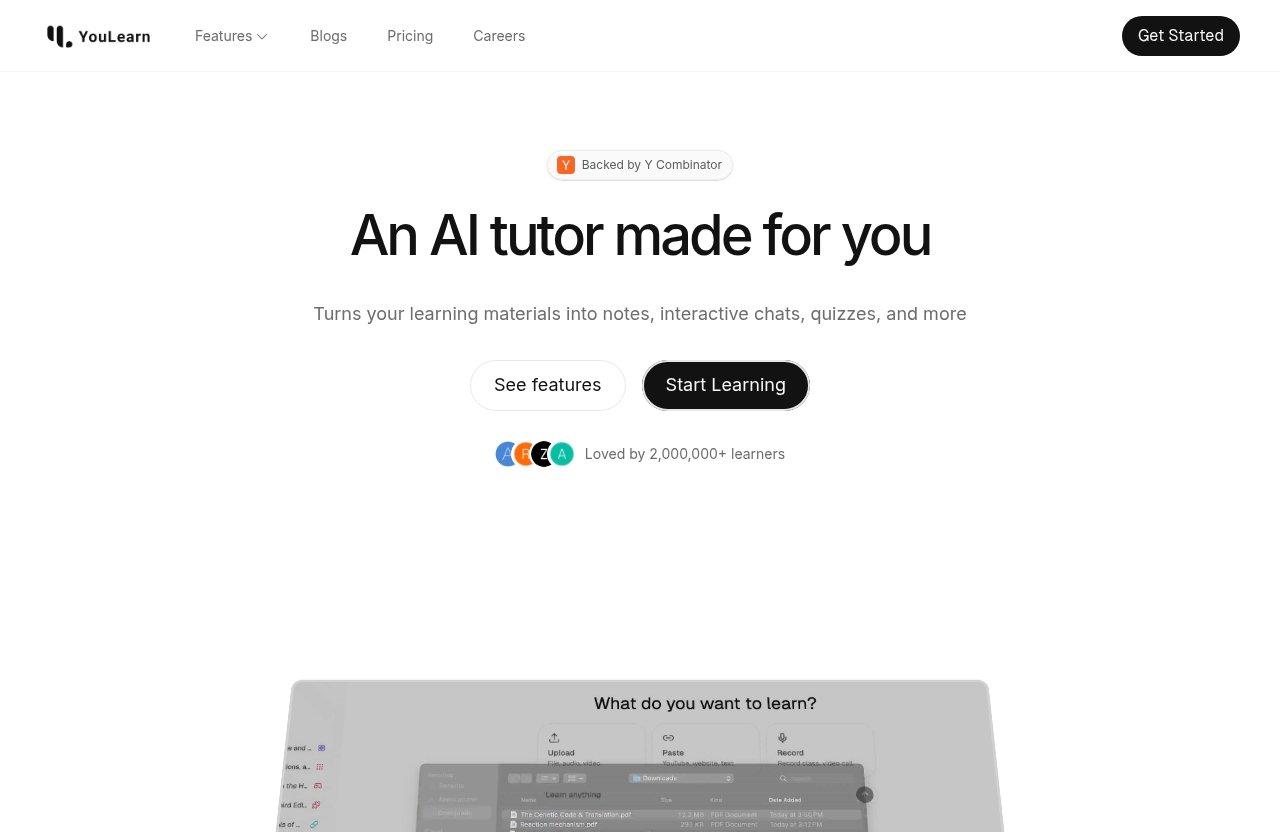
One of the most practical uses of YouLearn is converting long course materials into shorter review resources. Students can use PDFs, lecture slides, lecture recordings, websites, text, and other supported materials as the basis for notes and summaries.
This helps most when preparing for cumulative exams. A history student, for instance, could upload readings and slides from multiple units, then use a summary to map major events, themes, and arguments before moving into detailed memorization. A nursing or science student could use the same approach to reduce dense lecture content into key processes and vocabulary.
For YouLearn exam prep, summaries should be treated as a starting point rather than the final study session. Read the output beside your original material, check that important instructor emphasis has not been missed, and add your own annotations for examples likely to appear on the exam.
Generating Quizzes and Practice Tests From Your Materials
Practice questions are valuable because they force retrieval rather than recognition. YouLearn can generate quizzes, personalized exams, practice tests, and answer breakdowns based on your study materials.
This is useful when your class offers few official practice questions. A college economics student could upload lecture notes covering supply, demand, elasticity, and market structures, then use generated questions to test conceptual understanding before a final. A certification learner could organize topic-specific materials and use practice tests to locate weaker categories.
YouLearn for exam prep is most effective here when you use the questions in cycles. Take a quiz without looking at your notes, review the answer breakdowns, return to the original lesson for missed concepts, and generate another set later. That process is more productive than simply reading correct answers and assuming the topic is mastered.
Generated questions still require judgment. Check whether the wording, difficulty, calculations, or terminology match your teacher’s expectations. For math, engineering, and science courses in particular, work through the full reasoning yourself instead of relying on a correct-looking answer.
Building Flashcards for Active Recall
Flashcards are a simple but effective format for vocabulary, definitions, formulas, dates, classifications, and short-answer prompts. YouLearn can turn source materials into flashcards, helping students get from lecture content to active recall practice more quickly.
For a language exam, flashcards for exams may cover vocabulary, grammar patterns, and common sentence structures. For anatomy, they may cover structures and functions. For a law, business, or psychology course, they can focus on central terms and the distinctions between related concepts.
A useful method with YouLearn for revision is to divide cards into three groups: confident, uncertain, and missed. Spend less time on terms you answer immediately, and repeatedly revisit cards that take too long to recall. The goal is not to flip through the largest possible number of cards; it is to make weak information easier to retrieve without prompts.
Using the AI Tutor to Explain Weak Concepts
An AI tutor is most useful after you know what you do not understand. Rather than asking a vague question such as “teach me chemistry,” a student can upload relevant class materials and ask for an explanation of a specific concept that appeared in a quiz or lecture.
For example, a physics student who misses questions about vectors could ask for a step-by-step explanation based on their uploaded lecture slides. A statistics student could ask the tutor to clarify the difference between correlation and causation using the language and examples present in their course material.
This AI tutor for exam prep is grounded in the user’s materials, which makes it more relevant than generic answers detached from the class. Still, students should compare explanations with the textbook, instructor guidance, and assignment rubrics when accuracy is important.
Combining Multiple Sources Into One Study Set
Real exam preparation rarely comes from a single document. You may need to review slides, readings, lecture recordings, problem sets, and your own notes at the same time. YouLearn supports combining multiple sources into one study set, which can make cumulative review less fragmented.
A realistic final-exam workflow might combine weekly lecture slides, a recorded review session, a professor’s study guide, and selected textbook notes. From there, students can create one set of summaries, flashcards, and quizzes focused on the exam scope.
This is a major reason YouLearn for exam prep can fit busy students better than simply using a chatbot for isolated questions. The study set can reflect the course material as a whole, not just one copied paragraph at a time. Before relying on the combined output, however, make sure each uploaded source is relevant and current.
How to Use YouLearn for Test Review Step by Step
Upload Your Class Materials
Begin by collecting the materials that actually define your exam content. This might include PDFs, lecture slides, photos of notes, recordings, website pages, YouTube lectures, text documents, or files from your course.
Avoid uploading everything without a plan. Start with one unit for a quiz, or with the instructor’s stated scope for a midterm. Clear source selection helps keep your YouLearn for exam prep study set focused and reduces the chance of reviewing topics that are not being tested.
If your course has multiple modules, name and organize your materials by unit before starting. That makes it easier to return to a weak chapter later instead of rebuilding the entire set.
Create Notes and Key Takeaways
Once your materials are available, generate notes or summaries that identify the main ideas. Use these outputs to build a high-level map of the unit: definitions, formulas, causes and effects, processes, examples, and recurring themes.
Then compare the summary with your original documents. Look for details your instructor repeated, items listed in a study guide, worked examples, and vocabulary that appeared in assignments. These are often more important than a broad overview alone.
For YouLearn quizzes and summaries to support real studying, add your own brief notes about what feels confusing. That creates a targeted list for tutor questions and later practice tests.
Generate Quizzes and Practice Questions
Next, generate quiz questions or a personalized practice test from the selected study set. Take the first attempt under realistic conditions: no notes, limited distractions, and enough time to think through each response.
Do not aim for perfection on the first round. The purpose is diagnostic. A lower score can be useful if it reveals that you know definitions but cannot apply them, remember steps but mix up the order, or understand one lecture but fail to connect it with another.
For YouLearn practice tests, keep a record of the kinds of errors you make. Label each missed question as a knowledge gap, a careless mistake, a misunderstood question, or a timing issue. Different mistakes require different revision tactics.
Review Answers and Weak Spots
Use answer breakdowns to understand why an answer was wrong, but return to the original lecture, slide, or reading whenever possible. This protects you from memorizing an explanation without understanding the source concept.
If a topic remains difficult, use the AI tutor to request a step-by-step explanation or a simpler example based on your materials. Then create additional questions or flashcards specifically for that area. Progress tracking can help students notice whether weak areas are becoming more consistent over repeated review cycles.
A practical YouLearn for exam prep routine might involve a short daily quiz, a review of missed questions, and a focused session on one weak topic. This is usually more manageable than waiting until the night before an exam and trying to reread every document.
Repeat With New Topics Before the Exam
Continue the same process for each topic: organize materials, review a summary, test yourself, investigate mistakes, and retest later. As the exam approaches, combine units into a broader practice set to check whether you can switch between topics.
For finals, it can help to alternate between older and newer content. That prevents a common problem where students remember the most recent chapters but forget material from the beginning of the term.
The value of YouLearn for exam prep comes from this repeatable workflow. The tool can generate study assets quickly, but the learning benefit comes from your deliberate effort to answer, correct, and revisit questions over time.
YouLearn vs Traditional Study Methods
Reading Notes Passively vs Active Recall
Traditional rereading can feel productive because the material looks familiar. But familiarity is not the same as being able to retrieve information independently during an exam.
With YouLearn for exam prep, students can move from notes and summaries into flashcards and quiz questions. That shift encourages active recall: attempting to produce an answer before seeing it. Passive reading still has a role when first learning difficult material, but it is usually stronger when followed by self-testing.
| Study Approach | Main Strength | Common Limitation |
|---|---|---|
| Rereading notes | Fast review of familiar information | Can create false confidence |
| Highlighting | Identifies important passages | Does not test recall |
| Manual flashcards | Personalized and flexible | Takes time to create |
| AI-generated study assets | Faster conversion of materials into practice | Requires accuracy checks and student engagement |
Manual Quiz Creation vs AI-Generated Quizzes
Writing your own questions can be an excellent way to learn, especially when you need to think like an instructor. The drawback is that creating a large set of balanced questions can take substantial time during a busy revision week.
YouLearn can generate quizzes from your uploaded materials, allowing you to spend more of your study session answering and reviewing. A balanced approach is often best: use generated questions for broad coverage, then create a few manual questions around the exact topics your instructor emphasizes.
Do not assume every generated question mirrors your exam format. Check whether your course uses multiple choice, essays, calculations, short answers, case studies, or definitions, and continue practicing in the formats that matter.
Studying One Source at a Time vs Combining Sources
Studying directly from one PDF or one lecture video at a time is sometimes necessary, especially when first learning a topic. However, it can make it harder to see how ideas connect across an entire unit.
Combining sources into a single study set is where an AI study app for students can be particularly useful. A student can review class slides alongside a recording and a study guide rather than treating each resource as a separate task.
This does not mean all materials should be merged indiscriminately. Use only the sources that match the current assessment, and prioritize official class content over unrelated internet explanations.
Last-Minute Revision vs Organized Prep
Last-minute cramming can help with very short-term memorization, but it often leaves little time to identify weak spots or revisit missed questions. An organized schedule creates more chances to retrieve information after a delay.
YouLearn for exam prep can support organized revision by making it easier to generate fresh practice across multiple sessions. A student might summarize a unit on Monday, use flashcards on Tuesday, take a quiz on Wednesday, and review missed concepts on Thursday.
The tool does not remove the need for a timetable. Students still need to decide what to study, protect focused time, sleep adequately, and complete course-specific practice such as problem sets or essays.
Official website · Latest pricing & offers
What to Look for Before Using YouLearn for Exams
Best Subjects and Content Types
YouLearn is designed for a wide range of subjects, including math, science, engineering, and more. Its supported material types make it especially relevant for courses with lots of lectures, slides, PDFs, recordings, text, and mixed digital resources.
Language-heavy courses can benefit from summaries, terminology flashcards, and thematic quizzes. Technical courses can use step-by-step explanations and practice questions, although students should independently verify calculations, symbols, assumptions, and method choices.
For YouLearn for exam prep, the best input is clear, course-specific material. A well-labeled lecture slide deck or a readable PDF is likely to be more useful than blurry photos, incomplete notes, or documents unrelated to the assessment.
When It Works Best
The tool works best when you give it a defined goal. “Help me prepare for Chapter 6 short-answer questions” is more actionable than “make me smarter for finals.” Start with a manageable study set, then expand only after you have reviewed the output.
It is also more useful when paired with active study habits. Generate a summary before revising, use flashcards to recall facts, take practice tests without notes, and ask the tutor about errors you cannot explain.
Students who want to review the official YouLearn information and current access options should still check the product pages directly before making a purchase decision. Features and plan availability can change, and the right choice depends on how frequently you will use the platform during the term.
Potential Limits and Study Habits to Avoid
AI-generated materials should be checked, especially for exact facts, formulas, citations, dates, technical details, and exam-specific requirements. The most reliable source for what will be assessed remains your instructor, official syllabus, and assigned course content.
Avoid treating summaries as a replacement for reading difficult source material. Avoid copying answers without understanding them, too. If you cannot explain a concept in your own words or solve a similar question without support, it should remain on your revision list.
A useful YouLearn AI review should be balanced: the platform can organize, explain, and generate practice from your materials, but it cannot sit the exam for you or guarantee a particular grade. Good outcomes still depend on study time, attention, feedback, and consistent practice.
Pricing and Plan Considerations
What the Official Pricing Page Confirms
YouLearn has an official pricing page, but the official pricing details visible in the provided source were not fully populated. For that reason, it would not be responsible to list prices, plan names, usage limits, or feature differences here.
Before purchasing, verify current plans and costs directly on the official pricing page. This matters because student budgets vary, and pricing information may change after an article is published.
How to Evaluate Value for Students
The practical value of YouLearn for exam prep depends on how much time it saves in your actual workflow. A student with one short quiz and a simple chapter outline may not need extensive AI support. A student managing several lecture-heavy classes, however, may find value in turning source materials into summaries, flashcards, quizzes, and practice tests more efficiently.
Consider how often you will use the platform. It may be more worthwhile during midterm and final periods, in courses with frequent readings or recordings, or when you regularly need explanations from multiple materials.
Also consider whether you will use the web version, mobile access, or both. YouLearn is available on web and mobile and supports 40+ languages, which may matter for students who study across devices or prefer working in a language other than English.
Who Should Start With the Free Option vs Paid Plan
The provided official pricing information does not show enough visible detail to confirm specific free-option or paid-plan terms. Students should not assume which features, limits, or access levels are included without checking the current official pricing page.
As a general buying decision, begin by assessing your study volume and required outputs. If the available option lets you test the workflow with one course unit, that can help you judge whether summaries, quiz generation, flashcards, and tutor explanations match your needs before committing to any paid access.
For students considering YouLearn for revision throughout a semester, the best approach is to compare the current official terms with the amount of use you realistically expect. Check the product pages before buying rather than relying on old screenshots, third-party plan descriptions, or assumptions.
Who YouLearn Is Best For
High School and College Students
High school students can use YouLearn to turn class slides, reading packets, and teacher-provided documents into more approachable review sets. It can be particularly useful before unit tests when there is a lot of terminology or when several lessons need to be connected.
College students may benefit even more in lecture-heavy courses. Recorded classes, dense PDFs, research readings, and presentation slides can become difficult to organize near finals, and YouLearn for exam prep provides a way to bring those sources into one focused study workflow.
Students Preparing for Midterms and Finals
Students facing cumulative assessments are a strong fit because the platform supports combining multiple sources into one study set. This can make it easier to create broad summaries and mixed-topic practice tests rather than reviewing each week in isolation.
For a midterm, students can use the tool to build a unit-by-unit review schedule. For a final, they can use quizzes and progress tracking to identify older chapters that need attention before the exam date.
Learners in Math, Science, Engineering, and Language-Heavy Courses
Math, science, and engineering students can use explanations, source-based notes, and practice questions to review concepts and methods. They should still solve problems independently and check every important step against course-approved methods.
Language-heavy learners can benefit from summaries, flashcards, transcripts, vocabulary review, and questions built from readings or lectures. The platform’s support for 40+ languages may also be helpful for multilingual learners.
Best for: students with many course files who want a more structured way to create summaries, flashcards, quizzes, and targeted review sessions.
Not best for: students looking for guaranteed results, students unwilling to verify generated material, or learners who need only a few basic flashcards and already have reliable practice resources.
Final Verdict: Is YouLearn Worth It for Exam Prep?
Best Reasons to Use It
The strongest reason to use YouLearn is not simply that it uses AI. Its value is in helping students turn their own class materials into usable revision assets: notes, summaries, flashcards, quizzes, practice tests, transcripts, podcasts, and step-by-step explanations.
For YouLearn for exam prep, the most practical workflow is clear: upload the material that matters, create a concise overview, test yourself with questions, study mistakes, use the AI tutor for difficult concepts, and repeat. That approach can make revision more organized and active than rereading files one by one.
When It May Not Be Necessary
YouLearn may not be necessary if your instructor already provides excellent study guides, practice exams, flashcards, and detailed feedback. It may also offer limited value if you only have a very small amount of content to memorize or prefer creating every study resource manually.
Students should also avoid using it as a shortcut around learning. It is best viewed as an assistant for organizing and practicing material, not as a replacement for reading, problem-solving, writing, attending review sessions, or following instructor guidance.
Bottom-Line Recommendation
YouLearn is a sensible option for students who have substantial course materials and want help converting them into active recall practice. Its ability to work with lectures, PDFs, slides, recordings, websites, photos, and text makes it particularly relevant for midterms, finals, quizzes, and certification-style revision.
Overall, YouLearn for exam prep appears most worthwhile for learners who want summaries, flashcards, practice tests, progress tracking, and grounded tutor support from their own materials. Review the official product and pricing pages before purchasing, verify important outputs, and use the generated study assets as part of a consistent study plan.
Official website · Latest pricing & offers
FAQ
Is YouLearn AI Free or Paid?
YouLearn has an official pricing page, but the visible official pricing details provided for this review were incomplete. Check the official pricing page directly for current plans, costs, and any available access options before buying.
Which App Is Best for Exam Preparation?
The best app depends on your course format and study habits. YouLearn is a strong fit for students who want to turn their own files into summaries, flashcards, quizzes, practice tests, and AI tutor-supported explanations.
What Is the Best AI Tool for Studying for Exams?
An effective AI study tool should help you convert notes into active recall practice, explain difficult concepts, and identify weak areas. YouLearn matches that use case well because it can build study resources from materials you upload.
What Is the Easiest Way to Study for an Exam?
Use an active-recall routine: gather your materials, create a concise summary, test yourself with flashcards and quizzes, review mistakes, and repeat weak topics over several sessions. This is generally more useful than only rereading notes at the last minute.
Related Reading
- YouLearn discount code 2026
- Best AI Study Apps Like Youlearn
- Klap Tutorial: Turn Long Videos Into Shorts and Post Them in 2026
References
- YouLearn AI
- YouLearn: AI Study Tutor – Apps on Google Play
- YouLearn: AI Study Tutor – App Store – Apple
- YouLearn vs ChatGPT for Studying: Which Is Better for Exam Prep?