
Skool vs Circle: Which Community Platform Is Better for Creators in 2026?
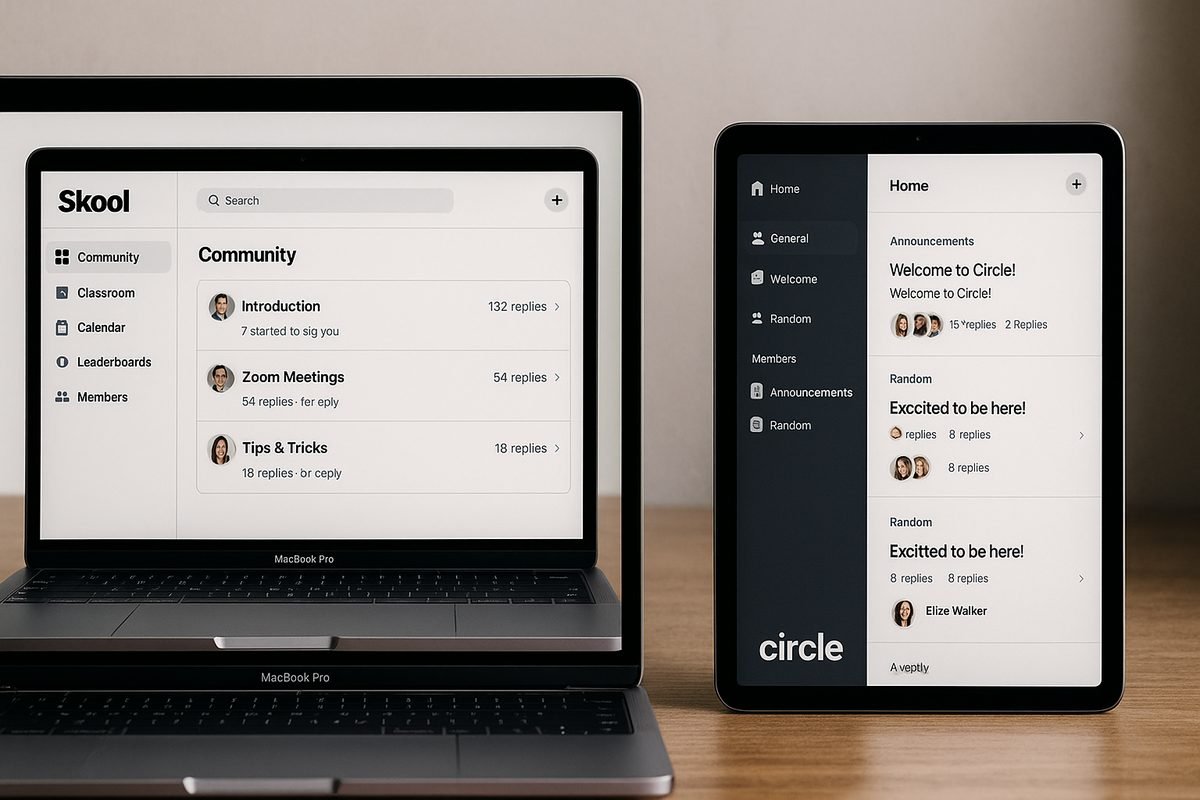
Choosing between skool vs circle is really a decision about how you want to run your creator business. Do you want the fastest path to a clean community, courses, calls, and paid memberships? Or do you want a more flexible platform that gives you more room to shape the community experience around your brand?
I have reviewed a lot of creator tools from the perspective of launch friction, member adoption, monetization, and long-term operations. My honest take: Skool and Circle can both make sense, but they serve different buyer profiles.
Affiliate disclosure: toptrustreview.com has an affiliate relationship with Skool. If you sign up through our Skool link, we may earn a commission at no extra cost to you. That does not change the recommendation framework below; I’ll clearly separate verified facts from interpretation.
Official website · Latest pricing & offers
Skool vs Circle: Quick Verdict
The fastest way to think about skool vs circle is this: Skool is generally the better fit for creators who want simplicity, speed, and an all-in-one community/course workflow. Circle is usually more attractive to brands and teams that want more control, deeper customization, and a more expansive community setup.
Neither answer is universally “best.” The right choice depends on your business model, your tolerance for setup complexity, and whether your members need a simple place to engage or a more customized branded environment.
Best for creators who want simplicity
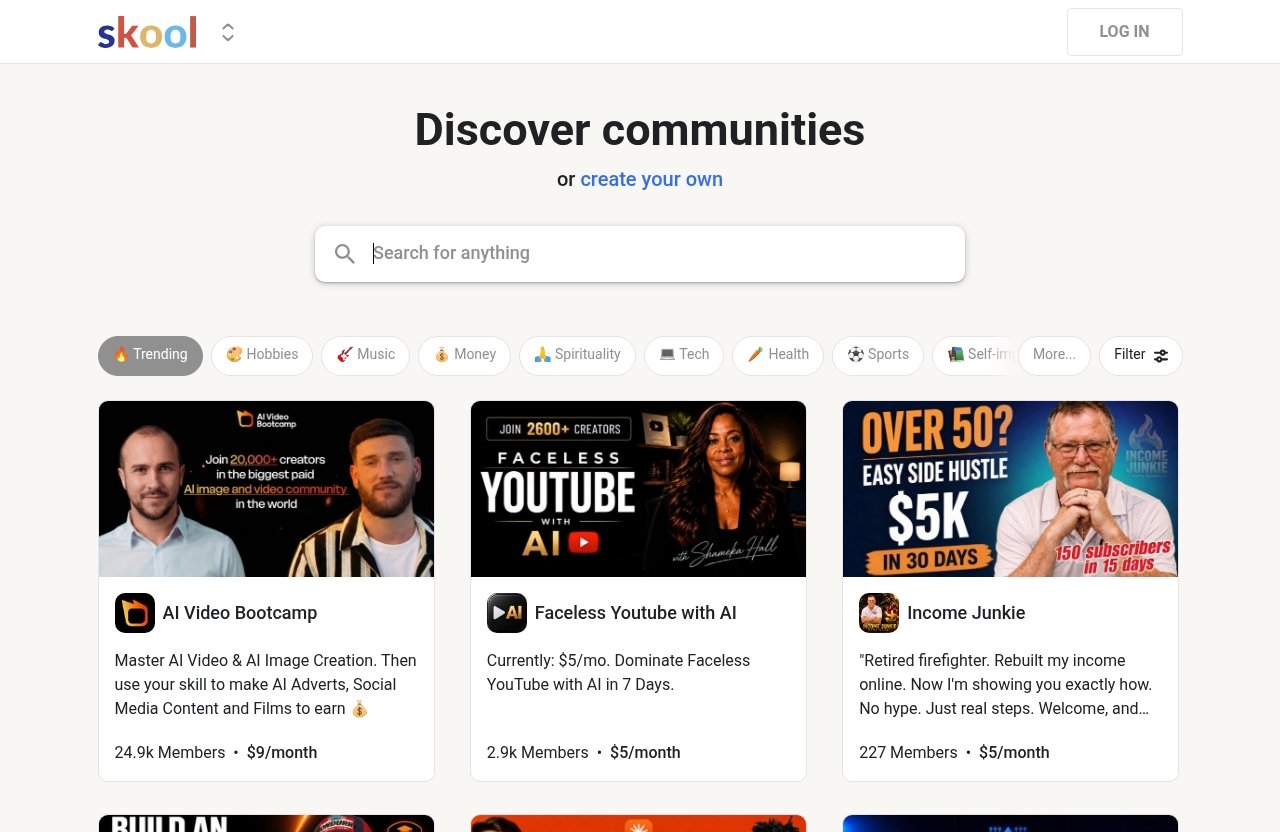
Skool is best for creators who want to get a community live quickly without building a complicated tech stack. Its positioning is straightforward: Skool is a place to discover communities or create your own.
That simplicity matters if your main offer is a paid membership, coaching group, course community, challenge, mastermind, or creator-led learning hub. In a practical skool vs circle decision, Skool often wins when the creator wants fewer settings, fewer moving parts, and less admin overhead.
The verified Skool pricing facts also make it easier to evaluate. Skool has a Hobby plan at $9/month and a Pro plan at $99/month, with both plans including unlimited members, unlimited courses, unlimited videos, unlimited live calls, custom URL, and affiliates.
Best for creators who want advanced customization
Circle is better suited to creators, brands, and teams that care more about shaping the community environment around a broader brand experience. Based on its market positioning, Circle is generally known as a deeper and more customizable community platform.
That does not automatically make Circle better. More flexibility can also mean more configuration, more decisions, and a longer path to launch. But if you need a more customized member experience, Circle deserves serious consideration.
In other words, the circle vs skool choice often comes down to whether you value control or convenience more.
Short answer by use case
| Use Case | Better Fit | Why |
|---|---|---|
| Solo creator launching a paid community fast | Skool | Simpler workflow and lower setup friction |
| Course creator who wants community + learning in one place | Skool | Verified unlimited courses, videos, members, and live calls on both plans |
| Brand that needs deeper customization | Circle | Stronger market reputation for flexibility and branding |
| Team with complex community operations | Circle | More suitable when structure and control matter most |
| Creator focused on clean monetization and referrals | Skool | Verified affiliates are included on both Skool plans |
| Organization needing a tailored community experience | Circle | Better fit when simplicity is not the top priority |
My practical verdict: for most solo creators, coaches, educators, and membership owners, Skool is the easier recommendation. For brand-led communities or teams planning a more customized platform experience, Circle may be the better strategic choice.
What Skool and Circle Are Trying to Be
Before comparing features, it helps to understand product philosophy. A tool can have a long feature list and still be the wrong fit if it pushes you into a way of working that does not match your business.
The skool vs circle comparison is not just about features. It is about whether you want an opinionated creator platform or a more customizable community environment.
Skool’s product philosophy
Skool’s official positioning is simple: it is a place to discover communities or create your own. That tells you a lot about the product’s center of gravity.
Skool is built around the idea that creators need a clean home for community, learning, and interaction. Based on the verified pricing page, both Skool plans include unlimited members, unlimited courses, unlimited videos, unlimited live calls, a custom URL, and affiliates.
That bundle suggests Skool is designed for creators who do not want to stitch together a course platform, video library, event tool, affiliate plugin, and community forum separately. In a skool review, the strongest practical argument is not that Skool has every advanced feature imaginable; it is that it keeps the core creator workflow focused.
This matters because many community businesses fail from friction. The founder spends too much time configuring software and not enough time selling, onboarding, posting, hosting calls, and helping members get results.
Circle’s product philosophy
Circle is generally known in the market as a more flexible and customizable community platform. That makes it appealing for creators and companies that want their community to feel more branded, structured, and tailored.
A careful circle review should not pretend that every buyer needs that extra flexibility. Some do, especially if the community is part of a larger brand ecosystem or if different member segments need different experiences.
But flexibility comes with trade-offs. More setup decisions can slow down launch. More customization can increase the need for internal documentation, admin training, and ongoing management.
That is why the skool vs circle pros and cons are not one-sided. Skool’s simplicity is a strength for one buyer and a limitation for another. Circle’s flexibility is a strength for one team and unnecessary complexity for another.
Why this matters for buyers
If you are a creator selling access to your knowledge, your platform should support momentum. The best community platform for creators is usually the one your members actually use and your team can manage consistently.
For early-stage creators, the biggest risk is not usually missing an advanced customization option. It is launching too slowly, confusing members, or failing to build a daily engagement habit.
For mature brands, the risk changes. You may need more nuanced organization, more brand control, and a platform that can adapt to a larger operating model. In that case, Circle’s broader market positioning may be attractive.
So when comparing skool vs circle, ask: “What will make this community easier to launch, easier to run, and easier for members to return to every week?”
Skool vs Circle UX: Which Platform Is Easier to Use?
User experience is where the skool vs circle decision becomes concrete. Most creators do not need a theoretical feature debate. They need to know which platform will be easier to set up, easier to explain to members, and easier to manage after launch.
In platform selection, I usually weigh UX more heavily than feature volume. A community tool can be powerful, but if members feel lost, engagement suffers.
Onboarding and setup speed
Skool is generally the simpler path if your priority is launch speed. Its value is the reduced number of decisions: create the community, add your learning content, schedule calls, invite members, and start engaging.
That simplicity can be especially useful for creators moving from a messy stack of tools. If you currently use separate tools for courses, group discussions, video hosting, live sessions, and affiliate referrals, Skool’s verified all-in-one plan inclusions are attractive.
Circle, by contrast, is better viewed as a platform for people who want more say in how the experience is structured. That can be powerful, but it usually requires more planning. You will need to think through the architecture of your community before inviting members.
In a practical online community platform comparison, launch speed is not a minor detail. The faster you can launch a clean version, the faster you can validate your offer, gather feedback, and improve the member experience.
Member experience and navigation
Skool’s member experience is built around clarity. For a creator-led community, that often matters more than having dozens of possible layouts or configuration options.
Members should be able to answer three questions quickly:
- Where do I post?
- Where do I learn?
- Where do I join calls or events?
- Where do I see who else is here?
Skool’s official verified feature set supports this kind of creator workflow: community, courses, videos, live calls, custom URL, and affiliates are included in both plans. That does not tell us every detail of the interface, but it does confirm the core areas a member needs are included.
Circle’s advantage is likely to appeal when the member journey needs more customization. A brand may want different spaces, structures, or experiences based on member type, customer lifecycle, or program tier. For that kind of setup, a more flexible tool can feel more professional.
The trade-off in skool vs circle is simple: Skool leans toward a cleaner default experience, while Circle is generally associated with more control over the community environment.
Admin experience for community owners
Admin experience is underrated. Community owners often choose software based on what members will see, but the owner has to live inside the tool every day.
For solo creators, Skool’s simplicity is a major advantage. Fewer configuration layers usually means less time spent troubleshooting and more time spent creating posts, hosting calls, improving courses, and talking to members.
For teams, Circle may make more sense if the community operation is complex. Larger teams often need more structure, more process, and more control over how the community is organized. That is where Circle’s market reputation for flexibility becomes relevant.
My opinion: if you are a solo creator or a small creator team, do not underestimate admin simplicity. In a skool vs circle evaluation, the platform that saves you 30 minutes a day may be more valuable than the platform with the longer list of possible configurations.
Community Tools: Features That Actually Affect Engagement
Feature lists can be misleading. Engagement does not come from having every possible tool. It comes from making it easy for members to participate, learn, connect, and return.
This section looks at skool vs circle through the lens of what actually drives community activity.
Posts, discussions, and content organization
Every community platform needs a way for members to post, comment, ask questions, and find relevant conversations. The real question is whether the structure encourages participation or creates confusion.
Skool’s strength is that it is community-first and simple. For creator communities, that often helps because members do not need a long tutorial before participating.
Circle is better positioned for communities that require more customized organization. If you have multiple programs, audiences, topics, or member segments, you may prefer a platform known for deeper structural flexibility.
Here is the practical difference:
| Community Need | Skool Fit | Circle Fit |
|---|---|---|
| Simple discussion hub | Strong | Strong |
| Fast member adoption | Strong | Depends on setup |
| Highly customized structure | More limited | Stronger market fit |
| Creator-led engagement | Strong | Strong |
| Complex multi-segment community | Depends | Stronger fit |
The important point is that organization should serve behavior. If members cannot figure out where to post, they will not post.
Courses and member learning experience
For many creators, the community is attached to a learning product. That might be a course, coaching program, cohort, challenge, or paid membership with ongoing training.
Skool’s verified pricing facts are strong here: both the Hobby and Pro plans include unlimited courses, unlimited videos, and unlimited members. For course creators, that removes some common scaling worries.
This is one of the clearer advantages in the skool vs circle comparison for creators who want a simple course-community bundle. You do not need to evaluate separate course limits inside Skool’s listed plan inclusions because unlimited courses and videos are included on both plans.
Circle may still be a strong choice for learning communities that need deeper customization around the overall experience. But based on the constraints of verified information provided here, I will not claim specific Circle course features or limits.
The real decision is whether your learning experience needs to be simple and accessible, or highly tailored and brand-specific.
Live calls and event delivery
Live calls are central to many communities. Weekly Q&A sessions, office hours, expert interviews, masterminds, and onboarding calls can significantly increase perceived value.
Skool’s official pricing facts state that both plans include unlimited live calls. For creators whose membership depends on frequent live interaction, that is meaningful.
In a skool vs circle pricing conversation, this matters because live programming can be a major part of the offer. If your platform supports unlimited live calls on both listed Skool plans, you can build your content calendar without worrying about that specific Skool limit.
For Circle, it is fair to say the platform is generally considered more customizable and expansive, but I will not state unverified event limits or pricing details. Buyers considering Circle should confirm the current official plan details directly before deciding.
From a business perspective, the key question is not simply “Can I host events?” It is “Can my members easily find, attend, and build habits around live sessions?”
Profiles, directories, and community discovery
Community is not just content. It is also member-to-member connection. Profiles, directories, and discovery features can help members find peers, accountability partners, collaborators, and experts.
Skool’s official homepage positioning includes discovering communities or creating your own. That discovery angle is part of Skool’s broader appeal: it is not only a place to host a group, but also a platform where communities are part of the product identity.
Circle is typically discussed as a strong community platform for branded spaces. That can be valuable if member identity and brand experience need to feel more controlled.
For skool vs circle, the right answer depends on whether you want your community to feel like a simple creator-led hub or a more customized branded environment.
Monetization: Which Platform Helps You Earn More?
Monetization is where this comparison becomes a business decision. A community platform is not just software; it affects your revenue model, pricing strategy, retention, and margins.
The best tool is not always the one with the most features. It is the one that helps you sell clearly, deliver value consistently, and keep the economics healthy.
Membership revenue
Paid memberships depend on a few basics: clear value, easy access, low friction, and ongoing engagement. If members do not understand where to go or what to do, retention suffers.
Skool is strong for membership owners who want to combine community, learning, live calls, and referrals in a focused environment. The verified inclusion of unlimited members on both plans is especially relevant if you plan to grow without worrying about member caps inside the Skool plan facts provided.
The skool vs circle membership decision should also consider your offer complexity. If you have one main membership or a few straightforward programs, Skool is likely easier to manage. If you run a more layered community with multiple audiences and branded journeys, Circle may fit better.
A simple membership business benefits from simple software. A complex membership business may justify a more flexible platform.
Course monetization
Course monetization is not just about uploading lessons. It is about packaging education with accountability, discussion, and live support.
Skool’s verified unlimited courses and unlimited videos on both plans make it appealing for course creators who want room to build out training libraries. Add unlimited live calls and unlimited members, and the model becomes especially practical for coaching/course hybrids.
That is one reason many creators comparing skool vs circle lean toward Skool when they want a straightforward educational community. It supports the common creator model: course content plus community plus recurring engagement.
Circle may be better for course businesses that need a more customized customer experience. But again, without verified Circle pricing or specific feature facts in the provided source material, I will keep that comparison at the positioning level.
Affiliate and referral potential
Referral growth can be powerful for communities. Members, partners, and fans can become a distribution channel if the platform supports affiliate workflows.
Skool’s official pricing facts state that affiliates are included on both the Hobby and Pro plans. For creators who want members or partners to promote the community, that is an important verified point.
This is also where I can responsibly mention that if Skool fits your needs, you can review it through our affiliate link here: explore Skool. I recommend doing that only after matching the platform to your business model, not because any one tool is automatically best.
In a skool vs circle monetization comparison, affiliate support is a real consideration for creators who rely on word-of-mouth, partner promotion, or audience collaborations.
Transaction fees and pricing impact
Transaction fees matter because they affect your margins as revenue grows. Skool’s verified pricing page lists a 10% transaction fee on the Hobby plan and a 2.9% transaction fee on the Pro plan.
That difference is significant. The Hobby plan is inexpensive at $9/month, but the transaction fee can become costly if you are earning meaningful revenue through the platform. The Pro plan costs more monthly at $99/month, but the lower transaction fee can make more sense as sales increase.
This is not just a skool pricing detail. It is a business math detail.
Here is a simplified way to think about it:
| Scenario | Hobby Plan Consideration | Pro Plan Consideration |
|---|---|---|
| Testing an idea with low revenue | Low monthly cost may be attractive | Higher monthly cost may be unnecessary |
| Growing paid membership | 10% transaction fee can add up | 2.9% transaction fee may protect margin |
| Established creator with steady sales | Fee may become expensive | Often more business-friendly |
| Community not monetized yet | Lower cost reduces risk | May be premature |
I cannot provide Circle pricing here because the prompt only provides verified pricing facts for Skool. If you are doing a strict skool vs circle pricing comparison, confirm Circle’s current official pricing directly before making a final decision.
Official website · Latest pricing & offers
Skool Pricing Explained
Skool pricing is refreshingly easy to summarize based on the verified official pricing facts provided. There are two plans: Hobby and Pro.
Both plans include unlimited members, unlimited courses, unlimited videos, unlimited live calls, a custom URL, and affiliates. There are also 2 months free on yearly billing.
Hobby plan
The Skool Hobby plan is $9/month. It includes:
- Unlimited members
- Unlimited courses
- Unlimited videos
- Unlimited live calls
- Custom URL
- Affiliates
The main trade-off is the transaction fee. The Hobby plan has a 10% transaction fee.
This plan is most logical for creators who are testing a new community idea, validating demand, or not yet generating enough revenue to justify the Pro plan. In the skool vs circle decision, Hobby makes Skool especially accessible for early experimentation.
Pro plan
The Skool Pro plan is $99/month. It includes the same verified core inclusions:
- Unlimited members
- Unlimited courses
- Unlimited videos
- Unlimited live calls
- Custom URL
- Affiliates
The Pro plan has a 2.9% transaction fee. That lower fee is the major economic difference from Hobby.
For creators already selling memberships, courses, coaching, or paid community access, Pro may make more sense. The higher monthly price can be offset by the lower transaction fee as revenue grows.
What the fees mean in practice
The right Skool plan depends on your revenue, not just your preference. A low monthly price can be appealing, but transaction fees scale with sales.
For example, a creator earning very little from a new community may prefer the $9/month Hobby plan because it keeps fixed costs low. But a creator with consistent paid membership revenue may prefer the $99/month Pro plan because the 2.9% transaction fee is much lower than 10%.
This is one of the strongest business points in the skool vs circle comparison. Skool gives you a clear choice: low fixed cost with a higher transaction fee, or higher fixed cost with a lower transaction fee.
Here is the verified Skool pricing table:
| Skool Plan | Monthly Price | Transaction Fee | Included |
|---|---|---|---|
| Hobby | $9/month | 10% | Unlimited members, courses, videos, live calls, custom URL, affiliates |
| Pro | $99/month | 2.9% | Unlimited members, courses, videos, live calls, custom URL, affiliates |
Yearly billing includes 2 months free.
What Circle Does Better According to the Market
Circle should not be dismissed just because Skool is simpler. In many circle alternatives discussions, Circle remains one of the more serious community platforms because it is associated with customization, flexibility, and brand control.
That makes Circle a better fit for certain buyers, especially those who do not want a highly opinionated community structure.
Customization and branding
Circle is generally known for stronger customization and branding potential. That is the main reason many creators and teams consider it over simpler community tools.
If your community is part of a larger company, media brand, education business, or customer ecosystem, brand control may matter more than speed. You may want the community experience to feel like an extension of your business rather than a simple creator hub.
This is where skool vs circle reddit discussions and broader market sentiment often become interesting. Many users tend to frame Skool as simpler and Circle as more configurable. That is not a scientific ranking, but it reflects a common buyer perception.
My view: customization is valuable when you actually have a clear use for it. If you only want it because it sounds professional, it may become unnecessary complexity.
Long-term platform flexibility
Long-term flexibility matters if your community is likely to evolve. A small creator group may start with one course and one discussion area, but later need multiple programs, member types, events, and operational workflows.
Circle’s broader market positioning makes it attractive for buyers who anticipate that kind of expansion. The platform is often considered more expansive than creator-first tools that prioritize simplicity.
In a skool vs circle comparison, this is Circle’s strongest argument. If you know your community will become structurally complex, starting with a more flexible platform may prevent migration pain later.
However, there is a counterpoint. Many creators overestimate how complex their community needs to be in year one. If you are still validating the offer, simplicity often beats future-proofing.
Why some teams outgrow simpler tools
Simpler tools are excellent until the business needs more nuance. Teams may outgrow a simple platform when they need more customized structures, more formal internal processes, or a more tailored brand experience.
That does not mean Skool is only for beginners. Skool’s verified unlimited members, courses, videos, and live calls on both plans make it capable for serious creator businesses. But it is still built around a simple, community-first philosophy.
Circle may be better when the community is not just a creator product but a larger operational asset. Think brand community, customer education hub, professional network, or multi-program organization.
So the fair skool vs circle conclusion is this: Skool optimizes for simplicity and creator momentum; Circle is more appealing when flexibility and brand control are the priority.
Who Should Choose Skool?
Skool is the stronger fit when the creator wants to focus on content, community, calls, and sales without building a complicated system. It is especially compelling for solo creators and small teams that want an all-in-one community and course platform.
This is where my recommendation becomes more opinionated: most creators do not need maximum flexibility at launch. They need momentum.
Creators launching fast
If you want to launch quickly, Skool is likely the better choice. The platform’s positioning is simple, and the verified plan inclusions cover the basics creators usually need: members, courses, videos, live calls, custom URL, and affiliates.
In the skool vs circle decision, Skool is more attractive when your goal is to go live, sell access, and improve based on member feedback.
This is especially true for:
- Coaches launching a paid group
- Educators building a course community
- Newsletter creators adding a membership
- YouTubers or podcasters creating a private community
- Consultants hosting a client learning hub
- Experts running challenges or cohorts
If you are still shaping your offer, speed matters more than perfect architecture.
Course creators who want minimal tech
Course creators often get trapped in tool overload. One platform for lessons, another for community, another for live calls, another for referrals, and another for landing pages or payments.
Skool’s verified inclusions reduce some of that complexity. Both plans include unlimited courses, unlimited videos, unlimited live calls, unlimited members, custom URL, and affiliates.
For a creator who wants to teach and engage rather than manage software, that is a compelling setup. This is why Skool often performs well in a best community platform for creators shortlist.
If Skool fits your model, you can compare the current official details through this Skool affiliate link. Just remember: the right choice still depends on whether simplicity or customization matters more to your business.
Communities that value simplicity over complexity
Some communities thrive because they are easy to understand. Members know where to post, where to learn, and when to show up.
Skool is a good fit for that kind of environment. It is not trying to be an endlessly customized enterprise portal. It is trying to be a clean place to create or discover communities.
That simplicity is not a weakness if your business model is straightforward. In fact, in many skool vs circle cases, simplicity is exactly what improves adoption.
Choose Skool if you want:
- A fast launch
- A focused community experience
- Built-in course and video capacity
- Live call support based on verified plan inclusions
- Affiliate capability included
- Clear pricing with two plan options
- Less time configuring and more time engaging
The best Skool buyer is not necessarily a beginner. It is a creator who values clarity.
Who Should Choose Circle?
Circle is the better fit when customization, brand control, and flexible community structure matter more than simplicity. If you already know you need a more tailored experience, Circle deserves a close look.
This is not a claim that Circle is universally more powerful in every way. It is a practical interpretation of its market positioning as a deeper and more customizable platform.
Brands needing customization
Brands often have different needs than solo creators. They may care more about visual consistency, member segmentation, customer lifecycle, and how the community fits into a larger brand ecosystem.
For those buyers, Circle may be the better option. A more flexible platform can help the community feel less like a standalone group and more like part of the overall business.
In the skool vs circle comparison, Circle is strongest when brand experience is a core requirement rather than a nice-to-have.
Choose Circle if your community must feel highly tailored from day one.
Teams with complex community structures
Teams with multiple programs, audiences, or internal workflows may prefer Circle. The more complex the community structure, the more valuable flexibility becomes.
For example, a company might need different areas for customers, partners, alumni, prospects, and internal experts. A creator with one paid membership probably does not need that level of complexity, but a larger organization might.
This is why the circle vs skool decision changes as the buyer changes. A solo creator may see Circle as too much setup. A team may see Skool as too simple for its intended structure.
The best platform is the one that matches your operating reality.
Organizations planning to scale beyond a basic setup
If you are building a long-term community asset for a larger organization, Circle may be more future-aligned. It is generally known for flexibility, and that matters when your community may evolve into something more sophisticated.
That said, “scaling” does not always mean you need more complexity. Skool’s verified unlimited members on both plans means Skool is not inherently limited to tiny communities based on the provided facts.
The real question is what kind of scale you expect. If scale means more members in a simple creator-led model, Skool may still fit. If scale means more structure, roles, branded pathways, and operational complexity, Circle may be safer.
That is the balanced skool vs circle answer: scale can mean size, complexity, or both.
Final Recommendation: Skool vs Circle for 2026
For 2026, my final skool vs circle recommendation is clear: most solo creators, coaches, course builders, and paid membership owners should start with Skool unless they have a specific need for advanced customization.
Circle is the better choice when customization and brand control are non-negotiable. It is not the default recommendation for every creator, but it is a serious option for teams and organizations with more complex requirements.
Best overall for most solo creators
Skool is the better overall choice for most solo creators because it removes friction. The verified pricing facts are easy to understand, and both plans include unlimited members, unlimited courses, unlimited videos, unlimited live calls, custom URL, and affiliates.
That combination supports the core creator business model: build an audience, sell access, teach, host calls, engage members, and grow through referrals.
In my view, the biggest advantage in skool vs circle is not just the feature set. It is the reduced cognitive load. Creators can spend more time building the business and less time designing the platform.
Best for customization-first businesses
Circle is the better recommendation for customization-first businesses. If your community has to support a more complex brand experience, multiple member journeys, or a more flexible structure, Circle may be worth the extra planning.
This is especially true for:
- Established brands
- Larger teams
- Customer communities
- Professional networks
- Multi-program education companies
- Organizations with detailed community architecture
If your internal team is ready to configure, manage, and maintain a more customized setup, Circle can be a stronger strategic fit.
Decision checklist
Use this checklist to decide in under a minute:
| Question | Choose Skool If… | Choose Circle If… |
|---|---|---|
| How fast do you want to launch? | You want to launch quickly | You can spend more time configuring |
| How complex is your community? | Simple or moderately structured | Multi-layered and highly customized |
| What matters most? | Ease of use and creator momentum | Branding and flexibility |
| Are you selling courses or memberships? | You want courses, videos, calls, members, and affiliates included | You need a more tailored platform experience |
| Are you a solo creator? | Yes, especially if you want minimal tech | Maybe, if customization is essential |
| Are you a larger team? | Possible, if your model is simple | More likely if operations are complex |
| Is pricing clarity important? | Skool pricing is verified here | Confirm Circle pricing directly |
Bottom line: choose Skool if you want the simpler, faster, creator-friendly path. Choose Circle if your business needs more customization and you are willing to manage the extra complexity.
The best skool vs circle decision is not about hype. It is about fit.
Official website · Latest pricing & offers
FAQ
Is Skool better than Circle?
Skool is better than Circle for many creators who prioritize simplicity, faster setup, and an all-in-one workflow for community, courses, videos, live calls, and affiliates. Based on verified Skool facts, both plans include unlimited members, unlimited courses, unlimited videos, unlimited live calls, custom URL, and affiliates.
Circle is better when customization, brand control, and more flexible community structure matter most. So the honest answer is use-case dependent: Skool is usually better for solo creators and simple paid memberships, while Circle is often better for customization-first teams.
Who is Circle's biggest competitor?
Skool is one of Circle’s main competitors in the creator community platform space, especially for paid memberships, course communities, coaching groups, and creator-led communities.
Other circle alternatives may also appear depending on the buyer’s needs, but in the direct skool vs circle comparison, Skool is one of the most relevant competitors because both platforms serve online community builders.
How much is Circle vs Skool?
Verified Skool pricing is:
| Skool Plan | Price | Transaction Fee |
|---|---|---|
| Hobby | $9/month | 10% |
| Pro | $99/month | 2.9% |
Both Skool plans include unlimited members, unlimited courses, unlimited videos, unlimited live calls, custom URL, and affiliates. Skool also offers 2 months free on yearly billing.
Circle pricing was not verified in the official source material provided for this article, so I will not state Circle prices as fact here. For an accurate skool vs circle pricing comparison, check Circle’s current official pricing page directly before buying.
What is better than Skool?
Something may be better than Skool if you need stronger customization, more advanced structure, or a more brand-controlled community experience. In that case, Circle may be a better fit.
But if your priority is a simple creator platform for community, courses, videos, live calls, and affiliate potential, Skool is hard to dismiss. The right answer depends on whether you value simplicity or flexibility more.
Related Reading
References
- Skool: Discover Communities or Create Your Own
- Skool: Pricing
- Compare Circle and Skool
- Circle vs Skool: Which Community Platform Is Best for Memberships in 2026?