Webflow vs Squarespace 2026: Which Website Builder Is Easier for Non-Technical Site Owners?
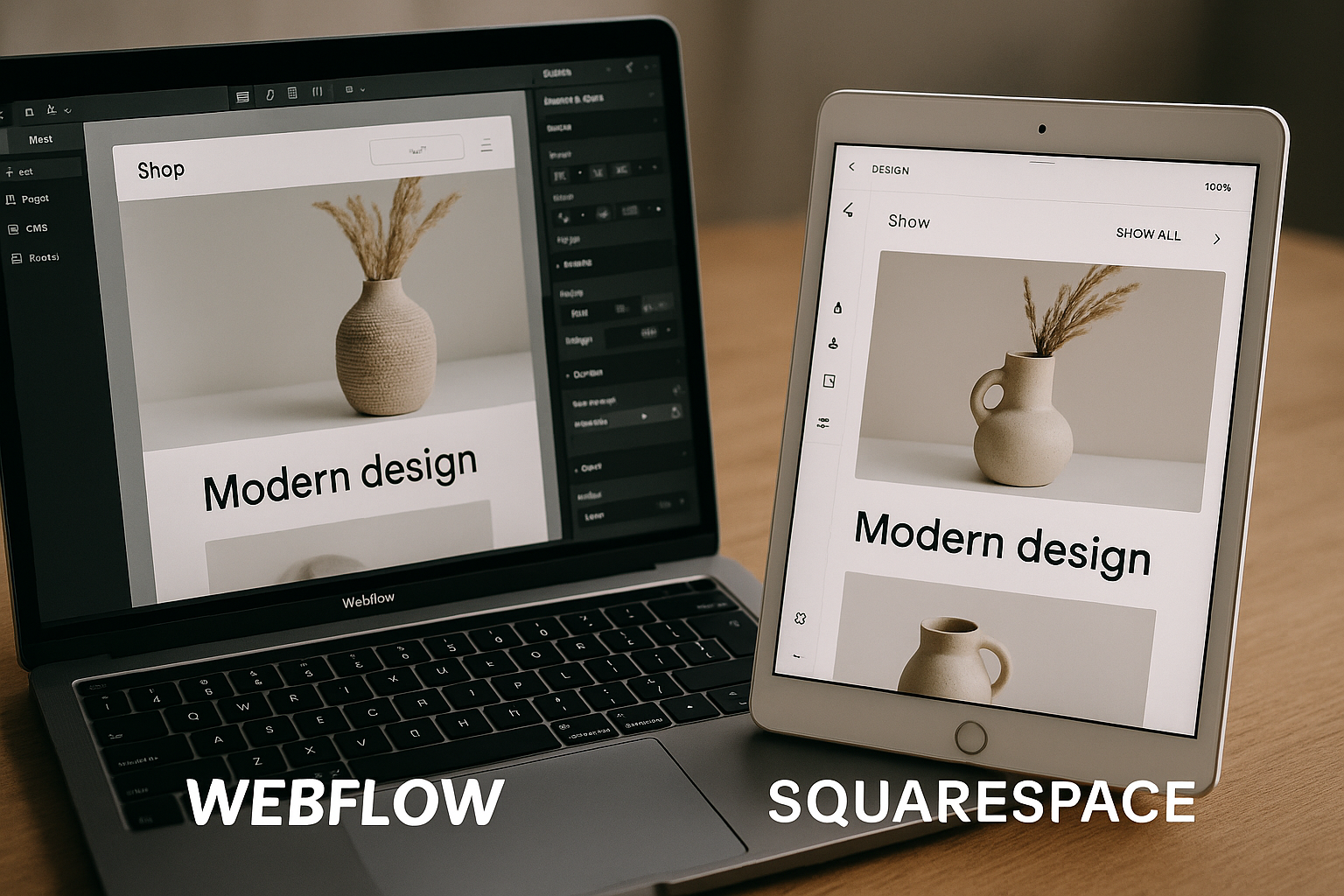
Official website · Latest pricing & offers
Quick verdict: which is easier, Webflow or Squarespace?
One-paragraph answer for busy readers
If your main question is webflow vs squarespace for ease of use, Squarespace is generally easier for first-time site owners who want to launch a polished website quickly with minimal setup. Webflow takes more effort because it gives you deeper design control, more layout freedom, and stronger room to grow. In practical terms, choose Squarespace if you want the shortest path to a simple site, and choose Webflow if you are willing to learn a more capable visual builder for a more customized, scalable website.
Who should choose Squarespace
Choose Squarespace if you want a guided, template-led experience and do not want to think much about layout structure, responsive design decisions, or advanced customization. It is a better fit for beginners who need a simple portfolio, brochure site, or small business website online quickly.
For many non-technical users, the biggest advantage is confidence. You can start from a template, replace content, adjust styling, and publish without feeling like you are building the entire design system yourself.
Who should choose Webflow
Choose Webflow if you care more about design control, brand expression, and future flexibility than the fastest possible launch. In the webflow vs squarespace decision, Webflow is not the simpler beginner tool, but it is the stronger choice when you want a site that feels custom rather than template-bound.
If that sounds like your project, you can try Webflow through TopTrustReview and test whether the extra control is worth the learning curve before committing to a larger build.
Webflow vs Squarespace at a glance
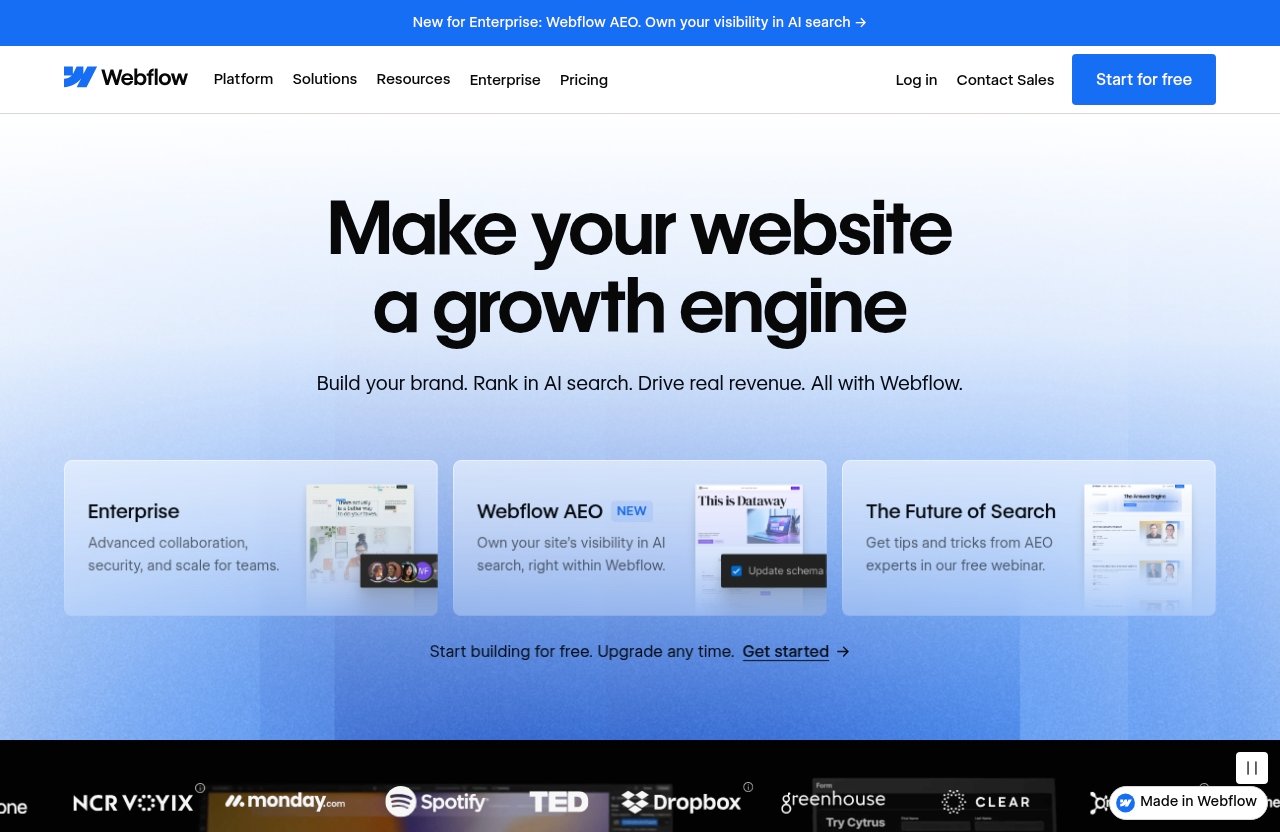
Ease of use
For pure beginner simplicity, Squarespace has the edge. Its template-led workflow is easier for people who want to make a few design choices, add content, and publish.
Webflow is visual, but it expects you to understand more about how pages are structured. The webflow vs squarespace for beginners answer is simple: Squarespace is easier on day one, while Webflow becomes more rewarding as your design expectations increase.
| Category | Squarespace | Webflow |
|---|---|---|
| Beginner ease | Easier for quick setup | More powerful but harder to learn |
| Best for | Simple sites, quick launches | Custom design, scalable marketing sites |
| Design style | Template-led | Highly flexible visual design |
| Learning curve | Lower | Higher |
| Long-term control | Good for straightforward sites | Stronger for custom layouts and growth |
Design flexibility
Webflow pulls ahead on design flexibility. If you are comparing webflow vs squarespace design control, Webflow is the platform more likely to satisfy users who want precise spacing, custom layouts, and a website that does not look like a lightly edited template.
Squarespace still works well for users who like its existing design direction. But when you want full creative control, Webflow gives you more room to shape the final experience.
CMS and content management
Both platforms can support ongoing content updates, but the experience differs. Squarespace is generally easier for straightforward editing, while Webflow is better suited to structured content and more customized content layouts.
This matters if your site may grow from five static pages into a content-heavy marketing site. In that case, webflow vs squarespace becomes less about the first week and more about what the site needs six or twelve months later.
SEO and marketing
For basic SEO tasks, both platforms can be workable for non-technical site owners. The distinction is that Webflow is often favored by marketers who want more advanced optimization and design control around landing pages, content structures, and conversion-focused layouts.
The practical webflow vs squarespace seo takeaway is this: Squarespace is easier for standard setup, while Webflow gives more control to users who are willing to learn.
Pricing and scaling
For Webflow, we can verify official pricing facts from the provided Webflow pricing information. Webflow offers a Free Starter plan, a Basic plan at $15/month billed yearly, a Premium plan at $25/month billed yearly, a Team plan at $2500/month with an annual contract required, and Enterprise custom pricing.
For Squarespace, no official pricing table was provided for this review, so this comparison avoids unsupported plan-by-plan claims. The most useful webflow vs squarespace pricing question is not only “which costs less?” but “which platform gives the right level of control for your project?”
Ease of use: how much work does each platform actually take?
Squarespace's guided setup and templates
Squarespace is easier because it narrows your choices. For a non-technical owner, that can be a major benefit: fewer layout decisions, fewer design systems to understand, and less chance of breaking the page visually.
In a typical webflow vs squarespace comparison, Squarespace wins when the goal is speed. You choose a template direction, add your text and images, make basic style changes, and move toward publishing.
That guided structure is especially helpful for service businesses, solo creators, and owners who do not want to learn how web layouts work. It is not necessarily more powerful, but it is more approachable.
Webflow's visual builder and learning curve
Webflow is also visual, but it is closer to a professional design environment than a simple template editor. You can build visually without hand-coding the site, but you still need to understand hierarchy, spacing, containers, responsive behavior, and how design changes affect different screen sizes.
That is why the webflow learning curve is real. It is not a flaw for the right user; it is the trade-off for getting more control.
When I review platforms for non-technical owners, I look at how quickly someone can make a change without second-guessing themselves. Webflow takes longer to feel natural, but once it clicks, it can feel much less restrictive than a template-first builder.
How non-technical users will feel after day one
After day one, a Squarespace user is more likely to feel, “I can publish this soon.” A Webflow user is more likely to feel, “I can build exactly what I want, but I need to learn the system.”
That difference is the core of squarespace vs webflow ease of use. Squarespace reduces complexity; Webflow exposes more of it so you can control it.
If you dislike tinkering, Squarespace will probably feel calmer. If you enjoy refining layout details and want your site to match a specific brand vision, Webflow will feel more capable.
Time required to publish a simple site
For a simple five-page site, Squarespace will usually be faster for a beginner because the workflow is more guided. You can get from blank account to presentable site with fewer decisions.
With Webflow, the same simple site may take longer because you will spend time learning the builder and making design choices. In the webflow vs squarespace debate, that extra time is only worth it if customization matters.
A good rule of thumb: if your priority is “publish this week,” lean Squarespace. If your priority is “build something I can keep improving,” Webflow deserves serious consideration.
Design control: where Webflow pulls ahead
Template customization limits in Squarespace
Squarespace’s ease comes partly from its structure. Templates help beginners move quickly, but they can also make advanced customization feel limited compared with a more flexible visual builder.
This is the natural trade-off in webflow vs squarespace. A simpler system protects you from complexity, but it can also limit unusual layouts, detailed spacing choices, and highly specific brand treatments.
For many small businesses, that is perfectly fine. A clean, professional site is enough. But if your website is a core marketing asset, template limits may become frustrating.
Pixel-level control in Webflow
Webflow’s biggest advantage is design control. You can create custom sections, detailed layouts, reusable visual patterns, and page designs that feel more tailored to your brand.
This is where webflow vs squarespace design control becomes the deciding factor. Webflow is better when you want to control the visual language of the site rather than adapt your brand to a template.
For example, a consultant with a premium positioning, a SaaS landing page, or a design-led portfolio may benefit from Webflow’s flexibility. The platform gives you more control over how each section looks and behaves.
Responsive design and layout freedom
Modern websites have to work across desktop, tablet, and mobile screens. Squarespace aims to simplify this for users, while Webflow gives you more direct control over responsive design decisions.
That means Webflow can take longer to set up well. But if you care about how a hero section, pricing area, case study layout, or lead-generation page adapts across devices, the extra control is valuable.
In a practical webflow vs squarespace review, I would not tell every beginner to choose Webflow. I would tell brand-conscious owners and marketers to consider whether responsive layout freedom is worth learning.
When design control matters more than simplicity
Design control matters most when your website is not just an online business card. If the site needs to convert leads, support campaigns, present case studies, or differentiate your brand, the ability to customize becomes more important.
This is where Webflow’s learning curve can be justified. You pay with time and attention, but you gain a platform that can support more ambitious design work.
If you are deciding is webflow easier than squarespace, the honest answer is no for most beginners. But if the better question is “which gives me more creative control?” Webflow is the clear winner.
Content management, CMS, and ongoing edits
Blogging and content-heavy sites
For a basic blog or simple content updates, Squarespace is approachable because the editing experience is designed for simplicity. If you only need occasional posts and standard pages, that may be enough.
Webflow becomes more interesting when your content needs structure. The verified Webflow pricing information shows that the Premium plan includes Webflow CMS, while the Starter plan includes Limited Webflow CMS.
For webflow vs squarespace, the CMS question depends on whether your site will remain simple or become a content hub. A growing marketing site often benefits from more structured content management.
Client or team editing workflows
For solo owners, editing simplicity matters more than team workflows. For agencies, marketers, and growing businesses, publishing processes and governance can become more important.
From the verified Webflow facts, the Team plan includes Site & Workspace, Webflow Localize, AEO agents, publishing workflows, single-page publishing, site activity log & API, foundational governance, enhanced security & compliance, and priority support. That is clearly aimed at more advanced organizations, not a typical beginner website.
In the webflow vs squarespace comparison, this shows how Webflow can scale upward. Most small site owners will not need that level at launch, but it matters if your website becomes a serious business system.
How easy it is to update pages without a developer
Squarespace is easier for simple page edits because the platform is built around straightforward content replacement and template editing. A non-technical user can usually make everyday updates with less training.
Webflow can also be managed without a developer, but setup quality matters. If the site is built cleanly, ongoing edits can be manageable; if the structure is confusing, beginners may struggle.
This is why webflow vs squarespace for small business depends on who will maintain the site. If the owner will make every edit personally and wants minimal complexity, Squarespace is safer. If a marketer or designer will manage updates, Webflow may be better long term.
When the CMS becomes a deciding factor
The CMS becomes a deciding factor when you publish repeated content types: blog posts, case studies, team profiles, resources, locations, or landing page collections. In those cases, Webflow’s structured approach can reduce future friction.
A simple restaurant-style brochure site may not need that flexibility. But a content-heavy B2B site, creator resource library, or agency portfolio may outgrow a basic template workflow.
For webflow vs squarespace, ask what your site will become, not just what it is today. If future content structure matters, Webflow deserves a closer look.
Official website · Latest pricing & offers
SEO and marketing: which platform is easier to optimize?
Built-in SEO basics
For basic SEO, a beginner mostly needs clean page titles, descriptions, readable content, sensible page structure, and a site that is easy to update. Squarespace is generally easier for owners who want a simpler setup and do not plan to manage many technical details.
Webflow is better suited to users who want more control over their site structure and marketing pages. In webflow vs squarespace seo, that extra control can matter for teams that actively test and refine pages.
Neither platform removes the need for good content, keyword research, and a clear offer. The builder helps, but it does not replace marketing strategy.
Advanced optimization and technical control
Webflow is often the better fit for advanced optimization because it gives more control over design and structure. That can help marketers create focused landing pages, content hubs, and custom layouts without being locked into a rigid template pattern.
This does not mean every beginner needs Webflow. If you are publishing a simple site and only need the basics, Squarespace may be easier to manage.
The webflow vs squarespace SEO decision is really about your appetite for control. More control can produce better marketing execution, but only if you use it well.
Performance and structured content considerations
Performance and structure matter because visitors and search engines both need a site that is clear, organized, and easy to navigate. Webflow’s design freedom can help create intentional page structures, but it also requires careful setup.
Squarespace simplifies decisions, which can be beneficial for non-technical owners. You are less likely to get lost in design complexity, but you also have less room to customize every detail.
For a marketing team, webflow vs squarespace seo often leans Webflow because the team can take advantage of the extra flexibility. For a solo beginner, Squarespace may be the easier optimization path.
Which platform is better for SEO-focused site owners
SEO-focused site owners should choose based on how hands-on they plan to be. If you want a simple site with basic optimization, Squarespace may feel easier.
If SEO is part of a larger marketing strategy involving custom landing pages, structured content, and continuous design improvements, Webflow is likely the stronger fit. The platform gives you more room to shape the site around your strategy.
In short, webflow vs squarespace for SEO is not “easy versus impossible.” It is “simpler setup versus deeper control.”
Pricing and value: what you can verify from official Webflow pricing
Webflow Starter plan
The Webflow Starter plan is Free. According to the verified pricing facts for this review, it includes a Webflow.io domain, Limited Webflow CMS, 2 static pages, 1 GB bandwidth, 50 form submissions, Webflow AI, MCP server, Webflow Cloud app hosting, and a Free Starter Workspace.
This plan is useful for testing the platform before deciding if the webflow vs squarespace trade-off makes sense. It gives you a way to explore Webflow’s builder without starting on a paid site plan.
Webflow Basic plan
The Webflow Basic plan is $15/month billed yearly. It includes a custom domain, 300 static pages, 10 GB bandwidth, unlimited form submissions, password protection, Webflow AI, MCP server, Webflow Cloud app hosting, and a Free Starter Workspace.
For a simple marketing site that does not require Webflow CMS, Basic may offer solid value. In a webflow vs squarespace pricing discussion, the key point is that Webflow’s value improves when you actually use its design control.
Webflow Premium plan
The Webflow Premium plan is $25/month billed yearly. It includes everything in Basic plus Webflow CMS, bandwidth, code components, site search, form file upload, and well-known files.
This is the plan that becomes more relevant for content-driven sites. If you need a structured CMS, site search, or more advanced site capabilities, Premium is where Webflow starts to feel more like a scalable marketing platform.
For webflow vs squarespace, Premium is worth considering when your site is more than a simple online brochure. Content hubs, case studies, and resource libraries are common examples.
Webflow Team plan
The Webflow Team plan is $2500/month, with an annual contract required. It includes everything in Premium plus Site & Workspace, Webflow Localize, AEO agents, publishing workflows, single-page publishing, site activity log & API, foundational governance, enhanced security & compliance, and priority support.
This plan is not aimed at most beginners or solo creators. It is more relevant for organizations that need governance, workflows, and higher-level support.
In the webflow vs squarespace conversation, Team shows Webflow’s upward path. You may not need it now, but the platform is built to support larger operations.
Webflow Enterprise plan
Webflow Enterprise uses custom pricing. It includes everything in Team plus enterprise-ready scale, granular permissions, custom roles, advanced governance, secure integrations, a dedicated account manager, enhanced SLAs, and custom configurations.
Enterprise is for larger organizations with complex requirements. It is not the deciding factor for most small business owners, but it reinforces Webflow’s positioning as a platform that can grow beyond a starter website.
Because official Squarespace pricing details were not provided for this review, I would avoid making unsupported plan-by-plan claims. The fair webflow vs squarespace pricing takeaway is to compare total value: simplicity and speed on one side, control and scalability on the other.
Best use cases: which platform fits your project?
Personal portfolio or simple brochure site
For a personal portfolio or simple brochure site, Squarespace is often the easier choice. If you need a clean online presence, a few pages, and a quick launch, its guided approach is practical.
However, webflow vs squarespace for portfolio changes if the portfolio itself needs to show design taste. Designers, photographers, agencies, and premium consultants may prefer Webflow because the site can become part of the creative statement.
If your portfolio should look unique rather than simply professional, Webflow is worth the learning curve.
Small business website
For a small business website, the choice depends on how much the site contributes to growth. If it mainly needs to explain services, show contact details, and look trustworthy, Squarespace is easier.
For webflow vs squarespace for small business, Webflow makes more sense when the site is central to lead generation, branding, or campaign performance. A business with landing pages, service-specific pages, and ongoing marketing needs may benefit from Webflow’s flexibility.
The practical split is simple: Squarespace for quick credibility, Webflow for stronger customization and future marketing control.
Blog or content hub
For a basic blog, Squarespace may be simpler to manage. It is a good fit if content is secondary and you do not need highly customized layouts.
For a content hub, Webflow becomes more compelling. The verified Webflow facts show CMS availability on Premium and Limited Webflow CMS on Starter, which matters when content structure becomes important.
In webflow vs squarespace, a blog that stays simple favors ease. A content strategy that grows into resources, case studies, and repeatable content types favors Webflow.
Agency, marketing site, or custom brand site
For agencies, marketers, and custom brand sites, Webflow is usually the stronger choice. These projects often need precise layouts, campaign pages, reusable content structures, and room for iteration.
Squarespace can still work for simpler agency sites, especially when speed matters more than uniqueness. But if design control is part of the value proposition, Webflow is better aligned.
This is one of the clearest webflow vs squarespace scenarios. The more your website needs to perform as a custom marketing asset, the more Webflow’s learning curve makes sense.
Pros and cons of Webflow vs Squarespace for non-technical users
Webflow pros
Webflow’s biggest strength is control. You can create more custom layouts, refine responsive design, and build a site that feels less constrained by templates.
It also offers a clear growth path, from the Free Starter plan to Basic, Premium, Team, and Enterprise options. For serious marketing sites, that scalability matters.
In the webflow vs squarespace comparison, Webflow is best for users who are willing to learn in exchange for flexibility.
Webflow cons
Webflow is not the easiest website builder for absolute beginners. The visual builder is powerful, but it requires more patience and a better understanding of page structure.
Pricing can also feel more complex than a simple template-based decision because different plans suit different site needs. You should review official Webflow pricing carefully before choosing a plan.
The main downside in webflow vs squarespace is clear: Webflow gives you more control, but it asks more from you.
Squarespace pros
Squarespace’s main advantage is ease. It is generally better for beginners who want a guided setup, attractive templates, and a faster path to publishing.
It is also a practical fit for simple business sites, portfolios, and creators who do not need deep customization. For many owners, that simplicity is the whole point.
If the webflow vs squarespace decision is based only on beginner comfort, Squarespace usually wins.
Squarespace cons
Squarespace’s simplicity can become a limitation when you want more design freedom. Template-led building is convenient, but it may not satisfy users with specific layout or branding goals.
It may also be less attractive for teams that want advanced design flexibility or highly customized marketing pages. That does not make it a bad platform; it makes it better for simpler needs.
In webflow vs squarespace, Squarespace is the easier tool, while Webflow is the more flexible one.
Final recommendation: choose based on your priorities
Choose Squarespace if speed matters most
Choose Squarespace if your top priority is getting a professional-looking site online quickly. It is the better fit for absolute beginners, simple portfolios, and small businesses that do not need extensive customization.
If you want fewer decisions and a smoother first-day experience, Squarespace is the safer beginner choice. The webflow vs squarespace ease-of-use winner is Squarespace.
Choose Webflow if design control and growth matter most
Choose Webflow if your website needs custom branding, flexible layouts, structured content, or room to evolve into a stronger marketing platform. It is not as easy at the beginning, but it can take you further if you are willing to learn.
This is where I would recommend Webflow for many growth-focused owners, creators, and marketers. If you want to test the builder for yourself, you can start with Webflow here and see whether its extra design control fits your workflow.
My recommendation for most readers
For most beginners who simply need a quick site, Squarespace is easier. For non-technical owners who care about long-term control, custom design, and marketing flexibility, Webflow is the better strategic choice.
My balanced recommendation is this: choose Squarespace for speed, choose Webflow for control. The best webflow vs squarespace decision is not about which platform is universally better, but which one matches your priorities in 2026.
Official website · Latest pricing & offers
FAQ
Why is Webflow better than Squarespace?
Webflow is better than Squarespace when you need more design control, deeper customization, and a platform that can scale into more advanced marketing and content needs. It is especially strong for custom brand sites, landing pages, structured content, and design-led projects.
That said, Webflow is harder to learn. In the webflow vs squarespace comparison, Webflow is better for control, while Squarespace is better for beginner simplicity.
What are the downsides of using Webflow?
The main downside is the learning curve. Webflow is visual, but it is not the simplest no-code website builder for someone who has never thought about layout structure, spacing, or responsive design.
Pricing decisions can also require more attention because Webflow has different plans for different needs, including Starter, Basic, Premium, Team, and Enterprise. If you want the easiest possible first website, Squarespace may feel less intimidating.
What are the top 3 website builders?
For many non-technical site owners, three commonly considered website builders are Squarespace, Webflow, and Wix. WordPress is also a major option, especially for users who want a broader ecosystem, but it can involve a different setup experience.
This article focuses on webflow vs squarespace because they represent a clear choice: easier template-led setup versus more flexible visual design control.
Is Webflow still the best?
Webflow is still one of the best choices for custom marketing sites, SEO-focused projects, and brands that need strong design flexibility. It is particularly appealing when your website needs to grow beyond a basic template.
But it is not automatically the best for everyone. If you are an absolute beginner and only want the fastest simple site, Squarespace may be the better fit.
Related Reading
References
- Webflow vs. Squarespace | Discover the visual alternative to Squarespace
- Squarespace vs Webflow: Full 2026 Comparison
- Webflow vs Squarespace: A no-BS Comparison
- Webflow vs Squarespace (2026): Which Is Better For Designers?