Webflow vs Wix: Best Website Builder for You in 2026
Official website · Latest pricing & offers
Webflow vs Wix: quick verdict
If you are comparing Webflow vs Wix, the simplest answer is this: Wix is usually easier for a first website, while Webflow is usually stronger for custom design, structured content, and growth-minded teams. I would not call either platform “best” for everyone.
For TopTrustReview readers, my practical recommendation is to choose based on how much control you need and how comfortable you are learning a more advanced builder. If you want to evaluate Webflow directly, you can review the current official offer through our Webflow partner link. We may earn a commission if you buy through that link, at no extra cost to you.
Who should choose Webflow
Choose Webflow if you want a website builder that feels closer to visual development than simple drag-and-drop editing. In the webflow vs wix decision, Webflow is the better fit for designers, marketers, agencies, and growing businesses that care about layout control, CMS-driven pages, collaboration, SEO/AEO workflows, and long-term scalability.
Webflow is officially positioned as “the agentic web platform for modern businesses” and an AI-native platform. That matters most if your site is not just an online brochure, but a marketing asset that may need structured content, localization, publishing workflows, governance, or team collaboration later.
Who should choose Wix
Choose Wix if you are a beginner, solo owner, or small local business that wants to launch quickly with minimal learning. In many wix vs webflow comparisons, Wix is favored for ease of use because it is commonly known as a beginner-friendly drag-and-drop website builder.
If your priority is “I need something online this weekend,” Wix may feel more approachable. You should still check Wix’s current official pricing and plan details directly, because this article does not have verified Wix pricing data.
Bottom-line summary
| Category | Better fit | Why |
|---|---|---|
| Fastest setup | Wix | Typically easier for first-time site owners |
| Design control | Webflow | Deeper visual control and customization |
| CMS/content scaling | Webflow | Better fit for structured content workflows |
| Beginner friendliness | Wix | More approachable drag-and-drop experience |
| Agencies and teams | Webflow | Stronger fit for collaboration, governance, and scaling |
| Pricing clarity in this review | Webflow | Verified official Webflow pricing is available |
The short version: webflow vs wix is not about which builder is universally better. It is about whether you value simplicity now or control and scalability later.
What Webflow and Wix are best known for
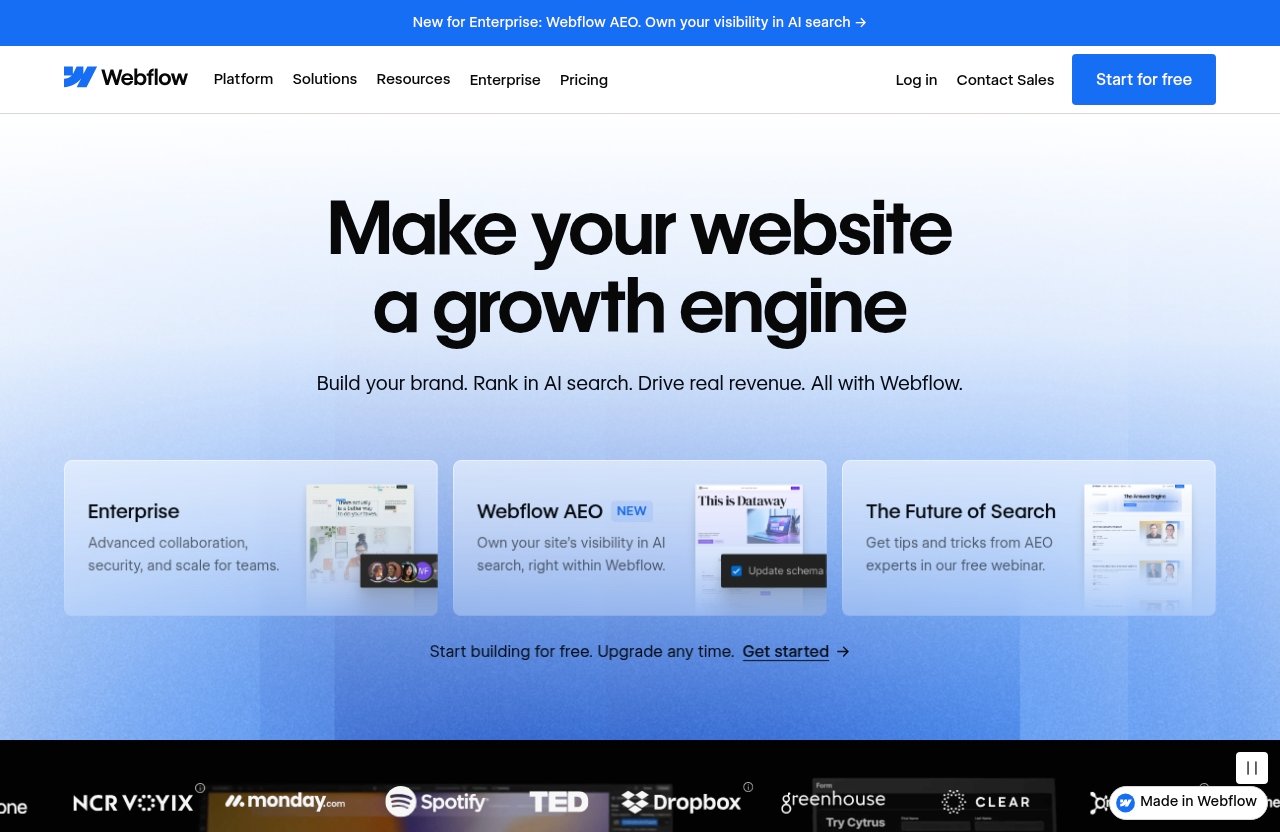
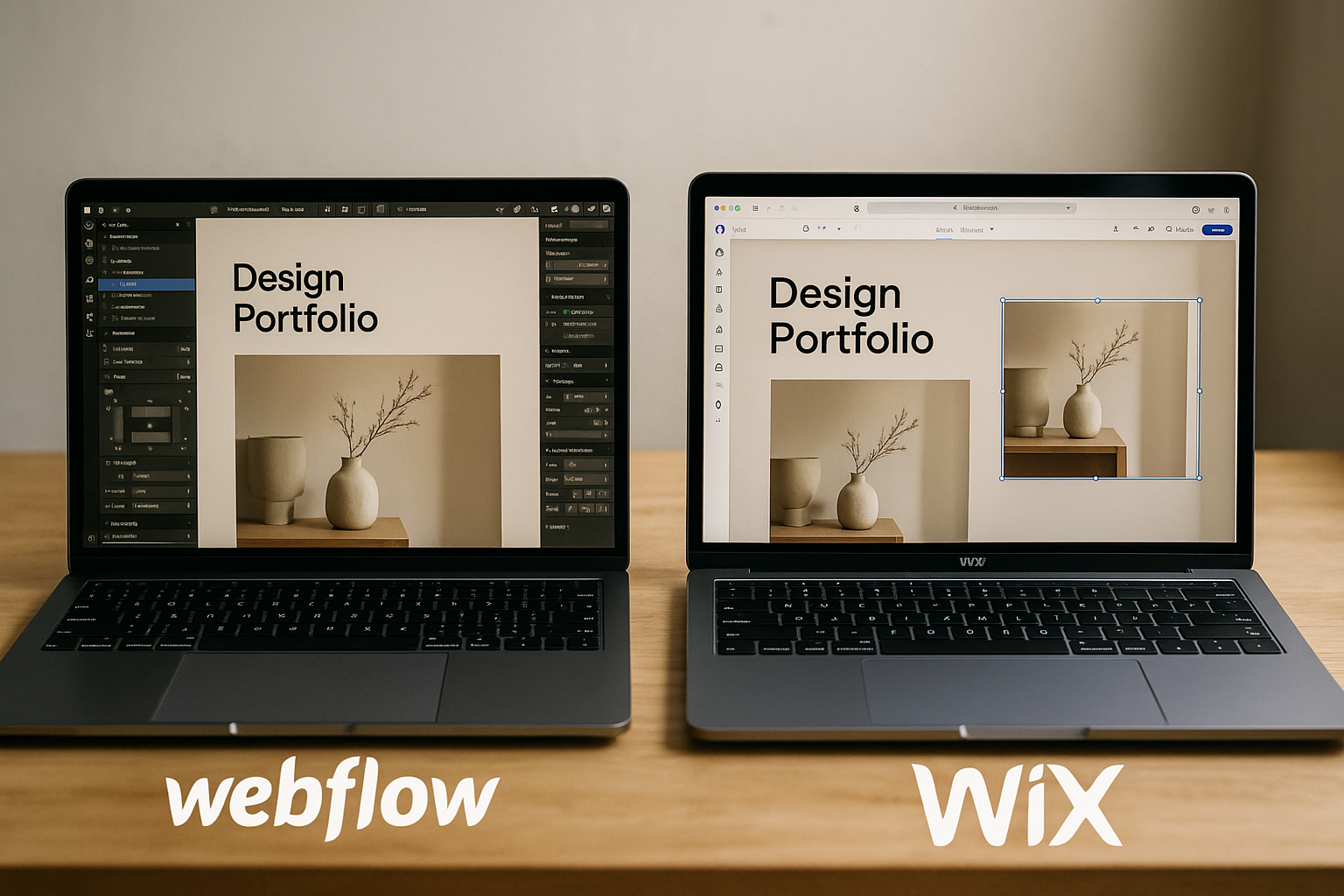
Webflow’s visual development and CMS-first approach
Webflow is best known for giving designers and marketers more precise control over how a website looks and behaves. It sits somewhere between a traditional website builder and a front-end development environment, but without requiring most users to write code for every layout decision.
In the webflow vs wix comparison, this is Webflow’s biggest advantage: it is built for people who want custom design systems, reusable content structures, and more advanced marketing sites. Its official pricing also confirms Webflow CMS access on the Premium site plan, plus advanced platform capabilities on Team and Enterprise.
Webflow’s current platform positioning also includes AI-native capabilities, Webflow AI, MCP server, Webflow Cloud app hosting, and AEO agents on the Team plan. I would treat those as platform-growth signals rather than magic ranking guarantees.
Wix’s drag-and-drop simplicity and fast setup
Wix is best known as an easier drag-and-drop website builder for people who do not want to think deeply about layout systems, CMS architecture, or advanced workflows. For beginners, that simplicity can be a major benefit.
When people search webflow vs wix for beginners, they are usually asking, “Which one will let me build without frustration?” In that case, Wix often has the edge because it is designed around straightforward editing and faster setup.
That does not mean Wix is only for basic sites. It simply means its core appeal is accessibility, while Webflow’s appeal is control.
Why this comparison matters for buyers
The webflow vs wix choice affects more than your first week of building. It can influence how easy it is to redesign pages, publish content, hand work to a team, manage brand consistency, and scale marketing campaigns.
I have seen buyers choose the easier tool first, only to feel limited once their content library, landing pages, or brand requirements grow. I have also seen non-technical users pick the more powerful tool and get stuck because they did not budget time to learn it.
So the right answer depends on your buyer type, not just feature lists.
Ease of use: which builder is faster to launch?
Wix for first-time site owners
For pure speed, Wix is typically the easier choice. If you are creating a simple homepage, services page, contact page, and a few supporting pages, the drag-and-drop experience is likely to feel more natural.
This is where webflow vs wix ease of use usually favors Wix. A beginner who has never built a website before may find Wix less intimidating because it is designed for quick visual editing.
That matters if your website is not your main growth engine. For example, a local consultant, hobby project, or one-person service business may value speed over advanced structure.
Webflow for users willing to learn
Webflow has a steeper learning curve, but that learning curve exists for a reason. It gives you more control over structure, spacing, breakpoints, layouts, CMS collections, and design consistency.
In the webflow vs wix debate, Webflow rewards users who think like designers, marketers, or builders. If you are willing to learn how the platform works, you can create more custom experiences than you typically would with a simpler drag-and-drop approach.
This is especially useful if you care about brand differentiation. A website that needs to feel bespoke, polished, and conversion-focused often benefits from Webflow’s more advanced visual control.
Time-to-publish tradeoff
Here is the practical tradeoff: Wix is often faster on day one, while Webflow can be more efficient over the long term for complex sites. If you only need five simple pages, faster launch may be the smarter decision.
But if your roadmap includes landing pages, content hubs, campaign pages, or multiple stakeholders, Webflow can become the more strategic platform. That is why webflow vs wix should be judged by the next 12 to 24 months, not just the first afternoon.
A simple brochure site favors Wix. A custom marketing site with growth plans often favors Webflow.
Design control and customization
How far Wix customization typically goes
Wix usually gives users enough design flexibility for common small-business websites. You can typically create attractive pages without learning web design principles deeply.
However, the webflow vs wix design control question becomes more important when your site needs a distinctive layout, tighter brand system, or more advanced page structure. Wix’s simplicity is a strength, but simplicity can also mean you work within a more guided building experience.
That is not automatically bad. Many buyers should choose guided simplicity over open-ended complexity.
Why Webflow appeals to designers and teams
Webflow appeals to designers because it offers deeper visual control over layouts and styling. It is commonly preferred by users who want their site to match a design vision more closely instead of adapting the design to a simplified builder.
For agencies and internal marketing teams, webflow vs wix for agencies often comes down to workflow and scalability. Webflow’s official platform plans include features such as publishing workflows, single-page publishing, site activity log and API, foundational governance, enhanced security and compliance, priority support, and, on Enterprise, granular permissions and custom roles.
Those are not beginner features. They are the kinds of capabilities that matter when more people are touching the website and brand governance becomes important.
When control matters more than simplicity
Control matters when the website is central to revenue, brand perception, or campaign execution. A SaaS company, design studio, content-heavy brand, or multi-market business may outgrow a basic site-building workflow quickly.
This is where webflow vs wix becomes a strategic choice. If your site needs to support campaigns, content operations, and team approvals, Webflow’s deeper platform model may be worth the learning curve.
If you just need a clean online presence, Wix’s simplicity may be more valuable than Webflow’s extra control.
Official website · Latest pricing & offers
SEO, performance, and content scaling
SEO basics in both tools
SEO is not guaranteed by any website builder. Your rankings depend on content quality, search intent, technical setup, site structure, authority, and user experience.
In a practical webflow vs wix seo comparison, the question is not “Which tool ranks automatically?” The better question is, “Which tool helps me build and maintain search-friendly pages at the scale I need?”
Both platforms can be used for basic SEO work such as page titles, descriptions, readable content, and logical page structure. The bigger difference appears when your site needs structured content and repeatable publishing workflows.
Webflow for structured content and scalable pages
Webflow is a stronger fit when content needs to scale in a structured way. Its verified Premium site plan includes Webflow CMS, and its higher platform plans add more advanced workflow and governance capabilities.
In the webflow vs wix decision, this matters for companies building resource libraries, case studies, location pages, product education hubs, or repeatable landing page systems. CMS-driven content helps teams avoid manually rebuilding similar layouts over and over.
Webflow’s official platform facts also include SEO and AEO-related positioning through features such as AEO agents on the Team plan. I would interpret that as support for modern search and answer-engine workflows, not as a promise of rankings.
Wix for smaller content needs
Wix can still be a sensible option for smaller content needs. If you are publishing only a few core pages and occasional updates, you may not need a more advanced CMS-first approach.
That is why webflow vs wix should be evaluated against your publishing plan. If content is a side task, Wix may be enough. If content is a growth channel, Webflow’s structure becomes more compelling.
The user impact is simple: better content operations can mean fewer bottlenecks, cleaner templates, and a more consistent experience for visitors.
Pricing and value: what you can verify
Webflow site plans and platform plans
For pricing, this review uses only verified Webflow facts from official Webflow pricing information. Webflow pricing is listed in USD, per site, plus applicable taxes at checkout.
In webflow vs wix pricing, I cannot responsibly provide a numerical Wix comparison because official Wix pricing data was not provided in this brief. If pricing is a deciding factor, check Wix directly before buying.
Here is the verified Webflow pricing overview:
| Webflow plan | Verified price | Best understood as |
|---|---|---|
| Starter | Free | Testing, learning, very limited starter sites |
| Basic | $15/month billed yearly | Custom-domain static sites |
| Premium | $25/month billed yearly | Sites needing CMS and additional features |
| Team | $2500/month, annual contract required | Advanced team and platform workflows |
| Enterprise | Custom pricing | Enterprise scale, governance, and support |
How to think about total cost of ownership
The cheapest plan is not always the best value. Total cost includes setup time, redesign effort, content management, team collaboration, and whether your site can support future growth.
In the webflow vs wix decision, Wix may offer better value for a simple site if it gets you online faster with less learning. Webflow may offer better value if it prevents costly rebuilds later because you need more design control, CMS depth, or team workflows.
This is especially true for marketing teams. A platform that supports campaign velocity can be worth more than a cheaper tool that slows publishing.
Which users are likely to get better value from each
Wix is likely to be better value for beginners, solo owners, and small businesses that need a simple website quickly. The fewer custom requirements you have, the more valuable simplicity becomes.
Webflow is likely to be better value for designers, agencies, marketers, and growing teams that need advanced control and scalable content operations. If you are comparing webflow vs wix studio, the same principle applies: judge the platform by the level of control, team workflow, and future growth you actually need.
For verified Webflow plan details, you can review Webflow through our affiliate link, and then compare it with Wix’s current official pricing before making a final decision.
Webflow pricing plans, explained using official facts
Starter
Webflow Starter is free. It includes a Webflow.io domain, limited Webflow CMS, 2 static pages, 1 GB bandwidth, 50 form submissions, Webflow AI, MCP server, Webflow Cloud app hosting, and a Free Starter Workspace.
In a webflow vs wix evaluation, Starter is best seen as a testing or learning plan. It is useful if you want to explore Webflow’s interface before committing, but the limits make it unsuitable for most serious business websites.
Basic
Webflow Basic is $15/month billed yearly. It includes a custom domain, 300 static pages, 10 GB bandwidth, unlimited form submissions, password protection, Webflow AI, MCP server, Webflow Cloud app hosting, and a Free Starter Workspace.
Basic makes sense for a custom-domain website that does not need Webflow CMS. If your site is mostly static pages, this plan may cover a straightforward business presence.
For webflow vs wix pricing, Basic gives us a verified Webflow benchmark, but you should compare it with current Wix pricing directly because Wix figures are not verified here.
Premium
Webflow Premium is $25/month billed yearly. It includes everything in Basic plus Webflow CMS, bandwidth, code components, site search, form file upload, and well-known files.
Premium is the key Webflow plan for many content-focused buyers because it includes Webflow CMS. If you are building structured content, repeatable page types, or a more scalable marketing site, this is likely where Webflow becomes more relevant.
In the webflow vs wix comparison, Premium is often the plan to examine if content growth is part of your strategy.
Team
Webflow Team is $2500/month, with an annual contract required. It includes everything in Premium plus Site & Workspace, Webflow Localization, AEO agents, publishing workflows, single-page publishing, site activity log and API, foundational governance, enhanced security and compliance, and priority support.
This is not a casual small-business plan. It is built for organizations that need team workflows, governance, and more advanced platform capabilities.
For agencies and larger marketing departments, webflow vs wix for agencies should include the question of whether these team-level controls justify the investment.
Enterprise
Webflow Enterprise uses custom pricing. It includes everything in Team plus enterprise-ready scale, granular permissions, custom roles, advanced governance, secure integrations, a dedicated account manager, enhanced SLAs, and custom configurations.
Enterprise is for larger organizations that need security, governance, support, and custom setup. It is not the right comparison point for most beginners.
Still, it shows why webflow vs wix is not only a beginner-builder comparison. Webflow is clearly positioned to serve more advanced teams and modern businesses as they scale.
Best use cases by buyer type
Choose Webflow if you are a designer, marketer, agency, or scaling business
Choose Webflow if your website needs to look custom, support structured content, and grow with your team. It is especially strong for people who care about brand control and repeatable marketing workflows.
Here is a practical buyer matrix for webflow vs wix:
| Buyer type | Better fit | Why |
|---|---|---|
| Designer | Webflow | Stronger visual control and custom layouts |
| Marketer | Webflow | Better fit for landing pages and CMS-led content |
| Agency | Webflow | More suitable for advanced client workflows |
| Growing team | Webflow | Team, governance, and publishing features available |
| Beginner | Wix | Faster and easier to start |
| Solo owner | Wix | Usually simpler for a basic site |
If you are searching for the best website builder for designers, Webflow deserves serious consideration. It gives design-minded users more room to build a site that feels intentional rather than template-led.
Choose Wix if you are a beginner, solo owner, or need a simple site quickly
Choose Wix if you want the easiest route to a basic online presence. If your priority is speed, low friction, and a familiar drag-and-drop workflow, Wix is often the more comfortable choice.
This is the heart of webflow vs wix for beginners. A first-time site owner may not need advanced CMS structures, governance, or design-system flexibility.
For a simple restaurant site, portfolio, personal brand page, or local-service website, Wix may be enough. Just verify Wix’s current pricing and plan details directly before committing.
When to switch from Wix to Webflow
Consider switching from Wix to Webflow when your site starts feeling constrained by your growth goals. Common triggers include needing stronger design control, more structured content, better marketing-page systems, or collaboration features for a team.
In the webflow vs wix journey, many users start with ease and later move toward control. That is normal.
You may also consider Webflow when your website becomes part of a broader marketing operation. If multiple people need to publish, review, localize, or manage content, Webflow’s higher-level platform features become more relevant.
Affiliate-style recommendation and final verdict
Why Webflow may be the smarter long-term pick
Webflow may be the smarter long-term pick if your site is central to growth. Its strengths are visual control, CMS, collaboration, SEO/AEO-oriented platform capabilities, and scaling options for teams and businesses.
In the webflow vs wix comparison, I would recommend Webflow for designers, agencies, marketers, and businesses that already know their site needs to evolve. It may take longer to learn, but that investment can pay off when your website becomes more complex.
The affiliate context does not change the recommendation: Webflow is not the easiest choice for everyone. It is the better choice when its advanced capabilities match your actual needs.
Where Wix still wins
Wix still wins for ease, speed, and beginner comfort. If your site is simple and you do not want to learn a more advanced system, Wix may be the more practical option.
That is especially true if your website is mainly informational. In that case, webflow vs wix should not become overcomplicated: choose the tool you can confidently maintain.
The best platform is the one that fits your skill level, timeline, and business goals.
Final recommendation by scenario
Choose Webflow if you want more design control, CMS structure, marketing flexibility, team workflows, or room to scale. Choose Wix if you want a simple website quickly and prefer a beginner-friendly drag-and-drop experience.
My balanced final verdict: webflow vs wix has no universal winner. Webflow is the stronger long-term platform for design-led, content-led, and team-led websites, while Wix is often the better entry point for beginners and simple launches.
If you are building a serious brand site in 2026 and expect it to grow, Webflow is the platform I would evaluate first. If you just need a clean site online fast, Wix remains a sensible choice.
Official website · Latest pricing & offers
FAQ
Why is Webflow better than Wix?
Webflow is better than Wix for users who need more visual control, structured content, scalable workflows, and team-ready capabilities. It is especially attractive for designers, marketers, agencies, and growing businesses.
That said, webflow vs wix is not one-sided. Wix is usually easier for beginners and may be the better choice for a simple website that needs to launch quickly.
Is Webflow still relevant in 2026?
Yes, Webflow is still relevant in 2026. Its official positioning describes it as “the agentic web platform for modern businesses” and an AI-native platform.
Webflow also offers verified features such as Webflow AI, Webflow CMS on Premium, AEO agents on Team, publishing workflows, localization, governance, and Enterprise-level scaling options. Those capabilities keep webflow vs wix relevant for buyers comparing beginner-friendly simplicity against a more advanced growth platform.
Is Wix or Webflow cheaper?
This article can only verify Webflow pricing. Webflow’s official site plans start with Starter free, Basic at $15/month billed yearly, and Premium at $25/month billed yearly; Team is $2500/month with an annual contract required, and Enterprise uses custom pricing.
For webflow vs wix pricing, you should check Wix’s official pricing directly because Wix pricing data was not verified in this brief. The cheaper option depends on the plan, your required features, and the total cost of building and maintaining the site.
Is there anything better than Wix?
Yes, depending on your use case. Webflow can be better than Wix if you want deeper design control, stronger structured content workflows, and a platform that can support more advanced marketing or team needs.
But if you are a beginner who needs a simple website quickly, Wix may still be the better fit. The smartest webflow vs wix decision is based on your skill level, growth plans, and how much control your website really needs.
Related Reading
- Webflow pricing 2026
- Hostinger vs HostGator: Which Web Host Offers More for Less in 2026?
- Systeme.io vs Kajabi: Which Is Better in 2026?
References
- Wix vs. Webflow: A powerful Wix alternative
- Webflow vs. Wix: Which website builder is best?
- Webflow vs Wix Studio: Which is Better for Designers and Agencies?
- I tested Wix Studio vs Webflow. Which is better?