Is Bybit Available in the US? 2026 Status, Rules & VPN Risks
Exclusive reader offer
If you are exploring digital asset platforms and asking is bybit available in the us, the direct answer according to official exchange policy is no. Bybit does not operate within the United States, nor does it allow individuals located in the country to open accounts or execute trades. Traders searching for clear information must understand how Bybit classifies restricted jurisdictions and why trying to bypass these barriers creates severe risks for account safety.
Affiliate disclosure: This article may contain affiliate links. If you buy through them, we may earn a commission at no extra cost to you. Details were checked on November 16, 2026 and can change.
Risk Warning: Cryptocurrency prices are subject to extreme market volatility. Digital asset trading—particularly involving derivative contracts, margin positions, and leveraged financial products—carries a substantial risk of financial loss. You should never trade with capital you cannot afford to lose. The information provided in this guide is strictly educational and does not constitute financial, legal, or investment advice.
Official website · Latest pricing & offers
Quick Answer: Is Bybit Available in the US?
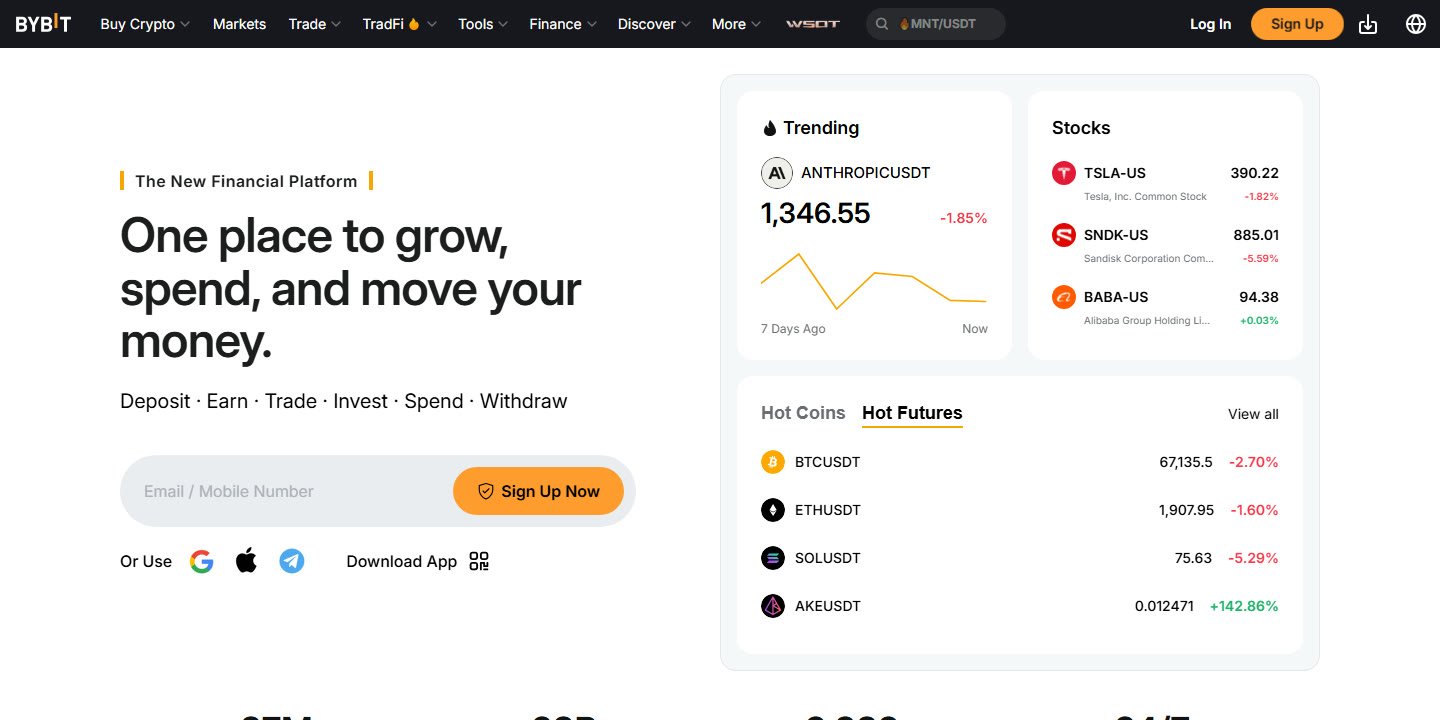
To put it plainly, Bybit is entirely unavailable to users located in the United States. According to Bybit’s official documentation, the platform maintains a strict list of service-restricted countries and territories. If you reside in the US or are physically located inside US borders, you cannot complete onboarding, verify your identity, or legally use Bybit’s products.
Here is an immediate breakdown of the core facts regarding US availability:
- Service Status: Strictly prohibited. The United States is explicitly listed under Bybit’s excluded jurisdictions.
- Account Registration: If your country of residence is on Bybit’s restricted list, the sign-up system rejects onboarding.
- Mandatory Verification: Bybit enforces identity verification (Know Your Customer or KYC). Submitting a US passport, US driver’s license, or US proof of address will result in account rejection.
- VPN Usage: Using a virtual private network (VPN) or IP proxy to obscure your US location violates Bybit’s Terms of Service and regularly triggers account freezes, asset lockups, or permanent closure.
- Product Access: Spot trading, derivatives, margin contracts, and asset management products offered on Bybit Global are off-limits to US individuals.
Service Restrictions and the Official Excluded Jurisdictions List
Bybit maintains a transparent, published roster of excluded locations to ensure regulatory compliance across international markets. According to Bybit’s official Help Center article on Service-Restricted Countries, the exchange does not provide services or support account creation for users residing in or operating from several specific global regions.
The officially documented excluded jurisdictions include:
- The United States
- The Chinese Mainland
- Hong Kong
- Singapore
- Canada
- North Korea
- Cuba
- Iran
- Uzbekistan
- Other territories subject to international sanctions or local regulatory restrictions
Prospective users should note that jurisdictional limits can also be product-specific. For example, while the United Kingdom is not included on the comprehensive general exclusion list, certain specialized financial products—such as xStocks—are unavailable to UK residents based on Bybit’s official service documentation. Similarly, users residing in the European Economic Area (EEA) are ineligible for particular promotional features, including specific Bybit Card referral rewards. Furthermore, Bybit’s promotional campaign terms state that the platform does not run referral programs in Germany, the United Kingdom, France, Belgium, Hong Kong, or any regions where Bybit does not operate.
Because exchange terms change in response to shifting global compliance mandates, anyone uncertain about their regional eligibility should review the complete, up-to-date documentation directly on the Bybit Restricted Countries guide or consult Bybit’s official Service-Restricted Countries page.
Why Is Bybit Available in the US Not Permitted Under Exchange Rules?
Traders often wonder why an international exchange with broad global liquidity would choose to shut out the largest financial market in the world. The fundamental reason is bybit available in the us answered with a strict negative relates to federal and state financial market regulation.
Financial authorities in the United States enforce extensive licensing frameworks across digital assets, commodities, and retail derivative instruments. International exchanges offering products such as high-leverage perpetual contracts, options, and structured yield programs face complex multi-agency oversight in the US. Operating legally for US retail traders typically necessitates dedicated domestic registrations, localized risk disclosures, segregated order books, and state-by-state money transmitter licenses.
Rather than restructuring its core platform architecture or launching a distinct, heavily modified US subsidiary, Bybit has maintained a policy of total market exclusion for the United States. By categorically prohibiting users located in the US from accessing its global servers, Bybit avoids conflicting with American regulatory mandates while continuing to focus its operational efforts on supported jurisdictions throughout Latin America, Africa, Asia, and parts of Europe.
Why Using a VPN to Access Bybit Violates Terms of Service
A frequent suggestion found across online forums is that an American trader can bypass geographical restrictions simply by installing a virtual private network (VPN). While a VPN can mask your device’s Internet Protocol (IP) address to make it appear as though traffic originates from a supported nation, utilizing this method to trade on Bybit is a direct violation of the platform’s user agreement.
1. Violation of the User Agreement
When you register on any digital trading venue, you agree to its governing Terms of Service. Bybit explicitly states that users from excluded jurisdictions—including the United States—are prohibited from registering accounts. Artificially disguising your geographic origin using an anonymizing proxy, data center IP, or residential VPN constitutes intentional circumvention of the platform’s security controls.
2. Automated Detection and Risk Flagging
Modern cryptocurrency exchanges utilize sophisticated threat intelligence, geo-location validation, and automated network detection systems. Commercial VPN server IP ranges are thoroughly cataloged by cybersecurity providers. When an account routinely switches IP subnets, connects via recognized hosting data centers, or leaks DNS or WebRTC data pointing back to an American service provider, automated security systems trigger instant risk flags.
3. Forced Identity Verification Checks
Even if an individual manages to submit an initial email or phone registration via an encrypted tunnel, Bybit’s mandatory KYC infrastructure prevents unauthorized participation. If risk management systems detect anomalous connection patterns, the account is immediately placed into a restricted status. To clear the restriction or execute a withdrawal, the user is required to complete identity verification.
4. Asset Lockup and Account Termination
Attempting to bypass jurisdictional controls introduces unnecessary operational risk. If Bybit’s compliance systems determine that an account belongs to a user located in the United States, the platform has the contractual right to freeze trading capabilities, suspend access, and initiate account closure. Recovering locked funds under these circumstances can involve protracted compliance reviews, causing severe distress and operational delays.
How Bybit Enforces Jurisdictional Restrictions: KYC and Verification
In previous market eras, some cryptocurrency platforms permitted unverified, low-tier trading accounts with daily withdrawal limits. Today, Bybit requires identity verification for account operations. Understanding this requirement is essential when considering whether is bybit available in the us under any circumstances.
Bybit’s compliance framework relies on structured verification tiers designed to confirm an applicant’s real identity, physical location, and jurisdictional eligibility:
| Verification Layer | Required Information | Outcome for US Users |
|---|---|---|
| Initial Registration | Email address or mobile phone, password, client IP address | US IP addresses are blocked from loading the registration portal. |
| Individual KYC (Level 1) | Government-issued photo identification (Passport, National ID, Driver’s License) and facial biometric scan | US-issued documents (US Passport, state driver’s licenses) are rejected by automated compliance software. |
| Advanced KYC (Level 2) | Proof of physical residential address (utility bill, bank statement, tax assessment) | Addresses inside the United States are rejected; document must match a non-restricted jurisdiction. |
To read more about the exact procedural steps and document guidelines applicable to eligible global users, review our Bybit KYC Verification Guide. For individuals residing within the US, however, the outcome is clear: the automated document scanner will detect the issuing country on any US passport, state ID card, or residency document and immediately deny account verification.
Questions Traders Ask: Is Bybit Available in the US for Expats or Travelers?
Given the global nature of modern remote work and travel, traders frequently encounter edge cases involving citizenship, travel, and international residency. Understanding how Bybit’s rules apply in these scenarios prevents critical account errors.
Scenario A: An American Citizen Living Permanently Abroad
What if you hold American citizenship but reside permanently in a fully supported country, such as Mexico, Brazil, or Thailand? Bybit’s terms state that it does not offer services to users in excluded jurisdictions, which includes the United States. However, verification systems evaluate both identity documentation and legal residency.
While an applicant may hold a US passport, establishing legal residency outside of restricted territories requires formal proof of address—such as a valid local residency permit, foreign tax certificate, or verified foreign utility bill issued in the approved jurisdiction. If an applicant cannot supply verifiable legal proof of permanent residency in an eligible country, their account cannot be onboarded under standard compliance requirements.
Scenario B: A Foreign Citizen Visiting or Traveling Through the US
If an individual from an eligible country—such as Argentina or South Africa—already holds a fully verified, compliant Bybit account and travels to the United States for business or vacation, access disruptions can occur. Because Bybit identifies incoming network connections from within US borders, opening the application or attempting to execute a trade while on an American cellular or Wi-Fi network may result in access blocks or automated risk alerts.
Traders traveling through the United States should be aware that accessing accounts from restricted territories can trigger temporary security lockdowns. The safest course of action during travel is to manage positions prior to entering excluded borders and consult Bybit’s customer support regarding policy parameters for temporary travel.
Scenario C: A US Citizen Attempting to Trade via Foreign Business Entities
Some traders explore setting up an offshore business or international corporate vehicle to trade on Bybit. Bybit maintains institutional KYC workflows that perform rigorous Ultimate Beneficial Owner (UBO) assessments. If the underlying beneficial owner, controlling officer, or substantial shareholder of the corporate entity is determined to be a US person or US resident, the corporate application is subject to exclusion under the same jurisdictional compliance rules.
Rules, Promotions, and Referral Information for Eligible Global Users
While Bybit is off-limits to US traders, individuals living in legally supported international jurisdictions have access to the platform’s complete suite of spot markets, derivative pairings, and promotional programs. For those eligible users who are looking to create an account from an authorized region, understanding the platform’s sign-up mechanics and reward tiers ensures expectations align with official terms.
When creating an account from a supported country, completing the registration form is straightforward. For a walkthrough of this process, see our Bybit Sign Up Guide. During the process, the Referral Code entry field is entirely optional and can be left blank if a user prefers not to use one.
Eligible users who choose to enter a referral code can use our referral code W7LKGG4. According to Bybit’s official Referral Program FAQ, the program operates under specific structural conditions:
- Deposit Reward: A referee who deposits at least $100 within 7 days of signing up receives a 10 USDT bonus (the referrer receives an identical 10 USDT bonus).
- Trading Reward: If the referee trades at least $500 on Spot and/or Derivatives within 30 days of registration, they receive an additional 15 USDT bonus (matched by a 15 USDT bonus for the referrer).
- Partner Commissions: Referrers can earn a net trading fee commission of up to 30% from referees’ eligible trading activity. Effective February 7, 2026, these referral commissions are capped at $5,000 per referrer per quarter. Trading volume generated on zero-fee pairs is excluded from commission calculations.
- Timing of Code Entry: It is not verified whether a referral code can be retroactively linked after an account has already been registered. Therefore, eligible users intending to use a code must enter it directly in the designated field at the moment of initial sign-up.
Beyond referral bonuses, Bybit publishes educational onboarding materials, including its official guide titled “How to create a Bybit account and claim up to 100 USDT reward.” Because campaign structures, welcome tasks, and reward coupons undergo regular updates, users should always inspect the official Bybit Rewards Hub directly after verification to review the current active promotions, necessary trading thresholds, and expiration schedules.
Remember that referral campaigns are strictly geographically segmented. Bybit’s official terms state that the exchange does not run referral programs in Germany, the United Kingdom, France, Belgium, Hong Kong, or any regions where Bybit does not operate. Eligible international users can learn more details in our dedicated Bybit Referral Code guide.
Compliant Alternatives: How US Traders Should Navigate Domestic Crypto Platforms
Discovering that Bybit is not available in the United States leaves American traders looking for viable paths forward. While Bybit itself cannot be used, US market participants have access to several domestic categories of cryptocurrency infrastructure that operate in full compliance with state and federal legal frameworks.
1. Domestically Regulated Spot Exchanges
Traders looking to buy, sell, and custody physical digital assets should look to platforms that maintain registration as Money Services Businesses (MSBs) with the Financial Crimes Enforcement Network (FinCEN) and hold required state-level licenses, such as the New York BitLicense or individual state money transmitter permissions. These platforms undergo routine regulatory examinations, provide transparent banking integration via ACH and domestic wire transfers, and issue standard annual US tax documentation (such as Form 1099-DA or 1099-MISC).
2. CFTC-Regulated Derivatives Platforms
One of the primary appeals of Bybit for international traders is its derivatives suite. In the United States, trading futures, options, and event contracts requires platforms to register with the Commodity Futures Trading Commission (CFTC) as a Designated Contract Market (DCM) or Derivatives Clearing Organization (DCO). US retail traders seeking access to Bitcoin or Ethereum futures contracts must utilize exchanges or retail brokerages that route orders through CFTC-regulated domestic venues.
3. Self-Custodial Wallets and Decentralized Protocols
Traders who prioritize maintaining direct ownership of their private keys frequently utilize non-custodial software or hardware wallets. Non-custodial wallets allow users to interact directly with public blockchain networks without relying on centralized intermediaries. However, market participants must remain aware of local reporting obligations and tax rules associated with on-chain asset transfers.
Summary: Key Differences Between Bybit Global and US Trading Standards
To help illustrate why Bybit remains segregated from the US marketplace, the table below highlights key functional and regulatory differences between Bybit Global and the general operating conditions found across US-licensed trading platforms:
| Feature / Dimension | Bybit Global | Standard US-Compliant Exchanges |
|---|---|---|
| US Availability | No (Explicitly restricted jurisdiction) | Yes (Subject to specific state availability) |
| Derivatives & Perpetual Contracts | Broadly available for eligible non-US accounts | Strictly restricted unless registered with the CFTC as a DCM |
| Identity Verification (KYC) | Mandatory; excludes US IDs and addresses | Mandatory; requires SSN/ITIN and valid US identification |
| Tax Reporting Documentation | No automated standard US tax forms generated | Provides standardized US tax documentation (1099 series) |
| Fiat Currency On-Ramps | Global payment providers and multi-currency rails | Direct integration with US banking rails (ACH, FedNow, Wires) |
Common Pitfalls and Mistakes When Researching Bybit in the US
Navigating exchange restrictions often leads to confusion due to outdated articles or bad advice on social media. Avoiding these common traps will protect both your capital and your personal data:
- Believing “No-KYC” Workarounds Still Exist: In earlier years, many platforms allowed unverified accounts to trade with modest daily withdrawal limits. This is no longer the case. Bybit enforces identity verification across its service suite. Anyone claiming you can trade anonymously from the US without KYC is providing inaccurate and hazardous advice.
- Trusting Third-Party Account Brokers: Some fraudulent online groups attempt to sell “pre-verified” Bybit accounts registered under foreign identities. Purchasing or using these accounts is dangerous; it violates exchange terms, constitutes identity fraud, and almost universally results in the permanent loss of any deposited funds when facial re-verification or security checks occur.
- Assuming Bybit Has an Official US Branch: Some major international exchanges have launched separate US-specific sister entities (such as a distinct localized platform with separate legal ownership). Bybit does not operate any US subsidiary or localized branch. Any website or mobile app claiming to be an “official Bybit US exchange” is unauthorized and likely an imposter or phishing portal.
- Ignoring Sanctions and Excluded Lists: Exchange terms are not suggestions. Engaging with restricted financial services from an excluded territory exposes the user to severe account restrictions, where customer support cannot assist due to compliance policies.
Official website · Latest pricing & offers
FAQ
Is Bybit available in the US under any legal circumstances?
No. Bybit does not operate in the United States and explicitly places the country on its Service-Restricted Countries list. US citizens and residents physically present within the US cannot open accounts, complete identity verification, or trade on the platform.
Can I use a VPN to trade on Bybit if I live in the United States?
No. Using a VPN to bypass Bybit’s geographic blocking violates the platform’s Terms of Service. Bybit utilizes IP monitoring and mandatory identity verification (KYC). When system checks identify VPN usage or require documentation, US identity documents and addresses will be rejected, resulting in account freezes and potential loss of access to your assets.
Can an American citizen living overseas open a Bybit account?
Bybit excludes individuals residing in restricted jurisdictions. If an American citizen lives permanently outside the United States in an approved, non-restricted country, they must provide formal, verifiable legal proof of residence in that supported nation (such as local residency permits, foreign utility bills, or local bank statements) during the KYC process. Accounts cannot be opened with US residential proof.
What happens if a verified non-US trader travels to the US?
If an eligible user who resides in an approved jurisdiction travels to the US, attempting to log in or trade from a US network connection can trigger geographic blocks and automated security flags. To prevent sudden account freezes or restrictions while traveling, users should consult Bybit support beforehand or avoid accessing their trading terminal while within restricted borders.
Does Bybit offer a localized version specifically for US traders?
No. Bybit does not have a US-licensed entity or a specialized domestic platform. Any third-party application or website claiming to represent an “official Bybit US platform” is unaffiliated with Bybit and should be treated with extreme caution.
What bonus rewards exist for eligible users outside restricted jurisdictions?
For users in supported international jurisdictions, entering our referral code W7LKGG4 at sign-up qualifies them for Bybit’s standard referral structure: a 10 USDT bonus for depositing at least $100 within 7 days, and an additional 15 USDT bonus for trading at least $500 within 30 days. Eligible users should inspect Bybit’s Rewards Hub upon registration to verify current welcome incentives, as promotional details and task requirements change periodically.
Related Reading
- Bybit Restricted Countries: Who Can’t Use Bybit (2026 Guide)
- Bybit KYC Verification Guide 2026: Steps, Rules, and Issues
- Bybit Sign Up Guide 2026: How to Create an Account Step by Step
- Bybit Referral Code 2026: How W7LKGG4 Works and Sign-Up Guide
References
- Bybit Help Center: Service-Restricted Countries
- Bybit Help Center: How to Register an Account
- Bybit Referral Program General FAQ