Gohighlevel vs GoDaddy: Which Website and Marketing Platform Is Better in 2026?
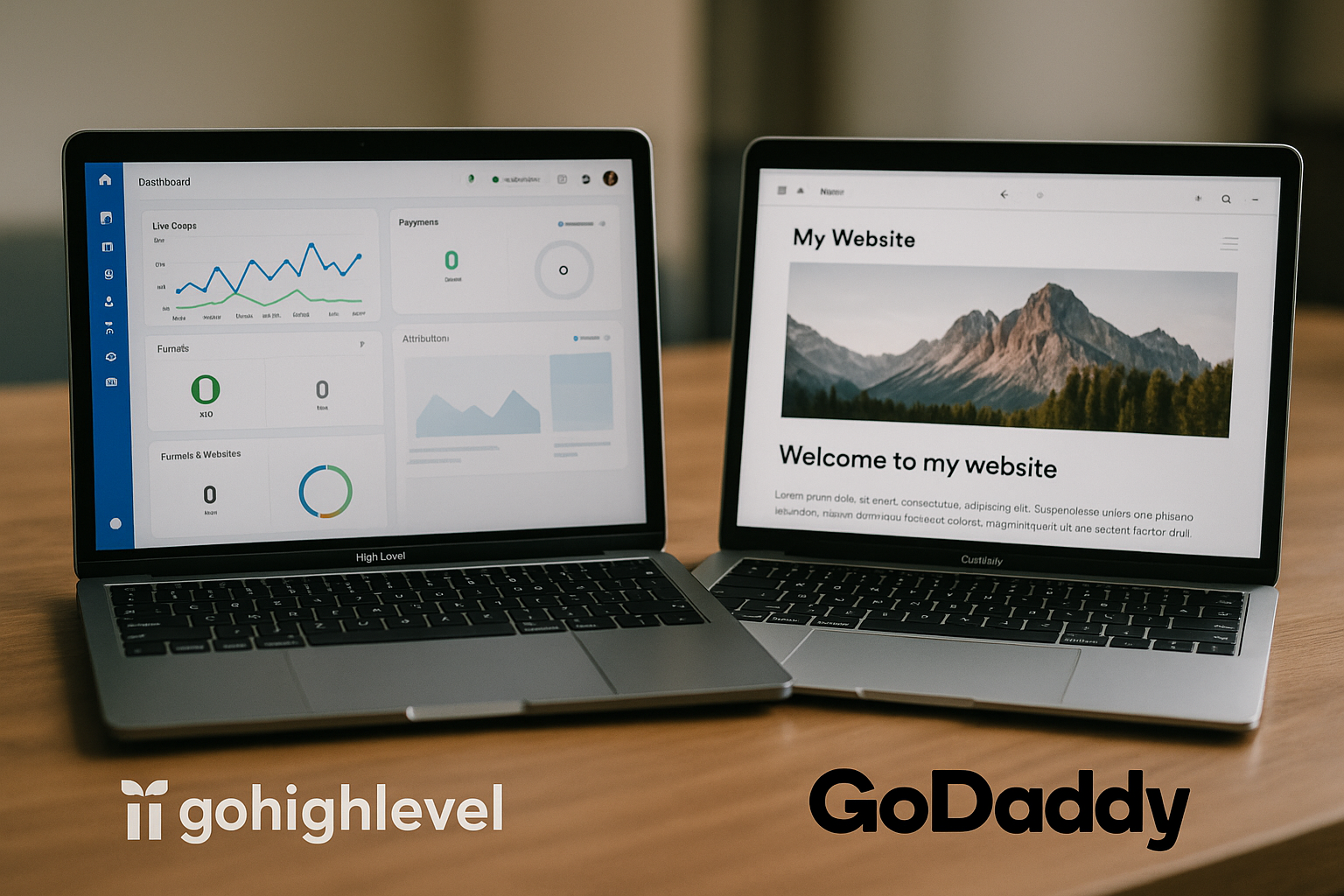
If you are comparing GoHighLevel vs GoDaddy, the short answer is this: GoHighLevel is the stronger choice if your goal is lead generation, follow-up, funnels, CRM, automation, AI-assisted communication, and agency-style client management. GoDaddy Website Builder is generally the simpler fit if you mainly want to publish a basic website without taking on a broader marketing system.
This comparison is written for buyers, not just feature shoppers. I’ll separate official GoHighLevel facts from practical buying guidance so you can decide which platform actually fits your business model.
Official website · Latest pricing & offers
Quick verdict: GoHighLevel vs GoDaddy Website Builder
GoHighLevel and GoDaddy Website Builder are often compared because both can help you get a business presence online. But they are built with very different intentions.
GoDaddy Website Builder is usually considered by people who want a straightforward website-first experience. GoHighLevel, by contrast, positions itself as a broader business and marketing platform designed to help capture, nurture, and close leads.
| Buyer priority | Better fit |
|---|---|
| Basic business website | GoDaddy Website Builder |
| Funnels and lead capture | GoHighLevel |
| CRM and automated follow-up | GoHighLevel |
| Agency client workflows | GoHighLevel |
| Simpler setup | GoDaddy Website Builder |
| Growth system beyond a website | GoHighLevel |
Who should choose GoHighLevel
Choose GoHighLevel if your website is only one part of your customer acquisition system. In this GoHighLevel vs GoDaddy comparison, GoHighLevel makes the most sense for businesses that care about leads, bookings, follow-up, reviews, repeat customers, and campaign tracking.
Based on official GoHighLevel product information, the platform includes categories such as CRM, websites, funnels, landing pages, forms, surveys, quizzes, chat tools, call tracking, inbound SMS and social DMs, Social Planner, Voice AI, Conversation AI, and Ad Manager for Google, Facebook, and Instagram ads.
That makes it a better fit for agencies, local service businesses, consultants, appointment-based businesses, and teams that want more than a digital brochure.
Who should choose a simpler website builder like GoDaddy
Choose a simpler website builder like GoDaddy if your main goal is to launch a basic site quickly. If you need a homepage, service pages, contact information, and a straightforward online presence, a website-first builder may be enough.
This is where the GoHighLevel vs GoDaddy Website Builder decision becomes practical. GoHighLevel gives you a much broader toolset, but not every beginner needs that on day one.
If you do not plan to run funnels, manage leads in a CRM, automate follow-up, or support clients, a lighter website builder can feel less intimidating.
Bottom-line recommendation
My bottom-line recommendation is simple: pick GoDaddy Website Builder if you only need a simple website. Pick GoHighLevel if you want the website to connect with a real revenue system.
For growth-focused small businesses and agencies, GoHighLevel vs GoDaddy is not just a website builder comparison. It is a choice between building a basic web presence and building a centralized system for lead capture, communication, automation, and sales follow-up.
What GoHighLevel actually is
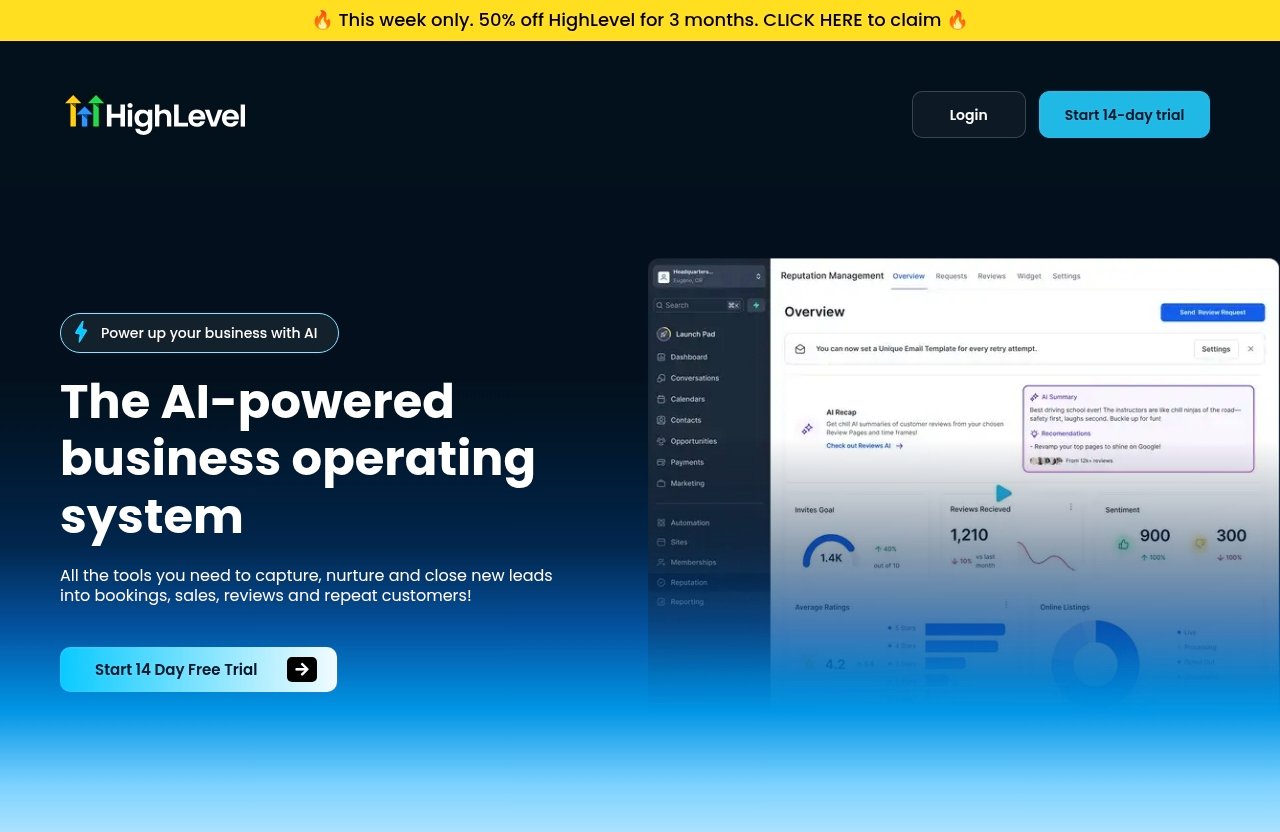
GoHighLevel is not best understood as a standard website builder. Officially, GoHighLevel describes itself as “the AI-powered business operating system.”
That positioning matters because the platform is designed around the full customer journey, not just web pages. In plain English, it aims to help businesses capture, nurture, and close new leads into bookings, sales, reviews, and repeat customers.
AI-powered business operating system
The phrase “AI-powered business operating system” is broad, but it gives useful context. GoHighLevel is intended to combine multiple marketing, sales, communication, and client management functions in one place.
According to official GoHighLevel homepage facts, the platform includes feature categories such as:
| Official GoHighLevel feature category | Practical use |
|---|---|
| CRM | Manage contacts and lead relationships |
| Voice AI | AI-assisted voice communication use cases |
| Forms, Surveys & Quizzes | Capture information from leads |
| Websites | Build web pages as part of a business system |
| Funnels & Landing Pages | Create conversion-focused flows |
| Webinar Funnels | Support webinar-based lead generation |
| Chat Widget / Conversation AI | Engage visitors and automate conversations |
| Call Tracking | Track phone-based lead sources |
| Inbound SMS & Social DMs | Manage conversations from multiple channels |
| Social Planner | Plan social content |
| Missed Call Text-Back | Respond when calls are missed |
| AI Biz Card Scanner | Capture contact details from business cards |
| QR Codes | Connect offline and online campaigns |
| Prospecting Tool | Support outreach and lead research workflows |
| Ad Manager | Manage Google, Facebook, and Instagram ads |
This is why a GoHighLevel review should not treat the platform like a simple drag-and-drop site builder. The website component exists, but it sits inside a wider marketing and sales ecosystem.
Core use cases for agencies and small businesses
For agencies, GoHighLevel is attractive because it can support repeatable client fulfillment. If you build funnels, manage leads, run campaigns, or help clients improve follow-up, having CRM, landing pages, forms, communication tools, and automation in one environment can reduce tool sprawl.
For small businesses, the appeal is similar but more operational. A local business may not need ten disconnected apps if it can centralize lead capture, messaging, missed call response, and customer follow-up.
This is one of the biggest differences in GoHighLevel vs GoDaddy. GoDaddy Website Builder is usually evaluated as a way to get a site online. GoHighLevel is better evaluated as a system for what happens before and after someone visits that site.
Why the platform is more than a website builder
A basic website builder helps you publish pages. A marketing operating system helps you turn visitors into leads, conversations, appointments, sales, reviews, and returning customers.
That difference is important because many businesses do not fail from lacking a website. They fail because leads are not captured clearly, inquiries are not followed up with quickly, and marketing campaigns are not connected to a structured pipeline.
In that context, GoHighLevel vs GoDaddy comes down to depth. If all you need is a simple web presence, GoHighLevel may be more than necessary. If you want an integrated growth engine, it is built for that broader job.
How GoDaddy Website Builder differs in intent
GoDaddy Website Builder is best understood as a website-first option. People usually look at it when they want a simple way to establish an online presence without building a complex marketing stack.
Because no official GoDaddy product page was provided for this comparison, I will avoid making detailed claims about current GoDaddy pricing, feature limits, templates, ecommerce tools, or plan differences. The useful comparison here is about intent and buyer fit.
Website-first versus revenue-system-first
The clearest distinction in GoHighLevel vs GoDaddy is website-first versus revenue-system-first.
A website-first builder focuses on helping you get pages published. A revenue-system-first platform focuses on the process around the website: capturing leads, routing inquiries, following up, tracking calls, managing contacts, and continuing communication after the first interaction.
That does not make one universally better. It means they serve different levels of business maturity and marketing ambition.
When simplicity is an advantage
Simplicity is not a weakness. If you are a beginner, side project owner, or small local business that only needs a clean web presence, choosing a simpler builder can be the smarter move.
A heavier platform can create friction if you do not plan to use its deeper tools. Setup, learning, and implementation time matter, especially if your immediate priority is simply publishing a site.
In a practical GoDaddy Website Builder vs GoHighLevel decision, the simpler option wins when speed, ease, and minimal configuration are more important than automation and growth infrastructure.
Where the comparison becomes uneven
The comparison becomes uneven when buyers expect both tools to solve the same problem. GoHighLevel is not just trying to help you build a website. It is trying to connect the website to CRM, funnels, AI communication, call tracking, social messages, ads, and follow-up.
That broader scope is why GoHighLevel can look more complex at first. It is also why it can become more valuable as your business needs mature.
So when evaluating GoHighLevel vs GoDaddy, do not ask only, “Which one builds a page?” Ask, “What do I need to happen after someone lands on that page?”
Feature-by-feature comparison: GoHighLevel vs GoDaddy
This feature comparison is based on verified GoHighLevel homepage facts and high-level buying guidance for GoDaddy Website Builder. I am intentionally not inventing unverified GoDaddy specifications.
The most useful way to compare the two is by business function: websites, funnels, lead capture, CRM, automation, communication, AI, and agency workflows.
Website building and landing pages
GoHighLevel includes websites, funnels, and landing pages among its official feature categories. That means it can support both standard web pages and conversion-focused pages.
For buyers comparing GoHighLevel vs GoDaddy Website Builder, GoDaddy’s likely appeal is a simpler website creation experience. If your site is mainly informational, a website-first builder may be easier to approach.
GoHighLevel becomes more interesting when the page is part of a campaign. For example, a service business may want a landing page connected to a form, follow-up sequence, call tracking, SMS conversation, and CRM record. That is where a basic page builder comparison stops being enough.
Funnels and lead capture
GoHighLevel officially lists Funnels & Landing Pages, Webinar Funnels, Forms, Surveys & Quizzes, QR Codes, and a Prospecting Tool. These tools support lead capture from multiple angles.
This is one area where GoHighLevel funnels are central to the buying decision. A funnel is not just a page; it is a structured path that moves someone from interest to action.
A simpler website builder can be fine for displaying information. But if you are running ads, collecting leads, hosting webinar campaigns, or trying to convert visitors into appointments, GoHighLevel’s funnel-oriented structure is more aligned with that goal.
CRM, automation, and follow-up
The official GoHighLevel feature list includes CRM, which is one of the biggest reasons buyers consider the platform. A CRM helps organize contact relationships and gives businesses a more structured way to manage leads.
In this GoHighLevel vs GoDaddy comparison, CRM is a key dividing line. A website builder may help you receive inquiries, but a CRM-centered system helps you manage what happens next.
The practical benefit is follow-up discipline. Leads can be captured through forms, conversations, SMS, social DMs, calls, or other entry points, then managed in a more centralized way. For businesses that depend on timely response, this can matter more than the design of the website itself.
AI and communication tools
GoHighLevel’s official homepage lists Voice AI, Chat Widget / Conversation AI, Inbound SMS & Social DMs, Call Tracking, and Missed Call Text-Back. Those categories show that communication is a major part of the platform.
This matters because many businesses lose opportunities between first contact and follow-up. Missed calls, slow replies, scattered social messages, and disconnected conversations can create revenue leakage.
In GoHighLevel vs GoDaddy, GoHighLevel has the stronger communication-system angle based on the verified product categories. If your business receives leads through calls, texts, social messages, or website chat, this broader toolset is likely more relevant than a basic website-only setup.
Client management and agency workflows
Agencies often need repeatable systems. They may create funnels, manage client leads, support follow-up, run ad campaigns, and report on marketing activity across multiple businesses.
GoHighLevel’s official feature categories, including CRM, funnels, landing pages, prospecting, social planning, ad management, communication tools, and AI-assisted features, make it a strong candidate for the best website builder for agencies if the agency defines “website builder” broadly.
That said, if an agency only designs basic brochure sites and does not touch lead management or automation, a simpler builder can still work. But for client fulfillment that includes sales pipelines, follow-up, and campaign infrastructure, GoHighLevel is built closer to the agency use case.
Official website · Latest pricing & offers
GoHighLevel pricing and trial
Pricing is one area where accuracy matters. Many comparison articles throw around numbers that may be outdated, incomplete, or copied from old sources.
For this article, I am using only the verified GoHighLevel pricing fact provided: the official pricing page confirms a 14 Day Free Trial Today. The captured official pricing snippet did not include exact plan names or prices.
Verified pricing facts from the official pricing page
The verified GoHighLevel pricing fact available here is the 14-day free trial. Since the captured snippet did not show exact plan names or prices, I will not invent them.
Before publishing or purchasing, you should verify current details directly from the official GoHighLevel pricing page. If you want to evaluate the platform through our affiliate path, you can start with the current trial page here: try GoHighLevel.
I am also not listing GoDaddy Website Builder prices because no official GoDaddy pricing page was provided for this comparison. For a clean GoHighLevel vs GoDaddy Website Builder pricing decision, check both official pricing pages at the time you buy.
What the pricing structure means for buyers
Even without listing exact plan amounts, the pricing decision should be framed around value and usage. A simple website builder may appear more appealing if your only goal is to publish a basic site.
GoHighLevel pricing should be evaluated differently. You are not only paying for web pages; you are evaluating a platform that includes official categories such as CRM, funnels, landing pages, AI communication, call tracking, social messaging, social planning, missed call text-back, prospecting, QR codes, and ad management.
That means the right question is not only, “Which is cheaper?” It is, “Which tools would I otherwise need to buy, connect, and manage separately?”
Why pricing context matters in the decision
Pricing context matters because a platform can be expensive if you underuse it and cost-effective if it replaces several tools. This is especially true for agencies and growth-focused businesses.
If you only need a five-page informational website, GoHighLevel may be more system than you need. If you need lead capture, CRM, follow-up, funnel pages, call tracking, and multi-channel communication, the value equation changes.
That is why “is GoHighLevel worth it” depends on your business model. In the GoHighLevel vs GoDaddy decision, GoHighLevel is easier to justify when the platform supports revenue-generating workflows, not just website publishing.
Pros and cons of GoHighLevel
A balanced GoHighLevel review should acknowledge both the upside and the tradeoffs. The platform is powerful, but power usually comes with more setup and a learning curve.
The key is matching the tool to the buyer. GoHighLevel is a strong choice for growth systems, but not necessarily the simplest choice for a beginner who wants only a basic website.
Main advantages
The biggest advantage of GoHighLevel is consolidation. Instead of building a website in one tool, forms in another, CRM in another, appointment follow-up in another, and campaign tracking somewhere else, GoHighLevel brings many marketing and communication categories together.
Officially verified categories include CRM, websites, funnels, landing pages, webinar funnels, forms, surveys, quizzes, chat widget, Conversation AI, Voice AI, call tracking, inbound SMS and social DMs, Social Planner, missed call text-back, QR codes, prospecting, and Ad Manager.
For agencies and small businesses, this can simplify the operational side of marketing. The benefit is not just having more features; it is having more of the customer journey connected.
Potential drawbacks
The main drawback is complexity. GoHighLevel can feel heavier than a basic website builder because it is not designed to be only a basic website builder.
You should expect more setup decisions. You may need to think through lead sources, forms, funnels, CRM stages, communication channels, automations, and client workflows.
That is not a dealbreaker for the right buyer. But in GoHighLevel vs GoDaddy, GoDaddy’s simplicity can be an advantage for users who do not want to manage a broader system.
Best-fit buyer profile
GoHighLevel is best for buyers who see their website as part of a sales and marketing machine. That includes agencies, lead generation businesses, local service providers, consultants, marketers, and scaling small businesses.
It is less ideal for someone who only wants a simple online business card. If you do not plan to use CRM, funnels, communication tools, or automation, you may not get enough value from the platform.
A good-fit GoHighLevel buyer is willing to invest some time upfront to create a system that can support future growth.
GoHighLevel vs GoDaddy Website Builder by use case
The easiest way to decide is to look at your actual use case. A tool that is perfect for an agency may be unnecessary for a personal portfolio, while a simple builder that is perfect for a brochure site may limit a business that wants automation.
This section is the practical decision engine for GoHighLevel vs GoDaddy.
Local business lead generation
For local business lead generation, GoHighLevel is usually the stronger fit. Local businesses often need more than a website: they need forms, call tracking, missed call response, SMS follow-up, chat, CRM, and review or repeat-customer workflows.
Official GoHighLevel facts support this use case because the platform says it helps users capture, nurture, and close new leads into bookings, sales, reviews, and repeat customers.
If your local business depends on phone calls, inquiries, appointments, and fast response, GoHighLevel’s broader system makes sense. If you only want a simple informational site with no structured follow-up, a simpler website builder may be enough.
Agency client fulfillment
For agency client fulfillment, GoHighLevel is one of the more natural fits in this comparison. Agencies need systems that can be repeated across clients, especially when the service includes lead generation, funnels, follow-up, and communication.
This is where GoHighLevel CRM and funnel capabilities become important. An agency can think beyond “we built your site” and move toward “we built your lead capture and follow-up system.”
A simple website builder can work for agencies focused only on design and publishing. But if your agency delivers marketing outcomes, GoHighLevel is better aligned with that operating model.
Solo creator or personal brand site
For a solo creator or personal brand site, the right choice depends on ambition. If you only need a homepage, bio, links, and a basic contact path, a simpler website builder may be the better choice.
If you plan to build funnels, collect leads, run webinars, manage contacts, and nurture an audience, GoHighLevel becomes more relevant. The official inclusion of webinar funnels, landing pages, forms, surveys, quizzes, and CRM supports this broader creator funnel use case.
In GoHighLevel vs GoDaddy, creators should avoid overbuying too early. But they should also consider whether they will outgrow a basic site quickly.
Simple brochure website
For a simple brochure website, GoDaddy Website Builder is generally the more sensible direction. If your only goal is to explain who you are, list services, and provide contact information, a full marketing operating system may be unnecessary.
This is one of the clearest cases where GoHighLevel can be overkill. You do not need CRM and automation if you have no plan to manage leads beyond basic inquiries.
So if the project is small, static, and unlikely to become campaign-driven, the simpler website-first path wins the GoHighLevel vs GoDaddy comparison.
Scaling beyond a basic site
If you expect to scale beyond a basic site, GoHighLevel deserves serious consideration. Many businesses start with a simple website and later realize they need landing pages, forms, CRM, follow-up, call tracking, chat, ads, and better customer communication.
At that point, businesses often begin connecting multiple tools. That can work, but it can also create complexity, duplicated data, and missed follow-up.
GoHighLevel is stronger when you already know the website is only the beginning. If your plan includes growth campaigns, client acquisition, automation, and repeatable lead management, it is the more future-ready choice in GoHighLevel vs GoDaddy.
My recommendation for readers on toptrustreview.com
My recommendation is intentionally scenario-based. I would not tell every reader to choose the same platform because the right answer depends on goals, technical comfort, and growth plans.
That said, for the audience of toptrustreview.com, GoHighLevel is the stronger recommendation when readers want a platform that can support lead generation, automation, agencies, and long-term marketing systems.
Best choice for affiliates and agencies
For affiliates and agencies, GoHighLevel is the better fit in most cases. These users typically need funnels, lead capture, tracking, CRM, follow-up, and scalable workflows.
GoHighLevel’s official product categories align closely with those needs. The platform includes funnels, landing pages, CRM, communication tools, AI categories, call tracking, social planning, prospecting, and ad management.
If you want to evaluate whether it fits your workflow, the most practical next step is to use the verified 14-day free trial through GoHighLevel’s trial access. Test it with a real funnel or client workflow rather than judging it only from the dashboard.
Best choice for beginners
For beginners, the answer is more nuanced. If you are a beginner who only wants a website, choose the simpler website-first option.
If you are a beginner building a service business, agency, coaching offer, consulting funnel, or local lead generation system, GoHighLevel may be worth learning. The learning curve is real, but the platform gives you room to build a more complete system.
In GoHighLevel vs GoDaddy, beginners should choose based on near-term execution. If you need to publish today, keep it simple. If you are building a real marketing engine, consider starting with the tool you are less likely to outgrow.
Best choice if you may outgrow your current tool
If you already suspect you will outgrow a basic website builder, GoHighLevel is the safer strategic choice. Moving later from a simple site into CRM, funnels, automation, and multi-channel communication can create extra migration work.
GoHighLevel is not the lightest option, but it is built for more advanced marketing operations from the start. That matters if your business roadmap includes campaigns, paid ads, lead nurturing, client management, or repeat-customer workflows.
Final recommendation: for a simple site, choose simplicity. For a growth system, GoHighLevel vs GoDaddy points clearly toward GoHighLevel.
Official website · Latest pricing & offers
FAQ
What are the disadvantages of GoHighLevel?
The main disadvantages of GoHighLevel are complexity, setup time, and the learning curve. It is powerful because it includes many marketing, CRM, funnel, AI, and communication functions, but that also means it can feel overwhelming compared with a basic website builder.
It may also be more than you need if your only goal is a simple brochure website. In the GoHighLevel vs GoDaddy decision, GoHighLevel is best for users who will actually use its broader growth features.
Who is GoDaddy's biggest competitor?
GoDaddy has several common competitors across domain registration, hosting, and website building. Depending on the category, buyers often compare it with other domain providers, hosting companies, ecommerce platforms, and website builders.
For marketing-focused users, GoHighLevel can be considered a GoHighLevel alternative to a basic website-first path, but it is not a direct domain registrar comparison in the traditional sense. The better question is whether you need a simple website tool or a broader business operating system.
Can I buy a domain from GoHighLevel?
There are references in search snippets and user discussions to a HighLevel domain purchase feature, but you should confirm current availability, requirements, and exact rules in the official GoHighLevel documentation before relying on it.
For buying decisions, treat domain purchasing as separate from the core GoHighLevel vs GoDaddy comparison. GoDaddy is widely associated with domains, while GoHighLevel should primarily be evaluated for CRM, funnels, lead capture, automation, communication, and business growth workflows.
What is the GoDaddy controversy?
Discussions around GoDaddy controversies are usually broad and vary by user experience. Some users online discuss concerns related to customer experience, pricing, policies, or business practices, but it is important not to treat individual complaints as universal facts.
If this matters to your purchase decision, review current customer feedback, official policies, and recent terms directly. For this article, the more useful comparison remains practical: GoDaddy Website Builder is the simpler website-first option, while GoHighLevel is the stronger all-in-one marketing and automation platform.
Related Reading
References
- GoHighLevel Official Homepage
- HighLevel Pricing
- How to set up LC Email Dedicated Domain using GoDaddy
- GoHighLevel vs. GoDaddy Website Builder: Which is better?