
Skool vs Mighty Networks: Which Community Platform Is Better in 2026?
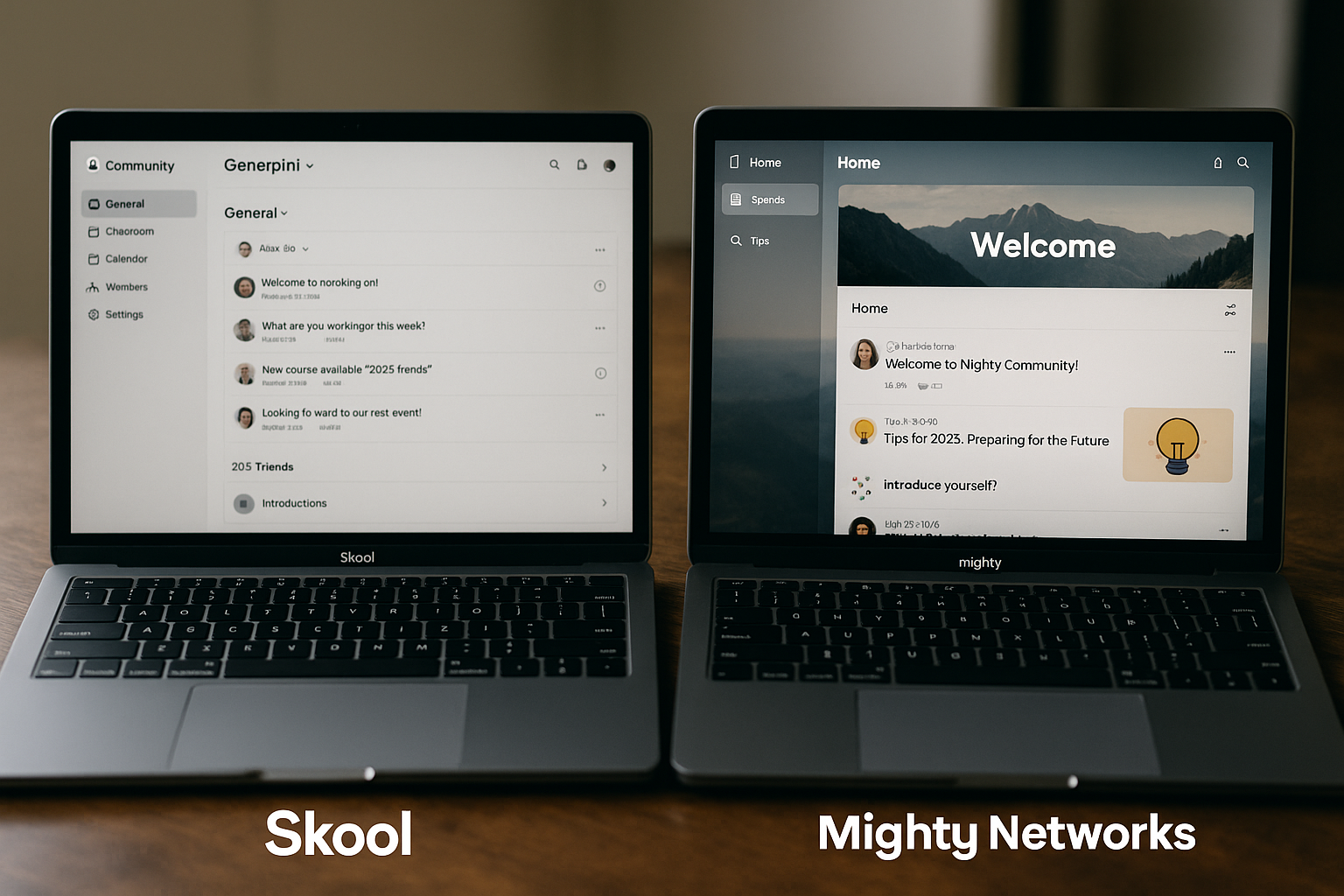
If you are comparing Skool vs Mighty Networks, you are probably trying to answer one practical question: which platform will your members actually use?
This review is written for creators, coaches, educators, and community builders who care about engagement, simplicity, and a clean member experience. I’ve based this comparison on official product pages, verified pricing details for Skool, and SERP-verified information for Mighty Networks. TopTrustReview may earn a commission if you use our Skool link, but the recommendation below is based on usefulness, fit, and verified facts—not commission alone.
Official website · Latest pricing & offers
Skool vs Mighty Networks: Quick Verdict
| Category | Skool | Mighty Networks |
|---|---|---|
| Best for | Simple paid communities, lightweight courses, coaching groups | Broader membership communities with courses, events, monetization, mobile apps, and branded app options |
| Simplicity | Strong advantage | More flexible, but broader scope can mean more setup decisions |
| Engagement feel | Community-first, gamified, easy to understand | Strong membership platform approach with community, courses, events, and messaging |
| Pricing clarity | Official Skool pricing is clearly listed: Hobby at $9/month and Pro at $99/month | Mighty Networks pricing should be checked on its official site before buying |
| Course use case | Unlimited courses and videos on both Skool plans | Positioned around community, courses, events, and monetization |
| Best decision factor | Choose if you want fewer moving parts | Choose if you need a broader membership platform experience |
Who Skool is best for
Skool is best for creators who want to launch a community quickly without building a complicated tech stack. If your business is built around coaching, peer discussion, accountability, lightweight course content, and repeat member engagement, Skool is the cleaner fit.
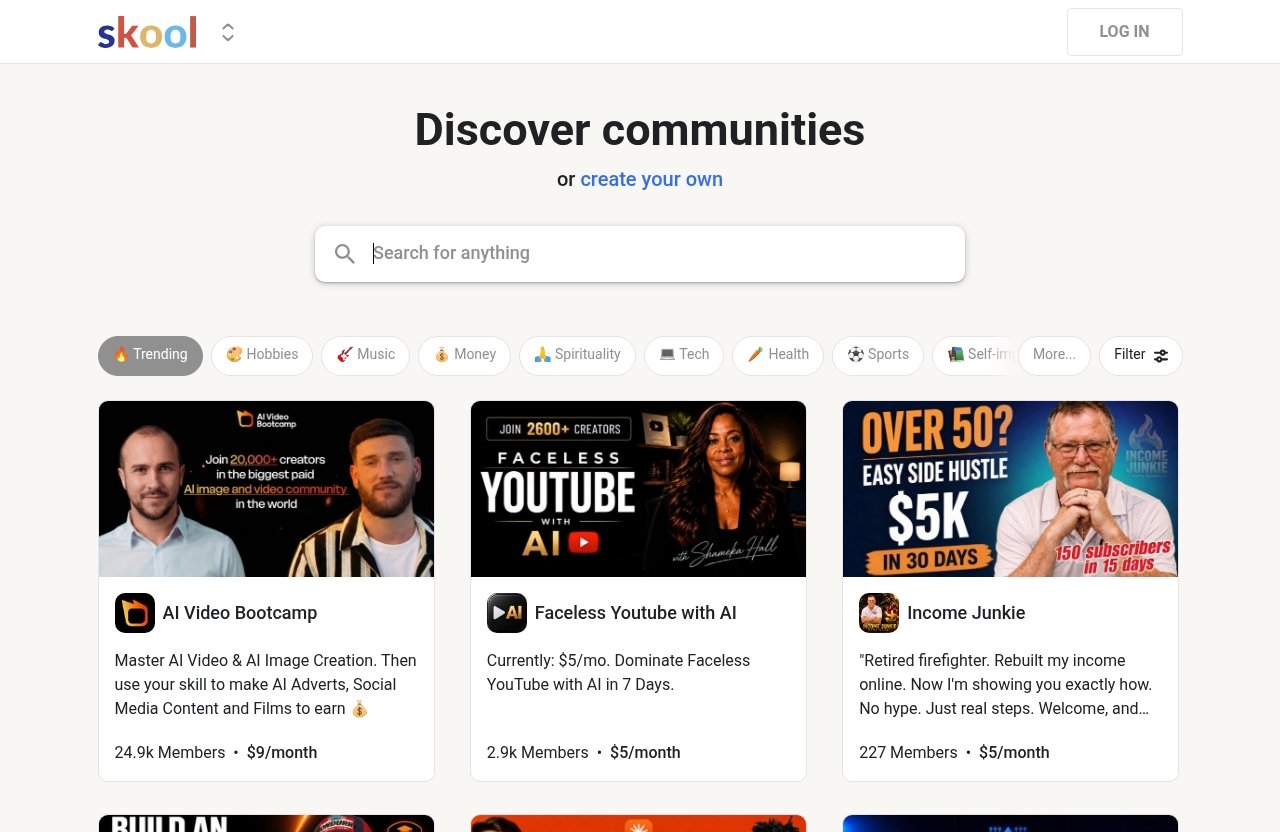
In this Skool vs Mighty Networks comparison, Skool stands out for creators who care less about advanced platform complexity and more about getting members to participate. The product’s official homepage positions it as a place to discover communities or create your own, which reflects its simple community-first focus.
If you want to review the current Skool plans directly, you can visit Skool through our affiliate link here: see Skool pricing and features.
Who Mighty Networks is best for
Mighty Networks is best for creators who want a broader membership platform with community, courses, events, monetization, mobile apps, and branded app or service options. It may appeal to businesses that want more of an all-in-one membership environment.
In a Skool vs Mighty Networks decision, Mighty Networks makes more sense when your community strategy depends on a richer branded ecosystem rather than the simplest possible member path.
The short answer: which one wins on simplicity and engagement
For simplicity and community-first engagement, I would choose Skool. It is easier to understand, easier to explain to members, and better suited to creators who want a focused online community platform without unnecessary friction.
Mighty Networks remains a legitimate and capable membership platform, especially if you want a wider mix of community, courses, events, monetization, mobile apps, and branded app options. But if the main buying criteria are speed, clarity, and member participation, Skool vs Mighty Networks leans toward Skool.
What These Platforms Are Designed to Do
Skool at a glance
Skool is designed around communities. Its official homepage presents it as a place where people can discover communities or create their own, and its official pricing page confirms that both plans include unlimited members, unlimited courses, unlimited videos, unlimited live calls, a custom URL, and affiliates.
That matters because many creators do not need a sprawling software system. They need a place where members can join, learn, interact, and return regularly.
From a practical Skool vs Mighty Networks perspective, Skool feels more like a focused community-and-course hub than a heavy membership operating system.
Mighty Networks at a glance
Mighty Networks is positioned as a broader membership platform. Verified information describes support for community, courses, events, monetization, mobile apps, and branded apps or services.
That broader scope is useful for creators who want more than a simple group and content area. It can be especially relevant when the platform itself is part of the brand experience.
In a mighty networks review, the key strength is not just one feature. It is the combination of community, content, events, monetization, messaging, and mobile access inside one membership platform.
Why the use case matters before comparing features
The mistake many creators make is comparing feature lists before defining the member journey. A platform can have more options and still be worse for your audience if members feel lost or distracted.
For a coaching community, mastermind, paid membership, or simple course platform, friction is expensive. Every extra step can reduce participation.
That is why this community platform comparison focuses heavily on workflow, UX, and retention—not just whether each product technically supports communities or courses.
Pricing Comparison: Skool vs Mighty Networks
Skool pricing and what you get
The official Skool pricing page shows two plans: Hobby and Pro.
| Skool Plan | Monthly Price | Included | Transaction Fee |
|---|---|---|---|
| Hobby | $9/month | Unlimited members, unlimited courses, unlimited videos, unlimited live calls, custom URL, affiliates | 10% |
| Pro | $99/month | Unlimited members, unlimited courses, unlimited videos, unlimited live calls, custom URL, affiliates | 2.9% |
The official pricing page also shows “2 months free!” for yearly billing. That gives Skool pricing a level of transparency that is helpful when you are modeling revenue before launch.
In a Skool vs Mighty Networks cost discussion, this clarity is one of Skool’s biggest practical advantages. You can see the monthly price, the transaction fee, and the core inclusions without building a complicated spreadsheet.
How pricing can affect creator margins
Pricing is not just about the monthly subscription. Transaction fees matter because they affect every sale you make through the platform.
With Skool, the Hobby plan has a 10% transaction fee, while the Pro plan has a 2.9% transaction fee. Both plans include unlimited members, unlimited courses, unlimited videos, unlimited live calls, a custom URL, and affiliates.
That means the right plan depends partly on your revenue volume. For a small or early-stage creator, Hobby may be attractive because of the low monthly price. For a creator with more sales volume, Pro may become more appealing because of the lower transaction fee.
When people search skool vs mighty networks cost, they are usually not just asking “Which monthly plan is cheaper?” They are asking which platform leaves more room for profit after subscriptions, transaction fees, and operational complexity.
Why transparent pricing matters for buyers
Transparent pricing reduces buying anxiety. If you are launching a paid community, you need to know your platform costs before you set member pricing.
For Mighty Networks pricing, buyers should verify current details directly on the official Mighty Networks site before making a decision. The verified information used here supports that Mighty Networks offers community, courses, events, monetization, mobile apps, and branded app/service options, but this article does not invent plan prices or unverified fees.
That is important for trust. A fair Skool vs Mighty Networks review should not guess numbers just to make the comparison look complete.
Ease of Use and Setup Time
Which platform is faster to launch
Skool has the advantage if your goal is to launch quickly. The product is easier to understand because it is centered on creating and joining communities, with courses, videos, live calls, affiliates, and a custom URL included on both official plans.
For a creator who wants to start a paid group this week, fewer decisions can be a major benefit. You can focus on your offer, your content, and your member onboarding.
In the Skool vs Mighty Networks simplicity battle, Skool is the platform I would expect most solo creators to launch faster.
Learning curve for admins
Admin learning curve matters more than many buyers admit. If the platform takes too long to configure, creators often delay launch or overbuild before they have paying members.
Skool’s appeal is that it feels lightweight. You are not forced to think like a software architect before building a useful member space.
Mighty Networks may be a better fit for creators who want a broader membership platform with community, courses, events, monetization, mobile apps, and branded app options. But that broader positioning can also mean more strategic decisions during setup.
How much tech stack you need to replace
Before choosing, list what you are trying to replace. Are you replacing a social group, course area, calendar, live call hub, affiliate setup, or full branded membership experience?
Skool’s verified inclusions make it attractive for creators who want one simple home for members, courses, videos, live calls, custom URL use, and affiliates. That is a clean stack for many coaching and education businesses.
In a broader Skool vs Mighty Networks evaluation, Mighty Networks may be more appealing when your goal is to build a wider membership ecosystem rather than a streamlined community hub.
Community Engagement Features
Feed, comments, and discussion flow
Community engagement depends on how natural it feels to post, reply, and return. If members have to think too much, participation drops.
Skool’s community-first design is its biggest advantage. It is built around the idea that members should find the group, understand what to do, and start interacting without a long onboarding curve.
In a practical skool review, the strongest case for the platform is not that it tries to do everything. It is that it makes the core community loop feel obvious.
Gamification and motivation
Skool is frequently associated with gamified, fun-based communities in SERP-level comparisons. That matters because motivation is one of the hardest parts of running an online group.
Gamification can help members feel progress, recognition, and momentum. For coaching communities, accountability groups, and educational memberships, those small engagement loops can influence retention.
This is one area where Skool vs Mighty Networks tends to favor Skool if your priority is repeat participation over platform breadth.
Searchability and everyday member activity
A good community platform should help members find conversations, resources, and reasons to come back. Searchability and day-to-day usability affect whether the platform becomes a habit or just another login.
Mighty Networks supports community, courses, events, messaging, mobile apps, and monetization, which can support a fuller member environment. That may be valuable when your community has multiple content and interaction layers.
But if your community model depends on fast discussion, simple navigation, and regular participation, Skool vs Mighty Networks again points toward Skool for everyday engagement.
Official website · Latest pricing & offers
Courses, Events, and Live Calls
Course delivery depth
Skool’s official pricing facts are clear: both Hobby and Pro include unlimited courses, unlimited videos, and unlimited live calls. That is strong for creators who want to host educational content alongside community discussion.
The key question is not whether Skool can support courses. It is whether your course model needs a simple library and community layer or a more expansive membership structure.
Mighty Networks is positioned around community, courses, events, monetization, and mobile apps. So in a Skool vs Mighty Networks course platform comparison, Mighty Networks may appeal to creators who want a broader program environment.
Event handling
Events and live interaction are central to many paid communities. Skool includes unlimited live calls on both official plans, which is helpful for coaches, educators, and community hosts who rely on recurring sessions.
Mighty Networks is also described as supporting events. That makes it relevant for creators whose membership includes scheduled programming, live sessions, or community gatherings.
The decision comes down to how much structure you need. If you want simple live call support inside a community-first platform, Skool fits well. If events are part of a larger branded membership experience, Mighty Networks may deserve a closer look.
When course complexity becomes a deciding factor
Not every creator needs a complex learning environment. Many profitable communities run on a simple model: discussions, recorded videos, live calls, and member accountability.
Skool is a strong match for that model because its verified plans include unlimited courses, videos, and live calls. The platform does not require creators to overcomplicate the learning journey.
However, if your offer depends on a broader membership platform with courses, events, monetization, mobile apps, and branded app/service options, the Skool vs Mighty Networks decision becomes less obvious. Mighty Networks may be better aligned with that broader structure.
Member Experience: Which Platform Feels Better for Users?
Navigation and clarity
Members do not care how impressive your backend is. They care whether they can find the next lesson, join the conversation, attend the call, and feel connected.
Skool’s advantage is clarity. The member experience is easier to understand because the platform is built around a focused community space rather than a large number of possible configurations.
That is why Skool vs Mighty Networks often comes down to philosophy. Skool prioritizes a cleaner, community-first path, while Mighty Networks supports a broader membership environment.
Mobile experience
Mobile access matters because members often check communities between meetings, during commutes, or after live sessions. Mighty Networks is verified as offering native iOS and Android apps, along with community, courses, events, and messaging.
That is a meaningful strength for Mighty Networks. If mobile app access and a branded mobile experience are central to your strategy, it may be a better fit.
For Skool, the stronger argument is simplicity and habit formation. In this Skool vs Mighty Networks comparison, Mighty Networks has the clearer verified mobile-app positioning, while Skool has the cleaner community UX angle.
Retention and habit-building
Retention is not just about content volume. It is about whether members develop a habit of returning, posting, learning, and connecting.
Skool’s gamified and community-focused feel can help with that. For creators who run accountability groups, masterminds, and coaching communities, habit-building is often more valuable than advanced configuration.
Mighty Networks can also support retention through community, courses, events, messaging, monetization, and mobile apps. The difference is that Skool feels more focused, while Mighty Networks feels broader.
Payments, Monetization, and Business Flexibility
Selling memberships and courses
Both platforms are relevant to creators selling access to a community, membership, or educational experience. Mighty Networks is verified as supporting monetization, while Skool’s official pricing facts include affiliates and transaction fees on both plans.
Skool’s two plans both include unlimited members, unlimited courses, unlimited videos, unlimited live calls, custom URL, and affiliates. That makes it practical for creators who want a straightforward monetization setup around a paid community.
In a Skool vs Mighty Networks business comparison, Skool is easier to reason about because the verified pricing and inclusions are very clear.
Transaction fees and checkout implications
Skool’s Hobby plan includes a 10% transaction fee. Skool’s Pro plan includes a 2.9% transaction fee.
That difference matters if you plan to sell paid memberships or courses at scale. A creator making only a few early sales may value the Hobby plan’s $9/month price, while a creator with higher sales volume may care more about the Pro plan’s lower transaction fee.
For Mighty Networks, buyers should check current official pricing and fee details directly before making a decision. This Skool vs Mighty Networks review does not assume unverified checkout terms, payment processors, or hidden costs.
When affiliates and custom URLs matter
Affiliates can be important if your growth strategy includes partners, student referrals, or creator collaborations. Skool includes affiliates on both Hobby and Pro, based on the official pricing facts.
A custom URL can also make the community feel more professional. Skool includes a custom URL on both official plans, which is useful for brand consistency.
If you want to inspect the official Skool offer while reading this comparison, you can use our review link: visit Skool here. As noted earlier, TopTrustReview may earn a commission, but our Skool vs Mighty Networks recommendation is based on verified facts and practical fit.
Pros and Cons Summary
Skool pros and cons
Skool pros:
- Simple community-first user experience
- Official pricing is transparent: Hobby at $9/month and Pro at $99/month
- Both plans include unlimited members, unlimited courses, unlimited videos, and unlimited live calls
- Both plans include custom URL and affiliates
- Strong fit for coaching communities, paid groups, masterminds, and lightweight courses
- Easier choice for creators who value engagement and speed over platform breadth
Skool cons:
- Hobby has a 10% transaction fee
- Pro has a higher monthly price at $99/month, though with a lower 2.9% transaction fee
- May not be the best fit if your priority is a broader branded membership platform with mobile apps and branded app/service options
- Less appealing if you want a platform positioned around a wider membership ecosystem
In a balanced Skool vs Mighty Networks view, Skool wins on simplicity, but not necessarily on breadth.
Mighty Networks pros and cons
Mighty Networks pros:
- Legitimate membership platform with community, courses, events, monetization, and messaging
- Verified native iOS and Android app support
- Offers mobile apps and branded app/service options
- Better fit for creators who want a broader membership platform experience
- Useful for brands that care deeply about mobile and branded community presence
Mighty Networks cons:
- Broader platform scope can mean more setup decisions
- Pricing should be verified directly on the official site before purchase
- May feel like more platform than needed for simple coaching groups or lightweight paid communities
- Not always the simplest path if your main goal is fast engagement
A fair mighty networks review should recognize that the platform is capable. The main question is whether that capability helps your members or adds unnecessary complexity.
Best-fit scenarios by creator type
| Creator Type | Better Fit | Why |
|---|---|---|
| Solo coach launching a paid group | Skool | Simple setup and community-first engagement |
| Accountability community | Skool | Gamification and repeat participation are strong advantages |
| Lightweight course plus community | Skool | Unlimited courses, videos, live calls, and members on both plans |
| Brand building a broader membership platform | Mighty Networks | Community, courses, events, monetization, mobile apps, and branded options |
| Creator prioritizing native mobile apps | Mighty Networks | Verified iOS and Android app support |
| Creator prioritizing pricing clarity | Skool | Official Skool pricing is easy to evaluate |
This community platform comparison is not about declaring one product universally superior. It is about matching the platform to the kind of member experience you want to create.
Final Recommendation: Which Should You Choose?
Choose Skool if…
Choose Skool if your priority is simplicity, engagement, and a clean community-first experience. It is the better fit for creators who want to launch quickly, reduce setup friction, and give members an obvious place to interact.
Skool is especially compelling for coaching communities, paid memberships, masterminds, accountability groups, and lightweight courses. The verified pricing is straightforward: Hobby is $9/month with a 10% transaction fee, and Pro is $99/month with a 2.9% transaction fee.
In my final Skool vs Mighty Networks recommendation, Skool is the better default choice for most creators who want a simple online community platform that members can understand quickly.
Choose Mighty Networks if…
Choose Mighty Networks if you want a broader membership platform with community, courses, events, monetization, messaging, mobile apps, and branded app or service options. It may be the stronger fit for brands that care about a richer mobile or branded membership experience.
Mighty Networks is also worth considering if your strategy is not just “community plus content,” but a more expansive ecosystem. For some creators, that extra breadth is worth the additional planning.
So while Skool vs Mighty Networks favors Skool for simplicity, Mighty Networks can still be the better choice for creators who need a broader platform footprint.
Decision checklist before you buy
Before choosing, answer these questions:
- Do I need the simplest possible setup?
- Will my members mainly engage through discussions, calls, and lightweight course content?
- Do I care more about participation than advanced platform breadth?
- Is transparent pricing important before I launch?
- Do I need native iOS and Android apps or branded app options?
- Am I building a simple coaching community or a broader membership platform?
- How much do transaction fees affect my margins?
- Will affiliates help me grow?
If you answered “yes” to simplicity, engagement, lightweight courses, and clear pricing, Skool is likely the better choice. If you answered “yes” to broader membership infrastructure, mobile apps, branded app options, and a larger platform experience, Mighty Networks may be preferable.
The bottom line: Skool vs Mighty Networks is really a choice between focused community simplicity and broader membership platform flexibility. For most creators prioritizing engagement and member experience, I would start with Skool.
Official website · Latest pricing & offers
FAQ
Who are Mighty Networks' competitors?
Mighty Networks' competitors include Skool, Circle, and other community or course/community tools. In a Skool vs Mighty Networks comparison, Skool is usually the simpler community-first option, while Mighty Networks is positioned as a broader membership platform.
Is Mighty Network legit?
Yes, Mighty Networks is legit. It supports community, courses, events, messaging, monetization, and native iOS and Android apps, making it a real option for creators building a membership platform.
What is better than Skool?
It depends on your goals. Some users may prefer Circle for more advanced community features and branding control, while others may prefer Mighty Networks for broader membership platform needs. If simplicity and engagement matter most, Skool is still one of the strongest choices.
What is the best community building platform?
There is no universal best community platform. The right choice depends on whether you value simplicity, engagement, branding, course depth, mobile experience, monetization, or scalability. For many creators, Skool vs Mighty Networks comes down to Skool for focused engagement and Mighty Networks for broader membership flexibility.
Related Reading
- Systeme.io Review 2026: Honest Verdict
- Systeme.io Pricing 2026: Which Plan Is Best Value?
- gohighlevel vs clickfunnels: Which Platform Is Better for Your Business?
References
- Mighty Networks vs. Skool
- Skool vs Mighty Networks: Ultimate 2026 Comparison
- Skool vs Mighty Networks: My Raw Views Using Both (2026)
- Skool vs Mighty Networks: Which Community Platform Is Better? (2026)