
Skool for Memberships: Complete Setup Guide

Building a paid community is easier when the offer, member journey, and pricing model are clear before you invite anyone in. This guide explains how to use skool for memberships in a practical way, from choosing a plan to launching your first members and improving retention.
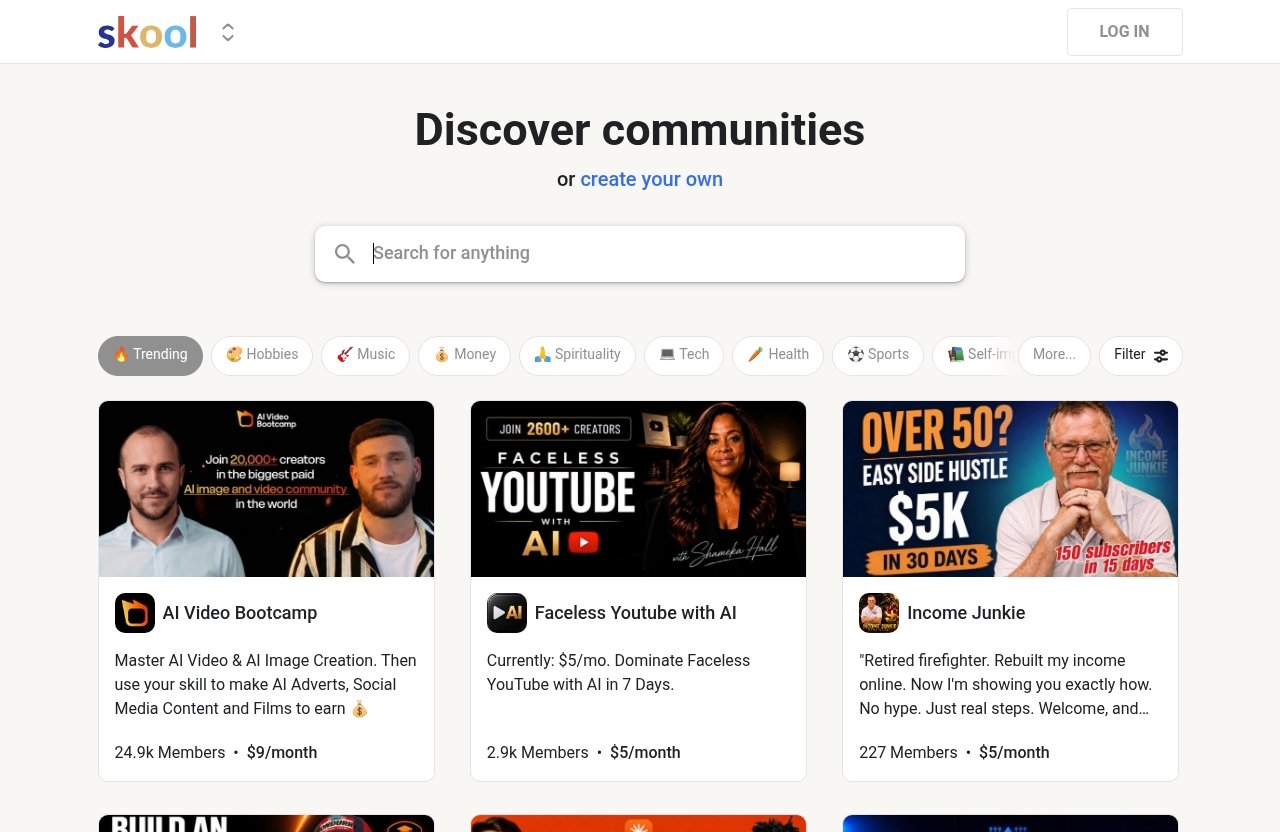
Skool is positioned as a community platform where people can discover communities or create their own. Some communities are free, while others are paid. For creators, coaches, educators, consultants, and small business owners, the appeal is straightforward: you can organize community interaction, learning content, and recurring membership access in one place.
This article is based on verified official Skool product information. Before purchasing, always review the current official pricing page and help-center documentation, since plan details and terms can change.
Official website · Latest pricing & offers
Skool for Memberships: What It Is and Why It Works
Skool’s core purpose: communities, courses, and memberships
At its core, Skool is a platform for creating or discovering communities. A creator can use skool for memberships to bring paid members into a shared destination for discussions, educational material, live sessions, and ongoing support.
The practical membership use case is not simply uploading content. It is creating a repeatable experience: members join, understand what to do first, take action, connect with others, and keep returning because the community helps them make progress.
Skool’s official pricing page lists unlimited members, unlimited courses, unlimited videos, and unlimited live calls on both available plans. That makes it relevant for membership owners who do not want their core plan choice to depend on a small member or content allowance.
Who Skool is best for: creators, coaches, educators, and community builders
Skool can be a solid fit if your offer depends on continued access, accountability, learning, or peer interaction. Examples include:
- A coach running weekly implementation discussions
- A course creator adding a member community around their lessons
- A consultant teaching a repeatable business process
- An educator supporting students beyond a one-time workshop
- A niche business owner building a customer or professional network
The strongest skool for memberships offers usually solve one focused problem for one specific audience. A broad “business community” may be difficult to explain, while “a weekly implementation community for freelance designers raising their rates” gives buyers a tangible reason to join.
Why a simple platform can improve launch speed and member experience
Many memberships fail before launch because the creator spends too long comparing tools, designing complex automations, and building a huge content library. Your first version should be useful, not exhaustive.
A simpler setup can help you spend more time on the elements members notice: a clear promise, helpful onboarding, reliable communication, and an active community. When evaluating Skool features, focus on whether the platform supports the membership experience you plan to deliver—not whether it has every possible feature you may someday want.
Skool for Memberships Pricing: Which Plan to Choose
Skool has two official plans listed on its pricing page: Hobby and Pro. Both plans include unlimited members, unlimited courses, unlimited videos, unlimited live calls, a custom URL, and affiliates.
The official pricing page also displays the note “2 months free!” Review the page directly before buying so you understand the current offer as presented by Skool.
Hobby plan: verified price and features
The Hobby plan costs $9/month and includes a 10% transaction fee. According to the official pricing information, it includes:
| Included on Hobby | Verified Detail |
|---|---|
| Members | Unlimited members |
| Learning content | Unlimited courses and unlimited videos |
| Events | Unlimited live calls |
| Promotion | Custom URL and affiliates |
| Monthly platform price | $9/month |
| Transaction fee | 10% |
For a new creator, Hobby can be a reasonable way to validate demand. You get access to the same listed core capacity for members, courses, videos, and live calls, while keeping the fixed monthly platform cost lower.
The tradeoff is the transaction fee. If your paid community starts generating meaningful sales volume, that 10% fee becomes a more important part of your financial decision.
Pro plan: verified price and features
The Pro plan costs $99/month and includes a 2.9% transaction fee. Its official listed inclusions are the same core items: unlimited members, unlimited courses, unlimited videos, unlimited live calls, a custom URL, and affiliates.
| Included on Pro | Verified Detail |
|---|---|
| Members | Unlimited members |
| Learning content | Unlimited courses and unlimited videos |
| Events | Unlimited live calls |
| Promotion | Custom URL and affiliates |
| Monthly platform price | $99/month |
| Transaction fee | 2.9% |
For a growing skool for memberships business, Pro may make more financial sense once lower transaction fees outweigh the higher monthly price. Do the math using your expected membership revenue rather than choosing based on a vague feeling that one plan sounds more professional.
How to choose between Hobby and Pro based on growth stage
The best choice among the Skool subscription tiers depends on your current revenue stage and pricing strategy.
Start by estimating expected monthly membership revenue. Then compare the 10% Hobby transaction fee plus $9/month against the 2.9% Pro transaction fee plus $99/month. This does not require an elaborate spreadsheet; it simply requires an honest estimate of what you expect to collect.
If you are testing an offer with a small initial group, Hobby may reduce your fixed monthly cost. If you already have an audience, paid customers, or a clear launch pipeline, Pro may be worth evaluating because its transaction fee is lower. Verify all current Skool pricing details on the official page before making the decision.
Step 1: Define Your Membership Offer Before You Build
Pick a niche and transformation
The foundation of a profitable membership is not the platform. It is a specific outcome for a specific person.
Before beginning your skool for memberships setup, write one sentence that answers these questions:
- Who is this community for?
- What problem are they trying to solve?
- What result will your membership help them work toward?
- Why should they join now rather than search for free advice?
For example, “I help first-time course creators build and launch one focused digital course” is more actionable than “I help entrepreneurs succeed.” The first statement tells you what lessons to create, what conversations to host, and what members should accomplish in their first month.
Choose the outcome your members want
People rarely pay for access alone. They pay for progress, clarity, support, accountability, and a more direct route to a desired outcome.
Turn your promise into a practical member journey. If you run a community for health coaches, the journey might begin with refining their offer, then building a client acquisition routine, then improving delivery. Your content and conversations should support those steps.
Be careful not to promise results you cannot control. A better membership promise focuses on what you provide: a framework, feedback, practice opportunities, templates, coaching, or structured accountability.
Decide what is included at launch versus later
Do not delay your launch because you think you need dozens of finished lessons. A focused starting library and a clear live engagement plan are often more valuable than a large collection of unorganized material.
For your initial skool paid community, define:
- One primary member outcome
- A short welcome path
- A starter lesson, resource, or challenge
- A schedule for your first live call or member discussion
- A simple method for members to ask questions
Create a “later” list for advanced lessons and optional resources. This keeps you from building content no one has requested yet.
Step 2: Set Up Your Skool Community
Create your group and branding assets
Once the offer is clear, prepare the assets you need for a consistent group identity. This may include your community name, a short positioning statement, a visual icon, a cover image, and a welcome message.
When setting up skool for memberships, keep the branding functional. A clean name and direct promise matter more than a complicated visual identity. Members should understand the audience and benefit within seconds of landing on the community page.
If the setup process provides branding fields, use the same language across each one. Consistency reduces confusion when someone arrives from a social post, email, partner recommendation, or custom URL.
Write the group name and description
A strong group name is easy to understand and easy to repeat. Avoid clever wording that forces potential members to guess what the community does.
Your description should clearly cover:
- Who belongs in the group
- The main outcome or topic
- What members can expect after joining
- The type of guidance, content, or community support available
For example: “A practical community for freelance copywriters who want to improve client systems, pricing confidence, and weekly outreach consistency.” This is clearer than a generic promise of “growth.”
Set your icon, cover image, and positioning
Your visuals should reinforce the promise rather than distract from it. Use an icon and cover image that feel professional, readable, and aligned with your audience.
More importantly, make sure your positioning is repeated in your welcome message, content categories, launch emails, and promotional pages. A successful Skool membership setup feels coherent from the first impression through the first member conversation.
Step 3: Structure Courses, Posts, and Member Access
Organize your content library
Your content library should guide members toward progress. Start with a few clear sections based on the stages of the transformation you teach.
For instance, a creator membership could organize material around offer clarity, audience growth, sales systems, and delivery. A coaching membership could separate foundations, implementation, troubleshooting, and advanced strategies.
With skool for memberships, resist the urge to make every resource equally prominent. New members need a recommended starting point. Label the first lesson, checklist, or challenge clearly so they do not feel overwhelmed.
Use community posts to drive engagement
Courses can deliver instruction, but community posts keep a membership active. Use posts to create interaction around the work members are doing right now.
Useful post formats include:
- Weekly progress check-ins
- One-question polls
- Member wins and lessons learned
- Discussion prompts tied to a current lesson
- Office-hour reminders
- Requests for feedback on real member work
The goal is not constant posting. The goal is meaningful rhythms that give members a reason to return, contribute, and see others making progress.
Map member onboarding and first-week wins
A new member’s first week is critical. If they cannot quickly identify the next step, they may delay participation and question the value of joining.
Create a simple onboarding sequence for your skool for memberships community:
| Timeframe | Member Experience |
|---|---|
| Day 1 | Welcome message, community expectations, and a clear first action |
| Days 2–3 | Starter lesson, checklist, or quick-win resource |
| Days 4–5 | Invitation to introduce themselves or answer a guided prompt |
| Days 6–7 | Reminder about the next live call, discussion, or implementation task |
This sequence does not need to be complicated. It needs to make action feel easy and show members that the community is active.
Step 4: Price Your Membership for Monetization
When to start low and when to charge premium
Your membership price should reflect the value and consistency of the experience, not just the number of lessons. A lower starting price can be useful when you are validating the offer and gathering feedback from early members.
A higher price can make sense when the membership offers a specific high-value outcome, meaningful guidance, direct expertise, or support that requires substantial involvement from you. In either case, explain exactly what members receive and what they should expect to do.
Do not use a low price as a substitute for clarity. Even a low-cost community is difficult to sell and retain if the purpose is vague.
How to think about monthly pricing
Set a price that supports the level of delivery you can maintain. Consider the time required for content, live sessions, discussion moderation, feedback, and member support.
When considering skool for memberships cost, calculate more than the platform subscription. Think about transaction fees, partner commissions if you use affiliates, your own delivery time, and any external costs related to your business.
You can begin with one simple recurring offer rather than several confusing options. Once you have member feedback and a clearer understanding of demand, you can improve your structure without overwhelming early buyers.
How transaction fees affect your margins
The verified fee difference is important. Hobby has a 10% transaction fee, while Pro has a 2.9% transaction fee. Both plans include unlimited members and the listed core content and live-call features, so the main financial comparison is the monthly plan cost versus the transaction fee.
Review projected revenue at multiple levels, such as a small launch, a stable early membership, and a larger audience. This turns Skool pricing into a business decision instead of a guess.
Do not assume the lower monthly fee is always cheaper. Likewise, do not assume Pro is automatically better. Your expected sales volume determines which option deserves closer consideration.
Official website · Latest pricing & offers
Step 5: Turn On Growth and Affiliate-Friendly Promotion
Use a custom URL for cleaner promotion
Both official Skool plans include a custom URL. Use it consistently in your website, email signature, social profiles, podcast mentions, and partner materials.
A clean destination helps potential members know where they are going. Pair the URL with a short, specific message about who the community is for and the outcome it supports.
For skool for memberships, your promotional message should lead with the member benefit rather than the platform. Buyers are not looking for another login; they are looking for help solving a problem.
Leverage affiliates to expand reach
Skool affiliates are included on both Hobby and Pro according to the official pricing page. Affiliates can help you reach qualified audiences through creators, peers, clients, or complementary businesses that already have trust with your ideal members.
Choose partners carefully. A partner with a smaller but highly relevant audience can be more valuable than someone with broad reach and little connection to your topic.
Give affiliates a clear explanation of the offer, ideal member profile, and core outcome. Do not ask them to promote a vague community with no defined reason to join.
Create a simple referral narrative for buyers
Your referral narrative should be easy for a partner or happy member to repeat. Use a simple structure:
This community helps [specific audience] achieve [specific outcome] through [your method, support, or learning experience].
That sentence becomes the basis for your partner emails, social posts, and verbal introductions. The clearer it is, the easier it is to grow your Skool membership through relevant recommendations.
Step 6: Launch Your Membership the Right Way
Pre-launch checklist
Before opening the doors, confirm that a new member can understand what to do without needing a personal explanation from you.
Your checklist should include:
- A clear community name and description
- A defined promise and ideal member profile
- A welcome message
- A first lesson, resource, or quick-win activity
- A schedule for the first member interaction
- A process for questions and feedback
- A simple promotional page or announcement sequence
A focused skool for memberships launch is better than a perfect-looking launch with no clear path for buyers.
Soft launch to early members
A soft launch lets you test the experience with a smaller group before promoting it widely. Invite people who closely match your ideal audience and who are willing to provide candid feedback.
Early members should not be treated as passive customers. Ask what confused them, what they found most useful, what they expected to receive, and what would make them participate more often.
This feedback may reveal that your onboarding needs work, your offer needs sharper wording, or your initial content sequence is out of order. Those are valuable findings before you scale.
Post-launch feedback and iteration
After launch, review the questions members ask repeatedly. Repeated questions often point to a missing lesson, unclear instruction, or opportunity for a recurring community discussion.
Do not add content simply because you feel you should. Improve the experience based on actual member behavior. If people complete one resource but ignore another, investigate why before building more.
A sustainable membership improves through small, regular adjustments rather than constant reinvention.
Step 7: Retain Members and Reduce Churn
Deliver quick wins in the first 7 days
The first week should make a new member feel that joining was the right decision. A quick win could be a completed action, a useful template, a helpful answer, a new connection, or a clear plan for the next step.
For skool for memberships, this is especially important because recurring revenue depends on continued perceived value. Members do not need to finish everything immediately, but they should feel momentum.
Make the first action easy. A simple checklist or guided prompt is often more effective than asking new members to consume a long course before participating.
Keep engagement consistent with weekly rituals
Retention is often driven by predictable habits. Choose one or two weekly rituals you can maintain, such as a progress thread, a live discussion, a member spotlight, or a focused implementation prompt.
Avoid setting a schedule that you cannot sustain. Inconsistent activity creates uncertainty, while a modest but reliable rhythm makes the community feel alive.
Your job is not to entertain members every day. It is to facilitate progress and make participation feel worthwhile.
Use feedback to improve content and community
Ask members why they joined, what they are working on, and what would help them make faster progress. Use surveys, discussion prompts, and direct conversations to identify patterns.
Pay attention to quiet members as well as active ones. If members join but never take a first action, revisit your onboarding. If they participate early and then disappear, review your weekly programming and the clarity of the ongoing value.
Retention improves when the membership stays close to the real needs of its members.
Common Mistakes to Avoid When Using Skool for Memberships
Building content before the offer
The most common mistake is creating a large library before validating the promise. Content cannot rescue an unclear offer.
Instead, define the transformation, launch with a focused starting path, and let real member questions guide future material. This approach protects your time and makes the community more useful.
Overpricing without a clear outcome
A higher price is not inherently wrong, but buyers need to understand what makes the membership valuable. If the outcome, support, and member experience are unclear, price objections are often really clarity objections.
Explain who the membership serves, what members will work on, and how they should use the community. Then set pricing that aligns with your delivery level and business model.
Ignoring onboarding and community activity
A content library alone does not create a thriving skool for memberships experience. Members need direction, opportunities to interact, and regular evidence that participation matters.
Treat onboarding as part of the product. Treat community activity as part of your delivery. If you neglect either one, even strong content can feel less valuable than it should.
Is Skool for Memberships Worth It?
Best fit use cases
Skool may be worth considering if you want to create a free or paid community that combines member interaction with courses, videos, and live calls. Both official plans include unlimited members, unlimited courses, unlimited videos, unlimited live calls, a custom URL, and affiliates.
It is particularly relevant for creators and educators who want a clear home for a recurring community offer. The right fit is someone who is ready to actively lead a member journey, not simply upload resources and hope people remain subscribed.
When another platform might be a better fit
Another platform may be a better fit if your business depends on requirements not covered by the verified Skool information above, or if you need a highly customized membership workflow that you should confirm directly with a provider.
Before choosing, make a short list of non-negotiables. Compare each platform based on your offer, expected revenue, delivery style, audience preferences, and the level of complexity you are prepared to manage.
Do not choose a platform solely because other creators use it. Choose the one that supports the experience you can consistently deliver.
Final verdict for creators and educators
For creators, coaches, educators, consultants, and community builders, skool for memberships is a practical option when you want to launch a focused free or paid community without tying your core plan to member, course, video, or live-call limits listed on the official pricing page.
The decision between Hobby at $9/month with a 10% transaction fee and Pro at $99/month with a 2.9% transaction fee should come down to your expected sales volume and margin goals. Review the official pricing page before purchasing, especially because it displays the “2 months free!” note.
If the structure fits your business model, you can start with Skool through this link and build around a clear offer, strong onboarding, and consistent member engagement. The platform can support the membership, but your positioning and delivery are what make people join and stay.
Official website · Latest pricing & offers
FAQ
How much does Skool cost for memberships?
Skool has two official plans: Hobby costs $9/month with a 10% transaction fee, while Pro costs $99/month with a 2.9% transaction fee. Both plans include unlimited members, unlimited courses, unlimited videos, unlimited live calls, a custom URL, and affiliates. Check the official Skool pricing page for current details.
Does Skool include unlimited members?
Yes. Both official Skool plans include unlimited members. They also include unlimited courses, unlimited videos, unlimited live calls, a custom URL, and affiliates.
Can I use Skool to run a paid membership community?
Yes. Skool’s homepage states that some communities are free and some are paid. You can use skool for memberships by defining a paid offer, setting up your community experience, choosing the appropriate plan, and promoting the membership to the right audience.
How do I cancel a Skool membership?
According to the official help center, paid members can cancel on desktop through Communities > Settings > Manage membership. On mobile, go to the Three Dots Menu > Group Settings > Manage Membership.
Members are removed at the end of the billing cycle. Skool recommends cancelling at least 24 hours before rebilling.
Which Skool plan is better for a new membership?
For a new membership, Hobby may be useful if you want the lower fixed price of $9/month while testing demand. However, Hobby has a 10% transaction fee, compared with Pro’s 2.9% transaction fee at $99/month.
Compare projected membership revenue and fees before deciding. Both Skool subscription tiers include unlimited members and the same listed core features, including affiliates and a custom URL.
Related Reading
References
- Pricing – Skool
- How to cancel my membership to a community? (paid members only)
- Skool: Discover Communities or Create Your Own
- How to Create a Membership Site with Skool (Step-By-Step Tutorial)