
How Much Does Skool Cost in 2026? A Clear Pricing Guide

Official website · Latest pricing & offers
Quick Answer: How Much Does Skool Cost in 2026?
How much does Skool cost? Skool has two official paid plans in 2026: Hobby at $9 per month and Pro at $99 per month. Both monthly and yearly billing are available, and the official pricing page states that yearly billing includes 2 months free.
The plan price is only part of the decision. The practical difference between the two tiers is mainly the monthly subscription price and the Skool transaction fee: Hobby charges 10%, while Pro charges 2.9%.
The Short Version
For creators asking how much does Skool cost per month, the published monthly prices are straightforward:
| Plan | Monthly Price | Transaction Fee |
|---|---|---|
| Hobby | $9/month | 10% |
| Pro | $99/month | 2.9% |
Both plans list the same core included platform features: unlimited members, unlimited courses, unlimited videos, unlimited live calls, a Custom URL, and Affiliates.
Who Each Plan Is For
The Skool Hobby plan is the lower-cost entry point for someone who wants to start a community, publish courses, or test a paid offer without a $99 monthly commitment. It makes the most sense when your sales volume is still modest or when you are not yet relying heavily on paid transactions.
The Skool Pro plan is the higher monthly-cost option, but it has the lower 2.9% transaction fee. That structure can become more attractive when paid community or course sales are a meaningful part of your business.
Skool Pricing Breakdown: Hobby vs Pro
When evaluating how much does Skool cost, it helps to separate the fixed monthly plan charge from fees tied to sales. The official pricing page presents a simple two-plan structure rather than a long menu of add-ons or feature bundles.
Hobby Plan: Price and Included Features
The Hobby plan costs $9 per month. According to Skool’s official pricing page, it includes:
- Unlimited members
- Unlimited courses
- Unlimited videos
- Unlimited live calls
- Custom URL
- Affiliates
- A 10% transaction fee
This means Hobby is not presented as a limited-members or limited-content version of the platform. The tradeoff is not the number of courses, members, videos, or live calls you can have; it is the higher fee charged on transactions.
Pro Plan: Price and Included Features
The Pro plan costs $99 per month. Its official listed features are the same core items included with Hobby:
- Unlimited members
- Unlimited courses
- Unlimited videos
- Unlimited live calls
- Custom URL
- Affiliates
- A 2.9% transaction fee
That matters because a higher plan price does not automatically mean a broader official feature list. For the pricing details published by Skool, the main financial distinction is the lower transaction fee on Pro.
What the Transaction Fee Means
A transaction fee is a percentage of qualifying sales processed through the platform. In this case, the official Skool transaction fee is 10% on Hobby and 2.9% on Pro.
That gap can materially change your effective cost as revenue rises. If you are only making occasional sales, the $9 Hobby subscription may be easier to justify. If you expect steady paid membership or course revenue, the lower Pro fee deserves a closer look alongside the higher monthly subscription.
What You Actually Get for $9 vs $99
A common assumption is that the $99 option must unlock a completely different product experience. Based on the official pricing details, that is not how the listed plans are structured. Understanding how much does Skool cost requires recognizing that both tiers include the same major published community, course, and monetization basics.
Platform Access and Community Tools
Both Hobby and Pro list unlimited members. For a community builder, that means the official pricing page does not identify a member cap as the deciding factor between plans.
Both options also include a Custom URL. This is useful for creators who want a more branded destination for their community, although the official pricing page does not specify further customization details beyond the included Custom URL.
Course Hosting and Live Calls
The two plans each include unlimited courses, unlimited videos, and unlimited live calls. A coach with one flagship course and a weekly call can use those listed capabilities on Hobby, while a larger educator can access the same listed categories on Pro.
This is why Skool pricing 2026 should not be viewed as a basic-versus-premium feature comparison based on volume. The official information indicates that the central pricing decision is financial: fixed plan cost plus transaction fees.
Branding and Monetization Basics
Both plans include Affiliates, which can matter for businesses that want to use affiliate promotion as part of their sales approach. Again, the official page lists Affiliates on both Hobby and Pro, so it is not a Pro-only reason to upgrade.
For a direct look at the current plans before committing, review the official offer through this Skool pricing link. As with any platform purchase, check the current checkout information because plan terms and presentation can change.
Hidden Cost Factors That Affect the Real Price
The sticker price answers only part of how much does Skool cost for your particular business. Your actual expense can depend on billing frequency and, most importantly, how much you sell through your Skool community.
Transaction Fees on Sales
Hobby’s 10% transaction fee is substantially higher than Pro’s 2.9% fee. The difference is 7.1 percentage points on transactions, which can outweigh the lower monthly subscription once sales become consistent.
Consider the basic formula:
| Cost Component | Hobby | Pro |
|---|---|---|
| Fixed monthly plan cost | $9 | $99 |
| Official transaction fee | 10% | 2.9% |
| Core listed features | Same listed features | Same listed features |
The important point is not that one tier is always cheaper. Instead, it is that Hobby has a lower fixed cost and Pro has a lower variable sales cost. Your preferred plan depends on which of those costs matters more to your current business.
Monthly vs Yearly Billing
Skool offers both monthly and yearly billing. The official pricing page says that yearly billing includes 2 months free.
For someone confident they will use the platform over a longer period, Skool yearly billing can reduce the effective annual subscription cost compared with paying monthly for all 12 months. Still, yearly payment involves a larger upfront commitment, so it is sensible to confirm the selected billing cycle before completing checkout.
Cost of Your Own Sales Volume
The best way to estimate the real Skool membership cost is to combine the monthly plan charge with the applicable transaction fee. You do not need complicated forecasting to begin; a realistic range of expected monthly sales is enough to compare the two options.
For example, a creator with little or no paid sales may focus first on the $9 monthly Hobby price. A creator already selling paid access regularly should compare the monthly savings from the lower Pro fee against the additional $90 monthly plan cost.
The official page does not specify every possible fee, payment-processing detail, or business expense that could apply outside the stated plan prices and transaction fees. That is why it is wise to confirm the final checkout terms for your specific setup.
Official website · Latest pricing & offers
Is Skool Worth It at Each Price Point?
Whether Skool is worth the cost depends less on a universal answer and more on how you plan to use it. The strongest decision starts with an honest view of your sales activity, content needs, and willingness to pay more upfront for a lower transaction fee.
When Hobby Makes Sense
The Hobby plan can make sense for new creators, early-stage coaches, and community builders who want the lowest official subscription price. At $9 per month, it provides access to the same listed unlimited members, courses, videos, and live calls as Pro.
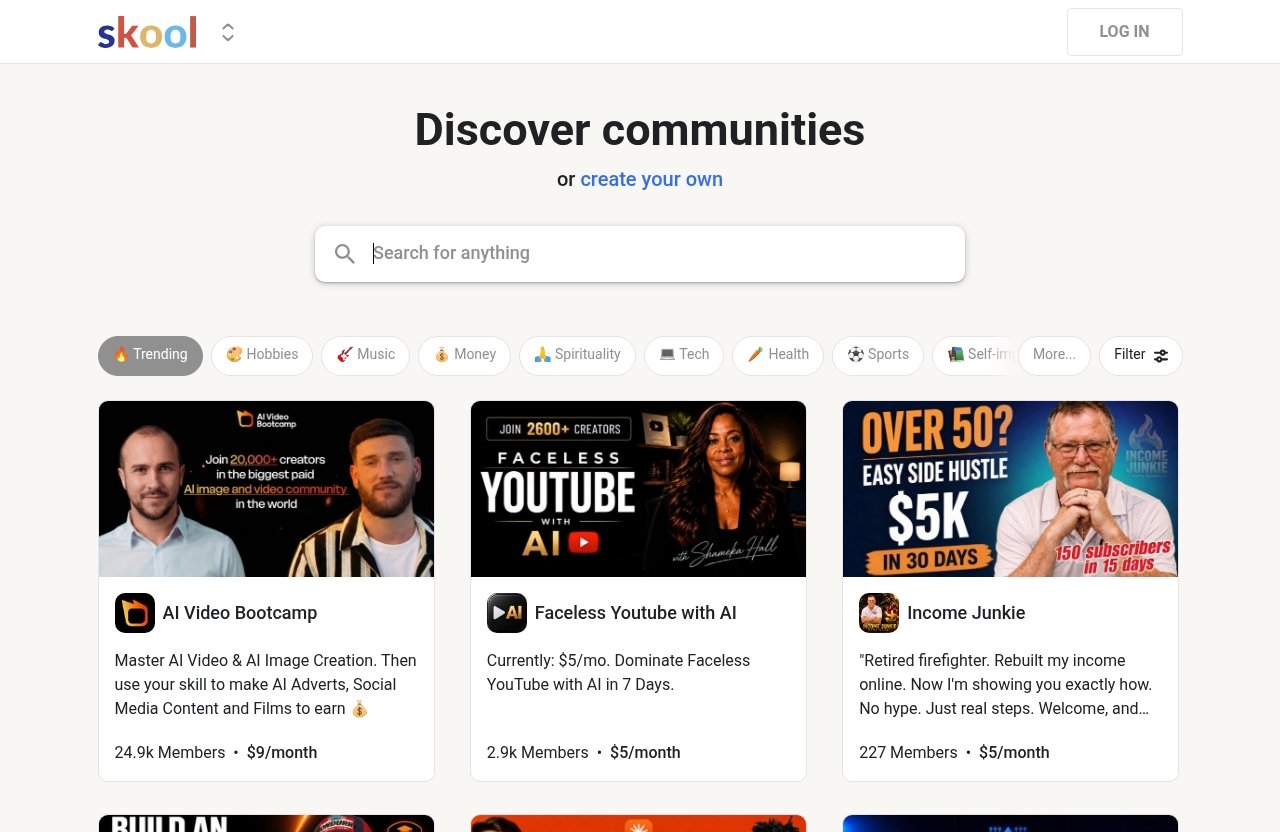
Hobby may also suit people with a free community. Skool’s homepage shows that communities can be free or paid, and a free community may not generate sales that would make the 10% transaction fee a primary concern.
When Pro Makes Sense
The Pro plan can make sense for established sellers who expect recurring paid transactions. The monthly price is much higher at $99, but the official transaction fee is 2.9% rather than 10%.
When considering how much does Skool cost, Pro should be assessed as a revenue-volume choice rather than an upgrade required for more listed courses or members. If transaction fees are becoming a significant operating cost, Pro may be the more logical fit.
Who Should Skip Skool
Skool may not be the right choice for someone who does not need a community, course, video, or live-call environment. It may also be a poor fit if the ongoing subscription and transaction-fee structure does not match your business model.
Be especially careful if you are choosing a plan based on features not stated on the official pricing page. The verified information supports the core inclusions listed in this guide, but it does not specify every potential workflow, integration, or customization need a business may have.
How Skool Pricing Compares to Buyer Expectations
Some buyers see $99 per month and immediately assume Skool is expensive. Others see the $9 entry price and assume it includes fewer essentials. Neither impression tells the complete story.
Why People Think Skool Is Expensive
The Pro subscription has a noticeable monthly price, especially for a beginner who has not yet generated revenue. A buyer may also focus on the plan fee without accounting for the potential effect of a lower transaction fee.
The reverse can happen with Hobby. The $9 figure looks inexpensive, but a 10% transaction fee can become more important than the subscription charge once paid sales grow.
Why It Can Still Be Competitive
Skool uses a relatively easy-to-understand two-plan model: a lower monthly tier with a higher transaction fee and a higher monthly tier with a lower fee. Both include the same main officially listed features, including unlimited members, courses, videos, and live calls.
Because no competitor pricing data is being used here, it would not be responsible to claim that Skool is cheaper or more expensive than specific alternatives. The better comparison is between the plan structure and your own expected usage.
What Buyers Should Check Before Joining
Before joining, verify these essentials:
- Whether you are choosing Hobby or Pro.
- Whether monthly or yearly billing is selected.
- The listed transaction fee for your chosen plan.
- Whether your community will be free or paid.
- Whether the official feature list covers your real needs.
Some search-result snippets have referenced a Skool 14-day free trial, but that should be treated as a general SERP reference rather than a guaranteed pricing-page promise. Confirm any trial availability directly at checkout before relying on it.
How to Decide Before You Buy
The clearest answer to how much does Skool cost comes from matching the plan to your stage, not from choosing the lowest number automatically. Think about your current sales, not just the business size you hope to have later.
Questions to Ask Yourself
Use this short checklist before selecting a plan:
- Will my community be free, paid, or a mix of both?
- Do I expect to sell access, courses, or other paid offers through Skool?
- How much transaction volume do I realistically expect each month?
- Would the lower Pro fee offset its higher $99 monthly cost?
- Do I prefer lower upfront cost or lower percentage-based fees?
- Am I comfortable with a yearly commitment to receive the stated two months free?
These questions keep the choice practical. A free or very early-stage community may prioritize the lower fixed price, while an active paid community may put greater weight on the fee percentage.
Best Plan by Creator Stage
| Creator Situation | Likely Starting Point | Why |
|---|---|---|
| Testing a new community | Hobby | Lowest official monthly price |
| Building a free community | Hobby | Transaction fees may be less relevant without paid sales |
| Selling paid access occasionally | Hobby or Pro | Compare expected fees with the $90 monthly price difference |
| Generating regular paid sales | Pro may deserve serious consideration | Lower 2.9% transaction fee |
| Needing unlimited listed members, courses, videos, or live calls | Either plan | Both plans list these inclusions |
This is not a guarantee that one plan will be cheaper in every situation. It is a decision framework based on the published prices and fees.
What to Verify on the Checkout Page
Before paying, confirm the displayed plan name, price, billing period, and transaction fee. Also review whether the yearly billing option is selected, since the official page advertises two months free on yearly billing.
If you are still deciding, revisit the current Skool plan details and verify that the offer shown matches the assumptions in your budget. This article is designed to help you evaluate the pricing, not to push every reader toward the higher plan.
Final Verdict: Which Skool Plan Is Best?
Best Value for Beginners
For beginners, the Hobby plan is usually the most accessible starting point. It costs $9 per month and includes unlimited members, courses, videos, live calls, a Custom URL, and Affiliates.
The central tradeoff is the 10% transaction fee. If paid sales are limited while you establish your audience, that fee may be easier to accept than a $99 monthly platform charge.
Best Value for Serious Sellers
For creators with meaningful, ongoing paid sales, Pro can offer better value despite the $99 monthly cost. Its 2.9% transaction fee is substantially lower than Hobby’s 10% fee, while the official core feature list remains the same.
The right choice depends on your actual transaction volume. Do the math with realistic sales expectations rather than upgrading simply because Pro sounds more advanced.
Final Recommendation
So, how much does Skool cost in 2026? The official plan prices are $9 per month for Hobby and $99 per month for Pro, with yearly billing offering two months free. Both plans include the same core listed features; the major difference is Hobby’s 10% transaction fee versus Pro’s 2.9%.
Choose Hobby if keeping your fixed monthly cost low is the priority. Choose Pro if consistent paid sales make a lower transaction fee more valuable. The best Skool plan is the one that fits your present revenue model, billing preference, and comfort with percentage-based fees.
Official website · Latest pricing & offers
FAQ
How much does Skool cost per month?
Skool’s official pricing page shows two monthly plans: Hobby at $9 per month and Pro at $99 per month. The selected plan also determines the transaction fee: 10% for Hobby and 2.9% for Pro.
Is Skool free?
Skool’s official pricing page lists paid Hobby and Pro plans, so the platform plans are not free. The Skool homepage does show that communities can be free or paid, which refers to how a community owner may structure access.
Search snippets have mentioned a Skool 14-day free trial, but verify any trial directly on the current checkout page because it is not one of the provided official pricing-page facts.
What’s included in Skool Hobby?
The Skool Hobby plan includes unlimited members, unlimited courses, unlimited videos, unlimited live calls, a Custom URL, and Affiliates. It costs $9 per month and has a 10% transaction fee.
What’s included in Skool Pro?
The Skool Pro plan includes unlimited members, unlimited courses, unlimited videos, unlimited live calls, a Custom URL, and Affiliates. It costs $99 per month and has a 2.9% transaction fee.
Does Skool offer yearly billing?
Yes. Skool offers monthly and yearly billing. The official pricing page states that yearly billing includes 2 months free.
How much does Skool cost to join?
The lowest official paid entry point is the Hobby plan at $9 per month. If you choose Pro, the cost is $99 per month; yearly billing is also available with the stated two-month-free offer.
Related Reading
- Skool for Digital Products: An Honest 2026 Review for Creators
- Skool for Coaches: Best Use Cases in 2026
- Best Contentstudio Alternatives for AI Repurposing 2026
References
- Pricing
- Skool: Discover Communities or Create Your Own
- Brutally Honest Skool Review 2026: Pros, Cons, And Is It …
- Is Skool Worth It in 2026? The Pro Fee Tier Reviews Miss