
How to Build a Paid Community on Skool

If you want to build a paid community on Skool, the fastest route is not filling a library with content and hoping people join. It is choosing one clear outcome, packaging ongoing support around it, and launching to people who already trust your work.
This guide explains how to build, price, and launch a paid Skool community with minimal setup friction. It is written for creators, coaches, educators, and niche operators who want recurring revenue without making unrealistic promises about results.
Affiliate disclosure: This article may contain an affiliate link to Skool. If you sign up through our link, we may earn a commission at no extra cost to you. Please independently evaluate whether Skool fits your audience, offer, and business model before choosing a plan.
Official website · Latest pricing & offers
What A Paid Community On Skool Is And Why It Can Work Fast
Define The Paid Community Model On Skool
A paid community is a membership where people pay recurring fees for access to a specific transformation, ongoing support, useful resources, and peers working toward a similar goal. When you build a paid community on Skool, the product is not simply information; it is an environment that helps members take consistent action.
For example, an AI-focused group could help freelancers use practical AI workflows to save time. A fitness membership might center on weekly training accountability. A business group may provide feedback, implementation sessions, and templates for a defined growth problem.
The strongest Skool membership community offers answer three questions quickly:
- Who is this for?
- What result can members work toward?
- What do they receive every month to keep progressing?
When A Paid Model Beats A Free Community
A free community can be useful for audience building, lead generation, and testing ideas. However, free groups often attract people who are curious but not ready to act. Participation can become inconsistent when members have no financial commitment.
A paid model works better when your guidance solves an ongoing problem. Members may need regular feedback, accountability, fresh implementation resources, live help, or a reason to stay focused. Those recurring needs create a stronger basis for community monetization than a one-time course alone.
The free vs paid community decision should come down to your goal. Use free access when you want broad reach and conversation. Use a paid offer when you can deliver a repeatable member experience with clear, continuing value.
The Fastest Revenue Path: Audience, Offer, And Retention
The quickest path to revenue is usually not a cold launch to strangers. It is a focused offer for a warm audience: newsletter subscribers, clients, social followers, podcast listeners, workshop attendees, or people who have asked you similar questions before.
Before you build a paid community on Skool, validate three essentials:
| Element | What To Define | Simple Example |
|---|---|---|
| Audience | A narrow group with a shared problem | Freelance designers seeking more clients |
| Offer | A repeatable result or process | Weekly client-acquisition support |
| Retention | Why members stay after joining | Feedback, office hours, accountability, and templates |
You do not need a huge following. You need enough people with a real problem, a reason to trust you, and a clear explanation of why monthly access is worthwhile. Results depend on niche demand, audience quality, your ability to deliver, and consistent engagement.
Skool Pricing And Plan Choices You Need To Know Before You Start
Skool community pricing is straightforward based on the official Skool pricing page. Before selecting a plan, understand the monthly platform cost and transaction fee structure, then compare that against your expected membership revenue.
Hobby Plan: $9/Month, What It Includes
The Skool Hobby plan costs $9 per month. According to Skool’s official pricing page, it includes unlimited members, unlimited courses, unlimited videos, unlimited live calls, a custom URL, and affiliates.
The Hobby plan has a 10% transaction fee. For a creator testing a new offer, this lower monthly platform cost can be appealing while you validate positioning and get early members.
Pro Plan: $99/Month, What It Includes
The Skool Pro plan costs $99 per month. It also includes unlimited members, unlimited courses, unlimited videos, unlimited live calls, a custom URL, and affiliates.
The Pro plan has a 2.9% transaction fee. If your paid membership gains traction, the lower transaction fee may become more relevant than the higher monthly plan cost. Skool’s pricing page also states that yearly billing includes two months free.
Which Plan Makes Sense For Creators Aiming To Monetize
There is no universal best choice when you build a paid community on Skool. The practical decision depends on your expected member volume, membership price, and how quickly you expect revenue to grow.
Start by estimating your likely monthly sales and comparing the transaction fee impact against the base plan cost. Do not choose a plan because it feels more “professional.” Choose the option that matches your current stage and lets you confidently deliver the experience you promised.
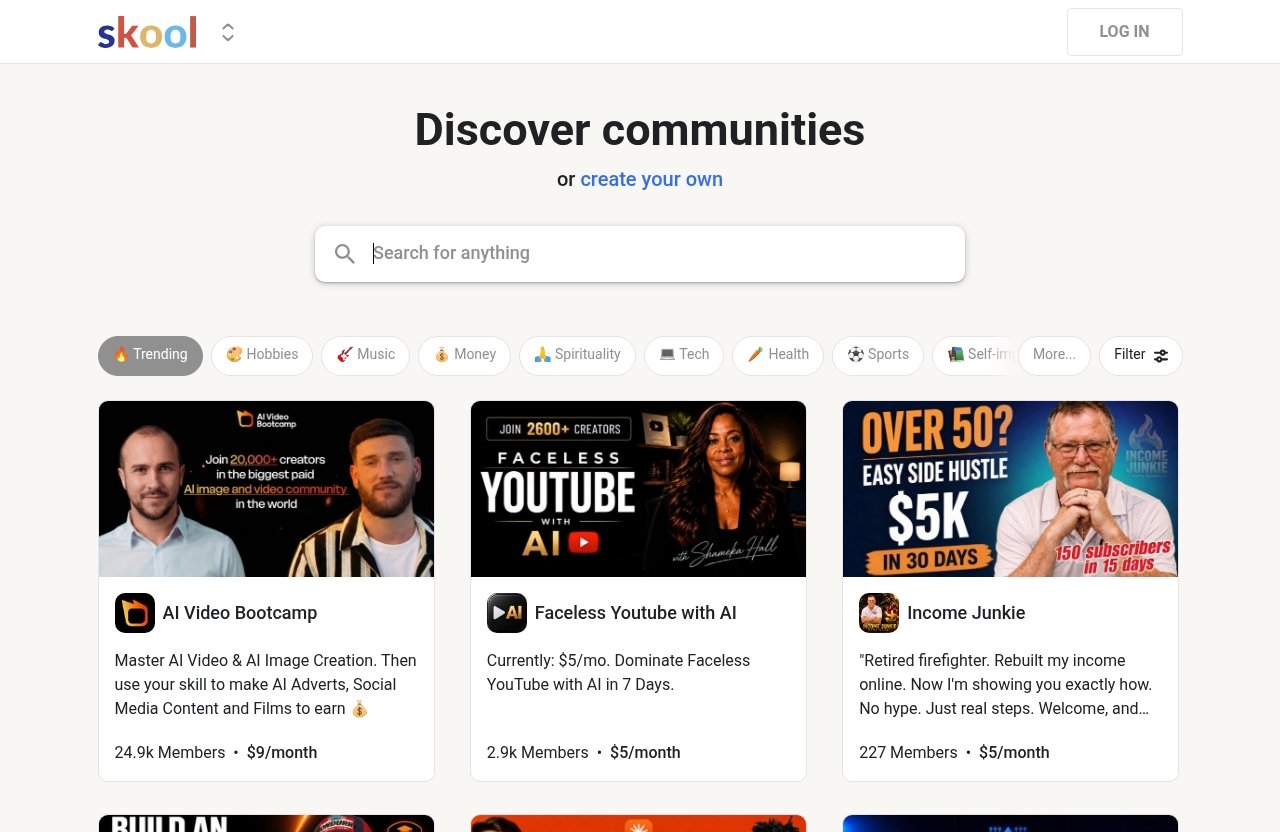
The official Skool homepage also shows communities across different niches and price points. Treat those examples as inspiration, not as a benchmark for what your own community should charge or earn.
How To Position Your Community So People Pay Monthly
Choose A Narrow Result Or Transformation
People rarely join a monthly membership because it has “lots of content.” They join because they want a result they cannot easily get alone. To build a paid community on Skool that converts, start with a narrow transformation rather than a broad topic.
Weak positioning sounds like:
A community for entrepreneurs.
Stronger positioning sounds like:
A practical membership for freelance marketers who want weekly feedback to improve their client acquisition systems.
The second statement identifies a specific person, a meaningful problem, and a recurring delivery mechanism.
Pick A Membership Promise Members Can Understand In 10 Seconds
Your membership promise should be short enough to explain in one breath. A useful formula is:
I help [specific member] achieve [specific outcome] through [your recurring method].
Here are practical examples:
- Help beginner AI consultants create usable client workflows through weekly implementation sessions.
- Help busy professionals improve strength through simple training plans and accountability.
- Help new course creators refine their offer through reviews, templates, and live feedback.
The promise should be ambitious enough to be valuable but realistic enough to support consistently. Avoid promising income, transformations, or outcomes that depend on factors you cannot control.
Decide What Stays Inside The Paid Community
A monthly membership community needs boundaries. Decide what is included for members and what remains a separate service, course, or premium offer.
For example, your Skool paid membership could include weekly office hours, resource templates, group feedback, and community discussions. Private consulting, done-for-you work, or intensive one-on-one strategy may remain outside the membership.
This protects your time and makes your offer easier to understand. It also prevents the common mistake of overdelivering so heavily that the membership becomes difficult to sustain.
Step-By-Step: How To Build A Paid Community On Skool
Create The Community Name, URL, Branding, And Banner
The first afternoon should focus on clarity, not perfection. When you build a paid community on Skool, choose a name that signals the member’s goal or identity, rather than a vague brand phrase.
Use a simple name structure such as:
- The AI Workflow Lab
- Stronger After 40 Club
- Freelance Growth Circle
- The Creator Offer Workshop
Set up your custom URL, then create a banner and description that communicate the audience, outcome, and primary recurring benefit. A visitor should understand the value before reading a long sales page.
Set Up Categories, First Posts, And Onboarding Flow
Next, organize the community around the actions members need to take. Start with only a few clear categories, such as:
- Start Here
- Introductions and Wins
- Questions and Feedback
- Weekly Implementation
- Resources and Templates
- Call Replays or Notes
Avoid creating dozens of empty sections. A new Skool creator community looks more credible when the structure is focused and a few areas already have useful activity.
Create a pinned welcome post explaining who the community serves, how to introduce themselves, where to ask questions, and what they should do during their first week. Your onboarding flow should produce one early action, not overwhelm members with instructions.
Build Tiers, Welcome Messages, And Member Expectations
For a first launch, simplicity usually wins. A single clear paid offer is easier to explain, deliver, and improve than multiple confusing levels.
Write a welcome message that tells each new member what to do first, second, and third:
- Introduce yourself and state your current goal.
- Complete the first quick-win resource or lesson.
- Attend the next live session or post one question.
Set expectations around response times, member conduct, self-promotion, and participation. Clear rules make the space more useful for serious members and easier for you to manage.
Add Courses, Live Calls, And A Simple Content Cadence
Skool states that both Hobby and Pro include unlimited courses, videos, and live calls. That does not mean you should create unlimited material before opening the doors.
A lean first version might include one foundational course, one onboarding checklist, one template pack, and a weekly live call. Then add content based on real member questions. This is more efficient than guessing what people need months in advance.
A sustainable weekly cadence could look like this:
| Day | Member Experience |
|---|---|
| Monday | Weekly focus, prompt, or implementation challenge |
| Wednesday | Resource, template, or short training |
| Friday | Wins thread, feedback, or community check-in |
| Weekly | Live call, workshop, or group Q&A |
Official website · Latest pricing & offers
What To Include Inside The Paid Offer So Members Stay Subscribed
Core Content Members Can Use Every Month
Retaining members requires more than a large content library. The core content should help members solve a problem repeatedly or progress through a clear path.
For instance, an AI membership might maintain a searchable collection of workflow lessons. A business community could provide updated outreach scripts, offer review frameworks, and client onboarding templates. The value is practical when members can apply it immediately.
As you build a paid community on Skool, create a small “start here” path first. Members should know what to consume, what to implement, and what success looks like in their first 30 days.
Live Calls, Workshops, And Accountability Loops
Live interaction can create the recurring value that static content cannot. Use calls for office hours, implementation workshops, hot seats, group reviews, or focused training sessions.
Do not schedule calls simply because you think a membership should have them. Give each one a clear function. A monthly workshop can teach a process, while weekly office hours can help members apply that process to their individual situations.
Accountability loops are equally important. Weekly progress posts, challenge check-ins, and celebration threads give people a reason to return and participate.
Templates, Resources, And Implementation Support
Templates save members time, but only when they are tied to a meaningful task. A generic folder of downloads is less valuable than a resource accompanied by instructions, examples, and a place to ask implementation questions.
Useful resources may include checklists, scripts, trackers, swipe files, worksheets, and decision frameworks. Pair each asset with a clear explanation of when to use it and what result it should support.
This approach helps you monetize a community responsibly: members pay for an organized system, guidance, and shared progress—not just access to files.
Community Rules That Protect Quality
A strong community experience depends on quality control. Establish simple rules from the beginning: no spam, no unsolicited direct messages, respectful feedback, and relevant posts only.
You should also state what members can expect from you. If you provide feedback on designated days or answer questions within a defined rhythm, say so. Consistent expectations are better than vague promises of constant access.
Pricing Your Membership For Faster Conversions
Start With A Simple Monthly Price Point
When pricing a new Skool paid membership, begin with a single monthly price that matches the clarity and depth of your offer. The price should be easy to understand and simple to explain in your launch messaging.
Focus on the member’s likely value from participation, but also consider the time you will spend supporting them. A membership with active feedback and live help needs enough revenue to remain sustainable.
Do not confuse your Skool platform cost with what members should pay. Skool community pricing refers to the plan you pay for the platform; your membership pricing should reflect your own offer and delivery model.
When To Test Low-Ticket Vs Premium Pricing
Lower-priced memberships can reduce hesitation when your audience is new to you or the offer is light-touch and community-led. Higher-priced memberships can make more sense when the offer includes substantial expertise, structured implementation, regular feedback, or a highly specific professional outcome.
Neither approach is automatically better. Test one clear price with a small founding group, listen to objections, and measure whether members participate and renew.
A low price does not solve weak positioning. If people do not understand the outcome, changing the price alone will not fix conversion.
How To Avoid Underpricing Your Value
Underpricing often creates a difficult situation: you attract more support needs than your revenue can sustain. That can lead to slow replies, creator burnout, and member disappointment.
Set boundaries around what is included, then price your membership so you can deliver reliably. If you later add more support, live workshops, or valuable implementation help, reassess your offer before increasing your workload indefinitely.
Launch Plan: How To Get The First Paying Members Quickly
Warm Audience Launch Vs Cold Launch
A warm launch is usually the fastest way to build a paid community on Skool with early momentum. Start with people who already know your expertise: past clients, email subscribers, engaged followers, or event attendees.
A cold audience may eventually work, but it requires stronger messaging and more trust-building. For your first cohort, prioritize conversations over broad promotion.
Use A Founding Member Offer
Invite a limited founding group to join the first version of your community. In return for joining early, they can receive a clear benefit such as direct access during the launch period, input into the resource roadmap, or a locked-in price while they remain active.
Do not use a founding offer to hide an unfinished product. Be transparent that the community is new, explain what is available now, and share the first month’s schedule.
Turn Content Into An Invite Funnel
Create content that addresses the exact problem your paid community solves. A useful sequence is:
- Publish a helpful post, video, email, or workshop on the problem.
- Teach one actionable part of your method.
- Explain the limitation of trying to solve it alone.
- Invite qualified people into the membership for ongoing support.
For creators ready to compare the platform options, you can review Skool through this Skool link while considering the official pricing details and your own business needs.
Ask For Testimonials And Referrals Early
Early testimonials should focus on tangible member experiences: clarity gained, a task completed, a question answered, or a useful implementation result. Avoid pressuring members to make exaggerated claims.
After members have received value, ask what changed and whether they know someone who would benefit. Referrals work best when your membership promise is specific enough for members to describe easily.
Common Mistakes That Make Paid Communities Fail
Launching Before The Promise Is Clear
The biggest launch mistake is offering “a community for anyone interested in X.” Broad positioning makes marketing harder because potential members cannot tell whether the space is for them.
Before you launch a Skool community, refine your message until it clearly communicates the audience, outcome, and delivery method. Clarity beats clever branding.
Too Much Content, Not Enough Outcomes
Many creators spend weeks recording lessons and still do not have a strong paid offer. Members are more likely to stay when they can make visible progress, receive feedback, and know the next action to take.
Start with fewer, better resources. Add material in response to real needs, not because you feel pressure to fill every possible category.
Weak Onboarding And No Reason To Return
A new member who joins, scrolls briefly, and leaves without taking action is at risk of canceling. Give them an immediate win and a reason to come back this week.
A welcome prompt, simple first lesson, scheduled live call, and accountability thread can make a major difference. Engagement is not guaranteed by the platform; it comes from intentional programming and active leadership.
Pricing Without Retention Or Delivery Systems
A recurring payment model requires recurring reasons to remain. If your offer is only a one-time course split into monthly access, members may leave after consuming it.
Plan your retention system before you build a paid community on Skool: recurring calls, new implementation resources, progress check-ins, feedback loops, and member milestones. You do not need to do everything, but you need a dependable rhythm.
Is Building A Paid Skool Community Worth It?
Who Is The Best Fit For Skool
Building a Skool community can be worthwhile for coaches, educators, creators, operators, and niche experts who can help a defined group solve an ongoing problem. It is particularly relevant when you can combine learning resources with support, accountability, and peer interaction.
The best fit is someone with a repeatable method and a willingness to lead the community consistently. Platform features support delivery, but the creator’s positioning and participation determine whether members see ongoing value.
When Skool Is Not The Right Tool
A paid community may not be the right model if you only have a one-time product, no clear audience, or no capacity to maintain engagement. In that case, validate demand through a workshop, consulting offer, email series, or smaller pilot first.
It may also be a poor fit if your offer depends on unlimited personal access from you at a low price. Define sustainable boundaries before promising high-touch help.
How To Decide In Under 5 Minutes
Ask yourself these questions:
- Do I know a specific group I can serve?
- Can I name a recurring problem they actively want to solve?
- Can I provide value beyond one-time content?
- Do I have a simple first-month plan for support and engagement?
- Can I invite a warm audience to a founding launch?
If the answer is yes to most of these questions, a Skool membership community is worth testing. The practical way to build a paid community on Skool is to start with one clear promise, one sustainable offer, and a small group of members you can serve well.
Official website · Latest pricing & offers
FAQ
How Much Does Skool Cost To Create A Community?
According to Skool’s official pricing page, the Hobby plan costs $9 per month and the Pro plan costs $99 per month. Both include unlimited members, courses, videos, live calls, a custom URL, and affiliates. Hobby has a 10% transaction fee, while Pro has a 2.9% transaction fee.
What Is The Highest Paid Community On Skool?
There is no reliable official public source that identifies one single highest-priced or highest-earning Skool community. Community prices vary by niche, offer depth, creator reputation, and the level of ongoing support. Focus on pricing your offer according to the specific outcome and delivery you can sustain.
Is Building A Skool Community Worth It?
It can be worth it if you have a defined audience, an ongoing problem to solve, and a consistent delivery system. It is generally a better fit for creators offering continued guidance, accountability, feedback, or implementation support than for those selling a one-time content dump.
How To Build A Paid Community?
Start with a clear transformation for a specific audience. Choose a simple monthly membership price, set up your community structure and onboarding, add a small amount of high-value core content, schedule recurring support, and launch first to a warm audience with a transparent founding offer.
Related Reading
- Systeme.io coupon and pricing guide
- Best Skool alternatives for coaches
- Systeme.io vs HubSpot for lean businesses
References
- Skool: Discover Communities or Create Your Own
- Skool: Pricing
- Want to start you own Skool Community? · Business Growth Society
- Paid vs Free? · Community Builders