
Cloudways vs AWS 2026: Which Hosting Choice Is Better for Your Site?
If you want the short version of cloudways vs aws, Cloudways is the simpler managed hosting option, while AWS is the more hands-on infrastructure option. Cloudways is built for users who want managed cloud hosting without spending their week configuring servers. AWS is better for teams that want direct control over infrastructure and have the technical skill to manage it.
For most SMBs, agencies, bloggers, publishers, ecommerce stores, and busy founders, Cloudways is usually the easier buying decision. For cloud engineers, DevOps-heavy teams, and highly custom infrastructure projects, AWS may be the better long-term fit.
Official website · Latest pricing & offers
Cloudways vs AWS: quick verdict
The real cloudways vs aws decision is not “which cloud is more powerful?” It is “how much infrastructure work do you want to own?”
Cloudways is a managed cloud hosting platform. It supports DigitalOcean, Vultr, Linode, AWS, and GCE, which means you can use Cloudways to host on major cloud providers while letting Cloudways simplify much of the hosting experience. AWS, by contrast, is the underlying cloud infrastructure route for people who want to work closer to the metal.
Which one is easier for most users?
Cloudways is easier for most users because it is designed around managed hosting. The platform emphasizes performance, security, 24×7 expert support, free migration, and free SSL, according to Cloudways’ official homepage.
That matters if you run a WordPress site, WooCommerce store, Laravel app, Magento shop, PHP project, blog, or publishing site and do not want to become your own server administrator. In practical cloudways vs aws terms, Cloudways removes more operational friction.
AWS can be excellent, but it expects more from you or your team. If you go directly to AWS, you are typically responsible for more setup, configuration, monitoring, maintenance, and cost oversight.
Which one offers more control?
AWS offers more direct infrastructure control. That is the main reason experienced technical teams choose it.
With AWS, you are closer to the raw cloud environment. That can be useful when you need custom architecture, specialized workflows, or deep infrastructure tuning. The tradeoff is that more control usually means more responsibility.
Cloudways gives you less low-level control than direct AWS, but it gives many site owners a more practical hosting workflow. For a lot of commercial websites, that tradeoff is worth it.
Who should choose Cloudways vs AWS
Choose Cloudways if you want managed hosting, easier day-to-day operations, and support without building an internal DevOps process. You can review Cloudways through our partner link here: see Cloudways via Top Trust Review.
Choose AWS if your team already understands cloud infrastructure and wants to manage every layer directly. The best choice depends on your skills, available time, risk tolerance, and how much operational complexity you are willing to handle.
What Cloudways is, and what AWS is
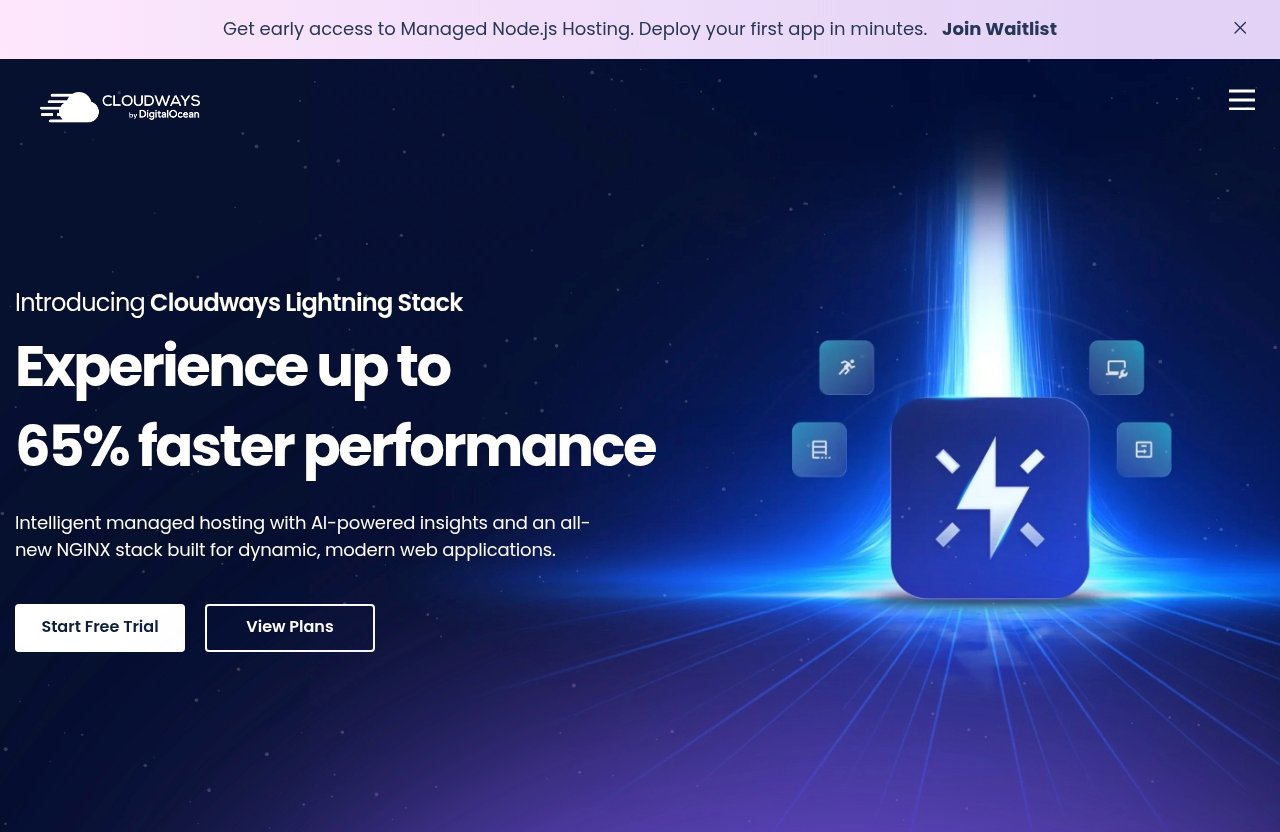
A fair cloudways vs aws comparison starts with understanding that these are not identical products. Cloudways is not simply “another AWS.” It is a managed cloud hosting platform that can sit on top of cloud providers, including AWS.
AWS is the infrastructure platform. Cloudways is the managed layer that can make hosting easier for website and app owners.
Cloudways as a managed cloud hosting platform
Cloudways is a managed cloud hosting platform for SMBs, agencies, developers, ecommerce businesses, bloggers, and publishers. Its official homepage lists two product options: Cloudways Flexible and Cloudways Autonomous.
Cloudways supports popular applications including WordPress, Laravel, Magento, WooCommerce, and PHP. That makes it especially relevant for site owners and agencies building client sites, content properties, ecommerce stores, and custom web apps.
The important point is that Cloudways focuses on simplifying hosting operations. It is not asking most users to manually design their entire cloud infrastructure stack from scratch.
AWS as a raw cloud infrastructure platform
AWS is best understood as a cloud infrastructure platform for users and teams that want direct control. In an aws vs managed hosting comparison, AWS represents flexibility and responsibility.
That does not mean AWS is only for enterprises. Smaller teams can use it too. But the learning curve and operational burden are usually higher than with a managed platform.
Because this article is focused on buyer decision-making, I will avoid inventing AWS pricing, performance claims, or feature specifics. The useful takeaway is simple: AWS is more hands-on, while Cloudways is more managed.
Why these two get compared
People compare cloudways vs aws because Cloudways can run on AWS, while AWS can also be used directly. So the question becomes: should you access cloud infrastructure through a managed platform, or should you manage the infrastructure yourself?
This is also why searches like managed aws hosting, cloudways aws, and cloudways vs aws cost are common. Buyers want to know whether the managed layer is worth paying for.
In many cases, the managed layer is not just a convenience. It can reduce the time and skill required to keep a website running smoothly.
Cloudways vs AWS: the key differences that matter
The practical cloudways vs aws comparison comes down to setup, management, control, support, scalability, and maintenance. These differences affect your cost, stress level, launch speed, and long-term hosting experience.
Here is the high-level view:
| Factor | Cloudways | AWS Direct |
|---|---|---|
| Setup | Managed platform experience | More hands-on infrastructure setup |
| Management | Cloudways abstracts much of the hosting work | Your team manages more of the environment |
| Control | Less low-level control, more simplicity | More direct infrastructure control |
| Support | Cloudways lists 24×7 expert support | Support depends on your AWS setup and support path |
| Best fit | SMBs, agencies, ecommerce, bloggers, publishers, developers wanting managed hosting | Technical teams needing deep infrastructure control |
Setup and onboarding
Cloudways is built to shorten the path from decision to deployment. Its official positioning is managed cloud hosting, and that is the key advantage for most non-infrastructure teams.
If you are launching a WordPress site or WooCommerce store, you generally want fewer moving parts. You want to get online, secure the site, and focus on traffic, content, products, or clients.
AWS direct setup can be powerful, but it typically requires more technical planning. You need to know what you are building, how it should be configured, and who will maintain it.
Management and maintenance
Management is where the cloudways vs aws difference becomes very real. Cloudways is designed to reduce the amount of platform work you personally handle.
The official Cloudways feature set includes performance, security, 24×7 expert support, free migration, and free SSL. Those are practical hosting concerns that small teams often do not want to piece together manually.
With AWS, you may have more freedom, but you also own more decisions. That can include infrastructure structure, ongoing maintenance, access control, operational monitoring, and cost discipline.
Control and customization
AWS wins on direct control. If your project needs a very specific infrastructure design, AWS is usually the more flexible route.
Cloudways is more opinionated because it is managed. That can be a benefit if you want fewer decisions, but it can be a limitation if your team wants to customize every layer.
This is the classic tradeoff in aws vs managed hosting. AWS gives you the steering wheel, engine access, and garage tools. Cloudways gives you a managed driving experience that is easier for most website owners.
Support and day-to-day operations
Cloudways lists 24×7 expert support as one of its powerful features. Its official homepage also mentions Advanced Support pricing as a current price of $100/mo and a new discounted price of $25/mo flat.
That is one of the clearest buyer benefits for users who do not have an in-house infrastructure team. If something goes wrong, having a managed hosting support path can matter.
With AWS, support and operations depend on how your team structures the environment and what support arrangement you use. For experienced teams, that can be fine. For smaller teams, it can become another operational layer to manage.
Pricing and total cost of ownership
The cloudways vs aws cost question is often misunderstood. The cheapest-looking infrastructure option is not always the cheapest real-world option after you include time, expertise, maintenance, support, and mistakes.
This section is intentionally careful. Cloudways pricing details beyond the verified facts provided are not included here because the available official pricing page content in the brief was not usable for additional numbers. I also will not invent AWS pricing.
Cloudways pricing model
Cloudways offers managed cloud hosting and supports DigitalOcean, Vultr, Linode, AWS, and GCE. Its official homepage lists Cloudways Flexible and Cloudways Autonomous as product options.
For buyers researching cloudways plans, the safest approach is to confirm current plan details directly on the Cloudways website before purchasing. Plan names, inclusions, and promotional details can change.
You may also see search terms like cloudways premium vs standard or cloudways autonomous vs flexible while researching. Based on the verified product facts available here, Cloudways Flexible and Cloudways Autonomous are official product options; for any deeper plan distinction, verify the current official Cloudways page before making a budget decision.
AWS cost variables to consider
AWS cost depends on how you design and use the infrastructure. Without citing a specific AWS calculator or official plan, it would be irresponsible to claim exact numbers in this article.
The important buyer point is that AWS costs are not only the bill from the provider. You also need to account for the human effort required to configure, secure, monitor, optimize, and maintain the environment.
If you already have skilled cloud engineers, that labor may be part of your normal workflow. If you do not, the hidden cost can be significant.
Why the cheaper-looking option may not be cheaper overall
In cloudways vs aws, AWS direct can look attractive because you may feel you are avoiding a managed platform layer. But if you spend hours learning, configuring, troubleshooting, or hiring help, the total cost can rise quickly.
Cloudways may cost more than raw infrastructure in some situations, but the value is in simplified management. For agencies, SMBs, publishers, ecommerce owners, and founders, time saved often matters as much as hosting line items.
A useful way to compare is this:
| Cost Category | Cloudways | AWS Direct |
|---|---|---|
| Hosting bill | Managed platform cost | Infrastructure-based cost |
| Setup time | Typically lower for common apps | Often higher |
| Technical expertise | Lower requirement for routine hosting | Higher requirement |
| Maintenance burden | More managed | More self-managed |
| Risk of misconfiguration | Reduced by managed approach | Depends heavily on team skill |
The best financial answer is not always “lowest monthly bill.” It is the option that gives you the best combination of cost, reliability, time savings, and confidence.
Official website · Latest pricing & offers
Cloudways features that simplify hosting
The strongest argument for Cloudways in a cloudways vs aws comparison is not that it replaces AWS. It is that Cloudways makes cloud hosting easier to operate for common website and application use cases.
This section uses only verified Cloudways product facts from the official homepage and provided brief.
Free SSL
Cloudways lists Free SSL as one of its powerful features. For site owners, this is a practical requirement, not a luxury.
SSL is especially important for ecommerce, login pages, lead generation forms, and content sites that care about visitor trust. Having it included in the managed hosting experience reduces another setup task.
Free migration
Cloudways also lists Free Migration as a feature. This is useful if you already have a website and want to move without handling the process entirely on your own.
For agencies and SMBs, migration friction is one of the biggest reasons hosting decisions get delayed. A free migration option can make the move easier to justify.
24×7 expert support
Cloudways lists 24×7 Expert Support as a powerful feature. This is one of the most relevant advantages for non-DevOps teams.
When comparing cloudways vs aws, ask yourself who will answer hosting questions at midnight, during a launch, or when a client is waiting. If the answer is “me, and I am not a server expert,” managed support becomes valuable.
Cloudways’ official homepage also mentions Advanced Support pricing with a current price of $100/mo and a new discounted price of $25/mo flat. Always verify current support terms before buying, but this is the verified pricing detail available from the provided product facts.
Performance and security features
Cloudways’ official homepage lists Performance and Security among its powerful features. Those are broad categories, so I will not invent specific technical benchmarks or claims.
What matters from a buyer standpoint is that Cloudways positions these as managed hosting priorities. That is helpful for users who want their hosting provider to reduce operational complexity.
AWS can also support strong performance and security outcomes, but you or your team are more responsible for designing and maintaining them directly. That is the tradeoff.
Supported apps and cloud providers
Cloudways supports WordPress, Laravel, Magento, WooCommerce, and PHP. That covers many common business, ecommerce, content, and developer workloads.
Cloudways also supports DigitalOcean, Vultr, Linode, AWS, and GCE as cloud providers. This makes cloudways aws especially relevant for buyers who want AWS-backed hosting through a managed platform rather than managing AWS directly.
For readers who want a simpler managed route, you can compare the Cloudways option through our partner page: explore Cloudways here.
When AWS is the better choice
AWS is the better choice when direct infrastructure control matters more than simplicity. In cloudways vs aws, this is the side for experienced teams, custom systems, and organizations that want to own every layer.
That does not make AWS “better” for everyone. It makes AWS better for a specific operating model.
Teams with in-house DevOps or cloud engineers
If you already have cloud engineers or DevOps specialists, AWS direct can make sense. Your team may prefer building and maintaining the architecture itself.
In that case, the learning curve is less of a blocker. The technical overhead is part of your normal operating process.
For these teams, a managed hosting platform may feel limiting. They may want deeper access, custom workflows, and direct infrastructure decisions.
Projects needing very specific infrastructure control
Some projects require infrastructure choices that a managed hosting platform may not expose. If your application depends on unusual architecture, custom networking, or specialized deployment practices, AWS direct may be more suitable.
This is where the aws vs managed hosting decision becomes strategic. Managed hosting is convenient, but convenience can come with boundaries.
If your project cannot fit inside those boundaries, AWS is the safer long-term option.
Builders who want to manage every layer themselves
Some developers simply prefer managing every layer. They want to choose, configure, monitor, and optimize the stack directly.
There is nothing wrong with that. If you enjoy infrastructure work and have the time to do it well, AWS can be a strong choice.
But if you only want to publish content, sell products, serve clients, or launch faster, the direct-management path may become a distraction.
When Cloudways is the better choice
Cloudways is the better choice when you want managed cloud hosting without taking on the full operational burden of AWS. That is the core cloudways vs aws distinction for most commercial buyers.
Cloudways serves SMBs, agencies, developers, ecommerce businesses, and bloggers and publishers. Those audiences often need performance, security, support, migration help, and SSL without building an internal infrastructure department.
Agencies and freelancers
Agencies and freelancers often manage multiple sites, clients, deadlines, and support expectations. They usually benefit from a hosting platform that keeps routine operations simpler.
Cloudways can be a practical fit because it supports popular apps like WordPress, WooCommerce, Magento, Laravel, and PHP. That aligns with the kinds of projects many agencies build.
In a cloudways vs aws decision, agencies should ask whether infrastructure management is a profit center or a time sink. If it is a time sink, Cloudways has a strong case.
SMBs and publishers
SMBs and publishers usually want reliable hosting without hiring a cloud team. Their business depends on content, leads, sales, advertising, subscriptions, or customer experience.
Cloudways’ managed approach fits that reality. Its official feature set includes performance, security, free SSL, free migration, and 24×7 expert support.
AWS direct can work for SMBs, but only if they have the technical confidence to manage it. Otherwise, the operational complexity may outweigh the perceived savings.
Founders who want speed over system administration
Founders should be careful about spending too much time on infrastructure too early. If your main job is validating an offer, serving customers, or building traffic, server administration can become a distraction.
Cloudways is useful when speed and simplicity matter more than maximum infrastructure control. You can still use major cloud providers through Cloudways, including AWS, while avoiding some of the direct management burden.
For many early-stage projects, that is the more practical choice.
Head-to-head decision matrix
A useful cloudways vs aws decision matrix should focus on your operating reality, not abstract opinions. The “best” platform depends on who will manage it, how much control you need, and how costly downtime or misconfiguration would be for your business.
Use the checklist below as an editorial framework, not a universal scorecard.
| Decision Factor | Better Fit | Why |
|---|---|---|
| Beginner-friendly hosting | Cloudways | Managed platform reduces complexity |
| Direct infrastructure control | AWS | More hands-on access and customization |
| Fast launch for common apps | Cloudways | Supports WordPress, WooCommerce, Laravel, Magento, PHP |
| In-house cloud engineering | AWS | Skilled teams can manage infrastructure directly |
| Support-oriented hosting | Cloudways | 24×7 expert support is a verified Cloudways feature |
| Lower operational burden | Cloudways | More managed day-to-day experience |
| Highly custom architecture | AWS | Better suited to granular infrastructure needs |
Best for beginners
Cloudways is the better fit for beginners. It is built as a managed cloud hosting platform, so users do not need to approach hosting like a cloud engineering project.
That does not mean beginners should ignore hosting basics. But they can start with a more guided environment.
AWS is better left to beginners who are intentionally learning cloud infrastructure and are comfortable with a steeper learning curve.
Best for scalability
Scalability depends on architecture, management, and team skill. I will not claim unsupported performance or scaling benchmarks for either platform.
AWS offers more direct infrastructure control, which can be important for complex scaling strategies. Cloudways offers managed cloud hosting on providers including AWS, DigitalOcean, Vultr, Linode, and GCE, which can be enough for many growing websites and stores.
For most SMBs and publishers, the real question is not theoretical scale. It is whether your team can manage growth without operational chaos.
Best for support
Cloudways has the clearer support advantage for the audience of this article because 24×7 expert support is an official Cloudways feature. That is highly relevant for SMBs, agencies, ecommerce owners, and publishers.
AWS support depends on how you structure your AWS relationship and operations. Since this article is not using unverified AWS pricing or plan details, the safest statement is that AWS requires more direct responsibility from your team.
If you want a hosting support experience built into a managed platform, Cloudways is easier to recommend.
Best for customization
AWS is the better choice for customization. It gives technical teams more direct control over infrastructure design.
Cloudways is intentionally more managed. That helps many users, but it also means you accept a platform layer between you and the underlying cloud provider.
If your project has unusual infrastructure requirements, AWS direct is likely the better path.
Best for value
The best value depends on what you count. If you only compare infrastructure line items, AWS direct may look attractive in some cases. If you include time, expertise, support, and maintenance, Cloudways may deliver better practical value for many users.
This is why cloudways vs aws cost should be evaluated as total cost of ownership. Hosting is not just a bill. It is also the human time required to keep the system working.
For non-specialist teams, Cloudways often offers the better value equation because it reduces operational complexity.
Recommended choice by scenario
The most honest cloudways vs aws recommendation is scenario-based. There is no universal winner for every website, app, team, or budget.
Instead of asking which platform is “best,” ask which one matches your operating model.
Choose Cloudways if…
Choose Cloudways if you want managed cloud hosting for WordPress, WooCommerce, Magento, Laravel, PHP, or content sites. It is also a strong fit if your team values free SSL, free migration, 24×7 expert support, performance, and security as managed-platform priorities.
Cloudways is especially practical for:
- Agencies managing client websites
- SMBs without in-house DevOps
- Ecommerce stores that want less hosting complexity
- Bloggers and publishers focused on content
- Developers who want faster deployment without managing every layer
- Founders who want to avoid infrastructure distractions
If your research includes cloudways vs aws reddit discussions, you will often see users framing the debate around control versus convenience. That is a useful lens, but remember that Reddit comments are external commentary, not official product documentation.
Choose AWS if…
Choose AWS if your team wants direct infrastructure control and has the skills to manage it responsibly. AWS is better when infrastructure itself is part of your competitive advantage or technical requirement.
AWS may be the better choice for:
- Teams with cloud engineers
- Projects needing custom infrastructure
- Organizations with established DevOps workflows
- Developers who want to manage every layer
- Businesses with technical governance requirements that demand direct control
If you do not have the time or expertise to operate AWS well, direct control can become a burden. In that case, Cloudways may be the more sensible choice.
A hybrid path: start managed, migrate later
A hybrid path can make sense. Some businesses start on Cloudways because they need speed, support, and simplicity. Later, if they outgrow the managed model or need more control, they can evaluate moving closer to direct infrastructure.
The reverse can also happen. A team may start on AWS, then decide the operational workload is too high and move to managed hosting.
This is why cloudways vs aws is not a permanent identity decision. It is a hosting operations decision for your current stage.
Official website · Latest pricing & offers
FAQ
Is Cloudways a Pakistani company?
I could not confirm from the official Cloudways product pages provided for this article whether Cloudways is a Pakistani company. For a claim about company origin or corporate structure, it is best to verify directly from authoritative company sources.
What is verified here is Cloudways’ service model: it is a managed cloud hosting platform that supports DigitalOcean, Vultr, Linode, AWS, and GCE, along with apps like WordPress, Laravel, Magento, WooCommerce, and PHP.
Who is the biggest competitor to AWS?
The answer depends on the segment. In cloud infrastructure, AWS is usually compared with other large cloud infrastructure platforms, but this article does not rely on market-share claims or rankings.
For managed hosting comparisons like cloudways vs aws, Cloudways is not a direct hyperscaler competitor in the same way. It is a practical managed hosting alternative for users who want less operational complexity while still using major cloud providers.
Is Cloudways the best hosting?
Cloudways may be the best hosting choice for users who want managed cloud hosting, simplified operations, 24×7 expert support, free migration, free SSL, performance, and security features. It is particularly relevant for SMBs, agencies, developers, ecommerce owners, bloggers, and publishers.
It is not automatically the best for every project. Advanced teams that need deep infrastructure control may still prefer AWS direct.
Are companies moving away from AWS?
Some companies diversify, optimize, or redesign their cloud stack rather than moving away from AWS entirely. The better question is whether a business wants direct infrastructure control or a simpler managed hosting experience.
For many teams, the decision is not “leave AWS” or “use AWS forever.” It is whether to use AWS directly or through a managed layer like Cloudways when operational simplicity matters.
Final recommendation
The final cloudways vs aws answer is straightforward: choose Cloudways if you want managed hosting and choose AWS if you want direct infrastructure control. Both can be valid, but they serve different buyers.
For most readers of Top Trust Review who run SMB sites, agency projects, ecommerce stores, blogs, publications, or practical web apps, Cloudways is the easier recommendation. It reduces the hosting workload while supporting major cloud providers, including AWS.
The simplest answer
The simplest answer is Cloudways for ease and AWS for control. If you do not have a DevOps team, Cloudways is likely the better day-to-day hosting choice.
That is especially true if your site runs on WordPress, WooCommerce, Magento, Laravel, or PHP and you want managed support around common hosting needs.
The best long-term answer
The best long-term answer depends on your team. If your infrastructure needs become highly specialized, AWS may be the better long-term platform.
If your business value comes from content, products, clients, or customers rather than infrastructure engineering, Cloudways may remain the better long-term fit.
How to decide in 10 minutes
Ask yourself three questions:
- Do I have the skill and time to manage cloud infrastructure directly?
- Would I rather pay for managed simplicity than troubleshoot hosting myself?
- Is my project standard enough for managed cloud hosting, or does it need deep custom infrastructure?
If you answered “I want simplicity” to most of these, Cloudways is the more practical choice. If you answered “I need control and have the team to manage it,” AWS is likely the better fit.
Related Reading
- best barn2 plugins for WooCommerce
- Webflow alternatives by use case
- Systeme.io vs Kartra feature comparison