Gohighlevel White Label: Essential Guide for Agencies in 2026
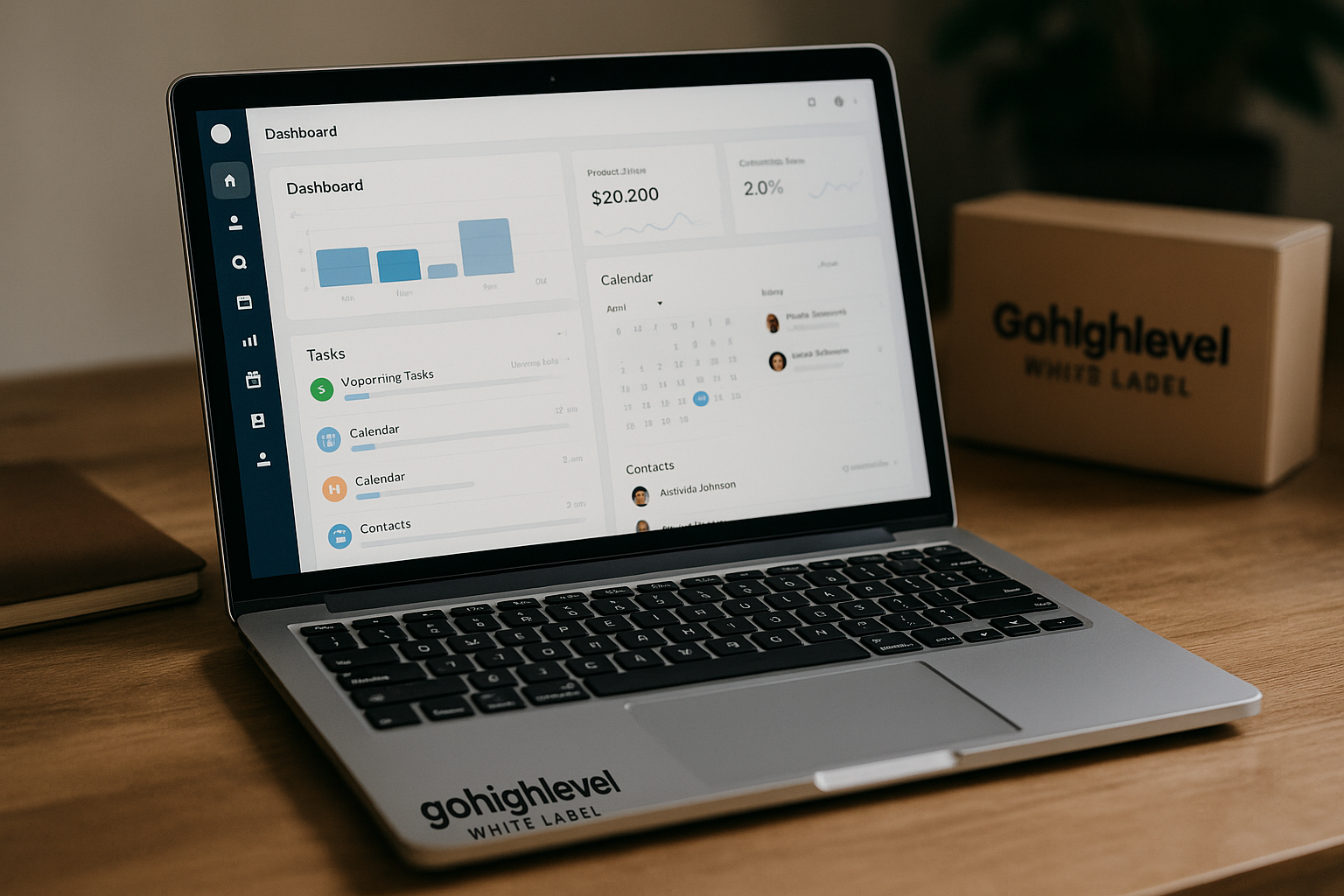
If you run an agency, consultancy, or service business, GoHighLevel white label can help you offer a branded CRM and client portal without building software from scratch. In simple terms, white labeling means your clients see your agency brand on the front-end experience, while the underlying platform is still powered by HighLevel.
This guide explains how the model works, what is verified from official HighLevel pages, how to think about pricing, and how to package a branded SaaS-style offer responsibly. If you want to evaluate the platform yourself, you can explore the official trial and current pricing through this GoHighLevel affiliate link.
Official website · Latest pricing & offers
What Is GoHighLevel White Label?
GoHighLevel white label is the agency model where you rebrand HighLevel’s software experience as your own client-facing platform. Instead of sending clients to a generic HighLevel login, agencies can create a more branded experience around their own domain, positioning, onboarding, and support.
Official HighLevel pages describe the platform as an “AI-powered business operating system” with tools to capture, nurture, and close leads into bookings, sales, reviews, and repeat customers. The white label model lets agencies bring those capabilities into a branded client portal or SaaS-style offer.
White label vs. standard GoHighLevel account
A standard account is typically used internally by an agency or business. A white label setup is more client-facing: the agency wraps the software in its own brand and may resell access as part of a monthly service, SaaS subscription, or hybrid package.
| Area | Standard Account | White Label Setup |
|---|---|---|
| Client perception | Clients may recognize HighLevel | Clients interact with your agency-branded experience |
| Domain | Default HighLevel access may be used | A branded domain such as app.yourdomain.com can be configured |
| Positioning | Internal tool or service delivery platform | Branded CRM, portal, or SaaS offer |
| Revenue model | Supports agency operations | Can support recurring software + service revenue |
| Responsibility | Mainly internal management | Requires onboarding, support, documentation, and client training |
The important distinction is that GoHighLevel white label does not mean you own the underlying software code. It means you can brand and package access to the platform while HighLevel continues to host and power the application.
Why agencies use a white label CRM model
Agencies use a white label CRM for agencies because it can make their service feel more complete and defensible. Instead of selling only campaigns, websites, or consulting hours, they can provide a central client portal for leads, conversations, calendars, pipelines, and follow-up.
In practice, GoHighLevel white label can help agencies create stronger brand control. Clients log into a system associated with the agency, which can improve perceived value and make the relationship feel less transactional.
It also supports recurring revenue. Agencies can package software access with implementation, automation setup, lead management, reporting workflows, or ongoing support.
Who this model is best for
This model is best for agencies that already understand their clients’ operational problems. For example, local marketing agencies, consultants, freelancers, and niche service providers can use GoHighLevel white label to organize lead capture, follow-up, booking, and communication in one place.
It is less ideal for beginners who have no defined niche, no onboarding process, and no support capacity. A branded portal can create value, but only if the agency can help clients use it consistently.
How GoHighLevel White Label Works for Agencies
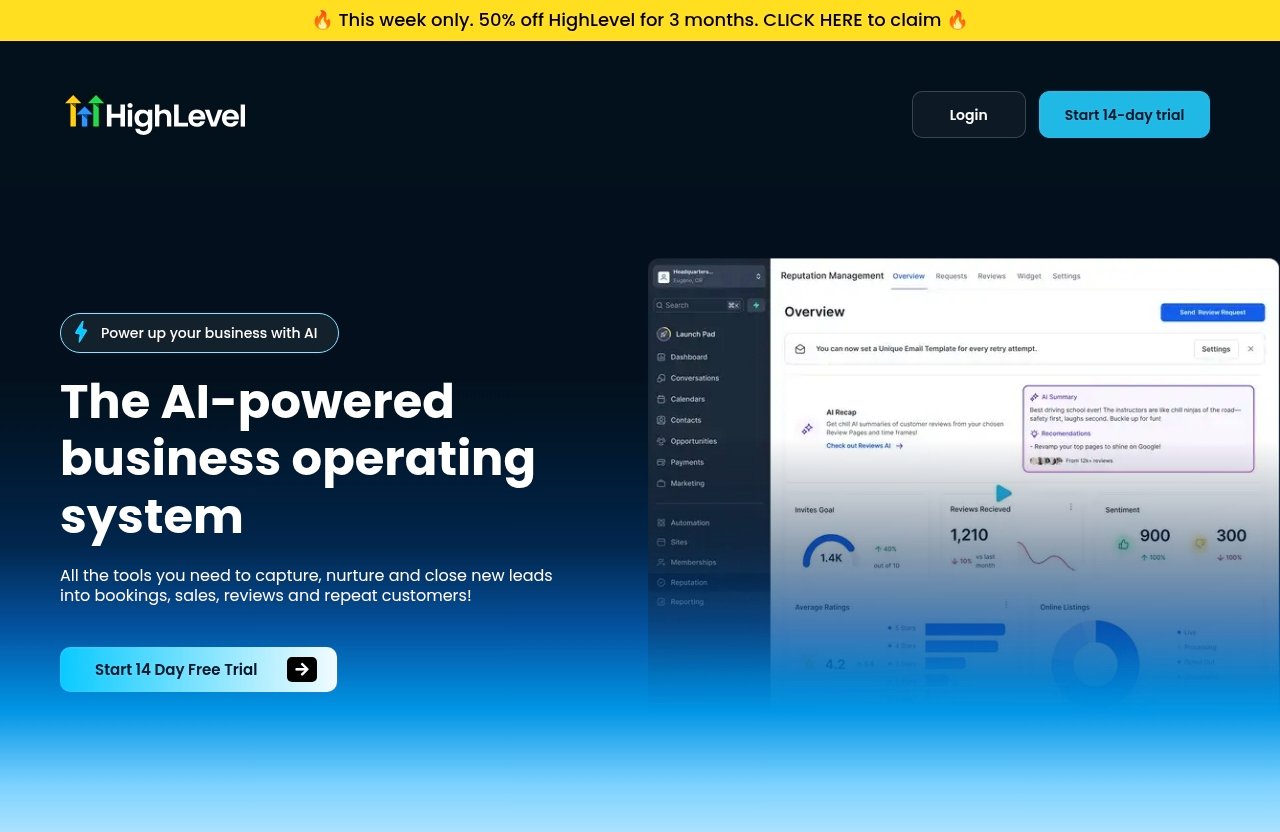
GoHighLevel white label works by letting an agency place its own brand layer over the client-facing software experience. The agency still relies on HighLevel’s infrastructure, but the client relationship is managed under the agency’s name.
For commercial investigation, this is the key question: are you simply using a CRM internally, or are you building a branded software offer clients will pay for every month? The answer affects your pricing, support, onboarding, and sales process.
Branding the dashboard, login, and app experience
HighLevel’s official pages emphasize agency branding and a branded mobile experience on its white label CRM materials. For agencies, this matters because the software becomes part of the client’s perception of your business.
A strong GoHighLevel white label rollout usually includes:
- A clear product name for your branded portal
- Consistent logo and visual identity
- Client-specific onboarding materials
- A simple explanation of what the portal does
- Training that connects the software to the client’s business goals
Do not treat branding as just a logo swap. Clients care less about the platform name and more about whether it helps them manage leads, conversations, appointments, and follow-up.
Using your domain instead of the default HighLevel domain
Official HighLevel support documentation confirms that agencies can set up a whitelabel domain for the desktop web app. This lets clients use a branded URL, such as app.yourdomain.com, instead of the default HighLevel URL.
A GoHighLevel whitelabel domain is a domain your agency owns and configures. According to official support documentation, HighLevel still hosts and secures the application, while your branded domain becomes the access point clients see.
This is one of the most practical parts of GoHighLevel white label because it improves trust. A client logging into your branded URL is more likely to see the platform as part of your agency’s service ecosystem.
Reselling access to clients under your agency brand
Agencies often use the model to resell access under their own brand. This can be positioned as a client portal, CRM system, lead management platform, appointment hub, or niche-specific growth system.
A GoHighLevel reseller should be careful with expectations. You are not just reselling software; you are responsible for helping clients understand how to use it. The best offers usually combine software access with setup, training, automations, and ongoing support.
Key White Label Features Agencies Care About
The value of GoHighLevel white label depends on the features your clients will actually use. Official HighLevel pages list a broad set of platform capability areas, but agencies should focus on the ones that solve immediate client problems.
HighLevel positions itself as an all-in-one operating system for capturing, nurturing, and closing leads. That makes it especially relevant for agencies serving businesses that need better follow-up, booking, sales pipeline visibility, and customer communication.
CRM and pipeline management
CRM and sales pipelines are core to many agency offers. Clients need a simple way to track leads, opportunities, appointments, sales conversations, and deal stages.
With GoHighLevel white label, agencies can package CRM and pipeline management as part of a branded operational system. For example, a local service business may use pipelines to track new inquiries, booked appointments, estimates, proposals, invoices, and closed customers.
Official HighLevel capabilities include CRM, sales pipelines, lead scoring, estimates and proposals, invoicing, and payment integrations. These are practical tools for agencies that want to help clients move from “more leads” to better sales processes.
Automations, conversations, and follow-up tools
Many small businesses lose revenue because they fail to follow up quickly. HighLevel’s official homepage lists workflows and automations, appointment reminders, missed call text-back, ringless voicemail, text snippets, automated outbound call connect, and conversation tools.
This is where GoHighLevel white label can become more than a portal. Agencies can build follow-up systems that help clients respond to inquiries, organize conversations, and reduce manual work.
Officially listed communication capabilities include inbound SMS, social DMs, a chat widget, Conversation AI, and a consolidated conversation stream covering SMS, Messenger, Instagram DM, WhatsApp, and live chat. For agencies, that means a branded system can centralize client communication instead of scattering messages across many tools.
Funnels, calendars, forms, and client communication
HighLevel’s official homepage lists websites, funnels and landing pages, webinar funnels, forms, surveys and quizzes, calendars, paid calendars, order forms, upsells, downsells, and one-click upsell funnels.
For an agency, these tools can support lead generation and conversion-focused campaigns. A GoHighLevel white label offer may include a landing page, a form or survey, automated follow-up, and a booking calendar inside one branded client system.
Client communication can also be supported through QR codes, AI Biz Card Scanner, prospecting tools, ad manager capabilities for Google, Facebook, and Instagram ads, plus social planning. Agencies should still be clear about what they set up, what clients manage, and what is included in the monthly fee.
Mobile app and branded web access
HighLevel’s official homepage lists a mobile app with video messages, and its white label CRM materials emphasize branded mobile experience. Agencies often refer to this commercially as a GoHighLevel white label app or branded client experience, but buyers should verify current mobile branding details directly on the official HighLevel pages before purchase.
The branded web access piece is more specifically documented through the whitelabel domain setup for the desktop web app. For many agencies, that branded URL is the first priority because it gives clients a professional login experience.
If mobile access is central to your offer, confirm the exact current app and branding options on the official HighLevel site. That keeps your sales promises aligned with verified capabilities.
GoHighLevel White Label Pricing Explained
GoHighLevel white label pricing should be evaluated directly from the official HighLevel pricing page before you buy. Pricing pages can change, and this guide does not invent plan names, monthly prices, or feature bundles that are not verified in the provided official facts.
What is verified: the official pricing page shows a 14 Day Free Trial Today. If you are comparing tools, use the trial period to test the workflow you intend to sell, not just the dashboard.
Official pricing overview
For this article, the only verified pricing-related claim is that HighLevel offers a 14-day free trial on its official pricing page. Current plan pricing, plan names, and feature availability should be checked directly on the live official pricing page.
That is especially important for GoHighLevel white label because your agency’s margin depends on the current cost of the platform and the value of the services you add around it.
Before subscribing, verify:
- Current pricing
- Current white label availability
- Any requirements for branded app or mobile experience
- Domain setup details
- Usage limits or add-on costs shown on the official page
- Cancellation and billing terms
14-day free trial
The verified trial detail is straightforward: HighLevel’s official pricing page shows a 14-day free trial. Agencies should use this trial strategically.
During the trial, test a real client use case. For example, build a sample pipeline, connect a form, create a calendar flow, draft a basic automation, and review how the client login experience would look under your brand.
A trial is also the right time to evaluate whether GoHighLevel white label fits your agency’s operational style. If your team does not have time to onboard clients, document processes, or provide support, the software alone will not solve that.
How agencies should budget for SaaS resale
Budgeting for a GoHighLevel white label SaaS offer is not just about platform cost. You also need to account for implementation time, client support, training materials, automation maintenance, and your sales process.
A practical agency budget should include:
- Platform subscription cost verified from the official pricing page
- Internal setup time
- Client onboarding calls
- Support and troubleshooting time
- Documentation or video training
- Ongoing optimization
- Payment processing or billing administration, if relevant
Do not price your offer only as “software access.” Clients usually pay for outcomes, convenience, and support. The software is the delivery vehicle, but your expertise is what makes it valuable.
Official website · Latest pricing & offers
How to Set Up a White Label GoHighLevel Offer
Learning how to white label GoHighLevel starts with business strategy, not software settings. Before configuring domains or branding, decide what problem your branded portal will solve and who it is for.
A strong GoHighLevel white label offer has a defined audience, a clear promise, and a repeatable onboarding process. Without those, your client portal can become a confusing collection of tools.
Choose your brand and offer structure
Start by naming your branded platform in a way that matches your niche. For example, a dental marketing agency may position it as a patient lead hub, while a home services agency may frame it as a booking and follow-up portal.
Your offer structure should answer:
- Who is this for?
- What business problem does it solve?
- What is included in setup?
- What is included monthly?
- What does the client manage?
- What does your agency manage?
This is where GoHighLevel custom branding becomes commercially useful. The brand should make the portal feel like a purposeful product, not a generic login.
Connect a whitelabel domain
Next, configure your GoHighLevel whitelabel domain. Official HighLevel support documentation explains that agencies can set up a whitelabel domain for the desktop web app, allowing clients to access a branded URL such as app.yourdomain.com.
HighLevel’s documentation also clarifies the relationship: the agency owns the whitelabel domain, while HighLevel hosts and secures the application. That distinction is useful when explaining the setup internally or to clients.
For a professional rollout, choose a simple subdomain that is easy to remember. Common patterns include:
app.yourdomain.comportal.yourdomain.comlogin.yourdomain.comcrm.yourdomain.com
Customize the client experience
Once the domain and brand foundation are ready, customize the client experience around the features they actually need. Avoid overwhelming new users with every possible tool on day one.
A practical GoHighLevel white label onboarding flow might include:
- Client login and profile setup
- Pipeline overview
- Conversation inbox walkthrough
- Calendar and appointment settings
- Lead capture form or funnel review
- Follow-up automation explanation
- Support process and escalation path
Keep the experience role-based. A business owner may only need pipeline and reporting visibility, while a receptionist may need calendars, conversations, and appointment reminders.
Build onboarding and support processes
White labeling creates support expectations. If clients think the platform is yours, they will contact you when they are confused, blocked, or unsure how to use a feature.
Before launching a GoHighLevel agency SaaS offer, prepare:
- A welcome email sequence
- Short training videos
- A “start here” checklist
- Internal troubleshooting notes
- A support inbox or helpdesk process
- Clear response time expectations
- A process for feature requests
This is one of the biggest differences between using software and reselling software. The agency must operationalize the client experience.
Pros and Cons of White Labeling GoHighLevel
GoHighLevel white label can be valuable, but it is not automatically the right choice for every agency. The upside is stronger brand control and recurring revenue potential; the downside is added responsibility.
A balanced decision should consider your niche, team capacity, technical comfort, and client demand.
Main benefits for agencies
The biggest benefit is that agencies can package a branded system around real business workflows. Instead of selling disconnected services, you can provide one client-facing environment for leads, conversations, calendars, and follow-up.
Key benefits include:
- Branded client experience
- Potential recurring revenue model
- More control over client workflows
- Stronger retention if clients rely on the portal
- Ability to bundle software with services
- Centralized communication and pipeline management
For the right agency, GoHighLevel white label can make the service offering feel more durable and less commoditized.
Common limitations and risks
The risks are practical. You depend on the platform, you must keep up with changes, and clients may expect your team to support everything inside the branded environment.
Common risks include:
- Platform dependency
- Support burden
- Client confusion if onboarding is weak
- Pricing pressure from software-only competitors
- Overpromising capabilities
- Underestimating setup time
Agencies should also avoid selling the tool as a magic solution. A CRM only works if clients use it, follow up, and maintain clean processes.
When white label is not the right move
White label may not be right if your agency has no recurring service model, no defined customer segment, or no team capacity for support. It may also be too much if your clients only need a simple website, basic form, or lightweight scheduling tool.
If you are still validating your agency niche, start by using the platform internally or with a small pilot client. Then decide whether GoHighLevel white label deserves to become a formal productized offer.
How to Sell and Package Your White Label SaaS Offer
Selling a GoHighLevel white label SaaS offer works best when you package it around a specific client outcome. The goal is not to say, “Here is a CRM.” The goal is to say, “Here is a system for managing leads, follow-up, bookings, and customer communication.”
Commercially, agencies should think in terms of software plus expertise. The platform provides capability; your agency provides strategy, setup, training, and accountability.
Niche-specific positioning
Niche positioning makes the offer easier to understand. A general “business CRM” is harder to sell than a clear system for a specific market.
Examples of niche positioning include:
- Lead follow-up portal for home service businesses
- Appointment and review system for local clinics
- Client communication hub for real estate teams
- Booking and pipeline system for consultants
- Funnel and automation platform for course creators
With GoHighLevel white label, the same underlying platform can support different niches, but your messaging should feel specific.
Bundled services vs. software-only pricing
Most agencies are better positioned with bundled services rather than software-only pricing. If you sell only access, clients may compare you directly with generic tools and push your margins down.
A bundled offer may include:
- Initial account setup
- Funnel or landing page build
- Forms and calendar configuration
- Basic workflow automation
- Pipeline customization
- Conversation inbox setup
- Monthly support or optimization
- Reporting review calls
Software-only can work for experienced clients, but it usually requires stronger documentation and lower-touch support. For many agencies, the best model is a hybrid: branded software plus a clear service layer.
Retention, upsells, and client lifetime value
Retention matters because recurring revenue only becomes meaningful when clients stay long enough to experience value. A branded portal can improve retention if it becomes part of the client’s daily workflow.
Ethical upsells should be connected to real needs. For example, after a client is using pipelines and calendars successfully, you might offer automation optimization, landing page improvements, paid ad management, or review generation workflows.
Do not build your GoHighLevel white label offer around unsupported income claims. Build it around measurable operational improvements: faster follow-up, cleaner lead tracking, better appointment management, and more organized communication.
Best Practices for Launching a Branded Client Portal
A successful launch depends on clarity. Clients should know what the portal is, why it matters, how to log in, what to do first, and where to get help.
Treat your branded client portal like a real product. Even if the underlying software is HighLevel, the client experience is your responsibility.
Domain and brand consistency
Use a domain and brand identity that feel trustworthy. The login URL, welcome email, training materials, and support documentation should all use consistent naming.
For a GoHighLevel white label setup, consistency reduces confusion. If your proposal calls the platform “GrowthHub,” your login page, onboarding videos, and support emails should use the same name.
A simple launch checklist:
- Confirm branded domain configuration
- Test client login from a fresh browser
- Review mobile access instructions
- Check core workflows
- Send welcome instructions
- Provide support contact details
- Schedule onboarding or training
Support documentation and training
Documentation is not optional. Even simple systems can feel overwhelming to clients who are not familiar with CRM tools.
Create short, practical resources such as:
- “How to log in”
- “How to view new leads”
- “How to update a pipeline stage”
- “How to reply to messages”
- “How to manage appointments”
- “How to request support”
If your clients rely on the GoHighLevel white label app or mobile experience, provide specific instructions and verify current official app details before making promises in your sales materials.
E-E-A-T and compliance considerations
For trust, be transparent about what your agency provides and what HighLevel powers behind the scenes. You do not need to over-explain the technology, but you should avoid implying that you built proprietary software from scratch if you are using a white label platform.
From an E-E-A-T perspective, document your process, show clients how the system works, and keep your claims grounded. If you discuss pricing, trial details, or app branding, point clients to the official HighLevel pages for the latest information.
Also consider compliance basics for your niche. Depending on your clients’ industry, they may have rules around customer communication, data handling, advertising claims, messaging consent, or payment workflows.
GoHighLevel White Label: Is It Worth It?
GoHighLevel white label is worth considering if your agency wants to offer a branded CRM, client portal, or SaaS-style system without developing custom software. It is most compelling when you already sell services related to lead generation, follow-up, booking, sales pipelines, or customer communication.
It is not a shortcut to effortless recurring revenue. The model works best when the agency adds real implementation value.
Ideal agency profiles
The best fit is usually an agency that has a clear niche and repeatable client needs. If your clients regularly ask for better lead tracking, faster follow-up, appointment booking, or centralized communication, a white label CRM can make sense.
Strong-fit profiles include:
- Local marketing agencies
- Lead generation agencies
- Funnel builders
- Automation consultants
- Niche CRM implementers
- Freelancers serving repeatable client segments
- Small SaaS-style businesses building a branded portal offer
For these businesses, GoHighLevel white label can become part of a larger recurring service model.
Decision checklist
Before moving forward, ask:
- Do we have a defined niche?
- Do our clients need CRM, follow-up, calendars, or communication tools?
- Can we support clients after setup?
- Do we have onboarding documentation?
- Can we price the offer profitably after platform and support costs?
- Have we verified current pricing on the official HighLevel pricing page?
- Have we tested the 14-day trial with a real use case?
- Are we clear about what is branded and what is powered by HighLevel?
If most answers are yes, the model is worth serious evaluation. If not, you may want to start smaller before launching a full branded SaaS offer.
Final recommendation
The practical verdict: GoHighLevel white label is a strong option for agencies that want to resell a branded CRM and client portal while adding their own strategy, setup, and support. It can help unify lead capture, conversations, calendars, pipelines, automations, and client communication under your agency brand.
However, it is best approached as a productized service, not a passive software resale. Verify current pricing and trial terms on the official HighLevel pricing page, test the platform with a real workflow, and make sure your agency can support clients professionally.
If you are ready to compare the platform against your agency’s needs, you can explore GoHighLevel’s official trial and pricing details through this affiliate link.
Official website · Latest pricing & offers
FAQ
What does GoHighLevel white label mean?
GoHighLevel white label means an agency can rebrand the client-facing software experience under its own brand while using HighLevel’s underlying platform. This can include a branded domain, agency positioning, and a client portal experience that feels connected to your business.
Can I resell GoHighLevel as my own software?
Yes. Agencies use the white label model to package HighLevel under their own brand and sell it as part of a SaaS offer, service bundle, or recurring client portal. The agency should still be clear internally that the underlying platform is powered by HighLevel.
Does GoHighLevel offer a branded app or custom domain?
Official HighLevel support documentation confirms agencies can set up a whitelabel domain for the desktop web app, such as app.yourdomain.com. Official HighLevel pages also emphasize white label agency branding and branded mobile experience, but you should verify current app branding details directly on the official site.
How much does GoHighLevel white label cost?
The verified pricing fact available here is that the official HighLevel pricing page shows a 14-day free trial. Because pricing and plan details can change, check the live official pricing page before purchase for current GoHighLevel white label pricing.
Is white labeling GoHighLevel worth it for agencies?
It can be worth it for agencies that want recurring revenue, stronger brand control, and a unified client experience for CRM, follow-up, calendars, conversations, and pipelines. It may not be the right move if you lack a niche, onboarding process, or support capacity.
Related Reading
References
- HighLevel – White Label CRM for Agency
- HighLevel Pricing
- Set Up a Whitelabel Domain for GoHighLevel Desktop App
- White-Label SaaS – A Beginner's Guide for Agencies & Entrepreneurs