Best Skool Alternatives for Coaches in 2026: Practical Picks for Client Communities
Official website · Latest pricing & offers
Best Skool Alternatives for Coaches: Quick Verdict
If you are comparing the best Skool alternatives for coaches, the right answer depends less on “which platform has the most features” and more on how you actually deliver coaching.
A group coaching business needs community, calls, accountability, and easy content access. A cohort program needs structure and pacing. A premium coaching offer may need a polished client hub, better segmentation, and a more branded experience.
TopTrustReview may earn a commission if you choose Skool through our affiliate link, but this guide is intentionally balanced. Skool is still a strong option for simple communities, and you can review its official plans here: Skool.
Who this article is for
This guide is for coaches, consultants, course creators, and membership-based service providers who want a practical comparison of skool alternatives for coaches.
It is especially relevant if you sell:
- Group coaching programs
- Cohort-based courses
- Paid client communities
- Membership programs
- Hybrid 1:1 and group coaching
- Course-plus-community offers
- Premium coaching containers with calls and accountability
If you only need a simple community with courses and live calls, Skool may be enough. If you need more control over client experience, branding, program structure, or monetization, a different coaching community platform may fit better.
Our short answer: when to consider Skool alternatives
Consider a platform like Skool if your priority is simplicity: one place for community, courses, videos, live calls, custom URL, and affiliate support.
Based on the official Skool pricing page, Skool offers a Hobby plan at $9/month and a Pro plan at $99/month. The official page lists unlimited members, unlimited courses, unlimited videos, unlimited live calls, custom URL, and affiliates on both plans, with a 10% transaction fee on Hobby and 2.9% transaction fee on Pro. It also says “2 months free!” and labels Pro as “Good choice!”
But consider the best Skool alternatives for coaches if you need one of these:
| Coaching Need | Better-Fit Direction |
|---|---|
| Deep community customization | Circle or Mighty Networks |
| Course-heavy coaching business | Kajabi or Thinkific |
| Business-oriented coaching delivery | TagMango or Coachful |
| Community-led membership | Circle, Mighty Networks, or Skool |
| Simple launch with low complexity | Skool or GoKollab |
| Branded client hub | Kajabi, Circle, TagMango, or Coachful |
| Multiple offers and upsells | Kajabi, TagMango, or Thinkific |
How we evaluated the options for coaches
We evaluated each option through a coaching workflow lens, not a generic creator lens.
The most important questions were:
- Can clients easily find their lessons, calls, replays, and resources?
- Can members engage without feeling overwhelmed?
- Can a coach run cohorts, group calls, and recurring programs?
- Does the platform support a professional client experience?
- Can offers, payments, upsells, and access be managed cleanly?
- Is the platform simple enough for a small team to operate?
For Skool, pricing and feature claims in this article are based on the official Skool homepage and official pricing page facts provided above. For competitors, because detailed verified pricing and official feature facts were not supplied, comparisons are intentionally high-level and based on public market positioning and SERP-level context rather than exact plan claims.
Why Coaches Look for Skool Alternatives
Coaches usually start searching for the best Skool alternatives for coaches when their client delivery model becomes more sophisticated than a single community plus basic content library.
A community feed is useful, but a coaching business often needs structured onboarding, segmented access, repeatable program delivery, and clear accountability. That is where the difference between a general community tool and a true coaching community platform starts to matter.
When Skool is enough
Skool can be enough when you want a straightforward place to create a community and host learning content.
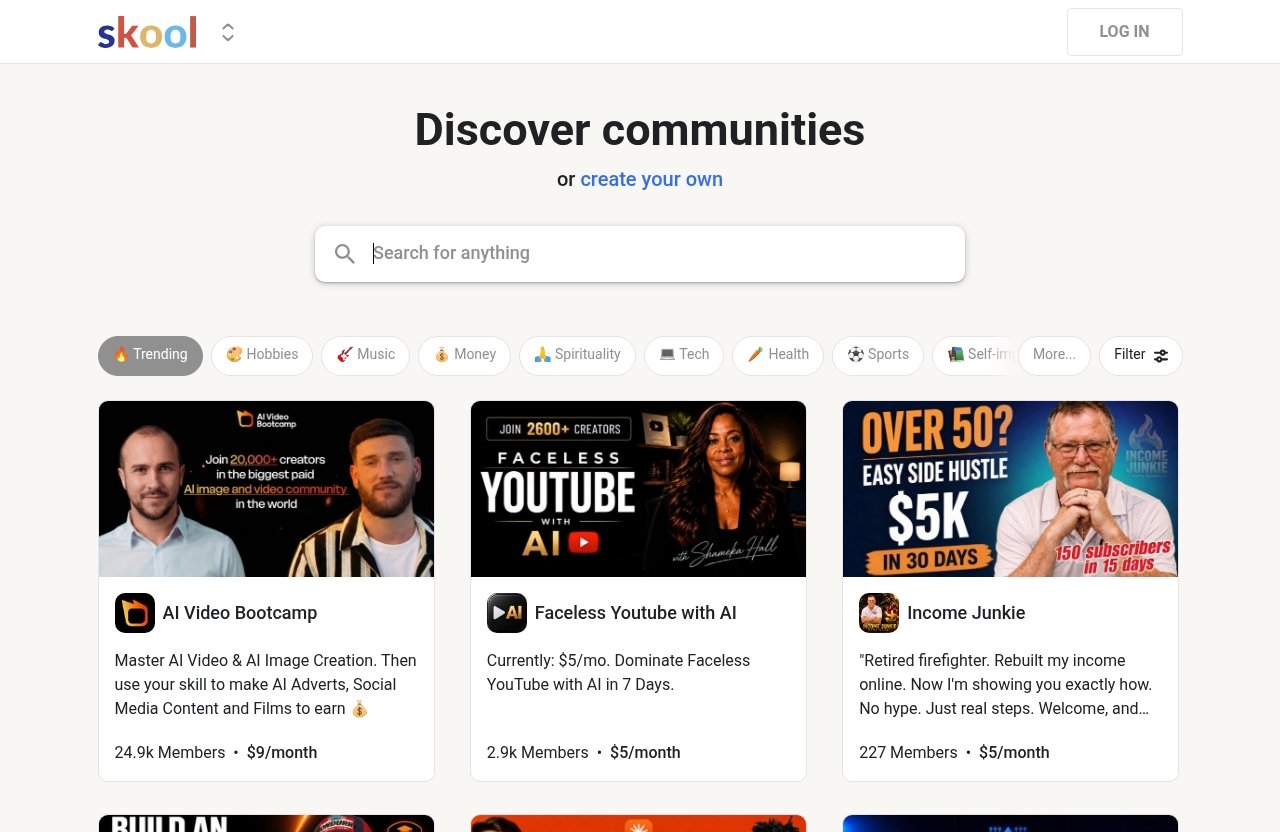
The official homepage presents Skool as a place to discover communities or create your own. Its official pricing facts also show simple plans with unlimited members, courses, videos, and live calls on both Hobby and Pro.
That makes Skool attractive for coaches who want to keep the tech stack lean. If you are launching a small group program, a paid community, or a simple course-and-call model, Skool may be a practical fit.
It is also worth considering if you care about predictable simplicity more than advanced customization. Coaches who do not want to stitch together multiple tools may prefer starting with Skool before moving into a more complex stack.
Where coaching businesses start to feel limited
Many coaching businesses begin to feel friction when their offer expands.
For example, a coach may start with one membership and later add a high-ticket mastermind, a beginner cohort, a self-paced course, and private client resources. At that point, the platform needs to support more than conversation and content access.
Common pressure points include:
- Organizing multiple programs without confusing clients
- Creating clear learning paths for cohorts
- Separating access by offer or client type
- Delivering a more premium branded experience
- Managing onboarding, calls, replays, and accountability
- Creating upsells or tiered programs more flexibly
This is why skool alternatives for coaching business searches are often driven by operational needs, not dissatisfaction alone.
Common reasons coaches switch
Coaches commonly switch from Skool or evaluate platforms like Skool for coaches because they want a platform that better matches their revenue model.
Some want deeper community features. Others want stronger course delivery. Others want a more polished client portal or a business system that better supports multiple offers.
Typical reasons include:
| Reason Coaches Switch | What They Usually Need |
|---|---|
| Programs are getting messy | Better structure and segmentation |
| Clients need clearer pathways | Course or cohort organization |
| Brand experience feels too generic | More design and client hub control |
| More offers are being added | Flexible monetization and access rules |
| Engagement is dropping | Better onboarding and accountability loops |
| Tech stack is growing | A more consolidated business platform |
The key is not whether Skool is “bad.” It is whether your coaching business has outgrown a simple community-first model.
What Coaches Need in a Skool Alternative
The best Skool alternatives for coaches should support the full client journey: discovery, purchase, onboarding, delivery, accountability, renewal, and upsell.
A coach does not just need a place to post updates. They need a system that helps clients get results.
Community and engagement tools
A coaching community platform should make members feel connected without creating noise.
Look for tools that support:
- Discussions by topic or program
- Member introductions
- Wins and accountability posts
- Event reminders
- Announcements
- Easy access to call links and replays
- Searchable resources
For group coaching, community engagement is not just a nice-to-have. It is part of the product. If members stop participating, perceived value drops.
Courses, cohorts, and client education
Coaches often need more structure than a content dump.
If you run a cohort, your platform should make it easy to guide clients through weekly lessons, assignments, live sessions, and replays. If you run evergreen coaching, clients should still know what to do first, next, and later.
When evaluating a skool alternative for group coaching, ask:
- Can I organize content by module, week, or milestone?
- Can clients find replays without asking support?
- Can I separate beginner, intermediate, and advanced resources?
- Can I support self-paced and live delivery together?
The best online community platform for coaches is rarely just the most active community tool. It is the one that helps clients progress.
Payments, pricing, and upsells
Coaches need monetization flexibility because coaching offers are rarely one-size-fits-all.
You may sell:
- Monthly memberships
- Paid cohorts
- Annual programs
- High-ticket coaching
- Private client portals
- Add-on workshops
- Course bundles
- Group upgrades
Skool’s official pricing page lists transaction fees of 10% on Hobby and 2.9% on Pro. That matters when comparing skool vs alternatives, especially for coaches with higher-volume sales or multiple offer tiers.
For competitors, exact pricing is not covered here because verified official pricing details were not supplied. Coaches should compare checkout experience, transaction costs, payment flexibility, and access control directly before committing.
Branding, domains, and client experience
A premium coaching client expects clarity and polish.
Skool’s official pricing facts include Custom URL on both listed plans. For many coaches, that may be sufficient. But others may want a more branded client portal, more visual control, or a stronger separation between different programs.
Branding matters most when:
- You sell high-ticket coaching
- You serve corporate or professional clients
- Your program experience is part of your positioning
- You want clients to feel they are inside your ecosystem, not a generic feed
This is one of the biggest reasons coaches compare the best Skool alternatives for coaches before scaling.
Scheduling, calls, and accountability
Live calls are central to most coaching programs.
Skool’s official pricing facts list unlimited live calls on both Hobby and Pro. That is useful for coaches who rely heavily on group sessions.
However, the broader workflow matters too. Coaches should map out how members will:
- Find upcoming calls
- Get reminders
- Submit questions
- Access replays
- Complete assignments
- Report wins or blockers
- Receive accountability prompts
The right coach membership platform should reduce admin work, not create more of it.
Top Skool Alternatives for Coaches Compared
Below is a practical comparison of the best Skool alternatives for coaches based on coaching use cases. Because competitor official plan details were not provided, this section avoids exact pricing and unverified feature claims.
Instead, it focuses on positioning, fit, and decision criteria for coaching businesses.
Circle
Circle is often considered by coaches who want a community-first platform with a more flexible and polished client experience than a basic feed.
For coaching businesses, Circle tends to fit well when community is central to the offer. Think masterminds, memberships, expert-led groups, and paid client communities where discussion, events, resources, and member relationships drive retention.
Circle may be a better fit than Skool if you want more control over how the community is organized and presented. It is commonly evaluated by coaches who care about client experience and community design.
Best fit:
- Group coaching communities
- Membership-based coaching
- Premium client communities
- Coaches who want stronger community organization
Potential trade-off:
- It may require more setup decisions than a simpler platform like Skool.
Mighty Networks
Mighty Networks is another frequently discussed option when coaches compare skool alternatives for coaches.
It is commonly positioned around community, memberships, and creator-led networks. For coaches, that can make sense if the community itself is the product, not just a support channel attached to a course.
Mighty Networks may appeal to coaches building a movement, niche network, or member-led ecosystem. It can be especially relevant when peer connection and identity are part of the coaching value proposition.
Best fit:
- Community-led memberships
- Niche coaching networks
- Coaches building a strong member identity
- Programs where peer interaction matters
Potential trade-off:
- Coaches should carefully evaluate whether the platform’s structure matches their course and client delivery needs before moving.
Kajabi
Kajabi is usually considered when a coach wants an all-in-one business platform rather than only a community tool.
For course-heavy coaching businesses, Kajabi is often part of the shortlist because it is widely positioned around selling and delivering digital products, courses, and coaching-style offers. It may be a stronger fit when your business needs marketing, content delivery, and offer management in one ecosystem.
Kajabi is worth evaluating if you sell multiple programs, rely on funnels or email-driven sales, or want a more complete business backend. Since verified pricing and exact current feature details were not supplied, coaches should confirm all plan limits directly before choosing.
Best fit:
- Course-heavy coaching
- Coaches with multiple offers
- Evergreen programs
- Businesses wanting all-in-one convenience
Potential trade-off:
- It may be more platform than a coach needs if the goal is simply a lightweight community.
TagMango
TagMango appears in the competitive landscape as a business-oriented option for creators and coaches.
For coaches comparing best Skool alternatives for coaches, the main distinction is positioning. Skool is community-first, while TagMango is often considered by users looking for a more coaching-business-oriented system with courses, monetization, and branded delivery.
TagMango may be worth evaluating if you want more than a community hub and need a platform that feels closer to a business operating system for coaching offers.
Best fit:
- Coaches selling structured programs
- Paid cohorts and memberships
- Branded coaching delivery
- Coaches who want business-oriented monetization options
Potential trade-off:
- Because exact verified feature and pricing details were not provided, compare current plans directly before switching.
Thinkific
Thinkific is commonly associated with online course delivery, making it a logical option for coaches whose programs are education-heavy.
If your coaching offer is built around a curriculum, lessons, modules, and student progress, Thinkific may deserve a close look. It can be especially relevant for coaches who want to sell courses alongside coaching calls or community access.
For a coaching business, Thinkific may be less about replacing Skool as a pure community and more about upgrading the learning experience. If your clients primarily buy structured education, that matters.
Best fit:
- Course-first coaching businesses
- Self-paced programs
- Coaches selling educational products
- Hybrid course-plus-coaching offers
Potential trade-off:
- Coaches should confirm whether its community experience matches their engagement needs.
Coachful
Coachful is relevant in this list because its positioning is directly tied to coaches.
For premium 1:1, hybrid coaching, or client-management-heavy delivery, a coach-specific platform can be attractive. Instead of forcing a coaching workflow into a generic creator community, coach-focused tools may better align with client progress, accountability, and service delivery.
Because verified official specifications were not supplied, this comparison stays high-level. Coaches should evaluate Coachful based on onboarding, client tracking, communication, resources, and how well it supports their specific coaching model.
Best fit:
- 1:1 coaching
- Hybrid coaching programs
- Coaches needing client management
- Premium service providers
Potential trade-off:
- It may not be the right choice if your primary product is a large public-style community.
GoKollab
GoKollab appears as another platform coaches may encounter when researching platforms like Skool for coaches.
It may be worth considering for coaches who want a simple way to collaborate, host a community, and support learning or membership delivery without building a large technical stack. As with other competitors, exact claims should be verified directly before choosing.
GoKollab may appeal to early-stage coaches who want a lighter alternative and are still validating their offer.
Best fit:
- Early-stage coaching communities
- Simple memberships
- Coaches testing a new offer
- Collaborative learning spaces
Potential trade-off:
- Coaches with complex monetization, multiple tiers, or premium branding needs should evaluate carefully before migrating.
Official website · Latest pricing & offers
Best Skool Alternative by Coaching Business Model
The easiest way to choose among the best Skool alternatives for coaches is to start with your business model.
A coach running weekly group calls has different needs than a course creator selling evergreen modules or a consultant managing premium 1:1 clients.
Best for group coaching
For group coaching, the strongest options are usually Skool, Circle, Mighty Networks, and TagMango.
Skool works when you want a simple community, courses, videos, and live calls in one place. Circle and Mighty Networks may fit better when community depth and member experience are central. TagMango may be worth evaluating if you want a more business-oriented coaching setup.
Choose based on your delivery style:
| If Your Group Coaching Is… | Consider |
|---|---|
| Simple and community-led | Skool |
| Discussion-heavy and premium | Circle |
| Identity/community movement-driven | Mighty Networks |
| Offer and monetization-oriented | TagMango |
Best for cohort-based courses
For cohort-based courses, structure matters.
Thinkific, Kajabi, TagMango, and Circle are usually worth evaluating. Skool can still work if your cohort is simple, but coaches running timed releases, structured lessons, assignments, and multiple cohorts may want a more course-oriented setup.
The right skool alternative for group coaching should make it easy for students to understand what week they are in, what to complete, and where to ask questions.
Best for premium 1:1 or hybrid coaching
For premium 1:1 or hybrid coaching, Coachful, Kajabi, TagMango, and Circle are strong candidates to evaluate.
The priority here is not just community. It is client experience, progress tracking, onboarding, resources, and communication.
A premium client should not need to dig through a busy feed to find their next step. If your coaching offer is high-touch, choose a platform that feels like a professional client hub.
Best for community-led memberships
For community-led memberships, Circle, Mighty Networks, and Skool are the main options to compare.
Skool may be best if simplicity is your top priority. Circle may be better if you want a more organized community experience. Mighty Networks may be worth considering if your membership is built around identity, belonging, and member-to-member connection.
The best online community platform for coaches in this category is the one your members will actually use every week.
Best for coaches who want simplicity
Skool remains one of the simplest options to evaluate.
Based on official Skool facts, both listed plans include unlimited members, unlimited courses, unlimited videos, unlimited live calls, custom URL, and affiliates. For coaches who do not want to assemble multiple tools, that simplicity is meaningful.
GoKollab may also be worth reviewing if you are exploring lightweight skool alternatives for coaches, but verify current feature details directly before making a decision.
Skool vs Alternatives: Feature Trade-Offs Coaches Should Know
When comparing skool vs alternatives, the decision usually comes down to trade-offs.
No platform is perfect. The best choice depends on whether you value speed, structure, branding, monetization flexibility, or operational control.
Community depth vs simplicity
Skool’s appeal is simplicity. It is designed around creating or joining communities, and the official pricing facts show a straightforward plan structure.
The trade-off is that some coaching businesses eventually want more nuanced community organization, richer client hubs, or more program-specific experiences.
If you want members to engage quickly without much setup, Skool is appealing. If your community is highly segmented or premium, Circle or Mighty Networks may be worth comparing.
All-in-one convenience vs specialization
Kajabi and TagMango may appeal to coaches who want more business infrastructure around courses, monetization, and delivery.
Thinkific may appeal to course-first coaches. Coachful may appeal to coaches who want a client-focused system. Circle and Mighty Networks may appeal to community-first brands.
Skool sits closer to the simple community-and-learning side. That can be a strength or a limitation depending on your business model.
Brand control and ownership
Brand control matters more as your pricing increases.
A low-ticket community can work well inside a simple platform. A premium coaching container may need a more customized client experience, stronger visual identity, and clearer separation between offers.
Skool’s official pricing facts include Custom URL, which is useful. But coaches who need a deeply branded portal should compare alternatives carefully.
Monetization flexibility
Coaching monetization can get complex quickly.
You may need payment plans, bundles, upsells, separate memberships, private client access, cohort enrollment windows, or annual renewals. Before switching, map your monetization model against each platform.
Skool’s official pricing page lists a 10% transaction fee on Hobby and 2.9% transaction fee on Pro. For coaches comparing the best Skool alternatives for coaches, those fees should be weighed against simplicity, feature fit, and revenue volume.
How to Choose the Right Platform for Your Coaching Business
The right coaching platform is the one that supports your next 12 months of delivery, not just your current launch.
Before moving, write down your offers, client journey, calls, content, payment structure, and engagement model. Then choose the platform that reduces friction.
If you are just starting
If you are just starting, avoid overbuilding.
A simple setup is usually better than a complex tech stack you cannot maintain. Skool may be enough if you need a community, courses, videos, live calls, a custom URL, and affiliates based on the official plan facts.
You can also evaluate GoKollab or other lightweight tools, but do not choose based only on features. Choose based on what helps you sell, deliver, and retain clients with the least friction.
If you already sell high-ticket coaching
High-ticket coaching needs a stronger client experience.
Your clients should know exactly where to go, what to do, when the next call is, and how to get support. If the platform feels messy, the perceived value of your offer drops.
For premium coaching, compare Circle, Kajabi, Coachful, and TagMango carefully. Look for a polished client hub, clean onboarding, and a workflow that supports accountability.
If you run multiple offers
Multiple offers create access complexity.
You may have a free community, paid membership, core course, mastermind, private clients, and alumni group. If those offers overlap, your platform needs clean organization.
Kajabi, TagMango, Thinkific, Circle, and Coachful may be worth evaluating depending on whether your offers are course-heavy, community-heavy, or coaching-heavy.
A good skool alternative for client communities should make it clear who gets access to what.
If you need a branded client portal
If branding is important, look beyond basic community functionality.
Ask:
- Can I make the client experience feel like my brand?
- Can I separate programs clearly?
- Can clients access resources without confusion?
- Can I create a premium onboarding path?
- Does the platform support the professionalism of my offer?
For branded delivery, Kajabi, Circle, TagMango, and Coachful are worth comparing. Skool may still work if Custom URL and simple organization are enough for your business.
Recommended Final Picks
The best Skool alternatives for coaches are not the same for every business. A coach selling a $49/month membership has different needs than a consultant delivering a $5,000 hybrid program.
Here is the practical shortlist.
Best overall for coaches
Best overall shortlist: Circle, Kajabi, TagMango, and Skool.
Circle is strong for community-led coaching. Kajabi is strong for course-heavy and all-in-one businesses. TagMango is worth evaluating for coaching-business-oriented delivery. Skool remains a strong simple option if you want fewer moving parts.
For most coaches, the best overall choice depends on whether community, courses, monetization, or client experience is the main driver.
Best for community-first coaching
Best picks: Circle, Mighty Networks, and Skool.
If your coaching value depends on member interaction, discussion, and peer accountability, start here. Circle may fit coaches wanting more community organization. Mighty Networks may fit membership-style networks. Skool may fit coaches who value simplicity and fast setup.
Best for course-heavy coaching
Best picks: Kajabi, Thinkific, and TagMango.
If your coaching program is built around curriculum, modules, lessons, and structured student progress, prioritize course delivery. Community can support the experience, but the learning path should be clear.
Thinkific may be best to evaluate for course-first models. Kajabi may be best to evaluate for all-in-one business needs. TagMango may be worth evaluating for coaching-style monetization and branded delivery.
Best for an upgraded client experience
Best picks: Circle, Kajabi, Coachful, and TagMango.
If you serve premium clients, your platform should feel like a professional client hub. That means clear onboarding, organized resources, calls, replays, and accountability.
Skool can still work for coaches who want simple delivery. But if your brand experience is a core part of your offer, alternatives may provide a better fit.
In conclusion, the best Skool alternatives for coaches are the ones that match your delivery model. Stay with Skool if you want simplicity. Switch if your coaching business needs deeper structure, stronger branding, more flexible monetization, or a more premium client journey.
How to Migrate from Skool Without Losing Members
Moving platforms can create confusion if you do it too quickly.
The goal is not just to transfer content. The goal is to preserve trust, engagement, and continuity for your coaching clients.
Audit your content and member data
Start by listing everything currently inside your community.
Include:
- Courses
- Videos
- Call replays
- Resource links
- Announcements
- Member groups
- Onboarding posts
- FAQs
- Payment or access rules
- Live call schedules
Then decide what should move, what should be updated, and what should be deleted.
Many coaches discover that migration is a good time to simplify. Do not move clutter just because it exists.
Communicate the switch clearly
Your clients should understand why the move is happening.
Explain the benefit in client-centered language:
- Easier access to resources
- Clearer onboarding
- Better program structure
- Improved call and replay organization
- More professional client experience
Give members a timeline and tell them exactly what they need to do. Avoid vague announcements like “we are moving soon.”
Recreate your onboarding and engagement loops
Do not migrate only the content library.
Rebuild the engagement system that keeps clients active:
- Welcome post
- Start-here module
- Introduction prompt
- Weekly accountability thread
- Call reminder workflow
- Replay archive
- Win-sharing space
- Support instructions
A coaching community platform works when clients know where to go and what to do next.
Test pricing and access before launch
Before going live, test your client journey from purchase to access.
Check:
- Payment flow
- Access permissions
- Email confirmations
- Program visibility
- Call links
- Replay access
- Mobile experience
- Member onboarding
If you are comparing the best Skool alternatives for coaches, do not switch until you have tested the workflow like a real client. A smoother launch protects trust and reduces support requests.
Official website · Latest pricing & offers
FAQ
What's better than Skool?
The better option depends on your coaching business model. Circle or Mighty Networks may be better for community-first coaching, while Kajabi, Thinkific, TagMango, or Coachful may be better for course-heavy, branded, or coaching-business-oriented delivery.
Skool is still a good fit if you want simplicity and a streamlined community with courses and calls.
Is Skool good for coaches?
Yes, Skool can be good for coaches who want a simple place for community, courses, videos, live calls, a custom URL, and affiliates. Those claims are based on the official Skool pricing facts provided for this article.
It may feel limited when a coaching business needs more structured learning paths, deeper branding, advanced client hubs, or more flexible monetization across multiple offers.
What are the key differences between TagMango and Skool?
The key difference is positioning. Skool is community-first, while TagMango is commonly evaluated as a more coaching-business-oriented platform.
Choose Skool if you want a simple community and learning setup. Evaluate TagMango if you want a system that may better support structured coaching offers, monetization, and branded delivery. Because verified TagMango pricing and feature details were not supplied here, confirm current details directly before switching.
Is there a free version of Skool?
No permanent free plan is shown in the verified official Skool pricing facts provided for this article.
The official pricing page lists Hobby at $9/month and Pro at $99/month. It also says “2 months free!” and labels Pro as “Good choice!” Both listed plans include unlimited members, unlimited courses, unlimited videos, unlimited live calls, custom URL, and affiliates, with different transaction fees.
Related Reading
- Systeme.io vs HubSpot: Which Platform Is Better for Lean Small Businesses in 2026?
- How Does Systeme.io Pay You? 2026 Guide
- Top Skool Alternatives for 2026
References
- Skool: Discover Communities or Create Your Own
- Skool: Pricing
- 7 Best Skool alternatives for community builders in 2026
- TagMango vs Skool: Best Skool Alternative for Creators