Podsqueeze for Solo Podcasters Review 2026: Faster Automation for One-Person Shows
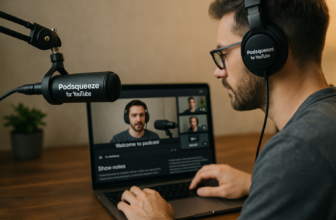
If you run a one-person podcast, speed is not a luxury. It is the difference between publishing consistently and falling behind on editing, show notes, clips, newsletters, and promotion. This podsqueeze for solo podcasters review focuses on one practical question: can it help you turn one recording into multiple useful assets with less manual work?
Based on the official Podsqueeze feature and pricing pages, the platform is built to generate transcripts, summaries, short clips with captions, newsletters, blogs, social posts, and podcast pages from your episodes. My take: it is most useful for creators who already have a repeatable show and want faster post-production without hiring a team.
Official website · Latest pricing & offers
Podsqueeze for Solo Podcasters: What It Solves
Why solo podcasters need automation more than teams
A team can split podcast work across editors, writers, social media managers, and web producers. A solo host usually does all of that alone.
That means every episode has two jobs: the creative job of recording and the operational job of turning the recording into publishable content. Podsqueeze for solo podcasters is designed around that second job.
The goal is not to replace your judgment or your voice. It is to reduce the repetitive work around AI podcast transcription, show notes, clips, quote images, social captions, newsletters, and basic publishing assets.
The biggest time drains in a one-person podcast workflow
The hardest part of a solo podcast workflow is rarely recording the episode. The bottleneck usually starts after recording.
Common time drains include:
| Task | Why it slows solo creators down |
|---|---|
| Transcription | Manual review takes focus and patience |
| Show notes | Summaries, timestamps, mentions, and bullets take time |
| Clips | Finding moments, adding captions, and formatting can be tedious |
| Social posts | Each platform needs slightly different copy |
| Newsletter content | Turning audio into readable email copy adds another step |
| Podcast page | Publishing episode details in a clean hub requires upkeep |
This is where podsqueeze for solo podcasters becomes commercially interesting. It gives one-person shows a way to package the episode after recording without rebuilding every asset from scratch.
How Podsqueeze fits a solo creator’s publish-repurpose-promote loop
A good podcast repurposing tool should support the whole loop: publish the episode, repurpose the best parts, then promote it consistently.
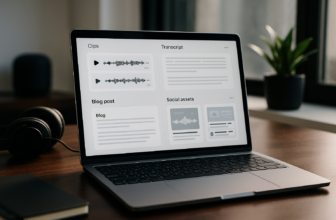
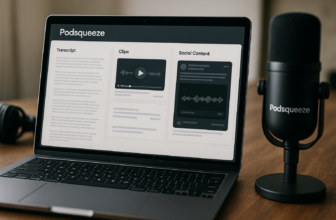
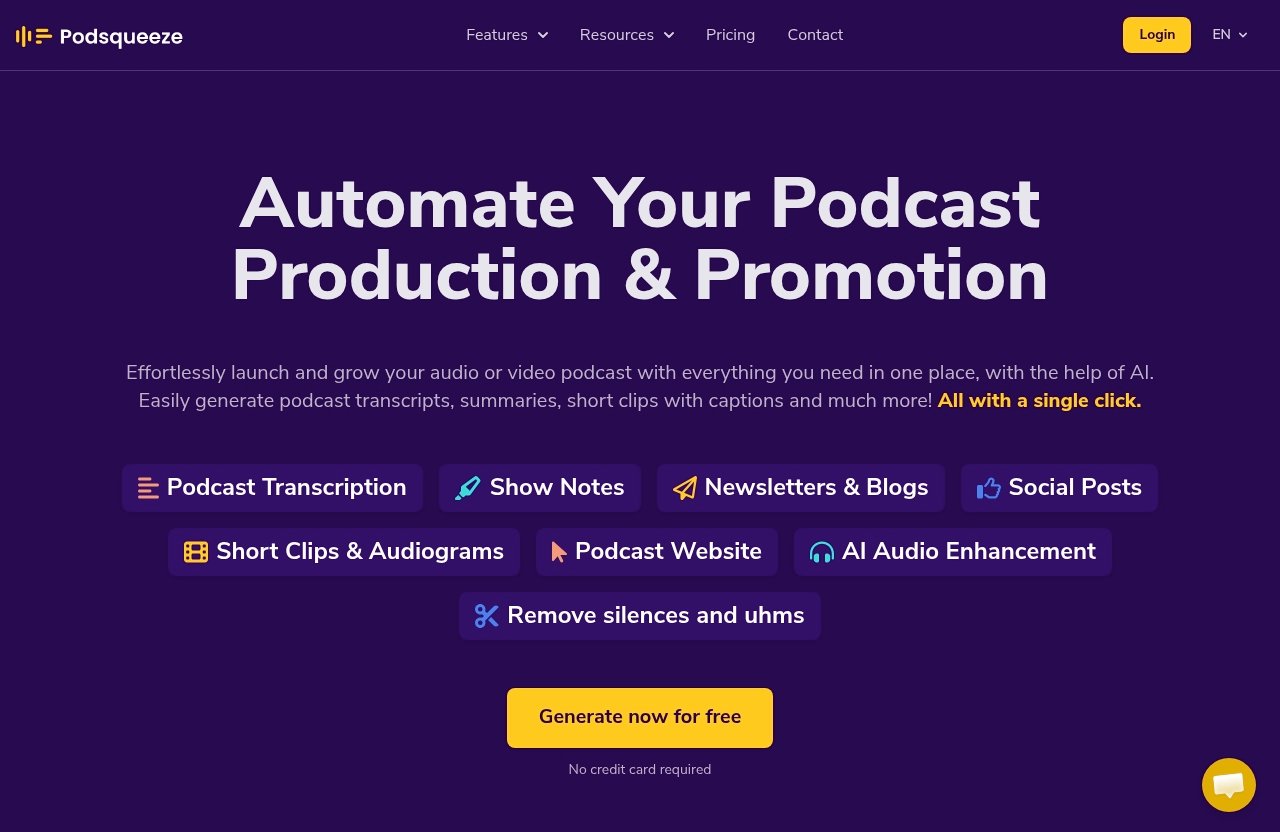
Podsqueeze officially supports transcripts with speaker labeling and SRT files, show notes with timestamps and bullet points, blog posts, ready-to-send newsletters, social media posts, bite-sized insights, and short clips with captions. It also includes AI audio enhancement and tools to remove silences and uhms.
For a solo creator, that combination matters because it keeps everything tied to the original episode. Instead of treating clips, blog posts, and emails as separate projects, podsqueeze for solo podcasters helps make them part of one workflow.
How Podsqueeze Helps a Solo Show Move Faster
Transcripts and SRT files
Transcripts are the base layer for almost every repurposing task. Podsqueeze’s official homepage lists podcast transcripts with speaker labeling and SRT files among its features.
For a solo host, this helps in two ways. First, AI podcast transcription gives you a written version of the episode to review, search, and reuse. Second, SRT files support captioned content, which is useful when publishing short video clips.
If your current process involves replaying the episode repeatedly to pull quotes, notes, or timestamps, podsqueeze for solo podcasters can make that review stage more structured.
Show notes with timestamps, bullet points, and mentions
Show notes are easy to underestimate until you have to write them every week. A strong podcast show notes generator should help summarize the episode clearly, organize key points, and make it easier for listeners to scan.
Podsqueeze officially generates show notes with timestamps, bullet points, and mentions. That is useful for solo creators because it turns the transcript into a listener-facing asset rather than leaving you with a raw wall of text.
You should still review the output for accuracy, tone, names, and links. But starting from generated notes is faster than starting from a blank page.
Blog posts, newsletters, and social posts from one episode
One of the strongest use cases for podsqueeze for solo podcasters is turning a single episode into written promotion assets. The official homepage states that Podsqueeze can generate newsletters, blogs, social posts, and bite-sized insights.
This matters because most one-person shows do not only need an episode. They need a short LinkedIn post, a few promotional snippets, a newsletter summary, and sometimes a blog-style article for their site.
If you are comparing broader content distribution tools, you may also find it useful to read about how creators [repurpose content with ContentStudio](repurpose-content-with-contentstudio). For podcast-first creators, though, Podsqueeze’s value is that the repurposing starts from the audio or video episode itself.
Short clips, audiograms, and quote images
Short-form content is one of the most obvious ways to promote a podcast, but it is also one of the easiest tasks to postpone. Finding a strong moment, creating subtitles, and formatting a clip can become a separate editing session.
Podsqueeze’s official positioning includes short clips with captions, one-click or AI-assisted clip creation, subtitle-based editing, audiograms, and quote images. On the pricing page, the Starter plan includes 8 video clips or audiograms, Pro includes 20, and Agency Lite includes 40.
That makes podsqueeze for solo podcasters especially useful if your growth strategy includes regular clips. If you are researching clip-focused tools too, you may want to compare your needs with resources on [Klap features](klap-features), but Podsqueeze is broader because it also covers transcripts, show notes, newsletters, and podcast pages.
AI audio enhancement and filler-word cleanup
Audio quality still matters, even when speed is the priority. Podsqueeze officially includes AI audio enhancement, plus the ability to remove silences and uhms.
For a solo creator, this can reduce some of the cleanup burden before publishing. It does not mean you should ignore recording basics like microphone placement, room noise, or input levels. It does mean podsqueeze for solo podcasters can help polish the episode as part of the same workflow that generates written and video assets.
If your work involves deeper audio separation or music cleanup, a dedicated guide like [best audio stem splitter](best-audio-stem-splitter) may be more relevant. For normal podcast post-production, Podsqueeze’s audio enhancement is aimed at making publishing faster and cleaner.
Best Podsqueeze Plan for Solo Podcasters
Starter plan: when Podsqueeze for solo podcasters makes sense
The official Podsqueeze pricing lists the Starter plan at $8.99/mo. It includes 120 minutes of podcast time per month, minutes rollover, 8 video clips or audiograms, quote images, file upload up to 4Gb, unlimited uploads, unlimited YouTube conversions, a podcast website, audio enhancement, podcast audio editor, chat with transcript, personalized results, and saved video templates.
For a small solo show, Starter is the natural first plan to consider. It makes sense if your monthly episode volume fits within 120 minutes and you only need a modest number of clips or audiograms.
This is the lowest-cost entry point for testing podsqueeze for solo podcasters without committing to a heavier plan.
Pro plan: when a solo creator outgrows Starter
The Pro plan is listed at $49/mo. It includes 320 minutes per month, minutes rollover, 20 video clips or audiograms, quote images, file upload up to 10Gb, unlimited uploads, unlimited YouTube conversions, podcast landing pages, audio enhancement, podcast audio editor, chat with transcript, personalized results, and saved video templates.
Pro is the better fit when your episodes are longer, more frequent, or more repurposing-heavy. If you publish weekly and want multiple clips per episode, the extra minutes and clip allowance can matter.
For many serious one-person shows, podsqueeze for solo podcasters becomes more compelling at this level because the plan better supports a consistent publish-and-promote rhythm.
What to consider before choosing monthly vs annually
The official pricing page states that monthly billing is available and annual billing is available with 30% off. That gives solo creators a simple decision.
Choose monthly if you are testing the workflow, validating your publishing schedule, or unsure how often you will repurpose episodes. Choose annual only if you are confident Podsqueeze fits your process and you want the listed annual discount.
Before upgrading, test one full solo podcast workflow from upload to transcript, show notes, clips, newsletter, social posts, and landing page. That is the clearest way to judge whether the saved effort is worth the plan cost.
Which plan is the best value for a one-person show
Here is the practical pricing view using only verified plan facts:
| Plan | Official price | Monthly podcast time | Clips/audiograms | Best fit |
|---|---|---|---|---|
| Starter | $8.99/mo | 120 minutes | 8 | Small solo shows testing automation |
| Pro | $49/mo | 320 minutes | 20 | Consistent solo creators publishing and promoting regularly |
| Agency Lite | $89/mo | 600 minutes | 40 | High-volume creators or small client workflows |
| Enterprise Custom | Custom pricing | Custom minutes | Custom clips | Larger teams needing priority support, feature requests, onboarding, and training |
For most readers searching podsqueeze for solo podcasters, I would start with Starter if your episode volume is light and move to Pro when you need more minutes or clips. You can review the current Podsqueeze plans through this Podsqueeze access link and compare them against your actual monthly production schedule.
Solo Podcaster Workflow Example: From One Recording to Publish-Ready Assets
Step 1: upload the episode
Start with a finished recording. Depending on your setup, that may be an audio file, a video file, or a YouTube-based episode.
Podsqueeze’s pricing page lists unlimited uploads and unlimited YouTube conversions across Starter, Pro, and Agency Lite. File upload limits vary by plan: Starter lists up to 4Gb, while Pro and Agency Lite list up to 10Gb.
For podsqueeze for solo podcasters, the key is that the upload becomes the source for the rest of the assets.
Step 2: generate transcript and show notes
Next, generate the transcript and episode notes. This is where the platform starts acting like an AI podcast transcription tool and podcast show notes generator.
A practical solo review process would be:
- Check speaker labels if applicable.
- Scan the transcript for important names or terms.
- Review timestamps and bullet points.
- Edit the summary so it sounds like your show.
This keeps you in control while still avoiding the slowest first draft work.
Step 3: create clips and quote images
Once the episode is transcribed, move into promotional assets. Podsqueeze supports short clips with captions, one-click or AI-assisted clip creation, subtitle-based editing, audiograms, and quote images.
As a solo host, I would look for three types of moments: a clear insight, a strong opinion, and a short story. Those usually work better than random highlights.
This is also where podsqueeze for solo podcasters can reduce friction. Instead of opening a separate video editor for every asset, you can create clips and quote images from the episode workflow.
Step 4: repurpose into social and newsletter content
After clips, turn the same episode into text-based promotion. Podsqueeze officially supports social media posts, bite-sized insights, blog posts, and ready-to-send newsletters.
This can replace the blank-page problem many solo creators face after publishing. You still edit for voice and context, but the first draft is already connected to the episode.
If you are building a larger repurposing system, you may also compare general automation ideas from [Repurpose.io features](repurpose-io-features). For a podcast-first workflow, the advantage of podsqueeze for solo podcasters is that the transcript, show notes, clips, and newsletter can all come from the same source episode.
Step 5: publish a podcast landing page
Podsqueeze’s homepage says it can create a branded podcast website or online hub with embedded audio players, auto-generated episode pages, and SEO-optimized show notes. The pricing page lists a podcast website on Starter and podcast landing pages on Pro and Agency Lite.
This is helpful if you do not want to maintain a complex website just to display episodes. A simple online hub gives listeners a place to find the episode, read notes, and access related content.
If YouTube is part of your podcast strategy, you may also want to review how [Podsqueeze for YouTube](podsqueeze-for-youtube) fits into your workflow.
Official website · Latest pricing & offers
When Podsqueeze Is Worth It for a Solo Podcaster
Best for creators who repurpose every episode
Podsqueeze is most useful when you want each episode to become more than an audio upload. If your standard checklist includes show notes, clips, quote images, social captions, and newsletter copy, the platform aligns well with that workload.
In that case, podsqueeze for solo podcasters is not just a transcription tool. It becomes a podcast repurposing tool that supports your promotion system.
Best for hosts who want faster publishing
Some solo creators delay publishing because the post-production list feels too long. Podsqueeze can help by grouping many of those tasks into one AI-assisted process.
That does not remove the need for review. It does reduce the number of separate tools and blank documents you may need to open for every episode.
Best for podcasters who also need a simple website
If you do not already have a polished podcast website, Podsqueeze’s website and landing page features can be valuable. The official homepage mentions embedded audio players, auto-generated episode pages, and SEO-optimized show notes.
For a one-person show, that can be enough to create a central episode hub without building a custom site.
When a lighter workflow or free tools may be enough
Not every solo podcaster needs Podsqueeze immediately. If you publish rarely, do not create clips, and only need a basic description, a lighter manual workflow may be enough.
The same is true if you enjoy editing every asset by hand or already have a tool stack you trust. Podsqueeze for solo podcasters is best when the cost is justified by repeated repurposing and faster publishing.
Podsqueeze Compared With the Manual Solo Workflow
What you still have to do yourself
Podsqueeze can create drafts and assets, but you still need editorial judgment. You should check accuracy, adjust tone, confirm names, remove anything off-brand, and decide which clips are worth publishing.
You also still own the strategy. The tool can help generate content, but it cannot know your exact audience priorities as well as you do.
What Podsqueeze can automate
Based on official Podsqueeze pages, the platform can help automate or assist with transcripts, summaries, short clips with captions, newsletters, blogs, social posts, AI audio enhancement, silences and uhms cleanup, SRT files, show notes, quote images, and podcast pages.
That is the practical appeal of podsqueeze for solo podcasters. It compresses many post-recording tasks into one workspace instead of forcing you to manually move between transcription, editing, writing, clipping, and publishing tools.
Time-saving comparison for one-person podcasts
| Workflow area | Manual solo workflow | Podsqueeze-assisted workflow |
|---|---|---|
| Transcript | Listen, type, or use a separate tool | Generate transcript with speaker labeling |
| Show notes | Write summary, bullets, and timestamps manually | Generate show notes with timestamps and bullet points |
| Clips | Find moments, edit captions, export assets | Create short clips, audiograms, and captions |
| Newsletter | Draft from scratch | Generate ready-to-send newsletter draft |
| Social posts | Write separate platform copy | Generate social posts and bite-sized insights |
| Episode page | Build or update manually | Use podcast website or landing page features |
This does not mean every output is final on the first pass. It means the solo creator starts from structured drafts instead of empty pages.
Pros, Limits, and Real-World Considerations
Advantages for solo creators
The biggest advantage is workflow consolidation. Podsqueeze for solo podcasters brings transcription, show notes, clips, quote images, newsletters, social posts, audio enhancement, and landing pages into one podcast-focused process.
Other practical advantages include clear plan tiers, monthly billing, annual billing with 30% off, minutes rollover on listed plans, and features that directly match common podcast repurposing needs.
The official homepage also states that Podsqueeze is used by top media groups, agencies, and podcasters, and cites 70,000 content creators and podcast professionals. I would treat that as official positioning, not as a guarantee of your specific results.
Potential tradeoffs to know
AI-generated content still needs review. Transcripts can need cleanup, show notes may need your voice, and clips still require human selection.
Also, the best plan depends on your actual minutes and clip needs. Do not choose Pro or Agency Lite just because they look more powerful; choose based on how many episodes you publish and how many clips or audiograms you realistically need.
How to test the workflow on one episode first
The best test is simple: take one recent episode and run it through the full workflow. Generate the transcript, show notes, clips, quote images, social posts, newsletter, and landing page.
Then ask three questions:
- Did it reduce repetitive work?
- Were the drafts close enough to edit quickly?
- Would I use these assets every episode?
If the answer is yes, podsqueeze for solo podcasters is likely worth a closer look.
Final Verdict: Is Podsqueeze Good for Solo Podcasters?
Who should try it
Podsqueeze is worth trying if you publish consistently and want each episode to become multiple assets. It is especially relevant if you need AI podcast transcription, a podcast clips generator, a podcast newsletter generator, show notes, social posts, quote images, and a simple podcast page.
It is also a strong fit if you are a one-person creator who wants solo podcast automation without building a complicated software stack.
Who should skip it
Skip it for now if you only publish occasionally, do not repurpose episodes, or prefer a fully manual editing process. You may also not need it if your current tools already cover transcription, clips, newsletters, show notes, and landing pages in a way you like.
Podsqueeze is practical, but it is not magic. You still need to review the content and make final publishing decisions.
Bottom-line recommendation
My bottom-line view: podsqueeze for solo podcasters is worth considering if your biggest problem is turning one recording into many publish-ready assets quickly. The official features line up well with the real post-production workload of a one-person show: transcripts, SRT files, show notes, clips, audiograms, quote images, newsletters, social posts, audio enhancement, and podcast pages.
For most solo creators, Starter is the sensible test plan if your minutes and clip needs fit. Pro is the better match when you publish more often or want a larger repurposing workflow. If you want to compare the latest plan details, you can check Podsqueeze here: https://toptrustreview.com/yr3d.
Official website · Latest pricing & offers
FAQ
How much does Podsqueeze cost to use?
Official Podsqueeze pricing lists Starter at $8.99/mo, Pro at $49/mo, Agency Lite at $89/mo, and Enterprise Custom with custom pricing. Monthly billing is available, and annual billing is available with 30% off.
Can you do a podcast with just one person?
Yes. A solo podcast is a one-person format where the host usually handles planning, recording, editing, publishing, and promotion. That is why podsqueeze for solo podcasters can be useful: it helps automate parts of the post-production and repurposing workflow.
What is the best way to save time as a solo podcaster?
The best approach is to batch your production and repurpose every episode from one source recording. Use a tool like Podsqueeze to generate transcripts, show notes, clips, newsletters, and social posts so you are not creating each asset manually from scratch.
Does Podsqueeze make clips and audiograms?
Yes. Podsqueeze officially supports short clips with captions, audiograms, quote images, one-click or AI-assisted clip creation, and subtitle-based editing. Its paid plans include specific monthly clip or audiogram allowances depending on the plan.
Related Reading
- Repurpose content with Contentstudio for social workflows
- Top 5 Repurpose.io features for creators in 2026
- Podsqueeze for YouTube Review 2026
References
- Podsqueeze
- Podsqueeze Pricing
- How To Do a Solo Podcast: Actionable Tips and Tools You Need
- Promote your Podcast